How to Fix Side Mirrors on a Car

Contents
- 1 Key Takeaways
- 2 📑 Table of Contents
- 3 Why Side Mirrors Matter More Than You Think
- 4 Common Side Mirror Problems and How to Spot Them
- 5 Tools and Safety Tips Before You Begin
- 6 Step-by-Step Guide to Fixing Side Mirror Glass
- 7 How to Repair or Replace a Loose or Damaged Mirror Housing
- 8 Fixing Power Mirror Electrical Issues
- 9 Maintaining Your Side Mirrors for Long-Term Performance
- 10 Conclusion
- 11 Frequently Asked Questions

Car Cup Holder Expander

OBD2 Scanner Tool

Chain Lubricant Spray

Car Wax Polish
Side mirrors are essential for safe driving, but they can break, misalign, or malfunction. This guide walks you through diagnosing and fixing common side mirror issues—from loose mounts to broken glass—so you can restore visibility and safety without a costly mechanic visit.
Key Takeaways
- Identify the problem first: Determine if the issue is with the mirror glass, housing, mounting, or electrical components before starting repairs.
- Use the right tools: A basic toolkit with screwdrivers, trim removal tools, and electrical tape is usually enough for most side mirror fixes.
- Handle glass carefully: Always wear gloves and eye protection when removing or replacing mirror glass to avoid injury.
- Check fuses and wiring: For power mirrors, a blown fuse or damaged wire could be the real culprit behind non-functioning adjustments.
- Reattach securely: Ensure the mirror is firmly mounted and properly aligned after repair to prevent vibration or further damage.
- Test before driving: Always test the mirror’s range of motion and clarity after repair to confirm it’s safe for use.
📑 Table of Contents
- Why Side Mirrors Matter More Than You Think
- Common Side Mirror Problems and How to Spot Them
- Tools and Safety Tips Before You Begin
- Step-by-Step Guide to Fixing Side Mirror Glass
- How to Repair or Replace a Loose or Damaged Mirror Housing
- Fixing Power Mirror Electrical Issues
- Maintaining Your Side Mirrors for Long-Term Performance
- Conclusion
Why Side Mirrors Matter More Than You Think
Side mirrors might seem like small, simple parts of your car, but they play a huge role in your safety every time you drive. They help you see vehicles in your blind spots, judge distances when changing lanes, and back up safely. A broken or misaligned side mirror doesn’t just look bad—it can lead to accidents, traffic tickets, or even fail your vehicle inspection.
Imagine you’re merging onto the highway, and your left mirror is cracked or missing. You can’t see the car speeding up beside you. That split-second hesitation could cause a collision. Or picture backing out of a tight parking spot with a foggy or loose mirror—your depth perception is off, and you might bump into another vehicle. These aren’t just hypotheticals. Every year, thousands of accidents are linked to poor visibility, and side mirrors are often the first thing to get damaged in minor fender benders or parking lot scrapes.
The good news? Most side mirror problems are fixable at home with a few tools and a little patience. Whether your mirror is hanging by a wire, the glass is shattered, or the motor won’t respond, this guide will walk you through the most common issues and how to solve them. You don’t need to be a mechanic to restore your mirror’s function—just follow these steps, and you’ll be back on the road with clear visibility in no time.
Common Side Mirror Problems and How to Spot Them
Before you start fixing anything, it’s important to know what you’re dealing with. Side mirrors can fail in several ways, and each problem requires a slightly different approach. Here are the most common issues drivers face—and how to identify them.

Visual guide about How to Fix Side Mirrors on a Car
Image source: acko-cms.ackoassets.com
Cracked or Shattered Mirror Glass
This is probably the most obvious problem. Whether from a rock kicked up by another car, a minor collision, or even extreme temperature changes, mirror glass can crack or shatter. A cracked mirror distorts your view and can worsen over time. If the glass is completely broken, shards may fall out, leaving you with no visibility on that side.
Signs to look for: Visible cracks, missing pieces, or the entire glass panel falling out. If you notice the mirror “rattling” when you tap it gently, the glass is likely loose.
Loose or Detached Mirror Housing
The mirror housing is the plastic or metal casing that holds the glass and attaches to the door. Over time, the mounting clips or screws can wear out, causing the entire mirror to wobble or even fall off. This often happens after a side-swipe or if the car washes too aggressively.
Signs to look for: The mirror moves when you touch it, makes a clicking sound, or appears misaligned with the door. In severe cases, the mirror may hang at an odd angle or dangle by wires.
Non-Functioning Power Adjustments
Many modern cars have power side mirrors that you can adjust from inside the cabin using a control switch. If the mirror won’t move up, down, left, or right, the issue could be electrical—like a blown fuse, faulty motor, or broken wiring.
Signs to look for: The mirror doesn’t respond to the control switch, moves only in one direction, or makes a grinding noise. Sometimes, one side works and the other doesn’t, which points to a wiring or fuse issue.
Foggy or Hazy Mirror Surface
Over time, the reflective coating on the back of the mirror glass can degrade, causing a foggy or cloudy appearance. This reduces clarity, especially at night or in low light.
Signs to look for: The mirror looks dull or has a milky film, even after cleaning. You may notice reduced reflectivity compared to the other side.
Mirror Folding Mechanism Failure
Some vehicles have power-folding mirrors that tuck in when you lock the car. If the mirror won’t fold in or out, the motor or linkage inside may be jammed or broken.
Signs to look for: The mirror stays extended when you lock the car, or it folds partway and gets stuck. You might hear a clicking sound from the motor.
Once you’ve identified the problem, you can move on to the right fix. The next sections will cover how to repair each of these issues step by step.
Tools and Safety Tips Before You Begin
Before diving into repairs, make sure you have the right tools and take basic safety precautions. Working on your car’s side mirrors is generally safe, but a few simple steps can prevent injury and make the job easier.
Visual guide about How to Fix Side Mirrors on a Car
Image source: learndriving.tips
Essential Tools You’ll Need
- Trim removal tools: Plastic pry tools help you remove door panels without scratching the paint or breaking clips.
- Screwdrivers: Both Phillips and flathead screwdrivers are useful for removing screws in the mirror housing or door panel.
- Socket wrench set: Some mirror mounts are secured with bolts that require a socket wrench.
- Electrical tape: Useful for securing loose wires or insulating connections.
- Needle-nose pliers: Helpful for gripping small parts or pulling wires.
- Replacement parts: Depending on the issue, you may need new mirror glass, a housing assembly, or a motor.
- Gloves and safety glasses: Protect your hands and eyes, especially when handling broken glass.
Safety First: Protect Yourself and Your Car
Always work in a well-lit, dry area. If you’re repairing the mirror on the driver’s side, park on a flat surface and engage the parking brake. For passenger-side repairs, consider turning the car off to avoid accidentally triggering power features.
Wear gloves to protect your hands from sharp edges, and safety glasses to shield your eyes from glass fragments. If you’re dealing with electrical components, disconnect the car’s battery to prevent short circuits or shocks. This is especially important if you’re working on power mirrors or folding mechanisms.
Also, be gentle when removing door panels or mirror housings. Many parts are held in place by plastic clips that can break if forced. Use a trim tool to slowly pry them loose instead of yanking with your hands.
Finally, keep your workspace organized. Lay out screws and small parts on a towel or in a small container so you don’t lose them. Taking photos before you disassemble anything can also help you remember how parts fit together.
Step-by-Step Guide to Fixing Side Mirror Glass
If your mirror glass is cracked, loose, or missing, replacing it is usually the quickest and cheapest fix. Most mirror glass is held in place by clips or adhesive, and replacement kits are widely available online or at auto parts stores.

Visual guide about How to Fix Side Mirrors on a Car
Image source: drivinginstructorblog.com
Removing the Old Mirror Glass
Start by adjusting the mirror so the glass is tilted inward as much as possible. This gives you better access to the back. If it’s a power mirror, turn on the car and use the control switch to move the glass to its most inward position.
Next, put on your gloves and safety glasses. Gently press on the edge of the glass from the back side (inside the housing). Most modern mirrors have clips that release when pressure is applied. You may hear a soft “click” as the clips disengage.
If the glass doesn’t come out easily, don’t force it. Some mirrors are held by strong adhesive. In that case, use a heat gun or hair dryer on low heat to soften the glue. Apply heat evenly around the edges for about 30 seconds, then try pressing again. Be careful not to overheat, as this can damage the housing.
Once the glass is free, disconnect any electrical connectors if it’s a heated or power-adjustable mirror. These are usually small plugs that can be unplugged by hand or with needle-nose pliers.
Installing the New Mirror Glass
Take your new mirror glass (make sure it matches your car’s make, model, and year) and check that it fits properly in the housing. If it’s a power mirror, connect the electrical plug first.
Align the glass with the housing and press it firmly into place. You should hear the clips snap in. If it’s an adhesive-mounted mirror, apply a small amount of mirror adhesive (available at auto stores) to the back of the glass before pressing it in.
Hold the glass in place for about 30 seconds to ensure it’s secure. Then, test the adjustment (if power) to make sure it moves smoothly. Finally, clean the surface with a glass cleaner and microfiber cloth.
Pro Tip: If you’re unsure about the type of glass you need, take a photo of the old one and bring it to an auto parts store. Many stores can look up the correct part using your vehicle’s VIN.
How to Repair or Replace a Loose or Damaged Mirror Housing
If the entire mirror assembly is loose, cracked, or hanging off the door, the housing itself may need repair or replacement. This is a bit more involved than just replacing the glass, but still doable at home.
Accessing the Mirror Mounting Hardware
Start by removing the door panel. Use a trim tool to gently pry off any covers over the screws (usually behind the door handle or armrest). Unscrew all visible screws, then carefully lift the panel away from the door. Be mindful of any wires connected to power windows or locks—disconnect them if necessary.
Once the panel is off, you’ll see the mirror mounting bracket attached to the door frame. This is usually held in place by three or four bolts. Use a socket wrench to remove them.
Removing the Old Housing
With the bolts removed, gently pull the mirror assembly away from the door. There may be electrical connectors for power adjustment, heating, or folding—disconnect these carefully.
Inspect the housing for cracks or broken clips. If it’s repairable, you can use epoxy or plastic welding to fix small cracks. For larger damage, it’s best to replace the entire housing.
Installing the New Housing
Take your new mirror housing (or repaired one) and reconnect the electrical connectors. Align it with the mounting holes and secure it with the bolts. Tighten them evenly to avoid warping the housing.
Reattach the door panel, making sure all clips snap in and screws are tightened. Test the mirror’s movement and alignment. If it’s a power mirror, check that all functions work.
Note: Some aftermarket mirror assemblies come pre-painted, while others require you to match your car’s color. If painting is needed, use automotive spray paint and clear coat for a professional finish.
Fixing Power Mirror Electrical Issues
When your power mirror won’t move, the problem is often electrical. Here’s how to troubleshoot and fix common issues.
Check the Fuse
The first step is to check the fuse. Locate your car’s fuse box (usually under the dashboard or in the engine bay) and find the fuse labeled “mirror,” “door,” or “power.” Use the fuse diagram in your owner’s manual to identify the correct one.
Pull out the fuse and inspect it. If the metal strip inside is broken, the fuse is blown. Replace it with one of the same amperage. If the new fuse blows immediately, there’s likely a short circuit—stop and consult a professional.
Inspect the Wiring
If the fuse is fine, the issue might be damaged wiring. Trace the wires from the mirror into the door. Look for frayed insulation, loose connections, or corrosion.
Use electrical tape to repair minor damage. For broken wires, you may need to splice in a new section using a wire connector. Make sure all connections are secure and insulated.
Test the Mirror Motor
If the fuse and wiring are good, the motor inside the mirror may be faulty. You can test it by applying 12V directly from a battery (use caution). If the motor doesn’t run, it needs replacement.
Replacing the motor involves removing the mirror glass and housing, then unscrewing the old motor and installing a new one. This is more advanced, so consider buying a complete mirror assembly if you’re not comfortable with electrical work.
Maintaining Your Side Mirrors for Long-Term Performance
Once your mirror is fixed, a little maintenance can prevent future problems. Here’s how to keep your side mirrors in top shape.
Regular Cleaning
Clean your mirrors weekly with glass cleaner and a microfiber cloth. This removes dirt, grime, and salt that can degrade the reflective coating.
Check Alignment
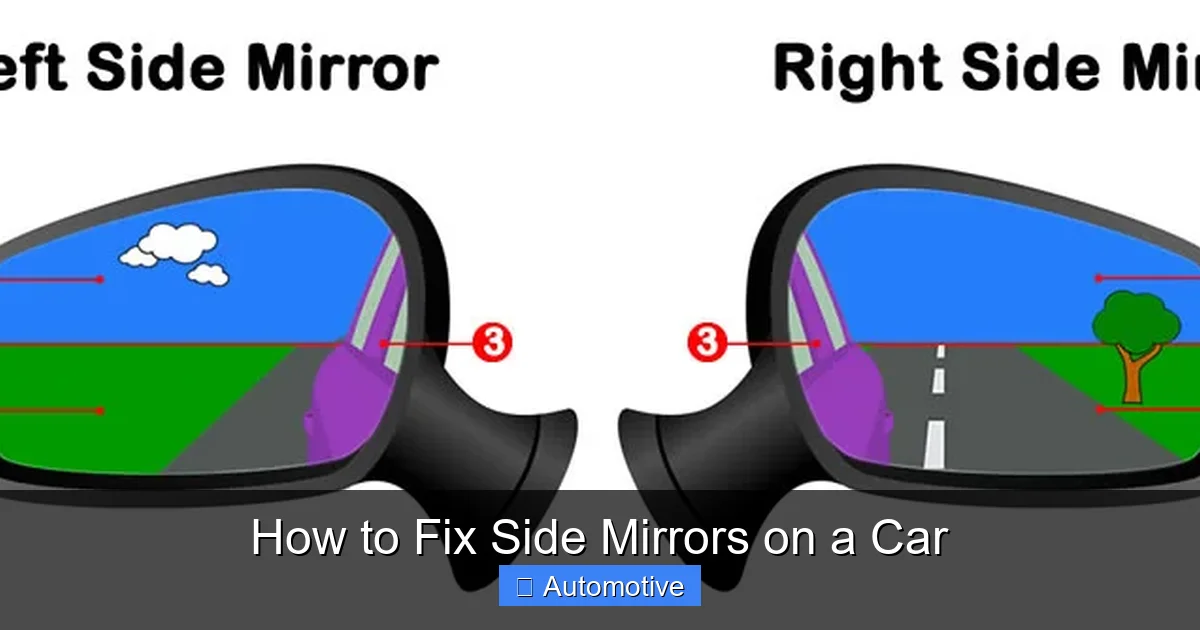
Periodically check that your mirrors are properly aligned. Sit in the driver’s seat and adjust them so you can just see the edge of your car in the mirror—this maximizes your field of view.
Protect from Damage
When parking, fold in power mirrors if your car has them. Avoid high-pressure car washes if your mirrors are loose. And always be cautious in tight spaces—side mirrors are the first thing to get clipped.
By following these tips, you’ll extend the life of your mirrors and stay safe on the road.
Conclusion
Fixing side mirrors on a car might seem daunting at first, but with the right approach, it’s a manageable DIY task. From cracked glass to electrical failures, most issues can be resolved with basic tools and a bit of patience. Not only does this save you money on mechanic fees, but it also ensures your vehicle remains safe and roadworthy.
Remember to always prioritize safety—wear protective gear, disconnect the battery when working with electronics, and test your repairs before driving. And if you’re ever unsure, don’t hesitate to consult a professional. Your visibility is too important to risk.
With the knowledge from this guide, you’re now equipped to handle the most common side mirror problems. So the next time your mirror takes a hit, you’ll know exactly what to do. Stay safe, stay visible, and keep driving with confidence.
Frequently Asked Questions
Can I drive with a broken side mirror?
In most places, driving with a missing or non-functional side mirror is illegal and can result in a ticket. It also significantly reduces your visibility, increasing the risk of accidents. It’s best to repair it as soon as possible.
How much does it cost to replace a side mirror?
Replacing just the glass can cost $20–$50, while a full mirror assembly ranges from $100 to $400, depending on the vehicle. Labor at a shop may add $50–$150, but doing it yourself saves money.
Can I fix a cracked mirror without replacing the glass?
Small cracks can sometimes be stabilized with clear epoxy or a mirror repair kit, but they will still distort your view. For safety, it’s recommended to replace the glass entirely.
Why won’t my power mirror move at all?
This is usually due to a blown fuse, faulty motor, or broken wiring. Start by checking the fuse, then inspect the wiring and motor. If none work, the mirror assembly may need replacement.
Do I need to paint a new mirror housing?
Some aftermarket housings come pre-painted, but many are black or primed. You’ll need to match your car’s color using automotive paint and clear coat for a seamless look.
How do I know if my mirror is heated?
Heated mirrors usually have small grid lines visible on the glass or a heating symbol in the corner. They also warm up when you turn on the rear defroster. Check your owner’s manual for confirmation.