
How to Fix Check Hybrid System Toyota Camry

Seeing the “Check Hybrid System” warning on your Toyota Camry can be alarming, but it’s often fixable with the right approach. This guide walks you through common causes, DIY fixes, and when to visit a technician to restore your hybrid’s performance.
If you own a Toyota Camry Hybrid, you already know how smooth, quiet, and fuel-efficient these cars can be. But when that dreaded “Check Hybrid System” warning light pops up on your dashboard, it can send your heart racing. You might wonder: Is it serious? Can I still drive? What’s going to cost me?
Don’t panic. While the warning should never be ignored, many causes are relatively minor and fixable—sometimes even at home. This comprehensive guide will walk you through everything you need to know about diagnosing and fixing the “Check Hybrid System” message in your Toyota Camry Hybrid. Whether you’re a DIY enthusiast or prefer to leave it to the pros, you’ll find practical steps, real-world tips, and clear explanations to help you get back on the road with confidence.
We’ll cover the most common triggers, from simple battery issues to more complex inverter failures, and show you how to troubleshoot safely. You’ll also learn when it’s time to visit a certified Toyota technician—because when it comes to high-voltage hybrid systems, safety is non-negotiable.
So grab your owner’s manual, maybe a flashlight, and let’s dive into how to fix check hybrid system Toyota Camry—step by step.
Key Takeaways
- Understand the warning: The “Check Hybrid System” light indicates an issue with the hybrid powertrain, not just the engine or battery.
- Common causes include: Faulty inverters, weak 12V battery, software glitches, or high-voltage battery problems.
- Start with simple checks: Inspect the 12V battery, fuses, and error codes using an OBD2 scanner before assuming major repairs.
- Reset the system safely: A power reset can clear temporary glitches—follow proper procedures to avoid damage.
- Monitor driving habits: Aggressive acceleration and frequent short trips can stress the hybrid system over time.
- Regular maintenance matters: Follow Toyota’s service schedule for coolant, air filters, and battery inspections.
- Seek professional help when needed: High-voltage components require certified technicians for safety and accuracy.
📑 Table of Contents
What Does “Check Hybrid System” Mean?
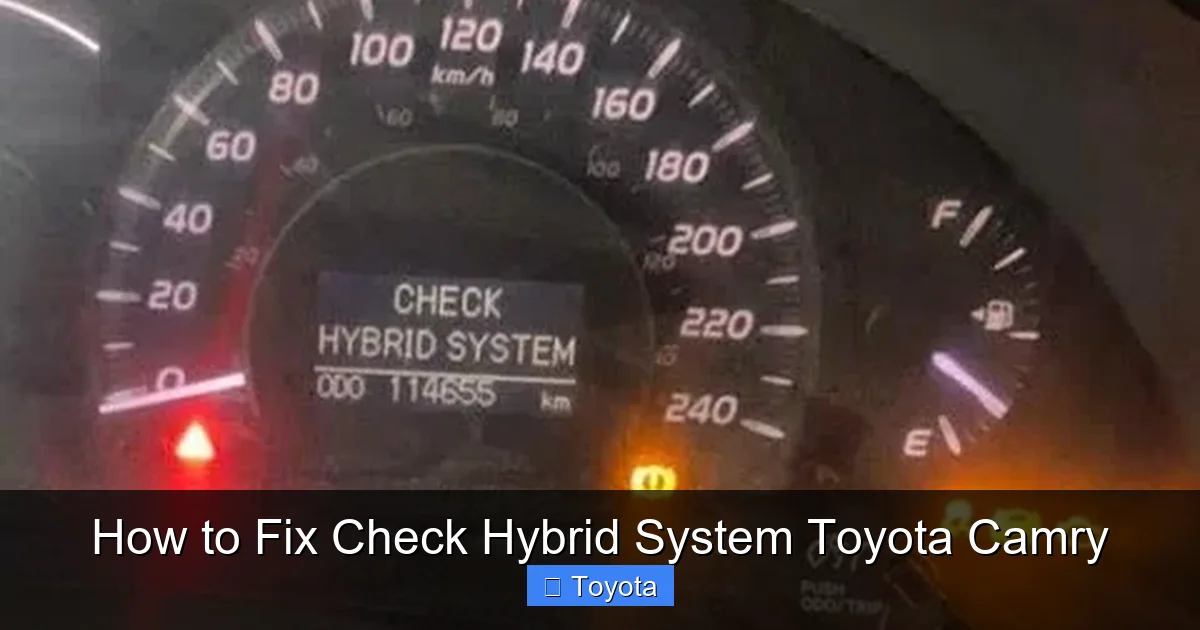
The “Check Hybrid System” warning light is specific to Toyota’s hybrid vehicles, including the Camry Hybrid. Unlike a generic “Check Engine” light, this alert is tied directly to the hybrid powertrain—the combination of the gasoline engine, electric motor, high-voltage battery, and control systems that work together to deliver efficient performance.
When this light appears, it means the vehicle’s onboard computer (ECU) has detected a malfunction in one or more components of the hybrid system. The issue could range from a minor sensor glitch to a serious electrical fault. In some cases, the car may still run on the gasoline engine alone, but you’ll likely notice reduced performance, poor fuel economy, or even a loss of power.
It’s important to note that this warning doesn’t always mean catastrophic failure. In fact, many drivers report the light appearing after something as simple as a loose gas cap or a drained 12V battery. However, because hybrid systems involve high-voltage electricity (up to 650 volts in some models), you should treat the warning seriously and act promptly.
How the Hybrid System Works in the Camry
To understand why the warning appears, it helps to know how the Toyota Hybrid Synergy Drive system operates. The Camry Hybrid uses a combination of a gasoline engine and an electric motor powered by a high-voltage nickel-metal hydride (NiMH) or lithium-ion battery pack (depending on the model year). The system intelligently switches between electric-only, engine-only, or combined power based on driving conditions.
Key components include:
– The high-voltage (HV) battery pack (usually located under the rear seats)
– The power control unit (PCU), which includes the inverter and converter
– The electric motor/generator
– The 12V auxiliary battery (powers lights, electronics, and starts the system)
– Various sensors and control modules
When any of these components report an anomaly—such as overheating, voltage irregularities, or communication errors—the ECU triggers the “Check Hybrid System” warning to alert the driver.
Why This Warning Shouldn’t Be Ignored
While some causes are benign, others can lead to reduced efficiency, increased emissions, or even safety risks. For example, a failing inverter can overheat and damage other components. A weak HV battery may not hold a charge, forcing the engine to work harder and increasing fuel consumption.
Moreover, driving with a persistent hybrid system fault can void your warranty or lead to more expensive repairs down the line. Toyota’s hybrid systems are designed to last, but they still require attention when something goes wrong.
Common Causes of the “Check Hybrid System” Warning
Visual guide about How to Fix Check Hybrid System Toyota Camry
Image source: i.ytimg.com
Now that you understand what the warning means, let’s look at the most frequent culprits behind it. Identifying the root cause is the first step toward a fix—and it could save you hundreds of dollars.
1. Weak or Dead 12V Battery
Surprisingly, one of the most common reasons for the “Check Hybrid System” light is a failing 12V auxiliary battery. This small battery powers the car’s electronics and helps initialize the hybrid system when you start the vehicle. If it’s weak or dead, the high-voltage system may not engage properly, triggering the warning.
Symptoms include:
– Slow or no response when pressing the power button
– Dim dashboard lights
– Frequent need for jump-starts
This is especially common in older Camry Hybrids (2007–2011) or vehicles that sit unused for long periods. The 12V battery typically lasts 3–5 years, so if yours is older, it’s worth checking.
2. High-Voltage (HV) Battery Issues
The HV battery is the heart of the hybrid system. Over time, individual cells can degrade, reducing the battery’s ability to hold a charge. This is more common in high-mileage vehicles (150,000+ miles), but it can happen earlier under certain conditions.
Signs of HV battery problems:
– Reduced electric-only driving range
– Frequent engine starts even at low speeds
– Warning lights accompanied by reduced power
Note: A failing HV battery doesn’t always mean a full replacement. Sometimes, reconditioning or cell balancing can restore performance.
3. Inverter or Power Control Unit (PCU) Failure
The inverter converts DC power from the HV battery into AC power for the electric motor. It’s a critical—and expensive—component. If it overheats or fails, the hybrid system can’t function properly.
Common causes of inverter issues:
– Cooling system failure (clogged radiator or fan)
– Electrical faults
– Age-related wear
Symptoms include:
– Sudden loss of power
– Warning light with a burning smell
– Vehicle going into “limp mode”
This is a serious issue that usually requires professional diagnosis and repair.
4. Software Glitches or Communication Errors
Modern hybrids rely on complex software to manage power flow. Occasionally, a software bug or communication error between modules can trigger the warning—even if all hardware is fine.
These glitches may resolve after a system reset or software update. Toyota occasionally releases Technical Service Bulletins (TSBs) to address known software issues in specific model years.
5. Faulty Sensors or Wiring
Sensors monitor everything from battery temperature to motor speed. If a sensor fails or wiring becomes corroded or damaged, it can send incorrect data to the ECU, triggering the warning.
Common sensor issues:
– Oxygen sensors
– Battery temperature sensors
– Motor position sensors
These are often easier and cheaper to fix than major component failures.
6. Cooling System Problems
The hybrid system generates heat, especially the inverter and HV battery. If the cooling fans, radiator, or coolant levels are compromised, components can overheat and trigger warnings.
Check for:
– Dirty or blocked radiator fins
– Faulty cooling fans
– Low coolant levels
Regular maintenance can prevent many cooling-related issues.
Step-by-Step Troubleshooting Guide
Visual guide about How to Fix Check Hybrid System Toyota Camry
Image source: somegadgetguy.com
Now that you know the common causes, let’s walk through a practical troubleshooting process. Always prioritize safety—especially when dealing with high-voltage systems.
Step 1: Check the 12V Battery
Start simple. Pop the hood and inspect the 12V battery. Look for:
– Corrosion on terminals (clean with baking soda and water if needed)
– Loose or damaged cables
– Swelling or leaks
Use a multimeter to check voltage. A healthy battery should read 12.6V when the car is off and around 13.7–14.7V when running. If it’s below 12V, charge or replace it.
Pro tip: If the battery is more than 4 years old, consider replacing it preventively—especially if you live in a hot climate, which accelerates wear.
Step 2: Scan for Diagnostic Trouble Codes (DTCs)
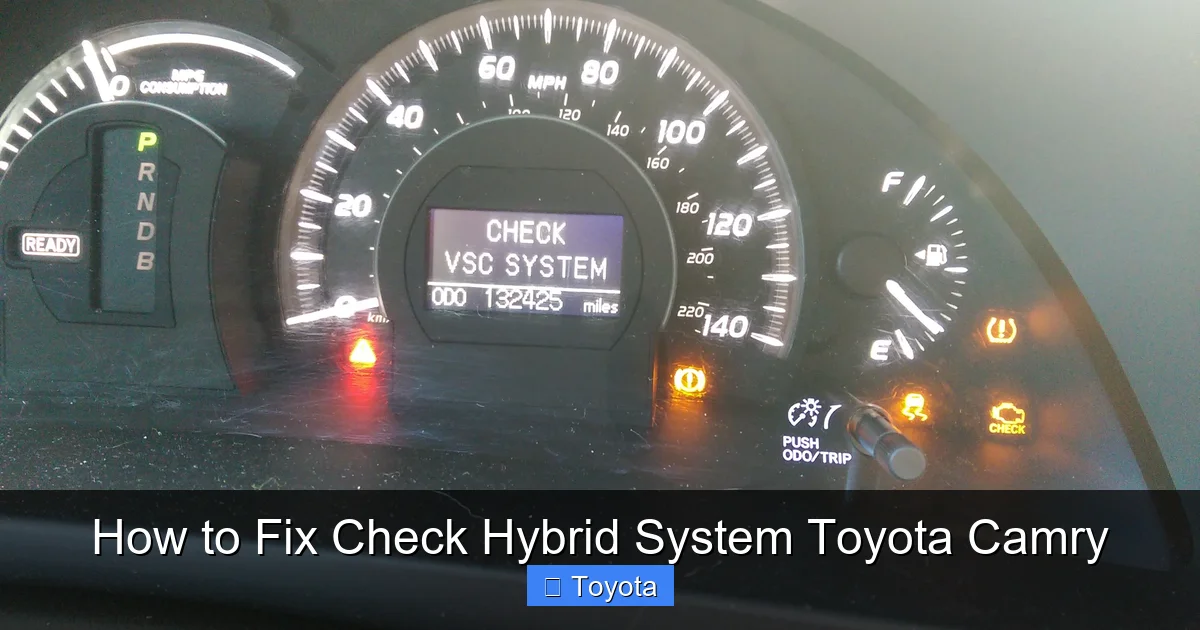
The most effective way to diagnose the issue is by reading the error codes stored in the ECU. You’ll need an OBD2 scanner that can read hybrid-specific codes (not all scanners can).
Plug the scanner into the OBD2 port (usually under the dashboard near the steering wheel) and turn the ignition to “ON” (don’t start the engine). The scanner will display codes like P0A80 (HV battery deterioration) or P3190 (inverter fault).
Write down the codes and research them using Toyota-specific resources or forums. This will point you toward the exact component at fault.
Step 3: Inspect Fuses and Relays
A blown fuse or faulty relay can disrupt power to critical systems. Check the main fuse box under the hood and the interior fuse panel. Look for:
– Blown fuses (use a fuse puller or needle-nose pliers)
– Corroded or loose relays
Refer to your owner’s manual for the fuse layout. Replace any damaged fuses with the correct amperage.
Step 4: Perform a System Reset
Sometimes, the warning is triggered by a temporary glitch. A power reset can clear it.
Here’s how:
1. Turn off the vehicle and remove the key (or press the power button to “OFF”).
2. Disconnect the negative terminal of the 12V battery.
3. Wait 10–15 minutes (this allows capacitors to discharge).
4. Reconnect the terminal and start the car.
If the light is gone, it may have been a software hiccup. If it returns, the issue is likely hardware-related.
Step 5: Check the HV Battery and Cooling System
If the 12V battery and fuses are fine, inspect the HV battery area (usually under the rear seats). Look for:
– Unusual odors (burning or chemical smells)
– Leaks or corrosion
– Blocked air vents
Also, check the cooling fans near the inverter (often in the engine bay). Make sure they spin when the car is on. If not, the fan motor or relay may be faulty.
Caution: Do not open the HV battery pack yourself. High-voltage components can be deadly. If you suspect HV battery issues, consult a professional.
Step 6: Monitor Driving Behavior and Conditions
Sometimes, the warning appears due to extreme conditions. For example:
– Driving in very hot or cold weather
– Frequent short trips (prevents the battery from fully charging)
– Aggressive acceleration (stresses the motor and inverter)
Try driving more gently for a few days and see if the light goes away. If it does, you may just need to adjust your habits.
When to Visit a Toyota Technician
Visual guide about How to Fix Check Hybrid System Toyota Camry
Image source: cararac.com
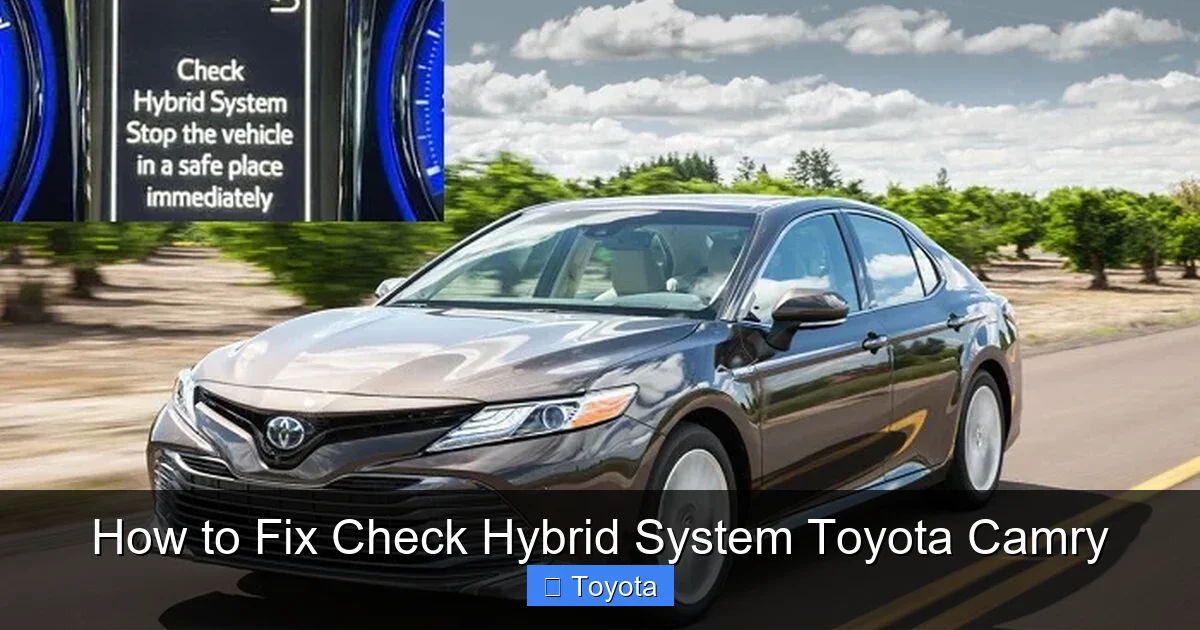
While many issues can be resolved at home, some require specialized tools and expertise. Here’s when you should seek professional help:
High-Voltage Component Repairs
Any work involving the HV battery, inverter, or motor should be handled by a certified hybrid technician. These components carry lethal voltages even when the car is off. Tampering with them can result in severe injury or death.
Persistent or Recurring Warnings
If the light keeps coming back after a reset or minor fix, there’s likely an underlying issue that needs diagnosis. A technician can perform advanced tests, such as:
– HV battery cell balancing
– Inverter waveform analysis
– Software updates
Warranty or Recall Concerns
If your Camry is still under warranty (Toyota offers an 8-year/100,000-mile hybrid warranty), take it to an authorized dealer. They can fix the issue at no cost and ensure proper documentation.
Also, check for open recalls or TSBs related to your model year. Toyota has issued several updates for hybrid system software and cooling systems in recent years.
Unusual Noises or Smells
If you hear grinding, whining, or see smoke, stop driving immediately. These could indicate mechanical failure or electrical arcing—both serious safety hazards.
Preventative Maintenance Tips
The best way to avoid the “Check Hybrid System” warning is through regular maintenance. Here’s how to keep your Camry Hybrid running smoothly:
Follow the Maintenance Schedule
Toyota provides a detailed maintenance plan in your owner’s manual. Key items for hybrids include:
– HV battery coolant replacement (every 50,000–100,000 miles)
– Air filter changes (every 15,000–30,000 miles)
– Brake fluid inspection (every 2 years)
– 12V battery testing (annually after 3 years)
Sticking to the schedule prevents many common issues.
Keep the Cooling System Clean
Dust, dirt, and debris can clog the radiator and cooling fans. Every few months, use compressed air or a soft brush to clean the fins. This helps prevent overheating—especially in hot climates.
Drive Smart
Avoid aggressive driving. Smooth acceleration and braking reduce stress on the hybrid system and extend battery life. Also, try to take longer drives occasionally to allow the HV battery to fully charge.
Store the Vehicle Properly
If you won’t drive the car for more than a week, consider using a battery maintainer for the 12V battery. Long periods of inactivity can drain it and trigger warnings.
Use Quality Parts and Fluids
When replacing components, use OEM (original equipment manufacturer) or high-quality aftermarket parts. Cheap alternatives may not meet Toyota’s specifications and can cause system errors.
Real-World Examples and Success Stories
Let’s look at a few real cases where drivers fixed the “Check Hybrid System” warning:
Case 1: 2010 Camry Hybrid – 12V Battery Replacement
A driver noticed the warning light after a long weekend trip. The car started fine, but the light stayed on. He scanned the codes and found no major faults. Suspecting the 12V battery (which was 5 years old), he replaced it. The light disappeared the next day. Total cost: $120.
Case 2: 2015 Camry Hybrid – Inverter Cooling Fan Fix
A woman in Arizona experienced the warning during a heatwave. The car felt sluggish, and the AC wasn’t cooling well. A technician found the inverter cooling fan wasn’t working. Replacing the fan motor ($250) resolved the issue.
Case 3: 2008 Camry Hybrid – Software Update
A driver had the warning for weeks. After multiple resets, he took it to a dealer. They performed a free software update under a TSB. The light never returned.
These stories show that many issues are fixable—and often less expensive than expected.
Conclusion
The “Check Hybrid System” warning in your Toyota Camry Hybrid doesn’t have to be a nightmare. With the right knowledge and tools, you can diagnose and often fix the problem yourself—starting with the 12V battery, fuses, and a simple system reset. Understanding the hybrid system’s components and how they interact helps you respond quickly and confidently.
Remember, safety comes first. Never attempt to service high-voltage components without proper training. When in doubt, consult a certified Toyota technician. Regular maintenance, smart driving habits, and prompt attention to warnings will keep your Camry Hybrid running efficiently for years to come.
By following this guide, you’re not just fixing a warning light—you’re taking control of your vehicle’s health and ensuring a smoother, more reliable ride. So the next time that light appears, you’ll know exactly what to do.
Frequently Asked Questions
Can I still drive my Camry Hybrid with the “Check Hybrid System” light on?
Yes, in many cases you can drive short distances, but it’s not recommended for long. The car may run on the gasoline engine alone, but performance and fuel economy will suffer. Have it checked as soon as possible.
How much does it cost to fix a “Check Hybrid System” issue?
Costs vary widely. A 12V battery replacement is $100–$200, while an inverter repair can exceed $2,000. Most issues fall in the $200–$800 range, depending on the cause and labor rates.
Will disconnecting the 12V battery reset the warning light?
Yes, a power reset by disconnecting the 12V battery can clear temporary glitches. Wait 10–15 minutes before reconnecting. However, if the underlying issue remains, the light will return.
Is the “Check Hybrid System” light covered under warranty?
Yes, if your vehicle is within the 8-year/100,000-mile hybrid warranty period. Toyota covers the HV battery, inverter, and related components. Check your warranty booklet for details.
Can a bad gas cap cause this warning?
Unlikely. The “Check Hybrid System” light is specific to the hybrid powertrain. A loose gas cap usually triggers the “Check Engine” light instead.
How often should I service my Camry Hybrid?
Follow Toyota’s recommended schedule: every 5,000–10,000 miles for oil changes, and every 15,000–30,000 miles for air filters and inspections. HV battery coolant should be replaced every 50,000–100,000 miles.
