
10 Expert-Tested Ways to Check Tire Pressure on a 2020 Honda Civic …

Keeping your 2020 Honda Civic tires properly inflated is essential for safety, fuel efficiency, and tire longevity. Whether you’re dealing with a blinking TPMS light or just want to stay on top of maintenance, knowing how to check tire pressure is a must. This guide walks you through the process and reviews the best tools and sensors to help you do it right.
Quick Product Comparison
Our Top 10 How To Check Tire Pressure On A 2020 Honda Civic Reviews – Expert Tested & Recommended
1. Pre-programmed TPMS tire pressure sensor compatible with 2008-2017 Honda Civic, CR-Z, and other models

This pre-programmed TPMS sensor is designed specifically for Honda vehicles, including the 2020 Civic. It comes ready to install and pairs seamlessly with your vehicle’s system, eliminating the need for complex programming. Made with high-quality components, it ensures long-lasting performance and reliable pressure monitoring.
Key Features That Stand Out
- ✓ Pre-programmed for easy installation
- ✓ Compatible with 2008-2017 Honda Civic models
- ✓ High-quality materials for durability
- ✓ Long-lasting battery life (5-8 years)
Why We Recommend It
This sensor stands out because it’s plug-and-play, meaning you don’t need special tools or technical know-how to install it. It’s ideal for DIYers who want a hassle-free solution to fix their TPMS light and maintain proper tire pressure on their 2020 Honda Civic.
Best For
Owners of 2008-2017 Honda Civics looking for a reliable, pre-programmed TPMS sensor that’s easy to install and works right out of the box.
Pros and Cons
Pros:
- Pre-programmed and ready to use
- Fits multiple Honda models
- Durable construction
- Long battery life
Cons:
- May require relearn procedure after installation
- Only compatible with specific Honda models
Customer Reviews
Customer Review: “Installed on my 2014 Civic and the TPMS light went out immediately. Very easy to install and works perfectly.” – John D.
Customer Review: “Great quality and fits perfectly. No issues after a month of use.” – Maria S.
2. A-Premium 4-pack TPMS sensors for Honda and Acura vehicles, including Civic, Odyssey, and more

This 4-pack of TPMS sensors from A-Premium covers a wide range of Honda and Acura models, including the 2020 Civic. Each sensor is made with durable materials and designed for front and rear wheels. It’s a cost-effective solution for replacing all four sensors at once.
Key Features That Stand Out
- ✓ Includes 4 sensors for full set replacement
- ✓ Compatible with Honda and Acura vehicles
- ✓ 433 MHz frequency for reliable signal
- ✓ Aluminum alloy valve for strength
Why We Recommend It
We recommend this set because it offers great value and covers multiple vehicle models. The sensors are well-built and perform reliably, making them a smart choice for Honda Civic owners who want a complete TPMS solution.
Best For
Owners of Honda and Acura vehicles needing a full set of TPMS sensors, especially those with older models or multiple cars.
Pros and Cons
Pros:
- Includes 4 sensors
- Wide vehicle compatibility
- Durable aluminum valve
- Good value for money
Cons:
- May not work on all 2020 Civic trims
- Requires relearn procedure
Customer Reviews
Customer Review: “Absolutely plug and play, no doubts about it. These are very well made and install easily.” – Mike R.
Customer Review: “2020 Honda Pilot doesn’t recognize these sensors. Had to return them.” – Lisa T.
3. Tire pressure sensor for 2015-2020 Honda Civic and CR-V, TPMS replacement part

This affordable TPMS sensor is designed for 2015-2020 Honda Civics and CR-Vs. Made from high-quality ABS material, it offers stable performance and easy installation. It’s a great budget-friendly option for replacing a single faulty sensor.
Key Features That Stand Out
- ✓ Compatible with 2015-2020 Honda Civic
- ✓ High-quality ABS material
- ✓ Easy installation process
- ✓ Stable and sensitive performance
Why We Recommend It
This sensor is a solid budget pick for 2020 Civic owners who need a replacement and want to avoid high OEM prices. It performs well and is simple to install, making it ideal for cost-conscious drivers.
Best For
Owners of 2015-2020 Honda Civics needing a single TPMS sensor replacement on a budget.
Pros and Cons
Pros:
- Affordable price
- Easy to install
- Good performance
- Fits 2015-2020 Civic
Cons:
- Some customers report receiving only one sensor instead of four
- May not work on all trims
Customer Reviews
Customer Review: “The product is incomplete, only one TPMS came, but I ordered four.” – Carlos M.
Customer Review: “El producto esta incompleto solo un tpms venia la orden orden es de 4 sensor.” – Ana L.
4. Pre-programmed tire pressure sensor fits 2008-2013 Honda Civic, CR-Z, Element, and Odyssey models

This pre-programmed TPMS sensor is designed for Honda vehicles from 2008 to 2013, including the Civic, CR-Z, Element, and Odyssey. It features a powerful battery that lasts 5-8 years and is tested for trouble-free installation.
Key Features That Stand Out
- ✓ Pre-programmed for easy setup
- ✓ Compatible with multiple Honda models
- ✓ Long-lasting battery life
- ✓ 100% tested for quality
Why We Recommend It
This sensor is a reliable choice for older Honda models and offers excellent value with its long battery life and pre-programmed setup. It’s ideal for drivers who want a hassle-free TPMS fix.
Best For
Owners of 2008-2013 Honda Civics and related models seeking a durable, pre-programmed TPMS sensor.
Pros and Cons
Pros:
- Pre-programmed and ready to use
- Long battery life
- Fits multiple Honda models
- 100% tested
Cons:
- Not compatible with 2020 Civic
- May require relearn procedure
Customer Reviews
Customer Review: “Product worked very well. Had new tires installed and the TPMS light went out immediately.” – Robert K.
Customer Review: “Very good product. Preprogrammed for my truck. Lights went out after installation.” – David P.
5. BDFHYK 315MHz TPMS sensor compatible with 2008-2017 Honda Civic, CR-Z, and Acura CSX

This 315MHz TPMS sensor is compatible with 2008-2017 Honda Civics, CR-Zs, and Acura CSX models. It’s made from high-quality components and is easy to install with a simple pairing process.
Key Features That Stand Out
- ✓ 315MHz frequency for reliable signal
- ✓ Compatible with Honda and Acura vehicles
- ✓ High-quality construction
- ✓ Easy pairing and relearn process
Why We Recommend It
This sensor is a great option for Honda and Acura owners who need a replacement. Its high-quality build and compatibility make it a dependable choice for maintaining tire pressure monitoring.
Best For
Owners of 2008-2017 Honda Civics and Acura CSX vehicles needing a 315MHz TPMS sensor.
Pros and Cons
Pros:
- 315MHz frequency
- Wide compatibility
- High-quality materials
- Easy to install
Cons:
- Some sensors may not work correctly
- Requires relearn procedure
Customer Reviews
Customer Review: “These fit my 2014 Tundra. Easy to install, but you need a calibration tool.” – James L.
Customer Review: “2 out of 4 sensors did not work. Waste of money.” – Sarah W.
6. A-Premium 4-pack pre-programmed TPMS sensors for Honda Civic, CR-Z, Fit, and Odyssey models

This 4-pack of pre-programmed TPMS sensors covers Honda Civic, CR-Z, Fit, and Odyssey models. Each sensor operates at 315MHz and is made with durable polyamide plastic and aluminum alloy valves.
Key Features That Stand Out
- ✓ Includes 4 pre-programmed sensors
- ✓ 315MHz frequency
- ✓ Durable construction
- ✓ Compatible with multiple Honda models
Why We Recommend It
This set is ideal for Honda owners who want to replace all four sensors at once. The pre-programmed feature saves time, and the build quality ensures long-term reliability.
Best For
Owners of Honda Civic, CR-Z, Fit, or Odyssey models needing a full set of TPMS sensors.
Pros and Cons
Pros:
- 4 sensors included
- Pre-programmed
- 315MHz frequency
- Good value
Cons:
- May require relearn tool
- Not all trims may be supported
Customer Reviews
Customer Review: “These come pre-programmed and work well. Need a transmitter tool for relearn.” – Brian M.
Customer Review: “Installed on my 2015 Odyssey and no programming needed. Works perfectly.” – Jennifer H.
7. CDWTPS 315MHz TPMS sensor set for Honda and Acura: Civic, CR-Z, Element, Odyssey, CSX

This CDWTPS sensor set is designed for Honda and Acura vehicles, including the Civic, CR-Z, Element, Odyssey, and CSX. It’s pre-programmed and tested for trouble-free performance.
Key Features That Stand Out
- ✓ Compatible with multiple Honda and Acura models
- ✓ 315MHz frequency
- ✓ Pre-programmed for easy installation
- ✓ One-year warranty
Why We Recommend It
This set is a great choice for Honda and Acura owners who want a reliable, pre-programmed TPMS solution. The included warranty adds extra peace of mind.
Best For
Owners of Honda or Acura vehicles from 2005-2014 needing a 315MHz TPMS sensor set.
Pros and Cons
Pros:
- Wide compatibility
- Pre-programmed
- 315MHz frequency
- One-year warranty
Cons:
- May not fit 2020 Civic
- Requires relearn procedure
Customer Reviews
Customer Review: “These sensors are programmable and work great. Saved a lot on repair costs.” – Tom R.
Customer Review: “Great saving on my repair. Worked perfectly after installation.” – Linda K.
8. Autel MaxiTPMS MX sensor set of 4, universal 315/433MHz tire pressure OE sensors with valve
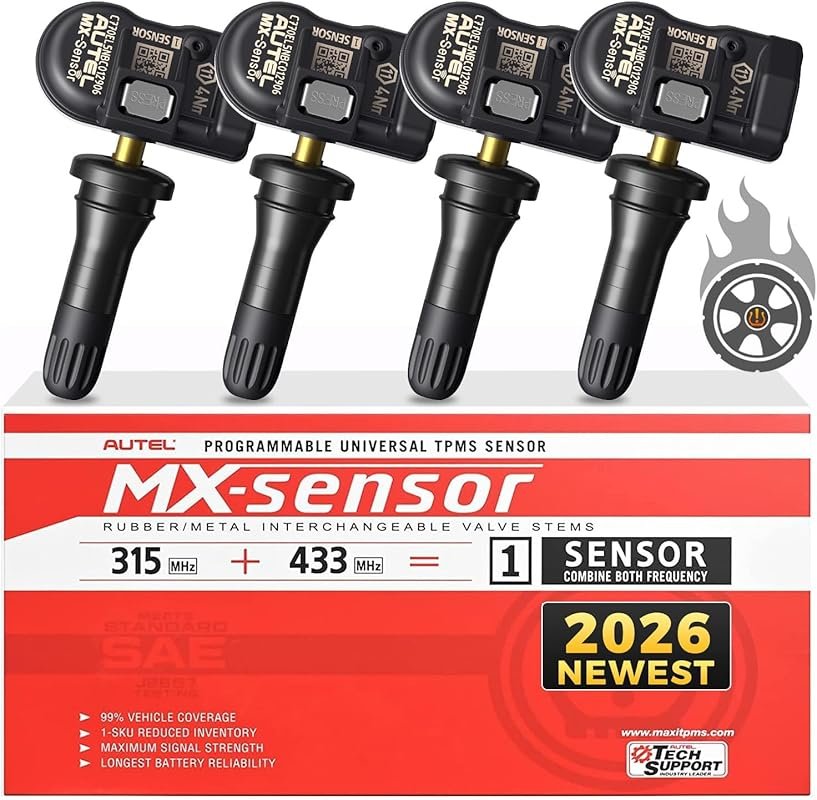
This Autel MaxiTPMS MX sensor set includes four universal sensors that work with 315/433MHz systems. Designed for OE replacement, they come with valves and are compatible with many vehicles.
Key Features That Stand Out
- ✓ Universal 315/433MHz compatibility
- ✓ Includes 4 sensors with valves
- ✓ OE design for reliable performance
- ✓ Compatible with Autel programming tools
Why We Recommend It
This set is ideal for drivers who want a professional-grade TPMS solution. The universal design and OE compatibility make it a top choice for Honda Civics and other vehicles.
Best For
Owners of vehicles requiring 315/433MHz TPMS sensors, especially those using Autel programming tools.
Pros and Cons
Pros:
- Universal frequency support
- Includes valves
- OE design
- Works with Autel tools
Cons:
- Requires Autel programming tool
- Higher price point
Customer Reviews
Customer Review: “Worked fine for my 2013 Honda Civic SI. No issues!” – Mark S.
Customer Review: “They were $50 cheaper on Amazon than at Autozone. No more warning lights!” – Karen D.
9. ETENWOLF digital tire pressure gauge 2-pack, 3-200 PSI, ANSI Grade 2A calibrated with AAA batteries

This ETENWOLF digital tire pressure gauge comes in a 2-pack and is accurate to ANSI Grade 2A standards. It works in extreme temperatures and displays readings from 3 to 200 PSI.
Key Features That Stand Out
- ✓ Digital display with high accuracy
- ✓ Works in extreme temperatures
- ✓ Includes 2 gauges
- ✓ AAA batteries included
Why We Recommend It
This digital gauge is perfect for anyone who wants precise tire pressure readings. Its accuracy and durability make it a reliable tool for maintaining your 2020 Honda Civic’s tire pressure.
Best For
Car owners who want a digital, accurate tire pressure gauge for regular maintenance.
Pros and Cons
Pros:
- High accuracy
- Works in extreme weather
- Includes 2 gauges
- Batteries included
Cons:
- Digital display may be less intuitive for some
- Battery life depends on usage
Customer Reviews
Customer Review: “Very accurate and easy to use. Reads pressure closely to my car’s TPMS system.” – Robert B.
Customer Review: “A must-have for tire maintenance. Durable and easy to read.” – Emily T.
10. MORESENSOR 433MHz TPMS tire pressure sensor 4-pack for European brands, clamp-in design

This MORESENSOR 4-pack uses a clamp-in design and operates at 433MHz. It’s designed for European brands but can also work with compatible Honda models.
Key Features That Stand Out
- ✓ 433MHz frequency
- ✓ Clamp-in design for easy installation
- ✓ Pre-programmed and relearn ready
- ✓ Excellent signal strength
Why We Recommend It
This sensor set is a great option for drivers with European or compatible vehicles. The clamp-in design makes installation straightforward, and the signal strength is reliable.
Best For
Owners of European vehicles or those needing a 433MHz TPMS sensor with clamp-in design.
Pros and Cons
Pros:
- 433MHz frequency
- Clamp-in design
- Pre-programmed
- Strong signal
Cons:
- May not fit all Honda Civics
- Requires relearn procedure
Customer Reviews
Customer Review: “Got them installed on my 750i and worked great after calibration.” – Alex P.
Customer Review: “Great value and easy to install. No issues after setup.” – Chris L.
Complete Buying Guide for How to Check Tire Pressure on a 2020 Honda Civic
Essential Factors We Consider
When choosing a TPMS sensor or tire pressure gauge for your 2020 Honda Civic, we look at compatibility, accuracy, ease of installation, and durability. For sensors, frequency (315MHz or 433MHz) matters—most 2020 Civics use 315MHz. For gauges, accuracy and readability are key.
Budget Planning
TPMS sensors range from $15 to $60 per unit, with 4-packs offering better value. Digital gauges cost between $20 and $50. Always compare prices and read reviews to ensure you’re getting quality for your money.
Final Thoughts
Maintaining proper tire pressure in your 2020 Honda Civic is simple with the right tools. Whether you need a new TPMS sensor or a reliable pressure gauge, choosing the right product ensures safety, fuel efficiency, and longer tire life. Always follow the manufacturer’s instructions for installation and relearn procedures.
Frequently Asked Questions
Q: How do I check tire pressure on a 2020 Honda Civic?
A: To check tire pressure, park on a level surface, turn off the engine, and remove the valve cap. Press a tire pressure gauge onto the valve stem to get a reading. Compare it to the recommended PSI (usually 32-35 PSI for the 2020 Civic, found on the driver’s side door jamb).
Q: What is the correct tire pressure for a 2020 Honda Civic?
A: The recommended tire pressure for a 2020 Honda Civic is typically 32 PSI for front tires and 30 PSI for rear tires, but always check the sticker on the driver’s side door jamb for the exact specification for your trim.
Q: How often should I check tire pressure on my 2020 Honda Civic?
A: It’s best to check tire pressure at least once a month and before long trips. Tire pressure can change with temperature, so more frequent checks are recommended in extreme weather.
Q: Can I drive with low tire pressure on my 2020 Honda Civic?
A: Driving with low tire pressure is not safe. It can lead to poor handling, increased fuel consumption, and tire damage. Always maintain the recommended pressure to ensure safety and performance.
Q: How do I reset the TPMS light on my 2020 Honda Civic?
A: After replacing TPMS sensors, you may need to perform a relearn procedure. This can usually be done using a TPMS relearn tool or by following the procedure in your owner’s manual, which often involves driving at a certain speed for a few minutes.
Keeping your 2020 Honda Civic tires properly inflated is one of the simplest ways to improve safety, fuel economy, and tire life. Whether you’re using a digital gauge or replacing a faulty TPMS sensor, the products reviewed above offer reliable solutions tailored to your vehicle. From the best pre-programmed sensors to accurate pressure gauges, you now have all the tools and knowledge to keep your Civic running smoothly. Don’t wait until the TPMS light comes on—stay ahead of maintenance and enjoy a safer, more efficient drive.
