How to Check Oil in a Bmw

Contents
- 1 Key Takeaways
- 2 📑 Table of Contents
- 3 The Two Methods: Electronic iDrive vs. Traditional Dipstick
- 4 Step-by-Step Guide: The Complete “How-To” for Your BMW
- 5 What the Reading Means & How to Add Oil Correctly
- 6 Common Pitfalls and Troubleshooting
- 7 When and How Often Should You Check?
- 8 Conclusion: Your Proactive Maintenance Power
- 9 Frequently Asked Questions

Car Wireless Charger Mount

Engine Oil Additive

Car Battery Tester
Foam Cannon
Checking the oil in your BMW is a non-negotiable maintenance task that takes under two minutes but can save you from a catastrophic engine failure. Unlike many older cars, BMWs use either a traditional dipstick or, more commonly, an electronic oil level sensor accessed via the iDrive system. The process differs significantly from a standard car, requiring the engine to be at specific temperatures and on level ground for an accurate reading. Never guess your oil level—master this simple procedure to ensure your M3, X5, or 3 Series runs smoothly for years.
Welcome, BMW owner! You’ve chosen a car that represents the pinnacle of driving dynamics and engineering precision. That precision doesn’t happen by accident; it’s maintained through meticulous care, and nothing is more fundamental to your engine’s health than proper oil levels. The phrase “check oil” might sound simple, but on a BMW, it’s a specific ritual. Unlike the straightforward dipstick of a 1990s Honda, your Bimmer—whether it’s a sporty 2 Series Gran Coupe, a luxurious 7 Series, or a robust X5—has its own protocol. Getting it wrong means you might think you’re fine when you’re actually running on empty, or worse, overfilling and aerating your oil, causing foaming and pressure loss. This guide will walk you through every detail, so you can check your oil with absolute confidence.
First things first: why is this so important? Your BMW’s engine is a high-performance machine, often with twin-scroll turbos, variable valve timing (VANOS), and high compression ratios. These components operate under immense stress and heat. Oil is its lifeblood—providing lubrication, cooling, cleaning, and protection. Running low even for a short distance can cause irreversible wear. An overfilled sump can cause the crankshaft to whip air into the oil, creating foam that doesn’t lubricate properly, leading to the same kind of damage. The good news? The check itself is quick. The key is doing it the BMW way. We’ll cover both the modern electronic method and the classic dipstick method, troubleshoot common issues, and give you pro-tips that will make you feel like a certified technician.
Key Takeaways
- Method Varies by Model Year: Newer BMWs (roughly 2006+) primarily use an electronic oil level sensor checked via the iDrive menu, while some older models like early E46s and certain SUVs still have a traditional dipstick under the hood.
- Engine Temperature is Critical: For an accurate reading, the engine must be fully warmed up and then turned off for 5-10 minutes, allowing oil to drain back into the sump. Checking when cold gives a false high reading.
- Level Ground is Mandatory: Your BMW must be parked on a perfectly flat, level surface. Even a slight incline will cause the oil to pool, giving an inaccurate measurement on the dipstick or sensor.
- Know Your Oil Specification: BMW engines require specific oil standards (like BMW LL-04 or LL-17 FE+). Using the wrong oil, even if the level is correct, can damage sensitive components like VANOS and turbos.
- Electronic Systems Have Quirks: The iDrive oil check may show “—” or “0.0” if the engine isn’t at operating temp, the car isn’t level, or the sensor is faulty. Don’t panic—warm it up and try again on level ground.
- Check the Dipstick Correctly: If your model has a dipstick, pull it, wipe it clean, reinsert it fully, then pull it again to read. The BMW dipstick has “MIN” and “MAX” marks; the oil level should be between them, not at the very top.
- Low Oil = Immediate Action: If the level is at or below “MIN,” add the correct oil immediately and recheck. Do not drive with low oil. If the oil light comes on, stop the engine as soon as it is safe to do so.
📑 Table of Contents
The Two Methods: Electronic iDrive vs. Traditional Dipstick
BMW transitioned from dipsticks to electronic oil level sensors in the mid-2000s, but the change wasn’t overnight. Your first step is to identify which system your car has. This isn’t always obvious, so we’ll break it down.
How to Identify Your System
Open your hood and look for the oil filler cap. On the vast majority of BMWs from 2006 onward, you will not see a dipstick tube near it. The oil is checked via the car’s computer. However, there are notable exceptions. Many BMW SUVs (X3, X5, X6) from certain model years retained a dipstick longer than sedans. Some early E90/E92 3 Series models (2006-2008) have a dipstick, while later ones do not. The most reliable way is to consult your owner’s manual. If you don’t have it, a quick online search for “[Your Year, Make, Model] oil dipstick location” will confirm it. If you can’t find a yellow or orange looped handle near the engine block, you almost certainly have the electronic system.
The Modern Standard: Checking Oil via iDrive
For cars without a dipstick, the oil level is monitored by a sensor in the oil pan. The reading is displayed on the iDrive screen. Here is the precise, step-by-step procedure that must be followed for an accurate reading.
- Step 1: Bring the Engine to Full Operating Temperature. This is the most common mistake. Drive your BMW normally for at least 15-20 minutes until the coolant temperature gauge is in the normal range (typically the middle tick or the blue area disappears). The engine oil must be hot and thin for the sensor to work correctly.
- Step 2: Park on a Perfectly Level Surface. Find a flat garage floor or a level spot in your driveway. Use a bubble level if you’re unsure. A hill or even a significant crown in the road will throw off the reading.
- Step 3: Let the Engine Idle for 5 Minutes. After parking, leave the engine running in Park (or Neutral for manuals). This allows the hot oil to circulate and settle. Do not turn the engine off yet.
- Step 4: Access the iDrive Menu. With the engine still running, press the “Menu” button on your iDrive controller. Navigate to “Vehicle Info” or “Service” (the exact name varies by iDrive version: CCC, CIC, or iDrive 7/8). Look for “Oil Level” or “Engine Oil Level.”
- Step 5: Interpret the Reading. The display will show either a bar graph with “MIN” and “MAX” or a numerical value (e.g., “0.5 qt below max”). The correct reading is when the bar is centered between MIN and MAX, or the display says “Oil level OK” or shows a value very close to zero (e.g., +0.0 or -0.1). If it shows “—” or “0.0” or “Check oil level,” it means the conditions aren’t met (engine not hot, not level, sensor fault). Re-check after idling longer or ensuring levelness.
Pro Tip: Some BMWs will also show an oil life percentage (oil service indicator) in this same menu. That’s a separate calculation based on time and mileage. You must check the level, not just the service reminder. A car with 90% oil life can still be a quart low.
The Classic Method: Using the Dipstick
If your BMW has a dipstick, the process is similar to other cars but with BMW-specific nuances. The dipstick is often located near the front of the engine, sometimes under a small plastic cover, and has a bright yellow or orange T-handle.
- Step 1: Warm the Engine. As with the electronic system, the engine must be at full operating temperature. Drive it for 15-20 minutes.
- Step 2: Park Level and Wait. Park on level ground. Turn the engine off and wait exactly 5-10 minutes. This is critical. The oil must drain fully down the dipstick tube for a true reading. Waiting too long (e.g., overnight) can cause oil to drain completely into the sump, giving a false low reading.
- Step 3: Locate and Pull the Dipstick. Open the hood. Find the dipstick tube (often with a yellow cap). Pull the dipstick all the way out.
- Step 4: Wipe, Reinsert, and Read. Wipe the end of the dipstick clean with a lint-free cloth. Now, this is the BMW-specific part: push the dipstick all the way back into the tube until it seats fully. Then, pull it out again and read the oil level. The BMW dipstick has two notches or a cross-hatched area marked “MIN” and “MAX.” The oil film should be clearly visible between these two marks. It should not be at the very top of the stick (MAX), as thermal expansion will cause it to rise when hot.
Important: If the oil is below MIN, you must add oil immediately. If it’s above MAX, you must drain some oil. Both conditions are serious. The BMW dipstick reading is for hot oil after the 5-10 minute wait. Never check it when the engine is stone cold.
Step-by-Step Guide: The Complete “How-To” for Your BMW
Let’s combine everything into a fail-safe workflow you can follow every time. This section is your master checklist.
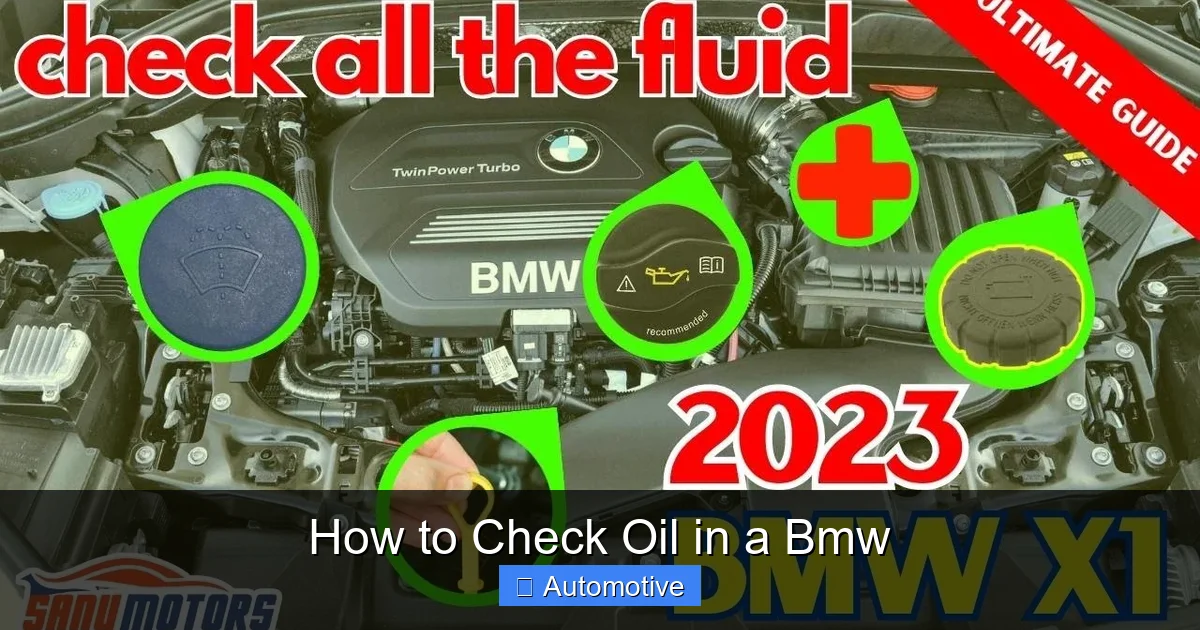
Visual guide about How to Check Oil in a Bmw
Image source: i.ytimg.com
Pre-Check Preparation: The Foundation of Accuracy
Before you even pop the hood, you need to set the stage. Rushing this part guarantees a wrong reading.
- Drive to Warm Up: Don’t just start the car and let it idle. Idling doesn’t warm the oil as effectively as driving. Take a normal 10-15 minute drive, getting the oil up to its full operating temperature of around 230°F (110°C). You’ll know it’s hot when the temperature gauge needle is steady in the middle.
- Find Your Spot: Your parking spot is part of the procedure. Use a level, paved surface. Grass or a sloped driveway is unacceptable. If your garage floor isn’t level, use a long spirit level to find a spot that is.
- Gather Your Supplies: Have a clean microfiber cloth, a funnel, and the correct BMW-approved motor oil (e.g., Mobil 1 0W-40 LL-01 or Pennzoil Platinum Euro L, depending on your engine) within reach. It’s also smart to have latex gloves.
Executing the Check: Electronic System in Detail
Now that you’re parked, level, and the engine is hot, here is the exact sequence for an iDrive check.
- Leave the engine running in Park (P). Do not turn it off.
- Press the iDrive “Menu” button. Use the controller to scroll to “Vehicle Info.” (On iDrive 7/8, it might be “My Vehicle” > “Vehicle Settings” > “Service Interval”).
- Select “Oil Level” or “Engine Oil Level.”
- The system may take 10-30 seconds to query the sensor. Be patient.
- Read the result. A healthy system will show a horizontal bar with a marker. The marker should be in the green zone between MIN and MAX. Some models show a numeric value; it should be within +/- 0.2 quarts of “0.0” or “OK.”
- If it shows “Oil level below minimum” or a red bar, you must add oil now. Do not wait. Turn the engine off, open the hood, and add oil through the filler cap (see next section). Then restart the engine and re-check.
- If it shows “Oil level above maximum,” you have overfilled. This is less common but serious. You will need to drain some oil. This usually requires a professional or a careful DIY drain via the drain plug, which is messy. Do not drive the car in this state.
- If it shows “—” or “Check oil level,” the conditions aren’t met. Ensure the engine is still hot and idling. If it persists, park on a more obviously level spot and try again. If it still fails, the sensor may be faulty, and you should use the dipstick method (if available) or consult a mechanic.
Executing the Check: Dipstick Method in Detail
For the models that still have one, here is the precise, BMW-specific dipstick ritual.
- With the engine still hot from your drive, park on level ground and turn the engine off.
- Set a timer for 7 minutes. This is the sweet spot for most BMWs. It allows hot oil to drain fully but not so long that it all drains away.
- After 7 minutes, open the hood. Locate the dipstick. It’s usually on the driver’s side of the engine block, near the front, with a bright-colored looped handle.
- Pull the dipstick straight up and out. It may have a clip holding it; release it.
- Using your microfiber cloth, wipe the entire end of the dipstick clean. You want to remove all oil residue.
- Now, the critical reinsertion: Push the dipstick all the way back into its tube. Make sure it goes in straight and fully. You should feel it seat. This step ensures the dipstick is properly aligned with the tube for an accurate reading.
- Immediately pull the dipstick back out again. Hold it vertically and read the oil film on the end.
- Look at the marked area. The oil level should be between the “MIN” and “MAX” notches. The ideal spot is the middle of that range. If the oil is just touching the bottom of the MIN notch, you are low. If it’s at the top of the MAX notch or above, you are overfilled.
- If adding oil, do so very slowly, a half-quart at a time, re-checking after each addition. It’s easy to overfill.
- Once done, push the dipstick back in firmly, close the hood, and you’re finished.
What the Reading Means & How to Add Oil Correctly
You’ve got your reading. Now what? Understanding the numbers and taking correct action is just as important as the check itself.

Visual guide about How to Check Oil in a Bmw
Image source: i.ytimg.com
Decoding the Levels: MIN, MAX, and the Sweet Spot
The space between MIN and MAX on a BMW dipstick or the “OK” zone on the iDrive represents roughly 1.0 to 1.2 quarts of oil capacity. Your goal is the middle. Why not fill it to MAX? Because oil expands significantly when hot. If you fill it to MAX when hot, as the engine cools, the oil contracts, and the level will drop, potentially into the danger zone by the next time you check. Filling to the midpoint gives a safe buffer for thermal expansion and contraction. The electronic system’s “0.0” or centered bar is calibrated for this same ideal hot level.
The “How-To” of Adding Oil: A Step-by-Step
If your level is at or below MIN, you must add oil. Here is the safe procedure.
- 1. Identify the Correct Oil: This is paramount. Look under your hood for the oil cap. It often says the specification, like “BMW Long-Life-01” or “LL-04 FE+.” You can also find it in your owner’s manual. If unsure, a BMW dealership or reputable parts store can look up your VIN. Using generic oil or the wrong specification can damage your engine. For most post-2010 BMWs, a high-quality full synthetic 0W-30 or 0W-40 meeting BMW LL-04 is standard. Some newer engines require LS or FE+ variants.
- 2. Prepare: Have your funnel and a quart of the correct oil ready. Open the oil filler cap. It’s usually a large black or yellow cap on the top of the engine valve cover, often with an oil can symbol.
- 3. Add Slowly: Insert the funnel. Pour in no more than half a quart (0.5L) at a time. After each half-quart, wait 30 seconds for the oil to drain down the side of the pan. Then, re-check your level using the method for your car (iDrive or dipstick).
- 4. Stop at the Middle: Continue this slow process until the level is solidly in the middle of the safe zone. Do not overfill. It is much easier to add a little more than to remove excess.
- 5. Clean Up: Replace the oil cap securely. Wipe any spilled oil from the engine bay. A clean engine makes future leak checks easier.
- 6. Reset Your Mind: Note the mileage and date in a logbook or your phone. This helps you track consumption. A healthy engine should not use more than a quart between 3,000-5,000 mile oil changes. If it’s using a quart every 1,000 miles, you have a problem that needs diagnosis.
Common Pitfalls and Troubleshooting
Even with the best instructions, things can go wrong. Let’s troubleshoot the most frequent issues BMW owners face.
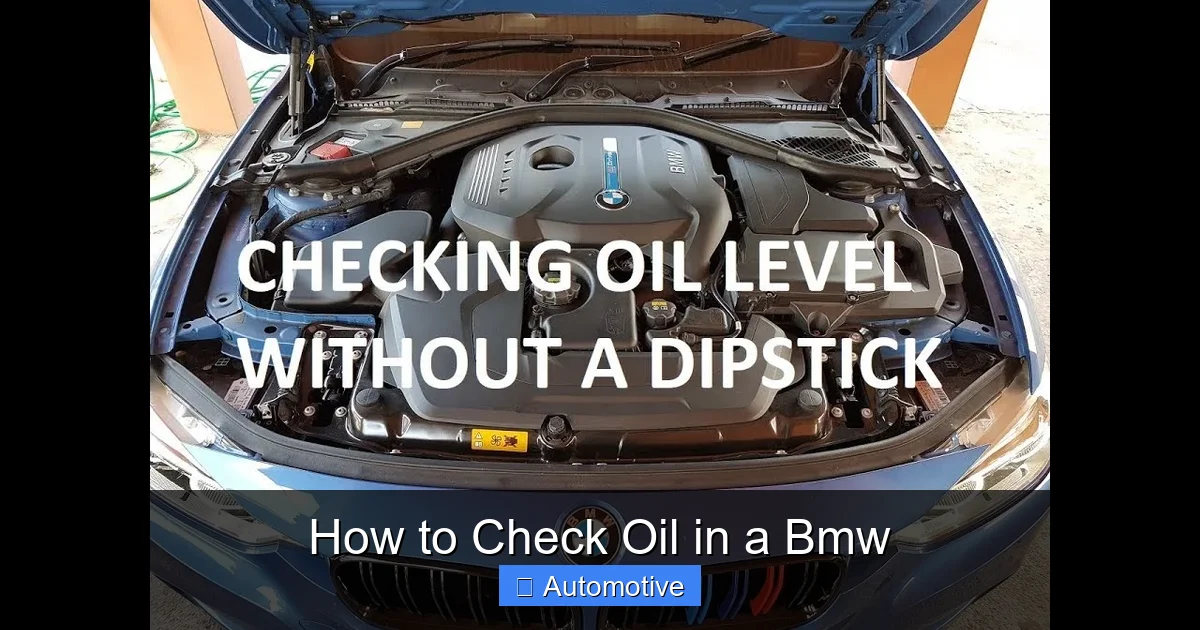
Visual guide about How to Check Oil in a Bmw
Image source: i.ytimg.com
“My iDrive Shows ‘—‘ or ‘Check Oil Level’!”
This is the #1 frustration. The sensor is finicky. First, ensure you followed all pre-check rules: engine was fully warmed by driving (not just idling), car is on level ground, and engine is still idling. If it still fails, try this: turn the engine off, open and close the driver’s door (this resets some modules), restart the engine, and try the menu again after 60 seconds of idle. If it persists, your car likely has a faulty oil level sensor. This is a known failure point on many BMWs. You can still check oil the old-fashioned way if you have a dipstick. If not, a mechanic can diagnose the sensor or perform a manual check via the drain plug.
“My Dipstick Shows No Oil at All!”
Panic mode. Before you assume a catastrophic leak, consider this: you may have checked too soon after shutdown, or the car wasn’t level. The oil needs time to drain down the tube. If you turned the engine off and immediately pulled the dipstick, it will read low or dry. Wait the full 7-10 minutes on a level surface and try again. If it’s still bone dry, do not start the engine. You likely have a major leak or the engine has consumed all oil (burning from piston rings or leaking from a seal). Call for a tow.
Oil Light Comes On But Level is Fine
This indicates a problem with oil pressure, not necessarily level. Low oil pressure can be caused by a failing oil pump, a clogged oil filter, worn engine bearings, or using the wrong viscosity oil (too thin). An oil pressure warning is an EMERGENCY. If the red oil pressure light illuminates, pull over safely and shut off the engine immediately. Do not drive. Have the car towed to a shop. This is different from the “oil level” warning, which is yellow/amber and suggests you add oil soon.
My BMW Burns/Consumes Oil
Some oil consumption is normal, especially in high-performance turbocharged engines (like the N54, B58, S55). BMW considers up to 1 quart per 1,000 miles acceptable for some models under hard use. However, consumption of more than 1 quart per 3,000 miles is excessive and indicates a problem. Common causes include: worn piston rings, leaking valve cover gaskets (very common on N55/N54 engines), leaking camshaft seals, or turbocharger seals. If you’re adding oil between services, mention it to your mechanic. For a deeper dive into maintenance schedules, you can read our guide on how often to change oil in a BMW 3 Series, which also touches on consumption patterns. Keeping the oil at the correct level is the #1 way to mitigate damage from consumption until you can fix the leak.
When and How Often Should You Check?
Now that you know how, let’s talk about frequency. The old rule “check oil every time you get gas” is good advice, but for a BMW, we can be more strategic.
The Ideal Check Schedule
For a daily-driven BMW that isn’t leaking or burning oil:
- Monthly: A quick level check via iDrive or dipstick. This is your baseline habit.
- Before Long Trips: Always check a day before a road trip of over 200 miles. Top it off to the middle of the range.
- Seasonal Changes: Check when seasons shift. Temperature extremes can affect readings and exacerbate small leaks.
- After Unusual Events: If you’ve driven through deep water, had the car on a lift, or suspect a bump might have damaged the oil pan, check the oil.
- If You Notice a Symptom: Blue smoke from the exhaust, oil spots under the car, or a slight ticking noise from the engine (lifters) all warrant an immediate check.
If your BMW is older or has known issues (high mileage, turbocharged), check the oil every 500-1,000 miles. It’s better to be paranoid than stranded. The procedure takes less than two minutes once you’re practiced.
Checking Oil vs. Checking Oil Life
This is a crucial distinction. The “oil life” or “service indicator” percentage you see on the iDrive is a calculated timer based on your driving habits (short trips vs. highway miles) and time. It tells you when the oil’s chemical properties are likely depleted and a change is due. It tells you nothing about the oil level. You can have 100% oil life and be a quart low. You can have 10% oil life and a perfect level. Always check the actual level separately. The service reminder is for scheduling an oil change; the level check is for immediate engine survival. Understanding this difference is a hallmark of a knowledgeable BMW owner. For general car maintenance literacy, our how to check the oil in a car guide covers these universal principles that apply to all vehicles.
Conclusion: Your Proactive Maintenance Power
Congratulations! You now possess the specialized knowledge to properly check the oil in your BMW. This isn’t just about avoiding a $10,000 engine rebuild—though that’s a huge part of it. It’s about connecting with your car, understanding its needs, and practicing the kind of preventative maintenance that keeps a German engineering masterpiece performing at its peak for decades. Remember the golden rules: warm it up, park it level, and know your system (iDrive or dipstick). Make it a monthly ritual. When you pop that hood or navigate that iDrive menu, you’re not just checking a fluid; you’re performing a vital health check on one of the most complex and beautiful machines you own. Stay on top of it, use the correct oil, and enjoy the drive with absolute peace of mind. Your BMW’s heart will thank you for it.
Frequently Asked Questions
Should I check the oil when the engine is hot or cold?
Always check when the engine is hot and has been shut off for 5-10 minutes (for dipstick) or still idling (for iDrive). A cold engine gives a falsely high reading because oil hasn’t drained back into the sump. The BMW procedure is specifically designed for hot oil.
My BMW has no dipstick. What if the electronic sensor fails?
If the iDrive oil level sensor fails (a common issue), it will display “—” or an error. You should then check for any physical dipstick (some models have one tucked away). If there is no dipstick, a mechanic must check the level manually by draining a small amount of oil from the drain plug into a graduated container—this is not a DIY procedure for most owners.
Can I use any 5W-30 oil in my BMW?
Absolutely not. BMW engines require oils that meet specific BMW Long-Life (LL) specifications, such as LL-01, LL-04, or LL-17 FE+. These oils have specific additive packages to protect BMW’s turbochargers, VANOS systems, and catalysts. Using non-approved oil can void your warranty and cause damage. Always check your owner’s manual or oil cap for the correct specification.
How often should I check my BMW’s oil level?
At a minimum, once a month. For high-mileage, older, or turbocharged BMWs, check every 500-1,000 miles. Always check before a long road trip and if you notice any symptoms like smoke or oil spots. The key is consistency.
What does it mean if my oil level is dropping between services?
Some consumption is normal, especially in turbocharged engines. However, losing more than 1 quart every 3,000 miles is excessive and indicates a problem. Common causes are leaking valve cover gaskets, camshaft seals, turbo seals, or worn piston rings. Have a mechanic diagnose the source to prevent engine damage.
My oil level is perfect, but the service reminder says “Oil Service Due.” What do I do?
You should schedule an oil change. The service reminder is based on oil degradation over time and mileage. Even with a perfect level, the oil’s lubricating and cleaning chemicals have broken down. Changing it at the recommended interval (often around 7,500-10,000 miles for modern BMWs with Long-Life oil) is critical for engine longevity. The level check and service reminder are two separate, equally important maintenance items. For a broader understanding of oil changes, our guide on how to change oil in a car explains the universal process.