How to Check Audi Transmission Fluid

Contents
- 1 Key Takeaways
- 2 📑 Table of Contents
- 3 Why Checking Audi Transmission Fluid Matters
- 4 Understanding Your Audi’s Transmission System
- 5 Signs Your Audi Needs a Transmission Fluid Check
- 6 How to Check Audi Transmission Fluid: Step-by-Step Guide
- 7 When to Change Your Audi’s Transmission Fluid
- 8 DIY vs. Professional Service: What’s Best for You?
- 9 Conclusion
- 10 Frequently Asked Questions

Parking Sensor Kit

Jack Stands

Power Steering Fluid

OBD2 Scanner Tool
Checking your Audi’s transmission fluid is essential for smooth shifting and long-term reliability. Unlike older cars, many modern Audis don’t have a traditional dipstick, so it’s important to know the correct method. This guide walks you through the process safely and effectively.
Key Takeaways
- Most modern Audis lack a dipstick: Unlike older models, newer Audi vehicles (typically 2005 and later) use sealed transmissions without a traditional dipstick for fluid checks.
- Use the correct fluid type: Always use Audi-approved transmission fluid (such as G 052 162 A2 or G 055 025 A2) to avoid damage and ensure proper lubrication.
- Check fluid when warm: Transmission fluid should be checked after driving the car for at least 10–15 minutes to ensure accurate readings.
- Professional tools may be required: Many Audi models require a scan tool or OBD2 diagnostic device to access transmission fluid level data via the onboard computer.
- Look for signs of low or dirty fluid: Slipping gears, delayed shifting, or burnt smells can indicate low or degraded transmission fluid.
- Regular maintenance prevents costly repairs: Checking and replacing transmission fluid every 40,000–60,000 miles helps extend the life of your Audi’s transmission.
- When in doubt, consult a professional: If you’re unsure about the process or notice irregularities, visit an Audi-certified technician for assistance.
📑 Table of Contents
- Why Checking Audi Transmission Fluid Matters
- Understanding Your Audi’s Transmission System
- Signs Your Audi Needs a Transmission Fluid Check
- How to Check Audi Transmission Fluid: Step-by-Step Guide
- When to Change Your Audi’s Transmission Fluid
- DIY vs. Professional Service: What’s Best for You?
- Conclusion
Why Checking Audi Transmission Fluid Matters
Your Audi’s transmission is one of the most complex and vital components of your vehicle. It’s responsible for transferring power from the engine to the wheels, allowing your car to shift gears smoothly and efficiently. Just like engine oil, transmission fluid plays a crucial role in lubricating internal parts, cooling the system, and preventing wear and tear. Over time, this fluid can degrade, become contaminated, or leak out—leading to poor performance, overheating, and even transmission failure.
Many Audi owners assume that because their car is high-end and well-engineered, it doesn’t require regular maintenance. But that’s a dangerous misconception. Even luxury vehicles like Audis need consistent care to perform at their best. One of the most overlooked yet essential maintenance tasks is checking the transmission fluid. Neglecting it can result in costly repairs—sometimes exceeding thousands of dollars—especially if the transmission overheats or seizes due to low or dirty fluid.
Unlike older cars with easily accessible dipsticks, modern Audis often feature sealed transmissions designed for longevity and reduced maintenance. While this design reduces the chance of leaks and contamination, it also makes DIY fluid checks more challenging. That doesn’t mean you should skip it altogether. With the right knowledge and tools, you can monitor your transmission fluid level and condition effectively. This guide will walk you through everything you need to know—from understanding your Audi’s transmission system to performing a safe and accurate fluid check.
Understanding Your Audi’s Transmission System

Visual guide about How to Check Audi Transmission Fluid
Image source: i.ytimg.com
Before diving into the how-to, it’s important to understand how your Audi’s transmission works and why the fluid is so critical. Audi vehicles typically come with one of two transmission types: a traditional automatic (Tiptronic) or a dual-clutch automatic (S tronic). Both systems rely on hydraulic pressure and precise fluid dynamics to operate smoothly.
In an automatic transmission, fluid acts as both a lubricant and a hydraulic medium. It helps engage clutches, apply bands, and cool internal components. In dual-clutch systems like S tronic, the fluid also cools and lubricates the dual clutches and mechatronic unit. Over time, heat and friction break down the fluid’s additives, reducing its effectiveness. Contaminants like metal shavings or sludge can also accumulate, further compromising performance.
One key difference between older and newer Audis is the presence—or absence—of a dipstick. Vehicles manufactured before the mid-2000s often had a simple dipstick under the hood, similar to an engine oil dipstick. You could pull it out, wipe it clean, reinsert it, and check the fluid level and condition with ease. However, starting around 2005, Audi began phasing out dipsticks in favor of sealed transmissions. These systems are designed to be maintenance-free for the life of the vehicle—but that doesn’t mean they’re immune to issues.
Sealed transmissions use electronic sensors and internal access points to monitor fluid levels. The fluid is typically checked via the transmission pan or through a fill plug, often requiring the vehicle to be on a lift and the transmission at operating temperature. Some models even require a diagnostic scan tool to read the fluid level from the car’s onboard computer. This shift in design reflects Audi’s focus on precision engineering and long-term reliability, but it also means that DIY checks require more caution and preparation.
Signs Your Audi Needs a Transmission Fluid Check

Visual guide about How to Check Audi Transmission Fluid
Image source: autotransmatic.com
Even if your Audi doesn’t have a visible dipstick, there are several warning signs that indicate it’s time to check the transmission fluid. Paying attention to these symptoms can help you catch problems early and avoid major repairs.
One of the most common signs is rough or delayed shifting. If your Audi hesitates when accelerating, jerks between gears, or shifts abruptly, it could mean the transmission isn’t getting enough fluid or the fluid is degraded. You might notice this especially when shifting from park to drive or during highway driving.
Another red flag is a burning smell. Transmission fluid has a distinct, slightly sweet odor when it’s in good condition. If you smell something burnt or acrid near the engine or under the car, it could indicate overheating due to low or contaminated fluid. Overheating is dangerous because it accelerates fluid breakdown and can warp internal components.
Slipping gears are another serious symptom. This happens when the transmission momentarily loses power or shifts unexpectedly—like your car suddenly dropping to a lower gear while cruising. It’s not only annoying but also a safety hazard, especially at high speeds.
You might also notice unusual noises, such as whining, humming, or clunking sounds coming from the transmission area. These noises can result from insufficient lubrication or worn components due to poor fluid condition.
Finally, check for fluid leaks under your car. Transmission fluid is typically red or reddish-brown when fresh and turns dark brown or black when old. If you see puddles or stains on your driveway, especially near the front or center of the vehicle, it’s a strong indication of a leak. Even small leaks can lead to low fluid levels over time.
If you experience any of these symptoms, don’t wait—schedule a transmission fluid check as soon as possible. Early detection can save you from expensive repairs down the road.
How to Check Audi Transmission Fluid: Step-by-Step Guide
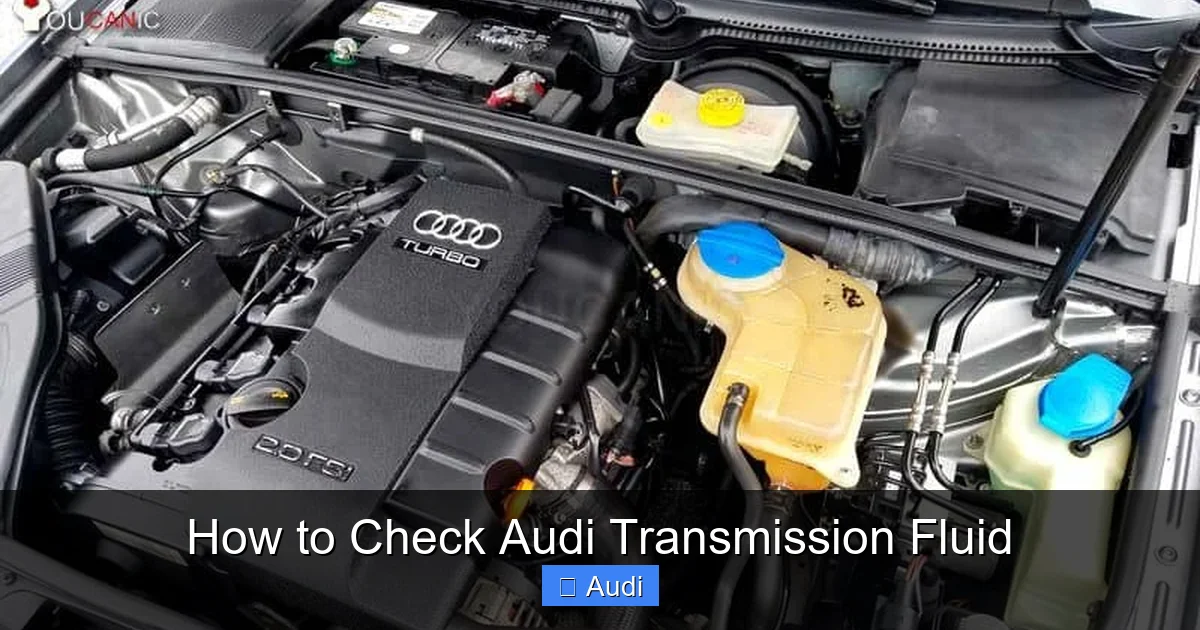
Visual guide about How to Check Audi Transmission Fluid
Image source: youcanic.com
Now that you understand why transmission fluid is important and how to spot potential issues, let’s walk through the process of checking it. The method varies depending on your Audi’s model and year, so we’ll cover both dipstick and sealed transmission approaches.
For Older Audis with a Dipstick (Pre-2005 Models)
If you own an older Audi—such as an A4, A6, or A8 from the early 2000s or earlier—you may still have a traditional dipstick. Here’s how to check the fluid safely:
First, park your car on a level surface and engage the parking brake. Start the engine and let it idle for about 10 minutes to warm up the transmission fluid. Most manufacturers recommend checking the fluid when it’s at operating temperature (around 80–100°F or 27–38°C) for an accurate reading.
Next, locate the transmission dipstick. It’s usually near the back of the engine bay, often labeled “ATF” (Automatic Transmission Fluid) or marked with a red or yellow handle. Pull the dipstick out, wipe it clean with a lint-free cloth, and reinsert it fully. Pull it out again and examine the fluid level. The dipstick will have “Full” and “Add” markings—ensure the fluid reaches the “Full” line.
Also, check the fluid’s condition. Fresh transmission fluid is bright red and translucent. If it’s dark brown, black, or has a burnt smell, it’s time for a change. You should also look for particles or sludge, which indicate contamination.
For Modern Audis with Sealed Transmissions (2005 and Newer)
Most modern Audis—including models like the A3, A4, Q5, and Q7—use sealed transmissions without a dipstick. In these cases, checking the fluid is more involved and often requires professional tools.
Start by warming up the car. Drive it for at least 15 minutes to ensure the transmission fluid reaches operating temperature. Then, park on a level surface and turn off the engine.
Next, you’ll need to access the transmission pan or fill plug. This usually requires lifting the car with a jack and jack stands or using a vehicle lift. Locate the transmission pan beneath the car—it’s typically a large metal or plastic component near the engine.
Some models have a fill plug on the side of the transmission. Remove it using the correct socket or wrench. If fluid drips out slowly, the level is correct. If nothing comes out, the fluid is low. If it gushes out, it may be overfilled.
However, many newer Audis require a diagnostic scan tool to read the fluid level electronically. These tools connect to the OBD2 port (usually under the dashboard) and communicate with the car’s onboard computer. The system will display the fluid temperature and level, ensuring accuracy.
If you don’t have a scan tool, it’s best to visit an Audi service center or a trusted mechanic. They have the equipment and expertise to perform a proper check and top-off if needed.
Safety Tips and Best Practices
Always wear gloves and safety glasses when working under your car. Transmission fluid can be hot and may contain harmful chemicals. Never work on a car that’s only supported by a jack—use jack stands for stability.
Avoid overfilling the transmission. Too much fluid can cause foaming, overheating, and pressure buildup. If you’re adding fluid, use a funnel and pour slowly. Only add Audi-approved fluid—never mix different types.
Keep a record of your fluid checks and changes. Note the date, mileage, and fluid condition. This helps track maintenance and identify patterns over time.
When to Change Your Audi’s Transmission Fluid
Checking the fluid is one thing—knowing when to change it is another. While some manufacturers claim “lifetime” fluid, most experts recommend changing it every 40,000 to 60,000 miles, depending on driving conditions.
If you frequently drive in stop-and-go traffic, tow heavy loads, or live in extreme temperatures, you may need to change the fluid more often. These conditions generate extra heat, which accelerates fluid breakdown.
A full transmission fluid change involves draining the old fluid, replacing the filter (if applicable), and refilling with fresh fluid. Some shops use a flush machine to remove more old fluid, but this can dislodge debris and cause issues in high-mileage vehicles. A simple drain and fill is often safer and just as effective.
Always use the correct fluid type. Check your owner’s manual or consult an Audi dealer for the recommended specification. Using the wrong fluid can damage seals, clutches, and valves.
DIY vs. Professional Service: What’s Best for You?
While checking transmission fluid can be a DIY task on older Audis, modern models often require professional assistance. If you’re comfortable working under your car and have the right tools, you can perform a basic check. But for sealed systems, a scan tool, or a full fluid change, it’s wise to visit a certified Audi technician.
Professionals have access to factory-level diagnostic equipment and genuine Audi parts. They can also inspect for leaks, worn components, and software updates that affect transmission performance.
That said, staying informed empowers you to make better decisions. Even if you don’t do the work yourself, knowing what to look for helps you communicate effectively with your mechanic and avoid unnecessary upsells.
Conclusion
Checking your Audi’s transmission fluid is a vital part of maintaining your vehicle’s performance and longevity. While the process has evolved from simple dipstick checks to advanced electronic monitoring, the importance of clean, adequate fluid remains unchanged. By understanding your Audi’s transmission system, recognizing warning signs, and following proper procedures, you can keep your car running smoothly for years to come.
Whether you drive a classic A4 with a dipstick or a sleek Q7 with a sealed transmission, regular fluid checks are an investment in reliability. Don’t wait for problems to arise—stay proactive, follow the guidelines in this guide, and when in doubt, consult a professional. Your Audi deserves the best care, and a little attention to transmission fluid can go a long way.
Frequently Asked Questions
Can I check Audi transmission fluid myself?
Yes, but it depends on your Audi’s model and year. Older models with a dipstick allow for easy DIY checks, while newer sealed transmissions often require professional tools and expertise.
What kind of transmission fluid does my Audi need?
Always use Audi-approved fluid, such as G 052 162 A2 or G 055 025 A2. Check your owner’s manual or consult a dealer to confirm the correct specification for your vehicle.
How often should I check my Audi’s transmission fluid?
Check it every 10,000–15,000 miles or during regular maintenance intervals. Change the fluid every 40,000–60,000 miles, or sooner if you drive in harsh conditions.
What happens if my Audi runs low on transmission fluid?
Low fluid can cause overheating, slipping gears, delayed shifting, and eventual transmission failure. It’s essential to address low levels immediately.
Can I use a generic OBD2 scanner to check transmission fluid?
Most basic OBD2 scanners won’t access transmission fluid data. You’ll need a advanced diagnostic tool compatible with Audi’s systems, such as VCDS or OBDeleven.
Is it safe to drive with dirty transmission fluid?
No. Dirty or burnt fluid loses its lubricating and cooling properties, increasing wear and the risk of transmission damage. Replace it as soon as possible.