How to Calculate Car Insurance

Contents
- 1 Key Takeaways
- 2 📑 Table of Contents
- 3 How to Calculate Car Insurance: A Step-by-Step Guide
- 4 What Factors Affect Your Car Insurance Premium?
- 5 Types of Coverage and How They Affect Cost
- 6 How to Estimate Your Car Insurance Premium
- 7 Tips to Lower Your Car Insurance Costs
- 8 Common Mistakes to Avoid When Calculating Car Insurance
- 9 Conclusion
- 10 Frequently Asked Questions


Calculating car insurance doesn’t have to be confusing. By understanding the key factors that influence your premium—like driving history, vehicle type, and location—you can estimate your costs and find the best deal. This guide breaks it all down in simple steps so you can make informed decisions and save money.
Key Takeaways
- Your driving record matters most: A clean history usually means lower premiums, while accidents or tickets can increase costs.
- Vehicle type affects pricing: Sports cars and luxury vehicles typically cost more to insure than sedans or compact cars.
- Location plays a big role: Urban areas with high traffic and crime rates often have higher insurance rates than rural areas.
- Credit score impacts your rate: In most states, insurers use credit-based insurance scores to help determine premiums.
- Coverage level changes cost: Higher liability limits, comprehensive, and collision coverage increase your premium.
- Discounts can lower your bill: Safe driver, multi-policy, and good student discounts can significantly reduce what you pay.
- Shop around annually: Comparing quotes from multiple insurers ensures you’re getting the best rate for your needs.
📑 Table of Contents
How to Calculate Car Insurance: A Step-by-Step Guide
So, you’re ready to get car insurance—or maybe you’re just curious about how much it might cost. Either way, you’re in the right place. Car insurance is one of those necessary expenses that can feel like a mystery. You know you need it, but figuring out how much it will cost? That’s where things get tricky.
The good news? Calculating car insurance doesn’t have to be overwhelming. While insurers use complex algorithms and data models, the core factors they consider are actually pretty straightforward. Once you understand what goes into your premium, you can make smarter choices, avoid overpaying, and even find ways to save. Whether you’re a first-time driver or just shopping for a better deal, this guide will walk you through everything you need to know—step by step.
In this article, we’ll break down the main elements that affect your car insurance rate, show you how to estimate your premium, and share practical tips to keep your costs low. No jargon, no confusion—just clear, actionable advice. Let’s get started.
What Factors Affect Your Car Insurance Premium?
Before you can calculate your car insurance, you need to know what goes into the price. Insurers don’t just pick numbers out of a hat. They use a combination of personal, vehicle, and location-based factors to assess risk. The higher the risk you pose, the more you’ll pay. Here’s a breakdown of the biggest influences.
Visual guide about How to Calculate Car Insurance
Image source: gabi.com
Driving History and Experience
Your driving record is one of the most important factors. Insurance companies want to know: Are you likely to get into an accident? If you’ve had accidents, speeding tickets, or DUIs in the past, insurers see you as a higher risk. Even minor violations can bump up your rate.
On the flip side, a clean driving record can earn you significant discounts. Many insurers offer “safe driver” discounts for those with no claims or violations over a certain period—usually three to five years. New drivers, especially teens, often face higher premiums because of their lack of experience, but completing a driver’s education course can help lower costs.
Age and Gender
Believe it or not, your age and gender still play a role in pricing—though this is changing in some states due to regulations. Statistically, younger drivers (under 25) are more likely to be involved in accidents, so they pay more. Male drivers under 25 typically pay higher rates than females, though the gap narrows with age.
As you get older and gain experience, your rates usually decrease. Drivers in their 30s, 40s, and 50s often enjoy the lowest premiums. After age 70, some insurers may increase rates again due to potential declines in reaction time or vision, but this varies by company.
Vehicle Make, Model, and Year
The car you drive has a huge impact on your insurance cost. Insurers look at safety ratings, repair costs, theft rates, and performance. For example, a high-performance sports car like a Porsche or Mustang will cost more to insure than a reliable sedan like a Toyota Camry or Honda Accord.
Newer cars often cost more to insure because they’re more expensive to repair or replace. However, they may also come with advanced safety features—like automatic emergency braking or lane departure warnings—that can qualify you for discounts. Luxury vehicles and those with high theft rates (like certain SUVs) also tend to have higher premiums.
Where You Live
Your ZIP code matters—a lot. Urban areas with heavy traffic, higher crime rates, and more accidents typically have higher insurance rates. For example, drivers in Detroit, Michigan, or Newark, New Jersey, often pay significantly more than those in rural Montana or Vermont.
Even within the same city, rates can vary by neighborhood. Areas with higher rates of vandalism, theft, or uninsured drivers will see higher premiums. Parking your car in a garage instead of on the street can sometimes help lower your rate, as it reduces the risk of damage or theft.
Credit Score (in Most States)
In most states (except California, Hawaii, and Massachusetts, where it’s restricted), insurers use your credit-based insurance score to help determine your premium. Studies have shown a correlation between credit history and claim frequency—people with lower credit scores tend to file more claims.
This doesn’t mean you’re being punished for bad credit, but it does mean improving your score can help lower your insurance costs. Paying bills on time, reducing debt, and checking your credit report for errors are all good steps to take.
Annual Mileage and Usage
How much you drive affects your risk level. The more time you spend on the road, the higher your chance of an accident. Insurers ask for your annual mileage to estimate this risk. If you commute long distances or use your car for business, your premium may be higher.
Conversely, if you work from home or only drive occasionally, you might qualify for a low-mileage discount. Some insurers even offer usage-based programs where you install a device or use an app to track your driving habits. Safe, low-mileage drivers can earn additional savings.
Types of Coverage and How They Affect Cost
Now that you know what personal factors influence your rate, let’s talk about the coverage itself. The type and amount of insurance you choose will directly impact your premium. Most states require at least liability coverage, but you can add more protection—for a price.

Visual guide about How to Calculate Car Insurance
Image source: 144634072.fs1.hubspotusercontent-eu1.net
Liability Coverage
This is the foundation of most car insurance policies. It covers damage or injuries you cause to others in an accident. It’s split into two parts: bodily injury liability (for medical expenses) and property damage liability (for vehicle or property damage).
State minimums vary, but they’re often too low to cover serious accidents. For example, if you cause an accident that results in $50,000 in medical bills but only have $25,000 in coverage, you could be personally liable for the difference. That’s why many experts recommend higher limits—like 100/300/100 (meaning $100,000 per person, $300,000 per accident for injuries, and $100,000 for property damage).
Collision and Comprehensive Coverage
These cover damage to your own vehicle. Collision pays for repairs if you hit another car or object, while comprehensive covers non-collision events like theft, vandalism, fire, or weather damage.
Both are optional if you own your car outright, but required if you have a loan or lease. The cost depends on your car’s value and your deductible—the amount you pay out of pocket before insurance kicks in. A higher deductible (like $1,000 instead of $500) lowers your premium but increases your risk if you file a claim.
Personal Injury Protection (PIP) and Medical Payments
PIP, also called “no-fault” coverage, pays for your medical expenses and sometimes lost wages, regardless of who caused the accident. It’s required in some states and optional in others. Medical Payments (MedPay) is similar but usually has lower limits and doesn’t cover lost income.
These coverages can be helpful, especially if you don’t have good health insurance. However, they add to your premium, so consider your personal health coverage before adding them.
Uninsured/Underinsured Motorist Coverage
This protects you if you’re hit by a driver with no insurance or insufficient coverage. It’s surprisingly common—about 1 in 8 drivers in the U.S. are uninsured, according to the Insurance Information Institute.
This coverage can save you from paying out of pocket for medical bills or car repairs. It’s relatively inexpensive and highly recommended, especially in states with high uninsured driver rates.
Additional Coverage Options
You can also add extras like roadside assistance, rental car reimbursement, or gap insurance (which covers the difference between your car’s value and what you owe if it’s totaled). These are usually low-cost add-ons that provide peace of mind.
For example, roadside assistance might cost $10–$20 per year and cover towing, jump-starts, or flat tire changes. Rental reimbursement pays for a rental car while yours is being repaired after a covered claim.
How to Estimate Your Car Insurance Premium
Now that you understand the factors and coverage types, let’s talk about how to actually calculate your car insurance. While you’ll need a formal quote from an insurer for an exact number, you can get a solid estimate using online tools and a few simple steps.

Visual guide about How to Calculate Car Insurance
Image source: midline.co.ke
Use Online Insurance Calculators
Many insurance companies and comparison websites offer free car insurance calculators. These tools ask for basic information—like your age, driving history, vehicle details, and location—and give you an estimated premium range.
For example, you might enter that you’re a 35-year-old female with a clean record, driving a 2020 Honda CR-V in Austin, Texas, with full coverage. The calculator might estimate your annual premium between $1,200 and $1,800. Keep in mind, these are rough estimates—actual quotes may vary.
Gather Your Information
To get the most accurate estimate, have the following ready:
- Driver’s license number and driving history (accidents, tickets)
- Vehicle information (make, model, year, VIN)
- Annual mileage and typical usage (commute, pleasure, business)
- Current insurance policy details (if applicable)
- Desired coverage levels and deductibles
The more accurate your information, the better your estimate will be. Don’t guess—use your actual data.
Compare Quotes from Multiple Insurers
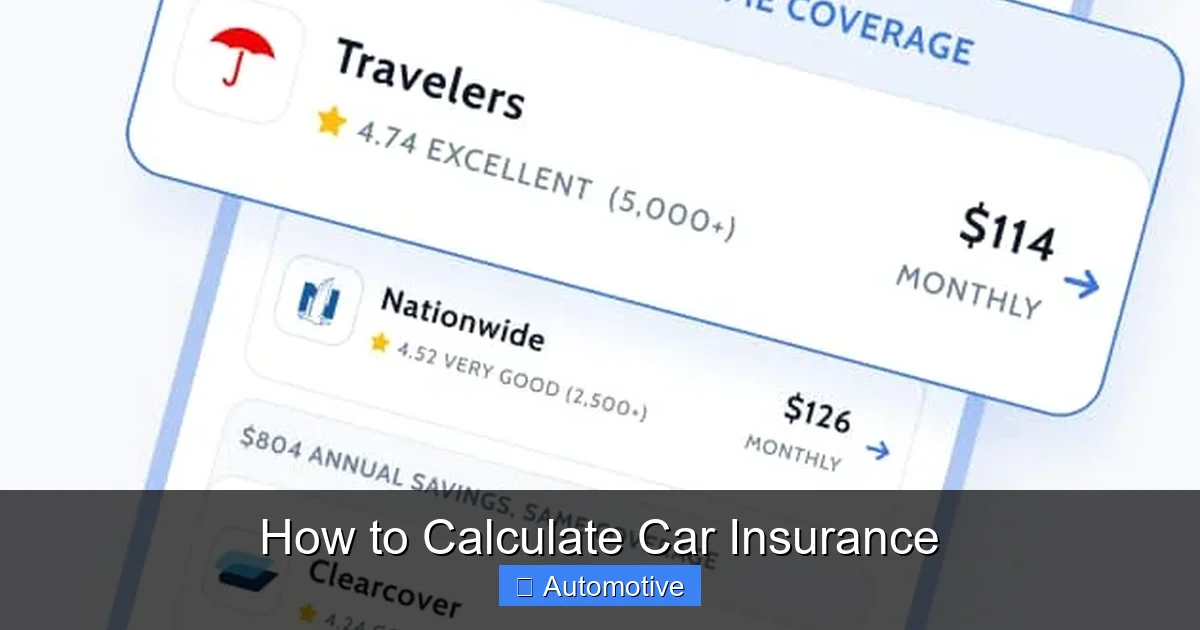
One insurer’s rate might be very different from another’s, even for the same driver and car. That’s why it’s crucial to get quotes from at least three to five companies. You can do this directly through insurer websites or use comparison platforms like NerdWallet, The Zebra, or Insurify.
For example, you might find that Geico offers you $1,300 per year, while State Farm quotes $1,600, and Progressive comes in at $1,450. By comparing, you can identify the best value—not just the lowest price, but the best coverage for your needs.
Adjust Coverage and Deductibles to See Impact
Most quote tools let you adjust coverage levels and deductibles in real time. Try lowering your deductible from $1,000 to $500—you’ll likely see your premium increase by $100–$200 per year. Or, switch from full coverage to liability-only and see how much you save.
This helps you find the right balance between protection and affordability. For instance, if your car is older and worth less than $5,000, you might decide to drop collision and comprehensive to save money.
Factor in Discounts
Don’t forget to ask about discounts! Many insurers offer savings for things like:
- Safe driving (no accidents or tickets)
- Multi-policy (bundling home and auto insurance)
- Good student (for young drivers with B averages or higher)
- Anti-theft devices or safety features
- Paying in full or going paperless
- Low mileage or usage-based programs
These can add up. For example, a safe driver discount might save you 10–25%, while bundling could knock off another 15%. Always ask what discounts you qualify for—you might be surprised.
Tips to Lower Your Car Insurance Costs
Even after calculating your premium, there are ways to reduce what you pay. Here are some proven strategies to keep your car insurance affordable without sacrificing protection.
Improve Your Driving Record
The best way to lower your rate over time is to drive safely. Avoid speeding, distracted driving, and aggressive maneuvers. Many insurers offer accident forgiveness programs, which prevent your rate from increasing after your first accident—but only if you maintain a clean record afterward.
Consider taking a defensive driving course. Some states require it for ticket dismissal, and many insurers offer discounts (usually 5–10%) for completion.
Raise Your Deductible
If you can afford to pay more out of pocket in the event of a claim, raising your deductible is a quick way to lower your premium. For example, increasing your collision deductible from $500 to $1,000 could save you $100–$200 per year.
Just make sure you have the savings to cover the higher deductible if needed. Don’t choose a $2,500 deductible if you only have $1,000 in emergency funds.
Drive a Safer, Less Expensive Car
If you’re in the market for a new vehicle, consider insurance costs before you buy. Use tools like the Insurance Institute for Highway Safety (IIHS) or insurer websites to check estimated premiums for different models.
Generally, cars with high safety ratings, low repair costs, and low theft rates are cheaper to insure. Avoid flashy or high-performance vehicles unless you’re prepared for higher premiums.
Maintain Good Credit
In states where credit is used, improving your credit score can lead to lower rates. Pay bills on time, keep credit card balances low, and check your credit report annually for errors.
Even a small improvement—like moving from “fair” to “good” credit—can make a difference. Some studies show that drivers with excellent credit pay up to 40% less than those with poor credit.
Bundle Your Policies
Most insurers offer a multi-policy discount if you bundle your auto insurance with home, renters, or life insurance. This can save you 10–25% on both policies.
For example, if you pay $1,500 for auto and $800 for home insurance separately, bundling might bring the total down to $1,800—a savings of $500 per year.
Review Your Policy Annually
Your life changes—and so should your insurance. Review your policy every year to make sure it still fits your needs. Have you moved? Changed jobs? Paid off your car? These changes can affect your rate.
Also, shop around annually. Insurers often raise rates over time, and you might find a better deal elsewhere. Even if you’re happy with your current provider, getting quotes from competitors can give you leverage to negotiate a lower rate.
Common Mistakes to Avoid When Calculating Car Insurance
Even with the best intentions, it’s easy to make mistakes when estimating or choosing car insurance. Here are some common pitfalls and how to avoid them.
Choosing the Minimum Coverage to Save Money
It’s tempting to go with the state minimum to keep costs low, but this can backfire. If you cause a serious accident, the damages could far exceed your coverage, leaving you personally liable. Always consider your assets and risk tolerance when choosing limits.
Not Disclosing Accurate Information
Lying on your application—like understating your mileage or hiding a ticket—can lead to denied claims or policy cancellation. Always be honest. Insurers verify information, and dishonesty can cost you more in the long run.
Ignoring Discounts
Many drivers don’t realize how many discounts they qualify for. Always ask your insurer about available savings. You might be missing out on hundreds of dollars per year.
Focusing Only on Price
While cost is important, don’t choose a policy solely based on the lowest premium. Consider customer service, claims handling, and financial stability. A cheap policy isn’t worth much if the company drags its feet on claims.
Not Updating Your Policy
Life changes—so should your insurance. Failing to update your policy after a move, marriage, or new car can result in incorrect coverage or missed discounts.
Conclusion
Calculating car insurance doesn’t have to be a guessing game. By understanding the key factors—like your driving history, vehicle, location, and coverage choices—you can estimate your premium with confidence. Use online tools, compare quotes, and take advantage of discounts to find the best rate.
Remember, the cheapest option isn’t always the best. Focus on getting the right coverage for your needs at a price you can afford. And don’t forget to review your policy regularly and shop around annually. With a little effort, you can save hundreds of dollars while staying protected on the road.
Frequently Asked Questions
How is car insurance calculated?
Car insurance is calculated based on a combination of personal factors (like age, driving history, and credit score), vehicle details (make, model, and safety features), location, and the type of coverage you choose. Insurers use this data to assess your risk level and set your premium accordingly.
Can I calculate my car insurance premium myself?
Yes, you can estimate your premium using online insurance calculators or quote tools from insurers. While these won’t give you an exact number, they provide a helpful range based on your input. For an accurate quote, you’ll need to apply directly with an insurance company.
Does my car’s color affect insurance rates?
No, the color of your car does not affect your insurance premium. Insurers care about the make, model, year, and safety features—not the paint job. However, certain colors (like red) are sometimes associated with sportier cars, which may cost more to insure for other reasons.
Will my insurance go up if I get a speeding ticket?
Yes, a speeding ticket can increase your insurance premium, especially if it’s your first violation. The exact increase depends on the severity of the ticket and your insurer’s policies. In some cases, taking a defensive driving course can help reduce or eliminate the rate hike.
How often should I shop for car insurance?
It’s a good idea to shop for car insurance at least once a year, or whenever you experience a major life change (like moving, getting married, or buying a new car). Rates change over time, and you may find a better deal by comparing quotes from multiple insurers.
Can I lower my insurance by driving less?
Yes, driving fewer miles can lower your premium, especially if you qualify for a low-mileage discount. Some insurers also offer usage-based programs that track your driving habits and reward safe, low-mileage drivers with savings.