How to Buy a Car Wash with No Money

Contents
- 1 Key Takeaways
- 2 📑 Table of Contents
- 3 Introduction: Turning a Dream into Reality
- 4 Understanding the Car Wash Business Landscape
- 5 Seller Financing: The Most Powerful No-Money-Down Tool
- 6 Partnering with Investors: Sharing the Load
- 7 Lease-to-Own: Operate First, Pay Later
- 8 Government and Small Business Programs
- 9 Creative Strategies: Mobile and Pop-Up Car Washes
- 10 Building Relationships and Leveraging Networks
- 11 Conclusion: Your Path to Ownership Starts Now
- 12 Frequently Asked Questions



Buying a car wash with no money may sound impossible, but it’s achievable with the right strategy. By leveraging seller financing, partnerships, and creative funding methods, you can launch your car wash business without upfront cash.
Key Takeaways
- Explore seller financing: Many car wash owners are willing to finance the purchase themselves, letting you pay over time with little or no down payment.
- Partner with investors: Bring in silent partners or equity investors who provide capital in exchange for a share of profits.
- Use lease-to-own agreements: Lease the car wash with an option to buy later, allowing you to operate first and pay later.
- Negotiate favorable terms: Work with the seller to structure payments based on revenue, reducing initial financial pressure.
- Leverage government and small business programs: Access grants, low-interest loans, or SBA-backed financing designed for entrepreneurs.
- Start small and scale up: Consider mobile or self-service car washes that require less capital to launch.
- Build strong relationships: Networking with lenders, suppliers, and industry experts can open doors to no-money-down opportunities.
📑 Table of Contents
- Introduction: Turning a Dream into Reality
- Understanding the Car Wash Business Landscape
- Seller Financing: The Most Powerful No-Money-Down Tool
- Partnering with Investors: Sharing the Load
- Lease-to-Own: Operate First, Pay Later
- Government and Small Business Programs
- Creative Strategies: Mobile and Pop-Up Car Washes
- Building Relationships and Leveraging Networks
- Conclusion: Your Path to Ownership Starts Now
Introduction: Turning a Dream into Reality
So, you’ve got the vision—owning your own car wash. You’ve driven past that busy automatic wash on the corner and thought, “I could run that.” But then reality hits: car washes cost hundreds of thousands of dollars. How can you possibly buy one with no money?
Here’s the good news: you don’t need a mountain of cash to get started. Many successful entrepreneurs have launched profitable car wash businesses with little to no personal investment. It’s not magic—it’s strategy. By thinking outside the box and using smart financial tools, you can turn that dream into a reality.
This guide will walk you through practical, real-world methods to buy a car wash with no money. We’ll cover everything from seller financing to partnerships, creative leases, and government programs. Whether you’re a first-time buyer or an experienced operator, these tactics can help you launch your business without draining your savings.
Understanding the Car Wash Business Landscape
Visual guide about How to Buy a Car Wash with No Money
Image source: cdn.branch.io
Before diving into financing, it’s important to understand what you’re getting into. The car wash industry is booming. With over 60,000 car washes in the U.S. alone, the market is competitive but full of opportunity. People will always need clean cars, and convenience drives repeat business.
There are three main types of car washes:
- Full-Service Car Washes: These offer hand washing, vacuuming, interior cleaning, and detailing. They require more labor but can charge premium prices.
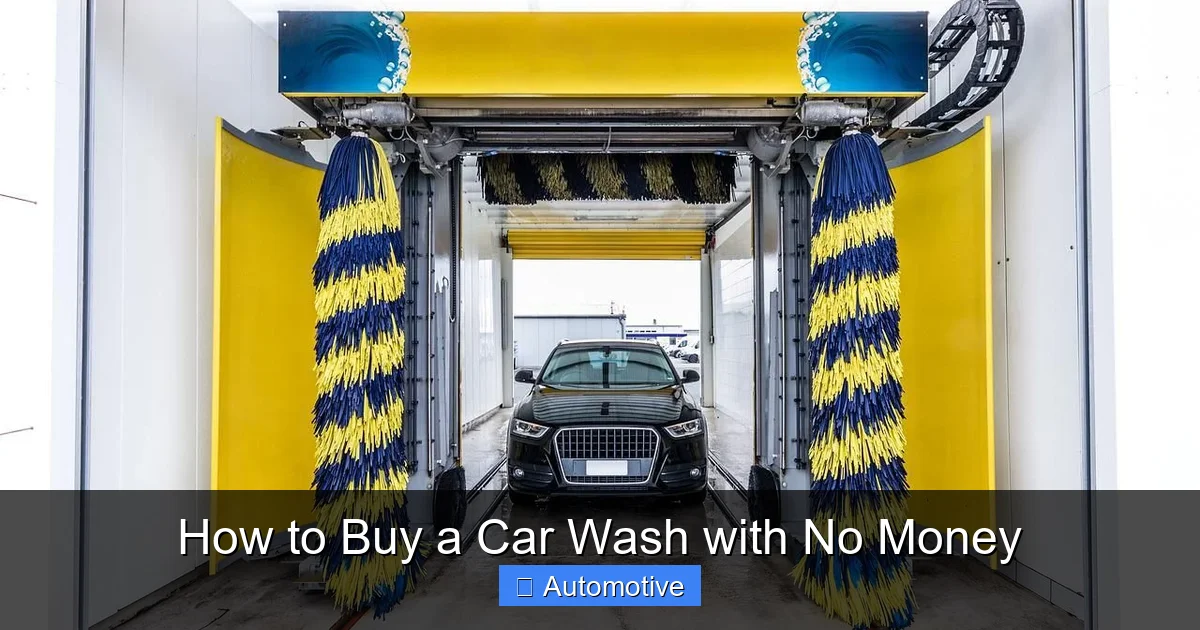
- Automatic (Tunnel) Car Washes: These use conveyor systems and machinery to wash multiple cars quickly. High volume, lower labor costs.
- Self-Service Car Washes: Customers operate the equipment themselves. Lower overhead, but less control over quality.
Each model has different startup costs. A full-service wash might cost $300,000 to $1 million, while a self-service bay can be under $100,000. Knowing your target model helps you plan your no-money-down strategy.
Why Buy an Existing Car Wash?
Starting from scratch is expensive and time-consuming. Buying an existing car wash gives you instant infrastructure, equipment, customer base, and cash flow. That’s why many entrepreneurs choose acquisition over building new.
An established wash already has:
- Permits and licenses
- Utilities and water connections
- Brand recognition (even if minimal)
- Existing equipment and layout
- Recurring customers
This reduces risk and accelerates profitability. And the best part? You can often finance the purchase without needing a large down payment.
Seller Financing: The Most Powerful No-Money-Down Tool
Visual guide about How to Buy a Car Wash with No Money
Image source: static.vecteezy.com
One of the most effective ways to buy a car wash with no money is through seller financing. This means the current owner lends you the money to buy the business, and you pay them back over time—just like a mortgage.
How Seller Financing Works
Instead of going to a bank, you negotiate directly with the seller. They agree to finance a portion (or all) of the purchase price. You might pay 10–30% down, or in some cases, nothing at all.
For example, let’s say a car wash is listed for $400,000. The seller agrees to finance $350,000, and you pay $50,000 down. But if you have no money, you might negotiate to pay $0 down and finance the full $400,000 over 5–10 years.
Why Sellers Offer Financing
Sellers do this for several reasons:
- They want a quick sale and know buyers may not qualify for bank loans.
- They earn interest on the loan, often at rates higher than banks.
- They may have emotional ties to the business and want it to succeed under new ownership.
- They receive steady income from your payments, like a retirement annuity.
Tips for Negotiating Seller Financing
To make this work, you need to build trust and present a solid plan. Here’s how:
- Show proof of experience: Even if you’re new, highlight any management, customer service, or automotive experience.
- Provide a detailed business plan: Include financial projections, marketing strategy, and operational improvements.
- Offer collateral or a personal guarantee: This reduces the seller’s risk and increases your credibility.
- Suggest a balloon payment: Pay smaller monthly installments with a large final payment in 5 years. This lowers your monthly burden.
- Include performance-based terms: Tie payments to revenue—e.g., “I’ll pay 10% of monthly gross sales until the loan is paid.”
Real-Life Example
Mike, a former auto detailer, wanted to buy a small automatic car wash in Ohio. He had $5,000 in savings but needed $250,000. He approached the owner and proposed a deal: $0 down, $3,500/month for 7 years at 6% interest. The seller agreed because Mike promised to modernize the equipment and expand services. Within two years, Mike refinanced with a bank and paid off the seller early.
Partnering with Investors: Sharing the Load
Visual guide about How to Buy a Car Wash with No Money
Image source: img.lovepik.com
If seller financing isn’t available, bringing in an investor can be your next best move. Investors provide the capital you need in exchange for equity or profit sharing.
Types of Investors
- Silent Partners: Provide money but don’t get involved in daily operations. You manage the business; they get a percentage of profits.
- Active Partners: Invest and help run the business. Great if they have industry experience.
- Family and Friends: Often more flexible with terms, but be cautious—mixing money and relationships can get messy.
- Angel Investors or Small Business Funds: Look for investors who specialize in service-based businesses.
How to Find Investors
Start close to home. Talk to people who believe in you—your network is your greatest asset. Attend local business meetups, join car wash associations, or reach out to former employers.
You can also use online platforms like:
- Fundable
- AngelList
- Local small business development centers (SBDCs)
When pitching, focus on:
- The business’s current profitability
- Your plan to grow revenue
- Exit strategy (e.g., buy them out in 5 years)
- Return on investment (ROI) projections
Structuring the Deal
Be clear about roles and expectations. Use a written agreement that outlines:
- Investment amount
- Ownership percentage
- Profit distribution
- Decision-making authority
- Buyout options
For example, you might offer a 30% stake for $150,000. The investor gets 30% of net profits until they recoup their investment, then 20% thereafter.
Example: The Power of Partnership
Sarah wanted to buy a self-service car wash in Texas. She found a retired mechanic, Tom, who had savings and loved cars. She pitched him a deal: Tom invests $120,000 for 40% ownership. Sarah runs the business full-time. They split profits 60/40. Within 18 months, the wash was profitable, and Tom was earning $3,000/month passively.
Lease-to-Own: Operate First, Pay Later
Another creative way to buy a car wash with no money is through a lease-to-own (or lease-option) agreement. You lease the property and equipment with the option to buy later.
How Lease-to-Own Works
You sign a long-term lease (5–10 years) with the property owner or equipment lessor. A portion of your monthly rent goes toward the future purchase price. At the end of the term, you can buy the business at a predetermined price.
This gives you time to:
- Generate cash flow
- Improve operations
- Build credit
- Save for a down payment
Benefits of Lease-to-Own
- No large upfront cost
- Immediate access to the business
- Opportunity to “test drive” ownership
- Potential tax benefits (lease payments may be deductible)
Negotiating a Fair Deal
To make this work, ensure the lease terms are favorable:
- Set a fixed purchase price at the start (e.g., $300,000 in 7 years).
- Agree on how much rent credits toward the purchase (e.g., 20% of monthly rent).
- Include maintenance responsibilities—don’t get stuck with costly repairs.
- Get everything in writing to avoid disputes.
Real-World Success
James leased a small car wash in Arizona with a $2,000/month rent, 25% of which went toward the $200,000 purchase price. After 5 years, he had built strong cash flow and used profits to buy the business outright. He now owns it free and clear.
Government and Small Business Programs
Don’t overlook public resources. Governments and nonprofit organizations offer funding and support for small business owners—especially those in underserved communities.
SBA Loans
The U.S. Small Business Administration (SBA) guarantees loans for entrepreneurs who can’t get traditional financing. The SBA 7(a) loan program can cover up to $5 million for business purchases.
While SBA loans usually require some down payment (10–20%), you can combine them with seller financing to reduce your cash need. For example, use a $50,000 SBA loan and $350,000 in seller financing to buy a $400,000 car wash with only $10,000 down.
Microloans
SBA microloans offer up to $50,000 for small businesses. These are ideal for self-service or mobile car washes. Interest rates are low (8–13%), and terms are flexible.
Organizations like Accion and Kiva also offer microloans with minimal requirements. Kiva even offers 0% interest loans funded by individual lenders.
Grants and Local Programs
Some cities and states offer grants for green businesses, job creation, or revitalizing commercial areas. A car wash that uses water recycling or solar power might qualify.
Check with your:
- Local economic development office
- Chamber of Commerce
- Small Business Development Center (SBDC)
Example: Green Car Wash Grant
In Portland, Oregon, a new car wash received a $25,000 grant for installing a water reclamation system. The owner used the grant to cover equipment costs and financed the rest through a microloan and seller financing—starting with less than $5,000 of his own money.
Creative Strategies: Mobile and Pop-Up Car Washes
If buying a traditional car wash seems out of reach, consider starting smaller. Mobile and pop-up car washes require far less capital and can be launched with no money using creative tactics.
Mobile Car Wash Business
A mobile car wash operates out of a van or trailer, going to customers’ homes or offices. Startup costs can be under $20,000—mostly for a vehicle, pressure washer, and supplies.
How to Start with No Money
- Lease a used van: Many dealerships offer $0-down leases on commercial vehicles.
- Buy equipment on credit: Some suppliers offer 12-month financing for washers, tanks, and hoses.
- Barter for services: Trade detailing for marketing help or website design.
- Pre-sell memberships: Offer monthly wash plans to generate upfront cash.
Pop-Up Car Washes
Rent space at gas stations, parking lots, or events for weekend pop-up washes. Use portable equipment and hire part-time staff. Keep overhead low and scale as demand grows.
Case Study: From Mobile to Brick-and-Mortar
Lisa started a mobile car wash in Denver with a leased van and $3,000 in equipment. She used Instagram to attract clients and offered $10 washes. Within a year, she saved $40,000 and used it as a down payment on a small self-service bay—financed the rest with seller financing.
Building Relationships and Leveraging Networks
Success in business often comes down to who you know. Building strong relationships with lenders, suppliers, and industry professionals can open doors to no-money-down opportunities.
Network with Car Wash Owners
Attend trade shows like the ICA (International Carwash Association) Show. Join online forums and Facebook groups. Many owners are looking for buyers and may offer flexible terms to the right person.
Work with a Business Broker
Brokers specialize in buying and selling businesses. They know which sellers are motivated and may accept creative financing. While they charge a fee (usually 10% of the sale), they can save you time and help you negotiate better deals.
Partner with Suppliers
Talk to equipment and chemical suppliers. Some offer:
- Lease programs for washers and dryers
- Trade credit (pay for supplies after 30–60 days)
- Discounts for bulk purchases
These relationships can reduce your upfront costs and improve cash flow.
Conclusion: Your Path to Ownership Starts Now
Buying a car wash with no money isn’t just possible—it’s been done by countless entrepreneurs. The key is to think creatively, build trust, and use the right financial tools.
Whether you use seller financing, bring in an investor, lease-to-own, or start mobile, there’s a path that fits your situation. The car wash industry rewards persistence, customer service, and smart operations. With the right strategy, you can go from zero to owner in just a few years.
Don’t wait for the “perfect” moment. Start networking, researching listings, and talking to sellers today. Your dream car wash is closer than you think.
Frequently Asked Questions
Can I really buy a car wash with no money down?
Yes, it’s possible through methods like seller financing, lease-to-own agreements, or investor partnerships. Many buyers have acquired car washes with little to no personal cash by structuring creative deals.
What if the seller won’t offer financing?
If the seller refuses financing, look for other options like SBA loans, microloans, or bringing in an investor. You can also negotiate a lower price or ask for a rent-to-own arrangement.
Do I need experience to buy a car wash?
Experience helps, but it’s not required. Many successful owners learned on the job. Highlight transferable skills like management, customer service, or mechanical knowledge when pitching to sellers or investors.
How much does a typical car wash cost?
Prices vary widely. Self-service bays start around $80,000, automatic washes range from $200,000 to $600,000, and full-service washes can exceed $1 million. Location, equipment, and revenue impact the price.
What are the risks of buying a car wash with no money?
The main risk is over-leveraging—taking on too much debt. Make sure the business generates enough cash flow to cover payments. Always have a backup plan and realistic financial projections.
Can I use my 401(k) to buy a car wash?
Yes, through a Rollover as Business Startups (ROBS) plan. This allows you to invest retirement funds into your business without penalties. Consult a financial advisor to ensure compliance with IRS rules.