How to Buy a Car from a Dealership

Contents
- 1 Key Takeaways
- 2 📑 Table of Contents
- 3 How to Buy a Car from a Dealership: A Step-by-Step Guide
- 4 Step 1: Do Your Homework Before You Step on the Lot
- 5 Step 2: Get Your Financing in Order
- 6 Step 3: Visit the Dealership Prepared
- 7 Step 4: Negotiate the Price Like a Pro
- 8 Step 5: Review the Paperwork and Finalize the Deal
- 9 Step 6: Take Delivery and Enjoy Your New Car
- 10 Final Thoughts: You’re in Control
- 11 Frequently Asked Questions


Buying a car from a dealership doesn’t have to be stressful or confusing. With the right preparation, research, and negotiation skills, you can drive off the lot in a vehicle that fits your needs and budget—without overpaying.
Key Takeaways
- Research before you go: Know the make, model, trim, and fair market price of the car you want using tools like Kelley Blue Book or Edmunds.
- Check your credit and secure financing: Get pre-approved for a loan from your bank or credit union to strengthen your negotiating position.
- Negotiate the price, not the monthly payment: Focus on the total out-the-door cost to avoid hidden fees and long loan terms.
- Inspect the vehicle and review the history: Always get a vehicle history report and consider a pre-purchase inspection, especially for used cars.
- Read all documents carefully: Don’t sign anything until you understand every charge, warranty, and add-on.
- Walk away if needed: There’s no shame in leaving if the deal doesn’t feel right—there are plenty of other dealerships and cars.
📑 Table of Contents
- How to Buy a Car from a Dealership: A Step-by-Step Guide
- Step 1: Do Your Homework Before You Step on the Lot
- Step 2: Get Your Financing in Order
- Step 3: Visit the Dealership Prepared
- Step 4: Negotiate the Price Like a Pro
- Step 5: Review the Paperwork and Finalize the Deal
- Step 6: Take Delivery and Enjoy Your New Car
- Final Thoughts: You’re in Control
How to Buy a Car from a Dealership: A Step-by-Step Guide
Buying a car is one of the biggest purchases most people make—right after a home. And while it can feel overwhelming, especially with all the options, paperwork, and sales pressure, it doesn’t have to be. Whether you’re shopping for a brand-new sedan, a rugged SUV, or a reliable used hatchback, knowing how to buy a car from a dealership can save you thousands of dollars and a lot of headaches.
The key is preparation. Too many buyers walk into a dealership excited but unprepared, only to leave with a car that doesn’t fit their budget or needs. But when you go in with a plan—knowing what you want, how much you can afford, and how to negotiate—you take control of the process. This guide will walk you through every step, from research to signing the final papers, so you can buy your next car with confidence.
In this article, we’ll cover everything you need to know about how to buy a car from a dealership, including how to research models, secure financing, negotiate effectively, inspect the vehicle, and close the deal. By the end, you’ll be ready to walk into any dealership like a pro—and drive away in the right car at the right price.
Step 1: Do Your Homework Before You Step on the Lot
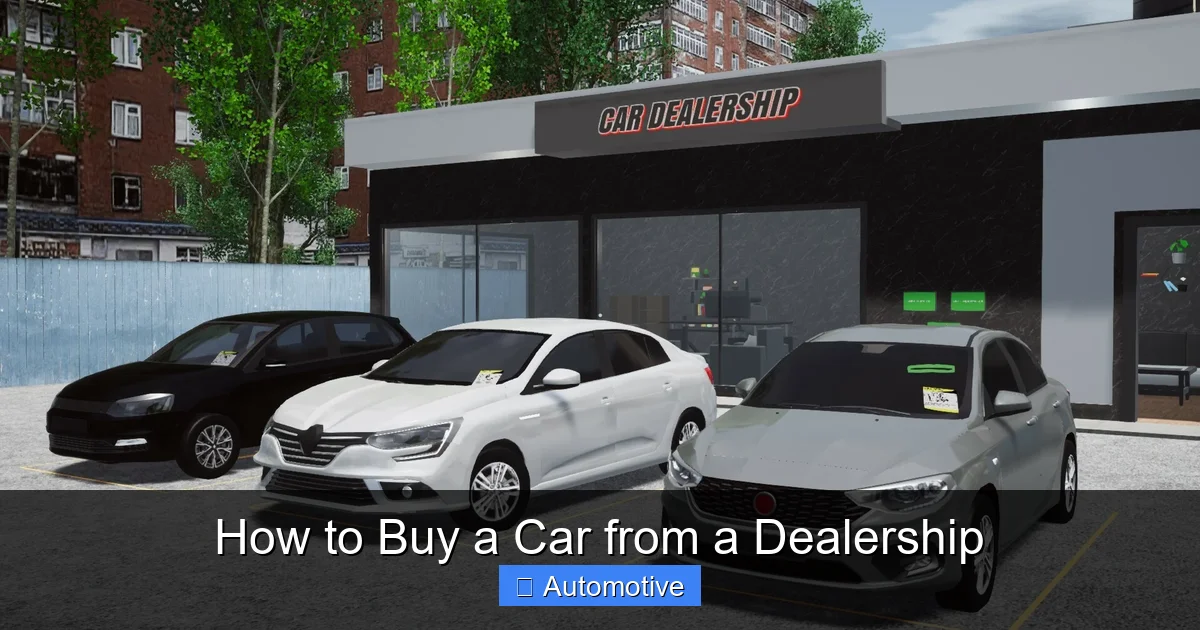
Visual guide about How to Buy a Car from a Dealership
Image source: shared.akamai.steamstatic.com
Before you even think about visiting a dealership, spend time doing research. This is the most important step in how to buy a car from a dealership. The more you know, the less likely you are to make a rushed or emotional decision.
Decide What You Need (and Want)
Start by asking yourself what you really need in a car. Are you looking for something fuel-efficient for your daily commute? Do you need extra cargo space for weekend adventures? Are safety features a top priority? Make a list of your must-haves and nice-to-haves. For example, if you have a family, you might prioritize seating for five, good crash test ratings, and advanced safety tech like automatic emergency braking.
Once you’ve narrowed down your needs, consider your wants. Do you want a sunroof? Leather seats? A premium sound system? Be honest about what you can live without—because those extras can quickly add to the price.
Research Makes and Models
Use trusted automotive websites like Kelley Blue Book (KBB), Edmunds, or Consumer Reports to compare different vehicles. Look at reliability ratings, fuel economy, ownership costs, and user reviews. For example, if you’re considering a Honda CR-V, check how it stacks up against the Toyota RAV4 or Subaru Forester in terms of resale value and long-term maintenance.
Don’t forget to look at both new and used options. A slightly used car that’s one or two years old can offer nearly the same features as a new model but at a significantly lower price—and without the steep depreciation that hits new cars the moment they’re driven off the lot.
Know the Fair Market Price
Once you’ve picked a few models, find out what they’re really worth. Use KBB’s “Fair Purchase Price” or Edmunds’ “True Market Value” to see what others are paying in your area. This gives you a solid starting point for negotiations.
For example, if a 2024 Toyota Camry LE has a sticker price of $28,000, but the fair market price is $26,500, you’ll know the dealer has room to negotiate. Print out or save these values on your phone so you can reference them during talks.
Step 2: Get Your Financing in Order
Visual guide about How to Buy a Car from a Dealership
Image source: cdn.cloudflare.steamstatic.com
One of the biggest mistakes car buyers make is letting the dealership handle all the financing. While dealer financing can be convenient, it’s not always the best deal. That’s why it’s smart to get pre-approved for a loan before you go shopping.
Check Your Credit Score
Your credit score plays a major role in the interest rate you’ll qualify for. Check your score through free services like Credit Karma, Experian, or your bank. If your score is below 650, consider taking steps to improve it before applying for a loan—such as paying down credit card balances or correcting errors on your report.
A higher credit score can save you hundreds or even thousands in interest over the life of the loan. For example, on a $25,000 loan over five years, a borrower with a 720 credit score might pay 5% interest, while someone with a 600 score could pay 10%—adding up to over $3,000 in extra interest.
Shop Around for Loans
Don’t just accept the first offer you get. Compare rates from multiple lenders, including banks, credit unions, and online lenders. Credit unions often offer lower rates than big banks, especially if you’re a member.
Get pre-approved for a loan amount and interest rate. This gives you a clear budget and shows dealers you’re a serious buyer. When you walk in with pre-approval, you’re in a stronger position to negotiate—because you’re not dependent on the dealer’s financing.
Understand Loan Terms
Pay attention to the length of the loan and the monthly payment. A longer loan term (like 72 or 84 months) might lower your monthly payment, but it means you’ll pay more in interest over time. Aim for the shortest term you can comfortably afford—usually 36 to 60 months.
Also, avoid rolling negative equity from a trade-in into a new loan. If your current car is worth less than what you owe, paying that difference out of pocket (if possible) will save you money in the long run.
Step 3: Visit the Dealership Prepared

Visual guide about How to Buy a Car from a Dealership
Image source: cdn.cloudflare.steamstatic.com
Now that you’ve done your research and secured financing, it’s time to visit the dealership. But don’t just walk in cold. Go in with a plan.
Schedule an Appointment
Call ahead and schedule a time to meet with a salesperson. This shows you’re serious and gives you a dedicated point of contact. It also helps you avoid the chaos of a busy Saturday morning.
When you arrive, be polite but firm. Let the salesperson know you’ve done your research and are ready to buy—but only if the deal is right.
Test Drive the Car
Always take the car for a test drive. Pay attention to how it feels on the road: Is the steering responsive? Are the brakes smooth? Do you have good visibility? Test the infotainment system, climate controls, and seating comfort.
If you’re buying a used car, take it on different types of roads—highways, city streets, and bumpy pavement—to get a full sense of its condition.
Ask the Right Questions
Don’t be afraid to ask questions. For a new car, ask about current incentives, rebates, or special financing offers. For a used car, ask about the vehicle’s history: Has it been in any accidents? How many previous owners? Has it had regular maintenance?
Request a copy of the vehicle history report (like Carfax or AutoCheck) and review it carefully. Look for red flags like flood damage, salvage titles, or odometer discrepancies.
Step 4: Negotiate the Price Like a Pro
Negotiation is where many buyers feel nervous—but it’s also where you can save the most money. Remember: the sticker price is not the final price. Every car has room for negotiation.
Start with the Invoice Price
The invoice price is what the dealer paid the manufacturer for the car. It’s usually $1,000 to $3,000 less than the sticker price. Use this as your baseline. You can find invoice prices on KBB or Edmunds.
Your goal is to negotiate a price close to or below the invoice price, plus any fees.
Negotiate the Out-the-Door Price
Always negotiate the total out-the-door price—not just the monthly payment. The out-the-door price includes the car’s price, taxes, registration, title fees, and any dealer add-ons.
Focusing on monthly payments can be dangerous. A dealer might lower your monthly payment by extending the loan term or adding extras you don’t need. Instead, agree on the total price first, then figure out the monthly payment.
Use Competing Offers
Get quotes from multiple dealerships. Let each dealer know you’re shopping around and ask if they can beat the best offer you’ve received. This creates competition and gives you leverage.
For example, if Dealer A offers $26,000 out-the-door for a Honda Accord, tell Dealer B and ask if they can match or beat it. Often, they will.
Be Ready to Walk Away
If the dealer won’t budge on price, be prepared to leave. Say something like, “I appreciate your time, but this isn’t the right deal for me.” Most dealers will try to stop you with a better offer—because they don’t want to lose a sale.
Walking away doesn’t mean you’ve failed. It means you’re making a smart, informed decision.
Step 5: Review the Paperwork and Finalize the Deal
Once you’ve agreed on a price, it’s time to sign the paperwork. But don’t rush. Take your time to read every document carefully.
Understand All Fees
Dealers often add fees like “documentation fees,” “prep fees,” or “advertising fees.” Some of these are legitimate, but others are just profit boosters. Ask for a breakdown of every charge.
For example, a documentation fee over $300 is often negotiable or unnecessary. In some states, these fees are capped by law.
Watch for Add-Ons
Dealers may try to sell you extras like extended warranties, paint protection, or VIN etching. Ask yourself: Do I really need this? Most of these add-ons are overpriced and can often be purchased cheaper elsewhere.
If you want an extended warranty, research third-party providers like Endurance or CarShield, which may offer better coverage at a lower cost.
Review the Buyer’s Order
The buyer’s order (or purchase agreement) lists the final price, fees, trade-in value, and financing terms. Make sure everything matches what you agreed to. If you see a discrepancy, speak up.
Also, confirm the VIN (Vehicle Identification Number) on the paperwork matches the car you’re buying.
Get Everything in Writing
Make sure all promises—like free oil changes, a full tank of gas, or a free upgrade—are written into the contract. Verbal promises aren’t binding.
Step 6: Take Delivery and Enjoy Your New Car
After signing, it’s time to take delivery of your car. But before you drive off, do a final walk-around.
Inspect the Car
Check for any scratches, dents, or missing features. Make sure all keys, manuals, and accessories are included. Test the lights, wipers, and electronics one more time.
Review the Owner’s Manual
Take a few minutes to go over the owner’s manual with the salesperson. Learn how to use key features like the infotainment system, safety alerts, and maintenance reminders.
Keep All Documents
Store your purchase agreement, warranty information, and maintenance schedule in a safe place. You’ll need these for future service and resale.
Final Thoughts: You’re in Control
Buying a car from a dealership doesn’t have to be a stressful experience. When you know how to buy a car from a dealership—by researching, preparing, negotiating, and reviewing every detail—you take back control.
Remember, the dealer works for you, not the other way around. You’re the one paying the bill, so don’t feel pressured to make a quick decision. Take your time, ask questions, and trust your instincts.
With the tips in this guide, you’re ready to walk into any dealership with confidence. Whether you’re buying your first car or upgrading to something newer, you’ll be able to find the right vehicle at the right price—and drive away feeling good about your decision.
Frequently Asked Questions
Should I finance through the dealership or my bank?
It’s usually better to get pre-approved through your bank or credit union first. This gives you a benchmark to compare against dealer financing and strengthens your negotiating position. However, always compare both options—sometimes dealers offer special low-rate promotions.
How much should I expect to pay over the invoice price?
Most buyers pay between $500 and $1,500 over the dealer’s invoice price, depending on demand, incentives, and negotiation. In high-demand markets, you may pay closer to sticker price—but always try to negotiate.
Is it better to buy new or used?
It depends on your budget and needs. New cars come with the latest features and full warranties but depreciate quickly. Used cars offer better value and slower depreciation but may have higher maintenance costs. A certified pre-owned (CPO) vehicle can be a great middle ground.
Can I negotiate the price of a used car?
Absolutely. Used car prices are often more flexible than new ones. Use the vehicle’s condition, mileage, and market value to justify your offer. Always get a pre-purchase inspection to uncover any hidden issues.
What if I owe more on my trade-in than it’s worth?
This is called being “upside-down” or having negative equity. You can roll the difference into your new loan, but this increases your debt and monthly payment. If possible, pay off the difference before trading in, or consider selling the car privately for a better price.
Do I need to buy an extended warranty?
Not necessarily. Extended warranties can be expensive and often duplicate coverage you already have. Research the cost and coverage carefully. For newer cars still under factory warranty, it may not be worth it. For older or high-mileage vehicles, it could provide peace of mind.