How Much Weight Can a Subaru Forester Pull?

Contents
- 1 Key Takeaways
- 2 📑 Table of Contents
- 3 How Much Weight Can a Subaru Forester Pull?
- 4 Understanding Towing Capacity: What It Really Means
- 5 Towing Capacity by Model Year
- 6 What Can You Actually Tow with a Subaru Forester?
- 7 How to Tow Safely with Your Subaru Forester
- 8 Common Mistakes to Avoid
- 9 Upgrades and Modifications for Better Towing
- 10 Real-World Examples: Forester Towing Stories
- 11 Conclusion: Tow Smart, Tow Safe
- 12 Frequently Asked Questions

Windshield Washer Fluid

Octane Booster

Car Battery Tester
Interior Cleaner Spray
The Subaru Forester is a reliable compact SUV with solid towing capability, but the exact weight it can pull depends on the model year, engine, and drivetrain. Most modern Foresters can tow between 1,500 and 3,500 pounds when properly equipped, making them great for small trailers, campers, or boats.
[FEATURED_IMAGE_PLACEHolder]
Key Takeaways
- Towing capacity varies by model year: Older Foresters (pre-2014) typically max out at 2,000 lbs, while newer models (2019–2024) can tow up to 3,500 lbs with the right setup.
- Engine and drivetrain matter: Models with the 2.5L four-cylinder engine and all-wheel drive (AWD) offer the best towing performance.
- Factory tow package is essential: Always use a Subaru-approved towing package or hitch to ensure safety and avoid voiding your warranty.
- Payload and tongue weight count: Don’t exceed the vehicle’s payload limit (usually around 1,000–1,200 lbs), and keep tongue weight at 10–15% of trailer weight.
- Proper equipment improves safety: Use a weight-distributing hitch, brake controller, and trailer mirrors for heavier loads.
- Know your limits: Even if your Forester can tow 3,500 lbs, consider road conditions, altitude, and driving habits before loading up.
- Regular maintenance is key: Check brakes, tires, transmission fluid, and cooling systems before long towing trips.
📑 Table of Contents
- How Much Weight Can a Subaru Forester Pull?
- Understanding Towing Capacity: What It Really Means
- Towing Capacity by Model Year
- What Can You Actually Tow with a Subaru Forester?
- How to Tow Safely with Your Subaru Forester
- Common Mistakes to Avoid
- Upgrades and Modifications for Better Towing
- Real-World Examples: Forester Towing Stories
- Conclusion: Tow Smart, Tow Safe
How Much Weight Can a Subaru Forester Pull?
If you’re a Subaru Forester owner—or thinking about becoming one—you might be wondering: Just how much can this rugged little SUV actually tow? Whether you’re planning a weekend camping trip with a small trailer, hauling a jet ski to the lake, or helping a friend move a few furniture pieces, knowing your vehicle’s towing limits is crucial for safety, performance, and peace of mind.
The Subaru Forester has long been praised for its all-wheel-drive capability, fuel efficiency, and spacious interior. But when it comes to towing, it’s not just about brute strength—it’s about smart engineering and proper preparation. Unlike full-size trucks or heavy-duty SUVs, the Forester is designed as a compact crossover, so its towing capacity is more modest. However, that doesn’t mean it’s useless for hauling. In fact, with the right setup, many Forester models can handle surprisingly useful loads.
In this guide, we’ll break down exactly how much weight a Subaru Forester can pull, depending on the year, engine, and equipment. We’ll also cover what you can realistically tow, how to do it safely, and what to avoid. Whether you’re driving a 2010 model or a brand-new 2024 Forester, this article will give you the facts you need to tow with confidence.
Understanding Towing Capacity: What It Really Means
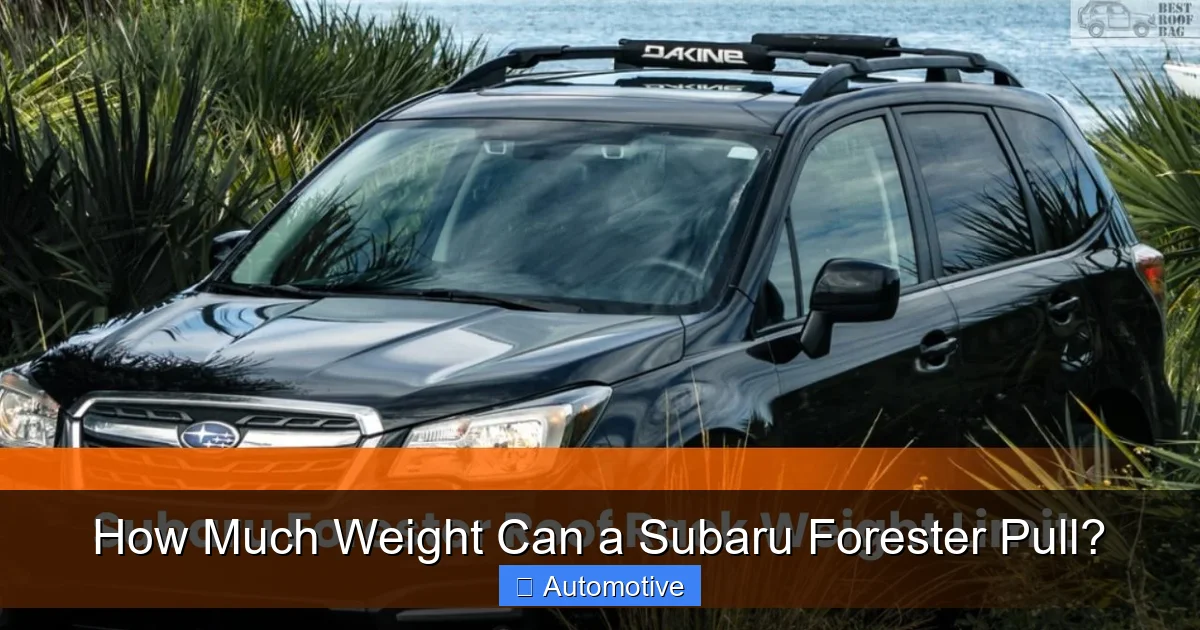
Visual guide about How Much Weight Can a Subaru Forester Pull?
Image source: hotvehs.com
Before we dive into numbers, let’s clarify what “towing capacity” actually means. Towing capacity is the maximum weight your vehicle can safely pull behind it, including the trailer, cargo, passengers, and any additional gear. It’s not just about the engine—it’s a combination of the vehicle’s frame strength, braking system, cooling capacity, transmission, and suspension.
Subaru designs the Forester with a unibody construction, which is lighter and more fuel-efficient than a traditional truck frame. This means it’s not built for heavy-duty towing like a Ford F-150 or Toyota Tacoma. However, it’s more than capable of handling light to moderate loads, especially when equipped properly.
It’s also important to distinguish between gross trailer weight (GTW) and tongue weight. GTW is the total weight of the loaded trailer. Tongue weight is the downward force the trailer exerts on the hitch—typically 10% to 15% of the GTW. For example, a 2,000-pound trailer should have a tongue weight of 200 to 300 pounds. Exceeding this can cause sway, poor handling, or even damage to your vehicle.
Another key term is payload capacity, which includes passengers, cargo, and the tongue weight. The Forester’s payload is usually around 1,000 to 1,200 pounds. So if you have four adults in the car (about 600–800 lbs), you only have 200–600 pounds left for cargo and tongue weight. This is why it’s critical to balance your load and not overload the vehicle.
Why Towing Capacity Isn’t One-Size-Fits-All
You might see different towing numbers online or in brochures—and that’s normal. Towing capacity depends on several factors:
– **Model year:** Subaru has updated the Forester’s engine and transmission over the years, affecting towing ability.
– **Engine type:** The 2.5L four-cylinder is standard, but some older models had weaker engines.
– **Transmission:** CVT (continuously variable transmission) models may have different limits than older automatics.
– **Factory tow package:** Subaru offers an optional towing package that includes a hitch, wiring harness, and cooling upgrades.
– **Drivetrain:** All Foresters come with AWD, which helps with traction but doesn’t increase towing capacity on its own.
Always check your owner’s manual or Subaru’s official website for the exact towing capacity of your specific model. Don’t rely on general estimates—your Forester’s capabilities could be higher or lower than average.
Towing Capacity by Model Year
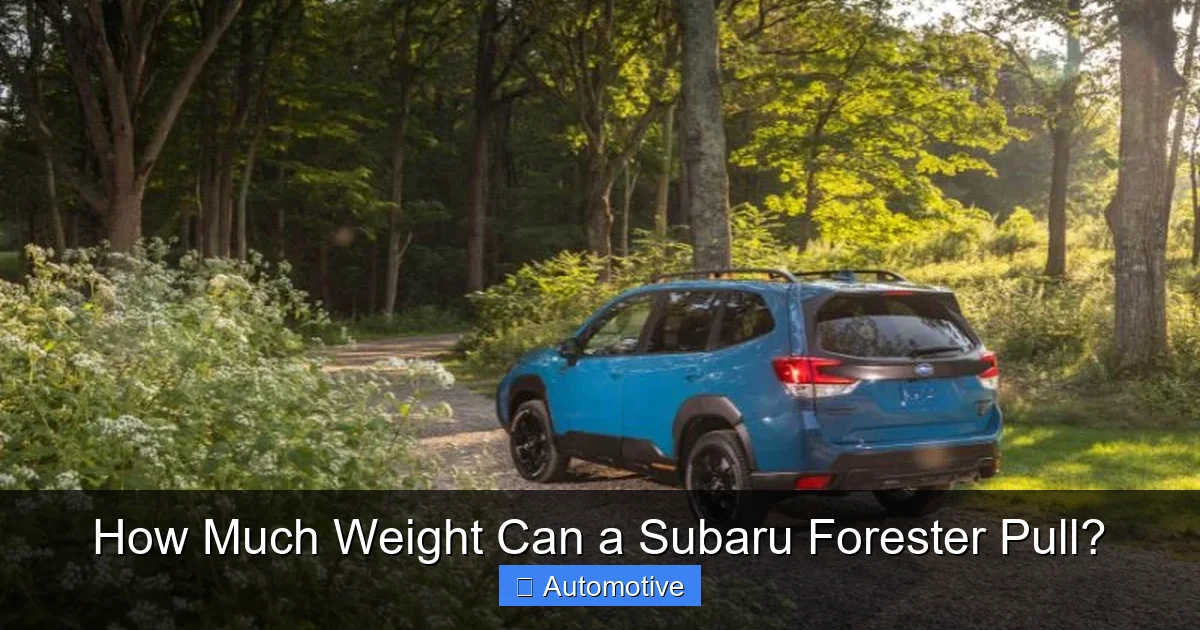
Visual guide about How Much Weight Can a Subaru Forester Pull?
Image source: suvhelp.com
One of the most common questions Forester owners ask is: “What year can pull the most weight?” The answer isn’t straightforward, but we can break it down by generation.
2009–2013 Subaru Forester (Second Generation)
These early 2010s models came with a 2.5L four-cylinder engine producing around 170 horsepower. Towing capacity was limited to **2,000 pounds** when properly equipped. This includes the 2009, 2010, 2011, 2012, and 2013 model years.
To reach that 2,000-pound limit, you needed the optional towing package, which included a Class II hitch and wiring harness. Without it, the capacity dropped to just **1,000 pounds**—enough for a small utility trailer or a couple of motorcycles, but not much else.
These models used a 4-speed automatic transmission, which wasn’t ideal for towing. Overheating could be an issue on long hills or in hot weather, so frequent breaks were recommended.
2014–2018 Subaru Forester (Third Generation)
The 2014 redesign brought a new platform, improved suspension, and a more efficient 2.5L engine with 170–182 horsepower. Towing capacity remained at **2,000 pounds** for most of these years.
However, Subaru introduced a more robust CVT (continuously variable transmission) in 2014, which handled towing better than the older automatics. The optional towing package became more common, and the hitch receiver was stronger.
One notable improvement was better cooling systems, reducing the risk of overheating during long tows. Still, 2,000 pounds was the hard limit—no more, no less.
2019–2024 Subaru Forester (Fourth Generation)
This is where things get exciting. The 2019 redesign brought a major upgrade: a new 2.5L Direct Injection engine with 182 horsepower and 176 lb-ft of torque. More importantly, Subaru increased the towing capacity to **3,500 pounds** when equipped with the factory tow package.
This jump from 2,000 to 3,500 pounds was a game-changer. It meant the Forester could now handle larger pop-up campers, small travel trailers, or even a lightweight teardrop camper. The new CVT was also tuned for better towing performance, with a manual mode and improved heat management.
To achieve the 3,500-pound rating, you must have:
– The factory-installed towing package (includes hitch, wiring, and cooling)
– All-wheel drive (standard on all Foresters)
– Properly inflated tires and functioning brakes
Without the tow package, the capacity drops back to **1,500 pounds**—still useful, but not enough for heavier trailers.
Special Cases: Turbocharged Models
It’s worth noting that Subaru offered a turbocharged 2.0L engine in the 2014–2016 Forester XT. This model produced 250 horsepower and had a towing capacity of **2,000 pounds**—the same as the non-turbo version. Despite the extra power, Subaru didn’t increase the towing limit, likely due to cooling and transmission constraints.
The XT was discontinued after 2016, so turbo models are rare and mostly found in the used market. If you own one, treat it like any other 2014–2018 Forester: max 2,000 pounds.
What Can You Actually Tow with a Subaru Forester?

Visual guide about How Much Weight Can a Subaru Forester Pull?
Image source: shunauto.com
Now that you know the numbers, let’s talk about real-world applications. What can you actually pull with your Forester?
Light Trailers (Up to 1,500 lbs)
Even without the tow package, most Foresters can handle small loads. This includes:
– Utility trailers (e.g., 4×8 or 5×8 foot)
– Motorcycle trailers
– Small cargo trailers
– Canoes or kayaks on a trailer
– Jet skis (most weigh under 800 lbs)
These are great for weekend projects, hauling firewood, or transporting gear to the lake. Just remember to distribute weight evenly and secure everything properly.
Medium Trailers (1,500–2,500 lbs)
With the factory tow package, you can move up to larger loads:
– Pop-up campers (many weigh 1,500–2,200 lbs)
– Small travel trailers (e.g., Casita, Scamp, or Airstream Basecamp)
– Small boats (aluminum fishing boats under 16 feet)
– ATVs or side-by-sides (with a lightweight trailer)
These require more planning. You’ll need a brake controller if the trailer has electric brakes, and you should practice backing up in an empty parking lot.
Heavier Trailers (2,500–3,500 lbs)
Only 2019–2024 Foresters with the tow package can handle this range. Examples include:
– Lightweight teardrop campers (e.g., Little Guy Mini Max)
– Small fiberglass boats (up to 18 feet)
– Medium-sized cargo trailers
– Small livestock trailers (for one or two goats or sheep)
These loads push the Forester to its limit. You’ll need:
– A weight-distributing hitch
– Trailer brakes with a brake controller
– Extended side mirrors
– Regular breaks to let the transmission cool
Always check the trailer’s actual weight—don’t rely on manufacturer estimates. Use a public scale or portable trailer scale to be sure.
How to Tow Safely with Your Subaru Forester
Towing isn’t just about hooking up and driving. Safety should always come first. Here’s how to do it right.
Use the Right Equipment
– **Factory tow package:** This is non-negotiable for heavier towing. It includes a reinforced hitch, wiring harness, and upgraded cooling.
– **Class III hitch:** For 2019+ models, a 2-inch receiver hitch is standard with the tow package.
– **Brake controller:** Required for trailers over 1,500 lbs with electric brakes. Install it inside the cabin for easy access.
– **Weight-distributing hitch:** Helps balance the load and reduces sway on heavier trailers.
– **Trailer mirrors:** Extend your side mirrors to see around the trailer.
Check Your Vehicle Before You Go
Before every tow, do a quick inspection:
– Tire pressure (including spare)
– Brake function (test lights and controller)
– Fluid levels (engine oil, transmission, coolant)
– Lights (brake, turn, and running lights)
– Hitch connection (secure and locked)
Drive Smart
Towing changes how your Forester handles. Remember:
– Accelerate and brake slowly.
– Allow extra distance for stopping.
– Take corners wider to avoid “trailer swing.”
– Avoid sudden lane changes.
– Use lower gears on hills (use manual mode on CVT).
Monitor Temperature
The CVT and engine can overheat when towing, especially in hot weather or on long climbs. Watch the temperature gauge. If it starts to rise, pull over, let the engine idle, and check for issues.
Don’t Overload
Even if your Forester can tow 3,500 lbs, that doesn’t mean you should. Consider:
– Passenger weight
– Cargo in the car
– Tongue weight
– Fuel level
Add it all up and stay under the payload limit. A good rule of thumb: if you’re close to the limit, leave something behind.
Common Mistakes to Avoid
Even experienced drivers make towing errors. Here are the biggest ones to watch out for.
Towing Without the Right Package
Many people assume any Forester can tow 3,500 lbs. Not true. Only 2019+ models with the factory tow package can reach that number. Using a third-party hitch without proper cooling can damage your transmission.
Ignoring Tongue Weight
Too much tongue weight can cause the rear of the car to sag, reducing steering control. Too little can cause trailer sway. Aim for 10–15% of the trailer’s total weight.
Overloading the Trailer
Just because a trailer is rated for 3,000 lbs doesn’t mean it’s safe to load it to capacity. Always weigh your loaded trailer. Many campers and boats are heavier than advertised.
Skipping Maintenance
Towing puts extra stress on your vehicle. Neglecting brake pads, transmission fluid, or tire condition can lead to failure on the road.
Driving Too Fast
Speed increases sway and reduces control. Keep it under 60 mph when towing, especially in wind or rain.
Upgrades and Modifications for Better Towing
Want to get the most out of your Forester’s towing ability? Consider these upgrades.
Heavy-Duty Suspension
Aftermarket shocks and springs can help level the rear when towing. Look for brands like KYB or Bilstein.
Transmission Cooler
Even with the factory package, an auxiliary cooler can help prevent overheating on long trips.
Upgraded Brakes
Performance brake pads and rotors improve stopping power, especially with heavy loads.
Roof Rack or Cargo Box
Free up interior space by storing gear on top. Just don’t exceed the roof load limit (usually 150–200 lbs).
Trailer Sway Control
Some hitches come with built-in sway control. Or add a separate device like the Husky or Curt sway bar.
Real-World Examples: Forester Towing Stories
Let’s look at a few real scenarios to put this all in perspective.
Example 1: Weekend Camper
Sarah owns a 2021 Forester with the tow package. She tows a 2,200-pound pop-up camper to state parks. She uses a brake controller, checks her hitch before each trip, and drives at 55 mph on the highway. She’s had no issues and loves the freedom it gives her.
Example 2: Boat Hauler
Mike has a 2015 Forester (2,000-lb capacity). He tows a 14-foot aluminum fishing boat that weighs 1,100 pounds with gear. He uses a simple ball hitch and drives carefully on mountain roads. He knows he can’t upgrade to a bigger boat without a new vehicle.
Example 3: Overloader
Jake bought a 2020 Forester and tried to tow a 3,800-pound travel trailer. He didn’t have the tow package and ignored the warnings. The transmission overheated, and he had to call a tow truck. Lesson learned: know your limits.
Conclusion: Tow Smart, Tow Safe
The Subaru Forester may not be a towing powerhouse, but it’s more capable than many people realize. With the right model, equipment, and preparation, you can safely tow everything from a small trailer to a full-sized camper.
Remember: towing capacity isn’t just a number—it’s a guideline for safe operation. Always check your owner’s manual, use the factory tow package when available, and never exceed your vehicle’s limits. And when in doubt, weigh your trailer and do a test drive in a safe area.
Whether you’re heading to the mountains, the lake, or just helping a friend move, your Forester can be a reliable partner—as long as you treat it right. So hook up, drive smart, and enjoy the journey.
Frequently Asked Questions
Can a 2020 Subaru Forester tow 3,500 pounds?
Yes, but only if it has the factory-installed towing package. Without it, the towing capacity drops to 1,500 pounds. Always check your vehicle’s equipment before towing.
What happens if I exceed my Forester’s towing capacity?
Overloading can cause transmission damage, brake failure, or loss of control. It may also void your warranty and increase the risk of accidents.
Do I need a brake controller for my trailer?
Yes, if your trailer has electric brakes and weighs over 1,500 pounds. A brake controller ensures the trailer brakes activate when you press the pedal.
Can I install a tow hitch myself?
You can, but it’s safer to have it done by a professional or dealer. Improper installation can lead to hitch failure or damage to your vehicle.
Does towing reduce fuel economy?
Yes, significantly. Expect a 20–40% drop in MPG when towing, depending on weight, speed, and terrain. Plan for more frequent fuel stops.
Can I tow with a Forester that has a CVT transmission?
Yes, but avoid prolonged heavy towing in hot weather. The CVT can overheat, so take breaks and monitor the temperature gauge.