
How Much Weight Can a Nissan Frontier Pull?

The Nissan Frontier is a reliable mid-size pickup known for its strong towing capabilities. Depending on the model year, engine, and drivetrain, it can pull between 3,500 and 6,720 pounds—making it ideal for boats, trailers, and small campers.
Key Takeaways
- Towing capacity varies by model year: Older Frontiers (2005–2021) typically tow up to 6,500 lbs, while newer models (2022–present) can reach 6,720 lbs with the right setup.
- Engine and drivetrain matter: The V6 engine and 4WD configuration significantly boost towing power compared to 4-cylinder or 2WD models.
- Proper equipment is essential: A factory-installed towing package, hitch receiver, and brake controller are needed to maximize and safely use the Frontier’s towing capacity.
- Payload and towing are different: The Frontier’s payload (how much it can carry in the bed) is separate from towing capacity and usually ranges from 1,300 to 1,500 lbs.
- Always check your owner’s manual: Towing limits depend on specific trim, cab size, bed length, and optional features—never assume based on general specs.
- Safe towing requires preparation: Distribute weight properly, use sway control, and never exceed the vehicle’s Gross Combined Weight Rating (GCWR).
- Regular maintenance improves performance: Keep the transmission, cooling system, and brakes in top shape for heavy towing tasks.
📑 Table of Contents
- How Much Weight Can a Nissan Frontier Pull?
- Understanding Towing Capacity: What It Really Means
- Nissan Frontier Towing Capacity by Model Year
- Factors That Affect Towing Capacity
- How to Safely Tow with Your Nissan Frontier
- Comparing the Frontier to Other Mid-Size Trucks
- Final Thoughts: Is the Nissan Frontier Right for Your Towing Needs?
How Much Weight Can a Nissan Frontier Pull?
If you’re considering buying a Nissan Frontier—or already own one—you’ve probably asked yourself: “How much weight can this truck actually pull?” Whether you’re hauling a small camper for a weekend getaway, towing a boat to the lake, or moving equipment for a DIY project, knowing your truck’s towing capacity is crucial for both safety and performance.
The good news? The Nissan Frontier is one of the most capable mid-size trucks on the market when it comes to towing. Over the years, it has earned a reputation for being rugged, dependable, and surprisingly strong for its size. But here’s the catch: not all Frontiers are created equal. Towing capacity depends on several factors, including the model year, engine type, drivetrain (2WD vs. 4WD), cab configuration, and whether you have the optional towing package installed.
In this guide, we’ll break down everything you need to know about the Nissan Frontier’s towing capabilities. We’ll cover the differences between older and newer models, explain how engine choices affect performance, and give you practical tips to tow safely and efficiently. By the end, you’ll have a clear understanding of what your Frontier can handle—and how to get the most out of it without risking damage or accidents.
Understanding Towing Capacity: What It Really Means
Visual guide about How Much Weight Can a Nissan Frontier Pull?
Image source: shunauto.com
Before diving into specific numbers, it’s important to understand what “towing capacity” actually means. In simple terms, it’s the maximum weight your vehicle can safely pull behind it using a trailer. This includes the weight of the trailer itself plus everything loaded onto it—gear, people, fuel, water, and more.
However, towing capacity isn’t just a single number you can apply to every truck. It’s determined by a combination of engineering limits, including the strength of the frame, the power of the engine, the cooling system’s ability to handle heat, the durability of the transmission, and the effectiveness of the braking system. That’s why manufacturers test each configuration individually and provide specific towing ratings based on those variables.
For the Nissan Frontier, this means that a 2023 model with a V6 engine, 4WD, and the towing package will have a much higher capacity than a 2010 model with a 4-cylinder engine and 2WD. Even within the same model year, different trims and options can change the towing limit.
Another key concept to understand is the Gross Combined Weight Rating (GCWR). This is the maximum allowable weight of your fully loaded truck plus the fully loaded trailer. Exceeding the GCWR can strain your engine, transmission, and brakes, and may even be illegal in some areas. Always check your owner’s manual or the door jamb sticker for your specific GCWR.
Key Towing Terms You Should Know
To make sense of towing specs, familiarize yourself with these common terms:
- Towing Capacity: The maximum weight your truck can pull.
- Payload Capacity: The total weight your truck can carry in the cab and bed (passengers, cargo, etc.).
- Gross Vehicle Weight Rating (GVWR): The maximum weight your truck can safely weigh when fully loaded.
- Gross Combined Weight Rating (GCWR): The total weight of your truck and trailer combined.
- Tongue Weight: The downward force exerted on the hitch by the trailer (typically 10–15% of the trailer’s total weight).
Understanding these terms will help you make smarter decisions when loading your trailer and planning your towing trips.
Nissan Frontier Towing Capacity by Model Year
Visual guide about How Much Weight Can a Nissan Frontier Pull?
Image source: i.ytimg.com
One of the most common questions about the Nissan Frontier is how its towing capacity has changed over time. The Frontier has gone through several generations, and each has brought improvements in power, technology, and capability. Let’s break it down by major model years.
First Generation (1998–2004)
The original Nissan Frontier was a compact truck designed for everyday use and light-duty work. During this period, towing capacity was modest compared to today’s standards. Most models came with a 2.4L 4-cylinder engine or an optional 3.3L V6.
– 4-cylinder models: Up to 3,500 lbs
– V6 models: Up to 5,000 lbs (with towing package)
These trucks were great for small trailers, jet skis, or utility hauls, but not ideal for larger loads. The lack of modern towing aids like trailer sway control also made them less stable when pulling heavier weights.
Second Generation (2005–2021)
This generation marked a major upgrade for the Frontier. It grew in size, power, and capability, becoming a true mid-size truck. The 4.0L V6 engine became standard on most trims, delivering 261 horsepower and 281 lb-ft of torque—a significant improvement over earlier models.
With the right configuration, the 2005–2021 Frontier could tow up to 6,500 lbs. This made it competitive with other mid-size trucks like the Toyota Tacoma and Ford Ranger. Key factors that boosted towing included:
– Stronger frame and suspension
– Improved cooling systems
– Optional towing package with hitch receiver, transmission cooler, and wiring harness
However, towing capacity still varied. A 2WD King Cab with the V6 might tow 6,500 lbs, while a 4WD Crew Cab with the same engine could drop to around 6,200 lbs due to added weight. Always check the specific build of your truck.
Third Generation (2022–Present)
The current-generation Nissan Frontier, introduced in 2022, represents a complete redesign. It features a more modern exterior, updated interior, and a new 3.8L V6 engine producing 310 horsepower and 281 lb-ft of torque. This engine is paired with a 9-speed automatic transmission, improving both power delivery and fuel efficiency.
Thanks to these upgrades, the 2022–2024 Frontier boasts a maximum towing capacity of 6,720 lbs when properly equipped. This is the highest in the Frontier’s history and puts it at the top of the mid-size truck class.
To achieve this rating, you’ll need:
– The 3.8L V6 engine
– 4WD or 2WD (4WD slightly reduces capacity due to weight)
– The optional towing package (includes Class III hitch, transmission cooler, trailer brake pre-wiring, and sway control)
Even base models without the towing package can still pull up to 3,500 lbs, which is plenty for small trailers or personal watercraft.
Real-World Towing Examples
To put these numbers into perspective, here are some common items the Frontier can handle:
– Small Camper: Most pop-up campers and teardrop trailers weigh between 1,500 and 3,000 lbs—well within the Frontier’s range.
– Boat and Trailer: A 17-foot fishing boat with trailer typically weighs 3,500–4,500 lbs. The Frontier can easily tow this, even with gear onboard.
– Utility Trailer with Equipment: A 5×8 enclosed trailer loaded with lawn equipment, ATVs, or furniture usually weighs 4,000–5,000 lbs.
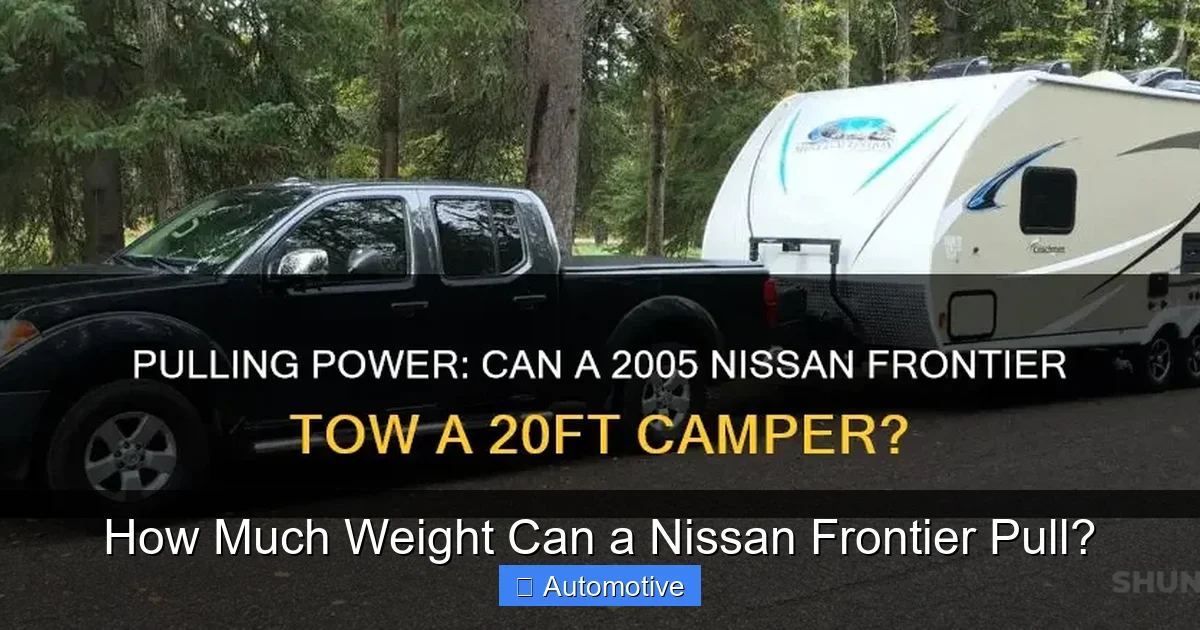
– Travel Trailer: Larger travel trailers (20–25 feet) can weigh 5,000–6,500 lbs. The Frontier can handle these, but you’ll need to stay within the GCWR and monitor weight distribution.
Always weigh your trailer at a certified scale before hitting the road. Many people underestimate how much their gear adds up.
Factors That Affect Towing Capacity
Visual guide about How Much Weight Can a Nissan Frontier Pull?
Image source: i.pinimg.com
Now that you know the numbers, let’s talk about what actually determines how much your Frontier can pull. It’s not just about the engine—several interconnected factors play a role.
Engine Type and Power
The engine is the heart of your towing capability. The Frontier has used a few different engines over the years, but the V6 has always been the towing champion.
– The 3.8L V6 in current models delivers 310 horsepower, giving it strong low-end torque for pulling heavy loads from a stop.
– Older 4.0L V6 engines (2005–2021) made 261 hp—still very capable, but less refined.
– 4-cylinder engines (mostly in older or base models) are best suited for light towing (under 4,000 lbs).
If you plan to tow regularly, a V6-equipped Frontier is the way to go.
Drivetrain: 2WD vs. 4WD
All-wheel drive (4WD) improves traction off-road and in bad weather, but it adds weight and complexity. Because of this, 4WD models usually have a slightly lower towing capacity than their 2WD counterparts.
For example:
– 2023 Frontier 2WD with V6: 6,720 lbs
– 2023 Frontier 4WD with V6: 6,510 lbs
The difference is small, but it’s worth noting if you’re near the limit. That said, 4WD can be safer when towing in slippery conditions, so the trade-off may be worth it.
Cab and Bed Configuration
The size of the cab (King Cab vs. Crew Cab) and bed (short vs. long) also affects towing. Generally:
– King Cab (2-door): Lighter, better towing
– Crew Cab (4-door): Heavier, slightly reduced capacity
Longer beds can improve weight distribution when towing, but they also add weight. Most towing ratings are based on the most common configurations, so check your specific model.
Towing Package and Equipment
This is where many people go wrong. You can’t just hook up a trailer and expect your Frontier to perform at its peak. The optional towing package includes:
– Class III hitch receiver (rated for up to 6,720 lbs)
– Heavy-duty transmission cooler (prevents overheating)
– Trailer brake pre-wiring (for electric brakes)
– Sway control system (improves stability)
– Upgraded cooling system
Without these, your truck may overheat, lose power, or become unstable—even if the engine is capable.
If you didn’t get the towing package from the factory, you can often add aftermarket components. But be cautious: not all hitches are rated for the full capacity. Always use a hitch and wiring harness rated for your intended load.
Weight Distribution and Trailer Setup
Even with a high towing capacity, poor setup can ruin your experience. Here are some tips:
– Tongue weight: Aim for 10–15% of the trailer’s total weight on the hitch. Too little causes sway; too much overloads the rear axle.
– Load balance: Heavier items should be centered over the trailer axles, not at the back.
– Use a weight distribution hitch: For trailers over 5,000 lbs, this helps level the truck and trailer, improving handling and braking.
– Check trailer brakes: Most states require electric brakes on trailers over 3,000 lbs. Make sure they’re working and properly adjusted.
How to Safely Tow with Your Nissan Frontier
Knowing your towing capacity is only half the battle. The other half is using that capacity safely. Towing puts extra stress on your vehicle, and mistakes can lead to accidents, breakdowns, or costly repairs.
Pre-Tow Checklist
Before you hit the road, go through this checklist:
- Verify your trailer’s weight (use a scale if possible)
- Check tire pressure on both truck and trailer
- Inspect hitch, safety chains, and wiring
- Ensure trailer brakes are functioning
- Confirm all lights (brake, turn, tail) are working
- Load cargo evenly and secure all items
- Check fluid levels (engine oil, transmission, coolant)
Driving Tips for Towing
Towing changes how your truck handles. Here’s how to adapt:
– Accelerate and brake slowly: Extra weight means longer stopping distances. Leave more space between you and other vehicles.
– Use lower gears on hills: Downshift when climbing to reduce strain on the engine and transmission.
– Avoid sudden maneuvers: Sharp turns or lane changes can cause trailer sway.
– Use your mirrors: Check frequently for sway or shifting cargo.
– Take wider turns: Trailers can “cut” corners, so swing wide to avoid curbs or obstacles.
If you feel the trailer swaying, don’t panic. Ease off the accelerator and gently apply the trailer brakes (if equipped). Never slam on the truck brakes—this can worsen the sway.
Maintenance for Towing
Regular maintenance is even more important when towing. Pay special attention to:
– Transmission: Towing generates heat. Use a transmission cooler and check fluid regularly.
– Brakes: Inspect pads and rotors often. Consider upgrading to heavy-duty brakes if you tow frequently.
– Cooling system: Ensure the radiator and coolant are in good condition to prevent overheating.
– Tires: Use tires rated for the load and check pressure before every trip.
If you tow often, consider a maintenance schedule every 3,000–5,000 miles instead of the standard 7,500.
Comparing the Frontier to Other Mid-Size Trucks
How does the Nissan Frontier stack up against its competitors? Let’s look at a quick comparison of towing capacities for popular mid-size trucks (2023–2024 models):
- Nissan Frontier: Up to 6,720 lbs
- Toyota Tacoma: Up to 6,800 lbs (with TRD Off-Road or TRD Pro)
- Ford Ranger: Up to 7,500 lbs (with 2.3L EcoBoost and towing package)
- Chevrolet Colorado: Up to 7,000 lbs (with Duramax diesel)
- GMC Canyon: Up to 7,700 lbs (with diesel engine)
As you can see, the Frontier is competitive, especially among gas-powered trucks. It doesn’t have a diesel option like the Colorado or Canyon, but its V6 delivers strong performance without the added cost and complexity of diesel maintenance.
The Frontier also stands out for its value. It’s often more affordable than the Tacoma or Ranger, especially when comparing similarly equipped models. And with its rugged design and proven reliability, it’s a favorite among off-roaders and weekend warriors.
Final Thoughts: Is the Nissan Frontier Right for Your Towing Needs?
So, how much weight can a Nissan Frontier pull? The answer depends on your specific truck, but in general, you can expect:
– Older models (2005–2021): Up to 6,500 lbs
– Newer models (2022–present): Up to 6,720 lbs
With the right engine, drivetrain, and towing package, the Frontier is more than capable of handling most mid-size towing tasks. Whether you’re pulling a camper, a boat, or a utility trailer, this truck delivers solid performance and dependability.
But remember: capacity is only part of the equation. Safe towing requires proper equipment, good driving habits, and regular maintenance. Never exceed your truck’s limits, and always double-check your setup before heading out.
If you’re in the market for a capable, affordable mid-size truck with strong towing power, the Nissan Frontier is definitely worth considering. It may not have the flash of some competitors, but when it comes to getting the job done, it’s hard to beat.
Frequently Asked Questions
What is the towing capacity of a 2023 Nissan Frontier?
The 2023 Nissan Frontier can tow up to 6,720 pounds when equipped with the 3.8L V6 engine, 4WD or 2WD, and the optional towing package. Without the package, capacity drops to around 3,500 pounds.
Can a Nissan Frontier tow a travel trailer?
Yes, the Frontier can tow many travel trailers, especially those under 6,500 pounds. Pop-up campers, teardrop trailers, and smaller fifth wheels are ideal matches. Always check the trailer’s weight and your truck’s GCWR.
Do I need a special hitch to tow with my Frontier?
Yes, for towing over 3,500 pounds, you’ll need a Class III hitch receiver, which is included in the factory towing package. Aftermarket hitches are available, but make sure they’re rated for your intended load.
Does 4WD reduce towing capacity on the Frontier?
Slightly. A 2023 Frontier 4WD has a towing capacity of 6,510 pounds, compared to 6,720 pounds for the 2WD version. The difference is due to the added weight of the 4WD system.
Can I add a towing package to my older Frontier?
Yes, many components like hitches, transmission coolers, and brake controllers can be added aftermarket. However, ensure all parts are compatible and professionally installed for safety.
What happens if I exceed my Frontier’s towing capacity?
Exceeding towing limits can cause engine overheating, transmission failure, brake fade, and loss of control. It may also void your warranty and violate traffic laws in some states.
