How Much Weight Can a Gmc Canyon Tow

Contents
- 1 Key Takeaways
- 2 📑 Table of Contents
- 3 Understanding Towing Capacity: What It Really Means
- 4 GMC Canyon Towing Capacity by Model Year and Configuration
- 5 Engine Options and Their Towing Impact
- 6 Towing Packages and Essential Equipment
- 7 Practical Tips for Safe and Effective Towing
- 8 Real-World Towing Examples
- 9 Common Mistakes to Avoid
- 10 Conclusion
- 11 Frequently Asked Questions

Car Ambient Light Kit
Wiper Blade Refills

Car Seat Cover (Universal Fit)
Car Neck Pillow
The GMC Canyon is a capable midsize pickup with a towing capacity ranging from 3,500 to 7,700 pounds, depending on configuration. With the right setup—like the available Duramax diesel engine and towing package—you can confidently haul trailers, boats, and campers. Always match your load to your truck’s specs and drive safely.
Thinking about hitching up a trailer and hitting the road with your GMC Canyon? You’re not alone. Whether you’re planning a weekend camping trip, hauling a small boat to the lake, or moving equipment for a home project, knowing how much weight your truck can safely tow is essential. The GMC Canyon, known for its rugged design and dependable performance, is a popular choice among midsize truck buyers who need real utility without the bulk of a full-size pickup.
But here’s the thing: not all GMC Canyons are created equal when it comes to towing. The amount of weight your Canyon can pull depends on several factors—engine type, drivetrain, cab configuration, bed length, and whether you’ve equipped it with the right towing gear. That’s why it’s so important to dig into the details instead of relying on general claims. In this guide, we’ll break down everything you need to know about how much weight a GMC Canyon can tow, so you can make smart, safe decisions every time you hook up a trailer.
From understanding the difference between towing capacity and payload to learning which engine gives you the most pulling power, we’ve got you covered. We’ll also share practical tips for safe towing, highlight common mistakes to avoid, and help you choose the right setup for your needs. Whether you’re a first-time tower or a seasoned pro, this article will give you the confidence to use your Canyon to its full potential—without overloading it or risking damage.
Key Takeaways
- Towing capacity varies by model year and configuration: The GMC Canyon’s towing ability ranges from 3,500 to 7,700 pounds, so always check your specific trim and engine.
- Engine choice matters: The 2.8L Duramax turbo-diesel delivers the highest towing capacity, while the 2.5L and 3.6L gas engines offer lower but still useful ratings.
- Towing packages boost performance: Adding the available Max Trailering Package increases capacity and includes cooling systems, hitch receivers, and brake controllers.
- Payload and tongue weight are critical: Don’t exceed your truck’s payload limit, and keep tongue weight at 10–15% of the trailer’s total weight for safe handling.
- Proper equipment ensures safety: Use weight-distributing hitches, trailer brakes, and sway control when towing near max capacity.
- Regular maintenance supports towing: Check fluids, brakes, tires, and suspension before every tow to prevent breakdowns and accidents.
- Know your state’s laws: Some states require brake controllers or special licenses for heavier trailers—stay compliant.
📑 Table of Contents
Understanding Towing Capacity: What It Really Means
Before we dive into the numbers, let’s clarify what “towing capacity” actually means. Simply put, it’s the maximum weight your vehicle can safely pull behind it when properly equipped. This includes the weight of the trailer itself plus everything inside it—gear, water, fuel, passengers, and cargo. It’s not just about raw power; it’s about balance, stability, and mechanical limits.
Towing capacity isn’t a one-size-fits-all number. It’s determined by the manufacturer based on extensive testing of the vehicle’s engine, transmission, cooling system, frame strength, brakes, and suspension. GMC engineers design each Canyon configuration with specific limits in mind, so even two trucks that look identical might have different towing abilities if their engines or options differ.
It’s also important to distinguish towing capacity from payload capacity. Payload refers to the total weight your truck can carry inside the cabin and bed—including passengers, gear, and the tongue weight of a trailer. Exceeding either limit can lead to poor handling, increased stopping distances, premature wear on components, or even catastrophic failure. Always check your owner’s manual or the door jamb sticker for your truck’s exact ratings.
Another key concept is Gross Combined Weight Rating (GCWR). This is the maximum allowable weight of your fully loaded truck plus your fully loaded trailer. Staying under this limit ensures your drivetrain and brakes can handle the stress. For example, if your Canyon has a GCWR of 12,000 pounds and your truck weighs 5,000 pounds loaded, your trailer shouldn’t exceed 7,000 pounds—even if your towing capacity is higher.
GMC Canyon Towing Capacity by Model Year and Configuration
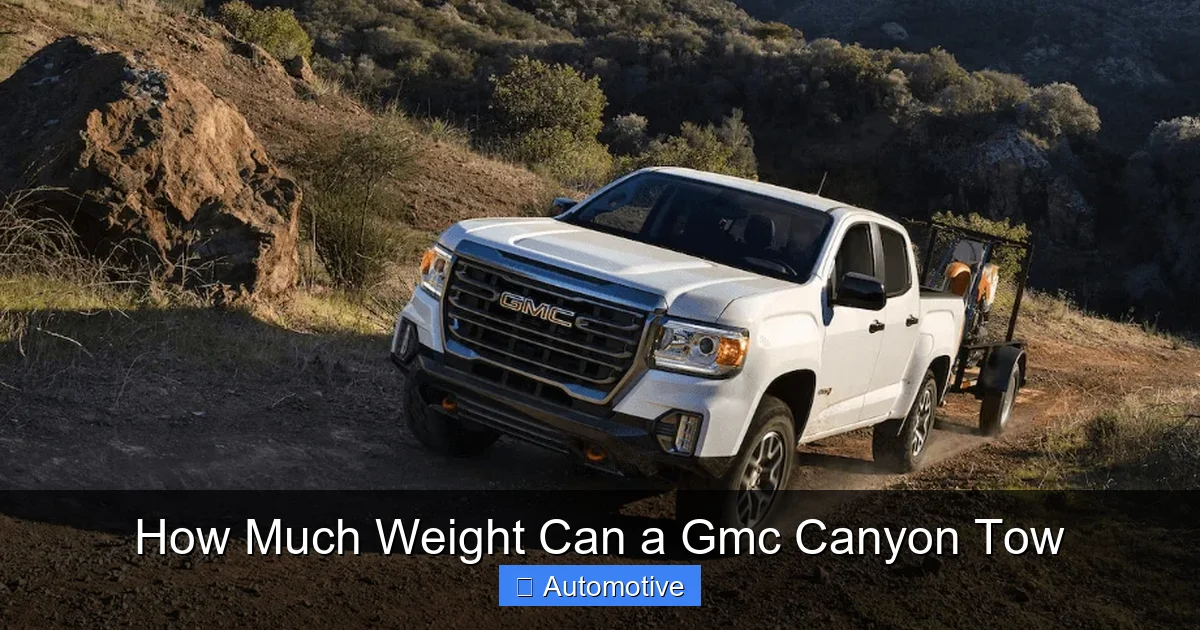
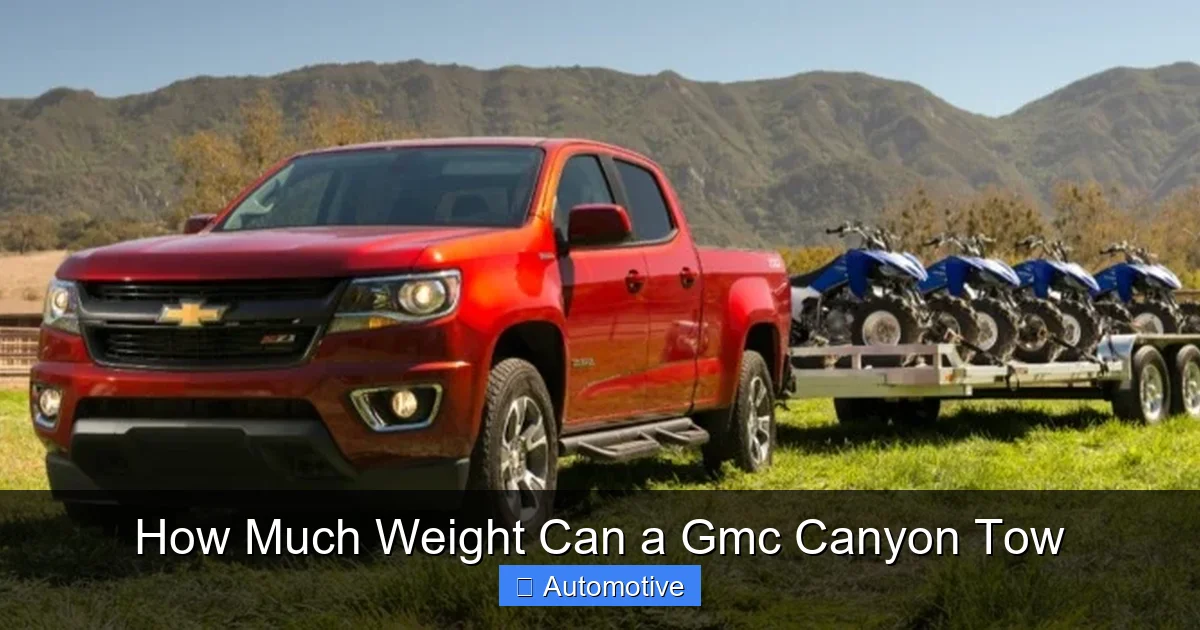
Visual guide about How Much Weight Can a Gmc Canyon Tow
Image source: automotivetowingguide.com
Now let’s get into the numbers. The GMC Canyon’s towing capacity has evolved over the years, with significant improvements in recent models thanks to more powerful engines and better towing technology. Below is a breakdown of towing capacities across different generations and configurations.
First Generation (2004–2012)
The original GMC Canyon offered modest towing capabilities. Most models came with a 2.8L or 3.5L inline-5 gasoline engine, delivering between 3,500 and 4,000 pounds of towing capacity. Some V6-equipped versions could reach up to 5,500 pounds when properly equipped, but these were rare. These early Canyons were best suited for light-duty tasks like hauling small utility trailers or pop-up campers.
Second Generation (2015–2022)
A major redesign in 2015 brought significant upgrades. The new platform offered three engine options: a 2.5L 4-cylinder, a 3.6L V6, and—most importantly—a 2.8L Duramax turbo-diesel. This diesel engine was a game-changer, boosting towing capacity dramatically.
– The 2.5L 4-cylinder (available early in this generation) could tow up to 3,500 pounds.
– The 3.6L V6, paired with rear-wheel drive or 4WD, increased capacity to 7,000 pounds with the proper towing package.
– The 2.8L Duramax diesel, introduced in 2016, became the towing champion, capable of pulling up to 7,700 pounds when equipped with the Max Trailering Package.
Cab and bed configurations also played a role. Extended cab and crew cab models with shorter beds (5-foot) generally had higher towing ratings than long-bed versions due to weight distribution and axle ratios. Rear-wheel drive typically offered better towing than 4WD because it reduced overall vehicle weight.
Third Generation (2023–Present)
The latest GMC Canyon continues to build on its legacy. The 2023 refresh brought updated styling, improved tech, and refined powertrains. The 2.8L Duramax diesel remains the top choice for serious towing, maintaining its 7,700-pound capacity. The 3.6L V6 is still available but is gradually being phased out in favor of more efficient options.
All new Canyons come standard with advanced towing aids like trailer sway control, hill start assist, and available integrated brake controllers. The Max Trailering Package is still offered and includes enhancements like an enhanced cooling system, heavy-duty battery, upgraded alternator, and a Class III hitch receiver.
Engine Options and Their Towing Impact

Visual guide about How Much Weight Can a Gmc Canyon Tow
Image source: gmauthority.com
Your engine choice is the single biggest factor affecting how much weight your GMC Canyon can tow. Let’s look at each option and what it brings to the table.
2.5L 4-Cylinder Gas Engine
This base engine delivers around 191 horsepower and 181 lb-ft of torque. It’s fuel-efficient and great for daily driving, but its towing capacity is limited to about 3,500 pounds. That’s enough for small trailers, jet skis, or lightweight cargo haulers, but not much more. If you plan to tow frequently or haul heavier loads, this engine isn’t ideal.
3.6L V6 Gas Engine
Stepping up to the 3.6L V6 gives you 308 horsepower and 275 lb-ft of torque. This engine significantly improves towing performance, allowing the Canyon to handle up to 7,000 pounds when properly equipped. It’s a solid choice for buyers who want strong performance without stepping into diesel territory. It works well for towing mid-sized travel trailers, small boats, or utility trailers loaded with equipment.
2.8L Duramax Turbo-Diesel Engine
This is the king of the hill when it comes to towing. The 2.8L Duramax produces 181 horsepower and a robust 369 lb-ft of torque—more than double the torque of the base engine. Torque is what gets heavy loads moving, especially from a stop or up a hill. With this engine and the Max Trailering Package, the Canyon can tow up to 7,700 pounds.
The diesel also offers better fuel economy under load. While it costs more upfront and requires diesel fuel (and occasional DEF fluid top-offs), it’s worth considering if you tow regularly. Many owners report getting 20+ mpg while towing a 6,000-pound trailer—something nearly impossible with a gas engine.
Towing Packages and Essential Equipment
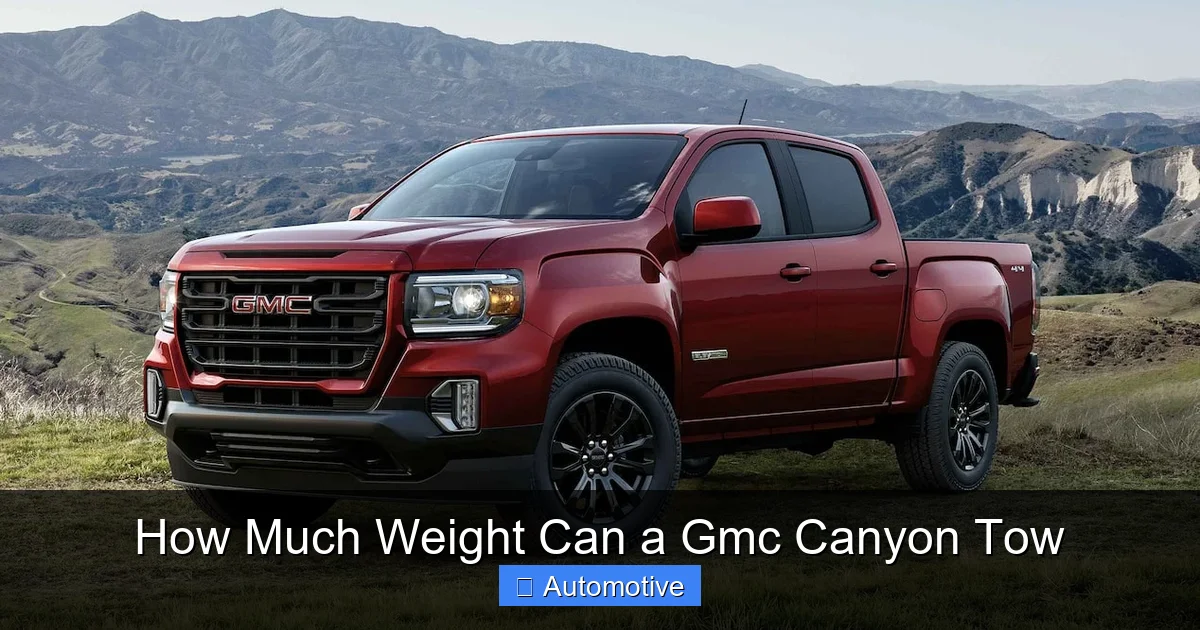
Visual guide about How Much Weight Can a Gmc Canyon Tow
Image source: otgmc.sfo2.digitaloceanspaces.com
Even with a powerful engine, you need the right equipment to tow safely and effectively. GMC offers several towing packages that enhance your Canyon’s capabilities.
Max Trailering Package
This is the gold standard for Canyon towing. Available on most trims with the V6 or diesel engine, it includes:
– Class III hitch receiver with 2-inch ball mount
– Integrated trailer brake controller
– Enhanced cooling system (engine and transmission)
– Heavy-duty battery and alternator
– Upgraded suspension components
– Trailer sway control and hill start assist
With this package, your towing capacity jumps to the maximum allowed for your engine. It also ensures your truck can handle the heat and stress of long hauls or steep grades.
Trailering Package (Standard or Optional)
A lighter version of the Max package, this includes a hitch receiver, wiring harness, and basic towing aids. It’s sufficient for lighter loads but doesn’t offer the same level of cooling or braking support.
Aftermarket Upgrades
If your Canyon didn’t come with a towing package, you can add many components aftermarket. Popular upgrades include:
– Weight-distributing hitches: These spread the trailer’s tongue weight across all axles, improving stability.
– Sway control devices: Reduce fishtailing, especially in windy conditions or when passed by large trucks.
– Brake controllers: Allow you to manually adjust trailer brake pressure, crucial for heavy loads.
– Transmission coolers: Help prevent overheating during long tows.
Always ensure any aftermarket parts are compatible with your truck and installed by a professional.
Practical Tips for Safe and Effective Towing
Knowing your towing capacity is just the first step. How you use it matters even more. Follow these tips to tow safely and protect your investment.
Know Your Limits
Never exceed your truck’s towing capacity, payload, or GCWR. Even if your trailer weighs 7,600 pounds and your capacity is 7,700, consider the weight of passengers, gear, and fuel. A half-tank of gas and two passengers can add 300+ pounds—enough to push you over the edge.
Distribute Weight Properly
Load your trailer so that 60% of the weight is in the front half. This helps maintain proper tongue weight (10–15% of total trailer weight). Too little tongue weight causes sway; too much overloads the rear axle and reduces steering control.
Use the Right Hitch and Ball
Match your hitch class and ball size to your trailer. Most Canyons use a Class III hitch with a 2-inch ball. Ensure the ball rating matches or exceeds your trailer’s coupler rating.
Check Tire Pressure and Condition
Underinflated tires overheat and can fail, especially under load. Check both truck and trailer tires before every tow. Consider upgrading to LT (Light Truck) tires for better durability.
Practice Before You Go
If you’re new to towing, practice in an empty parking lot. Get used to braking distances, turning radius, and backing up. Use your mirrors and consider adding extended towing mirrors for better visibility.
Maintain Your Truck
Towing puts extra strain on your engine, transmission, brakes, and suspension. Regular maintenance is crucial:
– Change engine oil and filter more frequently when towing.
– Inspect brake pads and rotors.
– Check transmission fluid level and condition.
– Grease suspension components and hitch parts.
Plan Your Route
Avoid steep mountain passes or narrow roads if you’re not experienced. Use GPS apps that factor in trailer size and weight. Allow extra time for stops and fuel.
Real-World Towing Examples
Let’s put the numbers into context with some real-world scenarios.
Scenario 1: Weekend Camper
You’re towing a 5,000-pound travel trailer with your Canyon equipped with the 3.6L V6 and Max Trailering Package. That’s well within the 7,000-pound limit. Pack light, keep tongue weight at 500–750 pounds, and you’ll have a smooth, stable ride.
Scenario 2: Fishing Boat
A 22-foot bass boat with trailer weighs about 4,500 pounds. Even the base 2.5L engine can handle this, but the V6 or diesel will give you more confidence on hills and better fuel economy.
Scenario 3: Equipment Hauler
You’re moving a 6,500-pound utility trailer loaded with landscaping equipment. Only the diesel-powered Canyon with the Max package should attempt this. Ensure your payload (including passengers and gear) doesn’t exceed the truck’s limit.
Scenario 4: Overlanding Setup
A rooftop tent, gear, and a small trailer with a motorcycle might total 3,000 pounds. Perfect for the base engine, but consider upgrading to the V6 for better performance and safety margin.
Common Mistakes to Avoid
Even experienced drivers make towing errors. Watch out for these common pitfalls:
– **Ignoring the owner’s manual:** Always refer to your specific model’s towing guide.
– **Overloading the trailer:** Just because it fits doesn’t mean it’s safe.
– **Skipping pre-tow inspections:** Check lights, brakes, hitch, and tires every time.
– **Forgetting trailer brakes:** Trailers over 1,500 pounds often require electric brakes.
– **Driving too fast:** Reduce speed when towing—handling and braking change dramatically.
– **Neglecting maintenance:** Towing accelerates wear. Stay on top of service.
Conclusion
The GMC Canyon is a versatile and capable midsize truck that can handle a wide range of towing tasks—from light weekend adventures to serious hauling jobs. With towing capacities ranging from 3,500 to 7,700 pounds, there’s a Canyon configuration for nearly every need. The key is matching your truck’s specs to your intended use.
If you plan to tow regularly or haul heavy loads, opt for the 2.8L Duramax diesel with the Max Trailering Package. It delivers the best combination of power, efficiency, and safety. For lighter duties, the 3.6L V6 offers excellent performance at a lower cost.
Remember, towing isn’t just about how much you can pull—it’s about how safely and confidently you can do it. Always respect your truck’s limits, use the right equipment, and maintain your vehicle properly. With the right preparation, your GMC Canyon can be a reliable partner for years of adventures on the road.
Frequently Asked Questions
What is the maximum towing capacity of a GMC Canyon?
The maximum towing capacity of a GMC Canyon is 7,700 pounds. This is achieved with the 2.8L Duramax turbo-diesel engine and the Max Trailering Package. Gas models with the 3.6L V6 can tow up to 7,000 pounds when properly equipped.
Can a GMC Canyon tow a travel trailer?
Yes, a GMC Canyon can tow a travel trailer, depending on the trailer’s weight. Most mid-sized travel trailers (4,000–6,500 pounds) are within the Canyon’s capability, especially with the V6 or diesel engine and towing package.
Do I need a special license to tow with a GMC Canyon?
In most states, no special license is required to tow with a GMC Canyon as long as the trailer weighs under 10,000 pounds. However, some states require brake controllers or additional endorsements for heavier trailers—check local laws.
What is the difference between towing capacity and payload?
Towing capacity is the maximum weight your truck can pull behind it. Payload is the total weight it can carry inside—passengers, cargo, and trailer tongue weight. Both limits must be respected to avoid damage or accidents.
Can I increase my GMC Canyon’s towing capacity?
You cannot legally exceed the manufacturer’s rated towing capacity. However, you can maximize it by choosing the right engine, adding the Max Trailering Package, and using proper towing equipment like weight-distributing hitches.
Is the GMC Canyon good for towing long distances?
Yes, especially the diesel model. The 2.8L Duramax offers strong torque, good fuel economy under load, and robust cooling systems, making it well-suited for long-distance towing with proper maintenance and preparation.