How Much Is a Maserati?

Contents
- 1 Key Takeaways
- 2 📑 Table of Contents
- 3 How Much Is a Maserati? A Complete Pricing Guide
- 4 New Maserati Models and Their Starting Prices
- 5 Used Maserati Pricing: Savings and Risks
- 6 Trim Levels and Optional Packages: How They Affect Price
- 7 Ownership Costs Beyond the Purchase Price
- 8 Financing and Leasing Options
- 9 Is a Maserati Worth the Price?
- 10 Frequently Asked Questions

Car Paint Touch Up Pen

Parking Sensor Kit

Tire Repair Kit

LED Indicator Light
Wondering how much is a Maserati? Prices range from around $75,000 for entry-level models to over $300,000 for high-performance variants. This guide breaks down costs across the lineup, including insurance, maintenance, and financing options to help you plan your dream purchase.
Key Takeaways
- Starting Prices Vary by Model: The Maserati Ghibli begins around $75,000, while the MC20 supercar starts near $215,000.
- Trim Levels Impact Cost Significantly: Upgrading from base to Trofeo trim can add $50,000 or more to the price.
- Used Maseratis Offer Savings: Pre-owned models can cost 30–50% less than new, but come with higher maintenance risks.
- Insurance and Maintenance Are Expensive: Expect annual insurance premiums of $2,500–$4,000 and maintenance costs exceeding $2,000 per year.
- Financing and Leasing Options Exist: Dealers offer competitive APRs and lease terms, but down payments often start at 10–20%.
- Optional Packages Add Up Fast: Performance, luxury, and tech packages can increase the total price by $15,000–$30,000.
- Resale Value Declines Rapidly: Maseratis typically lose 50% of their value within the first three years.
📑 Table of Contents
How Much Is a Maserati? A Complete Pricing Guide
So, you’ve been eyeing that sleek Italian stallion—the Maserati. With its roaring engine, hand-stitched leather interior, and unmistakable trident logo, it’s hard not to fall in love. But before you picture yourself cruising down the coast in a cloud of premium exhaust, there’s one big question: how much is a Maserati?
The short answer? It depends. Maserati offers a range of vehicles, from sporty sedans to high-octane supercars, and each comes with its own price tag. Whether you’re looking at a brand-new Ghibli or a used Quattroporte, the cost can vary dramatically based on model, year, trim, and optional features. And that’s just the purchase price—owning a Maserati isn’t just about the sticker; it’s also about what comes after.
In this guide, we’ll walk you through everything you need to know about Maserati pricing. We’ll cover new and used models, trim levels, financing options, and the often-overlooked costs of ownership like insurance, maintenance, and depreciation. By the end, you’ll have a clear picture of what it really takes to own one of these Italian masterpieces—and whether it fits your budget.
New Maserati Models and Their Starting Prices
Visual guide about How Much Is a Maserati?
Image source: media1.jpc.de
If you’re buying new, Maserati’s current lineup includes four main models: the Ghibli sedan, the Quattroporte luxury sedan, the Levante SUV, and the MC20 supercar. Each serves a different purpose, and their prices reflect that.
Maserati Ghibli: The Entry Point
The Maserati Ghibli is the brand’s most affordable model and a great starting point for first-time buyers. As of 2024, the base Ghibli GT starts at around $75,000. This rear-wheel-drive sedan comes with a 3.0-liter twin-turbo V6 engine producing 345 horsepower. It’s sporty, stylish, and surprisingly practical for a luxury car.
But don’t stop at the base model. The Ghibli Modena bumps the price to about $85,000 and adds all-wheel drive, more power (424 hp), and upgraded interior materials. Then there’s the Ghibli Trofeo, which starts near $110,000. With a 580-horsepower engine, carbon fiber accents, and track-inspired performance, the Trofeo is a serious machine.
Maserati Quattroporte: The Luxury Flagship
Step up to the Maserati Quattroporte, and you’re entering true executive territory. This full-size luxury sedan starts at approximately $105,000 for the GT trim. It shares the Ghibli’s engine but offers more space, refinement, and technology.
The Quattroporte Modena starts around $115,000 and includes all-wheel drive and a more powerful tune. The top-tier Quattroporte Trofeo, priced at about $145,000, delivers 580 horsepower and a top speed of 203 mph. It’s not just a luxury car—it’s a performance statement.
Maserati Levante: The Italian SUV
For those who want Maserati flair with SUV versatility, the Maserati Levante is the answer. Starting at around $85,000, the base Levante GT offers 345 horsepower and all-wheel drive standard. It’s stylish, capable, and surprisingly fun to drive on winding roads.
The Levante Modena starts near $95,000 with 424 horsepower, while the Levante Trofeo tops out at about $140,000 with a 580-horsepower engine and aggressive styling. There’s also the Levante Hybrid, which starts around $80,000 and offers better fuel efficiency without sacrificing the Maserati experience.
Maserati MC20: The Supercar Dream
Now, if you’re ready to go all-in, the Maserati MC20 is the brand’s halo car. Starting at approximately $215,000, this mid-engine supercar features a 3.0-liter twin-turbo V6 (dubbed the “Nettuno”) that produces 621 horsepower. It’s lightweight, aerodynamically advanced, and built for speed.
Optional features like the carbon fiber body kit, track package, and custom interior can push the price well over $250,000. And if you’re lucky enough to get your hands on the limited-edition MC20 Cielo convertible, expect to pay closer to $275,000.
Used Maserati Pricing: Savings and Risks

Visual guide about How Much Is a Maserati?
Image source: s1.cdn.autoevolution.com
Buying used is one of the best ways to get into a Maserati without breaking the bank. Pre-owned models can cost 30–50% less than their new counterparts, making them tempting for budget-conscious enthusiasts.
Average Used Prices by Model
A 2020 Maserati Ghibli might cost between $45,000 and $60,000, depending on mileage and condition. A 2018 Quattroporte could go for $50,000 to $70,000. The Levante, being newer and more popular, holds its value slightly better—expect to pay $55,000 to $80,000 for a 2019–2021 model.
The MC20 is still too new to have a large used market, but early examples are already appearing at prices around $190,000—still a significant discount from new.
What to Watch Out For
While used Maseratis offer great value, they come with risks. These cars are known for higher maintenance costs and reliability concerns compared to German or Japanese luxury brands. Common issues include electrical problems, turbo failures, and expensive brake wear.
Before buying, always get a pre-purchase inspection from a qualified mechanic—preferably one familiar with Maseratis. Check the vehicle history report for accidents, service records, and whether the car has been regularly maintained. And don’t forget to factor in potential repair costs; a single major repair could cost $5,000 or more.
Certified Pre-Owned (CPO) Options
Maserati offers a Certified Pre-Owned program that includes a 12-month/unlimited-mile warranty, 24/7 roadside assistance, and a rigorous 120-point inspection. CPO models typically cost 10–15% more than non-certified used cars, but the peace of mind is worth it—especially for a brand with a reputation for complex engineering.
Trim Levels and Optional Packages: How They Affect Price
Visual guide about How Much Is a Maserati?
Image source: s1.cdn.autoevolution.com
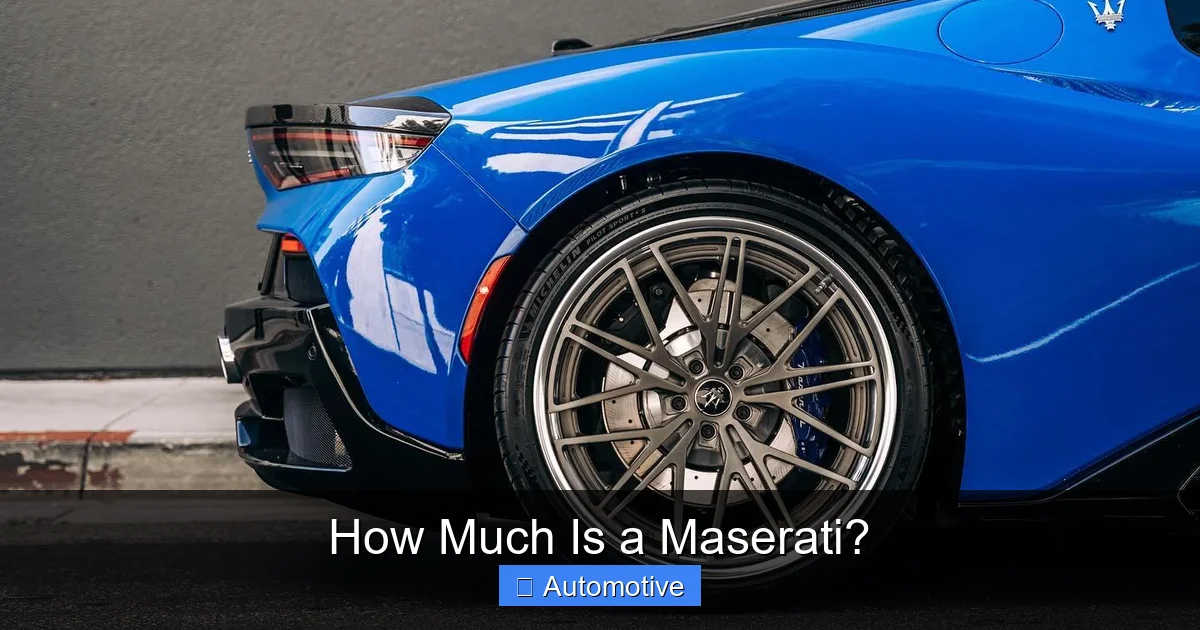
One of the biggest factors in how much a Maserati costs is the trim level and optional packages. Maserati offers multiple trims for each model, each adding performance, luxury, or technology features—and a higher price tag.
Understanding Trim Levels
Most Maserati models come in three main trims: GT, Modena, and Trofeo.
– GT: The base trim. Good performance and luxury, but fewer premium features.
– Modena: Mid-tier. Adds all-wheel drive, more power, and upgraded interiors.
– Trofeo: Top-tier. High-performance engine, sport suspension, carbon fiber details, and exclusive styling.
For example, the Ghibli GT starts at $75,000, but the Trofeo jumps to $110,000—a $35,000 difference for more power and sporty aesthetics.
Optional Packages and Upgrades
Even within a trim, you can add packages that significantly increase the price.
– Nero Ribelle Package: Adds black exterior trim, red brake calipers, and sport seats. Costs around $3,000.
– Premium Package: Includes premium audio, upgraded leather, and ambient lighting. Adds $5,000–$7,000.
– Driver Assistance Package: Features adaptive cruise control, lane keeping, and blind-spot monitoring. Around $4,000.
– Carbon Fiber Package: Adds carbon fiber interior and exterior accents. Can cost $8,000 or more.
On the MC20, the Track Package adds performance tires, upgraded suspension, and a roll bar for about $15,000. The full carbon fiber body can add another $20,000.
Customization and Paint Options
Maserati offers extensive customization. You can choose from over 30 paint colors, including special metallics and pearlescents that cost $2,000–$5,000 extra. Interior options include different leather types, stitching patterns, and wood or carbon fiber trim.
If you go full bespoke with Maserati’s “Fuoriserie” program, you could be looking at $20,000–$50,000 in custom options alone.
Ownership Costs Beyond the Purchase Price
Buying a Maserati is just the beginning. The real cost of ownership includes insurance, fuel, maintenance, and depreciation—and these can add up quickly.
Insurance Costs
Insuring a Maserati is expensive. Due to high repair costs, performance capabilities, and theft risk, premiums are significantly higher than average.
For a new Ghibli, expect to pay $2,500 to $4,000 per year for full coverage, depending on your age, location, and driving record. The MC20? That could easily exceed $6,000 annually.
Tips to lower insurance:
– Increase your deductible.
– Bundle with home or other vehicle policies.
– Take a defensive driving course.
– Consider usage-based insurance if you drive infrequently.
Fuel Economy
Maseratis are not fuel-efficient. The Ghibli gets around 18 mpg city / 25 mpg highway. The Levante is similar. The MC20 manages about 15 mpg city / 22 mpg highway.
At $4 per gallon, driving 12,000 miles a year could cost you $1,800–$2,500 in fuel alone.
Maintenance and Repairs
This is where Maserati ownership can get pricey. Routine maintenance—oil changes, brake pads, tire rotations—is more expensive than average due to specialized parts and labor.
An annual service might cost $800–$1,500. But major repairs? A new turbocharger can run $5,000. A transmission rebuild? $8,000 or more.
Maserati recommends servicing every 10,000 miles or annually. Always use a certified technician—DIY repairs can void warranties and lead to bigger problems.
Depreciation
Maseratis lose value fast. On average, they depreciate about 50% in the first three years. A $100,000 Quattroporte could be worth $50,000 after three years.
This makes leasing an attractive option for some buyers—you avoid the steepest depreciation hit and can upgrade to a new model every few years.
Financing and Leasing Options
If you’re not paying cash, you’ll likely finance or lease your Maserati. Maserati Financial Services offers competitive rates and flexible terms.
Financing a Maserati
Interest rates vary based on credit score, loan term, and down payment. As of 2024, APRs range from 3.9% to 6.9% for qualified buyers.
Most buyers put down 10–20% ($7,500–$15,000 on a Ghibli). Loan terms typically range from 36 to 72 months.
Example: Financing a $85,000 Ghibli Modena at 5% APR over 60 months results in monthly payments of about $1,600.
Leasing a Maserati
Leasing is popular for luxury cars because it lowers monthly payments and allows you to drive a new model every 2–3 years.
A typical 36-month lease on a Ghibli might require $5,000–$8,000 due at signing (including down payment, fees, and first month) and monthly payments of $900–$1,200.
Leases come with mileage limits (usually 10,000–12,000 miles per year) and wear-and-tear guidelines. Exceeding these can result in hefty fees.
Cash vs. Financing: Which Is Better?
Paying cash avoids interest and gives you full ownership. But it ties up a large amount of capital.
Financing preserves cash flow and may offer tax benefits for business use. Just be mindful of total interest paid over time.
Leasing offers lower monthly costs but no equity. It’s best for those who want to drive new cars regularly and don’t mind not owning.
Is a Maserati Worth the Price?
So, after all this, the big question remains: is a Maserati worth it?
For many, the answer is yes—if you value style, sound, and Italian passion over practicality and reliability. There’s nothing quite like the roar of a Maserati engine or the feel of driving a car that turns heads everywhere it goes.
But it’s not for everyone. If you’re on a tight budget, need low maintenance costs, or prioritize resale value, a BMW, Mercedes, or Audi might be a better fit.
However, if you’re ready to embrace the lifestyle—and the costs—that come with owning a Maserati, then go for it. Just go in with your eyes open. Know how much a Maserati really costs, not just at the dealership, but over time.
And remember: the best Maserati is the one that fits your life, your budget, and your heart.
Frequently Asked Questions
How much is a Maserati Ghibli?
The Maserati Ghibli starts at around $75,000 for the base GT trim. The Modena trim costs about $85,000, and the high-performance Trofeo starts near $110,000.
Are Maseratis expensive to maintain?
Yes, Maseratis are more expensive to maintain than average. Annual maintenance can cost $1,500 or more, and major repairs often exceed $5,000 due to specialized parts and labor.
Can I lease a Maserati?
Yes, Maserati offers leasing through Maserati Financial Services. Leases typically last 24–36 months with monthly payments ranging from $900 to $1,200, depending on the model and terms.
How much does it cost to insure a Maserati?
Insurance for a Maserati ranges from $2,500 to $4,000 per year for most models. High-performance variants like the MC20 can cost $6,000 or more annually.
Do Maseratis hold their value?
No, Maseratis depreciate quickly. They typically lose about 50% of their value within the first three years, making them poor investments if resale is a priority.
Is it better to buy new or used?
Buying used saves money upfront, but comes with higher maintenance risks. Certified pre-owned models offer a balance of savings and peace of mind with warranty coverage.