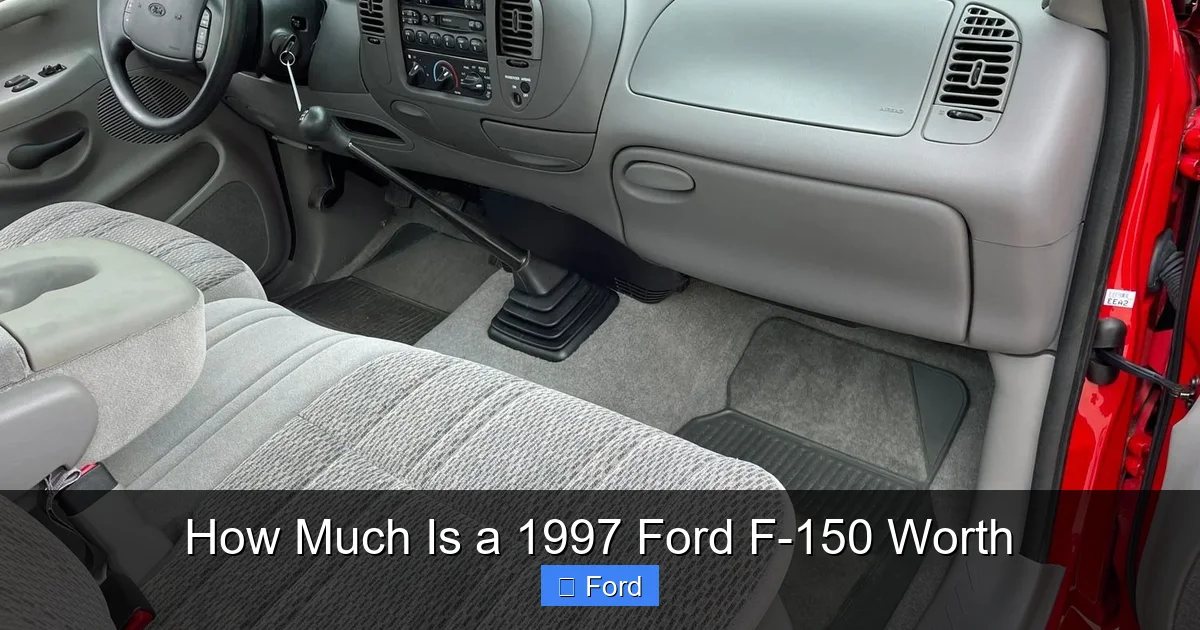
How Much Is a 1997 Ford F-150 Worth

Contents
- 1 Key Takeaways
- 2 📑 Table of Contents
- 3 The Undying Legend: Why the 1997 Ford F-150 Still Matters
- 4 Decoding the Trim Levels: From Basic Work Truck to Eddie Bauer Lux
- 5 Under the Hood: The Engine & Drivetrain Price Dictators
- 6 The Condition Report: Where Value is Made or Lost
- 7 Market Realities: What You’ll Actually Pay in 2024
- 8 How to Buy Smart and Sell Fast
- 9 The Final Word: A Truck for Every Budget and Purpose
- 10 Frequently Asked Questions



The value of a 1997 Ford F-150 can range from as low as $1,500 for a parts truck to over $15,000 for a pristine, low-mileage example. The final price hinges overwhelmingly on the truck’s specific condition, mileage, drivetrain, and installed options. Standard models with high mileage or rust are at the bottom, while well-maintained XL or XLT trims with the powerful 5.4L V8 and 4×4 command a premium. Regional demand for reliable used trucks also plays a significant role in the final sale price.
Key Takeaways
- Condition is King: The single biggest factor is overall condition. Rust, especially in the frame and cab corners, and a worn interior drastically reduce value.
- Mileage Matters: While these are 25+ year old trucks, lower mileage (under 150k) is a major selling point and can add thousands to the price.
- Engine & Drivetrain Dictate Base Value: The 5.4L Triton V8 (especially the 2-valve) is the most desirable. 4×4 models are consistently worth more than 2WD. The 4.2L V6 and 5.0L V8 are less sought after.
- Trim Level & Options Add Up: An XLT with power windows/locks, A/C, and a sliding rear window is worth more than a base XL. Special packages like the Eddie Bauer or the SVT Lightning (extremely rare) are in a league of their own.
- Regional Demand is Real: In rural areas and states with harsh winters, clean, reliable 4×4 trucks hold value better. In urban areas, they may be less in demand.
- Maintenance History is Proof: A truck with a stack of receipts for major services (timing chains, transmission, rear axle) will sell faster and for more money than an identical truck with no history.
- It’s a Buyer’s Market for Projects: There are many non-running or high-mileage examples. For a daily driver, budget for immediate repairs (brakes, tires, suspension) which can cost $2,000-$4,000.
📑 Table of Contents
- The Undying Legend: Why the 1997 Ford F-150 Still Matters
- Decoding the Trim Levels: From Basic Work Truck to Eddie Bauer Lux
- Under the Hood: The Engine & Drivetrain Price Dictators
- The Condition Report: Where Value is Made or Lost
- Market Realities: What You’ll Actually Pay in 2024
- How to Buy Smart and Sell Fast
- The Final Word: A Truck for Every Budget and Purpose
The Undying Legend: Why the 1997 Ford F-150 Still Matters
Let’s talk about a true American icon. The 1997 Ford F-150. This isn’t just any old truck; it’s the first of the tenth-generation F-series, a complete redesign that set the template for modern full-size pickups. It’s the truck that moved from a purely work-focused tool to a more comfortable, capable family hauler. That bold, two-box design? That’s the 1997. It’s the one with the rounded fenders and that distinctive grille. Because of its significance, durability, and sheer numbers on the road, people are always asking: “How much is a 1997 Ford F-150 worth?” It’s a great question, but the answer is famously, “It depends.”
We’re going to break down everything. Think of this as your complete field guide. We’ll look at the different trims, the crucial engine choices, and the absolute make-or-break factor of condition. We’ll give you realistic price ranges you’ll actually see on dealer lots, Craigslist, and at auction. Whether you’re looking to buy a reliable workhorse, sell your old faithful, or just curious about the market, this article will give you the clear, actionable answers you need. The value isn’t in the year alone; it’s in the story the truck tells.
Decoding the Trim Levels: From Basic Work Truck to Eddie Bauer Lux
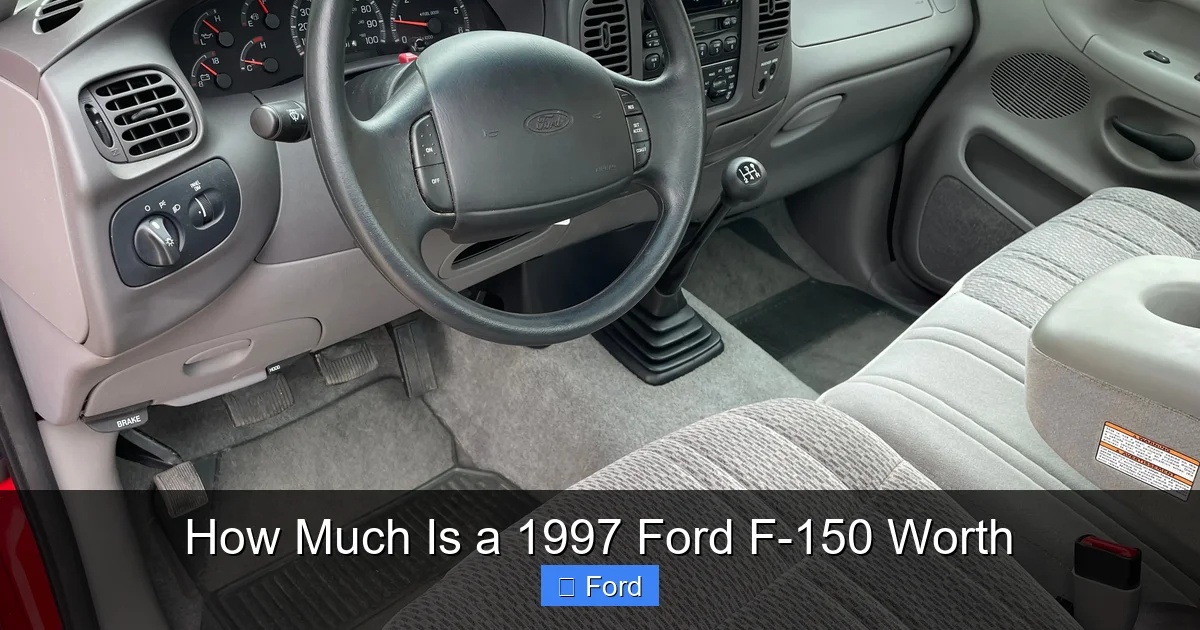
Ford offered a confusingly delightful array of trims for the 1997 F-150. Understanding these is your first step to gauging value. Each step up added significant comfort and convenience features that collectors and daily drivers alike appreciate today.
Visual guide about How Much Is a 1997 Ford F-150 Worth
Image source: cdn.dealeraccelerate.com
The Foundation: XL and XL Step-Side
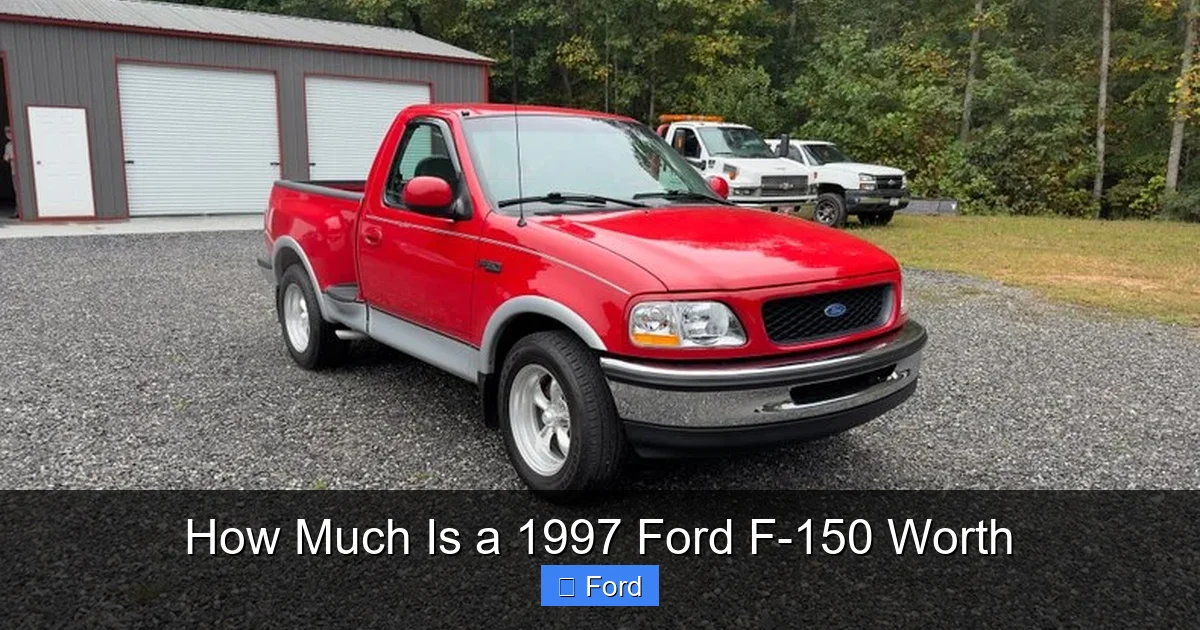
The XL was the no-frills work truck. Vinyl seats, an AM/FM radio, and manual everything. These are the most common and, in poor condition, the least valuable. However, a clean, well-optioned XL with the 5.4L V8 and 4×4 is a fantastic, affordable workhorse. The Step-Side (or Styleside) refers to the bed style; the standard “flare-side” bed was the most common, but the “step-side” with its narrower, flared rear fenders is a desirable, less common variant that can add a few hundred dollars.
The Sweet Spot: XLT and XLT Step-Side
This is the volume seller and the trim most people think of. The XLT added cloth seats, power windows and locks, air conditioning, and often a tilt steering wheel and cruise control. A good XLT with the 5.4L V8 in decent shape is the benchmark for the market. It represents the best balance of desirable features and reasonable price. Finding one with a well-preserved interior and no major rust is the goal for most buyers.
The Top of the Line: Eddie Bauer and Lariat
These were the luxury trims. Eddie Bauer brought leather seats, a premium sound system, and unique two-tone paint. The Lariat was similar, often with added chrome and woodgrain trim. These models, when in excellent condition, command a noticeable premium—often $1,000 to $3,000 more than a comparable XLT. They are less common, so well-preserved examples are prized.
The Unicorn: SVT Lightning
We have to mention it. The 1997 SVT Lightning was a factory-built high-performance pickup with a supercharged 5.4L V8 (360 hp), unique suspension, and aggressive styling. Only about 4,200 were made. These are not just old trucks; they are collector’s items. A pristine Lightning can easily fetch $25,000 to $40,000+ at auction, depending on mileage and originality. It’s a completely different market segment.
Under the Hood: The Engine & Drivetrain Price Dictators
Forget about the chrome bumpers for a second. The heart of your value calculation is under the hood and in the drivetrain. Ford offered three main gasoline engines for the 1997 F-150, and their reputations directly impact price.
Visual guide about How Much Is a 1997 Ford F-150 Worth
Image source: cdn.dealeraccelerate.com
The 5.4L Triton V8 (2-Valve): The King
This is the most desirable engine by a country mile. The 5.4L (330 cubic inches) produced 235 horsepower and 330 lb-ft of torque. It’s known for being robust, torquey, and relatively reliable for its era, though it has its quirks (like spark plug issues in later years, but the ’97 is generally okay). A 1997 F-150 with this engine, especially mated to the 4×4 drivetrain, is the baseline for a “good” price. It’s what buyers are looking for. Expect a $1,500 to $3,000 premium over a similarly conditioned truck with a smaller engine.
The 5.0L V8 (302): The Solid Middle
The venerable 5.0L (302 cubic inches) was a workhorse, making 205 hp and 275 lb-ft of torque. It’s simpler and has a great reputation for durability. While not as powerful or sought-after as the 5.4L, it’s a perfectly fine engine that doesn’t scare buyers away. Value is typically on par with the base V6 but slightly below the 5.4L.
The 4.2L V6: The Budget Option
The 4.2L (255 cubic inches) V6 was the entry-level engine, making 160 hp. It’s reliable and gets slightly better gas mileage (a relative term with these trucks), but it lacks the grunt for heavy towing or confident acceleration. Trucks with this engine are the most affordable, but they also sell slower. For a buyer wanting a true work truck, the V6 is often overlooked unless the price is exceptionally low.
The Critical 4×4 vs. 2WD Divide
This cannot be overstated. A 1997 Ford F-150 4×4 is almost always worth at least $1,000 to $2,500 more than a 2WD version with everything else being equal. The 4×4 system (with the manual or automatic transfer case) is a massive value adder. It’s a necessity for many buyers in snowy or rural areas and is a huge selling point nationwide. When you see a price for a 2WD truck, mentally add that premium to compare it to 4x4s.
The Condition Report: Where Value is Made or Lost
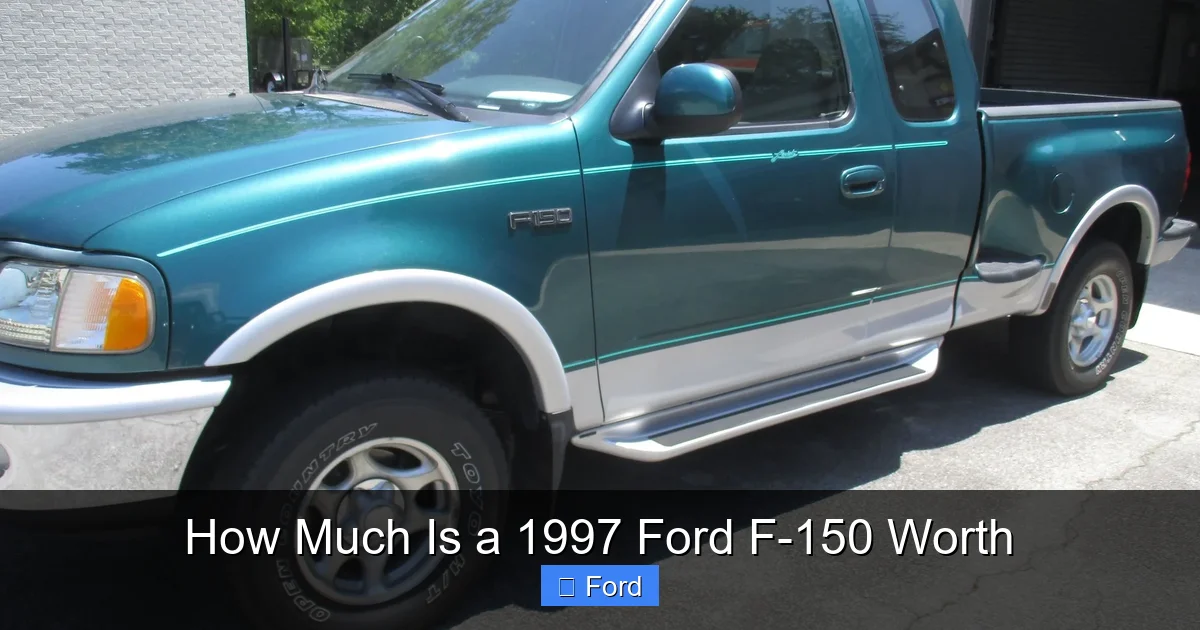
You can have the perfect trim with the 5.4L V8 and 4×4, but if the truck is a rusted-out, worn-out mess, its value plummets. Condition is the ultimate arbiter. Let’s dissect it.
Visual guide about How Much Is a 1997 Ford F-150 Worth
Image source: cdn.dealeraccelerate.com
Rust: The Silent Killer of Value
For a 25-year-old truck, rust is the #1 enemy. Inspect these critical areas:
- Frame: Surface rust is okay. Deep, flaking, or perforated rust on the frame rails, especially near the cab mounts or rear axle, is a major red flag and can reduce value by 25-50% or more.
- Cab Corners & Rocker Panels: These are notorious. If you can poke a screwdriver through the metal, walk away. Repairing this is expensive.
- Fender Wells & Bed: Rust here is common but less structurally critical. Large holes in the bed floor will still hurt value significantly.
A completely rust-free truck in a salt-belt state is a unicorn and commands a huge premium.
Interior Wear: The Usability Gauge
Is the cloth on the seats shredded? Is the headliner sagging? Are all the switches and knobs present and functional? A worn interior screams “neglect.” A clean, odor-free interior with working A/C (a big deal in these trucks) and power accessories is a massive plus. Cracked dashboards are common and expensive to fix properly.
Mechanical Health: The “Drive-Off” Premium
Does it run and drive well? A truck that needs a new transmission, has a knocking engine, or has severe suspension issues is a “project” or “parts” vehicle. Its value is based on the sum of its usable parts. A truck that is mechanically sound with a clean title and passes inspection (or can easily pass) is a “driver” and commands a significantly higher price—often double or triple that of a non-runner with similar body condition.
Market Realities: What You’ll Actually Pay in 2024
Let’s get to the numbers. These are general national averages as of early 2024. Local markets may vary.
The Project/Part-Out Range: $500 – $3,000
This is for trucks with major rust, non-running engines, severe interior damage, or salvage titles. They sell to mechanics, restorers, or farmers who need a bed and a frame. You are buying a collection of parts.
The Fair/Runner Range: $3,000 – $7,000
This is the meat of the market. These are running, driving trucks with significant issues—moderate to heavy rust, worn interiors, high mileage (200k+), or needing immediate repairs (brakes, tires, exhaust). A clean-title XLT 4×4 with the 5.4L V8, 180k miles, and moderate frame rust would fit here.
The Good/Great Range: $7,000 – $12,000
Here you find trucks with lower mileage (120k-160k), minimal rust, good interiors, and solid mechanical health. All major systems have been maintained. A well-optioned XLT or Eddie Bauer with the 5.4L V8, 4×4, and under 150k miles in a rust-free region (like the Southwest) will be in this bracket.
The Excellent/Pristine Range: $12,000 – $18,000+
This is for the cream of the crop. Low mileage (under 100k), absolutely no rust, immaculate interior, complete service history, and often garage-kept. These are rare. A perfect, original XLT or Lariat can hit these numbers. The supercharged SVT Lightning starts here and goes way up, as mentioned.
Pro Tip: Always check recent sold listings on eBay Motors and Facebook Marketplace, not just asking prices. The “sold” data tells you what people are actually paying. For a comparison with a more modern but still aging truck, you might look at what a 2007 Ford F-150 commands to see how much extra modern features and safety are worth.
How to Buy Smart and Sell Fast
Armed with knowledge, here’s how to use it.
For Buyers: Your Checklist
Never buy sight-unseen. Go in with this list:
- Rust Inspection: Bring a magnet and a flashlight. Check the frame, cab mounts, and bed. A magnet won’t stick to bondo or heavy rust-through.
- Test Drive: Listen for engine knocks, transmission slippage, differential whine, and suspension clunks. Test 4WD engagement.
- History is Everything: Ask for any and all repair records. A truck with a timing chain job at 150k miles is a better bet than one with no history.
- Check for TSBs: The 5.4L had known issues with cam phasers and spark plugs that can be costly. A quick internet search for “1997 F-150 common problems” is worth it.
For Sellers: How to Maximize Your Price
You’re competing against hundreds of other 1997 F-150s. Stand out:
- Clean Itobsessively: A thorough wash, clay bar, and interior detail costs $100 and can add $500 to your sale price.
- Fix the Small Stuff: Replace worn wipers, burnt-out bulbs, fix any check engine lights (even if minor), and top off all fluids. These are cheap fixes that build buyer confidence.
- Take Great Photos: Clean background, good light. Shoot the engine, interior, and all angles of the exterior. Highlight any upgrades (new tires, running boards, etc.).
- Be Honest About Flaws: Mention known rust spots or mechanical quirks in the ad. It builds trust and saves you from wasting time with tire-kickers.
The Scrap Value Consideration
Sometimes, a truck is too far gone. If your 1997 F-150 has catastrophic frame rust, a seized engine, and a totaled interior, its value might be closer to its scrap metal weight. While a scrap BMW might fetch more per ton due to catalytic converter value, a full-size truck has a lot of steel. You’d likely get $500-$1,200 from a scrapyard based on current metal prices. It’s often better to part it out yourself if you have space and time, selling the engine, transmission, and body panels separately. For context, the scrap value of a different vehicle, like a Subaru, is heavily influenced by its catalytic converter, which isn’t the primary value driver for an old F-150.
The Final Word: A Truck for Every Budget and Purpose
So, how much is a 1997 Ford F-150 worth? The real answer is: whatever someone will pay for it. But now you know the landscape. You know that a 4×4 XLT with the 5.4L V8 and no rust is a $10,000+ truck. You know that a V6 2WD with a rotted frame is a $1,500 project. You understand that the Eddie Bauer trim is worth more, and the SVT Lightning is in a universe of its own.
This truck’s value is a direct reflection of its continued utility. It’s not a collector’s item like a pristine 1960s F-100 (yet), but it’s a supremely capable, repairable, and iconic machine. Its worth is in its bones—that tough, simple, and now-legendary platform. Whether you need a $3,000 winter beater to plow snow or a $15,000 vintage hauler for weekend projects, the 1997 F-150 market has you covered. Do your homework, inspect thoroughly, and you’ll find a truck that’s worth every penny you spend on it.
Frequently Asked Questions
What is the most common 1997 Ford F-150 engine?
The most common engine was the 5.4L Triton V8, which was the standard for most higher trims and 4×4 models. The 4.2L V6 was the base engine for the XL and some lower-trim models.
How much does a 1997 Ford F-150 with a 5.4L V8 cost?
It varies dramatically by condition. A running, driving example with moderate rust can range from $4,000 to $9,000. A clean, low-mileage, rust-free example can easily exceed $12,000.
Is the 1997 Ford F-150 a good truck?
Yes, it’s considered a very good, robust truck. The 1997 redesign was a major leap forward in comfort and capability. The 5.4L V8 and 4×4 drivetrain are particularly well-regarded for durability, making it a popular choice for used truck buyers.
What should I look for when buying a 1997 Ford F-150?
Prioritize checking for frame rust, cab corner rust, and overall mechanical health. A test drive is essential to check the transmission and 4×4 engagement. Also, verify that air conditioning works, as repairs can be costly. A vehicle history report is highly recommended.
How many miles is too many for a 1997 Ford F-150?
With proper maintenance, these trucks can easily surpass 300,000 miles. However, high mileage (250k+) will lower the value significantly unless the truck has an impeccable, documented service history showing major components (timing chains, transmission, rear axle) have been rebuilt or replaced.
Are 1997 Ford F-150 parts easy to find?
Yes, absolutely. Due to the massive production numbers and shared parts with later 1997-2004 models, aftermarket and salvage yard availability for engines, transmissions, body panels, and suspension components is excellent and relatively inexpensive compared to many other 25-year-old vehicles.