
How Much Gas Does a Nissan Altima Hold?

The Nissan Altima typically holds between 16 and 18 gallons of gas, depending on the model year and trim. This capacity allows for impressive driving ranges, especially with the Altima’s efficient 4-cylinder and turbocharged engines. Understanding your Altima’s fuel tank size helps with trip planning, budgeting, and maximizing fuel economy.
Key Takeaways
- Fuel Tank Capacity: Most Nissan Altima models have a fuel tank capacity of 16 to 18 gallons, with newer models averaging around 16.2 gallons.
- Model Year Variations: Older models (pre-2013) often had larger tanks (up to 18 gallons), while newer generations focus on efficiency with slightly smaller tanks.
- Engine Type Impact: The 2.5L 4-cylinder engine is standard and offers excellent fuel economy, while the 2.0L VC-Turbo engine balances power and efficiency.
- Estimated Driving Range: With a full tank, the Altima can travel between 450 and 600 miles, depending on driving conditions and engine type.
- Fuel Type Matters: Always use regular unleaded gasoline (87 octane) for optimal performance and to avoid engine damage.
- Fuel Efficiency Tips: Maintain proper tire pressure, avoid aggressive driving, and use cruise control to extend your range.
- Dashboard Indicators: The low fuel warning light typically comes on when 2–3 gallons remain, giving you time to refuel safely.
📑 Table of Contents
- How Much Gas Does a Nissan Altima Hold?
- Fuel Tank Capacity by Model Year
- Engine Types and Fuel Efficiency
- Understanding Your Altima’s Fuel Gauge and Warning Lights
- Fuel Type and Octane Recommendations
- Maximizing Your Altima’s Driving Range
- Maintenance Tips to Keep Your Fuel System Healthy
- Conclusion
How Much Gas Does a Nissan Altima Hold?
When you’re behind the wheel of a Nissan Altima, one of the first things you might wonder is: how much gas does it actually hold? Whether you’re planning a long road trip, commuting daily, or just trying to budget your fuel costs, knowing your car’s fuel tank capacity is essential. The Nissan Altima, known for its reliability, comfort, and fuel efficiency, has been a popular midsize sedan for over two decades. But despite its consistent popularity, the fuel tank size has evolved across different generations and trims.
In this comprehensive guide, we’ll dive deep into the fuel tank capacities of various Nissan Altima models, explore how engine types and model years affect fuel storage, and share practical tips to help you get the most out of every gallon. Whether you drive a 2010 Altima or a brand-new 2024 model, understanding your vehicle’s fuel system can save you time, money, and stress at the pump. We’ll also cover real-world driving ranges, fuel efficiency tips, and what to do when that dreaded low fuel light comes on.
Fuel Tank Capacity by Model Year
The fuel tank size in the Nissan Altima has seen subtle changes over the years, primarily driven by design updates, weight reduction efforts, and advancements in engine technology. While the core capacity has remained relatively stable, it’s important to know the specifics for your particular model.

Visual guide about How Much Gas Does a Nissan Altima Hold?
Image source: appgecet.co.in
2002–2006 Nissan Altima (First Generation)
The early 2000s Altimas, part of the first generation, were known for their spacious interiors and reliable performance. These models typically came equipped with a fuel tank capacity of 18.5 gallons. This larger tank allowed drivers to travel longer distances between fill-ups, which was especially appealing during an era when gas prices were lower and road trips were more common.
2007–2012 Nissan Altima (Second Generation)
With the redesign in 2007, the Altima received a more aerodynamic body and improved fuel efficiency. The fuel tank capacity was slightly reduced to 18 gallons, but the newer engines—particularly the 2.5L QR25DE 4-cylinder—offered better mileage per gallon. This meant that even with a slightly smaller tank, the driving range remained competitive.
2013–2018 Nissan Altima (Third Generation)
The third-generation Altima, introduced in 2013, marked a shift toward lighter materials and improved aerodynamics. The fuel tank size was reduced to 18 gallons for most trims, but some sportier versions, like the SR trim, maintained the same capacity. This generation also introduced the first use of Nissan’s Xtronic CVT (Continuously Variable Transmission), which further boosted fuel economy.
2019–2024 Nissan Altima (Fourth Generation)
The current generation, starting in 2019, features a more modern design and advanced engine options. The fuel tank capacity was reduced to 16.2 gallons across all trims. This reduction was part of a broader effort to reduce vehicle weight and improve efficiency. Despite the smaller tank, the Altima’s fuel economy improved significantly, thanks to the introduction of the 2.0L VC-Turbo (Variable Compression Turbo) engine and enhanced aerodynamics.
Why the Change in Tank Size?
You might be wondering why Nissan reduced the fuel tank size in newer models. The answer lies in engineering priorities. Modern vehicles are designed to be lighter, more fuel-efficient, and environmentally friendly. A smaller tank means less weight, which improves fuel economy. Additionally, with rising fuel efficiency, drivers don’t need as large a tank to achieve the same driving range. For example, a 2023 Altima with a 16.2-gallon tank and 32 MPG highway can travel over 500 miles on a single tank—something that would have required a much larger tank in the past.
Engine Types and Fuel Efficiency
The Nissan Altima has offered a variety of engines over the years, each with its own impact on fuel consumption and range. Understanding how your engine type affects fuel usage is key to knowing how far you can go on a full tank.
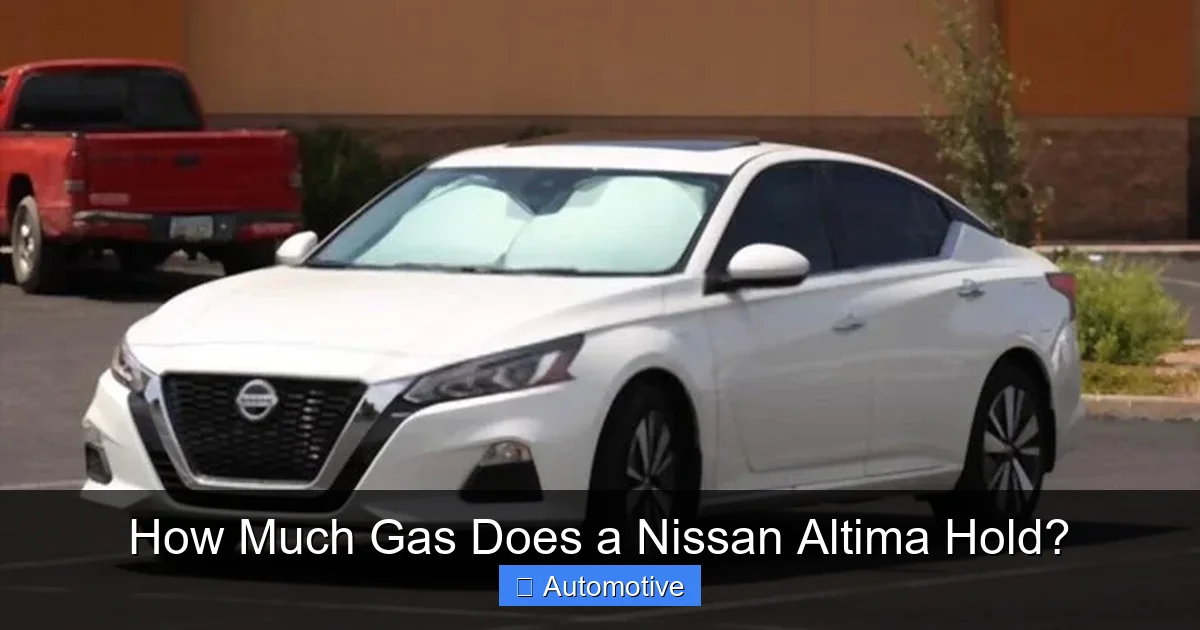
Visual guide about How Much Gas Does a Nissan Altima Hold?
Image source: car-us.com
2.5L 4-Cylinder Engine (Standard on Most Trims)
The 2.5L inline-4 engine has been the workhorse of the Altima lineup for years. Producing around 182–188 horsepower (depending on the model year), this engine is known for its balance of power and efficiency. On average, it delivers:
- City: 25–28 MPG
- Highway: 32–39 MPG
- Combined: 28–32 MPG
With a 16.2-gallon tank, this engine can take you approximately 450 to 520 miles on a full tank under ideal conditions. That’s enough to drive from Los Angeles to San Francisco and back without stopping for gas.
2.0L VC-Turbo Engine (Available on SR and Platinum Trims)
Introduced in 2019, the 2.0L Variable Compression Turbo engine is a technological marvel. It can adjust its compression ratio on the fly, optimizing performance and efficiency. This engine delivers around 248 horsepower while still achieving impressive fuel economy:
- City: 23–25 MPG
- Highway: 30–34 MPG
- Combined: 26–29 MPG
While slightly less efficient than the 2.5L engine in city driving, the VC-Turbo shines on the highway. With the same 16.2-gallon tank, you can expect a range of 420 to 480 miles, depending on driving habits.
Hybrid Option (2013–2014)
For a brief period, Nissan offered a hybrid version of the Altima. This model combined a 2.5L gasoline engine with an electric motor, achieving up to 38 MPG combined. The hybrid used the same 18-gallon fuel tank as the standard model, giving it a remarkable range of over 680 miles on a single tank. However, the hybrid was discontinued after 2014 due to low demand and the rise of more efficient conventional engines.
Real-World Fuel Economy Tips
While EPA estimates are helpful, real-world fuel economy can vary based on driving style, terrain, and weather. Here are some tips to maximize your Altima’s efficiency:
- Maintain Proper Tire Pressure: Underinflated tires increase rolling resistance, reducing fuel economy by up to 3%.
- Avoid Aggressive Driving: Rapid acceleration and hard braking can lower your MPG by 15–30% on highways.
- Use Cruise Control: On long highway drives, cruise control helps maintain a steady speed, improving efficiency.
- Reduce Excess Weight: Remove unnecessary items from your trunk—every 100 pounds can reduce fuel economy by 1–2%.
- Keep Up with Maintenance: Regular oil changes, air filter replacements, and spark plug checks ensure your engine runs efficiently.
Understanding Your Altima’s Fuel Gauge and Warning Lights
Knowing how much gas your Altima holds is only half the story—understanding how the fuel system communicates with you is equally important. The fuel gauge and warning lights are designed to keep you informed and prevent you from running out of gas unexpectedly.
Visual guide about How Much Gas Does a Nissan Altima Hold?
Image source: images.simplepart.com
How the Fuel Gauge Works
The fuel gauge in your Altima uses a float sensor inside the fuel tank to measure the level of gasoline. As the fuel level drops, the float moves down, sending a signal to the dashboard gauge. Most Altimas have a gauge that ranges from “F” (Full) to “E” (Empty), with a yellow warning light that illuminates when fuel is low.
When Does the Low Fuel Light Come On?
The low fuel warning light typically comes on when there are 2 to 3 gallons of gas remaining in the tank. This gives you a buffer to find a gas station without risking engine damage or getting stranded. For a 2023 Altima with a 16.2-gallon tank, that means the light will usually appear after you’ve used about 13–14 gallons.
How Far Can You Drive on Reserve?
The number of miles you can drive after the low fuel light comes on depends on your engine and driving conditions. On average:
- 2.5L Engine: 50–70 miles
- 2.0L VC-Turbo: 40–60 miles
For example, if you’re driving a 2021 Altima with the 2.5L engine and the light comes on, you can likely drive another 60 miles at 30 MPG before needing to refuel. However, it’s always best to fill up as soon as possible to avoid fuel pump damage, which can occur if the tank is run too low too often.
Fuel Gauge Accuracy and Common Issues
While the fuel gauge is generally reliable, some drivers report inconsistencies, especially after refueling. This can happen if the fuel sloshes around during driving, causing the float to give a temporary false reading. In rare cases, a faulty fuel level sensor may need replacement. If your gauge seems stuck or inaccurate, have it checked by a certified Nissan technician.
Fuel Type and Octane Recommendations
Using the correct type of gasoline is crucial for your Altima’s performance, longevity, and fuel efficiency. Nissan provides clear guidelines on fuel type, and following them can save you from costly repairs down the road.
Recommended Fuel: Regular Unleaded (87 Octane)
All Nissan Altima models, including those with the turbocharged 2.0L engine, are designed to run on regular unleaded gasoline with an octane rating of 87. This is the standard fuel available at most gas stations and is the most cost-effective option.
Can You Use Premium Gas?
While you can use premium gasoline (91–93 octane) in your Altima, it’s not required and won’t significantly improve performance or fuel economy. The engine’s computer is calibrated for 87 octane, and using higher-octane fuel won’t provide any measurable benefit unless you’re driving under extreme conditions (e.g., towing or high-altitude driving).
What Happens If You Use the Wrong Fuel?
Using diesel or E85 (ethanol blend) in a gasoline engine can cause severe damage, including engine knocking, fuel system corrosion, and catalytic converter failure. Always double-check the pump before fueling. If you accidentally put the wrong fuel in your tank, do not start the engine. Call a tow truck and have the fuel system drained immediately.
Ethanol Blends and Your Altima
Most gasoline sold in the U.S. contains up to 10% ethanol (E10), which is safe for your Altima. However, avoid fuels with higher ethanol content (like E15 or E85) unless your vehicle is specifically designed for flex-fuel. High ethanol blends can damage fuel lines, seals, and the fuel injection system over time.
Maximizing Your Altima’s Driving Range
With a full tank of gas, your Nissan Altima can take you far—but how far exactly? The answer depends on several factors, including engine type, driving habits, and road conditions. Let’s break it down.
Calculating Your Real-World Range
To estimate how far you can drive on a full tank, multiply your fuel tank capacity by your average MPG. For example:
- 2023 Altima (2.5L, 16.2-gallon tank, 32 MPG combined): 16.2 × 32 = 518 miles
- 2020 Altima (2.0L VC-Turbo, 16.2-gallon tank, 28 MPG combined): 16.2 × 28 = 454 miles
These numbers are based on ideal conditions. In real-world driving—especially in heavy traffic, cold weather, or hilly terrain—your actual range may be 10–20% lower.
Tips to Extend Your Range
If you’re planning a long trip or trying to minimize stops, here are some proven strategies to stretch every gallon:
- Drive at Steady Speeds: Avoid frequent speed changes. Use cruise control on highways.
- Reduce Air Resistance: Remove roof racks or cargo boxes when not in use.
- Plan Efficient Routes: Use GPS apps that suggest fuel-efficient paths, avoiding traffic and hills.
- Combine Trips: Cold engines use more fuel. Combine errands to reduce cold starts.
- Use Eco Mode: Many newer Altimas have an Eco driving mode that adjusts throttle response and climate control to save fuel.
Long-Distance Driving Example
Imagine you’re driving from Denver, Colorado, to Salt Lake City, Utah—a distance of about 520 miles. With a 2023 Altima (2.5L engine), you could make the trip on a single tank if you drive efficiently. Fill up in Denver, maintain 65 mph on I-70, and you’ll likely arrive in Salt Lake City with a half-tank to spare. That’s the kind of range that makes the Altima a great choice for road trips.
Maintenance Tips to Keep Your Fuel System Healthy
A well-maintained fuel system ensures your Altima runs smoothly and efficiently. Neglecting it can lead to poor performance, reduced fuel economy, and expensive repairs.
Fuel Filter Replacement
The fuel filter prevents dirt and debris from entering the engine. While many modern Altimas have lifetime fuel filters, it’s a good idea to have it inspected every 30,000–60,000 miles. A clogged filter can restrict fuel flow, causing hesitation or stalling.
Fuel Injector Cleaning
Over time, fuel injectors can become clogged with carbon deposits, leading to rough idling and reduced power. Use a quality fuel injector cleaner every 15,000 miles or have them professionally cleaned during routine maintenance.
Fuel Pump Care
The fuel pump is submerged in gasoline, which keeps it cool and lubricated. Running your tank too low (below 1/4 full) can cause the pump to overheat and fail prematurely. Try to refuel when the tank is between 1/4 and 1/2 full.
Regular Oil Changes
Clean oil reduces engine friction, which improves fuel efficiency. Follow Nissan’s recommended oil change interval—typically every 5,000–7,500 miles with synthetic oil.
Conclusion
So, how much gas does a Nissan Altima hold? The answer depends on your model year and trim, but most modern Altimas have a fuel tank capacity of 16.2 gallons, while older models may hold up to 18.5 gallons. This capacity, combined with the Altima’s efficient engines, allows for impressive driving ranges—often exceeding 500 miles on a single tank.
Understanding your Altima’s fuel system—from tank size and engine type to fuel recommendations and maintenance—can help you drive smarter, save money, and avoid unexpected breakdowns. Whether you’re commuting to work or embarking on a cross-country adventure, knowing how far your Altima can go on a tank of gas gives you peace of mind and greater control over your driving experience.
Remember: regular maintenance, smart driving habits, and using the right fuel all contribute to maximizing your Altima’s efficiency. So the next time you fill up, take a moment to appreciate just how far that gallon of gas can take you.
Frequently Asked Questions
What is the fuel tank capacity of a 2023 Nissan Altima?
The 2023 Nissan Altima has a fuel tank capacity of 16.2 gallons across all trims. This size balances fuel efficiency and vehicle weight for optimal performance.
How many miles can a Nissan Altima go on a full tank?
A Nissan Altima can travel between 450 and 600 miles on a full tank, depending on the engine, driving conditions, and fuel efficiency. The 2.5L engine typically offers the longest range.
Can I use premium gas in my Nissan Altima?
Yes, but it’s not necessary. The Altima is designed to run on regular unleaded gasoline (87 octane). Using premium gas won’t improve performance or fuel economy.
When does the low fuel light come on in a Nissan Altima?
The low fuel warning light usually comes on when 2–3 gallons of gas remain in the tank, giving you enough time to find a gas station safely.
Does the Nissan Altima have a hybrid version?
Nissan offered a hybrid Altima from 2013 to 2014, but it was discontinued. The current lineup relies on efficient gasoline engines instead.
How often should I replace the fuel filter in my Altima?
Most modern Altimas have lifetime fuel filters, but it’s wise to have them inspected every 30,000–60,000 miles to ensure proper fuel flow and engine performance.