How Much Freon Does a Dodge Caravan Need?

Contents
- 1 Key Takeaways
- 2 📑 Table of Contents
- 3 How Much Freon Does a Dodge Caravan Need?
- 4 Understanding Refrigerant Types in Dodge Caravans
- 5 Exact Freon Capacity by Model Year and Configuration
- 6 Signs Your Dodge Caravan Needs More Freon
- 7 How to Safely Recharge Your Dodge Caravan’s AC System
- 8 Why a Leak Repair Is Often Necessary
- 9 Environmental and Legal Considerations
- 10 When to Call a Professional
- 11 Conclusion
- 12 Frequently Asked Questions

Windshield Cleaning Tool

LED Emergency Road Flares

Car Seat Cover (Universal Fit)

Radiator Coolant
Knowing how much Freon your Dodge Caravan needs is essential for keeping its air conditioning system running efficiently. This guide breaks down refrigerant capacity by model year, explains safe refill procedures, and helps you spot low Freon symptoms early.
[FEATURED_IMAGE_PLACEHORD]
Key Takeaways
- Freon capacity varies by model year: Most Dodge Caravans require between 1.75 and 2.25 pounds (28–36 ounces) of R-134a refrigerant, depending on the year and AC system configuration.
- Older models use R-12, newer ones use R-134a: Pre-1994 Caravans originally used R-12 (Freon), but were often retrofitted to R-134a; post-1994 models use R-134a from the factory.
- Overcharging can damage the AC system: Adding too much refrigerant reduces cooling efficiency and may harm the compressor or other components.
- Low Freon usually means a leak: If your AC stops working, it’s rarely just “out of gas”—there’s likely a leak that needs repair before recharging.
- Use a manifold gauge set for accuracy: DIYers should invest in a basic AC recharge kit with gauges to monitor pressure and avoid overfilling.
- Professional diagnosis is recommended: If you’re unsure about leaks or system health, have a certified technician inspect your Caravan’s AC before adding refrigerant.
- Environmental responsibility matters: Never vent refrigerant into the atmosphere—it’s illegal and harmful to the environment.
📑 Table of Contents
- How Much Freon Does a Dodge Caravan Need?
- Understanding Refrigerant Types in Dodge Caravans
- Exact Freon Capacity by Model Year and Configuration
- Signs Your Dodge Caravan Needs More Freon
- How to Safely Recharge Your Dodge Caravan’s AC System
- Why a Leak Repair Is Often Necessary
- Environmental and Legal Considerations
- When to Call a Professional
- Conclusion
How Much Freon Does a Dodge Caravan Need?
If you’ve ever climbed into your Dodge Caravan on a sweltering summer day only to be greeted by warm, stale air instead of a cool blast from the vents, you’ve probably wondered: “Is my AC out of Freon?” And if so, how much does it actually need?
The short answer? Most Dodge Caravans built between 1996 and 2007—the most common years still on the road—require between **1.75 and 2.25 pounds (28 to 36 ounces)** of R-134a refrigerant to operate properly. But that number isn’t universal. The exact amount depends on your specific model year, engine size, whether you have a single or dual-zone climate control system, and even factory options like rear air conditioning.
Understanding your Caravan’s refrigerant needs isn’t just about comfort—it’s about protecting your vehicle’s AC system from damage. Overcharging can cause high pressure, leading to compressor failure. Undercharging means weak cooling and potential strain on components. And worst of all, repeatedly topping off without fixing the root cause (usually a leak) wastes money and harms the environment.
In this guide, we’ll walk you through everything you need to know about how much Freon your Dodge Caravan needs, how to check it safely, when to call a pro, and why simply “recharging” your AC might not solve the real problem.
Understanding Refrigerant Types in Dodge Caravans
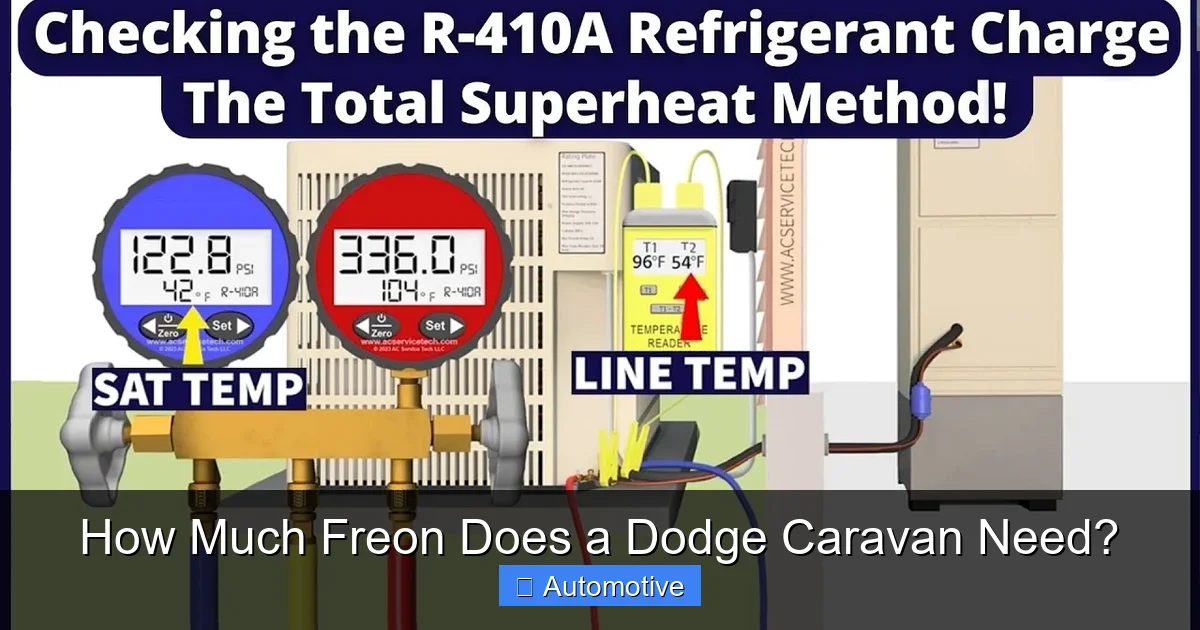
Visual guide about How Much Freon Does a Dodge Caravan Need?
Image source: i.ytimg.com
Before diving into quantities, it’s crucial to understand what kind of refrigerant your Caravan uses. Not all “Freon” is the same—and using the wrong type can ruin your AC system.
R-12 vs. R-134a: What’s the Difference?
Older Dodge Caravans (typically 1984–1993) were originally equipped with R-12 refrigerant, commonly known as “Freon.” However, due to environmental concerns—R-12 depletes the ozone layer—it was phased out in the early 1990s under the Montreal Protocol. By 1994, all new vehicles in the U.S., including the Caravan, switched to R-134a, a more environmentally friendly alternative.
If you own a pre-1994 Caravan, it likely still has R-12—or, more commonly, it’s been retrofitted to use R-134a. Retrofitting involves replacing certain seals and O-rings and using compatible oil, because R-134a doesn’t mix well with the original mineral oil used in R-12 systems.
**Important:** Never mix R-12 and R-134a. They’re chemically incompatible and can cause system corrosion or failure.
How to Identify Your Refrigerant Type
Check your owner’s manual—it will specify the correct refrigerant. Alternatively, look for a label under the hood, usually near the AC compressor or receiver-drier. It should say “R-134a ONLY” or “Use only R-134a refrigerant.”
If there’s no label and you’re unsure, assume it’s R-134a if your Caravan was made after 1994. For older models, consult a mechanic or use a refrigerant identifier tool (available at auto parts stores) to confirm before adding anything.
Why R-134a Is the Standard Today
R-134a is safer for the environment, widely available, and compatible with modern AC components. It also operates at slightly different pressures than R-12, which is why retrofitted systems must be properly converted. Most DIY recharge kits sold today contain R-134a—so unless you’re working on a vintage classic, this is what you’ll be using.
Exact Freon Capacity by Model Year and Configuration

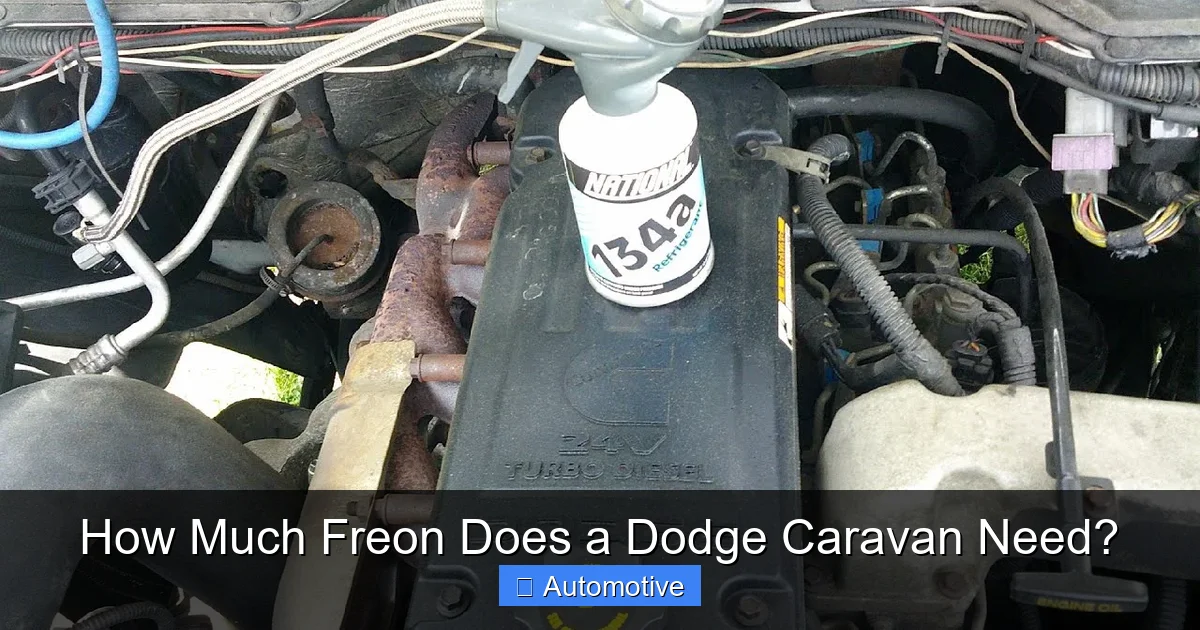
Visual guide about How Much Freon Does a Dodge Caravan Need?
Image source: indoorclime.com
Now let’s get specific. The amount of refrigerant your Dodge Caravan needs isn’t a one-size-fits-all number. Here’s a breakdown based on common configurations:
1996–2000 Dodge Caravan (Base & SE Models)
These models typically have a single-zone front AC system with no rear air. The total system capacity is usually **28 to 32 ounces (1.75 to 2 pounds)** of R-134a. This includes the compressor, condenser, evaporator, and all lines.
2001–2007 Dodge Caravan (Including SXT and GT Trims)
Starting in 2001, many Caravans offered optional rear air conditioning, especially in family-oriented trims. If your van has rear AC, the total capacity increases to **32 to 36 ounces (2 to 2.25 pounds)**. Dual-zone front systems (driver and passenger independent temperature controls) also use slightly more refrigerant due to additional valves and lines.
Minivan vs. Cargo Van Considerations
Passenger minivans generally have larger evaporators and more ductwork than cargo versions, so they may require closer to the upper end of the range. Always check your owner’s manual or a service guide for your exact VIN-specific specs.
Example: 2005 Dodge Caravan SE with Rear AC
Let’s say you own a 2005 Caravan SE with factory-installed rear air. According to factory service manuals, this configuration holds approximately **34 ounces (2.125 pounds)** of R-134a when fully charged. If you’re doing a DIY recharge and the system is completely empty (rare), you’d add about 34 oz. But in practice, most recharges only require 8–16 oz to top off a slow leak.
**Pro Tip:** Never fill to 100% capacity during a top-off. Most systems are designed to operate optimally when 80–90% full, allowing for thermal expansion.
Signs Your Dodge Caravan Needs More Freon

Visual guide about How Much Freon Does a Dodge Caravan Need?
Image source: jeepzine.com
Low refrigerant doesn’t always mean your AC blows hot air immediately. Often, the decline is gradual. Watch for these common symptoms:
Weak or Warm Airflow
If your AC used to blow ice-cold but now only produces lukewarm air—even on the coldest setting—it’s a strong indicator of low Freon. However, this can also be caused by a clogged cabin air filter, a failing blower motor, or a faulty blend door. Rule those out first.
Longer Cool-Down Times
On a hot day, it should take 5–10 minutes for your Caravan’s interior to reach a comfortable temperature. If it’s taking 20+ minutes, your system may be low on refrigerant.
Hissing Sounds Near the Dashboard or Under the Hood
A hissing noise when the AC is running could indicate a refrigerant leak, often from a worn O-ring, cracked hose, or damaged seal. Don’t ignore this—leaks worsen over time and can lead to compressor failure.
Ice Buildup on AC Components
If you see frost or ice on the evaporator coils (usually visible through the blower motor access panel), it may be due to low refrigerant causing the coil to drop below freezing. This restricts airflow and reduces cooling.
AC Compressor Cycling On and Off Frequently
The compressor clutch engages and disengages based on system pressure. Low Freon can cause erratic cycling, which stresses the compressor and reduces efficiency.
**Important Note:** These symptoms can also point to other issues like a bad pressure switch, clogged expansion valve, or electrical problems. Always diagnose thoroughly before assuming it’s just low Freon.
How to Safely Recharge Your Dodge Caravan’s AC System
If you’ve confirmed low refrigerant and want to try a DIY recharge, follow these steps carefully. Safety and precision are key.
Gather the Right Tools
You’ll need:
– A quality R-134a recharge kit with a hose, can tap, and built-in pressure gauge (available at auto parts stores for $20–$40)
– Safety goggles and gloves (refrigerant can cause frostbite)
– A digital thermometer (optional, to measure vent temperature)
Avoid “no-gauge” cans—they make it impossible to monitor pressure and often lead to overcharging.
Locate the Low-Pressure Port
On all Dodge Caravans, the low-pressure service port is located on the aluminum line between the firewall and the compressor. It’s usually marked with an “L” and has a blue or black cap. The high-pressure port (marked “H”) should never be used for recharging—it’s for diagnostics only.
Check Ambient Temperature and Target Pressure
Refrigerant pressure varies with outside temperature. Use this general guide:
– 70°F (21°C): Target low-side pressure = 25–35 psi
– 80°F (27°C): 30–40 psi
– 90°F (32°C): 35–45 psi
Your recharge kit’s gauge should display these ranges. Never exceed 50 psi on the low side.
Recharge Slowly and Monitor
1. Start the engine and set the AC to MAX COOL, fan on HIGH.
2. Shake the refrigerant can well and attach it to the hose.
3. Open the valve slowly and let refrigerant flow into the system.
4. Watch the gauge—stop when you reach the target pressure for your temperature.
5. If the can gets cold, pause to let it warm up. Never invert the can—liquid refrigerant can flood the compressor.
**Typical Recharge Amount:** Most top-offs require only 8–16 ounces. If you’re adding more than 20 oz, there’s likely a major leak that needs professional attention.
When to Stop
Stop recharging if:
– The pressure gauge reaches the recommended range
– The can is empty
– The AC starts blowing cold air consistently
Never force more refrigerant into the system. Overcharging reduces cooling efficiency and can damage the compressor.
Why a Leak Repair Is Often Necessary
Here’s the hard truth: **If your Dodge Caravan is low on Freon, it’s because it leaked out.** Unlike engine oil or coolant, refrigerant doesn’t “burn off” or evaporate under normal conditions. A sealed AC system should hold its charge for years—even decades.
Common Leak Points in Dodge Caravans
– **O-rings and seals:** Deteriorate over time, especially near the compressor and condenser.
– **Schrader valves:** The tiny valves in the service ports can leak if damaged or over-tightened.
– **Condenser:** Located in front of the radiator, it’s vulnerable to road debris.
– **Evaporator core:** Hidden inside the dashboard, leaks here are hard to detect but cause musty smells.
– **Hoses and fittings:** Rubber hoses dry out and crack; metal lines can corrode.
The Cost of Ignoring Leaks
Continuously recharging without fixing the leak is like putting a bandage on a broken pipe. You’ll keep losing refrigerant, waste money on cans, and eventually damage the compressor—which can cost $800+ to replace.
Professional Leak Detection Methods
Certified technicians use tools like:
– **UV dye:** Added to the system, then scanned with a black light to find leaks.
– **Electronic leak detectors:** Sniff for refrigerant vapor.
– **Nitrogen pressure testing:** Pressurizes the system to locate slow leaks.
Many shops offer free leak checks with a recharge—take advantage of this!
Environmental and Legal Considerations
Handling refrigerant isn’t just about car maintenance—it’s also a legal and environmental responsibility.
It’s Illegal to Vent Refrigerant
Under the Clean Air Act, releasing R-134a into the atmosphere is a federal offense. Fines can exceed $10,000. Always use a recharge kit with a sealed system or have a professional recover the old refrigerant.
Proper Disposal and Recycling
If your Caravan’s AC system needs major repair, the refrigerant must be recovered by an EPA-certified technician using specialized equipment. Never puncture a can or release leftover refrigerant.
Choosing Eco-Friendly Options
Some aftermarket “drop-in” replacements claim to be more eco-friendly, but most aren’t approved for use in factory systems. Stick with pure R-134a unless advised otherwise by a professional.
When to Call a Professional
DIY recharges are great for minor top-offs, but certain situations demand expert help:
– You’ve recharged twice in one year
– The system won’t hold pressure
– You smell a sweet or musty odor (sign of evaporator leak)
– The compressor is noisy or won’t engage
– You’re unsure about the refrigerant type or capacity
A certified mechanic can perform a full system diagnosis, repair leaks, evacuate and recharge properly, and ensure your warranty (if applicable) isn’t voided.
Conclusion
So, how much Freon does a Dodge Caravan need? For most models, the answer is **between 1.75 and 2.25 pounds of R-134a**, depending on year and configuration. But the real question isn’t just about quantity—it’s about system health, safety, and long-term performance.
Recharging your AC can restore cool air quickly, but it’s not a permanent fix if there’s an underlying leak. Always monitor pressure, avoid overfilling, and prioritize leak detection. And remember: refrigerant isn’t a consumable like windshield washer fluid—it should last the life of your vehicle if the system is sealed properly.
By understanding your Caravan’s specific needs and taking a thoughtful approach to maintenance, you’ll keep your family comfortable on summer road trips and avoid costly repairs down the road. When in doubt, consult a professional—they’ll have the tools and expertise to keep your minivan’s AC running smoothly for years to come.
Frequently Asked Questions
How often should I recharge the Freon in my Dodge Caravan?
You shouldn’t need to recharge Freon regularly. A properly sealed AC system should hold its charge for 5–10 years or more. If you’re recharging more than once every 2–3 years, there’s likely a leak that needs repair.
Can I use R-12 refrigerant in a newer Dodge Caravan?
No. Post-1994 Dodge Caravans are designed for R-134a only. Using R-12 can damage the system and is illegal without proper retrofitting and certification.
What happens if I overfill my Caravan’s AC with Freon?
Overcharging increases system pressure, reduces cooling efficiency, and can cause the compressor to fail. It may also trigger the high-pressure relief valve or damage seals.
Is it safe to recharge my AC myself?
Yes, if you use a proper recharge kit with a gauge, wear safety gear, and follow instructions. However, if you suspect a major leak or system damage, consult a professional.
Why does my Caravan’s AC work sometimes and not others?
Intermittent cooling is often caused by a failing compressor clutch, low refrigerant, or electrical issues like a bad relay or pressure switch. Have it diagnosed promptly.
Does adding Freon improve AC performance immediately?
Yes, if the system was low. You should notice colder air within minutes of a proper recharge. If not, there may be another issue like a clogged expansion valve or faulty blower.