How Much Does It Cost to Tint a Dodge Challenger

Contents
- 1 Key Takeaways
- 2 📑 Table of Contents
- 3 Why Tint Your Dodge Challenger?
- 4 Factors That Affect the Cost of Tinting a Dodge Challenger
- 5 Average Cost Breakdown by Film Type
- 6 DIY vs. Professional Tinting: Is It Worth It?
- 7 Legal Considerations: Know Your State’s Tint Laws
- 8 Tips to Save Money on Tinting Your Challenger
- 9 Conclusion: Is Tinting Your Dodge Challenger Worth It?
- 10 Frequently Asked Questions


Tinting your Dodge Challenger enhances privacy, reduces heat, and protects interiors—but costs vary widely. Prices range from $150 to $600 depending on film quality, coverage, and location. This guide breaks down everything you need to know to make a smart, budget-friendly decision.
So, you’ve got a Dodge Challenger—maybe it’s a sleek SXT, a roaring R/T, or a track-ready Hellcat. It turns heads, purrs like a beast, and feels like freedom on four wheels. But have you ever noticed how hot the cabin gets on a sunny afternoon? Or how your dashboard is starting to fade from UV exposure? That’s where window tinting comes in.
Tinting your Dodge Challenger isn’t just about looking cool (though, let’s be honest, it definitely helps). It’s a smart upgrade that improves comfort, protects your interior, and adds a layer of privacy. But before you roll up to the nearest tint shop, you’re probably wondering: *How much does it actually cost to tint a Dodge Challenger?*
The short answer? It depends. A lot. From the type of film you choose to how many windows you want tinted, the price can swing from a budget-friendly $150 to a premium $600 or more. But don’t worry—we’re going to break it all down so you know exactly what to expect, how to save money, and what to avoid.
Whether you’re a first-time car owner or a seasoned Challenger enthusiast, this guide will walk you through every factor that affects the cost of tinting your ride. We’ll cover film types, installation options, legal considerations, and even tips for finding the best deal without sacrificing quality. By the end, you’ll be ready to make an informed decision that fits your budget and your style.
Key Takeaways
- Cost Range: Expect to pay between $150 and $600 to tint a Dodge Challenger, with most owners spending $250–$400 for quality ceramic film.
- Film Type Matters: Dyed, metalized, hybrid, carbon, and ceramic films offer different levels of heat rejection, durability, and price—ceramic is best for performance.
- Coverage Options: Tinting just the rear windows is cheaper ($100–$200), while full-window tinting (including windshield) costs more but offers maximum benefits.
- Labor and Location: Professional installation is recommended; labor costs vary by region, with urban areas charging 20–30% more than rural shops.
- Legal Compliance: Check your state’s window tinting laws—some states limit visible light transmission (VLT) on front side windows, affecting your options.
- DIY vs. Pro: DIY kits cost $50–$150 but risk bubbles, peeling, and legal issues; professional tinting ensures longevity and warranty coverage.
- Long-Term Value: High-quality tinting protects your interior from UV damage, improves comfort, and can increase resale value.
📑 Table of Contents
- Why Tint Your Dodge Challenger?
- Factors That Affect the Cost of Tinting a Dodge Challenger
- Average Cost Breakdown by Film Type
- DIY vs. Professional Tinting: Is It Worth It?
- Legal Considerations: Know Your State’s Tint Laws
- Tips to Save Money on Tinting Your Challenger
- Conclusion: Is Tinting Your Dodge Challenger Worth It?
Why Tint Your Dodge Challenger?
Before we dive into costs, let’s talk about why tinting is such a popular upgrade for Dodge Challenger owners. This isn’t just a cosmetic tweak—it’s a functional enhancement that pays off in comfort, protection, and even safety.
First, let’s talk heat. The Challenger’s large windows and low roofline make it a greenhouse on wheels during summer. Without tint, the interior can heat up to dangerous levels, making your AC work overtime and your passengers sweat through their shirts. Quality window film can block up to 99% of UV rays and reject significant amounts of infrared heat, keeping your cabin cooler and reducing strain on your cooling system.
Then there’s UV protection. Prolonged exposure to sunlight doesn’t just fade your dashboard and seats—it can also damage your skin. High-quality tint acts as a sunscreen for your car, shielding you and your passengers from harmful UVA and UVB rays.
Privacy is another big perk. Whether you’re parked in a busy lot or cruising through the city, tinted windows make it harder for prying eyes to see inside. That’s especially useful if you keep valuables in your car or just prefer a little extra discretion.
And let’s not forget style. A well-tinted Challenger looks aggressive, sleek, and custom—like it rolled straight out of a car show. It enhances the car’s muscular lines and gives it a more finished, professional appearance.
Finally, there’s resale value. A clean, professionally tinted car signals to buyers that it’s been well cared for. Plus, many buyers see tinting as a desirable feature, which can help your Challenger stand out in a crowded used car market.
Factors That Affect the Cost of Tinting a Dodge Challenger
Visual guide about How Much Does It Cost to Tint a Dodge Challenger
Image source: carscoops.com
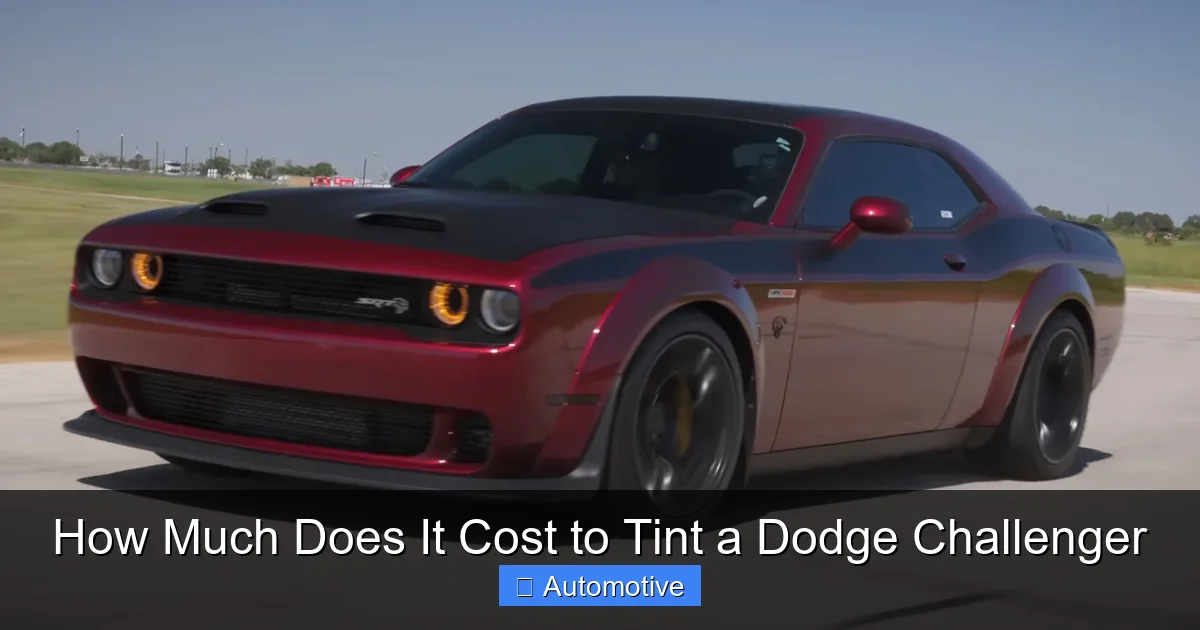
Now that you know why tinting is worth it, let’s get into the nitty-gritty: what actually determines the price? Several key factors influence how much you’ll pay, and understanding them will help you avoid overpaying or getting stuck with a subpar job.
Type of Window Film
This is the biggest cost driver. Not all tint films are created equal. Here’s a quick breakdown of the most common types:
– Dyed Film: The cheapest option, usually $50–$100 for a full tint job. It blocks some heat and UV but tends to fade and bubble over time. Best for budget-conscious owners who don’t drive much in extreme heat.
– Metalized Film: Contains tiny metallic particles that reflect heat. More durable than dyed film and offers better heat rejection. Costs $150–$250. However, it can interfere with GPS, cell signals, and keyless entry.
– Hybrid Film: Combines dyed and metalized layers for a balance of performance and price. Great middle-ground option at $200–$300.
– Carbon Film: Made with carbon particles that resist fading and provide excellent heat rejection. Looks matte black and doesn’t interfere with electronics. Typically $250–$350.
– Ceramic Film: The top-tier choice. Uses nano-ceramic technology to block heat and UV without metal, so no signal interference. Offers the best clarity, durability, and performance. Expect to pay $350–$600 for a full ceramic tint job.
For a high-performance car like the Challenger, ceramic film is often the best investment—especially if you live in a hot climate or drive frequently.
Extent of Coverage
Are you tinting just the rear windows, or going full coverage? The more windows you tint, the higher the cost.
– Rear Windows Only: The back glass and rear side windows. This is the most basic option, often chosen for privacy or to match factory tint. Costs $100–$200.
– Side Windows Only: Front and rear side windows. Adds privacy and heat protection but doesn’t include the rear windshield. Typically $150–$300.
– Full Window Tint: All side windows, rear windshield, and sometimes the front windshield (if legally allowed). This gives maximum heat rejection and a uniform look. Prices range from $250–$500, depending on film type.
– Windshield Tinting: Adding a clear or lightly tinted strip to the top of the windshield (or full coverage where permitted) can reduce glare and heat. Adds $50–$150 to the total cost.
Most Challenger owners opt for full side and rear window tinting, with a windshield strip if legal in their state.
Labor and Installation Quality
You can buy the best film in the world, but if it’s installed poorly, it’ll look terrible and fail early. Professional installation is strongly recommended.
Labor costs vary by shop, location, and experience. On average, labor makes up 40–60% of the total cost. A reputable shop with trained technicians will charge more, but you’ll get precision cutting, bubble-free application, and a warranty.
Beware of “cheap” tint jobs. If a shop quotes $100 for a full tint, they’re likely using low-quality film and cutting corners on installation. You’ll end up with peeling edges, discoloration, or even legal issues if the tint is too dark.
Geographic Location
Where you live affects pricing. Shops in major cities like Los Angeles, New York, or Miami charge more due to higher overhead and demand. In rural areas or smaller towns, you might save 20–30%.
For example, a ceramic full tint job might cost $500 in Chicago but only $350 in Des Moines. Always get at least three quotes from local shops to compare.
Vehicle-Specific Considerations
The Dodge Challenger has some unique features that can affect tinting:
– Large Rear Windshield: The Challenger’s rear glass is wide and curved, making it harder to install without wrinkles or bubbles. This can increase labor time and cost.
– Factory Tint: Some trims (like the SRT or Hellcat) come with factory-tinted rear windows. If you’re only tinting the front windows, the job is simpler and cheaper.
– Aftermarket Modifications: If you’ve added custom glass, sunroofs, or window deflectors, these can complicate installation and raise the price.
Average Cost Breakdown by Film Type
Visual guide about How Much Does It Cost to Tint a Dodge Challenger
Image source: tintinghub.com
Let’s put some real numbers to these options. Here’s a realistic cost breakdown for tinting a Dodge Challenger, based on film type and coverage.
Budget Option: Dyed Film, Side and Rear Windows
– Film Cost: $50–$80
– Labor: $100–$120
– Total: $150–$200
Best for: Occasional drivers, cold climates, or those on a tight budget. Expect some fading after 3–5 years.
Mid-Range Option: Carbon or Hybrid Film, Full Coverage
– Film Cost: $150–$200
– Labor: $150–$200
– Total: $300–$400
Best for: Daily drivers in moderate climates. Offers good heat rejection, durability, and a sleek look.
Premium Option: Ceramic Film, Full Coverage + Windshield Strip
– Film Cost: $250–$350
– Labor: $200–$250
– Windshield Strip: $75–$100
– Total: $525–$700
Best for: Hot climates, long commutes, or owners who want the best performance and longevity. Ceramic film can last 10+ years with proper care.
Keep in mind, these are averages. Prices can vary based on shop reputation, promotions, and package deals.
DIY vs. Professional Tinting: Is It Worth It?
Visual guide about How Much Does It Cost to Tint a Dodge Challenger
Image source: cdn.shopify.com
You might be tempted to save money by tinting your Challenger yourself. After all, DIY kits are available online for $50–$150. But is it really worth the risk?
The Case for DIY Tinting
Pros:
– Lower upfront cost
– Sense of accomplishment
– Flexibility to work at your own pace
Cons:
– High risk of bubbles, creases, and peeling
– Difficult on curved or large windows (like the Challenger’s rear glass)
– No warranty or professional support
– Potential legal issues if tint is too dark
Most DIYers struggle with the rear windshield, which requires precise cutting and heat-shrinking to fit the curve. One mistake can ruin the film—and your investment.
The Case for Professional Installation
Pros:
– Expert precision and clean results
– Access to high-quality films not sold to the public
– Warranty coverage (often 5–10 years)
– Legal compliance assurance
– Faster turnaround (usually 2–4 hours)
Cons:
– Higher cost
– Need to schedule and drop off the car
For a car as iconic as the Challenger, professional tinting is almost always the better choice. You’re not just paying for labor—you’re paying for expertise, tools, and peace of mind.
Legal Considerations: Know Your State’s Tint Laws
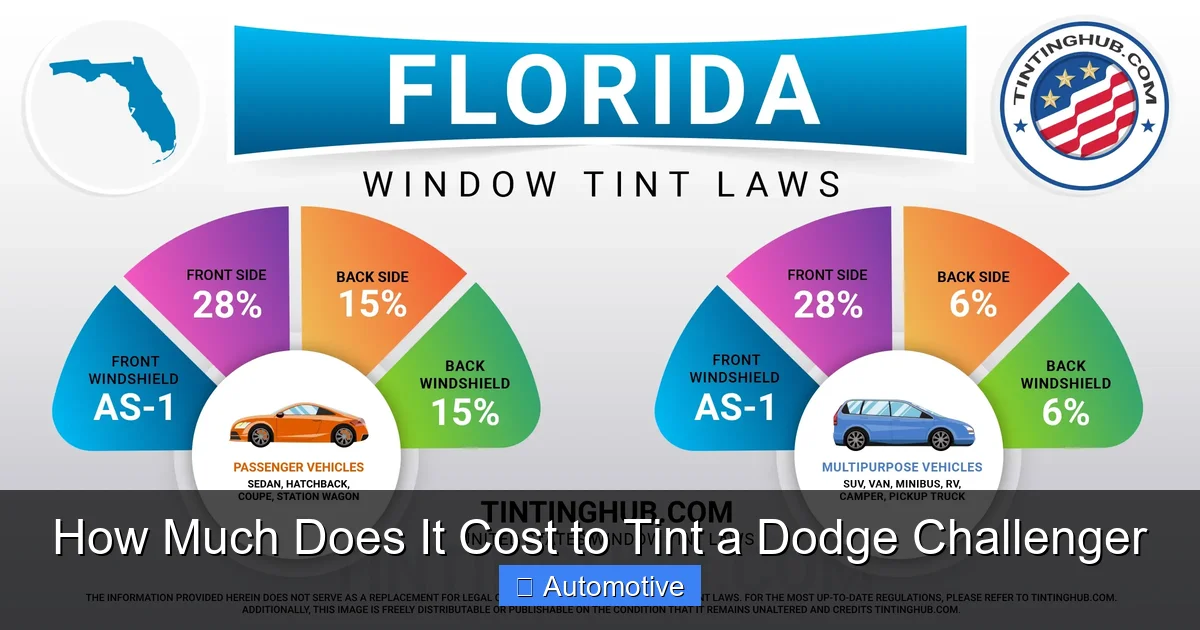
Before you tint, check your state’s window tinting laws. Every state has different rules about how dark your windows can be, especially on the front side windows.
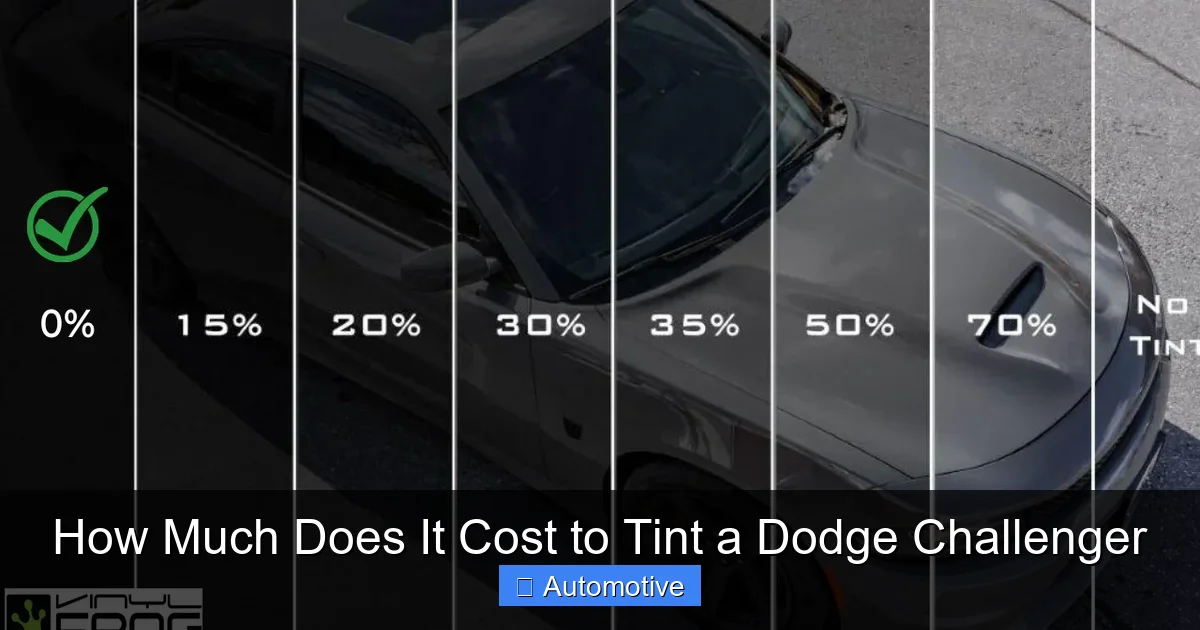
The key term is Visible Light Transmission (VLT)—the percentage of light that passes through the window. A 5% tint lets in only 5% of light (very dark), while a 50% tint is relatively light.
Here’s a quick overview of common restrictions:
– Front Side Windows: Most states require at least 70% VLT (same as factory glass). Some allow 50% or 35%. Very few allow darker tints.
– Rear Side Windows: Often allow 20%–35% VLT.
– Rear Windshield: Usually allows 20%–35%, but some states require 70% if side mirrors aren’t present.
– Windshield: Typically allows only a clear or lightly tinted strip (usually 5–7 inches at the top).
For example, in California:
– Front side windows: 70% VLT minimum
– Rear side windows: 35% VLT minimum
– Rear windshield: 35% VLT minimum
In Texas:
– Front side windows: 25% VLT minimum
– Rear side and back: 25% VLT minimum
Violating these laws can result in fines, failed inspections, or even having to remove the tint. Always confirm your state’s rules before choosing a film shade.
Tips to Save Money on Tinting Your Challenger
Tinting doesn’t have to break the bank. Here are some smart ways to reduce costs without sacrificing quality.
1. Choose the Right Film for Your Needs
You don’t need ceramic film if you live in a cool climate and drive infrequently. A hybrid or carbon film may offer enough protection at a lower price.
2. Tint in Stages
Start with the rear windows and rear windshield, then add the front side windows later. This spreads out the cost and lets you test the shop’s work first.
3. Look for Package Deals
Many shops offer discounts for full-window tinting or bundle services (e.g., tint + paint protection). Ask about promotions.
4. Avoid Add-Ons You Don’t Need
Some shops push extras like “anti-scratch coating” or “premium adhesive.” Most quality films already include these features.
5. Maintain Your Tint
Clean your windows with ammonia-free products and avoid rolling them down for 3–5 days after installation. Proper care extends the life of your tint, saving you money in the long run.
Conclusion: Is Tinting Your Dodge Challenger Worth It?
So, how much does it cost to tint a Dodge Challenger? The answer is: it depends on your priorities. But for most owners, the investment is well worth it.
At the low end, a basic dyed tint job might cost $150 and offer modest benefits. At the high end, a full ceramic tint with windshield strip can run $600 or more—but deliver superior heat rejection, UV protection, and a premium look that turns heads.
The sweet spot for most Challenger owners is a mid-range carbon or hybrid film with full coverage, costing around $300–$400. It balances performance, durability, and price, and enhances both comfort and style.
Remember, tinting is not just an expense—it’s an upgrade that protects your car, improves your driving experience, and adds long-term value. And with the right shop and film choice, you can enjoy a cooler, safer, and more stylish ride for years to come.
So go ahead—treat your Challenger to the tint it deserves. Your dashboard, your passengers, and your peace of mind will thank you.
Frequently Asked Questions
How much does it cost to tint just the rear windows of a Dodge Challenger?
Expect to pay between $100 and $200 for tinting just the rear windshield and rear side windows. This is the most affordable option and provides privacy and some heat reduction, but doesn’t cover the front windows.
Can I tint my Dodge Challenger’s front side windows?
Yes, but only if it’s legal in your state. Most states require front side windows to have at least 70% VLT (same as factory glass). Check your local laws before choosing a darker tint.
Is ceramic tint worth the extra cost for a Challenger?
Absolutely, especially if you live in a hot climate or drive frequently. Ceramic film offers the best heat rejection, UV protection, and clarity, and doesn’t interfere with electronics. It’s the top choice for performance and longevity.
How long does it take to tint a Dodge Challenger?
Professional tinting typically takes 2–4 hours, depending on coverage and shop workload. DIY jobs can take a full day or more, especially for first-timers.
Will tinting void my Dodge Challenger’s warranty?
No, window tinting does not void your vehicle’s manufacturer warranty. However, if you use a DIY kit and damage the glass or electrical components, those repairs may not be covered.
How do I find a reputable tint shop for my Challenger?
Look for shops with good reviews, certified installers, and a warranty on their work. Ask to see examples of previous jobs, especially on muscle cars or coupes with curved glass like the Challenger.