How Much Does It Cost to Replace a Toyota Transmission?

Contents
- 1 Key Takeaways
- 2 📑 Table of Contents
- 3 Why Your Toyota’s Transmission Matters (and Why It’s So Expensive to Fix)
- 4 Understanding Your Toyota’s Transmission: It’s Not One-Size-Fits-All
- 5 The Real Cost Breakdown: Parts, Labor, and The “Extras”
- 6 5 Critical Factors That Will Change Your Final Bill
- 7 Rebuild vs. Replace: What’s the Difference and Which Should You Choose?
- 8 Smart Strategies to Save Money on Your Toyota Transmission Repair
- 9 Choosing the Right Shop: Dealer vs. Independent vs. Specialist
- 10 Final Thoughts: Is It Worth It?
- 11 Frequently Asked Questions



Replacing a Toyota transmission typically costs between $2,500 and $6,000, depending on your model, year, and whether you choose new, used, or rebuilt parts. Labor rates and geographic location also significantly impact the final bill. Always get a professional diagnosis before committing to this major repair.
Key Takeaways
- Cost varies widely by model and transmission type: A compact Corolla’s transmission costs less than a heavy-duty Tundra’s, and CVTs are often pricier than traditional automatics.
- New OEM parts are most expensive; used/rebuilt save money but carry risks: Remanufactured units offer a balance of cost and warranty, while used parts have unknown longevity.
- Labor is a huge portion of the cost; shop rates vary: Dealerships charge $120-$180/hour, independents $80-$130/hour. The job takes 6-12 hours.
- Regular transmission fluid changes can prevent premature failure: Following Toyota’s service schedule (often every 30,000-60,000 miles) is the best way to avoid this costly repair.
- Rebuilding may be cheaper than replacing but isn’t always an option: If the transmission case is damaged, a rebuild is impossible. A rebuild also takes longer and may have a shorter warranty.
- Always get multiple quotes and check warranties: A reputable shop will offer at least a 12-month/12,000-mile warranty on parts and labor.
📑 Table of Contents
- Why Your Toyota’s Transmission Matters (and Why It’s So Expensive to Fix)
- Understanding Your Toyota’s Transmission: It’s Not One-Size-Fits-All
- The Real Cost Breakdown: Parts, Labor, and The “Extras”
- 5 Critical Factors That Will Change Your Final Bill
- Rebuild vs. Replace: What’s the Difference and Which Should You Choose?
- Smart Strategies to Save Money on Your Toyota Transmission Repair
- Choosing the Right Shop: Dealer vs. Independent vs. Specialist
- Final Thoughts: Is It Worth It?
Why Your Toyota’s Transmission Matters (and Why It’s So Expensive to Fix)
Let’s be honest. Hearing the words “you need a new transmission” is one of the most dreaded moments for any car owner. It’s right up there with “your engine is blown.” For Toyota owners, known for reliability, it can feel especially shocking. Your transmission is the complex, heavy-duty component that takes the powerful force from your engine and translates it into the motion that moves your wheels. It’s filled with intricate gears, sophisticated electronics, and hundreds of precisely machined parts working in perfect harmony under immense pressure and heat.
When it fails, it’s not a simple bolt-on fix. It’s a major mechanical surgery. That’s why the Toyota transmission replacement cost is one of the highest single repair bills you’ll face. The price isn’t just for a big metal box; it’s for the specialized part itself, many hours of skilled labor, and often additional components like a new torque converter, fluid, filters, and seals. In this guide, we’ll pull back the curtain on these costs. We’ll break down real numbers for popular models like the Camry, RAV4, Tacoma, and Tundra. We’ll explore the huge factors that swing the price from $2,500 to over $6,000. And most importantly, we’ll give you practical tips to make the smartest, most cost-effective decision for your situation.
Understanding Your Toyota’s Transmission: It’s Not One-Size-Fits-All
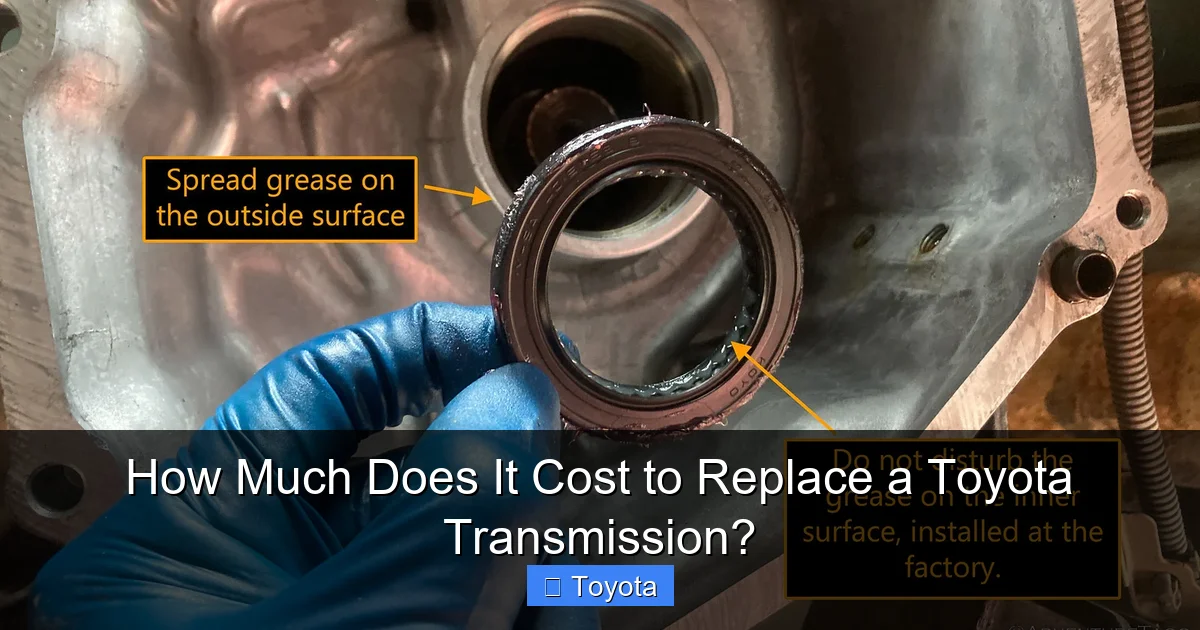
Before we talk dollars, we need to talk about what’s under the hood. The type of transmission in your specific Toyota is the single biggest factor determining the Toyota transmission replacement cost. Over the years, Toyota has used several different designs, each with its own price point and common failure points.
Visual guide about How Much Does It Cost to Replace a Toyota Transmission?
Image source: live.staticflickr.com
The Main Types You’ll Encounter
Traditional Automatic (e.g., Aisin AW series): This is the workhorse found in countless Toyotas, from the Camry to the Tundra. It uses a complex set of planetary gears and a hydraulic torque converter. These are generally robust and, when they fail, a remanufactured replacement is widely available, which helps keep costs somewhat predictable.
Continuously Variable Transmission (CVT): Popular in many modern Camrys, Corollas, and RAV4s for their fuel efficiency. Instead of fixed gears, they use a belt and pulley system. While smooth and efficient, early model CVTs (particularly from the early 2010s) have been prone to failure and are often more expensive to replace due to the specialized parts and computer calibration required. The cost to replace a CVT frequently sits at the higher end of the spectrum.
Manual Transmission: Less common in recent years but still found in some base-model Tacomas and older vehicles. A clutch replacement is a common and much cheaper fix, but if the gearbox itself is destroyed, replacement costs can be significant, though often less than an automatic.
Hybrid Transmissions (e.g., in the Prius): These are highly integrated with the electric motor system. They are incredibly complex and, not surprisingly, the most expensive to replace. This guide focuses on conventional gasoline models, but the principle of high complexity equals high cost remains the same.
Knowing your transmission type is step one. You can usually find it in your owner’s manual or by looking up your VIN online. This knowledge immediately sets the stage for your potential cost range.
The Real Cost Breakdown: Parts, Labor, and The “Extras”
Okay, let’s get to the numbers. A Toyota transmission replacement cost is rarely a single line item. It’s a sum of several parts. Think of it like building a house: you need the foundation (the transmission), the workers (labor), and all the finishing touches (fluids, seals, etc.).
Visual guide about How Much Does It Cost to Replace a Toyota Transmission?
Image source: autozonic.com
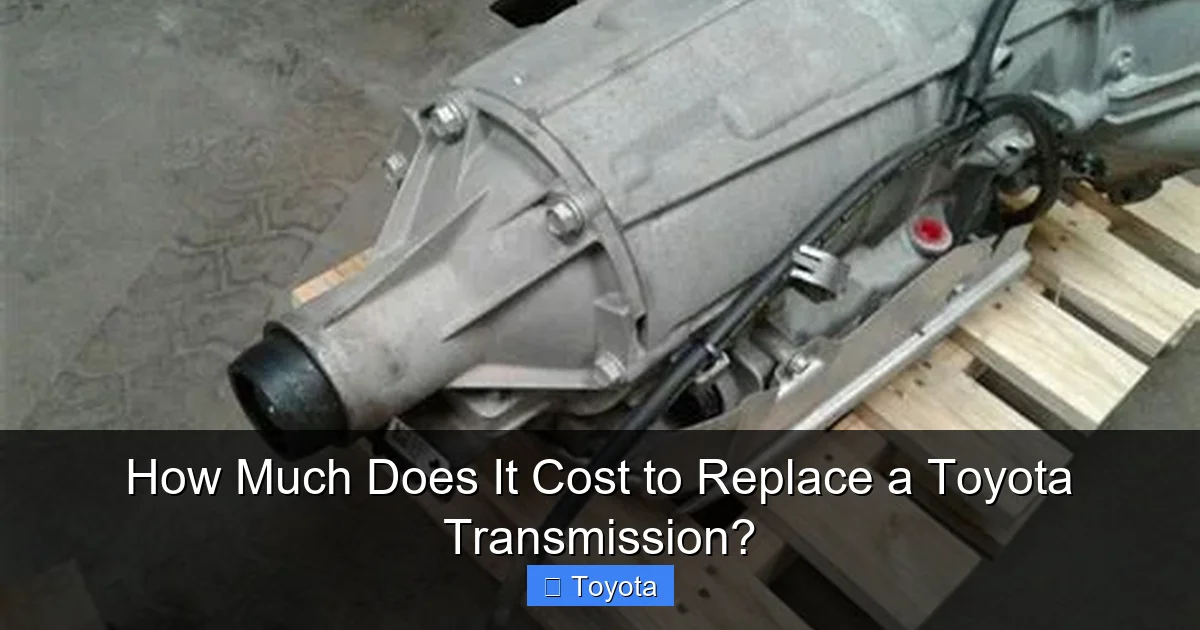
1. The Transmission Unit Itself
This is the biggest variable. You generally have three tiers:
- New OEM (Original Equipment Manufacturer): This is a brand-new, direct-from-Toyota (or their supplier, like Aisin) transmission. It comes with a full factory warranty (often 3 years/36,000 miles). It’s the gold standard for reliability and peace of mind, but also the most expensive. Price Range: $2,500 – $5,000+ for the unit alone, depending on the model.
- Remanufactured (Reman): This is a used core that has been completely disassembled, all worn parts replaced with new ones, and reassembled to factory specs. It’s essentially “like new” and comes with a strong warranty from the rebuilder (often 3 years/unlimited miles). This is the most common and recommended middle ground. Price Range: $1,800 – $3,500.
- Used/Salvage: Pulled from a donor vehicle at a junkyard. It’s the cheapest upfront cost but a serious gamble. You have no idea about its history, maintenance, or remaining lifespan. Warranties are typically very short (30-90 days). Price Range: $800 – $2,000.
2. Labor: The Silent Majority of Your Bill
This is where the bill truly balloons. Replacing a transmission is not a quick job. The transmission sits deep in the engine bay, often connected to the engine, driveshaft, axles, and cooling lines. The process typically involves:
- Lifting and supporting the vehicle.
- Disconnecting the driveshaft and axles.
- Unbolting the transmission from the engine.
- Carefully lowering and removing the heavy unit (often 150-300 lbs).
- Installing the new/rebuild unit and reconnecting everything.
- Refilling with new, specific transmission fluid.
- Road testing and computer calibration (especially for CVTs and modern automatics).
All this takes time. Expect 6 to 12 billable hours for most rear-wheel-drive models (Tacoma, Tundra) and 8-14 hours for some front-wheel-drive models (Camry, RAV4) where the engine often needs to be partially removed for access. Labor rates vary dramatically:
- Dealerships: $120 – $180 per hour.
- Independent Repair Shops: $80 – $130 per hour.
Just on labor alone, you’re looking at $700 to $2,500+ before the part even arrives.
3. The “Extras” You Must Budget For
Your quote should include these, but always ask. They add hundreds:
- New Transmission Fluid: High-quality Toyota WS fluid or equivalent. 5-10 quarts. ($150-$300).
- Torque Converter: Often recommended to replace with a new unit, especially on high-mileage vehicles. ($200-$600).
- Seals, Gaskets, and Filters: A complete gasket and seal kit is standard best practice. ($100-$250).
- Cooler Lines & Hardware: They can be corroded or damaged during removal. ($50-$200).
- Miscellaneous: Shop supplies, disposal fee, alignment check after reassembly. ($100-$200).
Total Real-World Cost Examples (Parts + Labor + Extras):
- 2015-2018 Toyota Camry (2.5L 6-Speed Auto): $3,200 – $4,800
- 2020 Toyota RAV4 (A25A-FKS 8-Speed Auto): $3,800 – $5,500
- 2016-2021 Toyota Tacoma (3.5L 6-Speed Auto): $4,000 – $6,200
- 2014-2018 Toyota Tundra (5.7L V8): $4,500 – $6,800+
- 2014-2019 Toyota Corolla (CVT): $3,500 – $5,300 (CVT premium)
These are national averages. Your zip code will adjust these numbers up or down by 15-30%.
5 Critical Factors That Will Change Your Final Bill
Now that you have a ballpark, understand the forces that will push your specific quote higher or lower. Ignoring these can lead to a nasty shock.
Visual guide about How Much Does It Cost to Replace a Toyota Transmission?
Image source: autozonic.com
1. Your Specific Model, Year, and Engine
A 4-cylinder Camry transmission is a different, less expensive animal than the heavy-duty unit in a Tundra 5.7L V8. The Tundra’s transmission is built for towing and hauling, with stronger internals and a higher torque capacity, hence the higher price. Similarly, a V6 RAV4’s transmission is more robust (and costly) than the 4-cylinder’s. Model year matters too—newer vehicles have more integrated electronics and sometimes more complex transmissions (like the 8-speed in newer RAV4s), which increase cost.
2. Geographic Location & Shop Type
Labor rates in New York City or San Francisco will be double those in a small Midwest town. A dealership in an affluent suburb will charge more than a trusted independent shop in a industrial area. Always get local quotes. The shop type is a huge lever: dealerships consistently charge 20-40% more for labor than reputable independents. For a job requiring 10 hours, that’s a $400-$800 difference before parts. However, dealerships have factory-trained technicians and direct access to the latest parts and technical bulletins.
3. New vs. Remanufactured vs. Used: The Part Choice Pyramid
We touched on this, but it bears repeating. Choosing a used transmission from a junkyard might save $1,500 upfront, but if it fails in 6 months, you’ve paid for labor twice. A remanufactured unit from a reputable rebuilder (like Jasper, Cottman, or a Toyota-certified rebuilder) is the sweet spot for most people—significant cost savings over new with a strong warranty. Always ask about the warranty terms: is it just for parts? Does it cover labor? A good warranty is worth a slightly higher price.
4. The “While We’re In There” Syndrome
This is a major budget buster. Once the transmission is out, a good mechanic will inspect related components that are now easily accessible. They may find:
- A cracked or leaking flexplate/flywheel.
- Worn engine or transmission mounts.
- Damaged driveshaft or CV axles.
- Leaking oil cooler lines.
It’s often smart to replace these items at the same time to avoid another shop visit in 10,000 miles. Ask your mechanic for a thorough inspection report before they start. This is where a pre-repair diagnostic and visual inspection is crucial.
5. CVT vs. Traditional Automatic: The Technology Tax
If your Toyota has a CVT, prepare for a higher bill. CVTs are more sensitive to fluid condition and internal belt/pulley wear. The remanufacturing process is more specialized, and fewer shops are equipped to handle them, which can reduce competition and keep prices higher. Diagnosing a CVT issue also often requires proprietary Toyota scan tools, which may add a diagnostic fee. The cost to replace a CVT transmission in a Camry or RAV4 is consistently at the top of our price ranges.
Rebuild vs. Replace: What’s the Difference and Which Should You Choose?
You’ll hear both terms. Understanding the distinction is key to making an informed choice and avoiding confusion in your estimate.
The Rebuild: A Ground-Up Overhaul
A rebuild means your current transmission core is sent to a specialized rebuilder (or done in-house at a very equipped shop). They completely disassemble it, inspect every single part, replace all worn gears, bearings, seals, clutches, and bands with new ones, and then reassemble it to exact factory specifications. It’s essentially a new transmission wearing your old, clean case. Pros: Often cheaper than a new unit. You keep the core, which can be a plus if you have a rare model. Strong warranties from reputable rebuilders. Cons: Takes longer (often 1-2 weeks for shipping and rebuilding). Not all transmissions are good rebuild candidates—if the case is cracked or the main shaft is damaged, it’s a paperweight. Quality varies wildly by rebuilder. You must use a highly reputable shop.
The Replace: A Complete Unit Swap
This means removing your old transmission and installing a complete, ready-to-run unit. This unit can be:
- New OEM: Direct from Toyota. Highest quality, highest price.
- Remanufactured: As described above. This is a “replace” job, not a “rebuild” job, because the unit is pre-assembled and tested.
- Used: From a salvage yard.
Pros: Faster (often 1-3 days if the unit is in stock). The unit is tested as a whole before shipping. Warranty is straightforward. Cons: Reman units can still have core issues if the rebuilder missed something. New units are very expensive.
How to Decide: The Quick Guide
- Choose a Remanufactured Replacement if: You want a balance of cost, warranty, and speed. This is the most common recommendation for a daily driver.
- Choose a Full Rebuild if: You have a rare or classic Toyota, you have a trusted, specialist rebuilder in your area, and you want to save a few hundred dollars. Ensure they offer a multi-year, nationwide warranty.
- Avoid Used if: This is your only vehicle and you cannot afford a second failure. The risk is rarely worth the savings.
- Consider New OEM if: You have a relatively new vehicle still under a power train warranty (check your warranty status first!), or you plan to keep the truck for 200,000+ miles and want absolute maximum longevity.
Smart Strategies to Save Money on Your Toyota Transmission Repair
Facing a $4,000+ bill is daunting. But you have more power than you think. Here are actionable strategies to reduce the cost without sacrificing quality or safety.
1. Prevention is Cheaper Than Cure: Maintenance is Non-Negotiable
The absolute best way to save money is to never need this repair. Toyota’s own service schedule for transmission fluid is often “sealed for life,” but independent mechanics universally recommend changing it every 60,000-80,000 miles, or sooner if you tow or drive in extreme conditions. Fresh fluid prevents wear, overheating, and sludge buildup—the primary killers of transmissions. It costs $150-$250. Do it.
2. Get At Least Three Detailed, Written Quotes
Never just accept the first estimate, especially from a dealer. Get quotes from 2-3 reputable independent shops and the dealer. The quote should itemize: part number and source (e.g., “Remanufactured Aisin AW6F25, Part #XXXX”), labor hours, labor rate, fluid cost, and all miscellaneous fees. This lets you compare apples to apples. You’ll often find a $1,000+ difference between the dealer and a good independent.
3. Ask About the Remanufacturer and Warranty
Not all reman units are created equal. Ask: “Who remanufactures this transmission? What is their warranty? Is it a bumper-to-bumper power train warranty or just for the part?” Top-tier rebuilders like Jasper, Cottman, or Trans Tec offer excellent warranties (3 years/unlimited miles). A 90-day warranty is a red flag.
4. Consider a “Core Charge” and Your Old Part
When you buy a reman or new transmission, you’ll pay a “core charge” (often $300-$600). This is a deposit you get back when you return your old, rebuildable transmission. If your old unit is completely destroyed (no core), you lose this deposit. Sometimes, it’s more economical to buy a used unit with no core charge if your old one is junk. Understand this dynamic.
5. Bundle Related Services
As mentioned, the “while we’re in there” items. If your mechanic recommends a new torque converter, motor mounts, or axles, the labor to replace them is minimal (they’re already out of the way). The parts cost is the only addition. It’s almost always cheaper to bundle them now than to pay for the same labor later.
6. Check for Technical Service Bulletins (TSBs)
Sometimes, a manufacturer acknowledges a widespread transmission problem and issues a TSB that may extend the warranty coverage for that specific issue, even out of the original bumper-to-bumper warranty. Search online for “[Your Year/Model/Engine] transmission TSB.” Your dealer can also check. This could mean Toyota covers part or all of the cost.
7. Aftermarket? Proceed with Extreme Caution
You might find an “aftermarket rebuilt” transmission for significantly less. These can be a mixed bag. Research the company extensively. Look for reviews, ask about their warranty, and find out who actually does the rebuilding. For a critical component like this, the savings are rarely worth the potential risk. Stick with OEM, reputable remanufacturers, or (with caution) a well-vetted used unit.
Choosing the Right Shop: Dealer vs. Independent vs. Specialist
Where you have the work done is as important as what parts you choose. This decision impacts cost, quality, and your peace of mind.
The Toyota Dealership
Pros: Factory-trained technicians with access to the latest technical information and diagnostic software. They use genuine Toyota parts (or Toyota-certified reman). The warranty is the factory’s warranty, which is the strongest. They are experts on your specific model’s quirks. Cons: The most expensive option by a significant margin. Labor rates are premium. They may be less flexible on using alternative (cheaper) parts.
Best for: Vehicles still under the original power train warranty (5 years/60,000 miles in most states), very new vehicles, or owners who want the absolute maximum “OEM” experience and are willing to pay for it.
The General Independent Repair Shop
Pros: Typically 20-40% cheaper on labor. They often use high-quality aftermarket or remanufactured parts. You can build a long-term relationship with a local business. Many are ASE-certified and extremely competent. Cons: Varying levels of expertise. Not all shops have the latest Toyota-specific scan tools for post-repair calibration (critical for CVTs and 8-speed autos).
Best for: Most Toyota owners. The key is vetting. Look for shops with specific experience on Toyotas, especially your model. Read online reviews focusing on transmission work. Ask if they have the necessary scan tool for your transmission type.
The Transmission Specialist
These are shops that *only* work on transmissions. They are experts, often with decades of experience. They may have remanufacturing capabilities in-house. Pros: Unmatched expertise. They see hundreds of transmissions. Often better warranties than general shops. Can often diagnose tricky problems others miss. Cons: Can be pricier than a general independent (though usually less than a dealer). They may outsource the actual rebuilding, so ask about their process.
Best for: Complex issues, older vehicles, or if you’ve gotten conflicting diagnoses from other shops. Their expertise can save you from a misdiagnosis that costs thousands.
Vetting Questions for ANY Shop:
- “What is the warranty on parts and labor? Get it in writing.”
- “What brand of remanufactured transmission do you use? Can I see the warranty document?”
- “Do you have the specific Toyota diagnostic software to calibrate the transmission control module after installation?” (CRITICAL for 2014+ models).
- “Can you provide references from past customers with the same model?”
- “Is the estimate all-inclusive, or will there be additional charges for ‘shop supplies’ or ‘miscellaneous’?”
Final Thoughts: Is It Worth It?
A Toyota transmission replacement cost is a significant investment, often approaching 25-50% of your vehicle’s current value. So, is it worth it? The answer depends on three things:
- The Condition of the Rest of the Vehicle: Is the body solid? Has the engine been well-maintained? Are the interior and other major systems (AC, electronics) in good shape? If the car is otherwise excellent and you love it, fixing it makes sense.
- The Vehicle’s Value: A $5,000 repair on a $15,000 Highlander with 150,000 miles is a tough call. On a $35,000 Tundra with 80,000 miles, it’s a no-brainer to fix it.
- Your Emotional Attachment & Future Plans: Sometimes, the math says “don’t fix it,” but you love your reliable Camry that has never given you trouble. That’s a personal choice.
For most well-maintained Toyotas with a failed transmission, a remanufactured replacement from a reputable shop is the most logical path. It restores the vehicle’s reliability for years to come at a fraction of the cost of a new car. The key is being an informed consumer: understand your transmission, get multiple detailed quotes, choose a shop with proven expertise, and get a solid warranty. Don’t rush this decision. A proper diagnosis from a specialist might even reveal a simpler, cheaper fix like a faulty solenoid or a fluid change that solves the problem. Always start with a full, professional diagnostic scan before any major commitment.
Frequently Asked Questions
What are the most common signs my Toyota transmission is failing?
Watch for slipping gears (engine revs but car doesn’t accelerate), harsh or delayed shifts, grinding or whining noises, transmission fluid leaks (red or brown puddles), a burning smell, or an illuminated check engine light. If you notice any of these, get a diagnostic scan immediately.
How long does a Toyota transmission replacement typically take?
At a well-equipped shop with the transmission in stock, the job usually takes 1 to 3 business days. If the part needs to be ordered or if a rebuild is required, it can take 1 to 2 weeks. Always ask for a time estimate when you get your quote.
Is it better to rebuild or replace my Toyota transmission?
For most owners, a remanufactured replacement unit is the best choice. It’s faster, comes with a strong warranty, and is tested as a complete assembly. A traditional rebuild can be cheaper but takes longer and quality depends entirely on the rebuilder’s skill. Avoid used transmissions unless you have a very tight budget and understand the high risk.
Can I drive with a bad transmission?
You should not. Driving with a failing transmission can cause catastrophic damage that turns a $3,000 repair into a $6,000+ repair very quickly. A minor issue like a solenoid can destroy clutches and gears if ignored. If it’s slipping or making noise, have it towed to a shop.
Does my car insurance cover transmission failure?
No. Car insurance covers damage from accidents, theft, fire, or weather. Mechanical breakdowns like transmission failure are not covered unless they are the direct result of a covered accident. You would need a separate mechanical breakdown insurance policy or an extended warranty (often called a vehicle service contract).
How long should a Toyota transmission last with proper maintenance?
With regular fluid changes (every 60,000-80,000 miles) and normal driving, a Toyota automatic transmission can easily last 200,000 to 300,000 miles. Many reach these milestones. CVTs, especially from the early 2010s, have a more inconsistent track record, but newer models with improved designs are showing much better longevity.