How Much Does It Cost to Replace a Catalytic Converter on a Toyota Corolla?

Contents
- 1 Key Takeaways
- 2 📑 Table of Contents
- 3 So Your Check Engine Light Is On… Now What?
- 4 What Exactly Is a Catalytic Converter and Why Does It Matter?
- 5 Clear Signs Your Corolla’s Catalytic Converter Is on Its Last Legs
- 6 The Bottom Line: Catalytic Converter Replacement Cost for a Toyota Corolla
- 7 What Factors Influence the Final Price Tag?
- 8 The Replacement Process: What to Expect at the Shop
- 9 Smart Tips to Save Money and Avoid Scams
- 10 Maintaining Your New (or Existing) Catalytic Converter
- 11 Frequently Asked Questions


Replacing a catalytic converter on a Toyota Corolla typically costs between $1,200 and $3,500 or more, with parts being the primary expense. The final price depends heavily on your Corolla’s model year, engine type, whether you choose OEM or aftermarket parts, and your geographic location. Ignoring a failing converter can lead to severe engine damage and failed emissions tests, making timely replacement critical.
Key Takeaways
- Average Cost Range: Total replacement cost for a Toyota Corolla catalytic converter usually falls between $1,200 and $3,500+, with parts accounting for 70-80% of the expense.
- Part vs. Labor: Expect to pay $800 – $2,500+ for the converter itself and $400 – $1,000+ for labor, which can take 2-4 hours depending on the model year and engine type.
- Model Year & Engine Matter: Newer Corollas (2014+) with more complex exhaust systems or hybrid models (like the Corolla Hybrid) have significantly higher parts costs than older, simpler models.
- OEM vs. Aftermarket: OEM (Toyota) parts are 30-50% more expensive but offer guaranteed compatibility and warranty; high-quality aftermarket brands can save 20-40% with good reliability.
- DIY is Risky: While possible for skilled mechanics, incorrect installation can damage oxygen sensors, cause exhaust leaks, or trigger check engine lights, often leading to more costly professional repairs.
- Symptoms of Failure: Key signs include a persistent check engine light (often codes P0420/P0430), rotten egg smell, poor acceleration, rattling noises from under the car, and failed emissions tests.
- Theft Target: Catalytic converters contain precious metals and are a common theft target for Corollas; installing anti-theft plates or etching can deter thieves and potentially lower insurance costs.
📑 Table of Contents
- So Your Check Engine Light Is On… Now What?
- What Exactly Is a Catalytic Converter and Why Does It Matter?
- Clear Signs Your Corolla’s Catalytic Converter Is on Its Last Legs
- The Bottom Line: Catalytic Converter Replacement Cost for a Toyota Corolla
- What Factors Influence the Final Price Tag?
- The Replacement Process: What to Expect at the Shop
- Smart Tips to Save Money and Avoid Scams
- Maintaining Your New (or Existing) Catalytic Converter
So Your Check Engine Light Is On… Now What?
You’re driving your trusty Toyota Corolla, maybe on your daily commute or a weekend trip, and that little yellow check engine light flickers on. Your stomach sinks a little. It’s never a welcome sight. After a diagnostic scan at an auto parts store or your mechanic, the code points to your catalytic converter. Your immediate thought is likely, “How much is this going to cost?” It’s a valid and stressful question. The catalytic converter is a critical component of your Corolla’s exhaust system, and replacing it isn’t a minor tune-up expense. This guide will walk you through everything you need to know about the cost to replace a catalytic converter on a Toyota Corolla, breaking down the numbers, the factors that influence them, and what you can do to manage the bill.
We’ll talk in plain language, no confusing jargon. Think of this as a conversation with a knowledgeable friend who’s been under a lot of hoods. The Toyota Corolla is famed for its reliability and low cost of ownership, but some repairs, like this one, can be a significant financial hit. Understanding why it costs what it does is the first step to making a smart decision. We’ll cover what the part does, the clear signs it’s failing, a detailed cost breakdown for parts and labor across different Corolla years and trims, and practical tips to potentially save money. By the end, you’ll know exactly what to expect and how to proceed with confidence.
What Exactly Is a Catalytic Converter and Why Does It Matter?
The Silent Guardian of Your Exhaust
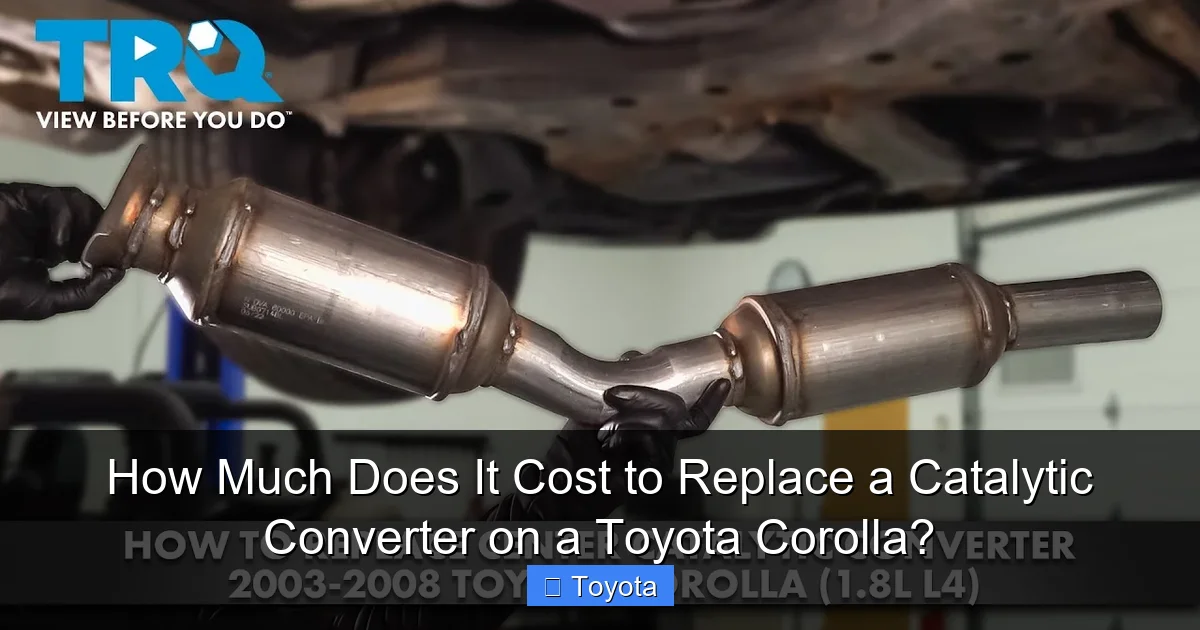
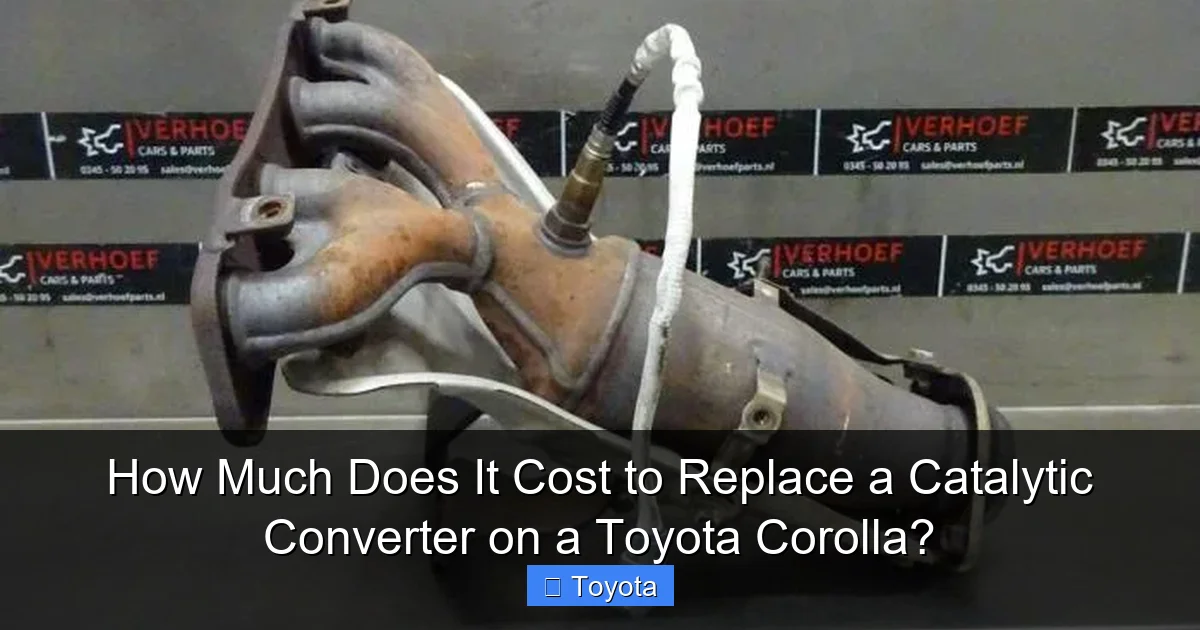
Before we dive into dollars and cents, let’s quickly understand what we’re paying for. Your Toyota Corolla’s catalytic converter, often called a “cat,” is a metal canister installed in the exhaust system between the engine and the muffler. Inside, it’s packed with a honeycomb-like structure coated with precious metals like platinum, palladium, and rhodium. These metals act as catalysts. As hot exhaust gases pass through, these metals trigger chemical reactions that convert harmful pollutants—like carbon monoxide, hydrocarbons, and nitrogen oxides—into less harmful carbon dioxide, nitrogen, and water vapor. It’s essentially an emissions control device that’s legally required on all modern cars.
Visual guide about How Much Does It Cost to Replace a Catalytic Converter on a Toyota Corolla?
Image source: cdn.proxyparts.com
Why a Failing Converter Is a Big Deal
A failing catalytic converter isn’t just an emissions problem. It can become a serious performance and engine health issue. When the internal honeycomb structure breaks down or gets clogged (often from a misfiring engine burning oil or coolant), it creates a severe restriction in the exhaust flow. Your engine has to work much harder to push exhaust out, which kills fuel economy, strangles power and acceleration, and can cause your engine to overheat. In extreme cases, a completely clogged cat can make your car undrivable. Furthermore, you will fail any required emissions test, which in many states means you cannot legally register or drive your vehicle. So, while the cost is high, the cost of ignoring it is higher—potentially leading to thousands in engine damage.
Clear Signs Your Corolla’s Catalytic Converter Is on Its Last Legs
Knowing the symptoms can help you catch a problem early, sometimes before a total failure occurs. Here are the most common red flags for a Toyota Corolla:
Visual guide about How Much Does It Cost to Replace a Catalytic Converter on a Toyota Corolla?
Image source: i.ytimg.com
- The Check Engine Light: This is the most frequent indicator. Mechanics often see codes P0420 (Catalyst System Efficiency Below Threshold) or P0430 (Catalyst System Efficiency Below Threshold Bank 2). While this code can sometimes be caused by a bad oxygen sensor, it’s the primary alert for cat issues.
- Rotten Egg Smell: A classic sign. If you smell sulfur or rotten eggs, especially from the exhaust when the engine is warm, it means the converter isn’t processing sulfur properly. This smell is hydrogen sulfide, a byproduct of incomplete conversion.
- Poor Performance & Acceleration: You might notice a lack of power, especially when accelerating uphill or passing. The engine feels “sluggish” or like it’s choking. This is the exhaust restriction in action.
- Rattling Noise: A broken internal substrate can cause a distinct metallic rattling or clattering sound from under the car, usually louder when the engine is cold and the exhaust is contracting. This noise often comes from the area of the converter, which is typically located near the front of the car under the engine.
- Failed Emissions Test: If your Corolla is due for a smog check and fails, a faulty catalytic converter is one of the most common culprits.
- Decreased Fuel Economy: Because the engine is working harder against the exhaust restriction, you’ll fill up more often.
Important Note: These symptoms can sometimes mimic other problems, like a faulty oxygen sensor or exhaust leak. A proper diagnosis with a scan tool and often a backpressure test is crucial before you spend money on a new converter.
The Bottom Line: Catalytic Converter Replacement Cost for a Toyota Corolla
Now, the moment you’ve been waiting for. The total cost to replace a catalytic converter on a Toyota Corolla is not a single number. It’s a range, and a wide one at that. We can break it down into two main buckets: the cost of the part itself and the cost of labor to install it.
Visual guide about How Much Does It Cost to Replace a Catalytic Converter on a Toyota Corolla?
Image source: 2carpros.com
Part Cost: The Major Expense
The catalytic converter is the expensive piece here. For a Toyota Corolla, you generally have three sourcing options, each with a different price point:
- OEM (Original Equipment Manufacturer): This is a brand-new converter made by Toyota or its official supplier. It’s guaranteed to fit perfectly and meet all original specifications. For a Corolla, OEM part prices typically range from $1,000 to $2,500+, depending on the model year and engine. Hybrid models (like the Corolla Hybrid) have a more complex, expensive converter and can push into the $2,500-$3,500 range.
- Aftermarket (New): These are new converters made by third-party manufacturers (like MagnaFlow, Bosal, or AP Exhaust). Quality varies widely. High-quality “CARB-compliant” or “EPA-compliant” models that meet emissions standards are reliable and often cost $600 to $1,800. Cheap, non-compliant units might be $400-$700 but could fail emissions tests or not last long.
- Used / Salvage: You can find used converters from junkyards or online marketplaces for $200 to $600. This is a risky gamble. You have no idea about its internal condition or remaining lifespan. It could fail in a year. Many states also have strict rules about using used catalytic converters for emissions compliance. Generally not recommended for a daily driver you plan to keep.
Labor Cost: The Installation Fee
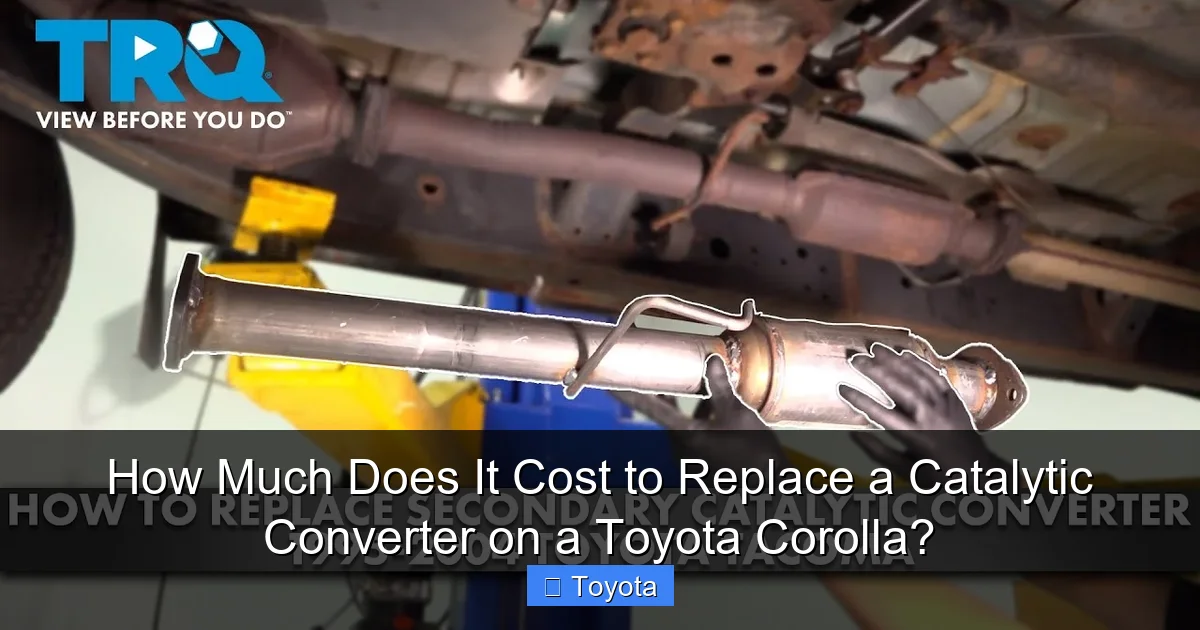
Labor is where the shop’s hourly rate and the specific Corolla model come into play. Replacing a catalytic converter is not always a simple bolt-on job. On many Corollas, especially newer ones, the converter is integrated into the exhaust manifold or is located in a tight space, requiring the removal of other components like the heat shield, oxygen sensors, or even part of the exhaust system. This increases time.
- Typical Labor Time: 2 to 4 hours for most Corolla models. Some older, simpler models might be 1.5-2 hours. Some newer, more complex models or those with dual converters can take 4+ hours.
- Labor Rate: Independent shops typically charge $75-$120 per hour. Dealerships often charge $110-$180+ per hour.
- Estimated Labor Cost: Therefore, you’re looking at roughly $150 to $720+ for labor alone.
Total Estimated Cost Breakdown by Corolla Generation
To give you a more concrete picture, here are realistic total cost ranges (parts + labor) for different Toyota Corolla model years and engine types, assuming a good quality aftermarket part at an independent shop. Dealership prices with OEM parts will be 30-50% higher.
- 2009-2013 Corolla (1.8L 4-cylinder): This older generation has a relatively accessible, single converter. Total Cost: $1,000 – $1,800.
- 2014-2018 Corolla (1.8L 4-cylinder): The design became a bit more integrated. Total Cost: $1,200 – $2,200.
- 2019-2023 Corolla (2.0L Dynamic Force Engine): Features a more complex, close-coupled converter near the engine. Total Cost: $1,500 – $2,800.
- Corolla Hybrid (2020+): Has a sophisticated, expensive converter system. Total Cost: $2,200 – $4,000+.
- Corolla iM / Hatchback (2017-2020): Slightly different exhaust layout. Total Cost: $1,300 – $2,400.
Remember: These are estimates. The only way to get a true number for your specific car is to get a quote from a reputable shop after a diagnosis.
What Factors Influence the Final Price Tag?
Why is there such a wide range? Several key factors play a role in determining your final bill. Understanding these can help you shop smarter.
1. Model Year and Engine Type
As shown above, newer models with more advanced emissions systems and tighter engine bays are more expensive. The shift to the 2.0L Dynamic Force engine in 2019 brought changes. The Corolla Hybrid is the most expensive due to its complex integration with the gasoline engine and electric motor system. Always specify your exact year, trim (LE, SE, XLE), and engine when asking for quotes.
2. Your Geographic Location
Labor rates vary dramatically by region. Major metropolitan areas on the coasts (California, New York, Massachusetts) have the highest shop rates, often $120-$180/hour. Rural Midwest or Southern states might be $70-$95/hour. Parts pricing can also fluctuate with local supply and demand. A converter in California might cost more due to stricter emissions (CARB) requirements, which mandate higher-quality, more expensive parts.
3. OEM vs. Aftermarket (and Quality Tiers)
This is the biggest variable in parts cost. An OEM part from a Toyota dealership is the safest but most expensive. Within the aftermarket world, there are tiers. A “standard” aftermarket converter might be $600, but a “premium” brand with a better substrate and warranty (like a MagnaFlow or Flowmaster) might be $1,200. For a Toyota, investing in a mid-to-high-tier aftermarket part is often the best value, as long as it’s confirmed to be CARB-compliant for your state. Never buy the cheapest one you find; it likely won’t last or pass emissions.
4. Additional Repairs Needed
A failing catalytic converter is rarely an isolated event. It’s usually the symptom of a prior problem. The most common cause is an engine that is misfiring, burning oil, or leaking coolant into the combustion chamber. These unburned substances flood the converter, melting or coating the precious metal substrate. If you just replace the cat without fixing the root cause (like bad spark plugs, ignition coils, or a leaking head gasket), the new converter will fail again, often within months or a year. A good mechanic will diagnose and recommend fixing these underlying issues first, which adds to the total cost but is essential for a permanent fix.
5. Shop Type: Dealership vs. Independent vs. Chain
Dealerships are the most expensive for both parts and labor but offer factory-trained technicians and genuine OEM parts with a full warranty. Independent local shops are often the best value, especially if you find one specializing in Japanese imports. Large national chains (like Midas, Meineke) fall somewhere in between but may use their own branded parts. Always get at least 3 detailed written estimates.
6. State Emissions Requirements
If you live in a state with strict emissions testing (California, New York, etc.), you must install a converter that is specifically certified for that state (CARB-compliant). These are more expensive than federal (EPA) compliant parts. In states without strict testing, you have more flexibility, but a low-quality part will still fail eventually and hurt performance.
The Replacement Process: What to Expect at the Shop
Knowing what happens during the replacement can help you ask the right questions and understand the labor charge. Here’s a typical workflow:
- Diagnosis & Confirmation: The mechanic connects a diagnostic scanner to read codes. They may perform a backpressure test to physically confirm the converter is clogged. They’ll also inspect for the root cause (misfires, oil leaks).
- Parts Ordering: Once confirmed, you approve the part. OEM parts come from the dealer. Aftermarket parts may be in stock or need to be ordered.
- Vehicle Preparation: The car is lifted on a lift. The mechanic will often remove the heat shield and disconnect the oxygen sensors (O2 sensors) before and after the converter. These sensors are delicate and expensive.
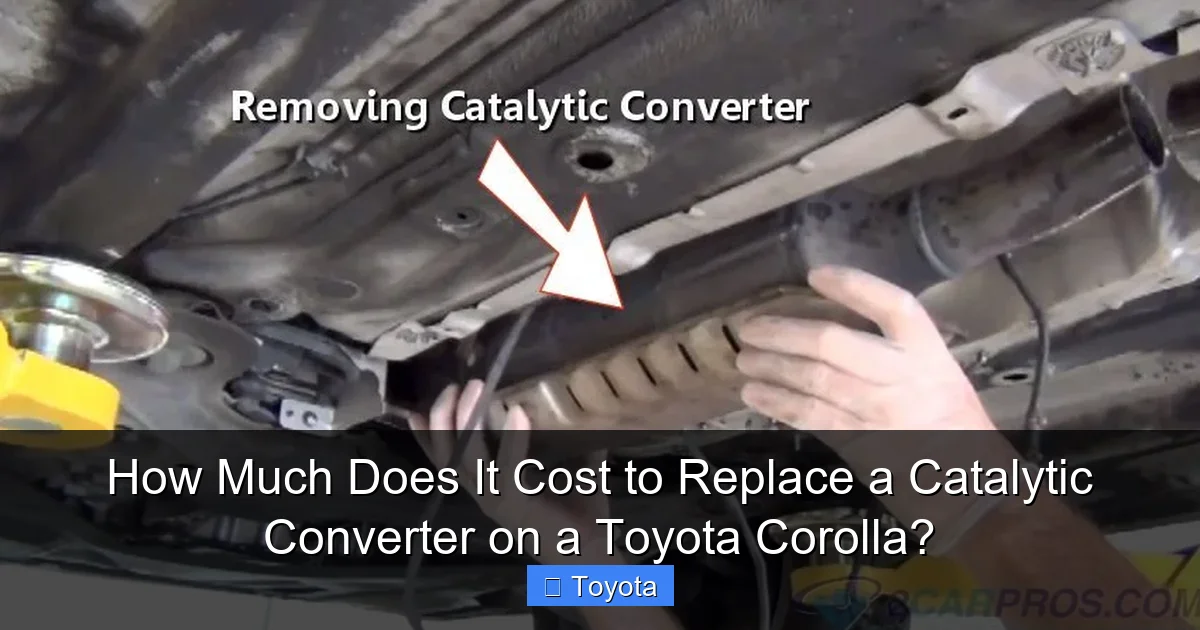
- Removal of the Old Converter: This is where the difficulty varies. On older Corollas, the bolts may be rusted and seized, requiring cutting or grinding, which adds time. On newer cars, it might be a straightforward unbolt. Sometimes, the converter is welded to the exhaust pipe, requiring cutting it off and welding the new one in place, which increases labor cost.
- Installation of the New Converter: The new unit is fitted. New gaskets and hardware are used. All bolts are torqued to specification. Oxygen sensors are carefully reinstalled and connected.
- Post-Installation: The mechanic clears the check engine codes, starts the engine, checks for exhaust leaks, and may perform a drive cycle to ensure the new converter is “lighting off” and the O2 sensors are functioning correctly. They should also ensure the check engine light stays off.
- Final Inspection & Clean-up: Heat shields are reinstalled, the car is lowered, and the work area is cleaned. You’re given the old part (often requested) and a receipt with warranty information.
The entire process, from drop-off to pick-up, is often a full day or overnight job, depending on the shop’s schedule and parts availability.
Smart Tips to Save Money and Avoid Scams
A catalytic converter replacement is a big bill, but you can be a savvy consumer. Here’s how:
Get Multiple, Detailed Quotes
Never go with the first estimate. Get at least three written quotes from reputable shops (independent and dealership). The quote should break down part cost (with brand and part number), labor hours, labor rate, and any miscellaneous fees (shop supplies, disposal). Compare the exact same part when possible. Ask if the quote includes fixing any underlying issues that caused the failure.
Consider High-Quality Aftermarket with a Strong Warranty
For most Corolla owners, a top-tier aftermarket converter is the best value. Look for brands that offer at least a 5-year/50,000-mile warranty on the converter itself. A good warranty is a sign of confidence in the product. Ensure it’s CARB-compliant if you live in a CARB state.
Ask About the Root Cause
If a shop immediately quotes you for a converter without mentioning checking for misfires, oil consumption, or coolant leaks, be wary. Insist on a full diagnosis. Fixing the cause is non-negotiable. Ask for a separate quote for any necessary pre-repair work (like spark plugs, coils, or a valve cover gasket).
Used Parts: A Calculated Risk
Only consider a used/salvage converter if you are on an extremely tight budget and your Corolla is an older, high-mileage project car. The risk of it failing within a year is high. For a car you rely on daily, it’s a false economy.
Check for Recalls or Warranties
Occasionally, automakers issue extended warranties or recalls for emissions components, including catalytic converters, on specific model years. Check the NHTSA recall website by your VIN. Also, some aftermarket warranties or your extended service contract might cover it.
Theft Prevention is Cost-Effective
Given the high theft rate, consider having an anti-theft plate welded over the converter or having your VIN etched onto it. Some shops offer this for $100-$300. It’s a small price to pay to avoid the massive cost and hassle of a stolen converter. Check with your auto insurance; some offer discounts for having an anti-theft device installed.
A Word on “Cat-Back” or “Straight-Pipe” Exhausts
Some owners wonder about replacing the entire exhaust system or removing the cat. Do not do this. Removing or modifying the catalytic converter is illegal in all 50 states under federal emissions law. It will cause an immediate check engine light, failed emissions, and potentially trigger the engine’s computer to run poorly. “Cat-back” exhausts replace everything after the converter and are for sound/performance only. They do not address a bad cat.
Maintaining Your New (or Existing) Catalytic Converter
Once you’ve made the investment, you want it to last as long as possible—ideally the life of the car. Catalytic converters are designed to last 10+ years or 100,000+ miles, but they can be destroyed prematurely. Here’s how to protect yours:
- Address Engine Problems Immediately: This is the #1 rule. A misfiring spark plug, a leaking fuel injector, or burning oil will poison the converter. If your check engine light comes on for any reason, get it diagnosed right away. The cost of fixing a $100 coil or $300 gasket is nothing compared to a $2,500 converter.
- Use High-Quality Fuel: While modern cars adjust for fuel quality, consistently using top-tier detergent gasoline (from brands like Shell, Chevron, etc.) helps keep engine deposits low, reducing the chance of unburned fuel reaching the cat.
- Don’t Ignore Oxygen Sensor Codes: A faulty O2 sensor can provide bad data to the engine computer, leading to a rich fuel mixture that dumps unburned fuel into the exhaust, overheating the cat. Replace bad O2 sensors promptly.
- Regular Oil Changes: Using the correct oil and changing it on schedule prevents oil consumption from worn rings or valve seals, which burns oil and fouls the converter.
- Be Mindful of Short Trips: Catalytic converters need to reach high operating temperatures (600°F+) to work efficiently and burn off carbon deposits. Frequent very short trips where the engine never fully warms up can lead to clogging over time. Occasionally take your Corolla on a longer highway run.
- Consider a Fuel System Cleaner: Periodically using a high-quality fuel injector cleaner can help keep injectors clean, ensuring proper fuel spray and combustion.
For other common Toyota maintenance costs, like painting a Toyota Tacoma or general repairs, planning ahead in your budget is always wise.
Frequently Asked Questions
Can I drive my Toyota Corolla with a bad catalytic converter?
You can drive it for a short distance if it’s slightly clogged, but performance will suffer. If it’s completely blocked, the car may not run or could overheat, causing severe engine damage. It’s not safe or legal to drive with a severely malfunctioning converter, as you will fail emissions and risk a breakdown.
How long does it take to replace a catalytic converter on a Corolla?
For most Toyota Corolla models, the replacement takes between 2 and 4 hours of actual shop time. Simpler, older models might be on the shorter end, while newer models with tighter packaging or hybrid systems can take longer. The total time from drop-off to pickup often includes diagnosis and parts waiting, so plan for a full day.
Is an aftermarket catalytic converter as good as an OEM one for my Corolla?
A high-quality, CARB-compliant aftermarket converter from a reputable brand is generally very good and can last many years, offering significant savings over OEM. However, OEM parts guarantee perfect fitment and use the exact substrate specification Toyota designed. For a car you plan to keep long-term, a mid-to-high-tier aftermarket part with a strong warranty is an excellent value choice.
Will my car insurance cover catalytic converter theft or replacement?
Comprehensive auto insurance typically covers catalytic converter theft, minus your deductible. You would need to file a police report and a claim with your insurer. Standard collision or liability insurance does not cover it. If your deductible is high (e.g., $500 or $1,000), the payout might not cover the full cost of a quality replacement, so review your policy.
How long should a catalytic converter last on a Toyota Corolla?
Under normal driving conditions and with proper engine maintenance, a catalytic converter should last 10 years or 100,000 miles or more. Many last the life of the vehicle. Premature failure is almost always caused by an upstream engine problem (misfires, oil/coolant leaks) that poisons or overheats the converter.
Can I replace the catalytic converter myself to save money?
It’s possible for advanced DIYers with the right tools (jack stands, impact wrenches, oxygen sensor tools, welding equipment if welded on). However, it’s a challenging job due to rusted bolts, tight spaces, and the risk of damaging oxygen sensors. Incorrect installation can cause exhaust leaks, trigger codes, and lead to costly professional fixes. For most owners, professional installation is the safer, more reliable route.