How Much Does a Toyota Dealership Charge for Brake Pad Replacement?

Contents
- 1 Key Takeaways
- 2 📑 Table of Contents
- 3 Introduction to Brake Pad Replacement Costs
- 4 Understanding Your Toyota’s Braking System
- 5 What You’re Paying For: The Dealership Pricing Breakdown
- 6 Key Factors That Influence Your Final Bill
- 7 Dealership vs. Independent Shop: Making the Right Choice
- 8 The Step-by-Step Replacement Process at a Dealership
- 9 Proactive Maintenance to Extend Brake Pad Life
- 10 Conclusion: Your Brakes Are an Investment in Safety
- 11 Frequently Asked Questions



Toyota dealership brake pad replacement typically costs between $300 and $800 per axle, depending on your model and location. This price includes genuine OEM parts and certified labor, but may be higher than independent shops. Understanding what you’re paying for helps you make a smart decision for your vehicle’s safety and your wallet.
Key Takeaways
- Dealerships charge a premium: You pay for OEM parts, certified technicians, and brand-specific warranties, which often costs 20-40% more than independent shops.
- Labor rates vary significantly: Dealership hourly rates can range from $120 to $200+ depending on your region, directly impacting your final bill.
- Your specific Toyota model matters: A Camry’s brake job will differ in cost from a Tundra or RAV4 due to parts size, complexity, and weight.
- Rotor condition is the wild card: Often, pads and rotors are replaced together. Severely worn or damaged rotors can double the parts cost.
- Always get a detailed estimate: A proper quote should separate parts, labor, and any additional fees like shop supplies or disposal.
- Preventive maintenance saves money: Regular inspections and avoiding aggressive driving can dramatically extend pad life and prevent rotor damage.
[FEATURED_IMAGE_PLACEHOLDER]
📑 Table of Contents
- Introduction to Brake Pad Replacement Costs
- Understanding Your Toyota’s Braking System
- What You’re Paying For: The Dealership Pricing Breakdown
- Key Factors That Influence Your Final Bill
- Dealership vs. Independent Shop: Making the Right Choice
- The Step-by-Step Replacement Process at a Dealership
- Proactive Maintenance to Extend Brake Pad Life
- Conclusion: Your Brakes Are an Investment in Safety
Introduction to Brake Pad Replacement Costs
Let’s talk about something no car owner wants to think about but absolutely must: brake maintenance. Your brakes are your vehicle’s most critical safety system, and when those squeaky pads finally need replacing, the first question is often, “How much is this going to cost?” If you own a Toyota and are considering a dealership for the job, you’re looking at a premium service. But what exactly are you paying for, and is it worth it?
This guide will pull back the curtain on Toyota dealership brake pad replacement pricing. We’ll break down every component of the cost, from the genuine Toyota parts to the certified technician’s time. You’ll learn the key factors that make your final bill higher or lower, how dealership pricing stacks up against independent mechanics, and smart strategies to manage this essential expense without compromising safety.
Whether you drive a compact Corolla, a family-friendly RAV4, or a heavy-duty Tundra, understanding these fundamentals empowers you to make an informed, confident decision when your brakes need service.
Understanding Your Toyota’s Braking System
Before we dive into dollars and cents, it’s crucial to understand what we’re actually replacing. The term “brake pad replacement” is often a simplified version of a more complex job. Your Toyota’s disc braking system has several key components that work together.

Visual guide about How Much Does a Toyota Dealership Charge for Brake Pad Replacement?
Image source: stocktonwheel.com
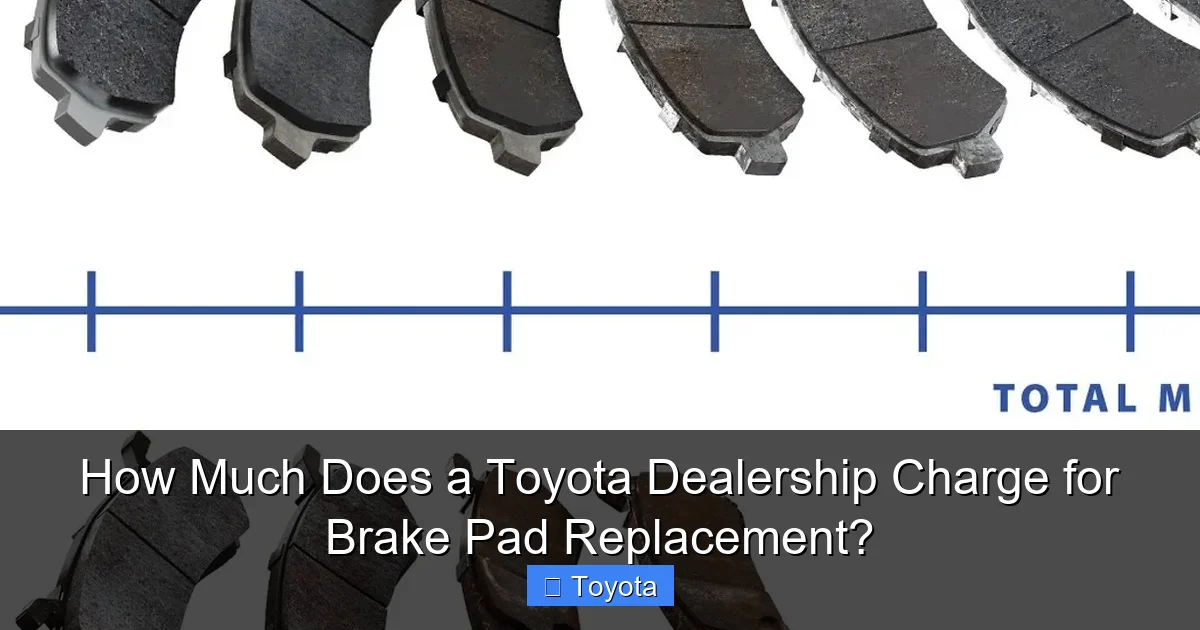
The Brake Pads: The Friction Material
These are the replaceable parts you’re primarily paying for. Brake pads are steel plates with a friction material bonded to one side. When you press the brake pedal, the caliper squeezes the pads against the spinning brake rotor. This friction converts the vehicle’s kinetic energy into heat, slowing you down. The friction material wears down over time, which is why they need periodic replacement. Toyota dealerships use genuine OEM (Original Equipment Manufacturer) pads, which are designed to their exact specifications for your specific model and year.
The Brake Rotors: The Disc That Spins
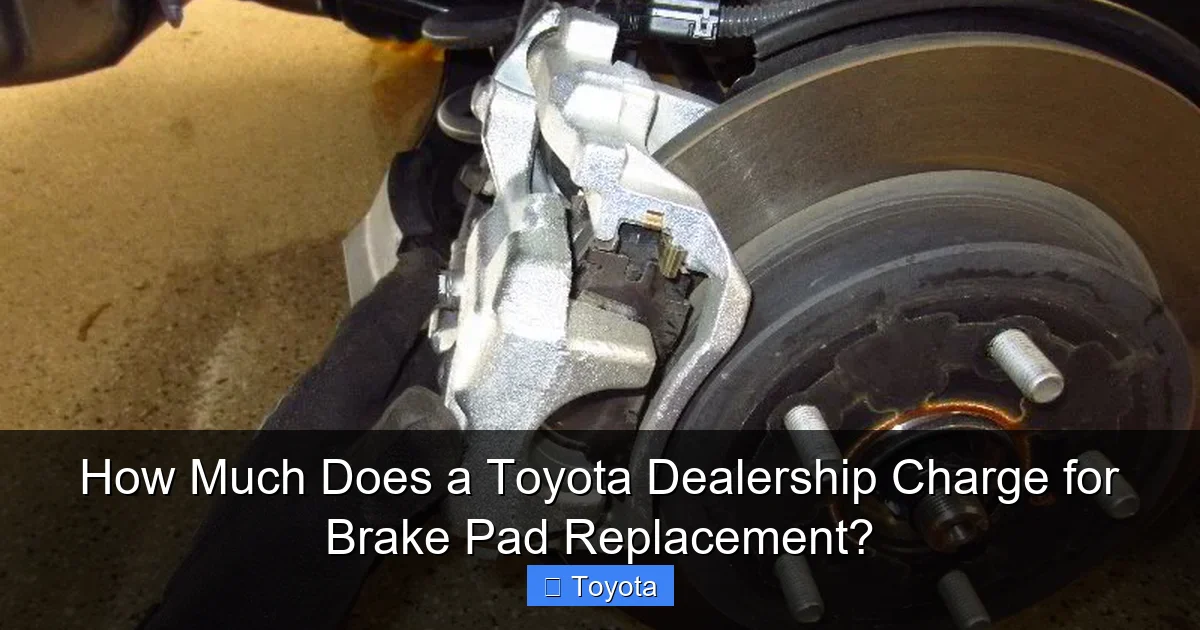
The rotor is the shiny, disc-shaped metal piece you can see behind your wheel’s hubcap. It’s what the pads clamp onto. Rotors can last through multiple pad sets, but they have a finite lifespan. They can become warped (from excessive heat), grooved (from worn pads), or simply worn below the manufacturer’s minimum thickness specification. If your rotors are damaged, they must be replaced, which significantly increases the parts cost. Dealerships will always measure rotor thickness and runout to determine if they can be resurfaced (turned) or must be replaced.
The Calipers and Hardware
The caliper is the hydraulic “clamp” that houses the pistons and pushes the pads against the rotor. While calipers are durable, their slide pins and bushings can seize or wear, preventing even pad wear. A complete brake job at a dealership often includes new hardware kits—these are the clips, shims, and anti-rattle springs that ensure the pads move correctly and quietly. Neglecting this hardware is a common cause of premature pad wear and annoying brake squeal.
What You’re Paying For: The Dealership Pricing Breakdown
So, when a Toyota dealership gives you a quote for a brake pad replacement, what’s in that number? It’s not just the cost of the parts. Let’s dissect a typical invoice.
Visual guide about How Much Does a Toyota Dealership Charge for Brake Pad Replacement?
Image source: paulstravelpictures.com
1. Genuine Toyota OEM Parts
This is the most visible cost. A set of front brake pads for a 2022 Toyota RAV4 might have a factory parts cost of $80-$150. For a heavier vehicle like a Tundra, expect $120-$250+ for a premium pad set with integrated wear sensors. The same goes for rotors, if needed. Genuine Toyota rotors are engineered for optimal performance and longevity. While aftermarket parts can be cheaper, OEM parts guarantee fit, finish, and warranty coverage that independent shops may not match.
2. Labor: The Certified Technician’s Time
This is where dealership costs balloon. A standard brake pad replacement on most Toyotas takes between 1.0 and 2.5 hours of labor per axle, depending on complexity. A simple front pad change on a Camry might be 1.2 hours. A rear pad change on a vehicle with an electric parking brake (common on newer models) can take 2+ hours due to the specialized procedure to retract the caliper piston. Dealership labor rates are the highest in the market, often ranging from $130 to $200+ per hour. At $150/hour, 2 hours of labor is $300 before you even touch a part.
3. Diagnostic and Inspection Fees
Before any work, a good dealership will perform a comprehensive brake inspection. This might be a separate fee ($50-$100) or included if you proceed with the repair. They’ll measure pad thickness, rotor condition, caliper operation, and brake fluid condition. This diagnostic step is critical because it uncovers the “hidden” costs, like rotor replacement or a sticking caliper. You can often find information on standard diagnostic fees by checking resources like how much Toyota charges for a diagnostic.
4. Shop Supplies and Disposal Fees
These are small line-item fees that add up. They cover brake cleaner, lubricants (for slide pins and hardware), new hardware kits, and the cost to properly dispose of old hazardous materials (brake fluid, contaminated parts). Expect $20-$50 here.
5. The Warranty
You’re paying for peace of mind. Dealership brake work typically comes with a 12-month/12,000-mile warranty on parts and labor (or longer). This warranty is backed by the manufacturer and is honored at any Toyota dealership nationwide. An independent shop’s warranty is usually much more limited in time and geography.
Sample Cost Scenario
Let’s put it together for a common scenario: a 2020 Toyota RAV4 needing front pads and rotor resurfacing (if within spec).
- OEM Front Pads: $120
- Rotor Resurfacing (if applicable): $40
- New Hardware Kit: $35
- Labor (1.8 hrs @ $165/hr): $297
- Shop Supplies/Disposal: $35
- Total (Before Tax): ~$527
If the rotors are worn and need replacement (+$180 per rotor), the total jumps to ~$787.
Key Factors That Influence Your Final Bill
The $300-$800 per axle range is broad because several variables dramatically change the price. Understanding these helps you interpret any quote you receive.
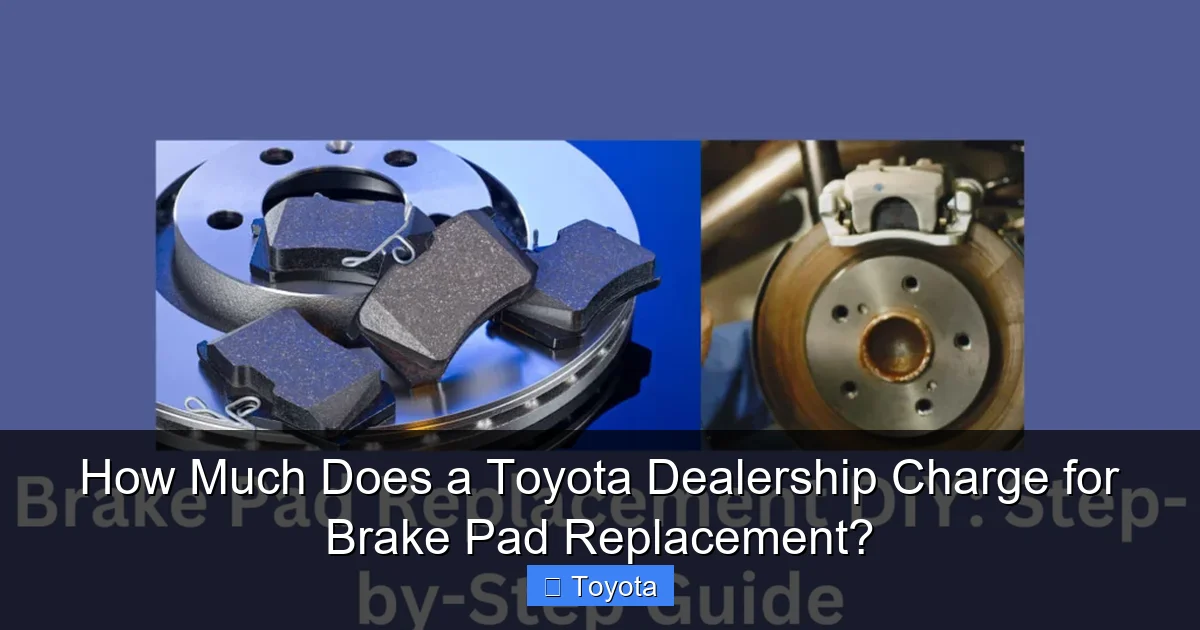
Visual guide about How Much Does a Toyota Dealership Charge for Brake Pad Replacement?
Image source: truetyres.com
Your Specific Toyota Model and Year
A Toyota Yaris has smaller, simpler brakes than a Toyota Sequoia. Weight, performance expectations, and brake system design all affect parts cost and labor time. Newer models, especially from 2015 onward, increasingly feature electric parking brakes (EPB). Replacing rear pads on an EPB system requires a specialized scan tool to retract the caliper piston, adding 0.5 to 1.5 hours of labor over a conventional system. This is a major cost driver for recent models.
The Condition of Your Rotors
This is the single biggest variable. If your pads were neglected and have been grinding on the rotors for too long, the rotors are likely scored, grooved, or below minimum thickness. In this case, replacement is mandatory. If they are just slightly worn but within spec, they can often be resurfaced (turned) for a fraction of the cost of new rotors. A dealership’s inspection will determine this path, and it can add $150-$400+ per rotor to your bill.
Pad Material Choice (OEM vs. Upgraded)
While dealerships primarily stock genuine Toyota pads, they may offer different material grades. Standard organic pads are quiet and gentle on rotors but wear faster. Ceramic pads (often OEM on newer models) last longer, produce less dust, and handle heat better but cost more. Some performance-oriented models may have different pad formulations. The type specified in your quote impacts the parts price.
Geographic Location and Dealership Pricing
Labor rates are not uniform. A dealership in Manhattan or San Francisco will have a significantly higher shop rate than one in a small Midwestern town. Additionally, some dealerships have higher overhead costs that they pass on. It’s always wise to get quotes from a couple of local dealerships if you’re committed to using dealer service.
Additional Services and “Upsells”
During a brake job, a service advisor might recommend a brake fluid flush (if the fluid is old and hygroscopic) or a caliper service if there’s any sign of sticking or leaking. While sometimes necessary, these are add-ons that increase the total. It’s reasonable to ask for a breakdown of “recommended” vs. “required” work. You can also learn more about common dealership service pricing structures by reviewing articles on other routine maintenance, such as how much an oil change at a Toyota dealership costs, to get a sense of their pricing philosophy.
The Labor Rate Itself
We’ve touched on this, but it bears repeating. The “book time” (the standardized time a repair should take) is set by Toyota, but the dealership’s hourly rate is their own. This rate covers technician salaries, benefits, facility costs, and profit. To understand the labor component in your area, you might research what a Toyota mechanic makes per hour, as wages are a primary factor in setting the shop rate.
Dealership vs. Independent Shop: Making the Right Choice
This is the great automotive debate. Is the dealership’s higher price justified? Let’s compare.
The Dealership Advantage: Expertise and Warranty
Factory Training & Specialized Tools: Toyota technicians undergo specific, ongoing training on their vehicles. They have access to the latest technical service bulletins (TSBs) and proprietary diagnostic software. For complex systems like EPB, this expertise is invaluable. They also have the correct, often expensive, specialty tools.
Genuine OEM Parts: You get parts designed and warranted by Toyota. There’s no guessing about quality or fit.
Manufacturer-Backed Warranty: The work is warrantied by Toyota, not just the local shop. This can be a major plus for peace of mind, especially on a newer vehicle.
One-Stop-Shop for Recalls & Updates: If there’s a related recall or a software update that affects braking, the dealership can handle it during the same visit.
The Independent Shop Advantage: Cost and Relationship
Lower Labor Rates: This is the biggest factor. Independent shops typically charge 30-50% less per hour. A $150/hr dealership rate might be $90-$110 at a reputable independent.
Potential for Aftermarket Value: A good independent mechanic might use high-quality aftermarket pads and rotors (like Akebono, Brembo, or Centric) that can equal or even exceed OEM performance at a lower cost, especially for standard driving.
Personalized Service: You often build a relationship with a specific mechanic who knows your car’s history.
Flexibility: They may be more willing to use your own parts (if you provide them) or discuss different grade options openly.
The Verdict
For a straightforward pad replacement on an older Toyota with conventional brakes, a reputable independent shop is often the most cost-effective choice. However, for a newer vehicle with complex systems like EPB, or if your car is still under its original power train warranty (where improper work could void coverage), the dealership’s premium is frequently worth the assurance of factory-correct procedure and full warranty coverage.
The Step-by-Step Replacement Process at a Dealership
Knowing the process helps you understand what you’re paying for. Here’s a typical flow at a Toyota dealership service department:
- Drop-off & Initial Inspection: The service advisor inputs your concern. A technician performs a full brake system inspection, measuring pad thickness, rotor runout/depth, caliper operation, and fluid condition.
- Authorization & Estimate: You receive a detailed estimate via text, email, or phone call. It lists exactly what needs to be done (e.g., “Replace front brake pads, resurface front rotors, replace front hardware kit”) with separate parts and labor costs. You approve this estimate.
- Parts Retrieval: The parts department pulls genuine Toyota parts from their inventory system.
- The Repair: The technician lifts the vehicle, removes the wheels and calipers, installs new hardware, presses the caliper piston back (or uses a scan tool for EPB), installs new pads, and either installs new or reinstalls resurfaced rotors. All sliding surfaces are lubricated with proper high-temperature brake grease. The caliper is re-installed, wheels torqued to spec.
- QA & Test Drive: A quality assurance technician or the performing tech checks the work, ensures proper pad seating, and typically performs a short test drive to verify normal, quiet operation.
- Finalization: The vehicle is cleaned (interior and exterior vacuum/wash is often standard), and the final invoice is prepared for pickup.
Proactive Maintenance to Extend Brake Pad Life
The best way to manage Toyota dealership brake pad replacement costs is to make the job as infrequent as possible. Here’s how:
Drive Smoothly, Not Aggressively
This is the #1 rule. Avoid “two-footing” (riding the brake pedal with your left foot). Anticipate traffic flow to brake gradually rather than slamming on the brakes at the last second. High-speed, hard braking generates extreme heat and wears pads exponentially faster.
Don’t Ignore Early Warning Signs
Squealing is often intentional—a wear indicator tab on the pad scraping the rotor to warn you. A grinding noise means you’ve worn through the pad material and are now metal-on-metal, destroying the rotors. Get an inspection at the first sign of noise.
Regular Visual Inspections
During routine tire rotations (every 5,000-7,000 miles), have your technician look at the brake pads through the wheel. They can give you a percentage of life left. Many Toyota dealerships include this as part of their multi-point inspection during oil changes.
Mind Your Load and Environment
Hauling heavy trailers, driving in mountainous terrain, or living in a stop-and-go urban environment will wear brakes faster. Adjust your expectations for pad lifespan accordingly.
Use Quality Fluid and Consider Flushes
Brake fluid is hygroscopic—it absorbs moisture over time, which lowers its boiling point. Old, contaminated fluid can cause internal corrosion in the calipers and brake system. A brake fluid flush every 2-3 years is a relatively inexpensive service that protects your entire braking investment.
Conclusion: Your Brakes Are an Investment in Safety
So, how much does a Toyota dealership charge for brake pad replacement? The honest answer is: it depends. You’re looking at a base of $300-$800 per axle for a standard job, with the potential to climb higher if rotors or additional hardware are needed. That price tag buys you genuine Toyota parts, the expertise of factory-trained technicians, specialized tools for modern systems, and a strong manufacturer-backed warranty.
While an independent shop can offer significant savings, the dealership’s value proposition is consistency, warranty, and specialized knowledge—especially for newer, electronically complex Toyotas. The smartest approach is to get a detailed, itemized estimate from your dealership after their inspection. Use that as a benchmark. Then, if you’re considering alternatives, get a comparable quote from a trusted independent mechanic for the exact same work (specify OEM or equivalent quality parts).
Ultimately, your brakes are not an area to compromise. Whether you choose the dealership or a trusted local shop, ensure they use quality parts, follow proper procedure (especially with EPB systems), and stand behind their work. By understanding the costs and factors at play, you can navigate this essential service with confidence, ensuring your Toyota stops safely and reliably for miles to come.
Frequently Asked Questions
How much does a Toyota dealership charge for brake pad replacement on average?
On average, expect to pay between $300 and $800 per axle at a Toyota dealership. The final cost depends heavily on your specific model, whether the rotors need replacement or resurfacing, and your local dealership’s labor rate. A simple pad replacement on a compact car will be at the lower end, while a full pad-and-rotor job on a large SUV or truck will be at the higher end.
What are the most common signs that my Toyota needs new brake pads?
Listen for a high-pitched squealing noise when braking, which is often a built-in wear indicator. A grinding or growling sound indicates severe wear and metal-on-metal contact, which requires immediate attention. You may also feel a vibration in the brake pedal or steering wheel (often from warped rotors) or notice your vehicle pulling to one side when braking. A longer stopping distance is another critical sign.
Do I always need to replace the rotors when changing the brake pads?
No, rotors do not need replacement with every pad change. If the rotors are thick enough (above the minimum spec), have no significant grooves or warping, and are in good condition, they can often be resurfaced (turned) to provide a smooth surface for the new pads. However, if rotors are worn below spec, deeply grooved, or warped, replacement is necessary for safety and performance.
Can I save a significant amount of money by using an independent mechanic instead of a Toyota dealership?
Yes, you can often save 20-40% by choosing a reputable independent shop. The primary savings come from lower labor rates. However, you must ensure they use high-quality parts (specify OEM or a premium aftermarket brand) and are experienced with your specific Toyota’s braking system, especially if it has an electric parking brake. Weigh the savings against the loss of the manufacturer’s warranty on the work.
How many miles do brake pads typically last on a Toyota?
There is no set mileage, as lifespan depends entirely on driving habits and environment. With gentle highway driving, pads can last 50,000 miles or more. With aggressive city driving, mountainous terrain, or heavy towing, they may wear out in 20,000-30,000 miles. Always rely on regular inspections rather than a fixed mileage interval.
Does my Toyota’s factory warranty cover brake pad replacement at the dealership?
No, brake pads are considered wear-and-tear items, similar to tires or wiper blades, and are not covered by the new vehicle limited warranty. However, the labor and parts for the replacement performed at the dealership will be covered by the dealership’s own service warranty, typically 12 months/12,000 miles. If your vehicle is still under its original power train warranty, improper brake work that causes damage to a covered component could potentially affect that coverage, which is a point in favor of using the dealership.