How Much Does a Porsche Cost?

Contents
- 1 Key Takeaways
- 2 📑 Table of Contents
- 3 How Much Does a Porsche Cost? A Complete 2024 Buyer’s Guide
- 4 Porsche Model Lineup and Starting Prices
- 5 How Options and Customization Affect Price
- 6 New vs. Used: Is a Pre-Owned Porsche Worth It?
- 7 Hidden Costs of Owning a Porsche
- 8 Financing, Leasing, and Ownership Tips
- 9 Conclusion: Is a Porsche Worth the Price?
- 10 Frequently Asked Questions

Side Mirror Rain Guard

Multipurpose Lubricant Spray

Emergency First Aid Kit

Solar Car Battery Maintainer
So, how much does a Porsche cost? Prices range from around $65,000 for a base Macan to over $300,000 for a fully loaded 911 GT3 RS. With options, taxes, and add-ons, the final price can climb fast—but the driving experience is worth every penny.
Key Takeaways
- Porsche pricing varies widely: Entry-level models like the Macan start near $65,000, while high-performance variants like the 911 Turbo S can exceed $250,000.
- Options dramatically increase cost: Custom paint, performance packages, and interior upgrades can add $20,000–$50,000 to the sticker price.
- Electric models are premium-priced: The Taycan starts around $90,000, making it one of the priciest EVs in its class.
- Used Porsches offer value: Certified pre-owned models can save you 20–40% off new prices while still offering warranty coverage.
- Maintenance and insurance add up: Annual upkeep can cost $1,500–$3,000, and insurance premiums are typically 30–50% higher than average.
- Financing and leasing options exist: Porsche Financial Services offers competitive rates, and leasing can lower monthly payments by 30–40%.
- Resale value holds strong: Porsches retain 50–60% of their value after 3 years, outperforming many luxury rivals.
📑 Table of Contents
- How Much Does a Porsche Cost? A Complete 2024 Buyer’s Guide
- Porsche Model Lineup and Starting Prices
- How Options and Customization Affect Price
- New vs. Used: Is a Pre-Owned Porsche Worth It?
- Hidden Costs of Owning a Porsche
- Financing, Leasing, and Ownership Tips
- Conclusion: Is a Porsche Worth the Price?
How Much Does a Porsche Cost? A Complete 2024 Buyer’s Guide
So you’re thinking about buying a Porsche. Maybe you’ve seen one glide past on the highway, engine purring like a contented lion. Or maybe you’ve always dreamed of owning that iconic crest on your hood. Either way, you’re not alone—Porsche has been a symbol of performance, precision, and prestige for over 75 years. But before you start picturing yourself behind the wheel of a sleek 911 or a muscular Cayenne, there’s one big question: *How much does a Porsche really cost?*
The short answer? It depends. A lot. Porsche isn’t just one car—it’s a whole family of vehicles, from compact SUVs to track-ready supercars. And within each model line, there are trims, packages, and customization options that can send the price soaring. Whether you’re eyeing a base model or dreaming of a fully loaded GT3, understanding the full cost picture is essential. This guide breaks down everything you need to know about Porsche pricing in 2024, from MSRP to hidden costs, so you can make an informed decision—and maybe even drive away with your dream car.
Porsche Model Lineup and Starting Prices
Visual guide about How Much Does a Porsche Cost?
Image source: ecarguides.com
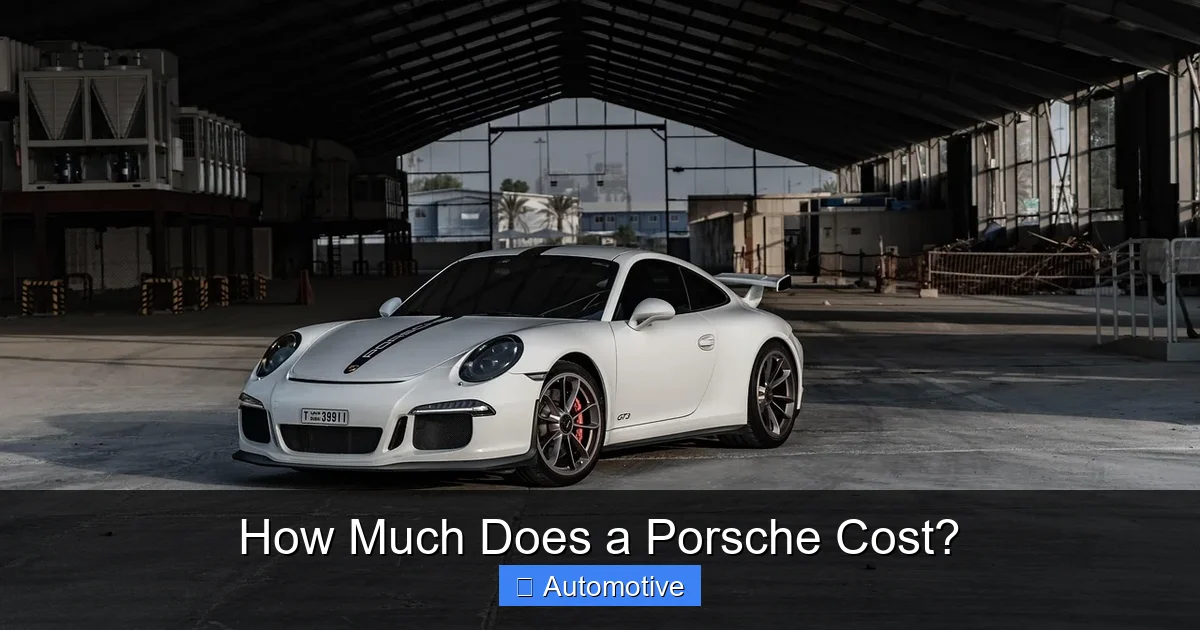
Porsche offers a diverse range of vehicles, each designed with a specific driving experience in mind. Whether you want a daily driver, a weekend track warrior, or a luxury SUV, there’s a Porsche for you. But with so many options, it’s easy to get overwhelmed. Let’s start with the basics: the current lineup and their starting prices.
Entry-Level Models: Macan and Boxster
The Porsche Macan is the brand’s most affordable model, starting at around $65,000 for the base Macan. It’s a compact luxury SUV that blends sporty handling with everyday practicality. With a turbocharged four-cylinder engine, all-wheel drive, and a refined interior, the Macan delivers that signature Porsche feel without the six-figure price tag.
If you prefer open-air driving, the Porsche Boxster is a great entry point into the sports car world. Starting at approximately $68,000, the Boxster offers a mid-engine layout, agile handling, and a convertible top—perfect for sunny weekend drives. The higher-performance Boxster S bumps the price to around $78,000, adding a more powerful engine and upgraded brakes.
Mid-Range Models: Cayenne and Panamera
For those who need more space and versatility, the Porsche Cayenne is a top choice. This midsize luxury SUV starts at about $78,000 for the base model. With seating for five (or seven in the Cayenne Coupé), a plush interior, and optional V8 power, the Cayenne is ideal for families who still want to feel the thrill of driving.
The Porsche Panamera takes luxury sedans to the next level. Starting at roughly $92,000, this four-door grand tourer combines performance with comfort. The Panamera Turbo S E-Hybrid, with its hybrid powertrain and 680 horsepower, can cost over $180,000 when fully equipped.
High-Performance Icons: 911 and Taycan
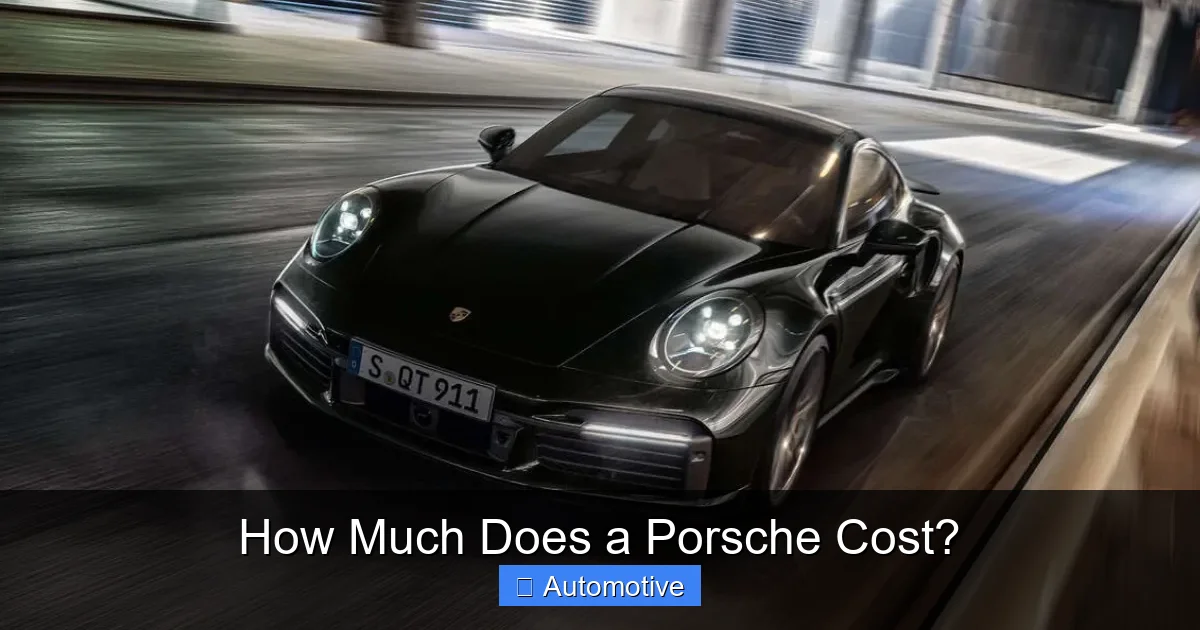
No discussion of Porsche pricing is complete without the 911. The legendary sports car starts at around $115,000 for the base Carrera. But don’t let that number fool you—this is no ordinary coupe. With rear-engine balance, a silky-smooth flat-six, and razor-sharp handling, the 911 is the heart and soul of Porsche.
Then there’s the Taycan, Porsche’s all-electric performance sedan. Starting at about $90,000, the Taycan blends zero-emission driving with Porsche-level performance. The Taycan Turbo S, with over 750 horsepower and a 0–60 mph time under 3 seconds, can cost well over $200,000 with options.
Track-Focused Models: GT3 and GT2 RS
For the ultimate driving experience, Porsche offers the 911 GT3 and GT2 RS. The GT3, designed for track days and spirited backroad runs, starts at around $175,000. With a naturally aspirated 4.0-liter engine and race-derived aerodynamics, it’s a purist’s dream.
The GT2 RS is even more extreme. Starting at approximately $295,000, this rear-wheel-drive monster uses a twin-turbocharged engine to deliver over 700 horsepower. It’s not just fast—it’s a street-legal race car.
How Options and Customization Affect Price
Visual guide about How Much Does a Porsche Cost?
Image source: motorbiscuit.com
Here’s the thing about Porsche: the starting price is just the beginning. Once you start adding options, the cost can climb quickly. Porsche is famous for its extensive customization program, allowing buyers to tailor nearly every detail of their vehicle. But that freedom comes at a price.
Paint and Exterior Options
The base paint on most Porsches is included, but if you want something more unique, be prepared to pay. Special colors like Carmine Red or GT Silver can add $3,000 to $5,000. And if you want a custom color from Porsche’s Paint to Sample program, you could be looking at $10,000 or more.
Wheels are another big-ticket item. While the standard wheels are stylish, upgrading to larger or forged alloys can cost $2,000 to $8,000. Carbon fiber body kits, side skirts, and rear spoilers add both style and aerodynamics—but they’ll set you back another $5,000 to $15,000.
Interior Upgrades
Step inside a Porsche, and you’ll notice the attention to detail. But if you want the full luxury experience, you’ll need to upgrade. Leather upholstery is standard on many models, but premium leathers like Club or Extended Leather can cost $3,000 to $7,000. Alcantara headliners, carbon fiber trim, and custom stitching add another $2,000 to $5,000.
Seats are another area where costs add up. Heated and ventilated seats are common, but massaging seats—available on the Panamera and Cayenne—can cost $1,500 to $3,000. And if you want sport seats with enhanced bolstering, expect to pay $2,000 to $4,000 more.
Performance and Technology Packages
Performance is where Porsche truly shines—and where the price tag can balloon. The Sport Chrono Package, which adds launch control, dynamic engine mounts, and a performance display, costs around $3,000. The PASM (Porsche Active Suspension Management) system, which adjusts damping for better handling, is another $2,000 to $3,000.
For the 911, the Weissach Package—available on the GT3 and GT2 RS—adds carbon fiber components, titanium exhaust, and lightweight parts for a total of $30,000 to $50,000. It’s not just cosmetic; it shaves weight and improves performance, but it’s a serious investment.
Technology upgrades include premium audio systems like the Burmester surround sound ($2,500), night vision assist ($2,500), and advanced driver aids like adaptive cruise control and lane-keeping assist ($1,500–$3,000).
New vs. Used: Is a Pre-Owned Porsche Worth It?

Visual guide about How Much Does a Porsche Cost?
Image source: motorbiscuit.com
Buying new gives you the latest tech, full warranty coverage, and the thrill of driving off the lot in a brand-new car. But it also means paying top dollar—and watching that value drop the moment you drive away. That’s why many smart buyers consider used or certified pre-owned (CPO) Porsches.
Certified Pre-Owned Benefits
Porsche’s CPO program offers significant peace of mind. Every CPO vehicle undergoes a rigorous 111-point inspection, and any worn parts are replaced. You also get a 2-year/unlimited-mile warranty that starts after the original warranty expires. Plus, CPO cars come with roadside assistance and the option to extend coverage.
Prices for CPO Porsches vary, but you can typically save 20% to 40% off the original MSRP. For example, a 2021 911 Carrera that originally cost $120,000 might now be available for $85,000–$95,000. That’s a huge saving for a car that still has plenty of life left.
Private Sales and Auctions
Buying from a private seller or at auction can yield even deeper discounts, but it comes with risks. Without a warranty or inspection, you could end up with hidden mechanical issues. That said, well-maintained Porsches from private owners can be excellent values—especially if you know what to look for.
Always get a pre-purchase inspection (PPI) from a Porsche specialist before buying. This typically costs $200–$400 but can save you thousands in repairs down the road.
Hidden Costs of Owning a Porsche
The purchase price is just one part of the equation. Owning a Porsche comes with ongoing expenses that can add up quickly. If you’re not prepared, these costs can turn your dream into a financial headache.
Maintenance and Repairs
Porsches are built to last, but they require regular maintenance to perform at their best. Routine services like oil changes, brake pads, and tire rotations are more expensive than on average cars. Expect to pay $500–$800 for an annual service at a Porsche dealership.
Major repairs can be even pricier. A new clutch on a 911 can cost $3,000–$5,000. Replacing a turbocharger? That could run $8,000 or more. And if you track your car, wear and tear will accelerate—brake rotors, tires, and suspension components will need replacing more often.
Insurance Premiums
Insurance is another big expense. Because Porsches are high-performance vehicles, insurers consider them higher risk. Premiums can be 30% to 50% higher than for a comparable luxury sedan or SUV. A 30-year-old driver might pay $2,500–$4,000 per year for full coverage on a 911, depending on location and driving history.
Fuel and Charging Costs
Porsches aren’t known for fuel efficiency. The base Macan gets around 20 mpg combined, while the 911 Turbo S might only manage 15 mpg. At $4 per gallon, that’s $200–$300 per month in fuel for regular driving.
Electric models like the Taycan are cheaper to “fuel,” but charging at public stations or installing a home charger adds upfront costs. A Level 2 home charger can cost $500–$1,000 installed, and fast-charging on road trips may incur fees.
Financing, Leasing, and Ownership Tips
So you’ve found the Porsche of your dreams. Now how do you pay for it? Financing and leasing are two popular options, each with pros and cons.
Financing a Porsche
Porsche Financial Services offers competitive loan rates, often starting around 3%–5% APR for qualified buyers. A typical 60-month loan on a $100,000 Porsche would mean monthly payments of $1,800–$2,000, depending on down payment and credit score.
Putting down 20%–30% is recommended to avoid being “upside down” on the loan (owing more than the car is worth). And remember: the more you finance, the higher your interest costs over time.
Leasing a Porsche
Leasing can be a smart choice if you like driving new cars every few years. Monthly payments are typically 30%–40% lower than financing. For example, leasing a $100,000 911 might cost $1,200–$1,500 per month, compared to $1,800+ for a loan.
But leasing comes with restrictions: mileage limits (usually 10,000–12,000 miles per year), wear-and-tear fees, and no ownership at the end. If you drive a lot or plan to keep the car long-term, buying may be better.
Tips for Smart Ownership
– **Buy what you can afford:** Don’t stretch your budget just to get into a higher trim. Stick to a payment that’s no more than 10%–15% of your monthly take-home pay.
– **Consider total cost of ownership:** Factor in insurance, maintenance, and fuel when budgeting.
– **Join a Porsche club:** Enthusiast groups offer discounts on parts, events, and advice from experienced owners.
– **Use independent mechanics:** For non-warranty work, a trusted Porsche specialist can save you 30%–50% over dealership labor rates.
Conclusion: Is a Porsche Worth the Price?
So, how much does a Porsche cost? The answer isn’t simple—it depends on the model, options, and how you plan to use it. But one thing is clear: a Porsche is more than just a car. It’s a statement. A commitment to driving excellence. A machine built for those who care about how a car feels, sounds, and responds.
Yes, Porsches are expensive. But they’re also built to last, hold their value, and deliver an experience few other cars can match. Whether you’re buying new, used, or leasing, the key is to go in with your eyes open. Understand the full cost, plan for maintenance, and choose the model that fits your lifestyle.
If you’re ready to take the leap, a Porsche could be one of the most rewarding purchases you’ll ever make. Just remember: it’s not just about the price tag. It’s about the journey.
Frequently Asked Questions
What is the cheapest Porsche you can buy?
The Porsche Macan is the most affordable model, starting at around $65,000. It’s a compact luxury SUV that offers Porsche performance at a more accessible price point.
How much does a Porsche 911 cost?
The base Porsche 911 Carrera starts at approximately $115,000. Higher trims like the Turbo S or GT3 can cost $200,000 or more, especially with options.
Are Porsches expensive to maintain?
Yes, maintenance costs are higher than average. Annual service can run $500–$800, and major repairs like clutch or turbo replacements can cost thousands.
Can you lease a Porsche?
Yes, Porsche offers leasing through Porsche Financial Services. Monthly payments are typically 30%–40% lower than financing, but come with mileage and wear restrictions.
Do Porsches hold their value?
Yes, Porsches retain 50%–60% of their value after three years, outperforming many luxury competitors thanks to strong demand and brand loyalty.
Is a used Porsche a good investment?
A certified pre-owned Porsche can be an excellent value, offering significant savings with warranty coverage. Just be sure to get a pre-purchase inspection.