How Much Can a Subaru Forester Tow

Contents


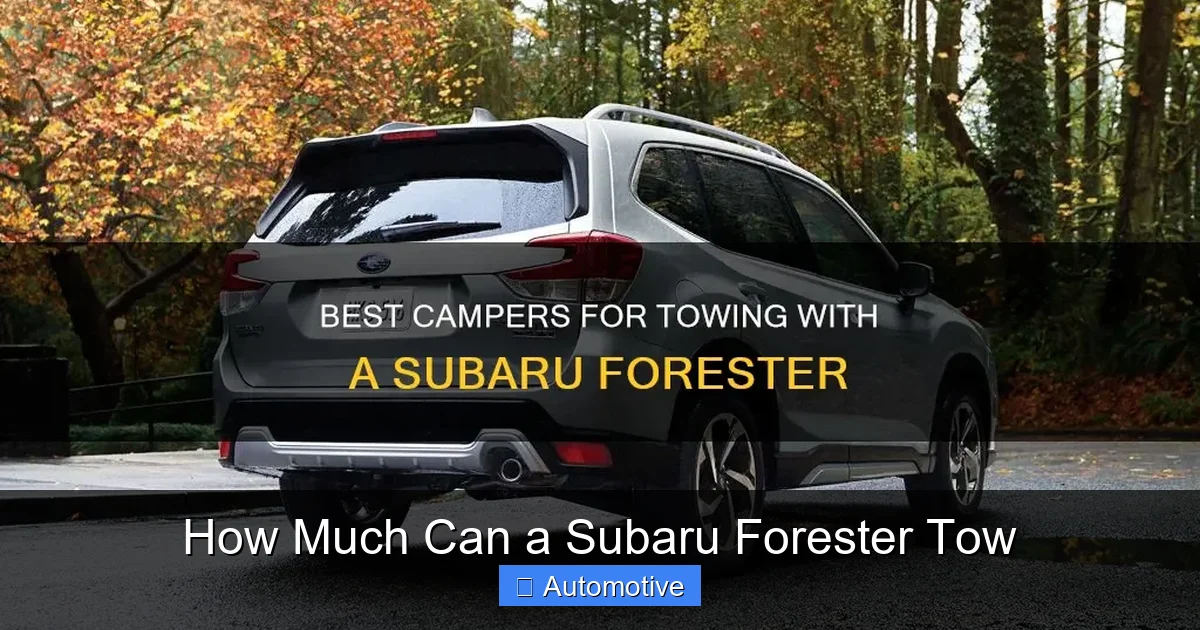
The Subaru Forester is a versatile compact SUV with solid towing capability for its class. Depending on the model year and engine, it can tow between 1,500 and 2,000 pounds—enough for small trailers, boats, or campers.
If you’re considering buying a Subaru Forester—or already own one—you might be wondering: *How much can a Subaru Forester tow?* It’s a fair question, especially if you enjoy weekend adventures, need to haul gear, or plan to tow a small trailer or boat. The Forester has long been praised for its reliability, all-wheel drive capability, and spacious interior. But when it comes to towing, many drivers are surprised by just how capable this compact SUV really is.
Unlike full-size trucks or heavy-duty SUVs, the Forester isn’t built to haul massive loads. But don’t let that fool you—it’s more than enough for everyday towing needs. Whether you’re pulling a small utility trailer loaded with landscaping supplies, a lightweight pop-up camper for a family camping trip, or a modest fishing boat to the lake, the Forester can handle it with the right setup. In this guide, we’ll break down exactly how much a Subaru Forester can tow, what factors affect its towing capacity, and how to do it safely and efficiently.
Understanding your vehicle’s towing limits isn’t just about numbers—it’s about safety, performance, and longevity. Overloading your Forester can strain the engine, overheat the transmission, and compromise braking ability. That’s why it’s essential to know your specific model’s capabilities and follow best practices. We’ll walk you through everything from factory specifications to real-world examples, so you can tow with confidence.
Key Takeaways
- Towing Capacity Range: The Subaru Forester typically tows between 1,500 and 2,000 pounds, depending on the model year and engine configuration.
- Engine Matters: Models with the 2.5L naturally aspirated engine usually have a 1,500-lb limit, while those with the turbocharged 2.4L engine (in newer models) can reach up to 2,000 lbs.
- Factory Tow Package Required: To achieve maximum towing capacity, the vehicle must be equipped with Subaru’s optional towing package, including a hitch receiver and wiring harness.
- Trailer Type Impacts Safety: Lightweight utility trailers, small pop-up campers, and single-axle boats are ideal; avoid heavy or large travel trailers.
- Proper Setup is Crucial: Use weight-distributing hitches, brake controllers (if needed), and ensure proper tire pressure and load distribution.
- Fuel Economy Drops When Towing: Expect a noticeable decrease in MPG when towing—plan fuel stops accordingly on long trips.
- Regular Maintenance Helps: Frequent checks of brakes, transmission fluid, and cooling systems are essential when using your Forester for towing.
📑 Table of Contents
Understanding Towing Capacity Basics
Before diving into the specifics of the Subaru Forester, it’s important to understand what “towing capacity” actually means. Simply put, towing capacity is the maximum weight your vehicle can safely pull behind it. This includes the weight of the trailer itself (called the trailer’s dry weight) plus everything loaded inside—gear, water, fuel, passengers, and more.
Towing capacity isn’t a one-size-fits-all number. It varies based on several factors, including the vehicle’s engine, drivetrain, suspension, cooling system, and whether it has a factory-installed towing package. For the Forester, Subaru provides official towing ratings that are determined through rigorous testing. These numbers are not guesses—they’re engineered limits designed to keep you and your vehicle safe.
It’s also crucial to distinguish between towing capacity and payload capacity. Payload refers to how much weight your vehicle can carry inside—passengers, cargo, and even the weight of the driver. Towing capacity, on the other hand, is strictly about what you can pull behind. Overloading either can lead to mechanical failure or unsafe driving conditions.
When evaluating how much a Subaru Forester can tow, always refer to the owner’s manual or Subaru’s official website for your specific model year and trim. Never exceed the stated limit, even if you think the trailer “feels light.” Safety should always come first.
Subaru Forester Towing Capacity by Model Year
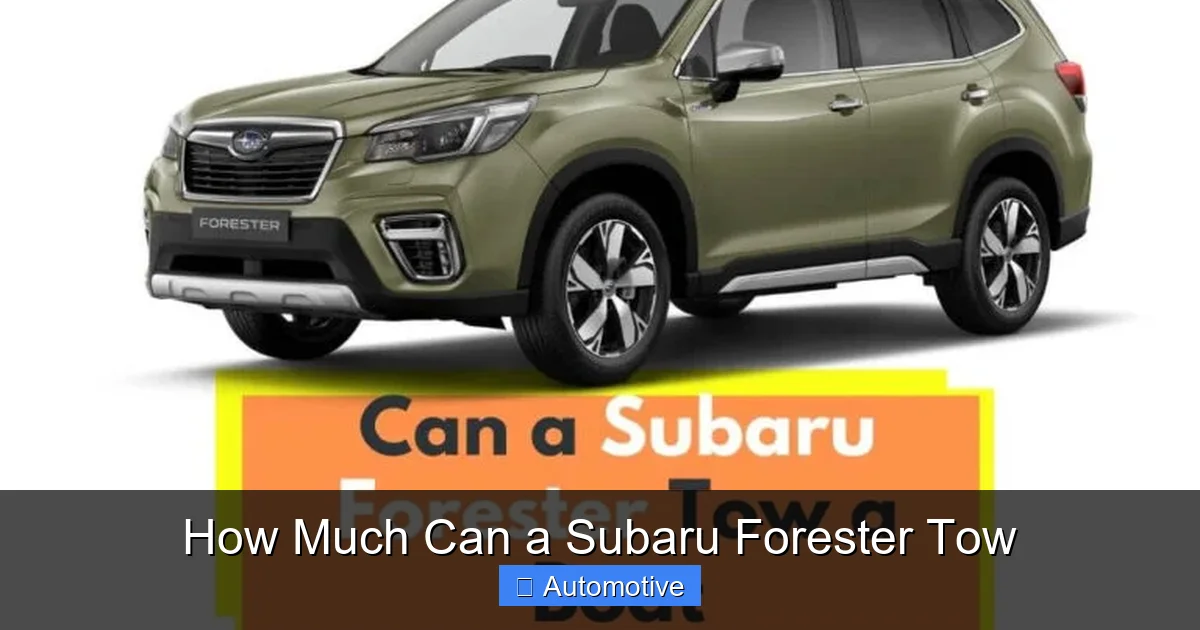
Visual guide about How Much Can a Subaru Forester Tow
Image source: rvandplaya.com
The towing capacity of the Subaru Forester has evolved over the years, largely due to changes in engine technology and vehicle design. Let’s break it down by generation and model year to give you a clear picture.
2014–2018 Subaru Forester (Second Generation)
During this period, the Forester was powered by a 2.5-liter four-cylinder engine producing around 170 horsepower. These models have a towing capacity of **1,500 pounds** when properly equipped. This includes the 2.5i base model and the 2.5i Premium, Limited, and Touring trims. The higher-performance XT trim, which featured a turbocharged 2.0-liter engine, also had a 1,500-pound towing limit—despite its extra power, Subaru kept the towing rating conservative due to transmission and cooling constraints.
2019–2024 Subaru Forester (Third Generation)
With the introduction of the third-generation Forester in 2019, Subaru made significant improvements. The base engine remained a 2.5-liter four-cylinder, now producing 182 horsepower. For these models, the towing capacity increased to **2,000 pounds** when equipped with the optional towing package. This was a welcome upgrade for buyers who needed a bit more hauling power.
In 2023, Subaru introduced a new turbocharged 2.4-liter engine in the Forester Sport and Wilderness trims. This engine delivers 260 horsepower and 277 lb-ft of torque, giving the Forester a more robust feel on the road. However, even with this added power, the towing capacity remains at **2,000 pounds**. Why? Because towing isn’t just about horsepower—it’s also about cooling, braking, and transmission durability. Subaru engineers determined that 2,000 pounds is the safe limit for the platform, even with the turbo engine.
2025 Subaru Forester (Upcoming Model)
While official details are still emerging, early reports suggest the 2025 Forester will retain the 2.5L and 2.4L engine options with similar towing capabilities. Subaru has not announced any plans to increase the towing limit beyond 2,000 pounds, likely due to the vehicle’s unibody construction and focus on fuel efficiency and ride comfort.
What Affects the Forester’s Towing Ability?

Visual guide about How Much Can a Subaru Forester Tow
Image source: fourwheeltrends.com
Now that you know the numbers, let’s explore the factors that influence how much a Subaru Forester can tow. Understanding these will help you make informed decisions and avoid common pitfalls.
Engine and Drivetrain
The engine is the heart of your towing capability. The Forester’s standard 2.5-liter engine provides adequate power for light to moderate towing, but it’s not designed for heavy loads. The turbocharged 2.4-liter engine in the Sport and Wilderness trims offers more low-end torque, which helps when starting from a stop or climbing hills with a trailer. However, both engines are paired with a continuously variable transmission (CVT), which, while efficient, isn’t as robust as a traditional automatic when under constant load.
All Foresters come with standard all-wheel drive (AWD), which is a major advantage when towing. AWD improves traction, especially in wet or snowy conditions, and helps distribute power evenly to all four wheels. This reduces the risk of wheel slip when accelerating with a trailer.
Factory Towing Package
To reach the maximum towing capacity, your Forester must be equipped with Subaru’s optional towing package. This typically includes:
– A Class II hitch receiver (rated for up to 2,000 lbs)
– A 4-pin wiring harness for trailer lights
– Upgraded cooling systems (transmission cooler, radiator)
– Heavy-duty suspension components
Without this package, the towing capacity may be limited to 1,000 pounds or less—even if your engine could technically handle more. Always check your vehicle’s build sheet or consult your dealer to confirm if the towing package is installed.
Trailer Type and Weight Distribution
Not all trailers are created equal. A lightweight aluminum utility trailer might weigh only 500 pounds, leaving you plenty of room for cargo. But a fiberglass boat with a trailer can easily exceed 1,500 pounds once you add fuel, gear, and the boat itself.
The way you load the trailer also matters. Ideally, 60% of the cargo weight should be positioned over the front half of the trailer, just ahead of the axle. This ensures proper tongue weight—the downward force exerted on the hitch. Subaru recommends a tongue weight of 10–15% of the total trailer weight. Too little, and the trailer may fishtail; too much, and it can overload the rear suspension.
Terrain and Driving Conditions
Towing on flat highways is one thing; hauling up mountain passes is another. Steep grades, high altitudes, and hot weather can all reduce your Forester’s effective towing capacity. The engine works harder, the transmission heats up, and braking distances increase. If you plan to tow in mountainous regions, consider using lower gears and taking frequent breaks to let the vehicle cool down.
Real-World Towing Examples

Visual guide about How Much Can a Subaru Forester Tow
Image source: thefunoutdoors.com
Let’s put the numbers into context with some practical examples of what you can realistically tow with a Subaru Forester.
Small Utility Trailer
A typical 5×8 foot utility trailer weighs around 500–700 pounds. Loaded with landscaping materials, firewood, or camping gear, the total weight might reach 1,200–1,500 pounds. This is well within the Forester’s capabilities, especially with the 2,000-pound limit on newer models. Just make sure the load is evenly distributed and secured.
Pop-Up Camper
Many pop-up campers weigh between 1,000 and 1,800 pounds when fully equipped. Brands like Jayco, Coleman, and Forest River offer models that are lightweight and aerodynamic, making them ideal for the Forester. With a 2,000-pound capacity, you can comfortably tow a pop-up camper for weekend getaways or family vacations.
Small Fishing Boat
A 14–16 foot aluminum fishing boat with a trailer and motor can weigh 1,200–1,600 pounds. This is a perfect match for the Forester’s towing ability. Whether you’re heading to a local lake or a remote river, your Forester can get you there with ease.
ATV or Single Dirt Bike Trailer
A single ATV or dirt bike on a small trailer typically weighs under 1,000 pounds. This is a great use case for the Forester, especially if you enjoy off-roading or trail riding. Just remember to secure the bike properly and check local regulations for trailer requirements.
What You Should Avoid
While the Forester is capable, it’s not built for heavy-duty towing. Avoid:
– Large travel trailers (most weigh 3,000+ pounds)
– Multi-axle boat trailers
– Cargo trailers over 2,000 pounds
– Horse or livestock trailers
These loads exceed the Forester’s design limits and can cause serious damage or safety hazards.
Tips for Safe and Effective Towing
Towing safely isn’t just about knowing your limits—it’s about preparation, technique, and maintenance. Here are some essential tips to help you tow with confidence.
Check Your Hitch and Wiring
Before every trip, inspect your hitch receiver, ball mount, and trailer coupler. Make sure the ball size matches the trailer’s coupler (usually 2 inches for Forester-compatible trailers). Test all lights—brake, turn signals, and running lights—to ensure they’re working properly. A faulty connection can lead to accidents or fines.
Use a Weight-Distributing Hitch (If Needed)
For trailers over 1,500 pounds, consider using a weight-distributing hitch. This device helps balance the load between the trailer and the towing vehicle, reducing sag in the rear suspension and improving steering control. While not always required for the Forester, it’s a smart upgrade for heavier loads.
Mind Your Speed and Following Distance
When towing, reduce your speed by 10–15 mph compared to normal driving. Allow extra following distance—up to twice as much—so you have time to react and stop safely. Sudden braking can cause the trailer to push the vehicle, leading to loss of control.
Monitor Transmission Temperature
The CVT in the Forester can overheat when towing, especially in hot weather or on long climbs. Many newer Foresters have a transmission temperature gauge in the instrument cluster. If it starts to climb into the red zone, pull over and let the vehicle cool down. Consider installing an aftermarket transmission cooler if you plan to tow frequently.
Practice Backing Up
Backing up with a trailer takes practice. Remember: turn the steering wheel in the opposite direction you want the trailer to go. Go slow, make small adjustments, and use your side mirrors. If you’re new to towing, practice in an empty parking lot before hitting the road.
Perform Regular Maintenance
Towing puts extra stress on your vehicle. Check and replace transmission fluid more frequently—Subaru recommends every 30,000 miles for normal use, but every 15,000 miles if you tow regularly. Also, inspect brakes, tires, and suspension components before long trips.
Fuel Economy and Towing
One of the trade-offs of towing is reduced fuel economy. The Forester is known for its excellent gas mileage—typically 26–33 MPG on the highway when not towing. But once you hook up a trailer, those numbers drop significantly.
On average, expect a 20–30% decrease in fuel efficiency when towing. For example, a Forester that normally gets 30 MPG might drop to 21–24 MPG with a loaded trailer. The exact impact depends on the trailer’s weight, aerodynamics, and driving conditions.
To minimize fuel loss:
– Remove unnecessary weight from the trailer
– Use a streamlined trailer (e.g., enclosed cargo vs. open utility)
– Maintain steady speeds and avoid rapid acceleration
– Use cruise control on flat highways (but disable it on hills)
Planning your route and fuel stops in advance can help you avoid running low on gas, especially in rural areas with fewer stations.
Conclusion
So, how much can a Subaru Forester tow? The answer is clear: **between 1,500 and 2,000 pounds**, depending on the model year, engine, and equipment. While it won’t replace a full-size truck for heavy hauling, the Forester is more than capable of handling light to moderate towing tasks with ease.
From small trailers and campers to boats and ATVs, the Forester offers a practical blend of capability, efficiency, and safety. With the right setup—especially the factory towing package—you can confidently take your adventures to the next level.
Remember, towing isn’t just about power—it’s about preparation. Always check your vehicle’s specifications, distribute weight properly, and maintain your Forester regularly. When done right, towing with your Subaru can be a smooth, safe, and enjoyable experience.
Whether you’re a weekend warrior, a family camper, or just need to move some gear, the Subaru Forester proves that sometimes, the best things come in compact packages.
Frequently Asked Questions
Can a Subaru Forester tow a camper?
Yes, a Subaru Forester can tow a small pop-up camper or lightweight travel trailer, as long as the total weight stays under 2,000 pounds. Always check the camper’s dry and loaded weight before towing.
Do I need a special hitch for my Forester?
Yes, to achieve maximum towing capacity, your Forester should have a Class II hitch receiver, preferably installed as part of Subaru’s factory towing package. Aftermarket hitches are also available but must be rated for at least 2,000 pounds.
Can I tow with a CVT transmission?
Yes, the Forester’s CVT is designed to handle towing up to its rated capacity. However, avoid prolonged heavy loads and monitor transmission temperature to prevent overheating.
What happens if I exceed the towing limit?
Exceeding the towing capacity can cause transmission failure, brake overheating, suspension damage, and loss of vehicle control. It may also void your warranty and increase insurance liability.
Can I install a brake controller in my Forester?
The Forester does not come with a built-in brake controller, and most trailers under 2,000 pounds don’t require electric brakes. However, if you upgrade to a heavier trailer, a brake controller may be necessary and can be installed by a professional.
Is the Forester Wilderness better for towing?
The Forester Wilderness has the same 2,000-pound towing capacity as other 2022–2024 models, but its enhanced suspension, all-terrain tires, and extra ground clearance make it better suited for off-road towing scenarios.