How Long Does It Take to Trickle Charge a Car Battery
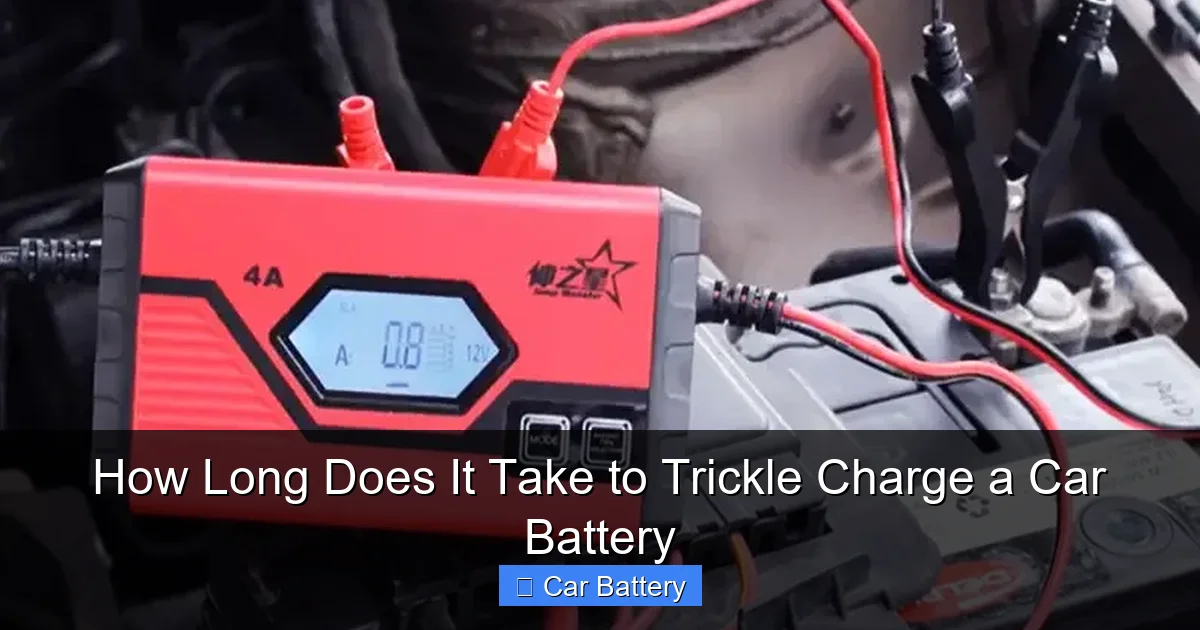
Trickle charging a car battery typically takes 12 to 48 hours, depending on battery size, charge level, and charger output. This slow, steady method is ideal for maintaining battery health and preventing overcharging, especially for vehicles that sit unused for long periods.
This is a comprehensive guide about how long does it take to trickle charge a car battery.
In This Article
- 1 Key Takeaways
- 2 How Long Does It Take to Trickle Charge a Car Battery?
- 3 What Is Trickle Charging and How Does It Work?
- 4 Factors That Affect Trickle Charging Time
- 5 Typical Trickle Charging Timeframes
- 6 Tips for Safe and Effective Trickle Charging
- 7 When to Use Trickle Charging vs. Other Methods
- 8 Conclusion
- 9 Frequently Asked Questions
- 9.1 Can I leave a trickle charger on overnight?
- 9.2 Is trickle charging bad for car batteries?
- 9.3 How do I know when the battery is fully charged?
- 9.4 Can I trickle charge a frozen battery?
- 9.5 Do I need to disconnect the battery to trickle charge it?
- 9.6 Can I use a trickle charger on a lithium car battery?
Key Takeaways
- Charging time varies by battery capacity: A standard 12-volt car battery with 40–60 amp-hours may take 12–24 hours to fully charge using a trickle charger.
- Charger amperage matters: Most trickle chargers deliver 1–2 amps; lower amperage means longer charging but safer results.
- State of charge affects duration: A completely dead battery can take up to 48 hours, while a partially discharged one may need only 6–12 hours.
- Temperature plays a role: Cold weather slows chemical reactions in the battery, increasing charge time.
- Maintenance vs. recovery charging: Trickle charging is best for maintenance; deeply discharged batteries may need a higher-amp charger first.
- Safety first: Always use a smart trickle charger with overcharge protection to avoid damage or hazards.
- Regular use reduces need: Driving your car regularly helps maintain battery charge, reducing reliance on trickle charging.
[FEATURED_IMAGE_PLACEHOLDER]
How Long Does It Take to Trickle Charge a Car Battery?
If you’ve ever gone to start your car after it’s been sitting in the garage for a few weeks—only to hear that dreaded clicking sound—you know how frustrating a dead battery can be. Whether it’s due to cold weather, infrequent use, or a parasitic drain, a weak or depleted battery is a common problem for many drivers. One of the safest and most effective ways to revive or maintain your car battery is through trickle charging.
But here’s the big question: How long does it take to trickle charge a car battery? The answer isn’t one-size-fits-all. It depends on several factors, including the battery’s size, its current state of charge, the type of charger you’re using, and even the temperature outside. In general, trickle charging is a slow and steady process—designed not to rush, but to preserve. While fast chargers can bring a battery back to life in a few hours, trickle chargers work at a much gentler pace, often taking anywhere from 12 to 48 hours to fully recharge a standard 12-volt car battery.
The beauty of trickle charging lies in its simplicity and safety. Unlike high-amp chargers that can overheat or damage a battery if left unattended, trickle chargers deliver a low, consistent current—usually between 1 and 2 amps. This slow feed prevents overcharging and sulfation, a common cause of battery failure. It’s especially useful for classic cars, motorcycles, RVs, or seasonal vehicles that aren’t driven regularly. But even if you drive daily, using a trickle charger during long trips away or winter storage can help extend your battery’s lifespan.
In this guide, we’ll break down everything you need to know about trickle charging—from how it works and how long it takes, to tips for doing it safely and effectively. Whether you’re a weekend mechanic or just trying to keep your daily driver running smoothly, understanding the ins and outs of trickle charging can save you time, money, and a lot of frustration down the road.
What Is Trickle Charging and How Does It Work?
Before we dive into timeframes, let’s clarify what trickle charging actually is. At its core, trickle charging is a method of slowly replenishing a battery’s charge using a low electrical current. Think of it like sipping water through a straw instead of gulping it down—gentle, steady, and controlled. This approach is particularly useful for lead-acid batteries, which are the most common type found in cars, trucks, and motorcycles.
So, how does it work? When you connect a trickle charger to your car battery, it supplies a constant, low-amperage charge—typically between 1 and 2 amps. This small but consistent flow of electricity gradually restores the battery’s charge without overwhelming its internal chemistry. Unlike fast chargers, which can push 10 or 20 amps into a battery in a short time, trickle chargers prioritize safety and longevity over speed.
One of the key advantages of trickle charging is that it helps prevent sulfation. Sulfation occurs when lead sulfate crystals build up on the battery plates during discharge. If a battery remains discharged for too long, these crystals harden and become difficult to reverse, reducing the battery’s capacity and lifespan. Trickle charging combats this by keeping the battery in a near-full state, minimizing the formation of these harmful crystals.
Modern trickle chargers—especially “smart” models—are designed with built-in safety features. They can detect the battery’s voltage and adjust the charge accordingly. Once the battery reaches full capacity, many smart trickle chargers automatically switch to a maintenance or “float” mode, delivering just enough power to counteract natural self-discharge. This means you can leave the charger connected for days or even weeks without risking overcharging.
It’s also worth noting that trickle charging is different from jump-starting. Jump-starting gives your car a quick burst of power to get it running again, but it doesn’t fully recharge the battery. In fact, after a jump-start, your alternator will need to work hard to restore the charge, which can strain the system. Trickle charging, on the other hand, provides a complete and balanced recharge, ensuring the battery is truly ready for reliable performance.
Factors That Affect Trickle Charging Time
Now that we understand how trickle charging works, let’s explore the variables that influence how long the process takes. While it’s tempting to look for a single “magic number,” the truth is that charging time depends on a combination of factors. Understanding these can help you set realistic expectations and avoid common pitfalls.
Battery Capacity and Size
The first and most obvious factor is the battery’s capacity, measured in amp-hours (Ah). Most standard car batteries range from 40 to 60 Ah. A larger battery holds more charge, so it will naturally take longer to recharge—even with a trickle charger. For example, a 60 Ah battery that’s completely dead will require more time to charge than a 40 Ah battery in the same condition.
To estimate charging time, you can use a simple formula:
Charging Time (hours) = Battery Capacity (Ah) ÷ Charger Output (Amps)
So, if you have a 50 Ah battery and a 2-amp trickle charger:
50 ÷ 2 = 25 hours.
That’s a rough estimate, but it gives you a ballpark figure.
Keep in mind, though, that this calculation assumes 100% efficiency—which isn’t realistic. In practice, charging efficiency is around 80–90%, so you may need to add 10–20% more time to your estimate.
State of Charge (SoC)
How depleted is your battery to begin with? A battery that’s only 20% discharged will recharge much faster than one that’s completely dead. Most car batteries begin to lose performance when they drop below 75% charge, and starting becomes difficult below 50%.
If your car wouldn’t start but the lights still turned on, the battery might be around 50–60% charged. In that case, a 2-amp trickle charger could restore it in 10–15 hours. But if the battery is fully drained—say, from leaving the headlights on overnight—it could take 24 hours or more.
Charger Amperage
Not all trickle chargers are created equal. While most deliver between 1 and 2 amps, some high-end models offer adjustable settings. A 1-amp charger is the slowest but safest option, ideal for long-term maintenance. A 2-amp charger will cut charging time roughly in half but still falls within the “trickle” range.
Avoid using chargers above 2 amps for trickle charging. Anything higher is considered a fast or rapid charger and can generate excess heat, damage the battery, or even pose a fire risk if left unattended.
Ambient Temperature
Temperature has a significant impact on battery chemistry. Cold weather slows down the chemical reactions inside the battery, making it harder to accept a charge. In freezing conditions, charging time can increase by 20–30%. Conversely, warm temperatures (but not extreme heat) can slightly speed up the process.
If you’re charging a battery in winter, try to do it in a garage or sheltered area. Never charge a frozen battery—it can explode. Always ensure the battery is above 32°F (0°C) before connecting the charger.
Battery Age and Condition
An older or damaged battery may not hold a charge as efficiently. Sulfation, internal corrosion, or worn-out plates can reduce its capacity and increase charging time. In some cases, a severely degraded battery may never reach full charge, no matter how long you leave the trickle charger connected.
If your battery is more than 4–5 years old and frequently dies, it might be time for a replacement—even if trickle charging helps temporarily.
Parasitic Drain
Even when your car is off, small amounts of power are drawn by systems like the clock, alarm, or onboard computer. This is called parasitic drain. While it’s usually minimal (around 20–50 milliamps), it can slowly deplete the battery over time—especially if the car sits for weeks.
If you’re trickle charging a vehicle with a known parasitic drain, the charger may struggle to keep up. In such cases, it’s wise to diagnose and fix the drain first, or use a charger with a higher maintenance capacity.
Typical Trickle Charging Timeframes
With all these variables in mind, let’s look at some realistic timeframes for trickle charging a car battery. These estimates assume you’re using a standard 1–2 amp smart trickle charger and the battery is in good condition.
Partially Discharged Battery (50–75% charged)
If your car started fine a few days ago but now struggles, the battery is likely around 50–75% charged. In this case, a 2-amp trickle charger should restore it in 6 to 12 hours. A 1-amp charger might take 12 to 24 hours. This is a common scenario for vehicles used occasionally or in mild weather.
Fully Discharged Battery (0–25% charged)
A completely dead battery—perhaps from leaving the lights on or a long period of inactivity—can take significantly longer. With a 2-amp charger, expect 24 to 36 hours for a full recharge. A 1-amp charger could require 36 to 48 hours or more. Patience is key here; rushing the process with a higher-amp charger can damage the battery.
Maintenance Charging (Topping Off)
If you’re using a trickle charger to maintain a healthy battery—say, for a classic car stored over winter—you might only need to run it for 8 to 12 hours per month. Smart chargers with float mode can be left connected indefinitely, topping off the battery as needed without overcharging.
Real-World Example
Let’s say you have a 50 Ah battery that’s 70% discharged (so it has about 15 Ah of charge left). You need to add roughly 35 Ah to bring it back to full. Using a 2-amp charger:
35 Ah ÷ 2 A = 17.5 hours.
Add 10% for inefficiency: about 19 hours.
So, you’d expect a full charge in roughly 18 to 20 hours.
These timeframes aren’t set in stone, but they give you a practical guide. Always monitor the battery voltage if possible—12.6 volts or higher indicates a full charge.
Tips for Safe and Effective Trickle Charging
Trickle charging is safe when done correctly, but a few best practices can make the process even more effective and hazard-free.
Use a Smart Trickle Charger
Invest in a modern smart charger with automatic shutoff, reverse polarity protection, and float mode. These features prevent overcharging, reduce fire risk, and extend battery life. Look for models with LED indicators that show charging status.
Charge in a Well-Ventilated Area
Batteries can release small amounts of hydrogen gas during charging, especially if overcharged. Always charge in a garage or outdoor space with good airflow. Avoid enclosed, poorly ventilated areas.
Disconnect Accessories
Before connecting the charger, turn off all lights, radios, and accessories. This reduces the load on the battery and allows the charger to focus on recharging.
Check Battery Condition
Inspect the battery for cracks, leaks, or swelling. If the case is damaged, don’t charge it—replace it instead. Also, ensure the terminals are clean and free of corrosion. Use a wire brush and baking soda solution to clean them if needed.
Follow Manufacturer Instructions
Every charger is different. Read the manual to understand its settings, safety features, and recommended usage. Some chargers require you to set the voltage or battery type (e.g., flooded, AGM, gel).
Don’t Rush the Process
Resist the urge to use a high-amp charger to speed things up. Trickle charging is about care, not convenience. A slow charge preserves battery health and ensures a full, balanced recharge.
Monitor Progress
If your charger has a voltage display, check it periodically. A fully charged 12-volt battery should read around 12.6–12.8 volts. If it’s not increasing after 24 hours, the battery may be faulty.
When to Use Trickle Charging vs. Other Methods
Trickle charging isn’t always the best solution. Knowing when to use it—and when to choose another method—can save you time and protect your battery.
Use Trickle Charging For:
- Maintaining batteries in stored vehicles (e.g., classic cars, boats, RVs)
- Recharging batteries that are partially discharged
- Long-term storage during winter or summer
- Batteries in good condition that just need a gentle top-up
Use a Fast Charger For:
- Emergency situations when you need to drive immediately
- Deeply discharged batteries that won’t hold a trickle charge
- Batteries that have been dead for several days
Use a Jump Starter For:
- Quick starts when you’re stranded
- Vehicles with healthy batteries that just need a boost
- Situations where you don’t have access to an outlet
Remember: after a jump start or fast charge, follow up with a trickle charge to fully restore the battery and prevent future issues.
Conclusion
So, how long does it take to trickle charge a car battery? The short answer is: it depends. But in most cases, you can expect the process to take anywhere from 12 to 48 hours, depending on the battery’s size, charge level, and the charger’s output. While it’s not the fastest method, trickle charging is one of the safest and most reliable ways to maintain or restore a car battery—especially for vehicles that aren’t used daily.
The key to success is patience and preparation. Choose a smart trickle charger, ensure the battery is in good condition, and follow safety guidelines. Avoid cutting corners with high-amp chargers, and always monitor the process when possible. By treating your battery with care, you’ll not only extend its lifespan but also reduce the chances of being stranded with a dead car.
Whether you’re storing a vintage Mustang for the winter or just want to keep your daily driver in top shape, trickle charging is a simple, effective tool in your automotive toolkit. It’s not glamorous, but it works—and that’s what matters when you turn the key and hear that confident engine roar.
Frequently Asked Questions
Can I leave a trickle charger on overnight?
Yes, you can safely leave a smart trickle charger on overnight—or even for several days. Modern chargers automatically switch to maintenance mode once the battery is full, preventing overcharging.
Is trickle charging bad for car batteries?
No, trickle charging is actually beneficial when done correctly. It helps prevent sulfation and maintains a full charge without damaging the battery, especially when using a smart charger.
How do I know when the battery is fully charged?
A fully charged 12-volt battery should read 12.6–12.8 volts on a multimeter. Many smart chargers also have LED indicators that show when charging is complete.
Can I trickle charge a frozen battery?
No, never charge a frozen battery. It can explode. Allow the battery to warm to above 32°F (0°C) before charging, and ensure it’s not cracked or damaged.
Do I need to disconnect the battery to trickle charge it?
It’s not always necessary, but disconnecting the negative terminal can prevent parasitic drain and make the process more efficient. Always follow your charger’s instructions.
Can I use a trickle charger on a lithium car battery?
Only if the charger is specifically designed for lithium batteries. Standard lead-acid trickle chargers can damage lithium batteries due to different voltage requirements.