How Long Does a Toyota Serpentine Belt Last?

The serpentine belt in your Toyota typically lasts between 60,000 and 100,000 miles, but driving conditions and maintenance habits can shorten or extend its life. Regular inspections and timely replacements help prevent unexpected breakdowns and costly engine damage.
Key Takeaways
- Average Lifespan: Most Toyota serpentine belts last between 60,000 and 100,000 miles, depending on model, driving habits, and climate.
- Visual Inspection Matters: Cracks, fraying, glazing, or missing ribs are clear signs the belt needs replacing—don’t wait for a squeal.
- Driving Conditions Impact Wear: Frequent short trips, extreme temperatures, and dusty environments accelerate belt degradation.
- Listen for Warning Sounds: A high-pitched squealing noise at startup or under load often indicates a slipping or worn belt.
- Replace Proactively: Follow your Toyota owner’s manual schedule and consider replacing the belt every 7–10 years, even if mileage is low.
- Use OEM or High-Quality Aftermarket Belts: Genuine Toyota parts or trusted brands like Gates or Dayco ensure durability and proper fit.
- Don’t Ignore Accessory Issues: A failing belt can cause power steering, alternator, or AC problems—address symptoms early.
📑 Table of Contents
- How Long Does a Toyota Serpentine Belt Last?
- What Is a Serpentine Belt and Why Does It Matter?
- Average Lifespan of a Toyota Serpentine Belt
- Signs Your Toyota Serpentine Belt Needs Replacement
- Factors That Affect Serpentine Belt Lifespan
- How to Inspect and Maintain Your Serpentine Belt
- Replacing the Serpentine Belt: What You Need to Know
- Conclusion: Stay Ahead of Belt Failure
How Long Does a Toyota Serpentine Belt Last?
If you own a Toyota—whether it’s a dependable Camry, a rugged Tacoma, or a fuel-efficient Prius—you likely appreciate the brand’s reputation for reliability and longevity. But even the most well-built vehicles need routine maintenance, and one often-overlooked component is the serpentine belt. This single, continuous belt powers multiple engine accessories, including the alternator, power steering pump, air conditioning compressor, and sometimes the water pump. So, how long does a Toyota serpentine belt last? The short answer: typically between 60,000 and 100,000 miles. But the real story is more nuanced, influenced by driving habits, climate, vehicle age, and maintenance practices.
Understanding the lifespan of your serpentine belt isn’t just about avoiding a roadside breakdown—it’s about protecting your engine and ensuring all critical systems keep running smoothly. A failed belt can leave you stranded, disable your power steering, kill your battery (because the alternator stops charging), and even cause your engine to overheat if the water pump isn’t turning. That’s why knowing when to inspect and replace your serpentine belt is a smart move for any Toyota owner. In this guide, we’ll break down everything you need to know—from average lifespan and warning signs to maintenance tips and replacement best practices.
What Is a Serpentine Belt and Why Does It Matter?
Visual guide about How Long Does a Toyota Serpentine Belt Last?
Image source: askmyauto.com
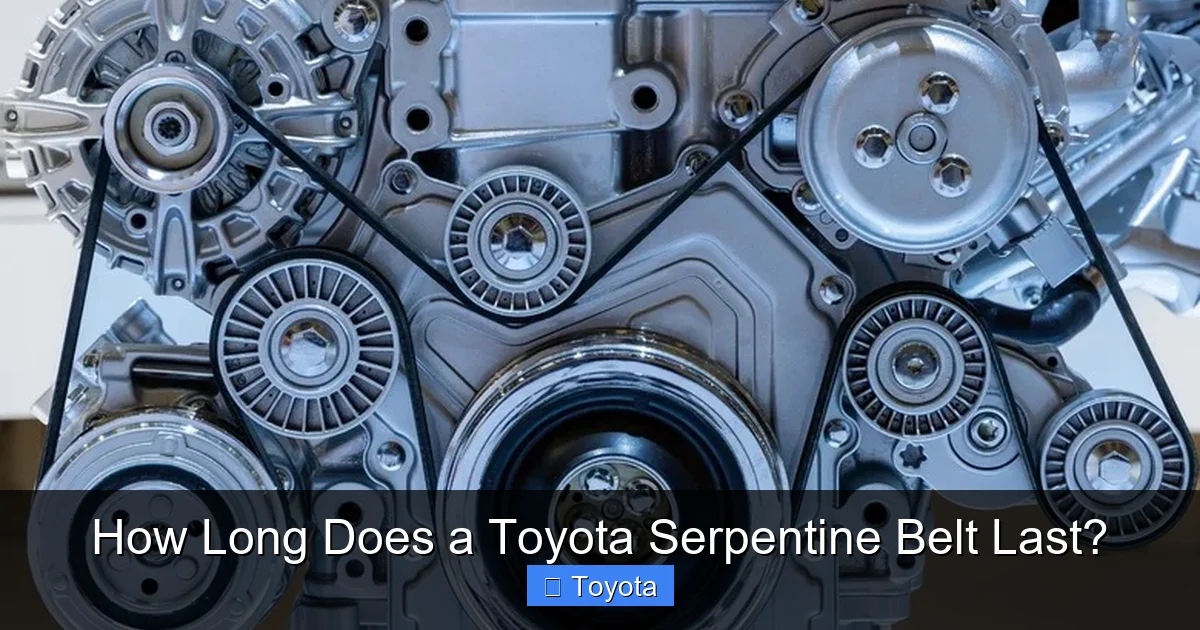
Before diving into lifespan, let’s clarify what the serpentine belt actually does. Unlike older vehicles that used multiple V-belts to drive different components, modern Toyotas use a single, wide, ribbed belt that snakes around several pulleys—hence the name “serpentine.” This design is more efficient, takes up less space, and reduces the chance of misalignment. The belt transfers rotational power from the engine’s crankshaft to vital accessories.
Key Components Powered by the Serpentine Belt
- Alternator: Charges the battery and powers electrical systems.
- Power Steering Pump: Makes steering easier, especially at low speeds.
- Air Conditioning Compressor: Circulates refrigerant to cool the cabin.
- Water Pump (in some models): Circulates coolant to prevent engine overheating.
- Emissions and Vacuum Pumps (in certain engines): Helps manage exhaust and engine efficiency.
Because so many systems rely on this one belt, its failure can have cascading effects. For example, if the belt breaks while driving, you might suddenly lose power steering, notice the battery warning light come on, and feel the engine getting hotter. In extreme cases, a broken belt can cause internal engine damage if the water pump stops working and the engine overheats.
How the Belt Works
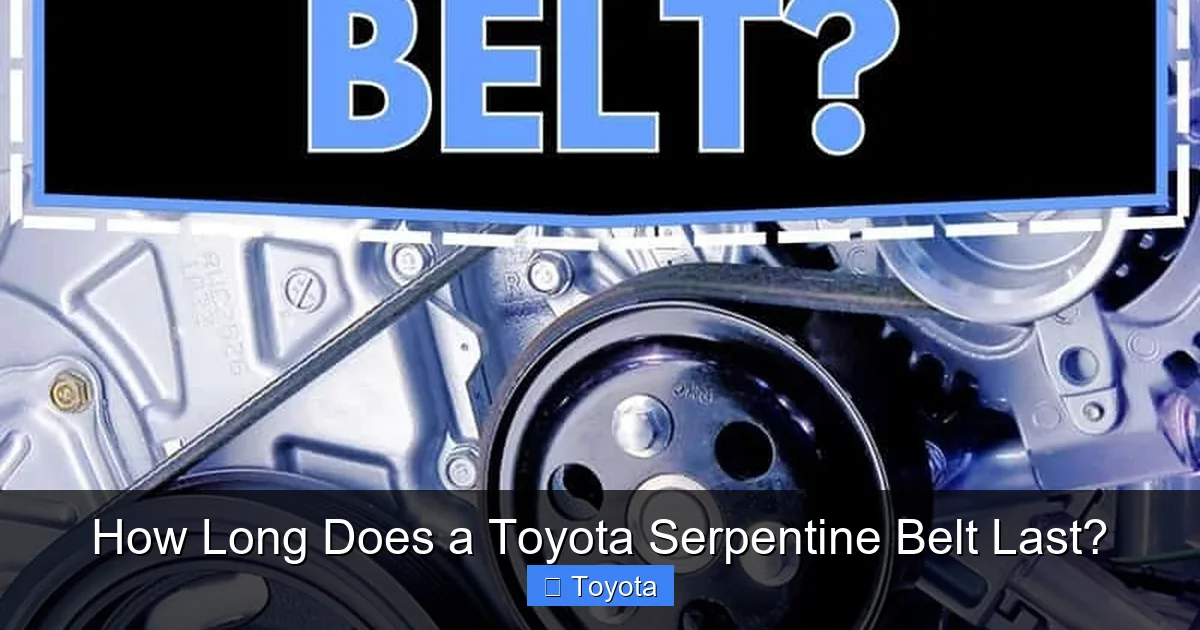
The serpentine belt is tensioned by an automatic tensioner pulley, which keeps it snug against all the other pulleys. As the engine runs, the crankshaft spins, turning the belt, which in turn spins the accessory pulleys. The ribs on the belt grip the pulleys tightly to prevent slipping. Over time, however, heat, friction, and exposure to oil or coolant can degrade the rubber, leading to cracks, fraying, or loss of tension.
Average Lifespan of a Toyota Serpentine Belt
Visual guide about How Long Does a Toyota Serpentine Belt Last?
Image source: vehq.com
So, how long does a Toyota serpentine belt last? Most manufacturers, including Toyota, recommend inspecting the serpentine belt every 30,000 to 60,000 miles and replacing it between 60,000 and 100,000 miles. However, this is a general guideline—actual lifespan can vary significantly based on several factors.
Manufacturer Recommendations
Toyota doesn’t always specify an exact replacement interval for the serpentine belt in the owner’s manual. Instead, they often recommend visual inspections during routine maintenance visits. For example, many Toyota service schedules suggest checking the belt at every oil change after 30,000 miles. Some models, like the Toyota Highlander or RAV4, may have slightly different recommendations based on engine type and usage.
In general, you can expect:
– City driving with frequent stops: 60,000–80,000 miles
– Highway driving with consistent speeds: 80,000–100,000 miles
– Severe conditions (extreme heat, dust, towing): As low as 50,000 miles
Real-World Examples
Let’s look at a few real-world scenarios:
– A 2015 Toyota Camry driven primarily in Phoenix, Arizona, with summer temperatures regularly exceeding 110°F, may need a belt replacement closer to 60,000 miles due to heat degradation.
– A 2018 Toyota Tacoma used for weekend off-roading and towing a small trailer might see belt wear accelerate from dust and strain, requiring replacement around 70,000 miles.
– A 2020 Toyota Prius driven mostly on highways in mild California weather could easily go 90,000–100,000 miles before needing a new belt.
These examples show that mileage alone isn’t the only factor—environment and usage play big roles.
Age Matters Too
Even if your Toyota has low mileage, the serpentine belt can degrade over time due to aging. Rubber compounds dry out, lose elasticity, and become brittle. Experts recommend replacing the serpentine belt every 7 to 10 years, regardless of mileage. For example, a 2012 Toyota Corolla with only 45,000 miles might still need a new belt because the original one is over a decade old.
Signs Your Toyota Serpentine Belt Needs Replacement
Visual guide about How Long Does a Toyota Serpentine Belt Last?
Image source: lastingcar.com
Knowing how long a Toyota serpentine belt lasts is helpful, but recognizing the warning signs is even more important. Catching issues early can prevent a breakdown and save you money on repairs.
Visual Inspection: What to Look For
The easiest way to check your belt is with a visual inspection. Pop the hood and look at the serpentine belt—it’s usually located at the front of the engine, running along the top or side. Here’s what to watch for:
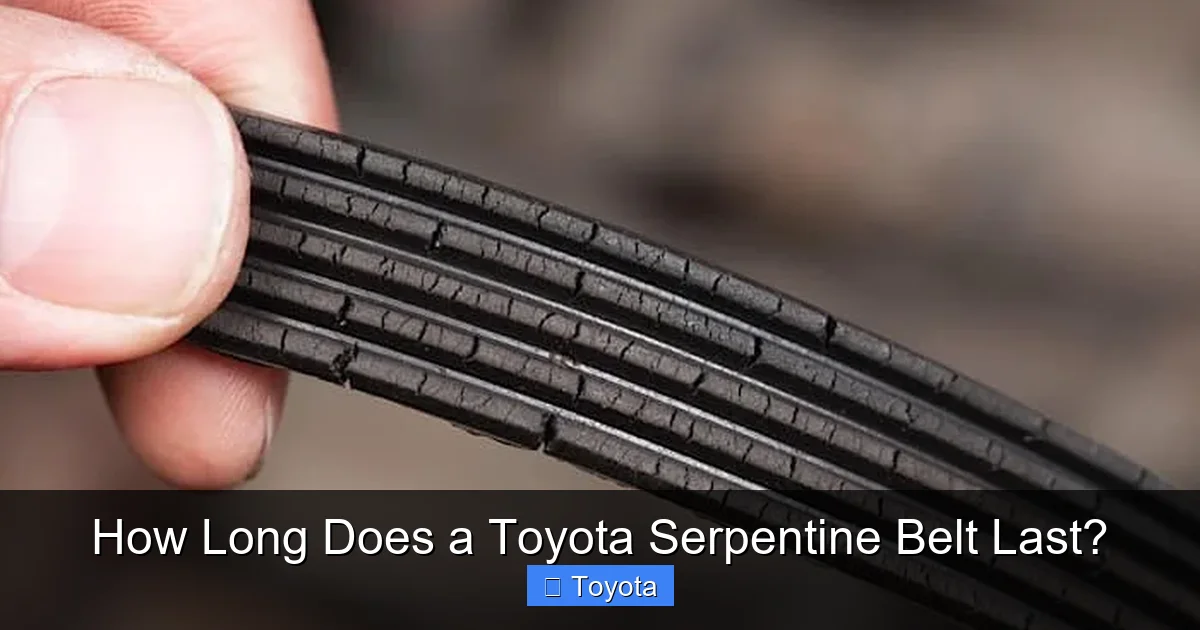
– Cracks: Small, hairline cracks across the ribs or along the edges. These can grow over time and lead to failure.
– Fraying or Splitting: The edges of the belt may look worn or unraveled.
– Glazing: A shiny, smooth appearance on the sides of the belt indicates slipping and heat buildup.
– Missing Ribs: If you see chunks of rubber missing from the grooves, the belt is severely worn.
– Oil or Coolant Contamination: Leaking fluids can degrade rubber. Look for stains or wet spots on the belt.
Pro tip: Use a flashlight and a small mirror to see hard-to-reach areas. Some belts are tucked behind other components, so take your time.
Audible Warning Signs
Your ears can also tell you a lot about your belt’s condition:
– Squealing or Chirping Noise: A high-pitched squeal at startup or when turning the steering wheel sharply often means the belt is slipping. This is common in cold weather or when the belt is loose.
– Rattling or Grinding: If the tensioner pulley is failing, you might hear a rattling sound. A grinding noise could indicate a seized accessory pulley.
– Noise Under Load: If the belt squeals when you accelerate, turn on the AC, or use power steering, it’s struggling to grip the pulleys.
Performance Issues
Sometimes, the symptoms aren’t obvious until systems start to fail:
– Battery Warning Light: If the alternator isn’t spinning properly, the battery won’t charge, and the dashboard light will come on.
– Loss of Power Steering: The steering wheel becomes hard to turn, especially at low speeds.
– AC Not Cooling: The compressor isn’t engaging because the belt isn’t turning it.
– Engine Overheating: If the water pump isn’t spinning (in models where it’s belt-driven), coolant won’t circulate, and the engine can overheat quickly.
If you notice any of these issues, don’t ignore them. A failing serpentine belt can cause serious damage if left unchecked.
Factors That Affect Serpentine Belt Lifespan
While the average lifespan of a Toyota serpentine belt is 60,000–100,000 miles, several factors can shorten or extend that range. Understanding these can help you take proactive steps to maximize belt life.
Driving Conditions
– City vs. Highway Driving: Frequent stops and starts in city traffic put more strain on the belt and accessories, leading to faster wear.
– Extreme Temperatures: High heat accelerates rubber degradation. Cold weather can make the belt stiff and more prone to cracking.
– Dusty or Dirty Environments: Dirt and debris can get trapped in the belt grooves, causing abrasion and reducing grip.
Vehicle Usage
– Towing and Hauling: Extra load on the engine increases demand on the belt and tensioner.
– Short Trips: Frequent cold starts don’t allow the belt to reach optimal operating temperature, leading to condensation and potential mold or rot in the rubber.
– High Electrical Load: Running multiple accessories (AC, heated seats, lights) increases strain on the alternator and belt.
Maintenance Habits
– Regular Inspections: Catching small cracks or glazing early can prevent sudden failure.
– Proper Tension: A loose belt slips; a too-tight belt wears out pulleys and bearings. The automatic tensioner should maintain correct tension, but it can fail.
– Fluid Leaks: Oil, coolant, or power steering fluid leaking onto the belt will degrade the rubber quickly. Fix leaks promptly.
Quality of the Belt
Not all belts are created equal. Toyota OEM (Original Equipment Manufacturer) belts are designed specifically for your vehicle and typically last longer. High-quality aftermarket brands like Gates, Dayco, or Continental also offer reliable options. Avoid cheap, no-name belts—they may save you money upfront but can fail prematurely.
How to Inspect and Maintain Your Serpentine Belt
Regular maintenance is the best way to extend the life of your serpentine belt and avoid unexpected failures. Here’s how to stay on top of it.
DIY Inspection Steps
You don’t need to be a mechanic to check your belt. Follow these simple steps:
1. Park on a level surface and turn off the engine. Let it cool if it’s been running.
2. Open the hood and locate the serpentine belt. It’s usually the longest belt with multiple ribs.
3. Visually inspect for cracks, fraying, glazing, or missing pieces.
4. Check for tension: Press down on the longest span of the belt. It should deflect about ½ inch. If it’s too loose or too tight, the tensioner may be faulty.
5. Listen for noise: Start the engine and listen for squealing or rattling. Rev the engine slightly and see if the noise changes.
When to Visit a Mechanic
While DIY checks are helpful, some issues require professional attention:
– If the belt shows significant wear or damage.
– If the tensioner pulley is wobbling or making noise.
– If you’re unsure about the belt’s condition or how to replace it.
– If multiple accessories are failing at once.
A certified Toyota technician can perform a thorough inspection and recommend replacement if needed.
Preventive Maintenance Tips
– Follow the maintenance schedule: Check your owner’s manual and adhere to recommended service intervals.
– Replace the belt proactively: Don’t wait for failure. Replace it every 7–10 years or 100,000 miles, whichever comes first.
– Use quality parts: Choose OEM or reputable aftermarket belts.
– Address leaks immediately: Fix oil, coolant, or power steering leaks to protect the belt.
– Keep the engine clean: A clean engine bay makes it easier to spot issues early.
Replacing the Serpentine Belt: What You Need to Know
If your inspection reveals wear or you’re approaching the recommended mileage, it’s time to replace the belt. Here’s what to expect.
DIY vs. Professional Replacement
Replacing a serpentine belt is often a DIY-friendly job, but it depends on your vehicle and comfort level. Most Toyotas have a simple belt routing and an accessible tensioner. However, some models (like certain 4-cylinder engines) may require removing other components.
If you’re comfortable with basic tools and following a diagram, you can save money by doing it yourself. Otherwise, a mechanic can typically replace the belt in 30–60 minutes.
Tools and Parts Needed
– New serpentine belt (check your owner’s manual or parts store for the correct part number)
– Socket wrench or serpentine belt tool
– Belt routing diagram (often found under the hood or in the manual)
– Gloves and safety glasses
Step-by-Step Replacement Overview
1. Locate the tensioner: It’s usually a spring-loaded pulley with a square hole for a wrench.
2. Relieve tension: Insert the wrench and rotate the tensioner to release pressure on the belt.
3. Remove the old belt: Slide it off the pulleys, noting the routing.
4. Install the new belt: Follow the routing diagram to ensure correct placement.
5. Release the tensioner: Slowly let it return to position, applying tension to the new belt.
6. Start the engine: Listen for noise and check that all accessories are working.
Cost of Replacement
– DIY: $20–$50 for the belt.
– Professional: $100–$200, including parts and labor.
While it’s not an expensive repair, skipping it can lead to much costlier problems down the road.
Conclusion: Stay Ahead of Belt Failure
So, how long does a Toyota serpentine belt last? On average, 60,000 to 100,000 miles—but that’s just a starting point. Your driving habits, climate, and maintenance routine all play a role in determining when it’s time for a replacement. The key is to stay proactive: inspect the belt regularly, listen for warning signs, and don’t ignore performance issues.
Remember, the serpentine belt is a small component with a big job. It keeps your alternator charging, your AC cooling, your steering smooth, and your engine cool. A failure can leave you stranded and lead to expensive repairs. By following your Toyota’s maintenance schedule, using quality parts, and addressing issues early, you can ensure your serpentine belt—and your entire vehicle—keeps running reliably for years to come.
Whether you’re driving a compact Corolla or a full-size Tundra, taking care of the serpentine belt is a simple but essential part of Toyota ownership. So pop the hood, give it a look, and drive with confidence.
Frequently Asked Questions
How often should I check my Toyota serpentine belt?
You should inspect your serpentine belt every 30,000 to 60,000 miles or during routine oil changes. Even if it looks fine, check it annually after 50,000 miles to catch early signs of wear.
Can I drive with a cracked serpentine belt?
It’s not recommended. Small cracks can quickly worsen, leading to sudden belt failure. If you notice cracks, replace the belt as soon as possible to avoid being stranded.
What happens if the serpentine belt breaks while driving?
If the belt breaks, you’ll lose power steering, the alternator will stop charging the battery, and the AC and water pump (if belt-driven) will fail. This can lead to overheating and electrical issues.
Is it necessary to replace the tensioner when changing the belt?
Not always, but if the tensioner is worn, noisy, or doesn’t hold tension properly, it should be replaced at the same time to ensure the new belt works correctly.
Can I replace the serpentine belt myself?
Yes, many Toyota owners can replace the belt themselves with basic tools and a routing diagram. However, if you’re unsure or the belt is hard to access, a professional mechanic is a safe choice.
Does extreme weather affect serpentine belt life?
Yes. High heat accelerates rubber degradation, while cold weather can make the belt stiff and prone to cracking. Both conditions can shorten the belt’s lifespan.