How Long Can a Car Overheat Before Damage Occurs

Contents
- 1 Key Takeaways
- 2 📑 Table of Contents
- 3 How Long Can a Car Overheat Before Damage Occurs?
- 4 Understanding Engine Overheating: What Happens Under the Hood
- 5 How Long Can a Car Overheat Before Damage Occurs?
- 6 Signs Your Car Is Overheating
- 7 What to Do When Your Car Overheats
- 8 Common Causes of Overheating
- 9 How to Prevent Overheating
- 10 When to See a Mechanic
- 11 Conclusion
- 12 Frequently Asked Questions
Car Phone Holder

Car Battery Charger

Car GPS Navigator

Car Mud Flaps (Universal)
Overheating can cause serious engine damage in as little as 30 seconds to a few minutes. The exact time depends on severity, but ignoring the temperature gauge can lead to warped heads, blown gaskets, or a seized engine. Acting quickly is key to avoiding expensive repairs.
Key Takeaways
- Immediate action is critical: Engine damage can begin within 30 seconds to 2 minutes of severe overheating.
- Watch the temperature gauge: A rising needle is the first sign—pull over safely as soon as possible.
- Common causes include coolant leaks, faulty thermostats, and radiator issues: Regular maintenance helps prevent these problems.
- Continuing to drive while overheating worsens damage: It can warp cylinder heads and destroy the head gasket.
- Pull over, turn off the engine, and let it cool: Never open the radiator cap while hot—it can cause dangerous steam burns.
- Call for help or add coolant only when safe: Attempting DIY fixes on a hot engine can be dangerous.
- Prevention beats repair: Regular coolant checks and system inspections save money and headaches.
📑 Table of Contents
- How Long Can a Car Overheat Before Damage Occurs?
- Understanding Engine Overheating: What Happens Under the Hood
- How Long Can a Car Overheat Before Damage Occurs?
- Signs Your Car Is Overheating
- What to Do When Your Car Overheats
- Common Causes of Overheating
- How to Prevent Overheating
- When to See a Mechanic
- Conclusion
How Long Can a Car Overheat Before Damage Occurs?
Imagine you’re cruising down the highway on a hot summer day. The sun beats down, traffic slows, and suddenly you notice the temperature gauge creeping into the red zone. Your heart skips a beat. You ask yourself: How long can a car overheat before damage occurs? The truth is, not very long. In fact, engine damage can begin in as little as 30 seconds under extreme conditions. But even mild overheating, if ignored, can lead to costly repairs down the road.
Overheating happens when your engine’s cooling system fails to regulate its temperature. Engines operate best between 195°F and 220°F. Once they exceed this range—especially past 240°F—components start to suffer. Metal expands, seals degrade, and fluids break down. The longer you drive with an overheating engine, the more likely you are to face serious mechanical failure. Understanding the timeline of damage and knowing when to act can mean the difference between a simple coolant top-up and a full engine rebuild.
In this guide, we’ll walk you through how long a car can overheat before damage occurs, what signs to watch for, the most common causes, and exactly what to do when your car starts running hot. Whether you’re a daily commuter or a weekend road-tripper, this knowledge could save you thousands in repairs.
Understanding Engine Overheating: What Happens Under the Hood
To grasp how quickly overheating can damage your car, it helps to understand what’s going on inside the engine. Your car’s engine generates intense heat—up to 4,500°F in the combustion chamber. Without a proper cooling system, that heat would melt engine parts in seconds. That’s where the coolant, radiator, water pump, thermostat, and fans come in. They work together to absorb, transfer, and dissipate heat, keeping the engine at a safe operating temperature.

Visual guide about How Long Can a Car Overheat Before Damage Occurs
Image source: carwrenching.com
How the Cooling System Works
The cooling system circulates a mixture of antifreeze and water (coolant) through the engine block and cylinder head. As the coolant absorbs heat, it flows to the radiator, where air passing through (or forced by fans) cools it down. The thermostat regulates this flow, opening when the engine warms up and closing when it’s cold. The water pump keeps the coolant moving, and the radiator cap maintains pressure to raise the coolant’s boiling point.
When any part of this system fails—say, a leak, a stuck thermostat, or a broken fan—the engine can’t cool properly. Heat builds up fast. And once the temperature climbs past safe levels, the real trouble begins.
Why Overheating Is So Dangerous
Engines are precision machines made of metal parts that expand and contract with temperature changes. Aluminum cylinder heads, for example, expand faster than iron engine blocks. When overheating occurs, this mismatch in expansion can cause warping. Even a slight warp in the cylinder head can break the seal between the head and the engine block, leading to a blown head gasket.
Additionally, engine oil breaks down at high temperatures. It loses its viscosity and ability to lubricate, causing increased friction and wear. Pistons can seize in their cylinders. Valves may bend. In extreme cases, the engine can literally melt or crack. The faster you act, the better your chances of avoiding these outcomes.
How Long Can a Car Overheat Before Damage Occurs?
So, how long can a car overheat before damage occurs? The short answer: it depends on the severity and duration of the overheating. But in many cases, irreversible damage can begin in under two minutes.

Visual guide about How Long Can a Car Overheat Before Damage Occurs
Image source: carwrenching.com
Timeline of Overheating Damage
Let’s break it down by time and temperature:
- 0–30 seconds (240°F–260°F): At this stage, the engine is in the danger zone. Coolant may boil, and steam can form. If the thermostat is stuck closed or the radiator is blocked, heat builds rapidly. Minor warping of aluminum components may begin.
- 30 seconds to 2 minutes (260°F–280°F): This is when serious damage becomes likely. The head gasket can start to fail. Cylinder heads may warp. Engine oil begins to degrade, reducing lubrication. Continuing to drive now risks catastrophic failure.
- 2–5 minutes (280°F+): At these temperatures, the engine is in crisis mode. Pistons can seize. Valves may bend from contact with pistons (in interference engines). The engine block itself can crack. Recovery is unlikely without major repairs.
Keep in mind that these timelines are estimates. Factors like engine design, coolant condition, and ambient temperature play a role. But one thing is clear: the longer you drive with an overheating engine, the worse the damage gets.
Real-World Example: A Common Scenario
Imagine you’re stuck in traffic on a 95°F day. Your car’s AC is blasting, and suddenly the temperature light comes on. You’re only two miles from home. You think, “I can make it.” But within 90 seconds, the engine starts knocking. You pull over, and by the time you pop the hood, steam is pouring out. In that short time, the head gasket may have already failed. A $200 coolant refill turns into a $2,500 repair.
This scenario plays out thousands of times a year. Drivers underestimate how quickly overheating escalates. The lesson? Don’t gamble with your engine. When the temperature gauge moves into the red, treat it like a fire alarm—act immediately.
Signs Your Car Is Overheating
Knowing the signs of overheating can help you react before damage occurs. Some symptoms are obvious; others are subtle. Here’s what to watch for:
Visual guide about How Long Can a Car Overheat Before Damage Occurs
Image source: carwrenching.com
1. Temperature Gauge in the Red
This is the most direct warning. Most cars have a temperature gauge on the dashboard. If it climbs past the midpoint and into the red zone, your engine is overheating. Some modern vehicles replace the gauge with a warning light—don’t ignore it.
2. Steam or Smoke from Under the Hood
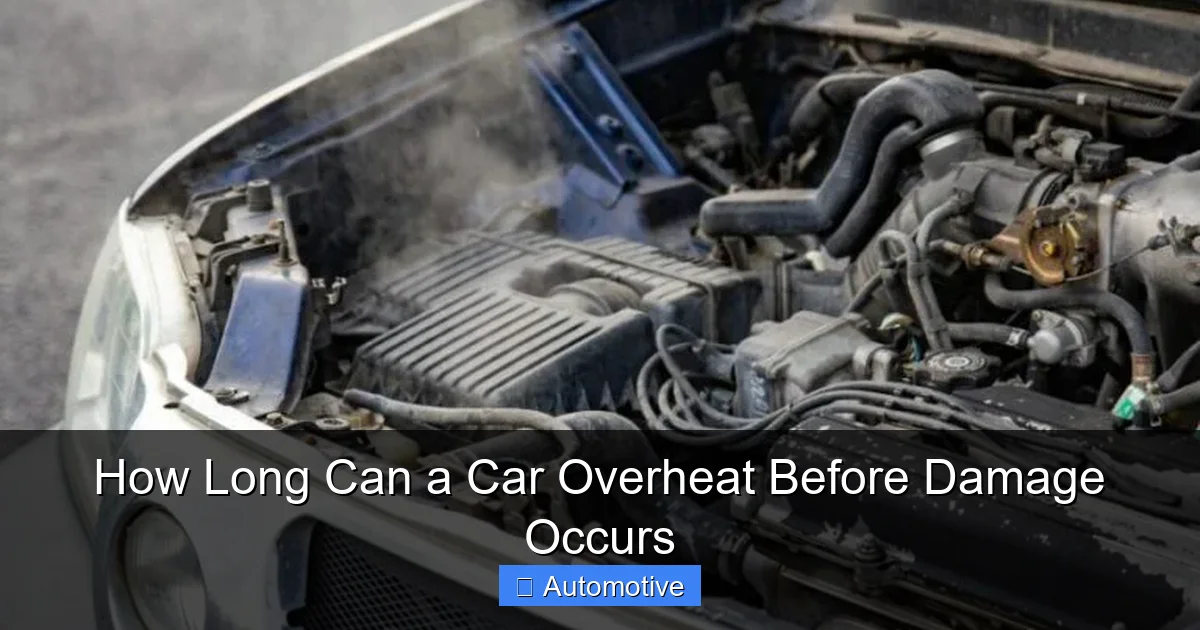
Steam (often mistaken for smoke) rising from the engine bay is a clear sign that coolant is boiling and escaping. This usually means the system is under extreme pressure. Pull over immediately.
3. Strange Smells
A sweet, syrupy smell often indicates a coolant leak. If you smell burning oil or rubber, it could mean overheating has caused hoses or belts to melt. Either way, it’s a red flag.
4. Engine Knocking or Pinging
When engine oil breaks down from heat, it can’t lubricate properly. This leads to metal-on-metal contact, causing knocking sounds. In severe cases, pre-ignition (pinging) can occur, damaging pistons and valves.
5. Loss of Power or Rough Idling
Overheating affects engine performance. You might notice hesitation, stalling, or a rough idle. This happens because heat disrupts combustion and sensor readings.
6. Coolant Leaks or Low Coolant Warning
If you see puddles of green, orange, or pink fluid under your car, you likely have a coolant leak. Many newer cars also have low-coolant sensors that trigger a dashboard warning.
Remember: Early detection is your best defense. The sooner you notice these signs, the better your chances of avoiding major damage.
What to Do When Your Car Overheats
So your car is overheating. What now? Panic won’t help—but quick, smart action might save your engine. Follow these steps:
Step 1: Pull Over Safely
As soon as you notice the temperature rising, find a safe place to pull over. Turn on your hazard lights. Do not continue driving, even if the gauge hasn’t hit the red yet. Every second counts.
Step 2: Turn Off the Engine
Once stopped, turn off the engine immediately. This stops heat generation and gives the engine a chance to cool. Do not restart it until it’s safe.
Step 3: Let the Engine Cool
Wait at least 30–45 minutes before opening the hood. Opening it too soon can release scalding steam or hot coolant, causing serious burns. Use this time to call for help or assess your options.
Step 4: Check Coolant Levels (When Safe)
Once the engine is cool, carefully open the hood and locate the coolant reservoir. Check the level. If it’s low, you may have a leak. Do not open the radiator cap while the engine is hot—it’s under pressure and can explode.
Step 5: Add Coolant or Water (If Available)
If you have coolant or distilled water, you can top off the reservoir. Use a 50/50 mix of antifreeze and water if possible. Never use tap water long-term—it contains minerals that can clog the system.
Step 6: Start the Engine (Cautiously)
After adding coolant, start the engine and let it idle. Watch the temperature gauge. If it stays normal, you may be able to drive to a repair shop—but drive slowly and monitor closely. If it overheats again, stop immediately.
Step 7: Call for Help
If you’re unsure, or if the car overheats again, call a tow truck. It’s better to spend $100 on a tow than $3,000 on a new engine.
Pro tip: Keep an emergency kit in your car with coolant, water, gloves, and a flashlight. It could save you in a pinch.
Common Causes of Overheating
Understanding why your car overheats can help you prevent it. Here are the most common culprits:
1. Low Coolant Level
The most frequent cause. Coolant leaks from hoses, the radiator, water pump, or heater core. Even small leaks can lead to big problems over time.
2. Faulty Thermostat
The thermostat regulates coolant flow. If it gets stuck closed, coolant can’t reach the radiator, and the engine overheats. A stuck-open thermostat causes slow warm-ups but rarely overheating.
3. Radiator Problems
A clogged or damaged radiator can’t dissipate heat. Debris, rust, or internal blockages reduce efficiency. Leaks are also common, especially in older cars.
4. Water Pump Failure
The water pump circulates coolant. If the impeller breaks or the seal leaks, coolant stops flowing. You might notice coolant leaks near the front of the engine or a whining noise.
5. Cooling Fan Issues
Electric fans help cool the radiator when the car is idling or moving slowly. If a fan motor fails or a relay burns out, overheating can occur in traffic.
6. Head Gasket Failure
Ironically, a blown head gasket can cause overheating—but overheating can also cause a blown head gasket. It’s a vicious cycle. Symptoms include white exhaust smoke, coolant loss, and milky oil.
7. Blocked or Collapsed Hoses
Coolant hoses can collapse under suction or get blocked by debris. This restricts flow and leads to hot spots in the engine.
Regular maintenance—like coolant flushes every 30,000–50,000 miles—can prevent many of these issues.
How to Prevent Overheating
An ounce of prevention is worth a pound of cure—especially when it comes to engine repair. Here’s how to keep your cooling system in top shape:
1. Check Coolant Regularly
Pop the hood once a month and check the coolant level in the reservoir. It should be between the “min” and “max” marks. Top it off if needed.
2. Inspect Hoses and Belts
Look for cracks, bulges, or leaks in coolant hoses. Check the serpentine belt for wear. Replace them every 5–7 years or as recommended.
3. Flush the Cooling System
Over time, coolant breaks down and collects debris. A flush removes old fluid and replaces it with fresh coolant. Do this every 30,000 to 50,000 miles.
4. Test the Thermostat
If your engine takes too long to warm up or overheats quickly, the thermostat may be faulty. A mechanic can test it with a scan tool.
5. Clean the Radiator
Keep the radiator fins clear of bugs, dirt, and debris. Use a soft brush or compressed air to clean it gently.
6. Monitor the Temperature Gauge
Get in the habit of glancing at your dashboard. If the needle moves, investigate immediately.
7. Avoid Overloading or Towing in Heat
Heavy loads and high temperatures strain the cooling system. Take breaks, use lower gears, and consider upgrading to a heavy-duty radiator if you tow often.
By staying proactive, you can avoid the stress—and expense—of an overheating emergency.
When to See a Mechanic
Not every overheating incident requires a mechanic, but many do. Here’s when to seek professional help:
- The temperature gauge stays in the red even after adding coolant.
- You see steam, smoke, or coolant leaks.
- The engine makes knocking or pinging sounds.
- Your car has overheated more than once in a short period.
- You notice white exhaust smoke or milky oil (signs of head gasket failure).
A mechanic can perform a pressure test, check for leaks, and inspect the thermostat, water pump, and radiator. They can also perform a combustion leak test to see if the head gasket is compromised.
Don’t wait. The longer you delay, the more damage can occur—and the higher the repair bill.
Conclusion
So, how long can a car overheat before damage occurs? The answer is clear: not long at all. In severe cases, damage can begin in under a minute. Even mild overheating, if ignored, can lead to warped heads, blown gaskets, or a seized engine. The key is to act fast—pull over, turn off the engine, and let it cool.
By understanding the signs, causes, and solutions, you can protect your car and your wallet. Regular maintenance, vigilant monitoring, and quick action are your best tools. Remember: when it comes to overheating, hesitation is costly. Treat every temperature warning like the emergency it is.
Your car is more than a machine—it’s your ride to work, your weekend adventure vehicle, your lifeline. Take care of it, and it will take care of you.
Frequently Asked Questions
How long can a car overheat before damage occurs?
Engine damage can begin in as little as 30 seconds to 2 minutes of severe overheating. The exact time depends on temperature and engine design, but immediate action is essential to prevent costly repairs.
Can I drive my car if it’s slightly overheating?
No. Even mild overheating can escalate quickly. Continuing to drive risks warping the cylinder head or blowing the head gasket. Pull over and let the engine cool.
What should I do if my car overheats on the highway?
Turn on your hazard lights, safely pull over, and turn off the engine. Wait at least 30–45 minutes before opening the hood. Call for help if needed—do not attempt to drive further.
Can low coolant cause overheating?
Yes. Low coolant reduces the system’s ability to absorb and dissipate heat. It’s one of the most common causes of overheating. Check and top off coolant regularly.
Is it safe to add coolant to a hot engine?
No. Opening the radiator cap on a hot engine can release pressurized steam and cause severe burns. Wait until the engine is completely cool before adding coolant.
How much does it cost to fix an overheating engine?
Costs vary widely. A simple coolant refill may cost $20, while a head gasket replacement can run $1,500–$2,500. Engine replacement can exceed $5,000. Early intervention saves money.