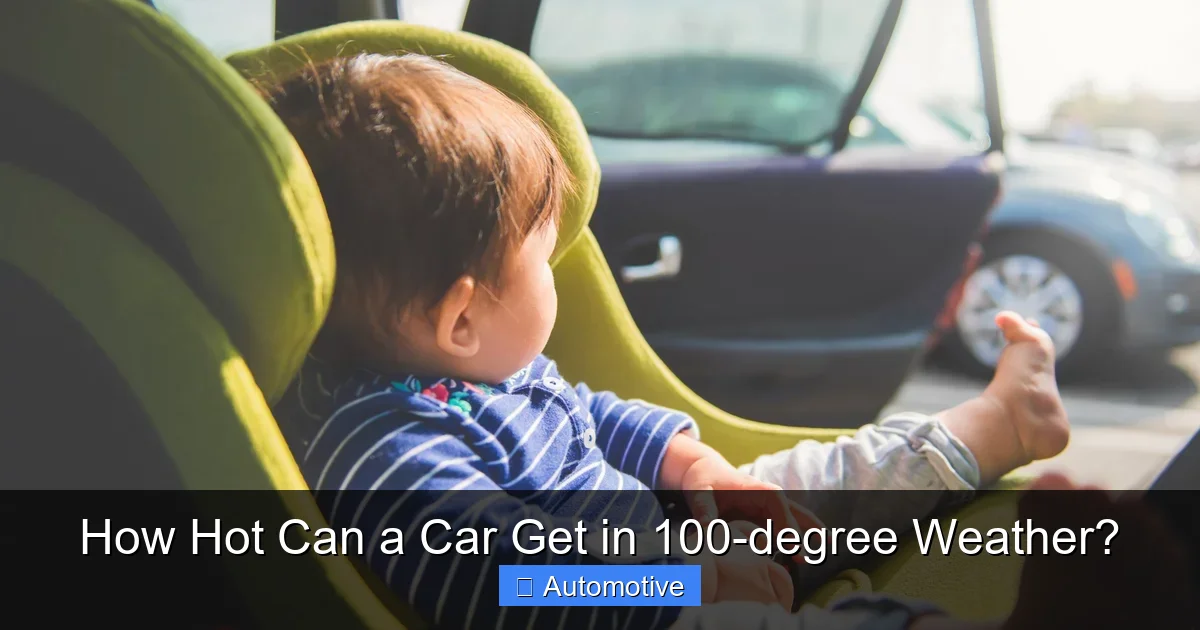
How Hot Can a Car Get in 100-degree Weather?

Contents


On a 100°F day, a parked car’s interior can soar to 140°F or higher within an hour—hot enough to cause heatstroke or death. This article breaks down the science, risks, and life-saving tips to protect people and pets from extreme car heat.
Key Takeaways
- Interior temperatures spike quickly: A car can reach 120°F in just 20 minutes on a 100°F day, and exceed 140°F within an hour.
- Dark surfaces absorb more heat: Black dashboards and seats can hit 180°F+, creating a dangerous oven-like environment.
- Children and pets are at highest risk: Their bodies heat up 3-5 times faster than adults, making heatstroke deadly in minutes.
- Cracking windows does little: Even with windows slightly open, temperatures still rise rapidly and remain unsafe.
- Prevention is critical: Never leave anyone unattended in a parked car—use alarms, routines, and technology to stay safe.
- Parking in shade helps slightly: While it delays heating, shaded cars still become dangerously hot within 30-60 minutes.
- Technology can help: Use apps, dash cams, or smart car features that alert you if someone is left behind.
📑 Table of Contents
How Hot Can a Car Get in 100-Degree Weather?
Imagine stepping outside on a scorching summer day when the thermometer hits 100°F. The sun beats down, the air shimmers, and every surface feels hot to the touch. Now picture leaving your car parked under that same sun—windows closed, engine off, no air conditioning. Within minutes, that vehicle transforms from a cool shelter into a life-threatening oven.
It’s a scenario that plays out thousands of times each summer, often with tragic consequences. Whether it’s a child accidentally left in a car seat, a pet forgotten in the back, or an adult who thought they’d “just be a minute,” the results can be devastating. But just how hot does a car get in 100-degree weather? The answer might shock you.
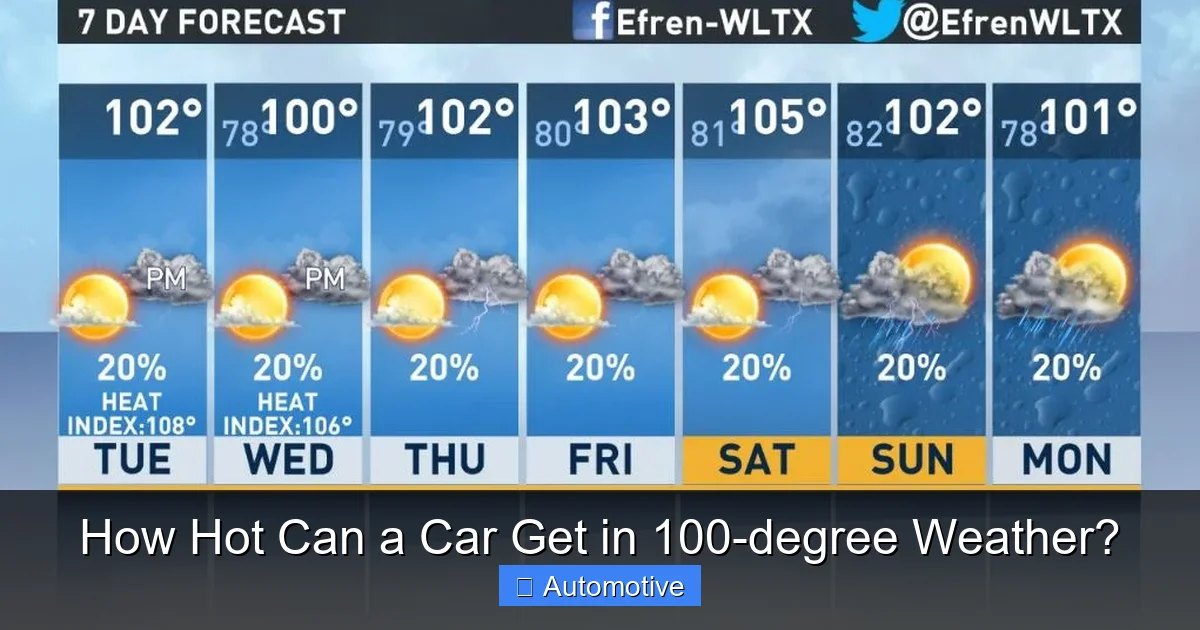
Studies and real-world experiments consistently show that a parked car’s interior temperature can rise dramatically—even when the outside air is only moderately warm. On a 100°F day, the inside of a car can reach 120°F in just 10 to 20 minutes. Within an hour, it can climb to 140°F or more. That’s hot enough to cause second-degree burns to skin, trigger heatstroke, or even be fatal. And it doesn’t matter if it’s a sedan, SUV, or truck—the effect is the same.
This article dives deep into the science behind car heating, the risks involved, and practical steps you can take to stay safe. Whether you’re a parent, pet owner, or just someone who parks outdoors, understanding how hot a car can get in 100-degree weather could save a life.
The Science Behind Car Heating
Visual guide about How Hot Can a Car Get in 100-degree Weather?
Image source: tffn.net
To understand why cars get so hot, we need to look at how sunlight interacts with the vehicle’s structure. It’s not just about the outside air temperature—it’s about solar radiation, heat absorption, and the greenhouse effect.
How Sunlight Turns Your Car Into an Oven
When sunlight hits your car, several things happen. First, visible light passes through the windows and hits surfaces inside—seats, dashboard, steering wheel, floor mats. These surfaces absorb the light and convert it into heat. Darker colors absorb more heat than lighter ones, so a black interior will get much hotter than a beige one.
Once the interior surfaces heat up, they radiate that heat back into the cabin. But here’s the catch: the windows trap much of that heat inside. This is similar to how a greenhouse works—sunlight enters, but the heat can’t easily escape. The result? The temperature inside the car rises rapidly, even if the outside air isn’t that hot.
This process is known as the “greenhouse effect,” and it’s why a car parked in direct sunlight can become significantly hotter than the surrounding environment. In fact, the interior temperature can be 40°F to 60°F higher than the outside air temperature within an hour.
The Role of Color and Material
Not all cars heat up at the same rate. The color of the car and its interior materials play a major role. A black car parked in the sun will absorb far more solar energy than a white one. Studies show that a black car’s exterior can be up to 20°F hotter than a white car under the same conditions.
Inside, dark leather seats can reach temperatures over 180°F on a 100°F day. That’s hot enough to cause burns on contact. Even fabric seats in dark colors can hit 150°F. The dashboard, especially if it’s black or dark gray, can become a radiant heater, warming the air around it.
Glass also matters. Windshields and windows allow sunlight in but slow down the escape of heat. Tinted windows can help reduce heat buildup slightly by blocking some UV rays, but they don’t stop the greenhouse effect entirely. In fact, some tints can make the interior hotter by trapping more infrared radiation.
Time Is the Biggest Factor
One of the most alarming aspects of car heating is how quickly it happens. You might think, “I’ll just be gone for five minutes,” but that’s all it takes for the temperature to start climbing.
Research from the National Highway Traffic Safety Administration (NHTSA) and universities like Arizona State University shows that:
– Within 10 minutes, the interior temperature can rise by 20°F.
– After 30 minutes, it can increase by 40°F.
– After 60 minutes, it can be 45°F to 50°F hotter than the outside air.
So on a 100°F day, that means:
– After 10 minutes: ~120°F inside
– After 30 minutes: ~140°F inside
– After 60 minutes: ~150°F inside
And that’s just the air temperature. Surfaces like the steering wheel, seatbelt buckle, or child car seat can be much hotter—often exceeding 160°F.
Real-World Data and Studies
Visual guide about How Hot Can a Car Get in 100-degree Weather?
Image source: media.whas11.com
To back up these claims, scientists and safety organizations have conducted numerous experiments measuring how hot cars get in real-world conditions.
University of Arizona Study
One of the most cited studies comes from the University of Arizona. Researchers parked a car in direct sunlight on a 95°F day and monitored the interior temperature. Within 30 minutes, the temperature inside reached 120°F. After one hour, it hit 135°F. On a 100°F day, those numbers would be even higher.
They also tested different scenarios:
– A car with windows cracked: The temperature still rose to 130°F in one hour. Cracking windows by an inch or two made almost no difference.
– A car parked in shade: The temperature rose more slowly but still reached 120°F after 60 minutes.
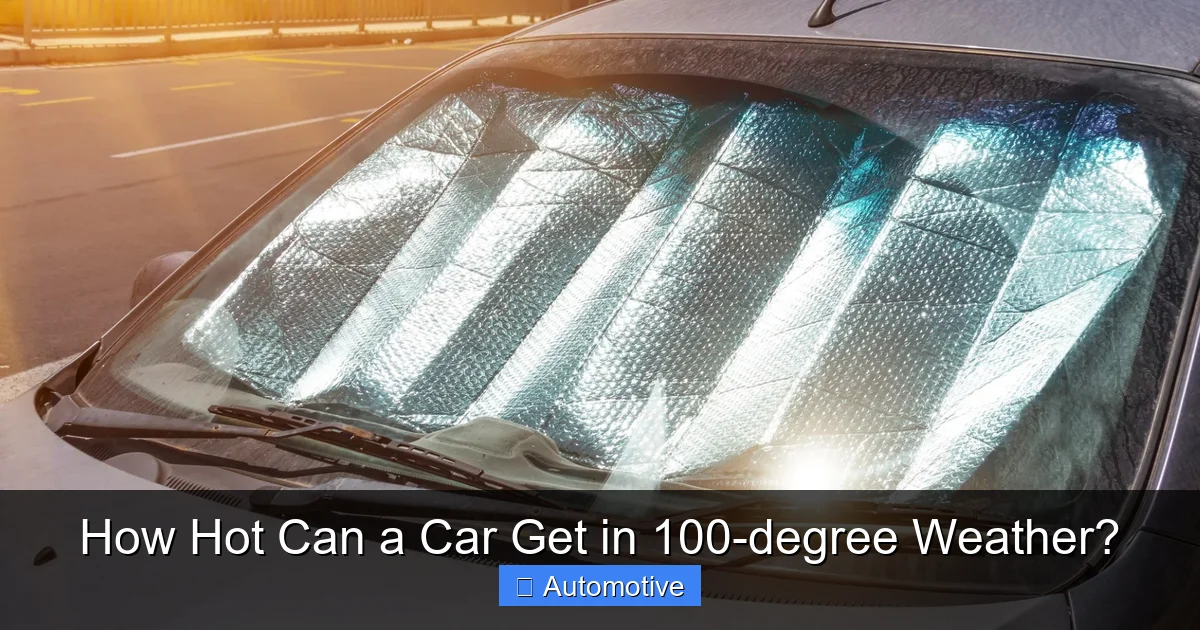
– A car with a sunshade: This helped reduce the temperature by about 10°F, but it still became dangerously hot.
The study concluded that no simple trick—like cracking windows or using a sunshade—can make a parked car safe for people or pets.
Jan Null’s Research on Child Heatstroke
Jan Null, a meteorologist and researcher at San Jose State University, has tracked hundreds of cases of children dying in hot cars. His data shows that most incidents happen when the outside temperature is between 70°F and 100°F—proving that even mild days can be deadly.
In one experiment, Null measured the temperature inside a car parked in 88°F weather. Within 20 minutes, it hit 110°F. After an hour, it was 124°F. He noted that children’s bodies heat up three to five times faster than adults, making them especially vulnerable.
Null’s research also highlights a troubling trend: over half of hot car deaths occur because a caregiver forgot the child was in the car. This often happens when routines change—like a parent dropping off a child at daycare on a day they don’t usually do it.
Automaker Testing
Car manufacturers also test how their vehicles perform in extreme heat. General Motors, for example, has conducted internal studies showing that interior temperatures can exceed 140°F on a 100°F day. They use this data to improve climate control systems and develop safety features.
Some newer cars now come with rear-seat reminders that alert drivers to check the back seat when they turn off the engine. These systems use door sensors or cameras to detect if a child or pet might have been left behind.
Dangers of Extreme Heat in Cars
Visual guide about How Hot Can a Car Get in 100-degree Weather?
Image source: media1.popsugar-assets.com
Understanding how hot a car can get is only half the story. The real concern is what that heat does to the human body—and how quickly it can become life-threatening.
Heatstroke: The Silent Killer
Heatstroke occurs when the body’s core temperature rises above 104°F. At this point, the body can no longer cool itself through sweating. Organs begin to fail, and without immediate treatment, death can occur within minutes.
Symptoms of heatstroke include:
– Hot, dry skin or profuse sweating
– Rapid pulse
– Confusion or dizziness
– Nausea or vomiting
– Loss of consciousness
In a hot car, these symptoms can develop in as little as 15 minutes—especially in children and pets.
Why Children Are at Higher Risk
Children are not just smaller versions of adults. Their bodies respond differently to heat. Their core temperature rises faster, and they have a harder time regulating it. A child’s body surface area is larger relative to their weight, meaning they absorb heat more quickly.
According to the American Academy of Pediatrics, a child’s body temperature can increase three to five times faster than an adult’s. That means a child left in a hot car can reach a dangerous core temperature in minutes.
Tragically, over 900 children have died from heatstroke in cars in the U.S. since 1998. Most were under the age of 3. Many were forgotten by caregivers who were distracted or had a change in routine.
Pets Are Equally Vulnerable
Dogs and cats are also at high risk. Unlike humans, they can’t sweat through their skin—they cool themselves by panting. But in a hot car, panting becomes ineffective as the air temperature rises.
A dog left in a car on a 70°F day can suffer heatstroke in under an hour. On a 100°F day, it can happen in 15 minutes or less. Signs of heatstroke in pets include excessive panting, drooling, vomiting, and collapse.
Many states have laws against leaving pets in hot cars, and some allow bystanders to break windows to rescue animals in distress. But the best protection is prevention—never leave a pet unattended in a vehicle.
Adults Aren’t Safe Either
While children and pets are most at risk, adults can also suffer serious harm. People with medical conditions, the elderly, or those on certain medications are more susceptible to heat-related illness.
Even healthy adults can experience heat exhaustion or heatstroke if trapped in a hot car. This can happen during breakdowns, accidents, or if someone falls asleep and doesn’t wake up.
In 2021, a man in Arizona died after his car broke down in 110°F heat. He was found unconscious inside the vehicle, which had reached over 150°F. His core temperature was 107°F—well above the lethal threshold.
Common Myths About Car Heat
Despite the clear dangers, many people still believe myths that can put lives at risk. Let’s debunk some of the most common misconceptions.
“Cracking the Windows Helps”
One of the most persistent myths is that cracking the windows will keep the car cool enough to be safe. In reality, it makes almost no difference.
Studies show that cracking windows by an inch or two reduces the interior temperature by only 2°F to 5°F. The greenhouse effect still dominates, and the car continues to heat up rapidly.
Even with windows open, the temperature can still reach 130°F or more on a 100°F day. That’s more than enough to cause heatstroke.
“It’s Only 100 Degrees Outside—It Can’t Be That Bad”
Some people assume that because the outside temperature isn’t extremely high, the car won’t get dangerously hot. But as we’ve seen, the interior can be 40°F to 60°F hotter than the outside air.
On a 100°F day, that means the car can easily hit 140°F–160°F. That’s hotter than most ovens. At those temperatures, skin can burn in seconds, and organs can fail in minutes.
“I’ll Only Be Gone for a Minute”
Time is the enemy. Even a quick stop at the store can turn deadly. The temperature inside a car rises fastest in the first 10 to 20 minutes. By the time you return, the interior could be over 120°F.
And if you’re delayed—by a long line, a phone call, or an emergency—the situation becomes even more dangerous.
“My Car Has a Sunroof—It Will Ventilate”
A sunroof might let in light and air when the car is moving, but when parked, it acts just like a regular window. It allows sunlight in and traps heat. In fact, some sunroofs can make the problem worse by increasing the surface area exposed to the sun.
“I Can Leave My Pet if I Park in the Shade”
Shade helps—but not enough. A car parked under a tree or awning will heat up more slowly, but it still becomes dangerously hot within 30 to 60 minutes.
Clouds, wind, and humidity also play a role. Even on a cloudy day, the sun’s UV rays can penetrate and heat the interior. And high humidity reduces the body’s ability to cool through sweating, making heatstroke more likely.
How to Stay Safe in Extreme Heat
The good news is that most heat-related deaths in cars are preventable. With awareness and simple precautions, you can protect yourself, your family, and your pets.
Never Leave Anyone Unattended
The most important rule: never leave a child, pet, or vulnerable adult alone in a parked car—even for a minute. No exceptions.
Make it a habit to check the back seat every time you exit the vehicle. Place your phone, purse, or bag in the back seat as a reminder. Some parents put a stuffed animal in the front seat when a child is in the car, and move it to the front when the child is safely out.
Use Technology and Reminders
Take advantage of modern tools:
– **Rear-seat alerts:** Many new cars (2018 and later) have systems that remind you to check the back seat.
– **Apps:** Apps like “Karsafe” or “Baby Reminder” send alerts if you’ve been driving with a child and haven’t checked in.
– **Dash cams with motion sensors:** Some models can detect movement in the back seat and send alerts to your phone.
– **Smart car features:** Some vehicles can detect if a child or pet is left behind and send notifications or even call emergency services.
Park Smart
While no parking method makes a car safe for occupants, some choices reduce risk:
– **Park in shade:** Look for covered parking, trees, or buildings that block direct sunlight.
– **Use a sunshade:** A reflective windshield cover can reduce interior temperature by 10°F–15°F.
– **Choose light colors:** If you’re buying a new car, opt for a light exterior and interior to reduce heat absorption.
Check on Others
If you see a child or pet alone in a hot car, act immediately:
– Note the car’s make, model, and license plate.
– Ask nearby businesses to page the owner.
– Call 911 if the person or animal appears in distress.
– In many states, you can legally break a window to rescue a child or pet in danger.
Educate and Advocate
Spread the word. Talk to family, friends, and coworkers about the dangers of hot cars. Share articles, post on social media, or organize community awareness events.
Support legislation that requires rear-seat reminder systems in all new vehicles. Several states have already passed such laws, and federal action is being considered.
Conclusion
So, how hot can a car get in 100-degree weather? The answer is clear: dangerously hot—often exceeding 140°F within an hour. That’s hot enough to cause burns, heatstroke, and death in minutes.
The science is undeniable, the data is alarming, and the consequences are tragic. But with awareness, preparation, and simple habits, we can prevent these avoidable deaths.
Never underestimate the power of the sun—or the speed at which a car can become a deadly oven. Whether you’re a parent, pet owner, or just someone who parks outside, take the threat seriously. Check the back seat. Use reminders. Park smart. And always, always err on the side of caution.
Because when it comes to heat, there’s no such thing as “just a minute.”
Frequently Asked Questions
How fast does a car heat up in 100-degree weather?
A car’s interior can rise by 20°F in just 10 minutes and reach 120°F within 20 minutes on a 100°F day. After one hour, it can exceed 140°F—hot enough to cause heatstroke.
Does cracking the windows make a car safe in the heat?
No. Cracking windows reduces temperature by only 2°F to 5°F and does not prevent dangerous heat buildup. The car still becomes unsafe within minutes.
Can a child survive in a hot car for a short time?
No. Children’s bodies heat up 3-5 times faster than adults. Heatstroke can occur in as little as 15 minutes, even on mild days.
What should I do if I see a child alone in a hot car?
Note the car’s details, alert nearby businesses, and call 911 immediately. In many states, you can legally break a window to rescue a child in distress.
Do sunshades really help reduce car temperature?
Yes, but only slightly. A reflective sunshade can lower the interior temperature by 10°F–15°F, but the car still becomes dangerously hot over time.
Are pets safe in cars on 100-degree days?
No. Pants can suffer heatstroke in under 15 minutes on a 100°F day. Never leave a pet unattended in a parked car, even with water or shade.