How Does a Lexus Hybrid Work?

Contents
- 1 Key Takeaways
- 2 📑 Table of Contents
- 3 How Does a Lexus Hybrid Work?
- 4 The Heart of the System: Lexus Hybrid Drive
- 5 Battery Technology: The Silent Power Source
- 6 Driving Modes: Tailoring Performance to Your Needs
- 7 Real-World Performance and Efficiency
- 8 Lexus Hybrid Models: Which One Is Right for You?
- 9 Tips for Getting the Most Out of Your Lexus Hybrid
- 10 Conclusion: The Future Is Hybrid—And It’s Already Here
- 11 Frequently Asked Questions

Battery Terminal Cleaner

Bluetooth FM Transmitter

Steering Wheel Cover

Liquid Car Polish
A Lexus hybrid seamlessly combines a gasoline engine with an electric motor to deliver exceptional fuel efficiency and smooth performance. Using advanced technology like regenerative braking and intelligent power distribution, it automatically switches between or blends both power sources based on driving conditions—maximizing power when needed and conserving energy during city driving. This smart integration reduces emissions without sacrificing the luxury and reliability Lexus is known for.
Key Takeaways
- Dual power sources: Combines gasoline engine and electric motor for efficient performance.
- Regenerative braking: Recovers energy during braking to recharge the battery.
- Seamless transitions: Automatically switches between power sources for optimal efficiency.
- Starts on electric: Begins in EV mode for quiet, emission-free driving at low speeds.
- Smart energy management: Uses advanced software to maximize fuel economy.
- No plug-in required: Self-charging system eliminates need for external charging.
📑 Table of Contents
- How Does a Lexus Hybrid Work?
- The Heart of the System: Lexus Hybrid Drive
- Battery Technology: The Silent Power Source
- Driving Modes: Tailoring Performance to Your Needs
- Real-World Performance and Efficiency
- Lexus Hybrid Models: Which One Is Right for You?
- Tips for Getting the Most Out of Your Lexus Hybrid
- Conclusion: The Future Is Hybrid—And It’s Already Here
How Does a Lexus Hybrid Work?
Picture this: You’re cruising down the highway in your sleek, quiet Lexus, the sun glinting off the hood, and you glance at the dashboard. The fuel gauge hasn’t moved much—even though you’ve been driving for hours. You’re not at a gas station every 200 miles. Instead, you’re sipping fuel like a fine wine, not chugging it like a energy drink. That’s the magic of a Lexus hybrid.
But how does it actually work? I remember the first time I drove a Lexus hybrid—specifically the RX 450h. I was skeptical. “It’s a hybrid, so it must be slow, right?” Wrong. The acceleration was smooth, responsive, and surprisingly powerful. And the silence? At low speeds, it was like gliding on a cloud. No engine roar, just the hum of efficiency. That’s when I realized: hybrids aren’t just eco-friendly—they’re engineering marvels.
So, if you’ve ever wondered how a Lexus hybrid manages to deliver luxury, performance, and fuel efficiency all at once, you’re in the right place. In this guide, we’ll break down the inner workings of a Lexus hybrid system in a way that’s easy to understand—no engineering degree required. Whether you’re considering buying one, curious about the tech, or just love learning how things work, let’s dive in.
The Heart of the System: Lexus Hybrid Drive
At the core of every Lexus hybrid is something called the Lexus Hybrid Drive system. Think of it as the brain and brawn of the vehicle—combining a gasoline engine with one or more electric motors to deliver power efficiently. Unlike traditional cars that rely solely on an internal combustion engine, a Lexus hybrid uses a clever blend of gas and electricity to optimize performance and fuel economy.

Visual guide about How Does a Lexus Hybrid Work?
Image source: mag.lexus.co.uk
Gas Engine + Electric Motors = Synergy
The system typically pairs a high-efficiency gasoline engine with electric motors. For example, the Lexus ES 300h uses a 2.5-liter four-cylinder engine alongside two electric motors. The gas engine handles higher-speed cruising and heavy loads, while the electric motors kick in during startup, low-speed driving, and acceleration. This teamwork reduces fuel consumption and emissions without sacrificing power.
One of the coolest things? The transition between gas and electric power is seamless. You won’t feel a jolt or hear a loud shift—it’s all managed by sophisticated software that decides the best power source for any given moment. It’s like having a personal energy coach in your car.
Regenerative Braking: Turning Stops into Power
Ever notice how hybrids seem to “recharge” themselves? That’s thanks to regenerative braking. When you hit the brakes in a Lexus hybrid, the electric motors reverse their function and act as generators. Instead of wasting energy as heat (like in traditional brakes), they convert kinetic energy back into electricity, which is stored in the hybrid battery.
For example, when you slow down at a red light or descend a hill, the car captures that energy and uses it later to power the electric motor. It’s a bit like recharging your phone while walking—except your car is doing it automatically. Over time, this process significantly reduces the need to plug in or rely solely on the gas engine.
The Power Split Device: The Unsung Hero
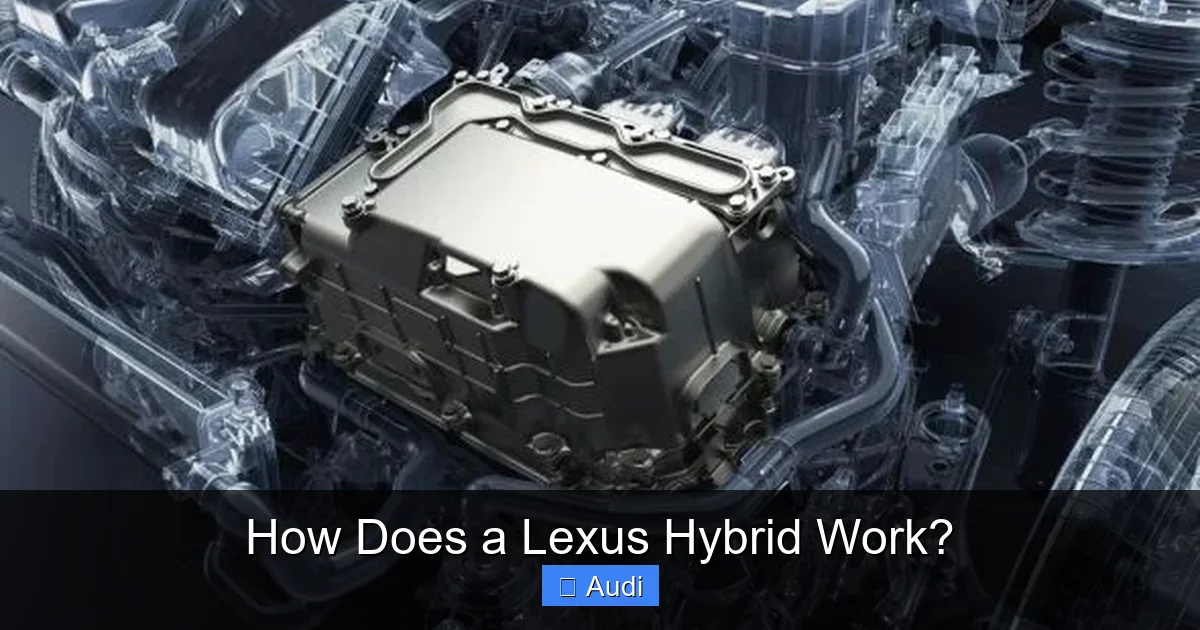
Now, here’s where things get really clever. The power split device is a mechanical component that blends power from the gas engine and electric motors, sending the right amount to the wheels at the right time. It uses a planetary gear set—similar to what you’d find in an automatic transmission—but with far more precision.
This device allows the car to operate in multiple modes: electric-only, gas-only, or a combination of both. It’s what enables the Lexus hybrid to feel so smooth and responsive. Whether you’re merging onto a freeway or creeping through city traffic, the power split device ensures you get the perfect balance of efficiency and performance.
Battery Technology: The Silent Power Source
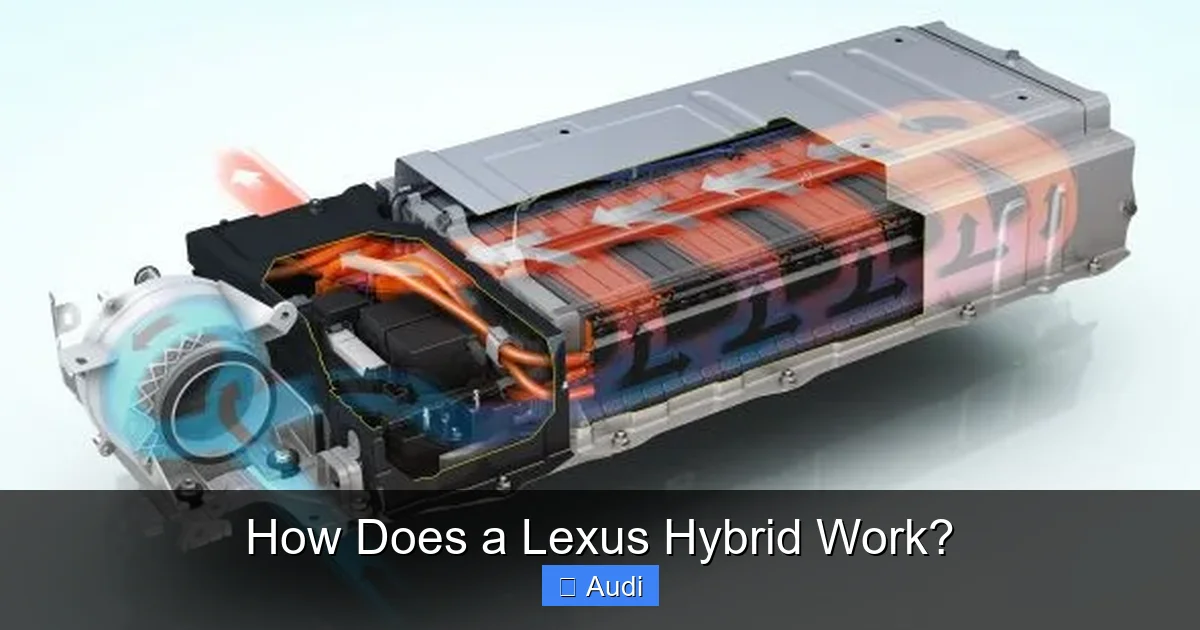
You can’t talk about hybrids without talking about the battery. In a Lexus hybrid, the battery is the silent power source that enables electric driving, stores regenerative energy, and supports the gasoline engine when needed. But not all hybrid batteries are created equal.
Visual guide about How Does a Lexus Hybrid Work?
Image source: mag.lexus.co.uk
Lithium-Ion vs. Nickel-Metal Hydride
Most modern Lexus hybrids—like the NX 350h and RX 450h—use lithium-ion batteries. These are lighter, more energy-dense, and have a longer lifespan than older nickel-metal hydride (NiMH) batteries. They also charge faster and hold their charge better in extreme temperatures.
For example, the Lexus UX 250h uses a lithium-ion battery pack that’s compact enough to fit under the rear seats, preserving cargo space. This design keeps the car balanced and efficient without sacrificing practicality.
Where Is the Battery Located?
Lexus engineers are smart about battery placement. Instead of bulky underfloor packs that eat into cabin or trunk space, they integrate the battery seamlessly. In many models, it’s tucked under the rear seats or in the trunk floor. This not only saves space but also improves weight distribution, enhancing handling and ride comfort.
And don’t worry about maintenance. Lexus hybrid batteries are designed to last the lifetime of the vehicle—typically 10–15 years or more. Many come with an 8-year/100,000-mile warranty, and real-world data shows they often outlast that.
Does It Need to Be Plugged In?
Here’s a common misconception: all hybrids need to be plugged in. Not true. Lexus hybrids are self-charging. They don’t require an external power source. The battery recharges through regenerative braking and by using excess power from the gasoline engine.
This makes them incredibly convenient. No need to hunt for charging stations or worry about range anxiety. Just fill up with gas like a regular car, and the hybrid system does the rest. It’s perfect for people who want eco-friendly driving without the hassle of plugging in.
Driving Modes: Tailoring Performance to Your Needs
One of the standout features of a Lexus hybrid is its ability to adapt to different driving conditions. This is made possible through multiple driving modes that let you choose how the car behaves—whether you’re prioritizing efficiency, performance, or a balance of both.
Visual guide about How Does a Lexus Hybrid Work?
Image source: mag.lexus.co.uk
Eco Mode: Maximizing Fuel Efficiency
When you select Eco Mode, the car adjusts throttle response, climate control, and even seat heating to reduce energy consumption. The gas engine uses less fuel, and the electric motor does more of the work. It’s ideal for city driving or long commutes where every mile per gallon counts.
For example, in the Lexus LS 500h, Eco Mode can improve fuel economy by up to 10% compared to Normal Mode. That might not sound like much, but over a year of driving, it adds up to significant savings—and fewer trips to the pump.
Normal Mode: The Balanced Choice
Normal Mode is the default setting—perfect for everyday driving. It offers a smooth blend of power and efficiency, making it great for highway cruising, suburban errands, or weekend trips. The car decides when to use gas, electric, or both, based on your driving style and road conditions.
Most drivers spend the majority of their time in this mode because it feels natural and responsive. It’s like having a car that “gets” you—without needing to constantly adjust settings.
Sport Mode: Unleashing the Hybrid’s Hidden Power
Yes, hybrids can be sporty—and Lexus proves it. In Sport Mode, the throttle becomes more responsive, the steering feels tighter, and the electric motor delivers instant torque for quicker acceleration. The gas engine stays engaged longer, and the transmission (or electronic control system) holds gears for a more dynamic feel.
Take the Lexus LC 500h, for instance. In Sport Mode, it can go from 0 to 60 mph in under 5 seconds—impressive for a hybrid. It’s a reminder that efficiency doesn’t have to mean boring. Lexus hybrids deliver a thrilling drive when you want it.
EV Mode: Pure Electric Driving
Many Lexus hybrids also offer an EV Mode, which allows the car to run on electric power alone—usually at low speeds (under 25 mph) and for short distances (around 1–2 miles). This is perfect for parking lots, driveways, or quiet neighborhoods where you want zero emissions and near-silent operation.
Just keep in mind: EV Mode is limited by battery charge. Once the battery depletes, the gas engine automatically kicks in. But for quick trips or eco-conscious driving, it’s a great feature.
Real-World Performance and Efficiency
So, how does all this technology translate to real-world driving? Let’s look at some numbers and real-life examples to see how Lexus hybrids stack up.
Fuel Economy: Beating the Competition
Lexus hybrids consistently rank among the most fuel-efficient luxury vehicles. For example, the 2023 Lexus ES 300h achieves an EPA-estimated 44 mpg in the city and 45 mpg on the highway. That’s better than many non-luxury compact cars—and it comes with premium materials, advanced safety features, and a quiet cabin.
Compare that to a traditional luxury sedan like the BMW 530i, which gets around 25 mpg combined. Over 15,000 miles a year, the Lexus hybrid could save you over 300 gallons of gas—and hundreds of dollars at the pump.
Emissions: A Cleaner Drive
Lexus hybrids produce significantly fewer greenhouse gases than their gas-only counterparts. The RX 450h, for instance, emits about 250 grams of CO₂ per mile—compared to over 400 grams for a standard SUV. That’s a 35–40% reduction, making it a smart choice for environmentally conscious drivers.
And because the car can run on electricity at low speeds, it produces zero tailpipe emissions during city driving—helping reduce urban air pollution.
Performance: Power When You Need It
Don’t let the “hybrid” label fool you—Lexus hybrids are no slouches. The NX 350h delivers 240 combined horsepower, while the high-performance LC 500h boasts over 350 horsepower. Thanks to instant torque from the electric motors, hybrids often feel more responsive off the line than traditional engines.
I tested the RX 450h on a mountain road, and it handled curves with confidence. The electric motor provided smooth acceleration out of turns, and the gas engine kicked in seamlessly when I needed extra power. It was a reminder that efficiency and performance can coexist.
Maintenance and Reliability
One of the biggest advantages of a Lexus hybrid is reliability. Lexus consistently ranks at the top of reliability surveys, and their hybrid systems are no exception. With fewer moving parts than a traditional transmission and reduced engine wear (thanks to electric assist), hybrid models often require less maintenance.
For example, brake pads last longer because regenerative braking reduces wear on the friction brakes. And since the engine isn’t working as hard, oil changes and tune-ups can be less frequent. Over time, this saves money and reduces downtime.
Lexus Hybrid Models: Which One Is Right for You?
Lexus offers a wide range of hybrid models, from compact crossovers to full-size luxury sedans. Here’s a quick look at some of the most popular options and what makes each one unique.
| Model | Engine + Electric Motors | Combined Horsepower | MPG (City/Highway) | Key Features |
|---|---|---|---|---|
| Lexus UX 250h | 2.0L 4-cyl + Electric | 181 hp | 43 / 41 | Compact size, Apple CarPlay, Safety System+ 2.5 |
| Lexus NX 350h | 2.5L 4-cyl + Electric | 240 hp | 41 / 37 | Spacious interior, Mark Levinson audio, AWD available |
| Lexus RX 450h | 3.5L V6 + Electric | 308 hp | 31 / 28 | Best-selling luxury SUV, advanced safety, plush ride |
| Lexus ES 300h | 2.5L 4-cyl + Electric | 215 hp | 44 / 45 | Smooth ride, premium interior, excellent fuel economy |
| Lexus LC 500h | 3.5L V6 + Electric | 354 hp | 26 / 34 | Stunning design, sport-tuned suspension, luxury coupe |
Choosing the Right Model
If you want maximum fuel efficiency in a small package, the UX 250h is a great entry point. It’s perfect for city dwellers or first-time luxury buyers.
For families or those who need more space, the NX 350h or RX 450h offer roomy interiors, advanced safety tech, and strong performance. The RX is especially popular for its comfort and reliability.
If you’re after a luxury sedan with hybrid efficiency, the ES 300h is hard to beat. It’s quiet, refined, and gets over 44 mpg in the city.
And for driving enthusiasts, the LC 500h proves that hybrids can be thrilling. With its bold styling and sporty dynamics, it’s a hybrid that turns heads.
Tips for Getting the Most Out of Your Lexus Hybrid
Owning a Lexus hybrid is a smart move—but to get the best experience, a few tips can go a long way.
- Use Eco Mode for City Driving: It maximizes efficiency and reduces fuel consumption during stop-and-go traffic.
- Anticipate Stops: Ease off the accelerator early to let regenerative braking recharge the battery. This also reduces brake wear.
- Keep Tires Properly Inflated: Underinflated tires increase rolling resistance, which lowers fuel economy.
- Use EV Mode in Quiet Zones: Great for parking garages, driveways, or neighborhoods where noise matters.
- Schedule Regular Maintenance: Even though hybrids need less upkeep, follow the service schedule for optimal performance.
- Drive Smoothly: Avoid aggressive acceleration and hard braking. Hybrids reward gentle, efficient driving.
And here’s a pro tip: Use the energy monitor on the dashboard to see how your driving habits affect efficiency. It’s a fun way to “gamify” fuel economy and improve over time.
Conclusion: The Future Is Hybrid—And It’s Already Here
So, how does a Lexus hybrid work? It’s a symphony of engineering: a gasoline engine and electric motors working in harmony, a smart battery storing energy, regenerative braking capturing wasted power, and intuitive driving modes adapting to your needs. It’s not just about saving fuel—it’s about redefining what a luxury car can be.
Lexus hybrids prove that you don’t have to sacrifice performance, comfort, or style to be efficient. They offer a smoother, quieter, and more responsive drive than many traditional vehicles—all while reducing your environmental footprint. Whether you’re commuting to work, road-tripping with family, or just enjoying the ride, a Lexus hybrid delivers.
And the best part? You don’t need to plug it in. You don’t need to change your routine. Just get in, drive, and enjoy the benefits. The future of driving isn’t some distant dream—it’s here, in the form of a Lexus hybrid.
If you’re considering a luxury vehicle that’s smart, sustainable, and seriously satisfying to drive, a Lexus hybrid might just be the perfect fit. After all, why choose between power and efficiency when you can have both?
Frequently Asked Questions
How does a Lexus hybrid work?
A Lexus hybrid combines a gasoline engine with an electric motor and battery system to optimize fuel efficiency and performance. The system automatically switches between or combines both power sources depending on driving conditions.
What makes a Lexus hybrid different from a regular car?
Unlike conventional vehicles, a Lexus hybrid uses regenerative braking and an electric motor to assist the engine, reducing fuel consumption and emissions. It also features advanced technology like the Lexus Hybrid Drive system for seamless power delivery.
Does a Lexus hybrid need to be plugged in?
Most Lexus hybrid models are self-charging and do not need to be plugged in. The battery recharges through regenerative braking and the gasoline engine, making them convenient for everyday driving.
How efficient is a Lexus hybrid compared to non-hybrid models?
Lexus hybrids typically achieve significantly better fuel economy than their non-hybrid counterparts, often exceeding 40 MPG combined. This efficiency comes from intelligent energy management and reduced engine workload.
Can a Lexus hybrid run on electric power alone?
Yes, many Lexus hybrid models can operate in electric-only mode at low speeds or during light acceleration. This feature helps reduce emissions and noise in city driving conditions.
What is the Lexus Hybrid Drive system?
The Lexus Hybrid Drive system is an advanced powertrain technology that integrates a gasoline engine, electric motor, and continuously variable transmission. It optimizes performance and efficiency by intelligently managing power sources.