How Do You Start a Car Without a Key
Ever locked out of your car with no key in sight? You’re not alone. This guide walks you through safe, legal ways to start a car without a key—from jump-starting to using a spare fob—so you can get back on the road fast and stress-free.
In This Article
- 1 Key Takeaways
- 2 📑 Table of Contents
- 3 How Do You Start a Car Without a Key?
- 4 Understanding Why You Can’t Start a Car Without a Key
- 5 Safe and Legal Ways to Start a Car Without a Key
- 6 Why Hot-Wiring Isn’t the Answer (And Why It’s Dangerous)
- 7 Prevention: How to Avoid Getting Locked Out
- 8 When to Call a Professional
- 9 Conclusion
- 10 Frequently Asked Questions
- 10.1 Can you start a car without a key using a screwdriver?
- 10.2 What if my key fob battery is dead?
- 10.3 Is it legal to hot-wire your own car?
- 10.4 How much does it cost to get a new car key made?
- 10.5 Can a locksmith start my car without a key?
- 10.6 Do all cars have a backup way to start without a key?
Key Takeaways
- Check for a spare key first: Many people hide a spare under a wheel well, in a magnetic box, or with a trusted neighbor—always the safest and easiest option.
- Use the key fob battery trick: If your key fob is dead, try holding it directly against the start button; many modern cars can still detect it.
- Jump-starting won’t start the engine without a key: A dead battery doesn’t bypass the ignition—you still need a working key or fob to turn the car on.
- Hot-wiring is outdated and risky: Most cars made after 1990 have immobilizers that prevent hot-wiring, and attempting it can damage your vehicle or lead to legal trouble.
- Call a professional locksmith: They can create a new key on the spot, often cheaper and faster than a dealership.
- Use your car’s mobile app (if available): Some manufacturers offer apps that let you start your car remotely—great for keyless entry systems.
- Prevention is key: Keep a spare key accessible, maintain your fob battery, and consider a keyless entry upgrade to avoid future lockouts.
📑 Table of Contents
How Do You Start a Car Without a Key?
Picture this: You’re running late for work, juggling coffee, your laptop, and groceries. You reach for your car keys—only to realize they’re still inside the locked car. Your heart sinks. You’re stranded, and the engine won’t turn over because there’s no key in sight.
It’s a frustrating scenario that happens to thousands of drivers every year. Whether you’ve lost your keys, locked them inside, or your key fob has died at the worst possible moment, knowing how to start a car without a key can be a real lifesaver. But before you panic or consider risky shortcuts, it’s important to understand your options—and which ones are safe, legal, and effective.
The good news? There are several practical ways to get your car running again without the original key. From simple tricks with your key fob to calling in a professional, this guide will walk you through every step. We’ll cover everything from emergency hacks to long-term prevention strategies, all while keeping your safety and your car’s security in mind. Whether you drive an older model or a brand-new smart car, there’s a solution that fits your situation.
Understanding Why You Can’t Start a Car Without a Key
Visual guide about How Do You Start a Car Without a Key
Image source: rxmechanic.com
Before diving into solutions, it helps to understand why cars require a key in the first place. Modern vehicles are equipped with advanced security systems designed to prevent theft. These systems go far beyond the simple metal key that once turned a mechanical ignition switch.
In today’s cars, the “key” is often a small electronic device called a key fob or transponder key. When you press the start button or insert the key into the ignition, the car’s computer system communicates with the fob. It sends a unique digital code—like a secret handshake—that tells the engine it’s safe to start. If the code doesn’t match, the car simply won’t turn over, even if you manage to turn the ignition physically.
This system is called an immobilizer, and it’s been standard in most vehicles since the mid-1990s. It’s one reason why hot-wiring—a method popularized in movies—rarely works on modern cars. Even if you bypass the ignition switch, the immobilizer will still block the fuel pump or ignition system, leaving you stuck.
So, when people ask, “How do you start a car without a key?” the real question is: How do you trick the car into thinking the key is present? The answer lies in understanding your car’s specific security features and using the right tools or methods to communicate with them.
Older Cars vs. Modern Vehicles
The approach you take will depend heavily on the age and make of your car. Older vehicles—typically those made before 1990—often lack electronic immobilizers. This means they rely solely on a physical key to turn the ignition. In theory, these cars can be started without a key using methods like hot-wiring, though we’ll discuss why this isn’t recommended.
Modern cars, on the other hand, are far more secure. They use encrypted signals, rolling codes, and sometimes even biometric sensors (like fingerprint scanners in luxury models). Starting one without the proper key or fob requires either bypassing the security system (which is illegal and risky) or using manufacturer-approved alternatives.
For example, many newer cars come with a backup method built into the key fob itself. If the battery dies, you can often use a physical key hidden inside the fob to unlock the door, then hold the fob directly against the start button to start the engine. This is a common feature in brands like Toyota, Honda, and Ford.
The Role of the Immobilizer System
The immobilizer is the gatekeeper of your car’s engine. It’s a small chip embedded in the key or fob that communicates with the engine control unit (ECU). When you insert the key or press the start button, the ECU sends a signal to the immobilizer. If the response matches the expected code, the engine starts. If not, the fuel injectors or ignition system remain disabled.
This system is so effective that it’s credited with reducing car theft by over 40% since its widespread adoption. But it also means that starting a car without a key isn’t as simple as turning a wire or using a screwdriver. You need to either replicate the key’s signal or use a method that the car’s computer recognizes as legitimate.
Safe and Legal Ways to Start a Car Without a Key
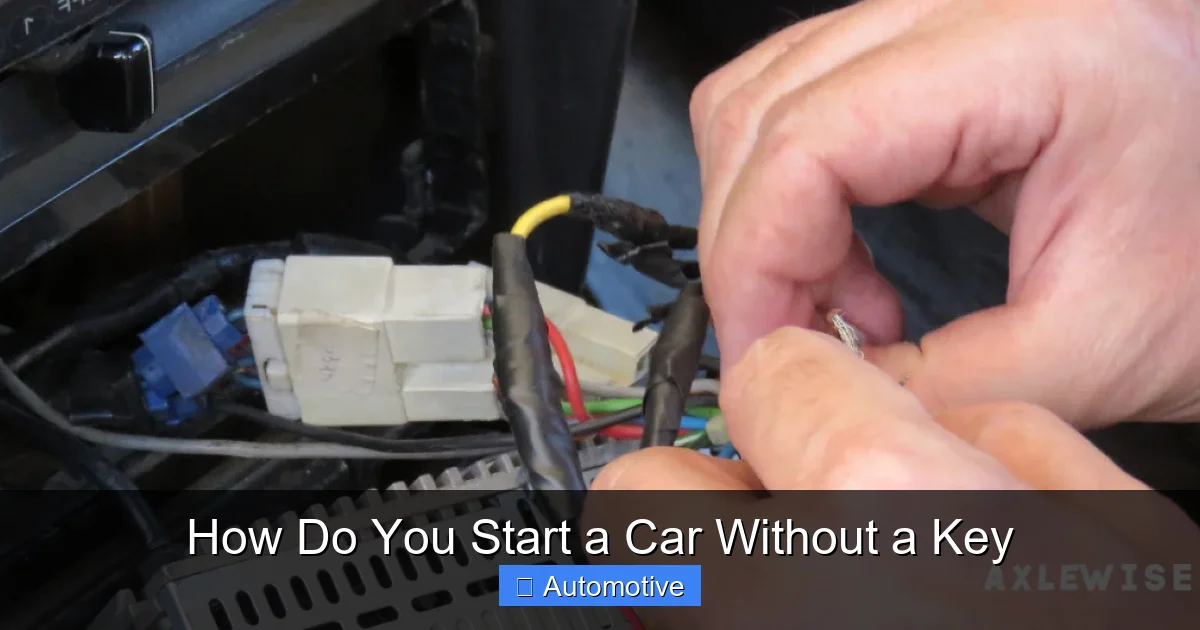
Visual guide about How Do You Start a Car Without a Key
Image source: axlewise.com
Now that you understand why your car won’t start without a key, let’s explore the safe, legal, and practical ways to get it running again. These methods prioritize your safety, your car’s integrity, and the law.
1. Use a Spare Key
This might seem obvious, but it’s worth saying: always check for a spare key first. Many drivers keep a spare in a magnetic key box attached to the car’s undercarriage, hidden in a wheel well, or stored with a trusted friend or family member. If you’ve set one up in advance, this is by far the easiest and safest solution.
If you don’t have a spare yet, consider getting one made. Most dealerships and locksmiths can create a duplicate key from your vehicle’s VIN number. It might cost $50–$200 depending on the car, but it’s a small price to pay for peace of mind.
2. Try the Key Fob Battery Trick
If your key fob is dead, don’t assume you’re out of options. Many modern cars have a backup method that lets you start the engine even with a dead battery.
Here’s how it works: Remove the physical key from inside the fob (most fobs have a small button or release latch). Use this key to unlock the driver’s door. Then, locate the start button inside the car. Press and hold the dead fob directly against the button—usually within an inch or two. The car’s antenna can still read the fob’s signal at close range, allowing the engine to start.
This trick works on many models, including:
– Toyota Camry and Corolla
– Honda Accord and Civic
– Ford F-150 and Escape
– Nissan Altima and Rogue
Check your owner’s manual for specific instructions—some cars require you to press the brake pedal while holding the fob.
3. Use a Keyless Entry App
If your car supports it, a mobile app can be a game-changer. Many manufacturers—including Hyundai, Kia, BMW, and Tesla—offer smartphone apps that let you lock, unlock, and even start your car remotely.
For example, the Hyundai Blue Link app allows you to start your car from your phone, set the climate control, and even track your vehicle’s location. This is especially useful if you’ve left your keys inside or if your fob battery dies.
To use this feature, you’ll need to:
– Download the official app for your car brand
– Create an account and link it to your vehicle
– Ensure your phone has cellular or Wi-Fi connection
Keep in mind that these apps require a subscription after the initial trial period, usually around $10–$15 per month. But for frequent travelers or people who often misplace keys, it’s a worthwhile investment.
4. Call a Professional Locksmith
If none of the above options work, your best bet is to call a licensed automotive locksmith. These professionals are trained to handle keyless entry systems and can often create a new key on the spot—sometimes in under 30 minutes.
Modern locksmiths use specialized tools to read your car’s immobilizer system and program a new fob or transponder key. They can also unlock your car without damaging the door or ignition.
The cost varies, but expect to pay $100–$300 depending on the car and location. While this might seem expensive, it’s usually cheaper and faster than going through a dealership, which can charge $200–$500 and require you to tow the vehicle.
Tip: Look for a locksmith with good reviews and certifications from organizations like the Associated Locksmiths of America (ALOA). Avoid unlicensed operators who might damage your car or use unethical practices.
5. Use a Jump Starter (With Caution)
A common misconception is that jump-starting a car will allow you to start it without a key. This isn’t true. Jump-starting only provides power to a dead battery—it doesn’t bypass the ignition or immobilizer system.
However, if your car won’t start because the battery is dead *and* you have a working key, a jump starter can get you back on the road. Use jumper cables and another vehicle, or a portable jump starter pack, to recharge the battery. Once the car has enough power, insert your key or fob and start the engine normally.
If you don’t have a key, jump-starting won’t help. But if you’re unsure whether the issue is the battery or the key, this is a good first step to rule out power problems.
Why Hot-Wiring Isn’t the Answer (And Why It’s Dangerous)
Visual guide about How Do You Start a Car Without a Key
Image source: i.ytimg.com
You’ve probably seen it in movies: a character pulls out a few wires under the dashboard, twists them together, and the car roars to life. While this might work in fiction, hot-wiring is rarely effective—and often dangerous—in real life.
How Hot-Wiring Used to Work
In older cars (pre-1990), the ignition system was purely mechanical. Removing the plastic cover around the ignition switch exposed wires that could be connected to start the engine. By touching the correct wires together, you could complete the circuit and turn over the engine.
This method required some knowledge of automotive wiring, but it was possible—and unfortunately, it made older cars easy targets for thieves.
Why It Doesn’t Work on Modern Cars
Today’s vehicles have multiple layers of security that make hot-wiring nearly impossible. Even if you manage to turn the ignition, the immobilizer will prevent the engine from starting. Additionally, modern wiring is more complex, and tampering can trigger alarms, disable the fuel system, or even cause electrical fires.
Attempting to hot-wire a car can also:
– Void your warranty
– Damage the ECU or wiring harness
– Result in legal consequences if the car isn’t yours
In short: hot-wiring is outdated, risky, and not worth the trouble. If you’re locked out, use one of the safe methods above instead.
What About Slim Jims and Lock Picks?
Some people try using tools like slim jims (long, flat strips of metal) to manually unlock car doors. While these can work on older vehicles with manual locks, they’re ineffective on modern cars with electronic locks and airbags.
Using a slim jim can also damage window seals, wiring, or the door mechanism. And if your car has side airbags, tampering with the door could accidentally deploy them—causing injury and expensive repairs.
Lock picks are slightly more effective but require skill and the right tools. Even then, they won’t help you start the engine without a key.
Prevention: How to Avoid Getting Locked Out
The best way to start a car without a key is to never need to in the first place. A little preparation can save you time, money, and stress down the road.
Keep a Spare Key Accessible
Store a spare key in a secure but accessible location. A magnetic key box attached to the car’s frame (under the bumper or wheel well) is a popular choice. Just make sure it’s well-hidden and not obvious to thieves.
Alternatively, give a spare key to a trusted neighbor, family member, or coworker. Choose someone who lives or works nearby and can bring it to you quickly.
Maintain Your Key Fob Battery
A dead fob battery is one of the most common reasons people get locked out. Most fobs use a small CR2032 battery that lasts 2–3 years. Replace it as soon as you notice the range decreasing or the buttons becoming unresponsive.
Many auto parts stores sell fob batteries for under $5, and replacement is usually as simple as prying open the fob with a flathead screwdriver.
Upgrade to Keyless Entry
If you frequently misplace your keys, consider upgrading to a keyless entry system. Options include:
– Push-button start with a backup fob
– Smartphone-based entry (like Tesla’s phone key)
– Biometric systems (fingerprint or facial recognition)
These systems eliminate the need for a physical key and often include remote start features. While they can be expensive to install, they offer convenience and enhanced security.
Use a Key Tracker
Devices like Tile or Apple AirTag can help you locate lost keys. Attach one to your keychain, and use your phone to track its location. Some models even alert you if you’re about to leave your keys behind.
When to Call a Professional
Sometimes, despite your best efforts, you’ll need expert help. Here’s when to call a professional:
– You’ve lost all keys and have no spare
– Your key is broken or damaged
– The immobilizer system is malfunctioning
– You’re locked out in a remote area with no cell service
In these cases, contact your car’s roadside assistance program (many insurance policies include this) or a trusted locksmith. Avoid towing the car to a dealership unless absolutely necessary—dealerships often charge more and may require days to program a new key.
Conclusion
Getting locked out of your car is frustrating, but it doesn’t have to be a disaster. With the right knowledge and preparation, you can start a car without a key using safe, legal methods. From using a spare key to leveraging your car’s built-in backup systems, there are plenty of options to get you back on the road.
Remember: hot-wiring and other risky methods are outdated and dangerous. Instead, focus on prevention—keep a spare key, maintain your fob battery, and consider upgrading to keyless entry. And when in doubt, call a professional.
By following the tips in this guide, you’ll be ready for any key-related emergency. Because the next time you’re standing outside your car with no key in hand, you’ll know exactly what to do.
Frequently Asked Questions
Can you start a car without a key using a screwdriver?
No, you cannot start a modern car with a screwdriver. Most vehicles today have electronic immobilizers that prevent the engine from starting without the correct key or fob signal. Even if you turn the ignition, the car won’t start.
What if my key fob battery is dead?
If your key fob battery is dead, try holding the fob directly against the start button. Many cars can still detect the signal at close range. You can also use the physical key inside the fob to unlock the door.
Is it legal to hot-wire your own car?
While it’s technically legal to work on your own vehicle, hot-wiring is rarely effective on modern cars and can damage the electrical system. It’s safer and more reliable to use a spare key or call a locksmith.
How much does it cost to get a new car key made?
The cost varies from $50 to $500, depending on the car and whether you go to a dealership or locksmith. Dealerships are usually more expensive but can program keys for complex systems.
Can a locksmith start my car without a key?
Yes, a professional automotive locksmith can often unlock your car and create a new key on the spot. They use specialized tools to work with modern immobilizer systems.
Do all cars have a backup way to start without a key?
Most modern cars have a backup method, such as a physical key inside the fob or a proximity sensor that works with a dead fob. Check your owner’s manual for specific instructions.