How Do I Sell My Car with a Title Loan on It

Contents
- 1 Key Takeaways
- 2 📑 Table of Contents
- 3 Can You Really Sell a Car with a Title Loan?
- 4 Understanding Title Loans and Car Ownership
- 5 Step-by-Step Guide to Selling Your Car with a Title Loan
- 6 Common Challenges and How to Avoid Them
- 7 Tips to Get the Best Price When Selling
- 8 What Happens If You Can’t Pay Off the Loan?
- 9 Final Thoughts: You Can Do This
- 10 Frequently Asked Questions

Car Scratch Remover

Car Tissue Holder

Brake Cleaner Spray

Car Wax Polish
Selling a car with a title loan can feel overwhelming, but it’s completely doable with the right steps. You’ll need to pay off the loan, get the title released, and complete the sale—all while protecting your credit and avoiding legal issues.
Key Takeaways
- Understand your loan status: Know your payoff amount, lienholder details, and whether your lender allows early payoff.
- Get a payoff quote: Contact your lender for an official payoff amount, which may differ from your current balance.
- Sell to a private buyer or dealer: Both options work, but dealers may handle lien payoffs directly, simplifying the process.
- Coordinate with your lender: Ensure the loan is paid and the title is released before or during the sale to avoid delays.
- Complete proper paperwork: Use a bill of sale, title transfer, and lien release form to protect yourself legally.
- Avoid scams and pitfalls: Watch for buyers offering to “take over payments” or lenders refusing to release the title after payoff.
- Consider timing and value: Selling when your car’s value exceeds the loan balance gives you equity to walk away with cash.
📑 Table of Contents
- Can You Really Sell a Car with a Title Loan?
- Understanding Title Loans and Car Ownership
- Step-by-Step Guide to Selling Your Car with a Title Loan
- Common Challenges and How to Avoid Them
- Tips to Get the Best Price When Selling
- What Happens If You Can’t Pay Off the Loan?
- Final Thoughts: You Can Do This
Can You Really Sell a Car with a Title Loan?
If you’re wondering, “How do I sell my car with a title loan on it?”—you’re not alone. Thousands of car owners face this exact situation every year. Maybe you took out a title loan to cover an emergency expense, or perhaps you’re trying to downsize and need to get rid of your vehicle. Whatever the reason, the good news is: yes, you can sell your car even if you still owe money on a title loan.
A title loan uses your car as collateral, meaning the lender holds a lien on your vehicle’s title until the loan is paid in full. This doesn’t mean you can’t sell the car—it just means you need to handle the loan payoff as part of the sale process. Think of it like selling a house with a mortgage: the buyer doesn’t take over the debt, but the seller must pay it off before transferring ownership.
The key is understanding your responsibilities and working closely with your lender. With the right steps, you can sell your car smoothly, pay off your debt, and walk away with cash—or at least without owing money. This guide will walk you through every step, from checking your loan balance to signing over the title, so you can sell your car confidently and legally.
Understanding Title Loans and Car Ownership
Visual guide about How Do I Sell My Car with a Title Loan on It
Image source: fillableforms.net
Before diving into the sale process, it’s important to understand how title loans work and what they mean for car ownership.
A title loan is a short-term, high-interest loan where you use your vehicle’s title as collateral. Unlike a traditional auto loan from a bank or credit union, a title loan doesn’t require a credit check—just proof of ownership and a clear title. The lender gives you cash, and in return, they place a lien on your car’s title. This lien gives them the legal right to repossess the vehicle if you fail to repay the loan.
Even though the lender has a lien, you still legally own the car. You can drive it, maintain it, and—yes—sell it. But because the lender has a financial interest in the vehicle, you can’t transfer full ownership to a buyer until the lien is removed. That’s why selling a car with a title loan requires coordination between you, the buyer, and the lender.
What Is a Lien and Why Does It Matter?
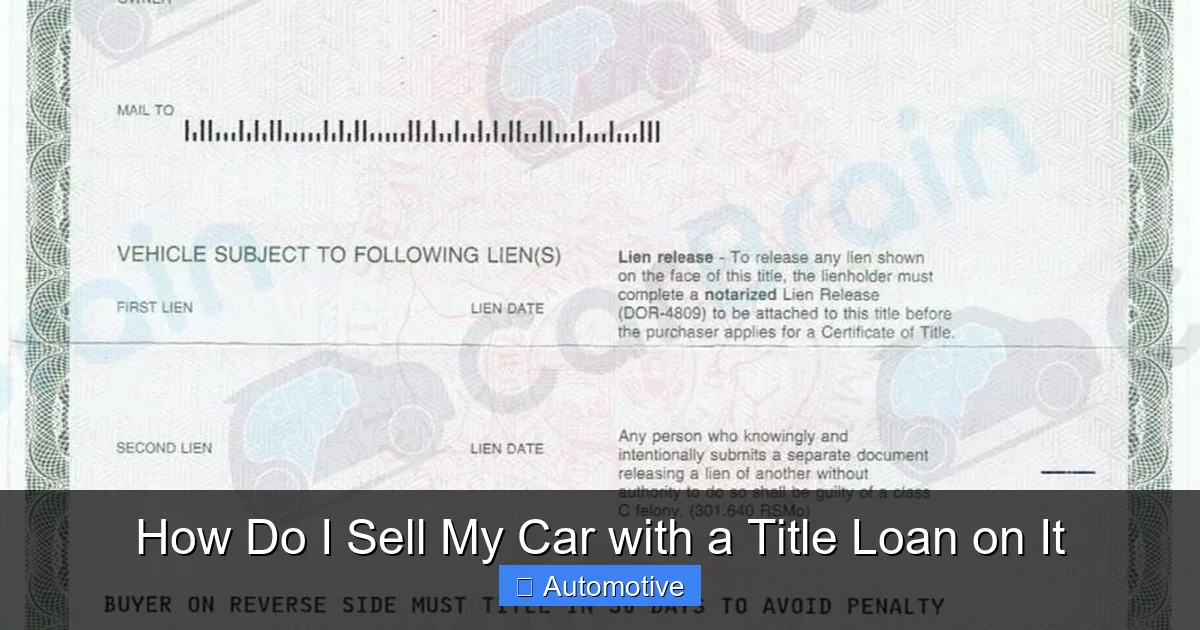
A lien is a legal claim on property—in this case, your car—to secure repayment of a debt. When you take out a title loan, the lender files a lien with your state’s Department of Motor Vehicles (DMV). This lien appears on your car’s title, showing that the lender has a right to the vehicle until the loan is paid.
This matters because a buyer won’t want to purchase a car with an active lien. Why? Because they can’t get a clean title in their name until the lien is released. If you try to sell the car without clearing the lien, the buyer could face legal and financial problems down the road.
Can You Sell a Car with a Lien on It?
Yes—but only if you pay off the lien as part of the sale. You have two main options:
1. **Pay off the loan before the sale:** Use your own money to pay the full balance, get the lien released, and then sell the car with a clear title.
2. **Pay off the loan during the sale:** Use the buyer’s payment to pay off the loan at the time of sale, with the lender releasing the title directly to the buyer.
Most people choose the second option because it’s more practical—especially if they don’t have extra cash lying around. But either way, the lien must be cleared before the title can be transferred.
Step-by-Step Guide to Selling Your Car with a Title Loan
Visual guide about How Do I Sell My Car with a Title Loan on It
Image source: viptitleloans.com
Now that you understand the basics, let’s walk through the exact steps to sell your car with a title loan. Follow this process carefully to avoid delays, legal issues, or losing money.
Step 1: Check Your Loan Balance and Get a Payoff Quote
The first thing you need to know is how much you owe. Don’t rely on your monthly statement—this may not include fees, interest, or penalties. Instead, contact your lender and request an official payoff quote.
A payoff quote tells you the exact amount needed to pay off the loan in full, including any accrued interest and fees. This quote is usually valid for 10 to 30 days, so plan your sale within that window.
For example, if your loan balance is $5,000, the payoff quote might be $5,200 due to interest and a small processing fee. This is the amount you’ll need to collect from the buyer (or pay yourself) to clear the lien.
Step 2: Determine Your Car’s Market Value
Next, find out how much your car is worth. Use trusted resources like Kelley Blue Book (KBB), Edmunds, or NADA Guides. Enter your car’s make, model, year, mileage, and condition to get a fair market value.
Let’s say your car is worth $8,000, and your payoff amount is $5,200. That means you have $2,800 in equity—money you can walk away with after the sale. But if your car is only worth $4,500, you’re “upside down” on the loan, meaning you owe more than the car is worth. In that case, you’ll need to pay the difference out of pocket or find a buyer willing to cover the gap.
Step 3: Decide How to Sell: Private Buyer or Dealer?
You have two main options for selling your car: to a private buyer or to a dealership. Each has pros and cons when you have a title loan.
Selling to a Private Buyer
Selling privately usually gets you the highest price. You can list your car on sites like Craigslist, Facebook Marketplace, or Autotrader. But you’ll need to coordinate the loan payoff with the buyer and lender.
Here’s how it works:
– The buyer pays you (usually via cashier’s check or bank transfer).
– You immediately use that money to pay off the loan.
– The lender releases the title to you or directly to the buyer.
– You complete the title transfer and bill of sale.
Tip: Meet at your lender’s office or a bank to ensure the payoff is processed correctly. Some lenders allow electronic title releases, which speeds up the process.
Selling to a Dealership
Dealerships often handle lien payoffs directly, which can simplify things. When you trade in or sell your car to a dealer, they’ll:
– Appraise your vehicle.
– Pay off your title loan directly to the lender.
– Give you any remaining equity in cash or as a credit toward a new car.
This is convenient, but dealers typically offer less than private buyers because they need to make a profit. Still, if you value convenience and speed, this can be a great option.
Step 4: Coordinate the Payoff with Your Lender
This is the most critical step. You must ensure the loan is paid and the lien is released before or during the sale.
Call your lender and explain that you’re selling the car. Ask:
– What’s the exact payoff amount?
– How do they release the title after payoff? (Mail, in person, electronically?)
– Do they require a notarized letter or specific forms?
Some lenders will release the title directly to the buyer after payoff. Others will send it to you, and you’ll need to sign it over. Make sure you understand their process.
Pro tip: Get everything in writing. Ask for a confirmation email or letter stating the lien will be released upon payoff. This protects you if there’s a delay.
Step 5: Complete the Sale and Transfer the Title
Once the loan is paid, it’s time to finalize the sale.
If you sold to a private buyer:
– Meet in a safe, public place.
– Have the buyer pay you (use a secure method like a cashier’s check).
– Immediately pay off the loan (go to the lender together if needed).
– Once the lien is released, sign the title over to the buyer.
– Complete a bill of sale (available from your state’s DMV website).
– Give the buyer the car, keys, and any manuals.
If you sold to a dealer:
– The dealer handles the payoff and title transfer.
– You’ll sign the title and any trade-in paperwork.
– Receive your equity check or credit.
Step 6: Notify the DMV and Cancel Insurance
After the sale, notify your state’s DMV that you’ve sold the car. This protects you from liability if the buyer gets a ticket or causes an accident. You can usually do this online or by mail.
Also, cancel your car insurance on the vehicle. Don’t wait—insurance companies often charge for unused days, and you don’t want to pay for coverage you don’t need.
Common Challenges and How to Avoid Them
Selling a car with a title loan isn’t always smooth sailing. Here are some common pitfalls and how to avoid them.
The Lender Delays Releasing the Title
Some lenders take days or even weeks to release the title after payoff. This can delay the sale and frustrate buyers.
Solution: Ask your lender about their title release timeline upfront. If they’re slow, consider selling to a dealer who can wait or use a lender that offers electronic title releases.
The Buyer Wants to “Take Over Payments”
You might get offers from buyers who say they’ll “take over your payments.” This sounds great, but it’s risky. The loan is still in your name, so if the buyer stops paying, your credit takes the hit—and the lender can repossess the car.
Solution: Never let a buyer assume your title loan. The only safe way is to pay off the loan in full during the sale.
You’re Upside Down on the Loan
If your car is worth less than what you owe, you’ll need to pay the difference. For example, if you owe $6,000 but the car is only worth $4,500, you’ll need to bring $1,500 to the sale.
Solution: Consider keeping the car longer to build equity, or sell it privately to maximize value. Some buyers may be willing to pay a bit more if the car is in great condition.
Scams and Fraudulent Buyers
Be cautious of buyers who offer to pay with a personal check, ask for your bank info, or want to complete the sale remotely.
Solution: Only accept secure payment methods (cash, cashier’s check, or bank transfer). Meet in person, and never sign over the title until the loan is paid and the money is in your account.
Tips to Get the Best Price When Selling
Even with a title loan, you can still get a fair price for your car. Here’s how:
– **Clean and detail your car:** A clean car looks well-maintained and can increase its value.
– **Fix minor issues:** Replace burnt-out bulbs, fix scratches, or replace worn wipers. Small repairs can make a big difference.
– **Gather maintenance records:** Buyers feel more confident when they see regular oil changes and service history.
– **Take high-quality photos:** Use good lighting and show all angles, including the interior and engine.
– **Be honest about the condition:** Disclose any problems upfront to build trust and avoid disputes later.
What Happens If You Can’t Pay Off the Loan?
If you can’t afford to pay the difference between the sale price and the loan balance, you have a few options:
1. **Negotiate with the buyer:** Some buyers may agree to pay a bit more to cover the gap.
2. **Use savings or borrow money:** If you have emergency funds or can borrow from family, this may be worth it to get out of the loan.
3. **Sell to a dealer:** Dealers may accept a lower trade-in value but handle the payoff, so you don’t need extra cash.
4. **Keep the car:** If selling isn’t urgent, consider keeping the car and paying down the loan until you have equity.
Remember: Walking away from a title loan without paying it off can lead to repossession, damage to your credit, and legal action. It’s always better to sell and pay off the debt, even if it costs you a little out of pocket.
Final Thoughts: You Can Do This
Selling a car with a title loan might seem complicated, but it’s entirely possible with the right plan. The key is communication—with your lender, your buyer, and yourself. Know your numbers, follow the steps, and don’t rush the process.
By paying off the loan, releasing the lien, and transferring the title correctly, you can sell your car legally and ethically. Whether you choose a private sale or trade it in at a dealership, you’ll walk away with peace of mind—and maybe even some extra cash.
Don’t let the title loan hold you back. Take control, follow this guide, and get your car sold the right way.
Frequently Asked Questions
Can I sell my car if I still owe money on a title loan?
Yes, you can sell your car with a title loan, but you must pay off the loan before or during the sale to release the lien on the title. The buyer cannot take ownership until the debt is cleared.
How do I find out how much I owe on my title loan?
Contact your lender and request an official payoff quote. This includes the remaining balance, interest, and any fees. Don’t rely on your monthly statement, as it may not reflect the full amount due.
Can a buyer take over my title loan payments?
No, buyers cannot legally assume your title loan. The loan remains in your name, so if the buyer stops paying, you’re still responsible. The only safe option is to pay off the loan in full during the sale.
What happens if my car is worth less than what I owe?
If you’re “upside down” on the loan, you’ll need to pay the difference out of pocket or find a buyer willing to cover the gap. Selling to a dealer may also help, as they can handle the payoff directly.
How long does it take for the lender to release the title after payoff?
It varies by lender—some release the title within days, others take weeks. Ask your lender about their timeline and request a written confirmation of the release process.
Do I need to notify the DMV after selling my car?
Yes, you should notify your state’s DMV that you’ve sold the car. This protects you from liability if the buyer gets a ticket or causes an accident after the sale.