How Do I Know Which Tire Is Low on My Toyota Corolla?

Contents
- 1 Key Takeaways
- 2 📑 Table of Contents
- 3 Understanding Your Corolla’s TPMS: The Brain Behind the Light
- 4 Step-by-Step: How to Identify the Low Tire Using Your Dash
- 5 The Manual Method: The Unfailing Gauge Check
- 6 Using Technology: The Toyota App and Advanced Systems
- 7 What to Do After You Find the Low Tire
- 8 When to Suspect a Faulty Sensor, Not a Low Tire
- 9 Conclusion: A Simple Habit for Safety and Savings
- 10 Frequently Asked Questions


Identifying a low tire on your Toyota Corolla is crucial for safety and fuel efficiency. Most modern Corollas use a direct TPMS that will either show a specific wheel location on the dash or require a manual check with a pressure gauge. If your model lacks a location display, you must physically inspect each tire’s pressure when cold to find the culprit.
That little yellow tire pressure warning light—shaped like a cross-section of a tire with an exclamation point—just blinked on in your Toyota Corolla. Your heart sinks a little. You know it means one or more tires is underinflated, but a critical question pops up: How do I know which tire is low on my Toyota Corolla? Is it the driver’s side front? The passenger side rear? Guessing can lead to over-inflating the wrong tire or, worse, ignoring a slow leak on a critical wheel. This comprehensive guide will walk you through every method, from the high-tech dash display to the old-school, foolproof manual check, ensuring you always find the correct tire on your specific Corolla model year.
Proper tire pressure isn’t just about avoiding a warning light; it’s fundamental to your safety, your car’s handling, fuel economy, and tire longevity. Driving on significantly underinflated tires causes excessive heat buildup, leads to premature tire wear on the shoulders, reduces traction, and increases rolling resistance, which hurts your miles per gallon. Knowing exactly which tire is low allows you to address the problem efficiently—whether that’s adding air at a gas station or patching a small puncture. Let’s demystify the process.
Key Takeaways
- TPMS is Your First Clue: Your Corolla’s Tire Pressure Monitoring System (TPMS) is designed to alert you, but its ability to pinpoint the exact tire depends on your model year and trim.
- Check the Driver Information Display: Many Corollas will show a graphic on the multi-information display indicating which specific wheel is low. Always start here.
- Manual Check is the Gold Standard: If the dash doesn’t specify, you must use a reliable tire pressure gauge to check each tire individually when the tires are cold for an accurate reading.
- Don’t Forget the Spare: A full-size spare tire (if your Corolla has one) also has a TPMS sensor and can trigger the warning light if its pressure is low.
- Sensor Issues Can Mimic Low Pressure: A faulty or dead TPMS sensor battery can cause a constant warning light, even if all tires are properly inflated. Diagnosis may require a professional scan tool.
- Temperature Affects Pressure: Cold weather naturally lowers tire pressure. A warning in winter might just mean you need a few PSI added to all tires, not that one has a leak.
📑 Table of Contents
- Understanding Your Corolla’s TPMS: The Brain Behind the Light
- Step-by-Step: How to Identify the Low Tire Using Your Dash
- The Manual Method: The Unfailing Gauge Check
- Using Technology: The Toyota App and Advanced Systems
- What to Do After You Find the Low Tire
- When to Suspect a Faulty Sensor, Not a Low Tire
- Conclusion: A Simple Habit for Safety and Savings
Understanding Your Corolla’s TPMS: The Brain Behind the Light
Before we hunt for the low tire, we need to understand the system that sounded the alarm. Every Toyota Corolla sold in the United States since 2007 has been equipped with a Tire Pressure Monitoring System (TPMS). There are two primary types, and knowing which one your Corolla has is the first step in identification.
Direct TPMS (Most Common in Modern Corollas)
This is the system you’re most likely dealing with. Each wheel has a small, battery-powered sensor mounted inside the valve stem. These sensors constantly monitor the air pressure and temperature of their specific tire and transmit that data via radio frequency to your car’s TPMS control module. If any sensor reports a pressure 25% or more below the manufacturer’s recommended level, the system triggers the warning light.
The key advantage for you, the driver, is specificity. In a properly functioning direct TPMS, your Corolla’s dashboard is designed to tell you exactly which tire is low. This is typically done through a graphic on the multi-information display (the screen between your speedometer and tachometer) that lights up the corresponding wheel position. For example, if the left rear tire is low, the graphic will highlight the rear-left corner. This feature is a huge help and is your very first point of investigation.
Indirect TPMS (Less Common, Found on Some Older Models)
This system doesn’t use physical sensors in the wheels. Instead, it relies on the existing Antilock Braking System (ABS) wheel speed sensors. The car’s computer learns the expected rotational speed of each tire. An underinflated tire has a slightly smaller diameter, causing it to rotate faster than the others. If the system detects a significant difference in rotational speed between wheels, it concludes a tire is low and illuminates the generic warning light.
The major drawback for identification is that indirect TPMS cannot tell you which tire is low. It only knows *that* a tire is low based on speed variance. Therefore, if your Corolla uses an indirect system (more common on base models from the early 2010s), you are forced to perform a manual check on all four tires. You can often confirm which system you have by looking at your valve stems. If they are standard rubber valves, you likely have indirect TPMS. If they are metal, all-black or chrome valve stems with a sensor inside, you have direct TPMS.
Step-by-Step: How to Identify the Low Tire Using Your Dash
If your Corolla has a direct TPMS, this is the easiest path. Follow these steps precisely the next time the light comes on.
Visual guide about How Do I Know Which Tire Is Low on My Toyota Corolla?
Image source: i.ytimg.com
1. Safely Pull Over and Observe
When the TPMS light illuminates while driving, don’t panic, but do acknowledge it. Find a safe place to park and turn off the engine. Wait about 30 seconds after restarting the car. Many Corollas will perform a system check and then display the tire pressure information on the multi-information display.
2. Navigate to the Tire Pressure Screen
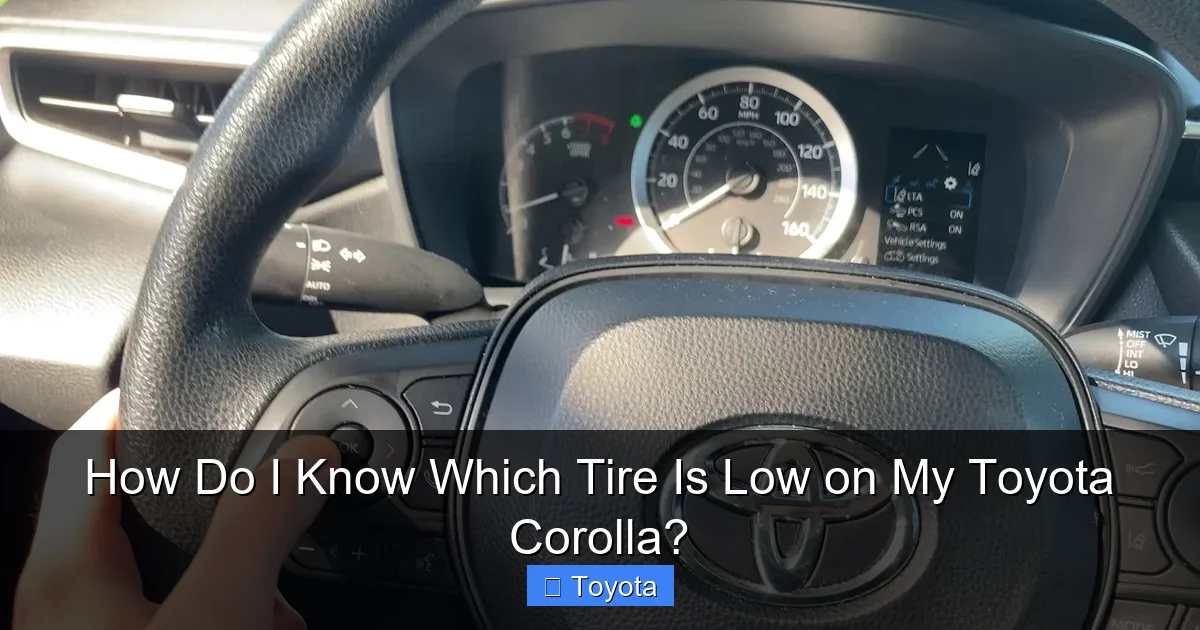
Using the buttons on your steering wheel (usually the “Up/Down” or “DISP” button), scroll through the menus on the driver’s display. Look for an option labeled “Tire Pressure,” “TPMS,” or an icon that looks like a car with tire positions. Select it. On newer Corollas with a central touchscreen, the tire pressure readout may also be found within the vehicle settings or “Apps” menu.
3. Interpret the Display
This is the critical moment. You should see a schematic of your car from a top-down view, with four boxes representing the four wheels. Each box will either show a pressure reading (in PSI or kPa) or a status like “OK.” The wheel that is low will be highlighted, often in a different color (like red or yellow), or it will show a significantly lower number compared to the others. For example, you might see:
- LF: 28 PSI (Low)
- RF: 32 PSI (OK)
- LR: 31 PSI (OK)
- RR: 30 PSI (OK)
In this case, the Left Front tire is the problem.
4. A Note on System Limitations
Sometimes, the display may show all tires as low, or it may not show a specific location even though the light is on. This can happen if multiple tires are slightly low (common in cold weather), if there’s a sensor communication error, or if the system hasn’t been recalibrated after tire service. If the dash is unhelpful, proceed to the manual method.
The Manual Method: The Unfailing Gauge Check
When technology fails or isn’t available, the tried-and-true method is a manual check with a tire pressure gauge. This is the only way to get a precise, reliable reading and is a skill every car owner should have. It works on every vehicle, every time.
Visual guide about How Do I Know Which Tire Is Low on My Toyota Corolla?
Image source: images.rewise.ai
Essential Tools and Preparation
You need a good-quality tire pressure gauge. Digital gauges are easy to read and accurate. Pencil-style analog gauges are cheap and work fine. Avoid the cheap, round dial gauges at gas stations—they are often inaccurate. Also, have a source of air available, like a home air compressor or a gas station air pump.
Check When Tires are “Cold.” This is the most important rule. “Cold” doesn’t mean it’s chilly outside. It means the tires haven’t been driven on for at least three hours or have been driven less than one mile. Driving heats the tires and the air inside, temporarily increasing the pressure and giving you a falsely high reading. You want the baseline, cold inflation pressure.
The Step-by-Step Inspection Process
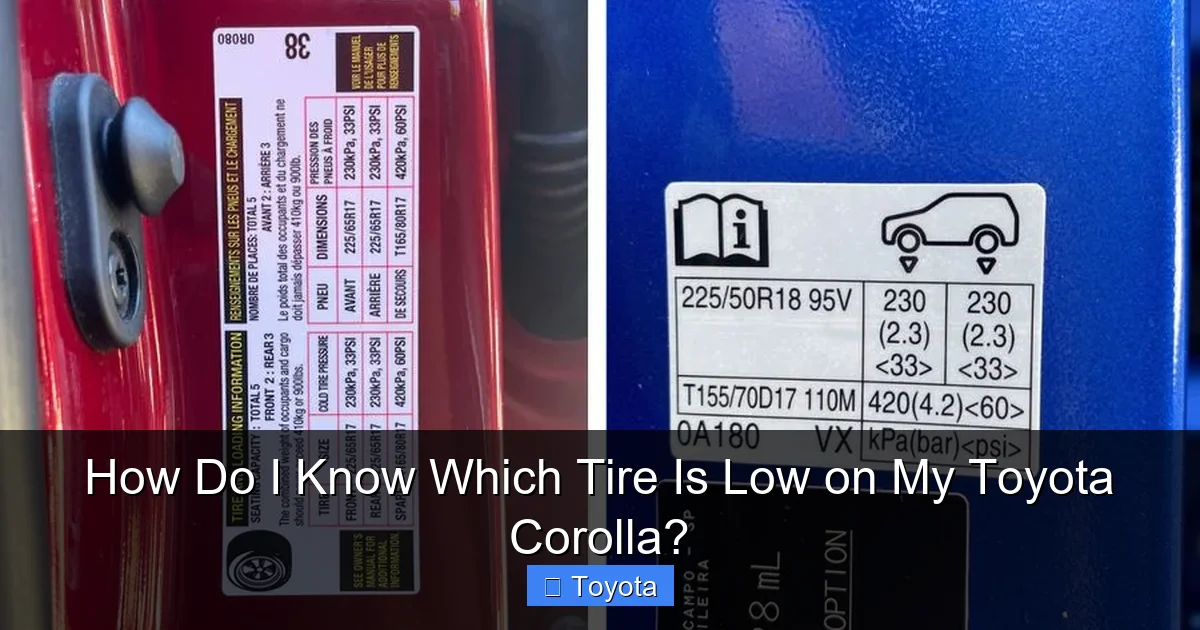
- Find Your Recommended Pressure: Before you check, you must know what the pressure *should be*. This is not on the tire sidewall (that’s the max pressure). Look for the yellow and white sticker on the driver’s side door jamb when you open the door. It will list the recommended PSI for the front and rear tires, often 32 PSI for all four on a standard Corolla, but always verify for your specific model. Write this number down or memorize it.
- Remove the Valve Stem Cap: Unscrew the small plastic cap from the valve stem on one tire. Keep it in a safe place so it doesn’t get lost.
- Press the Gauge On: Firmly press the open end of your gauge onto the valve stem. You should hear a brief hiss of air. Press until the seal is tight and no air is leaking around the connection.
- Read the Pressure: For a digital gauge, the number will appear on the screen. For a pencil gauge, a small bar will pop out and lock in place; read the measurement where it meets the outer scale. Release the gauge.
- Compare and Record: Compare the reading to your door jamb sticker. Is it 2-3 PSI or more below? That’s your low tire. It’s a good idea to quickly jot down the pressure for all four tires on a piece of paper to compare them accurately.
- Repeat for All Tires: Go to the next tire and repeat steps 2-5. Do this for all four wheels. Don’t skip any. You might find two tires are low.
- Check the Spare (If Applicable): If your Corolla has a full-size spare tire mounted on the back (common on some older or base models), it also has a TPMS sensor. Check its pressure too. A low spare will also trigger the warning light.
By systematically checking each tire, you will unambiguously identify which one (or ones) need air. This method eliminates all guesswork and sensor confusion.
Using Technology: The Toyota App and Advanced Systems
For the ultimate in convenience, some newer Toyota models, including recent Corollas, offer remote tire pressure monitoring through the Toyota app on your smartphone. If you have a connected vehicle subscription (like Safety Connect or Service Connect), you may be able to view individual tire pressures in real-time from your phone, even when you’re not in the car. This is the pinnacle of identification—you can check before the warning light even comes on.
Visual guide about How Do I Know Which Tire Is Low on My Toyota Corolla?
Image source: i.ytimg.com
Furthermore, certain premium trims might have a more sophisticated display that shows exact PSI readings for all four tires at all times on the digital gauge cluster, not just when one is low. If your Corolla has this feature, it makes identification instantaneous. Consult your owner’s manual under the “TPMS” section to see what specific capabilities your vehicle possesses.
What to Do After You Find the Low Tire
You’ve identified the culprit—say, the passenger front tire is at 26 PSI, and your recommended pressure is 32 PSI. Now what?
Inflate to the Correct Pressure
Take the tire to an air pump. Add air in short bursts, checking the pressure frequently with your gauge. It’s easy to over-inflate. Your goal is to hit the exact number on your door jamb sticker, not the number on the tire sidewall. Once correct, replace the valve stem cap securely. The cap keeps dirt and moisture out of the valve.
Investigate the Cause
An occasional 1-2 PSI drop due to seasonal temperature change is normal. But if you’re adding significant air (more than 3-4 PSI) or find the tire low again within a few days or weeks, you have a problem that needs fixing:
- Puncture: A nail or screw in the tread is the most common cause. Have it professionally repaired if possible.
- Valve Stem Leak: The valve itself can become faulty or damaged. A quick dip in soapy water will show bubbles at the base if it’s leaking.
- Bead Leak: Poor seal between the tire and the rim, often from corrosion.
- Damaged TPMS Sensor: The sensor or its seal may be compromised, often after a tire service.
Resetting the TPMS Light
After you have inflated all tires to the correct pressure, the TPMS warning light should turn off on its own after a few minutes of driving. The system needs to re-read all sensor signals and confirm they are within range. If the light remains on after a short drive:
- Double-check that all four tires (and the spare) are exactly at the recommended pressure.
- Drive for 10-15 minutes at highway speeds to allow the system to communicate.
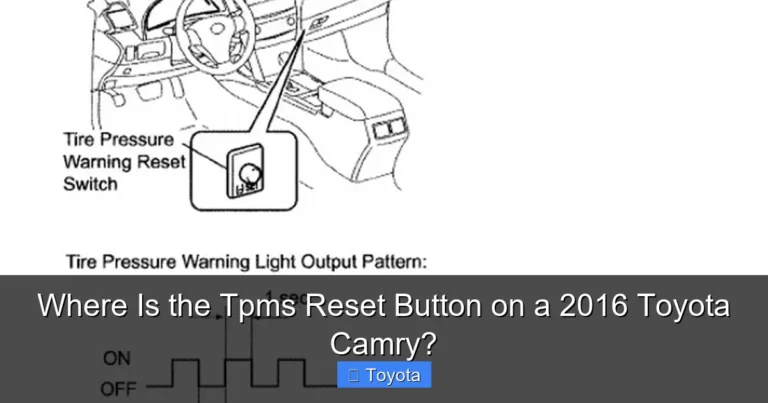
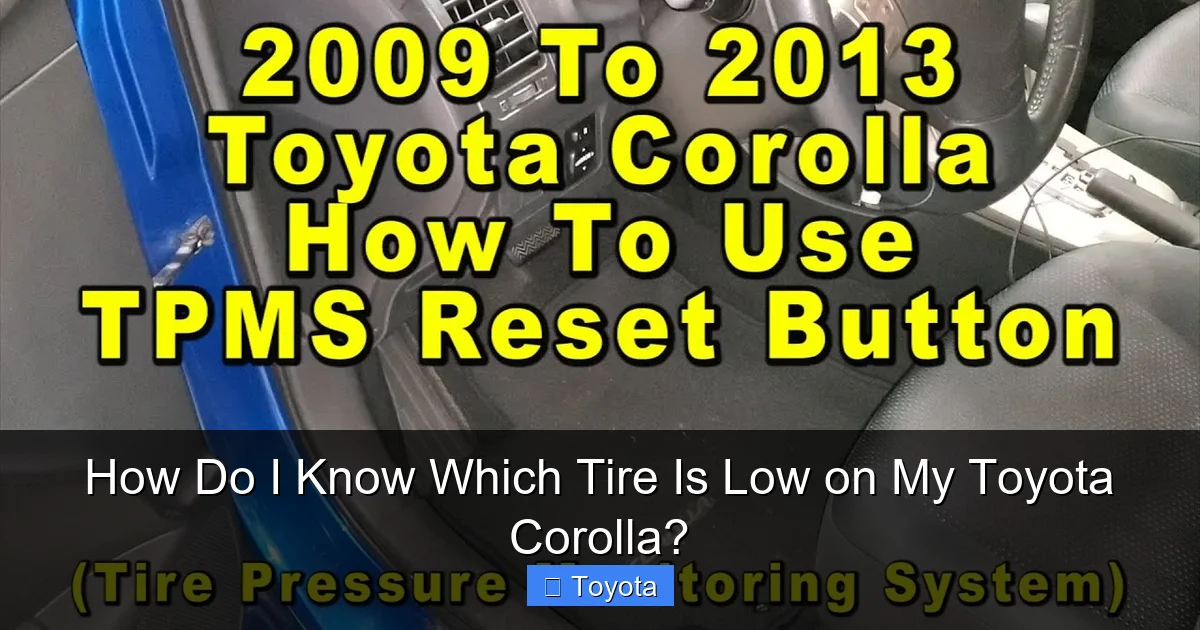
- If it still stays on, there may be a sensor fault, or the system may need to be manually reset. Some Corollas have a TPMS reset button located under the dash (consult your manual). For many models, simply driving at a steady speed (often 50+ mph for 5-10 minutes) will trigger an automatic recalibration.
If the light blinks for about a minute and then stays solid, that usually indicates a system malfunction (like a dead sensor battery), not just low pressure. This requires diagnostic scanning by a tire shop or dealership. They can read which sensor is failing to communicate, which is another form of “identification.”
When to Suspect a Faulty Sensor, Not a Low Tire
What if you check all four tires and the spare, and they are all perfectly inflated to spec, yet the TPMS light is stubbornly on? This is a classic sign of a TPMS sensor issue, not a low-pressure issue. Direct TPMS sensors are powered by internal batteries that typically last 7-10 years. When the battery dies, the sensor goes silent and the system interprets that as a fault, illuminating the light.
Other sensor issues include physical damage during tire installation, corrosion on the sensor stem preventing a good seal, or electronic failure. Diagnosing this requires a specialty TPMS scan tool that can communicate with each sensor individually. A tire shop or dealership can perform this scan. They can tell you, “The sensor in the right rear wheel is not responding,” which is the precise identification of the faulty component. This is different from identifying a low tire but is a vital part of the overall diagnostic process. For more on sensor failure, you can read our detailed guide on how to tell which TPMS sensor is bad on Toyota.
Conclusion: A Simple Habit for Safety and Savings
Knowing how to identify which tire is low on your Toyota Corolla transforms a vague warning into a specific, actionable task. Start with your dashboard display—it’s the quickest answer if your model provides it. Always fall back on the manual gauge check for 100% certainty. Make it a habit to check all your tires monthly and before long trips with a gauge, not just when the light comes on. This proactive approach catches slow leaks early, ensures optimal fuel economy, maximizes tire life, and most importantly, keeps you and your passengers safe on the road with properly maintained, correctly inflated tires. Your Corolla’s TPMS is a helpful assistant, but it’s your knowledge and a simple $10 gauge that give you true control.
Frequently Asked Questions
My Corolla’s TPMS light is on, but the dash doesn’t show which tire. What should I do?
If your multi-information display doesn’t pinpoint the tire, you must perform a manual check. Use a tire pressure gauge to measure the PSI of all four tires (and the spare if equipped) when they are cold. Compare the readings to the recommended pressure on your driver’s door jamb sticker. The tire reading significantly lower than the others is the one that needs air.
Can temperature cause the TPMS light to come on without a leak?
Yes, absolutely. For every 10°F drop in outside temperature, tire pressure decreases by about 1-2 PSI. A cold winter morning can easily cause all four tires to drop below the TPMS trigger threshold. If the light comes on in very cold weather and all tires read equally low (but above zero), simply adding a few PSI to all of them to reach the recommended door jamb pressure will usually turn the light off.
Why did my TPMS light come on after I had my tires rotated?
This is common. During a tire rotation, the sensors are moved to different wheel positions. The TPMS needs to relearn which sensor is at which wheel location. After a rotation, drive your Corolla at a steady speed (around 50 mph) for about 10-15 minutes. The system should automatically relearn and the light should turn off. If it doesn’t, the shop may need to perform a manual relearn procedure using a scan tool.
How much does it cost to replace a bad TPMS sensor on a Toyota Corolla?
Replacing a direct TPMS sensor typically costs between $100 and $250 per wheel, including parts and labor. The sensor itself usually runs $50-$120, and installation requires removing the tire, breaking the bead, and remounting/balancing it. Some shops may recommend replacing all four sensors at once if one fails, as they have similar lifespans.
Can I disable the TPMS light if it’s annoying me?
While it is technically possible to disable the TPMS system, it is illegal in all 50 states and strongly discouraged. The TPMS is a critical safety feature. Disabling it will cause your vehicle to fail annual safety inspections in most regions and removes a vital warning system that prevents blowouts and poor handling. Always address the root cause of the warning instead.
My tire pressure is fine, but the light is still on after I added air. Is it the sensor?
Possibly. If you have confirmed all tires (including the spare) are inflated to the exact recommended pressure on the door jamb, and the light remains on after a 15-minute drive, it likely indicates a sensor malfunction. A sensor battery may be dead, or the sensor itself may be damaged. You will need a professional with a TPMS scan tool to diagnose which sensor is faulty and needs replacement.