Harley Davidson Engine Size Chart: Ultimate Guide & Tips
When it comes to motorcycles, few names carry the weight and legacy of Harley Davidson. The roar of a Harley engine isn’t just sound; it’s a statement. But behind that iconic rumble lies a fascinating world of engine sizes and mechanics that can be confusing for newcomers and even seasoned riders. Whether you’re a beginner looking for a manageable ride or a veteran chasing raw power, understanding Harley Davidson engine sizes is key to picking the right bike for your lifestyle.
From compact 500cc models to the monstrous 1923cc giants, Harley Davidson offers an engine for nearly every riding style. Each size has unique performance characteristics, fuel efficiency, and handling traits. In this guide, we’ll break down the engine legacy, decode the engine size chart, explore performance implications, and offer practical tips to choose and maintain the perfect Harley.
In This Article
- 1 The Legacy of Harley Davidson Engines
- 2 Evolution Through the Decades
- 3 Iconic Harley Davidson Engine Models
- 4 Decoding the Harley Davidson Engine Size Chart
- 5 Comparing Small and Large Engines
- 6 Choosing the Right Engine Size for Your Harley
- 7 Impact of Engine Size on Motorcycle Dynamics
- 8 Customization and Upgrades
- 9 Maintenance Tips for Optimal Performance
- 10 Future Trends in Harley Engine Sizes
- 11 Frequently Asked Questions (FAQs)
- 12 Conclusion
The Legacy of Harley Davidson Engines
The story of Harley Davidson engines is more than a technical journey; it’s a story of innovation, passion, and American craftsmanship. These engines have been at the heart of some of the most iconic motorcycles in history. Think of them as the heartbeat of a Harley—every rev telling tales of freedom, open roads, and mechanical artistry.
From the F-Head V-twin in the early 1900s to today’s Milwaukee-Eight engines, Harley Davidson has consistently pushed engineering boundaries. Each generation brought improvements in power, reliability, and rider experience. Owners often speak of a deep emotional connection with their engine, because it’s not just about speed—it’s about the ride, the vibration, and the unmistakable Harley feel. Owning a Harley is like joining a family with decades of mechanical heritage.
Evolution Through the Decades
Harley Davidson engines haven’t remained static; they’ve evolved alongside the motorcycle culture itself. Understanding this evolution helps riders appreciate why engine sizes matter and what each model offers.
-
1900s – F-Head: The first V-twin engine with a 45-degree angle. A simple but revolutionary start for Harley.
-
1930s – Knucklehead: Introduced overhead valves and a unique look, setting Harley apart in design and performance.
-
1940s – Panhead: Aluminum heads and hydraulic lifters made maintenance easier and improved reliability.
-
1960s – Shovelhead: Offered better performance and more power, catering to a growing biker culture.
-
1980s – Evolution: Air-cooled and more dependable, it brought consistency to riders who demanded durability.
-
1990s – Twin Cam: Increased displacement and dual cams offered smoother rides and more horsepower.
-
2010s – Milwaukee-Eight: Modern eight-valve engines reduced heat and improved efficiency, blending power with comfort.
Each engine isn’t just a technical update—it’s a reflection of the culture and needs of its time. From city cruising to cross-country touring, Harley’s engines have been designed to enhance the rider experience, not just to deliver raw power.
Iconic Harley Davidson Engine Models
Certain Harley engines have earned legendary status, and for good reason. These engines are more than mechanical assemblies—they’re symbols of innovation, style, and performance. Here’s a closer look:
-
Knucklehead: Famous for its overhead valves, distinctive knuckle-shaped rocker covers, and classic design. It’s a collector’s favorite.
-
Panhead: Aluminum heads and hydraulic lifters made it a durable choice. Panhead engines were quieter and ran cooler than their predecessors.
-
Shovelhead: Known for robust performance and increased horsepower. It appealed to riders craving power without sacrificing style.
-
Evolution (Evo): Celebrated for reliability and air-cooled design. The Evo engine revived Harley’s reputation during the 1980s.
-
Twin Cam: Dual cams and larger displacement offered smoother rides and higher power. Ideal for long-distance touring.
-
Milwaukee-Eight: Today’s flagship, offering eight valves and better heat management. It blends modern engineering with classic Harley feel.
Riding a Harley with any of these engines isn’t just transportation—it’s an experience. Each engine carries a distinct personality, affecting vibration, sound, and handling. When choosing a Harley, understanding these models gives you a sense of what your ride will truly feel like.
Decoding the Harley Davidson Engine Size Chart
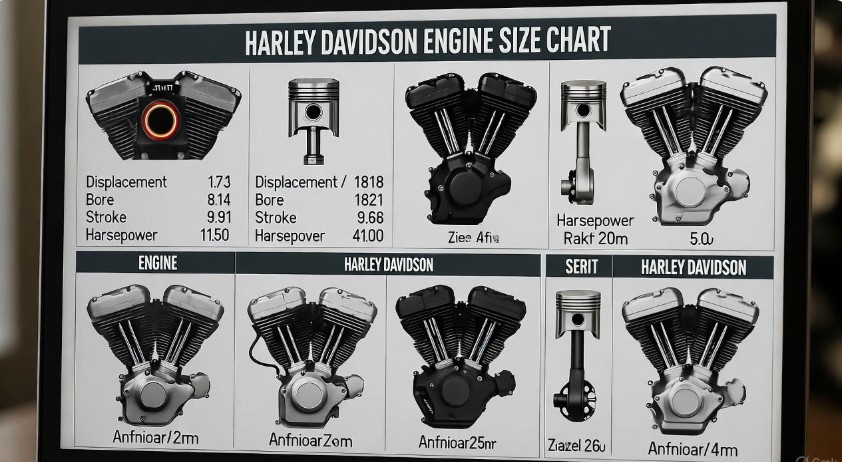
For many, Harley’s engine sizes can feel like a maze. Understanding the engine size chart simplifies your decision and ensures you pick a bike that matches your skills and lifestyle.
Engine displacement is the total volume of all the cylinders in the engine, measured in cubic centimeters (cc) or cubic inches (ci). Simply put, the bigger the number, the more fuel-air mixture the engine can burn at once, which usually translates to higher power and torque. But bigger isn’t always better—it depends on your riding goals.
Here’s a quick overview of Harley engine sizes by model type:
-
Street Models: 500cc to 750cc. Perfect for beginners or city commuting. Lightweight, easy to handle, and fuel-efficient.
-
Sportster Models: 883cc to 1200cc. Versatile bikes for casual riders and weekend warriors. Balance of power and agility.
-
Softail Models: 107ci to 114ci (1753cc to 1868cc). Comfortable for longer rides, heavier bikes with more torque.
-
Touring Models: 107ci to 117ci (1753cc to 1923cc). Designed for long-distance touring, delivering stability and sustained power.
Comparing Small and Large Engines
Choosing an engine size affects performance, comfort, and confidence on the road. Small and big engines offer different advantages:
-
Small Engines (500cc – 883cc):
-
Pros: Lightweight, fuel-efficient, easy to maneuver, beginner-friendly.
-
Cons: Less power, limited top speed, may struggle on highways.
-
-
Big Engines (1200cc – 1868cc):
-
Pros: High power, excellent for long rides, better for highway cruising.
-
Cons: Heavier, less fuel-efficient, intimidating for new riders.
-
For example, a city commuter may love an Iron 883 for its agility and fuel savings, while a seasoned rider planning cross-country trips may prefer a Road Glide Special with a 1923cc Milwaukee-Eight engine for unmatched torque and comfort.
Choosing the Right Engine Size for Your Harley
Picking the right Harley Davidson engine size is more than a numbers game—it’s about your riding style, experience, and lifestyle. One size does not fit all, and understanding your needs can save frustration and enhance your riding experience.
Rider Experience Level plays a huge role. Beginners often feel overwhelmed by high-powered engines. A manageable 883cc Sportster offers confidence and control, making it easier to learn how to handle a heavy bike. On the other hand, experienced riders can tackle larger engines like 1200cc or 114ci, enjoying the full thrill of Harley’s torque and acceleration.
Intended Use and Riding Style matter just as much. If you mostly ride in the city or short trips, a smaller engine is practical, fuel-efficient, and easier to park. For long-distance touring, larger engines provide stability, smoother highway rides, and the ability to carry luggage comfortably. Aggressive riders may also prefer high-powered engines for the adrenaline rush and responsiveness.
Here’s a simple guide to match engine sizes with rider needs:
| Engine Size | Recommended For |
|---|---|
| 883cc | Beginners, city riding |
| 1200cc | Intermediate riders, mixed use |
| 107ci | Experienced riders, long-distance touring |
| 114ci | High-performance touring, heavy riders |
Choosing wisely ensures a balanced ride that’s enjoyable, safe, and perfectly suited to your lifestyle.
Impact of Engine Size on Motorcycle Dynamics
Engine size isn’t just about speed—it affects every aspect of how a Harley rides. From handling and maneuverability to fuel efficiency and mileage, your choice of engine shapes your entire riding experience.
Handling and Maneuverability:
Smaller engines provide better agility. They’re lighter, easier to steer, and perfect for weaving through traffic. Larger engines add weight and stability, ideal for highway cruising but slightly harder to handle in tight city spaces.
| Engine Size | Handling | Maneuverability |
|---|---|---|
| Small | Excellent | High |
| Medium | Good | Moderate |
| Large | Fair | Low |
Fuel Efficiency and Mileage:
Smaller engines generally burn less fuel, giving better mileage and cost efficiency. Larger engines offer more power but consume more fuel. Choosing between the two depends on whether you prioritize performance or economy.
-
Small Engine: High fuel efficiency, better mileage
-
Medium Engine: Balanced fuel efficiency and power
-
Large Engine: Lower fuel efficiency, more power
Understanding these dynamics helps you select a Harley that matches your expectations and road conditions.
Customization and Upgrades
One of the joys of owning a Harley Davidson is customization. Every engine size offers possibilities to enhance performance and make your bike truly yours. Whether it’s aesthetic upgrades or performance tweaks, knowing your engine specifications ensures compatibility.
Modifying for More Power:
-
Air Intake Systems: Boost airflow for better combustion.
-
Exhaust Systems: Improve performance and create that signature Harley rumble.
-
Fuel Management Systems: Optimize fuel delivery for efficiency and power.
-
Cams and Camshafts: Adjust valve timing for maximum performance.
-
Big Bore Kits: Increase displacement and torque for a more exhilarating ride.
Each modification affects performance differently. Riders must ensure upgrades match their engine size for safety and efficiency.
When to Upgrade Your Engine:
-
Assess current performance—if your bike feels underpowered, it may be time.
-
Consider your riding style—long-distance touring or aggressive rides may require more power.
-
Factor in maintenance costs—upgrades can affect service intervals.
-
Plan your budget—engine upgrades can be costly, but worth it for performance gains.
Regularly consulting the Harley Davidson engine size chart ensures your modifications are compatible and maximize benefits.
Maintenance Tips for Optimal Performance
Owning a Harley is a joy, but proper maintenance is essential. A well-cared-for engine delivers a smoother ride, better fuel efficiency, and longer lifespan.
Routine Checks:
-
Oil Levels: Check every 1,000 miles and replace the oil filter regularly.
-
Spark Plugs: Inspect every 5,000 miles; clean or replace if necessary.
-
Air Filter: Clean or replace every 10,000 miles for optimal efficiency.
-
Brake Fluid and Coolant: Replace as recommended to prevent overheating.
-
Drive Belt: Check wear every 20,000 miles to avoid unexpected failures.
Engine Longevity:
Different engine sizes have different lifespans. Small engines like the 883cc may last around 50,000 miles, mid-sized 1200cc engines up to 75,000 miles, and large engines like 1800cc+ can last over 100,000 miles with proper care. Routine maintenance is the key to longevity and a reliable ride.
Future Trends in Harley Engine Sizes
The future of Harley Davidson is exciting, with innovation driving engine development. Riders can expect advancements in performance, fuel efficiency, and even environmentally friendly technologies.
Innovation in Engine Technology:
Harley is exploring hybrid and electric engines alongside traditional combustion models. These will offer:
-
More horsepower
-
Better fuel efficiency
-
Reduced emissions
-
Smoother, quieter rides
What Riders Can Expect:
-
Engines that are powerful yet eco-friendly
-
Improved performance for both city and highway rides
-
Longer distances without frequent refueling
-
Modern designs while retaining Harley’s iconic feel
| Feature | Current | Future |
|---|---|---|
| Horsepower | 100 HP | 120 HP |
| Fuel Efficiency | 40 MPG | 50 MPG |
| Emissions | High | Low |
| Engine Type | Combustion | Hybrid/Electric |
These trends highlight Harley’s commitment to innovation while maintaining the soul of its legendary motorcycles.
Frequently Asked Questions (FAQs)
1. What is the best Harley engine size for beginners?
A: The 883cc Sportster is ideal. It’s lightweight, manageable, and provides confidence for new riders.
2. Which engine size is best for long-distance touring?
A: Larger engines like 107ci or 114ci offer stability, power, and comfort for extended rides.
3. Do bigger engines mean faster bikes?
A: Generally yes, larger displacement delivers more power and torque, but handling and weight also affect speed and control.
4. Can I customize any Harley engine?
A: Yes, but modifications must be compatible with your engine size to ensure safety and performance.
5. How often should I maintain my Harley engine?
A: Routine checks every 1,000–5,000 miles for oil and spark plugs, with major inspections every 10,000–20,000 miles.
6. Are electric Harley engines available?
A: Harley is developing hybrid and electric engines, providing smoother rides and lower emissions while maintaining iconic style.
7. How long do Harley engines last?
A: Small engines (883cc) can last 50,000 miles, mid-sized (1200cc) around 75,000 miles, and large engines (1800cc+) over 100,000 miles with proper maintenance.
Conclusion
Understanding Harley Davidson engine sizes is essential for anyone looking to own or ride one of these legendary motorcycles. From the nimble 500cc Street models to the powerhouse 1923cc Touring machines, each engine offers unique performance, handling, and riding experiences. Your choice should reflect your experience level, riding style, and intended use.
Regular maintenance, smart upgrades, and knowledge of engine capabilities ensure your Harley remains reliable, powerful, and thrilling for years to come. By using this ultimate guide and engine size chart, you can make informed decisions and enjoy every mile on your Harley with confidence and style.
Remember, riding a Harley isn’t just transportation—it’s a lifestyle. Choosing the right engine allows you to embrace freedom, power, and the open road exactly the way it was meant to be.