Fast Charging Jump Starter
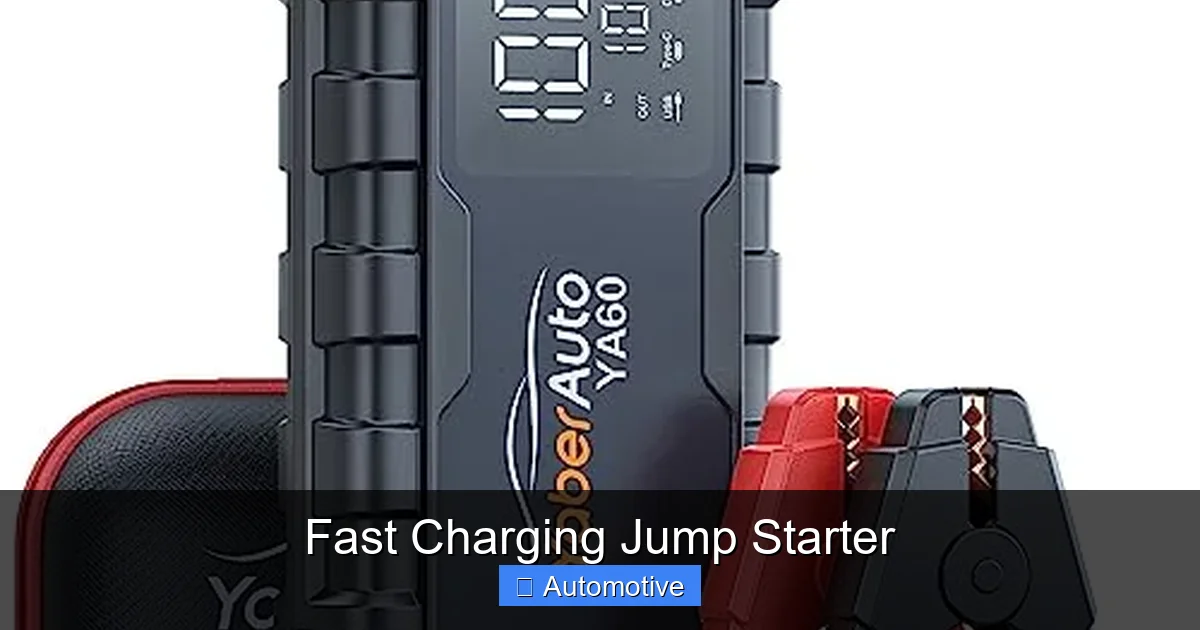
A fast charging jump starter is a compact, portable device that revives dead car batteries in minutes—no second vehicle needed. It combines high-cranking power with USB ports to charge phones, tablets, and more, making it a must-have for every driver.
Imagine this: It’s a cold winter morning. You’re running late for work, you hop in your car, turn the key—and nothing. The engine doesn’t even click. Your battery is dead. Again. You look around. No friendly neighbor in sight. No other car to help with jumper cables. Panic sets in… until you remember the small, sleek device tucked in your glove box: your fast charging jump starter.
Gone are the days when a dead battery meant waiting for roadside assistance or flagging down a stranger. Today’s fast charging jump starters are smart, safe, and surprisingly simple to use. These portable powerhouses don’t just jump-start your vehicle—they’re also power banks, flashlights, and emergency tools all in one. Whether you’re a daily commuter, weekend adventurer, or just someone who wants peace of mind, a fast charging jump starter is one of the smartest automotive investments you can make.
In this guide, we’ll break down everything you need to know about fast charging jump starters—how they work, what to look for, how to use them safely, and why they’re no longer just a nice-to-have, but a must-have. We’ll also share real-life scenarios, top tips, and expert advice to help you choose the right model for your needs. By the end, you’ll understand why thousands of drivers are swapping their old jumper cables for these modern, reliable alternatives.
In This Article
- 1 Key Takeaways
- 2 📑 Table of Contents
- 3 What Is a Fast Charging Jump Starter?
- 4 Why Every Driver Needs a Fast Charging Jump Starter
- 5 How to Choose the Right Fast Charging Jump Starter
- 6 How to Use a Fast Charging Jump Starter Safely
- 7 Top Use Cases and Real-Life Scenarios
- 8 Maintenance and Care Tips
- 9 Conclusion
- 10 Frequently Asked Questions
- 10.1 Can a fast charging jump starter damage my car’s electronics?
- 10.2 How many times can a jump starter be used before recharging?
- 10.3 Can I use a jump starter in the rain?
- 10.4 Do I need to turn off my car’s electronics before jumping?
- 10.5 Can a jump starter charge my phone while jump-starting?
- 10.6 How long does it take to recharge a fast charging jump starter?
Key Takeaways
- Instant Battery Revival: A fast charging jump starter delivers powerful cranking amps to jump-start your vehicle in under 60 seconds, even in cold weather.
- No Second Vehicle Required: Unlike traditional jumper cables, these devices work independently—perfect for remote areas or solo drivers.
- Multi-Device Charging: Most models include USB-A, USB-C, and wireless charging pads to keep your phone, GPS, or tablet powered on the go.
- Compact and Portable: Lightweight designs with carrying cases make them easy to store in your trunk, glove box, or backpack.
- Safety Features Built-In: Advanced protection against reverse polarity, overcharging, short circuits, and sparks ensures safe use for beginners and pros alike.
- Long Battery Life: Lithium-ion batteries hold a charge for 6–12 months, so your jump starter is ready when you need it most.
- Versatile Use: Ideal for cars, trucks, motorcycles, boats, ATVs, and even small engines like lawnmowers or generators.
📑 Table of Contents
What Is a Fast Charging Jump Starter?
A fast charging jump starter is a portable battery-powered device designed to jump-start a vehicle with a dead or weak battery. Unlike traditional jumper cables that require a second vehicle to provide power, a jump starter contains its own internal battery—usually lithium-ion—that stores enough energy to crank your engine and get you back on the road.
These devices are often referred to as “jump packs,” “portable jump starters,” or “battery boosters.” But what sets the “fast charging” models apart is their ability to recharge quickly—sometimes in under an hour—and deliver high cranking power in a compact form. Many can jump-start a car in under a minute, and some even feature smart technology that detects battery health and adjusts output accordingly.
How It Works
At its core, a fast charging jump starter works like a mini power station. When your car battery dies, the jump starter connects to your vehicle’s battery terminals using heavy-duty clamps. It then delivers a burst of electrical current—measured in cranking amps (CA) or peak amps—to turn over the engine.
Most modern jump starters use lithium-ion or lithium-polymer batteries because they’re lightweight, hold a charge well, and can deliver high power output. Once connected correctly, the device sends power directly to your car’s starter motor, mimicking the role of a healthy battery.
The “fast charging” aspect refers to how quickly the jump starter itself can be recharged. Older models might take 6–8 hours to recharge via a wall outlet. Today’s top models can recharge in 1–3 hours using fast-charging USB-C or DC input. Some even support solar charging or car charger input for added convenience.
Key Components
A typical fast charging jump starter includes several essential components:
– Battery Pack: The heart of the device, usually lithium-ion, storing the energy needed to jump-start your vehicle.
– Clamps: Heavy-duty, color-coded (red for positive, black for negative) clamps that connect to your car’s battery terminals.
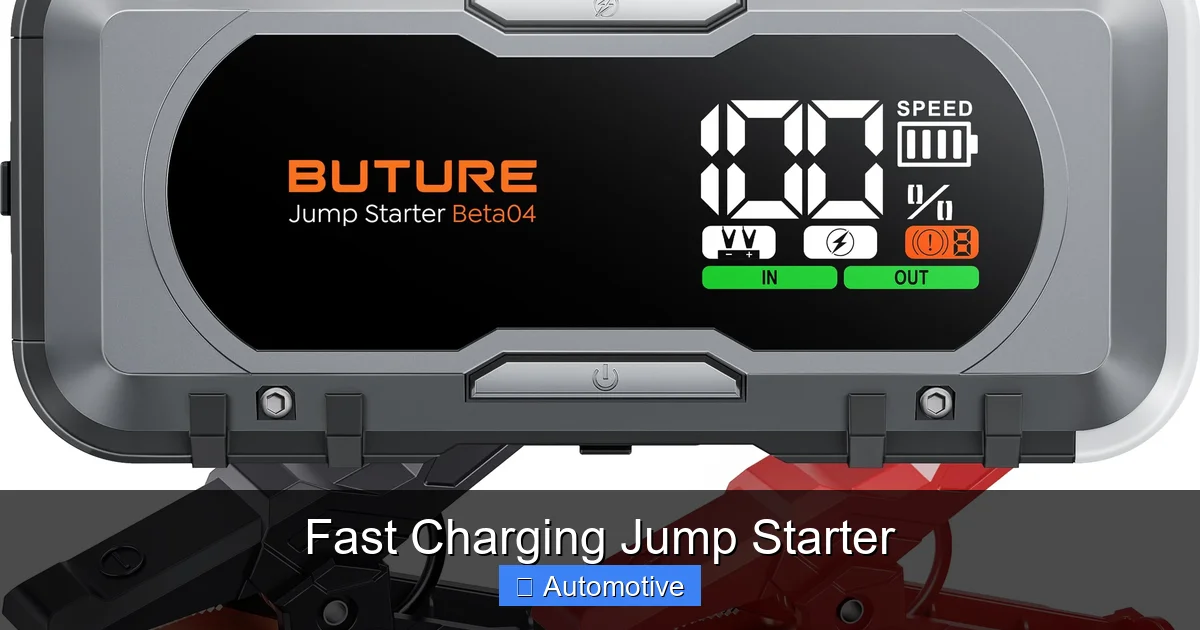
– Control Panel: Displays battery level, charging status, and sometimes diagnostic info like voltage or error codes.
– USB Ports: Allow you to charge phones, tablets, or other USB-powered devices.
– LED Flashlight: Often includes multiple modes (steady, strobe, SOS) for emergencies.
– Safety Circuitry: Protects against reverse polarity, overcurrent, overheating, and short circuits.
Some advanced models also include air compressors, digital displays, or Bluetooth connectivity for app-based monitoring.
Why Every Driver Needs a Fast Charging Jump Starter
Visual guide about Fast Charging Jump Starter
Image source: m.media-amazon.com
You might think, “I’ve never had a dead battery—why do I need this?” But the truth is, battery failure can happen to anyone, anywhere, at any time. And when it does, the consequences can range from mildly inconvenient to downright dangerous.
No More Waiting for Help
Imagine you’re on a remote hiking trail, miles from the nearest town. Your car won’t start. No cell service. No other vehicles in sight. With a fast charging jump starter, you’re not stuck. You pop the hood, connect the clamps, and within minutes, your engine is running. No waiting. No stress.
Even in urban areas, relying on strangers or roadside assistance can be risky or time-consuming. A jump starter puts the power back in your hands—literally.
Perfect for Cold Weather
Cold weather is one of the biggest enemies of car batteries. Temperatures below freezing can reduce a battery’s capacity by up to 50%. If your battery is already weak, winter mornings are when it’s most likely to fail.
Fast charging jump starters are designed to perform in extreme conditions. Many are rated to work in temperatures as low as -4°F (-20°C). Some even have built-in heaters to warm the internal battery for optimal performance.
Great for Older Vehicles and High-Drain Systems
Older cars often have weaker electrical systems, and modern vehicles come packed with electronics that drain the battery even when the engine is off—infotainment systems, security alarms, GPS trackers, and more. This constant drain can leave your battery vulnerable.
A jump starter ensures you’re never stranded, whether you drive a 1998 sedan or a 2023 SUV with all the bells and whistles.
Peace of Mind for Families and Travelers
If you’re a parent, you know how stressful it is when your car won’t start with kids in the backseat. Or if you’re traveling long distances, the last thing you want is a breakdown in an unfamiliar area.
A fast charging jump starter gives you confidence. It’s like having a roadside assistance team in your trunk—always ready, always reliable.
How to Choose the Right Fast Charging Jump Starter
Visual guide about Fast Charging Jump Starter
Image source: m.media-amazon.com
Not all jump starters are created equal. With so many options on the market, it’s important to know what to look for. Here’s a breakdown of the key factors to consider.
Cranking Power (Amps)
The most important spec is cranking amps (CA) or peak amps. This tells you how much power the device can deliver to start your engine.
– Small cars (4-cylinder): 400–600 CA is usually sufficient.
– Mid-size cars and SUVs (6-cylinder): Look for 600–1000 CA.
– Trucks, vans, and large SUVs (V8 engines): Choose 1000+ CA, or even 2000+ for diesel engines.
Peak amps refer to the maximum burst of power the device can deliver for a short time—important for stubborn starts.
Battery Capacity (mAh)
Measured in milliampere-hours (mAh), this indicates how much energy the internal battery can store. Higher mAh means more jump-start attempts before needing a recharge.
– 10,000–15,000 mAh: Good for 3–5 jumps on a single charge.
– 15,000–20,000+ mAh: Ideal for larger vehicles or frequent use.
Charging Speed and Input Options
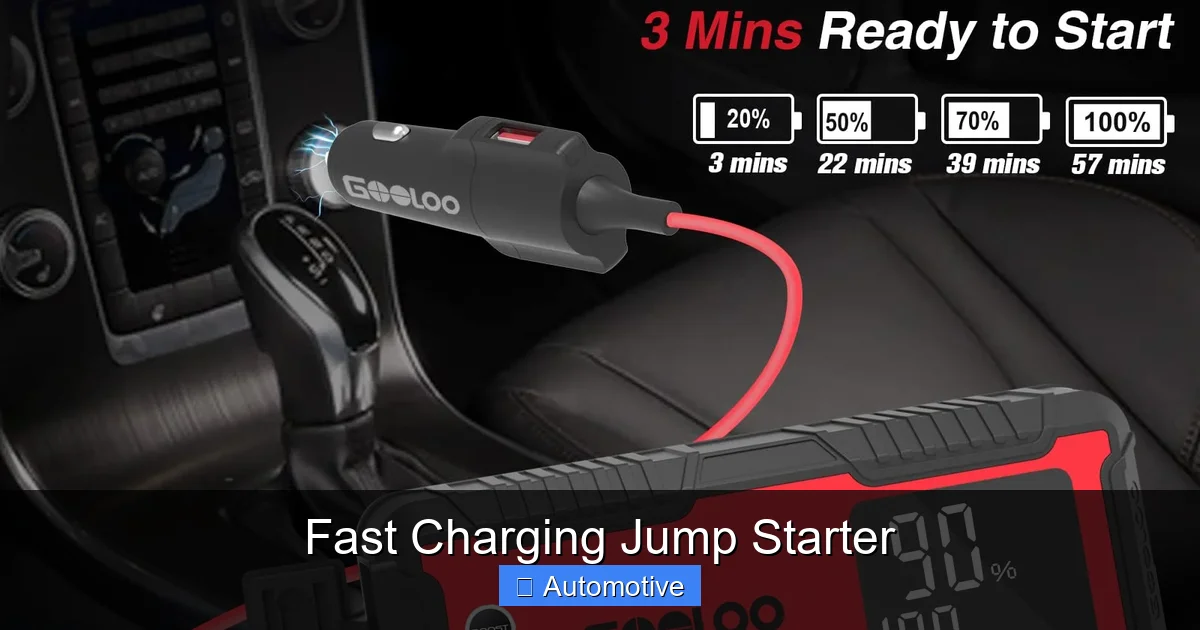
Since we’re talking about “fast charging,” look for models that support quick recharge. USB-C PD (Power Delivery) is the gold standard—capable of recharging the jump starter in 1–2 hours.
Some models also support 12V car charger input or solar charging, which is great for road trips or off-grid use.
Safety Features
Safety should be non-negotiable. Look for these protections:
– Reverse Polarity Protection: Prevents damage if clamps are connected incorrectly.
– Spark-Proof Technology: Reduces the risk of sparks during connection.
– Overcharge/Overcurrent Protection: Safeguards both the jump starter and your vehicle.
– Short Circuit Protection: Shuts off power if a short is detected.
Many top brands include LED indicators or digital displays that alert you to errors.
Additional Features
While not essential, these extras can add serious value:
– USB-C and USB-A Ports: Charge multiple devices at once.
– Wireless Charging Pad: Charge compatible phones without cables.
– LED Flashlight with SOS Mode: Useful in emergencies or nighttime jumps.
– Air Compressor: Inflate tires, sports balls, or air mattresses.
– Digital Display: Shows battery level, voltage, and error codes.
Size, Weight, and Portability
You want something compact enough to store easily but powerful enough to get the job done. Most jump starters weigh between 1–3 pounds and fit in a small carrying case.
If you’re an avid camper or overlander, consider a model with a rugged, waterproof design.
How to Use a Fast Charging Jump Starter Safely
Visual guide about Fast Charging Jump Starter
Image source: shopcdnpro.grainajz.com
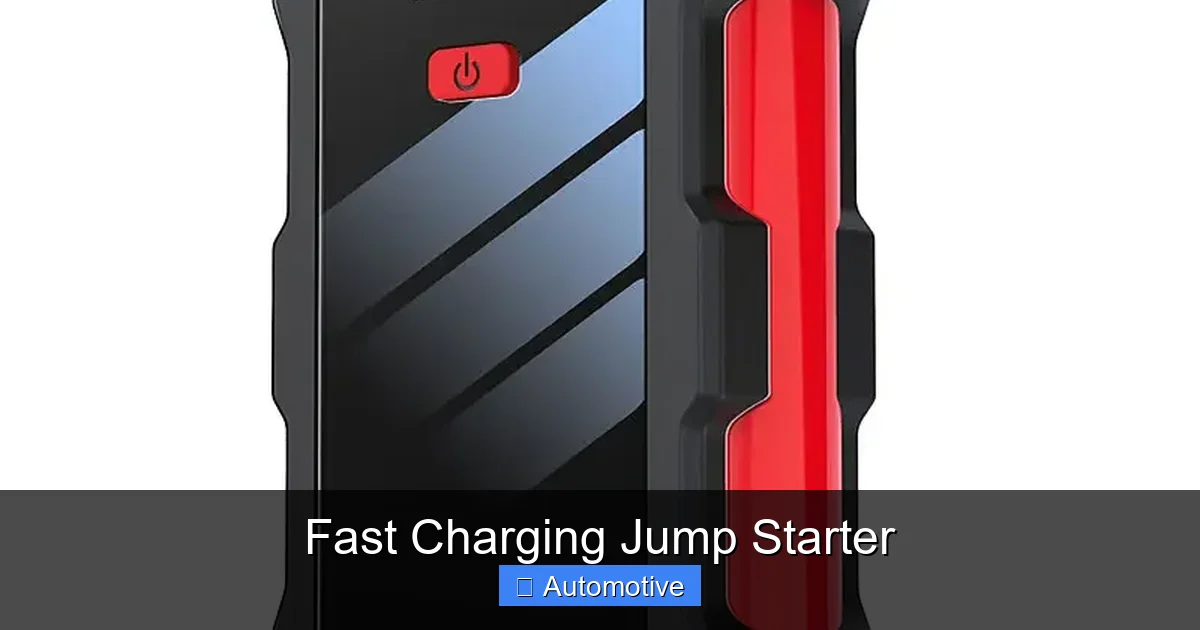
Using a jump starter is simple, but safety is critical. Follow these steps to ensure a smooth, risk-free jump.
Step 1: Read the Manual
Every model is slightly different. Start by reading the user manual to understand your device’s specific features and warnings.
Step 2: Park Safely
Pull over to a safe, flat area. Turn off the engine, headlights, and all electronics. Engage the parking brake.
Step 3: Locate the Battery
Open the hood and find your car’s battery. Most are under the hood, but some (like in BMWs or hybrids) may be in the trunk or under a seat.
Step 4: Connect the Clamps
– Connect the red (positive) clamp to the positive terminal (+) on the battery.
– Connect the black (negative) clamp to an unpainted metal surface on the engine block or chassis—not the negative terminal. This reduces sparking risk.
Step 5: Power On and Start the Engine
Turn on the jump starter. Wait a few seconds for it to detect the connection. Then, try starting your car. If it doesn’t start immediately, wait 30–60 seconds and try again.
Step 6: Disconnect and Recharge
Once the engine is running, disconnect the clamps in reverse order: black first, then red. Turn off the jump starter and store it safely. Recharge it as soon as possible.
Safety Tips
– Never connect the clamps to the wrong terminals.
– Don’t use the jump starter in rain or snow unless it’s rated waterproof.
– Keep the device away from children and pets.
– If the jump starter feels hot, stop using it and let it cool.
Top Use Cases and Real-Life Scenarios
A fast charging jump starter isn’t just for dead batteries. Here are some real-world situations where it shines.
Scenario 1: Morning Commute in Winter
It’s 6:30 a.m. in January. You’re rushing to work. You turn the key—nothing. Your battery is frozen. You grab your jump starter, connect it in under a minute, and your car starts on the first try. You’re on the road by 6:40.
Scenario 2: Road Trip Breakdown
You’re driving through rural Montana. Your GPS dies, your phone is at 5%, and your car won’t start after a long stop. You use the jump starter to get moving again, then charge your phone via USB-C while driving.
Scenario 3: Helping a Friend
Your neighbor’s car won’t start. Instead of calling a tow truck, you lend them your jump starter. They’re back on the road in minutes—and you’ve earned serious neighbor-of-the-year points.
Scenario 4: Camping or Overlanding
You’re deep in the woods. Your truck battery dies after leaving the lights on overnight. No cell service. No other vehicles. Your jump starter saves the trip—and maybe your dinner plans.
Maintenance and Care Tips
To keep your fast charging jump starter ready when you need it, follow these simple maintenance tips.
Charge Regularly
Even when not in use, lithium-ion batteries lose charge over time. Recharge your jump starter every 3–6 months to maintain optimal performance.
Store Properly
Keep it in a cool, dry place—ideally in its carrying case. Avoid extreme heat or cold, which can damage the battery.
Clean the Clamps
Wipe the clamps with a dry cloth to remove dirt or corrosion. Dirty contacts can reduce efficiency.
Check for Updates
Some smart jump starters receive firmware updates via Bluetooth. Check the manufacturer’s app periodically.
Test It Occasionally
Once a year, do a quick test jump (on a healthy battery) to ensure everything works.
Conclusion
A fast charging jump starter is more than just a backup plan—it’s a smart, modern solution to one of the most common automotive problems. It’s compact, powerful, and packed with features that go beyond just jump-starting your car. From charging your phone to lighting your way in an emergency, it’s a versatile tool that every driver should have.
Whether you’re a daily commuter, weekend warrior, or full-time traveler, the peace of mind that comes with a reliable jump starter is priceless. No more waiting for help. No more stress. Just quick, safe, and easy starts—every time.
Investing in a quality fast charging jump starter isn’t just about convenience. It’s about safety, independence, and preparedness. So next time you’re shopping for car accessories, skip the air fresheners and seat covers. Get yourself a jump starter. Your future self will thank you.
Frequently Asked Questions
Can a fast charging jump starter damage my car’s electronics?
No, as long as you use it correctly. Modern jump starters have built-in safety features like reverse polarity protection and voltage regulation to prevent damage. Always follow the manufacturer’s instructions.
How many times can a jump starter be used before recharging?
Most models can jump-start a car 3–5 times on a full charge, depending on the battery size and engine type. Larger vehicles may require more power, reducing the number of jumps.
Can I use a jump starter in the rain?
Only if the device is rated waterproof or water-resistant (look for IP ratings like IP65). Using it in wet conditions can be dangerous and may void the warranty.
Do I need to turn off my car’s electronics before jumping?
Yes. Turn off the engine, headlights, radio, and any other electronics to reduce the load on the battery and prevent voltage spikes.
Can a jump starter charge my phone while jump-starting?
Yes, most models allow you to charge devices via USB while the engine is running. However, avoid using high-power devices during the actual jump-start process.
How long does it take to recharge a fast charging jump starter?
With USB-C PD input, many models recharge in 1–2 hours. Standard USB-A charging may take 4–6 hours. Always use the recommended charger for best results.