Does the Jeep Sahara Have Lockers?

Contents
- 1 Key Takeaways
- 2 📑 Table of Contents
- 3 What Are Lockers and Why Do They Matter?
- 4 The Jeep Wrangler Sahara: Features and Positioning
- 5 Does the Jeep Sahara Come with Factory Lockers?
- 6 How to Get Lockers on a Jeep Sahara: Options and Aftermarket
- 7 Sahara vs. Rubicon: The Locker Divide
- 8 Maximizing Off-Road Performance Without Lockers
- 9 Conclusion
- 10 Frequently Asked Questions


Quick Summary: The Jeep Sahara trim does not come with factory-installed lockers. Lockers are typically reserved for the Rubicon model. However, Sahara owners can add aftermarket lockers or opt for specific packages. Understanding locker functionality is key for off-road enthusiasts.
If you’re shopping for a Jeep Wrangler or already own a Sahara, you’ve likely asked yourself: “Does the Jeep Sahara have lockers?” It’s a common question among off-road enthusiasts, and the answer isn’t always straightforward. Lockers are a coveted feature for serious adventurers, but not all Wrangler trims are equipped with them. In this guide, we’ll break down everything you need to know about lockers on the Jeep Sahara, from factory specifications to aftermarket solutions. Whether you’re new to off-roading or a seasoned pro, understanding this topic will help you make informed decisions about your vehicle.
The Jeep Wrangler is legendary for its rugged capability. But within the lineup, trims like the Sahara, Sport, and Rubicon serve different purposes. The Sahara sits in the sweet spot for many buyers—offering a comfortable ride, premium features, and solid off-road chops. However, when it comes to hardcore off-road gear like lockers, the Sahara often falls short compared to the Rubicon. Let’s explore why, and what you can do if you want lockers on your Sahara.
Key Takeaways
- No Factory Lockers: The Jeep Sahara trim does not include lockers as a standard or optional feature from the factory.
- Rubicon Has Lockers: The Jeep Wrangler Rubicon comes with front and rear electronic lockers as standard equipment.
- Aftermarket Options: Sahara owners can install aftermarket lockers, but it requires professional installation and may affect warranty.
- Locker Benefits: Lockers provide maximum traction by locking both wheels on an axle, essential for rock crawling and deep mud.
- Alternative Traction Aids: Without lockers, Sahara relies on limited slip differentials and traction control systems for off-road grip.
- Consider Your Needs: For casual off-roading, the Sahara’s standard features may suffice; for extreme terrain, lockers are recommended.
📑 Table of Contents
What Are Lockers and Why Do They Matter?
Before diving into the Sahara-specific details, it’s essential to understand what lockers are and why they’re so important for off-roading. In simple terms, a locker is a device that locks the two wheels on an axle together, forcing them to spin at the same speed. This is crucial when one wheel loses traction, as it ensures power is sent to both wheels, maximizing grip and preventing the vehicle from getting stuck.
How Differential Lockers Work
Every axle has a differential, which allows wheels to spin at different speeds when turning. On pavement, this is necessary for smooth handling. But off-road, when a wheel is in the air or on a slippery surface, the differential can send all power to the wheel with the least resistance—meaning the wheel that’s spinning freely while the other stays planted. A locker overrides this, locking the differential so both wheels turn together. This means if one wheel has traction, both wheels get power, helping you climb out of tough spots.
Types of Lockers: Electronic vs. Mechanical
There are two primary types of lockers: electronic and mechanical. Electronic lockers, like those in the Jeep Rubicon, use a switch inside the cabin to engage or disengage them. They’re convenient and can be activated on the fly. Mechanical lockers, such as air or cable-actuated ones, require physical engagement, often via a lever or button, and may need compressed air or manual effort. Electronic lockers are more common in modern factory setups because they’re easier to use and integrate with vehicle systems.
For off-road enthusiasts, lockers are game-changers. Imagine rock crawling: one front wheel is perched on a boulder while the other dangles in the air. Without a locker, the airborne wheel spins uselessly, and you go nowhere. With a front locker engaged, both front wheels turn together, allowing the wheel with traction to pull the vehicle upward. The same applies to the rear axle in mud or sand. Lockers provide that extra assurance when tackling extreme terrain.
Practical Examples of Locker Use
Consider a scenario where you’re driving through deep mud. Your left rear tire sinks, losing all traction. The right rear tire is on firmer ground. Without a locker, the left tire spins, and the right tire does nothing—you’re stuck. Engage the rear locker, and both tires are forced to spin together. The right tire, now sharing the load, can push the vehicle forward. Similarly, in rock crawling, a front locker helps both front wheels climb over obstacles simultaneously, reducing the chance of losing momentum.
Lockers aren’t just for extreme off-roading; they’re also useful in slippery conditions like snow or ice. However, they should be used judiciously on high-traction surfaces like pavement, as locking differentials can cause tire scrubbing and damage to the drivetrain during turns. That’s why factory lockers are typically designed for off-road use only and automatically disengage on dry pavement in some systems.
The Jeep Wrangler Sahara: Features and Positioning
Now, let’s talk about the Jeep Wrangler Sahara. The Sahara is one of the most popular trims in the Wrangler lineup. It’s positioned as a blend of comfort, style, and capability. Think of it as the “luxury” off-roader—with premium interior touches, upgraded wheels, and additional tech features compared to the base Sport model. But does it include lockers? That’s where things get specific.
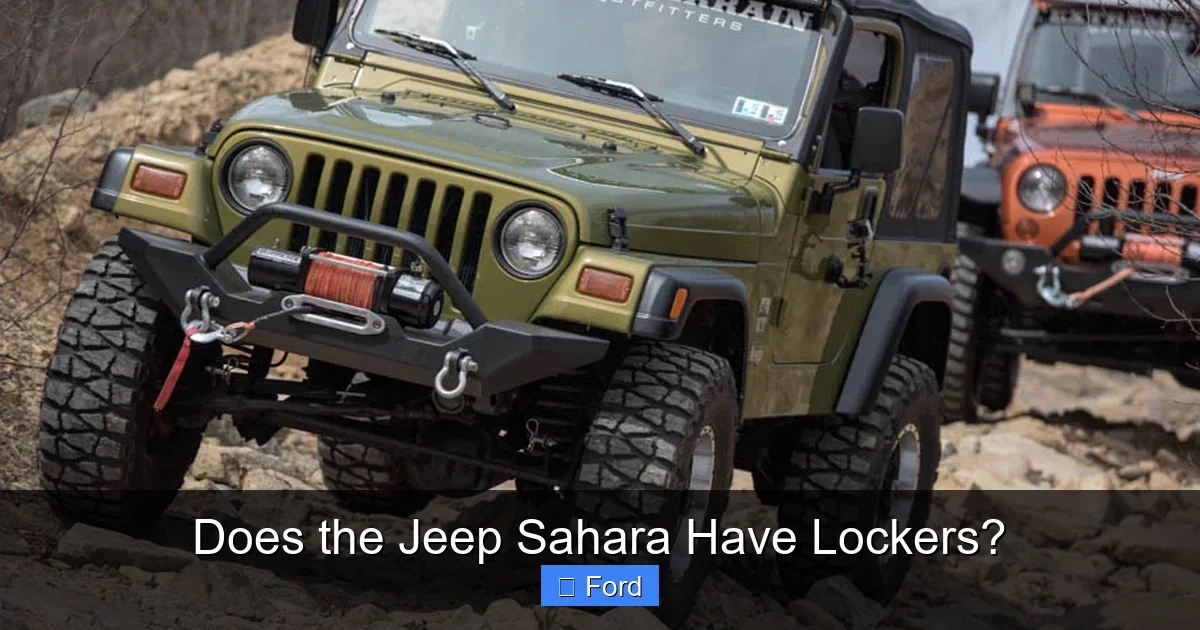
Visual guide about Does the Jeep Sahara Have Lockers?
Image source: automotiveaddicts.com
Sahara Trim Overview
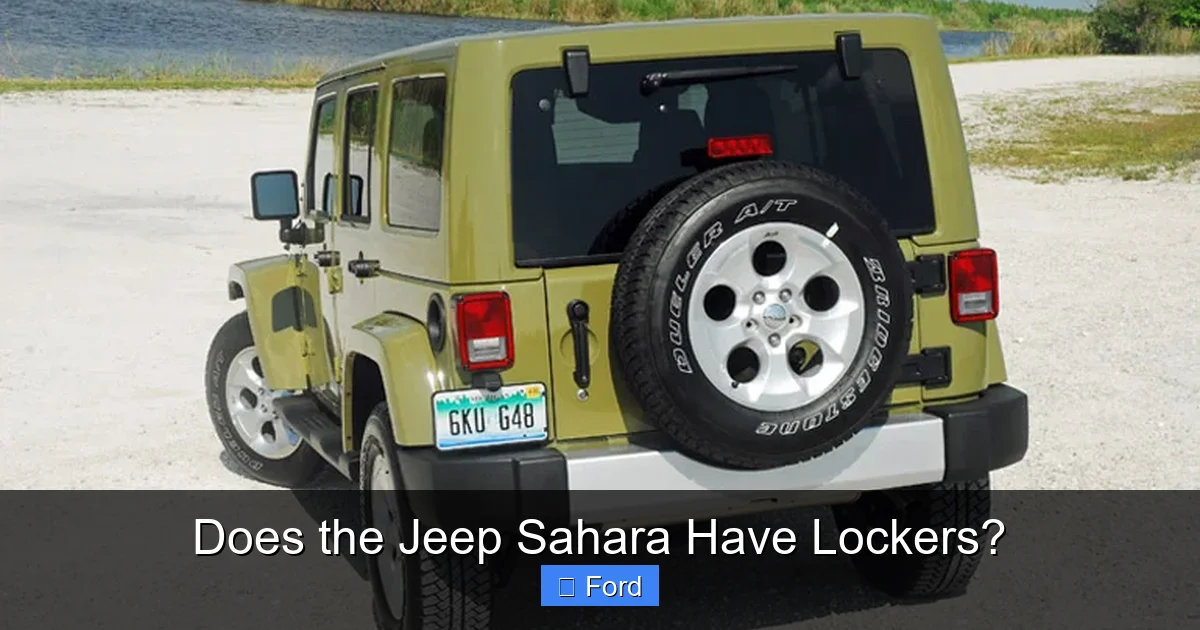
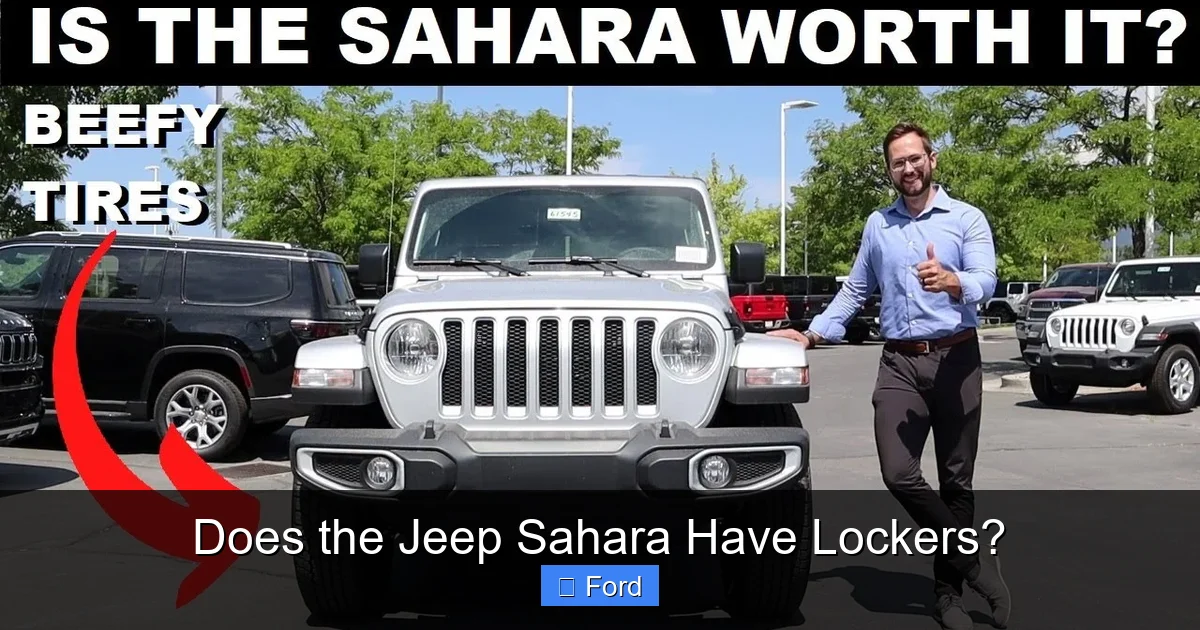
The Sahara comes standard with a host of features that make daily driving enjoyable. These include leather-trimmed seats, a premium Alpine sound system, heated front seats, and a leather-wrapped steering wheel. On the exterior, you’ll often find unique Sahara badging, alloy wheels, and a more polished look. Off-road, it’s equipped with Command-Trac part-time 4WD, which includes a transfer case with a 2:1 low range for crawling. It also has a limited slip rear differential, which helps distribute power when one wheel slips, but it’s not a true locker.
The Sahara is designed for buyers who want a Wrangler that feels refined on the road but can still handle light to moderate off-road adventures. It’s perfect for weekend explorers who might tackle forest trails, sandy beaches, or mild rock gardens but don’t need the hardcore gear of a Rubicon. This positioning means Jeep reserves its most advanced off-road components—like lockers—for the Rubicon trim.
Standard Drivetrain on Sahara
Under the hood, the Sahara typically shares the same powertrain as other Wranglers: a 3.6L V6 engine (or turbo four-cylinder in newer models) paired with a 8-speed automatic transmission. The 4WD system is Command-Trac, which is capable but not as robust as the Rock-Trac system in the Rubicon. Command-Trac has a single-speed transfer case with a 2.72:1 low-range ratio, while Rock-Trac has a 4:1 ratio for even slower, more controlled crawling. More importantly, the Sahara’s rear differential is a limited slip unit, not a locker.
A limited slip differential (LSD) uses clutch packs or gears to bias torque to the wheel with more traction. It’s better than an open differential but not as effective as a full locker. In an LSD, some power still goes to the slipping wheel, whereas a locker ensures equal power to both wheels. For many off-road situations, an LSD is sufficient, but in extreme cases, a locker is superior. This distinction is why the Sahara doesn’t advertise “lockers”—it simply doesn’t have them from the factory.
While the Sahara focuses on a balanced approach, other SUVs cater to different needs. For instance, the Nissan Pathfinder is known for its family-friendly third-row seating, prioritizing passenger space over off-road prowess. The Sahara, in contrast, keeps its emphasis on adventure, even without lockers.
Does the Jeep Sahara Come with Factory Lockers?
Now, to the core question: does the Jeep Sahara have lockers from the factory? The short answer is no. Jeep does not offer front or rear electronic lockers as a factory option on the Sahara trim. This is a deliberate decision to differentiate the Rubicon as the ultimate off-road Wrangler.
Visual guide about Does the Jeep Sahara Have Lockers?
Image source: i.ibb.co
Official Jeep Specifications
According to Jeep’s official brochures and website, lockers are exclusively available on the Rubicon model. The Rubicon comes standard with front and rear electronic locking differentials, along with other off-road enhancements like heavy-duty Dana 44 axles, rock rails, and a disconnectible front sway bar. The Sahara, while capable, omits these features to maintain its position in the lineup and price point.
Even when exploring optional packages, such as the Sahara’s “Premium” or “Convenience” groups, you won’t find lockers listed. Jeep keeps locker availability strictly for the Rubicon to justify its higher price tag and appeal to hardcore off-roaders. This means if you buy a new Sahara off the lot, you will not have lockers, period.
Why No Lockers on Sahara?
There are a few reasons behind this. First, market segmentation: Jeep wants to offer a range of Wranglers for different buyers. The Sport is the entry-level, the Sahara is the comfortable daily driver, and the Rubicon is the off-road beast. Lockers are a key selling point for the Rubicon, so including them on the Sahara would cannibalize sales. Second, cost: lockers add expense, both in parts and integration. The Sahara’s target buyer may not need or want to pay extra for lockers. Third, drivetrain compatibility: the Sahara’s Command-Trac system is designed without locker provisions, whereas the Rubicon’s Rock-Trac system is built to accommodate them.
It’s also worth noting that in some model years, Jeep has offered “Sahara Unlimited” or special editions, but even these typically don’t include lockers. Always check the specific window sticker or build sheet to confirm, but the rule holds: no factory lockers on Sahara.
How to Get Lockers on a Jeep Sahara: Options and Aftermarket
If you own a Sahara and crave lockers, don’t despair. There are ways to add them, though it requires effort and investment. The two main paths are aftermarket installations or seeking out rare factory options, but the latter is unlikely.
Visual guide about Does the Jeep Sahara Have Lockers?
Image source: i.ytimg.com
Aftermarket Locker Installations
The most common solution is installing aftermarket lockers. Brands like ARB (Air Locker), Ox, and Yukon offer locker kits for Jeep Wrangler axles. ARB’s air lockers are popular because they use compressed air to engage, controlled by a switch in the cabin, mimicking factory electronic lockers. Mechanical lockers, like selectable lockers from Ox or Detroit, require manual engagement but are often more durable and less prone to failure.
Installation is not a simple DIY project for most. It involves opening the differential, replacing the carrier and side gears, and wiring for air or electronic systems if applicable. You’ll need a skilled mechanic or off-road shop. Costs can range from $1,000 to $3,000 per locker, including parts and labor, depending on the type and your location. For a Sahara with both front and rear lockers, budget accordingly.
Warranty and Legal Considerations
Before modifying, understand the implications. Installing aftermarket lockers may void your vehicle’s warranty on related drivetrain components. The Magnuson-Moss Warranty Act protects against voiding entire warranties for aftermarket parts, but dealers can deny claims if they prove the modification caused the issue. Always discuss with your dealer first. Also, ensure the locker is street-legal in your state; some mechanical lockers are not intended for on-road use and could be illegal if engaged on pavement.
Another option is to look for factory “dealer-installed” accessories, but Jeep doesn’t offer lockers as such for the Sahara. Some third-party companies might offer “bolt-on” solutions, but these are rare and often less integrated than a proper differential locker.
Practical Tips for Aftermarket Lockers
If you decide to go the aftermarket route, here are some tips. First, research thoroughly—read reviews and talk to other Sahara owners who have installed lockers. Second, choose a reputable installer; a poor installation can lead to noise, vibration, or failure. Third, consider your driving style: air lockers offer convenience but require an air compressor; mechanical lockers are simpler but may need manual engagement. Fourth, don’t forget about gearing; lockers work best with appropriate axle ratios for your tire size. Finally, budget for any supporting mods, like stronger axle shafts if you plan on extreme use.
While upgrading your Sahara, you might also explore other comfort features. Many modern SUVs come with tech like remote start, which the Subaru Crosstrek offers as an available feature. Such conveniences can enhance your driving experience, both on and off-road.
Sahara vs. Rubicon: The Locker Divide
Understanding the Sahara’s lack of lockers is easier when comparing it directly to the Rubicon. The Rubicon is Jeep’s flagship off-roader, built from the ground up for extreme terrain. Lockers are just one of many features that set it apart.
Rubicon’s Standard Lockers and More
The Rubicon comes with front and rear electronic locking differentials as standard. These are seamlessly integrated with the vehicle’s systems, controlled by buttons on the dashboard. Engage them, and you have maximum traction at your fingertips. Beyond lockers, the Rubicon boasts 4:1 Rock-Trac transfer case, Dana 44 front and rear axles with larger shafts, electronic front sway bar disconnect, and aggressive off-road tires. All these components work together to tackle rocks, mud, and sand with ease.
In contrast, the Sahara has a part-time 4WD system with a 2.72:1 low range, limited slip rear differential, and no front locker option. It’s capable, but there’s a clear gap in extreme capability. For example, in a severe rock crawl, the Rubicon’s front locker and disconnectible sway bar allow for greater wheel articulation, while the Sahara might struggle with one wheel in the air.
Cost-Benefit Analysis: Is the Rubicon Worth It?
If lockers are a must-have, the Rubicon is the obvious choice. But it comes at a premium—typically $10,000 to $15,000 more than a comparable Sahara. You need to evaluate how often you’ll use lockers. For casual off-roading on trails, the Sahara’s limited slip differential and traction control might be plenty. For dedicated rock crawling, desert racing, or muddy backcountry, the Rubicon’s lockers and other upgrades are worth the extra cost.
Consider this: a Sahara with aftermarket lockers might approach the cost of a Rubicon, but you’ll lose factory warranty and integration. A Rubicon offers a complete, reliable package. However, if you love your Sahara’s comfort and style, adding lockers can bridge the gap without switching trims.
Maximizing Off-Road Performance Without Lockers
Even without lockers, the Jeep Sahara is a competent off-roader. Many owners successfully tackle challenging terrain using other tools and techniques. Here’s how to make the most of your Sahara’s stock setup.
Driving Techniques for Non-Locker Vehicles
Without lockers, you must rely on skill and momentum. Key techniques include:
- Tire Placement: Carefully choose your line to keep tires on high-traction surfaces like rocks or firm ground.
- Momentum: Maintain steady speed in loose terrain to avoid stopping, where wheel spin is likely.
- Weight Distribution: Have passengers shift weight to increase traction on slipping wheels.
- Use of Recovery Gear: Carry a shovel, traction mats, or a winch to self-recover when stuck.
These methods can often overcome the lack of lockers in moderate conditions.
Utilizing Sahara’s Stock Traction Aids
The Sahara comes with features that help compensate for no lockers. It has a limited slip rear differential, which biases torque to the wheel with more grip. It also includes Jeep’s Selec-Terrain system, with modes like Auto, Snow, Sand, Mud, and Rock. These modes adjust throttle response, transmission shift points, and traction control to optimize performance. For example, Rock mode holds lower gears and reduces wheel slip intervention, allowing more wheel spin before intervening, which can be helpful.
Additionally, the Sahara has a sway bar disconnect feature (available on some model years or via aftermarket). Disconnecting the front sway bar increases front axle articulation, allowing wheels to stay on the ground longer. This is a significant advantage in rocky terrain. You can also add aftermarket traction aids like locking differentials in the rear only, which is a common and effective upgrade.
Accessories and Preparations
To boost your Sahara’s off-road prowess, consider these accessories:
- Off-Road Tires: All-terrain or mud-terrain tires provide better grip than stock all-seasons.
- Skid Plates: Protect vital components like the engine and transmission.
- Winch: A front-mounted winch is invaluable for recovery.
- Spare Tire: Always carry a full-size spare; off-road flats are common. Note that while the Sahara includes a spare, some vehicles like the Toyota RAV4 Hybrid also come with one, but size and type may vary.
Proper preparation can mitigate the lack of lockers significantly.
Remember, off-roading is about more than hardware—it’s about skill and respect for the environment. Take a course, go with experienced friends, and always practice Leave No Trace principles.
Conclusion
So, does the Jeep Sahara have lockers? The definitive answer is no—the Sahara trim does not come with factory-installed lockers. Lockers are reserved for the Rubicon model, which is Jeep’s dedicated off-road warrior. However, this doesn’t mean the Sahara is incapable. With its limited slip rear differential, Selec-Terrain system, and solid 4WD, it handles many off-road scenarios well. For those seeking maximum traction, aftermarket lockers are a viable but costly and warranty-impacting option. Ultimately, your choice depends on your off-road needs: if you stick to trails and moderate terrain, the Sahara is excellent; if you pursue extreme rock crawling or deep mud, consider the Rubicon or invest in aftermarket upgrades. Understand your vehicle’s capabilities, drive smart, and enjoy the adventure.
Frequently Asked Questions
Does the Jeep Sahara come with lockers from the factory?
No, the Jeep Sahara does not come with factory-installed lockers. Lockers are exclusive to the Rubicon trim in the Wrangler lineup.
Can I add lockers to my Jeep Sahara?
Yes, you can add aftermarket lockers to a Sahara. This involves differential modification and professional installation, with costs ranging from $1,000 to $3,000 per locker.
Are aftermarket lockers as reliable as factory lockers?
Aftermarket lockers from brands like ARB or Ox are reliable when properly installed, but they may lack the seamless integration and warranty coverage of factory electronic lockers.
What is the cost to install lockers on a Jeep Sahara?
Expect to spend $1,000 to $3,000 for parts and labor per locker, depending on the type (air, mechanical, etc.) and your location. Front and rear installations will double the cost.
Does the Sahara have any traction aids besides lockers?
Yes, the Sahara includes a limited slip rear differential and Selec-Terrain traction control systems, which help manage wheel slip in various off-road conditions.
Will installing aftermarket lockers void my Jeep’s warranty?
It might void warranty coverage for drivetrain components related to the modification. Always consult your dealer before installing aftermarket parts to understand potential impacts.