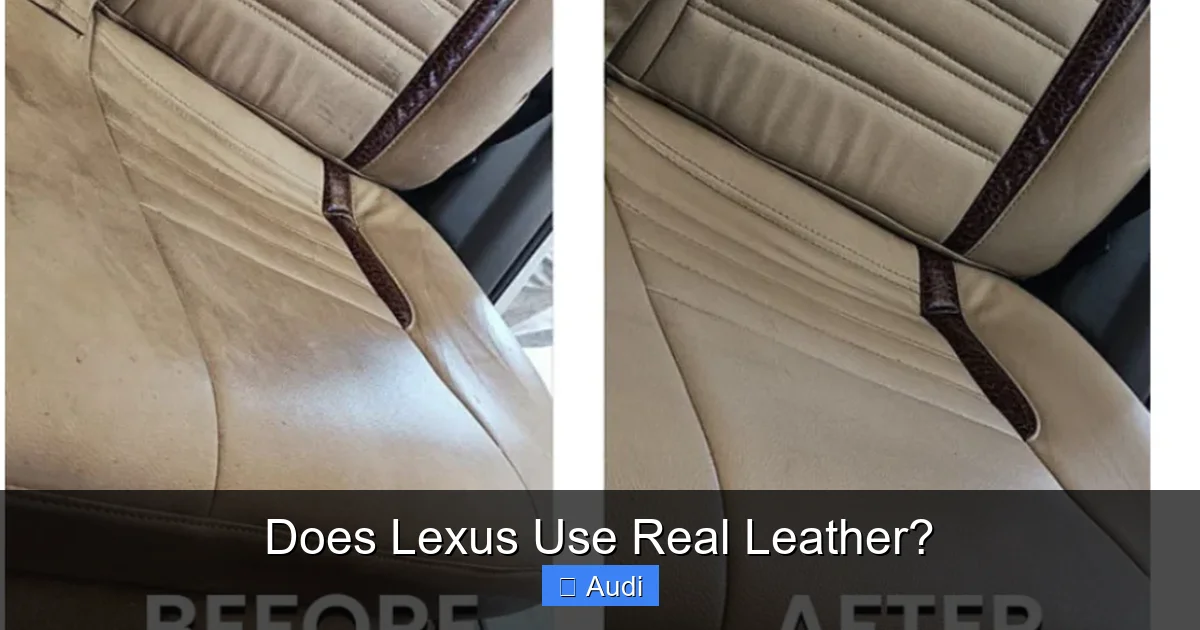
Does Lexus Use Real Leather?

Contents
- 1 Key Takeaways
- 2 📑 Table of Contents
- 3 Does Lexus Use Real Leather? The Straight Answer
- 4 Lexus Leather Quality: What Makes It Special?
- 5 Real Leather vs. Synthetic: How to Tell the Difference
- 6 Lexus Models That Use Real Leather
- 7 Lexus NuLuxe: The Premium Synthetic Alternative
- 8 Ethical and Environmental Considerations
- 9 How to Care for Lexus Leather Interiors
- 10 Conclusion: Real Leather or Not, Lexus Delivers Luxury
- 11 Frequently Asked Questions
Power Steering Fluid

Solar Car Battery Maintainer

Car Floor Mats (Universal)

Car Vacuum Cleaner (Portable)
Lexus does use real leather in many of its luxury vehicles, especially in higher trims and premium models. However, not all Lexus interiors are 100% genuine leather—some use high-quality synthetic alternatives or partial leather combinations. Understanding the difference helps buyers make informed choices.
When you slide into the driver’s seat of a Lexus, one of the first things you notice is the interior. The soft-touch materials, the quiet cabin, and yes—the seats. Many people assume that because Lexus is a luxury brand, every seat must be wrapped in real leather. But is that always true? The short answer is: it depends. Lexus does use real leather in many of its vehicles, but not all. The type of upholstery varies by model, trim level, and even regional market. Understanding what you’re actually getting when you buy a Lexus can save you from disappointment—or help you appreciate the craftsmanship even more.
Lexus has built its reputation on quality, refinement, and attention to detail. From the whisper-quiet cabins to the precision of the stitching on the dashboard, every element is designed to elevate the driving experience. Leather plays a big role in that. It’s not just about luxury—it’s about durability, comfort, and the way it ages over time. Real leather develops a unique patina, becoming more characterful with use. But with rising concerns about animal welfare, environmental impact, and cost, automakers like Lexus are rethinking how they use leather. The result? A mix of genuine leather, high-end synthetics, and innovative alternatives that still deliver that premium feel.
Key Takeaways
- Lexus uses genuine leather in most premium trims: Models like the LS, LX, and RX often feature full-grain or semi-aniline leather for a luxurious feel.
- Not all Lexus seats are fully real leather: Entry-level trims may use synthetic leather (leatherette) or a blend of materials to reduce cost.
- Lexus prioritizes ethical sourcing: The brand emphasizes responsible leather procurement, avoiding exotic skins and focusing on sustainability.
- Leather quality varies by model and trim: Higher-end models offer softer, more durable leather with better aging characteristics.
- Maintenance matters for longevity: Real leather requires proper care—cleaning and conditioning—to prevent cracking and fading.
- Lexus offers vegan alternatives: Some models include NuLuxe, a premium synthetic leather, appealing to eco-conscious and vegan buyers.
- Always check trim specifications: To confirm leather type, review the vehicle’s build sheet or consult a dealer before purchase.
📑 Table of Contents
- Does Lexus Use Real Leather? The Straight Answer
- Lexus Leather Quality: What Makes It Special?
- Real Leather vs. Synthetic: How to Tell the Difference
- Lexus Models That Use Real Leather
- Lexus NuLuxe: The Premium Synthetic Alternative
- Ethical and Environmental Considerations
- How to Care for Lexus Leather Interiors
- Conclusion: Real Leather or Not, Lexus Delivers Luxury
Does Lexus Use Real Leather? The Straight Answer
So, does Lexus use real leather? Yes—but with important caveats. Lexus incorporates genuine leather in many of its higher-end models and trims, especially in the flagship LS sedan, the LX SUV, and the RX crossover. These vehicles often feature full-grain or top-grain leather, which is considered the highest quality available. Full-grain leather retains the natural grain and imperfections of the hide, making it more durable and breathable. It also ages beautifully, developing a rich patina over time.
However, not every Lexus comes with real leather. Entry-level trims, such as the base IS or NX models, often use synthetic materials like NuLuxe—a premium vegan leather developed by Lexus. NuLuxe looks and feels remarkably close to real leather, offering a soft texture and excellent resistance to wear and tear. It’s also easier to clean and more environmentally friendly, as it doesn’t require animal hides. In some cases, Lexus uses a combination of real leather on high-contact areas (like seat bolsters and armrests) and synthetic materials on less visible parts.
The key takeaway? Always check the trim level and specifications. A Lexus ES 350 in the base trim might have fabric or synthetic seats, while the F Sport or Luxury trim could include semi-aniline leather. The same model can have different upholstery options depending on how it’s configured. This tiered approach allows Lexus to offer luxury at various price points while maintaining its brand image.
Lexus Leather Quality: What Makes It Special?

Visual guide about Does Lexus Use Real Leather?
Image source: leatherinsights.com
When Lexus does use real leather, it’s not just any leather—it’s carefully selected and processed to meet high standards. The brand sources leather from reputable tanneries that follow strict ethical and environmental guidelines. Lexus avoids exotic skins like crocodile or ostrich, focusing instead on cowhide from regulated farms. This ensures consistency, quality, and alignment with modern sustainability values.
One of the standout features of Lexus leather is its finish. Many models use semi-aniline leather, which is treated with a light protective coating. This preserves the natural texture and breathability of the hide while offering resistance to stains and fading. Unlike heavily pigmented leathers that feel plasticky, semi-aniline leather retains a soft, supple feel. It’s also less likely to crack over time, especially when properly maintained.
Lexus also pays close attention to the tanning process. Chrome-tanned leather is common in the industry because it’s fast and cost-effective, but it can contain harmful chemicals. Lexus prefers vegetable-tanned or eco-friendly tanning methods where possible, reducing environmental impact. The result is a leather that’s not only luxurious but also more sustainable.
Another factor is craftsmanship. Lexus interiors are assembled with precision. Seats are hand-stitched in some models, and the alignment of the leather grain is carefully matched across panels. This attention to detail ensures a cohesive, high-end appearance. Even the smell—often described as a rich, natural aroma—contributes to the premium experience.
Real Leather vs. Synthetic: How to Tell the Difference

Visual guide about Does Lexus Use Real Leather?
Image source: leatherinsights.com
If you’re shopping for a used Lexus or comparing trims, it’s important to know how to distinguish real leather from synthetic alternatives. Here are some practical tips:
First, look at the texture. Real leather has a natural grain with slight imperfections—tiny pores, scars, or variations in thickness. Synthetic leather, including high-end options like NuLuxe, tends to have a uniform pattern that repeats across the surface. If the texture looks too perfect, it’s likely not real.
Second, feel the material. Real leather is soft and slightly cool to the touch. It warms up quickly when you sit on it and may feel slightly damp in humid conditions due to its breathability. Synthetic leather often feels smoother and more consistent, but it can feel plasticky or overly slick, especially in hot weather.
Third, check the edges. On real leather seats, the edges are usually finished with a stitched or rolled hem. Synthetic materials may have glued or heat-sealed edges that look cleaner but lack the craftsmanship of real leather.
Fourth, smell it. Real leather has a distinct, earthy scent—like a new wallet or jacket. Synthetic leather often has a chemical or rubbery odor, especially when new.
Finally, do a water test. Drop a small amount of water on the seat. Real leather will absorb it slowly and darken the area. Synthetic leather will repel the water or absorb it unevenly.
Keep in mind that some synthetic materials, like NuLuxe, are so well-made that they can fool even experienced buyers. That’s why it’s always best to consult the vehicle’s build sheet or ask the dealer for confirmation.
Lexus Models That Use Real Leather

Visual guide about Does Lexus Use Real Leather?
Image source: leatherinsights.com
Not all Lexus models are created equal when it comes to leather. Here’s a breakdown of which vehicles are most likely to feature genuine leather:
Lexus LS
The LS is Lexus’s flagship sedan and a showcase of luxury. Higher trims like the LS 500 and LS 500h often come with semi-aniline leather seats, available in colors like black, beige, or brown. The seats are heated, ventilated, and may include massage functions. The leather extends to the door panels, center console, and even the headliner in some configurations.
Lexus LX
As Lexus’s full-size SUV, the LX is built for both comfort and capability. The interior rivals high-end German competitors, with full-grain leather seats standard on most trims. The LX 600 Luxury and Ultra Luxury packages include premium leather with contrast stitching and wood accents. The seats are designed for long-distance comfort, with excellent support and durability.
Lexus RX
The RX is one of Lexus’s best-selling models. While base trims use synthetic materials, the RX 350 F Sport and RX 500h F Sport Performance offer semi-aniline leather. These seats are sportier, with bolstered sides and a more aggressive design. The leather is also treated for UV resistance, preventing fading in sunny climates.
Lexus ES
The ES sedan offers a range of upholstery options. The base ES 250 and ES 350 may come with fabric or NuLuxe, but the Luxury and F Sport trims include real leather. The leather in the ES is softer and more refined, emphasizing comfort over sportiness.
Lexus GX
The GX is a rugged luxury SUV with a focus on off-road capability. Higher trims feature leather-trimmed seats with heating and ventilation. The leather is durable and resistant to wear, making it ideal for families and outdoor enthusiasts.
Lexus LC
The LC coupe is a halo model for Lexus, blending performance with elegance. It comes standard with semi-aniline leather seats, available in bold colors like red or blue. The interior is handcrafted, with attention to every detail.
Lexus NuLuxe: The Premium Synthetic Alternative
While real leather has its advantages, Lexus has invested heavily in synthetic alternatives—most notably NuLuxe. Introduced over a decade ago, NuLuxe is a high-performance vegan leather that mimics the look and feel of real leather without using animal products.
NuLuxe is made from a polyurethane base with a microfiber backing. It’s lightweight, durable, and resistant to stains, fading, and cracking. Unlike cheaper leatherette, NuLuxe breathes well and doesn’t get sticky in hot weather. It’s also easier to clean—just wipe it down with a damp cloth.
One of the biggest advantages of NuLuxe is its environmental impact. Producing real leather requires significant water, energy, and chemicals. It also contributes to deforestation and greenhouse gas emissions. NuLuxe, by contrast, has a lower carbon footprint and doesn’t involve animal farming.
Lexus markets NuLuxe as a premium material, not a compromise. It’s used in many trims across the lineup, including the IS, NX, and base RX models. Some buyers even prefer it over real leather because it’s more consistent in texture and color.
That said, NuLuxe doesn’t age the same way as real leather. It won’t develop a patina, and while it’s durable, it may not feel as luxurious to traditionalists. However, for eco-conscious buyers or those with allergies, it’s an excellent choice.
Ethical and Environmental Considerations
The use of real leather raises important ethical and environmental questions. Animal welfare is a growing concern, with many consumers avoiding products that involve animal harm. While Lexus doesn’t use exotic skins, it still relies on cowhide, which comes from the meat industry. This creates a moral dilemma for some buyers.
Environmental impact is another issue. Leather tanning is a water-intensive process that can pollute rivers with chemicals like chromium. Deforestation for cattle grazing also contributes to climate change. Lexus has taken steps to address these concerns by sourcing leather from certified tanneries and exploring sustainable alternatives.
The brand is also investing in circular economy principles. Some Lexus models use recycled materials in their interiors, and the company is researching bio-based synthetics that could replace traditional leather altogether.
For buyers who prioritize ethics and sustainability, NuLuxe and other synthetic options offer a way to enjoy luxury without compromise. Lexus’s commitment to innovation means the future of its interiors may look very different—but still feel just as premium.
How to Care for Lexus Leather Interiors
Whether your Lexus has real leather or NuLuxe, proper care is essential to maintain its appearance and longevity. Here are some practical tips:
For real leather:
– Clean regularly with a pH-balanced leather cleaner. Avoid household cleaners, which can strip natural oils.
– Condition every 3–6 months with a high-quality leather conditioner. This prevents drying and cracking.
– Protect from direct sunlight. Use sunshades and park in the shade when possible to prevent UV damage.
– Address spills immediately. Blot—don’t rub—with a clean cloth to avoid staining.
– Avoid sharp objects. Keys, belts, and pet claws can scratch or puncture the leather.
For NuLuxe:
– Wipe down with a damp microfiber cloth. Mild soap can be used for tougher stains.
– Avoid harsh chemicals or abrasive scrubbers, which can damage the surface.
– Conditioning isn’t necessary, but a protectant spray can enhance water resistance.
– Like real leather, protect from prolonged sun exposure to prevent fading.
Regular maintenance not only keeps your interior looking new but also preserves resale value. A well-cared-for Lexus with pristine leather can command a higher price on the used market.
Conclusion: Real Leather or Not, Lexus Delivers Luxury
So, does Lexus use real leather? The answer is nuanced. Yes, Lexus uses genuine leather in many of its premium models and trims, offering a luxurious, durable, and breathable material that ages beautifully. But the brand also embraces innovation with high-quality synthetics like NuLuxe, providing ethical, sustainable, and cost-effective alternatives.
What sets Lexus apart is its commitment to quality, regardless of material. Whether you’re sitting on semi-aniline leather in an LS or NuLuxe in an NX, the craftsmanship, comfort, and attention to detail are unmistakable. The choice between real and synthetic often comes down to personal values—luxury tradition versus modern sustainability.
For buyers, the key is to know what you’re getting. Always check the trim level, review the specifications, and don’t hesitate to ask questions. A little research goes a long way in ensuring your Lexus experience matches your expectations.
In the end, Lexus proves that luxury isn’t just about materials—it’s about how those materials are used to create an experience. And whether it’s real leather or a cutting-edge synthetic, Lexus delivers that experience with excellence.
Frequently Asked Questions
Does every Lexus model come with real leather seats?
No, not every Lexus model comes with real leather. Base trims often use synthetic materials like NuLuxe or fabric, while higher trims may include genuine leather.
What is NuLuxe, and how does it compare to real leather?
NuLuxe is Lexus’s premium synthetic leather. It’s durable, eco-friendly, and feels similar to real leather, but it doesn’t develop a patina over time.
Can I upgrade to real leather in a Lexus with synthetic seats?
It depends on the model and trim. Some trims offer leather as an option, but factory upgrades may not be available after purchase. Consult a dealer for details.
How long does Lexus real leather last?
With proper care, Lexus real leather can last 10–15 years or more. Regular cleaning and conditioning help prevent cracking and fading.
Is Lexus leather ethically sourced?
Yes, Lexus sources leather from certified tanneries and avoids exotic skins. The brand emphasizes responsible procurement and sustainability.
Does real leather in Lexus cars require special maintenance?
Yes, real leather needs regular cleaning and conditioning to maintain its softness and prevent damage. Synthetic materials like NuLuxe require less upkeep.