Does Fm Transmitter Drain Car Battery
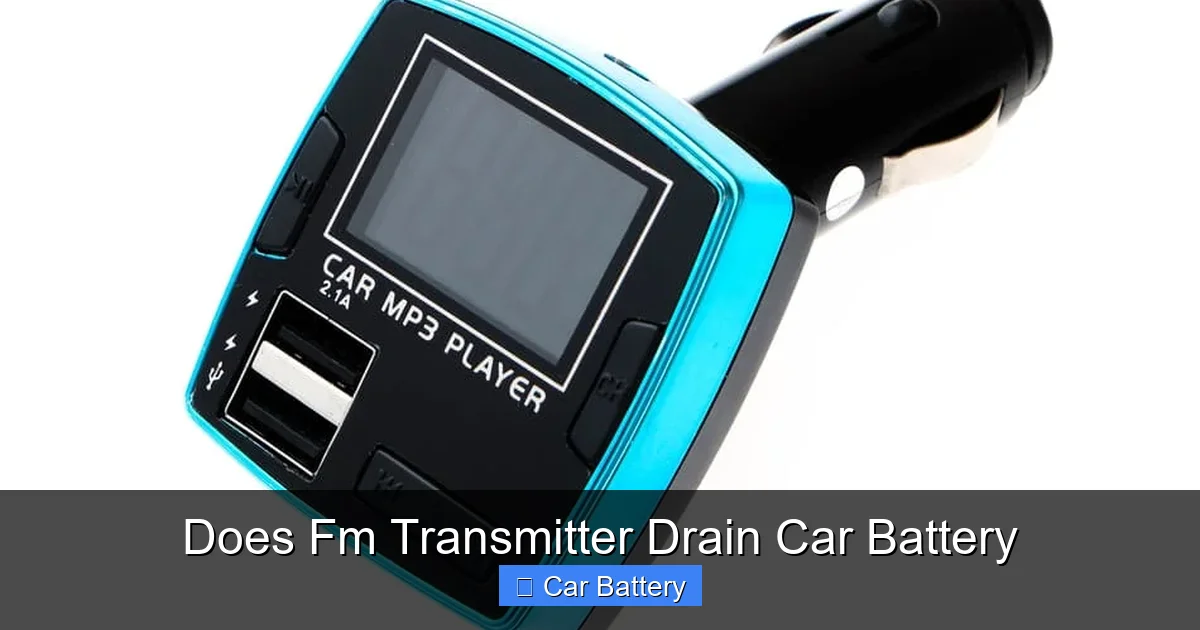
FM transmitters are low-power devices that draw minimal energy from your car’s cigarette lighter or 12V socket. While they don’t typically drain your battery under normal use, leaving them plugged in for extended periods with the engine off can contribute to gradual battery depletion—especially in older vehicles or during cold weather.
In This Article
- 1 Key Takeaways
- 2 📑 Table of Contents
- 3 Introduction: The Convenience of Wireless Audio in Your Car
- 4 How FM Transmitters Work and Their Power Source
- 5 Does an FM Transmitter Actually Drain Your Car Battery?
- 6 Factors That Influence Battery Drain from FM Transmitters
- 7 How to Prevent FM Transmitter Battery Drain
- 7.1 Unplug When Not in Use
- 7.2 Use a Transmitter with Auto-Shutoff
- 7.3 Install a Smart 12V Socket or Switch
- 7.4 Use a Battery Maintainer or Trickle Charger
- 7.5 Monitor Your Battery Health Regularly check your battery’s condition. Most auto parts stores offer free battery testing. If your battery is more than 4 years old or shows signs of weakness (slow cranking, dim lights), consider replacing it. A healthy battery is far less likely to be affected by small power draws. Think of it like a strong immune system—it can handle minor stresses without getting sick. Alternatives to FM Transmitters If you’re still concerned about battery drain—or if you’ve experienced interference with FM signals—consider these alternatives: Bluetooth Car Kits
- 7.6 AUX Cable
- 7.7 Aftermarket Head Units
- 8 Conclusion: Peace of Mind with Smart Habits
- 9 Frequently Asked Questions
- 9.1 Can an FM transmitter drain my car battery overnight?
- 9.2 How much power does an FM transmitter use?
- 9.3 Should I unplug my FM transmitter when not in use?
- 9.4 Do all FM transmitters have auto-shutoff?
- 9.5 Can cold weather make FM transmitter drain worse?
- 9.6 Is it safe to leave an FM transmitter plugged in all the time?
Key Takeaways
- FM transmitters use very little power: Most draw between 0.5 to 2 watts, which is negligible compared to other car electronics.
- Battery drain is rare during normal use: When used while driving, the alternator powers the device and recharges the battery simultaneously.
- Leaving it plugged in overnight can cause issues: Continuous draw over many hours may slowly deplete a weak or aging battery.
- Older cars are more vulnerable: Vehicles with weaker electrical systems or degraded batteries are at higher risk of drain.
- Use a smart charger or disconnect when parked: Prevent unnecessary drain by unplugging the transmitter or using a battery maintainer.
- Quality matters: Cheap, poorly designed transmitters may have higher standby power consumption or faulty circuits.
- Monitor battery health regularly: A healthy battery is less likely to be affected by small power draws from accessories like FM transmitters.
📑 Table of Contents
- Introduction: The Convenience of Wireless Audio in Your Car
- How FM Transmitters Work and Their Power Source
- Does an FM Transmitter Actually Drain Your Car Battery?
- Factors That Influence Battery Drain from FM Transmitters
- How to Prevent FM Transmitter Battery Drain
- Alternatives to FM Transmitters
- Conclusion: Peace of Mind with Smart Habits
Introduction: The Convenience of Wireless Audio in Your Car
Remember the days of fumbling with cassette adapters or aux cords just to play your favorite playlist through your car stereo? Thanks to modern technology, those days are long gone. One of the most popular solutions today is the FM transmitter—a small, affordable device that plugs into your car’s 12V cigarette lighter socket and broadcasts audio from your phone or MP3 player to your car radio via an unused FM frequency.
It’s simple, wireless, and works with almost any car, even older models without Bluetooth or USB ports. Whether you’re commuting to work, taking a road trip, or just running errands, an FM transmitter gives you instant access to music, podcasts, and navigation audio without needing to upgrade your entire sound system. But with convenience comes a common concern: Does an FM transmitter drain your car battery? It’s a fair question, especially if you’ve ever come back to a dead battery after leaving something plugged in overnight.
How FM Transmitters Work and Their Power Source
To understand whether an FM transmitter can drain your car battery, it helps to know exactly how these devices operate. An FM transmitter is essentially a mini radio station. It takes the audio signal from your smartphone (via Bluetooth, AUX, or USB) and converts it into an FM radio signal. You then tune your car radio to the same frequency—say, 88.1 FM—and the audio plays through your car speakers.
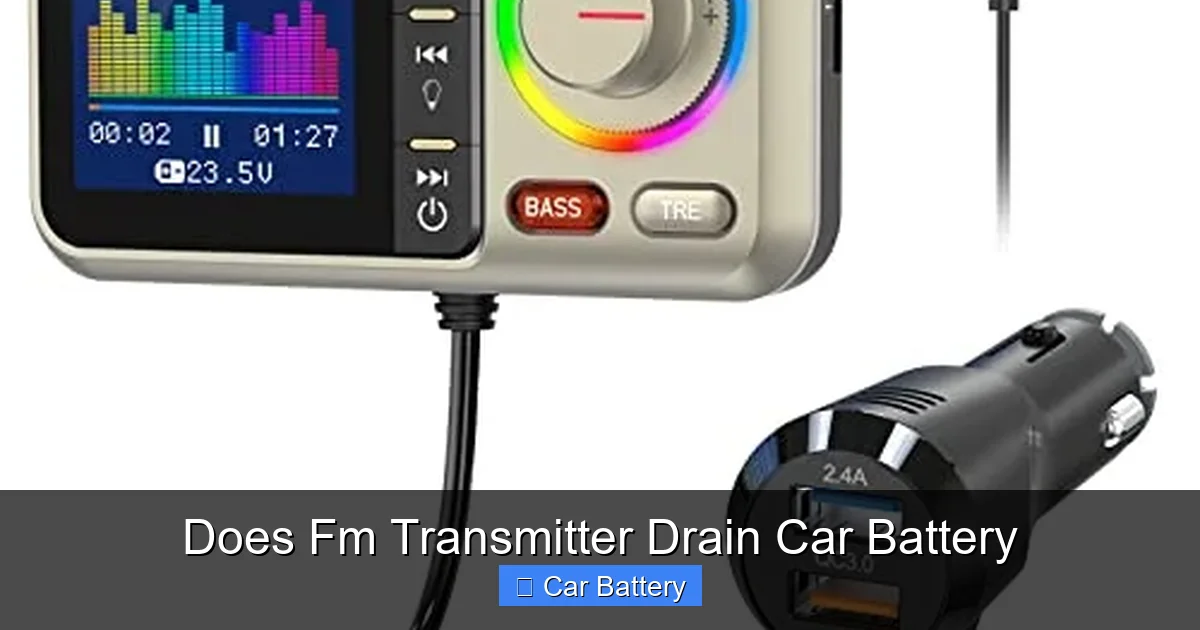
Visual guide about Does Fm Transmitter Drain Car Battery
Image source: m.media-amazon.com
Power Source: The 12V Cigarette Lighter Socket
Most FM transmitters draw power directly from your car’s 12V cigarette lighter socket, also known as the accessory socket. This socket is part of your vehicle’s electrical system and is typically live whenever the ignition is on. Some sockets remain powered even when the engine is off, depending on your car’s design.
The transmitter itself contains a small internal circuit that regulates the incoming 12V power to a level suitable for its components—usually around 3.3V to 5V. This process is efficient and consumes very little energy. In fact, most FM transmitters use between 0.5 and 2 watts of power. To put that in perspective, a single LED light bulb uses about 1 watt. So, the transmitter is drawing roughly the same amount of power as a tiny nightlight.
Energy Consumption Compared to Other Car Devices
Let’s compare the FM transmitter’s power usage to other common car accessories:
- Phone charger (USB): ~5–10 watts
- Dash cam (with parking mode): ~3–5 watts
- Car vacuum cleaner: ~100–150 watts
- FM transmitter: ~0.5–2 watts
As you can see, the FM transmitter is one of the least power-hungry devices you can plug into your car. It’s far less demanding than a phone charger or a dash cam. This low power draw is a key reason why FM transmitters rarely cause battery issues during normal use.
Does an FM Transmitter Actually Drain Your Car Battery?
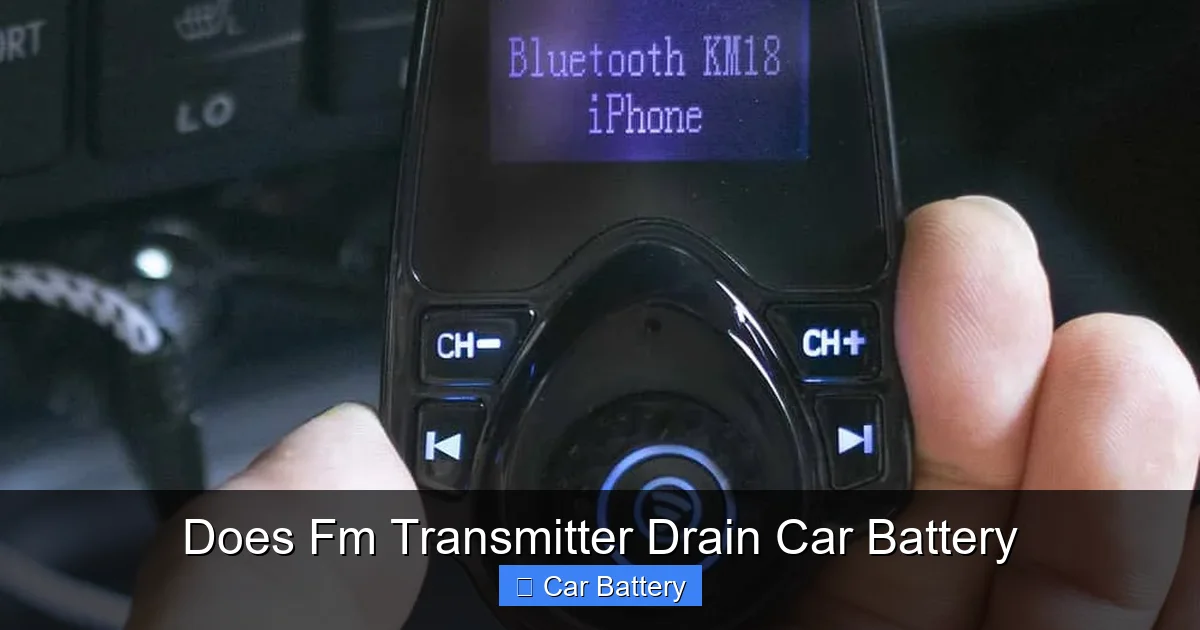
Now for the big question: Can an FM transmitter drain your car battery? The short answer is: Yes, technically—but it’s highly unlikely under normal circumstances. Let’s break this down.
Visual guide about Does Fm Transmitter Drain Car Battery
Image source: drivingonroad.com
When the Engine Is Running: No Problem
When your car is running, the alternator generates electricity to power all electrical systems and recharge the battery. At this point, the FM transmitter is drawing a tiny fraction of the available power—less than 0.1% of what the alternator produces. So, even if you use the transmitter for hours during a long drive, it won’t make a noticeable dent in your battery’s charge.
In fact, the alternator is designed to handle much larger loads, like headlights, air conditioning, and the stereo system. The FM transmitter is a drop in the bucket. You could leave it plugged in all day while driving and still have plenty of battery power left.
When the Engine Is Off: The Real Risk
The concern arises when the engine is off. In this state, the battery is the sole source of power. If the FM transmitter remains plugged in and active, it will continue to draw a small amount of current—typically around 50 to 200 milliamps (mA).
To understand the impact, let’s do a quick calculation. A typical car battery has a capacity of about 48 amp-hours (Ah). If a device draws 100 mA (0.1 amps), it would take:
48 Ah ÷ 0.1 A = 480 hours (or 20 days) to fully drain the battery—assuming no other loads and a perfectly healthy battery.
That sounds like a long time, right? And it is. But here’s the catch: most car batteries aren’t perfectly healthy, and other small drains (like the clock, alarm system, or infotainment memory) are always present. These are called parasitic drains, and they can add up.
So, while the FM transmitter alone won’t kill your battery overnight, it can contribute to a slow drain—especially if your battery is already weak, old, or exposed to cold weather (which reduces battery efficiency).
Real-World Scenarios: When Drain Might Happen
Let’s look at a few realistic situations where an FM transmitter could contribute to battery drain:
- Leaving the transmitter plugged in for days: If you park your car for a week and forget to unplug the transmitter, that constant 100 mA draw—combined with other small drains—could eventually deplete a weak battery.
- Cold weather conditions: In winter, car batteries lose up to 35% of their capacity. A small drain that wouldn’t matter in summer could be the final straw in freezing temperatures.
- Older vehicles with degraded batteries: A battery older than 4–5 years may not hold a charge well. Even a small continuous load can push it below the threshold needed to start the engine.
- Faulty or low-quality transmitters: Some cheap models have poor power management and may draw more current than advertised, especially in standby mode.
In most cases, though, the FM transmitter is not the primary culprit. It’s usually the last straw on an already strained system.
Factors That Influence Battery Drain from FM Transmitters
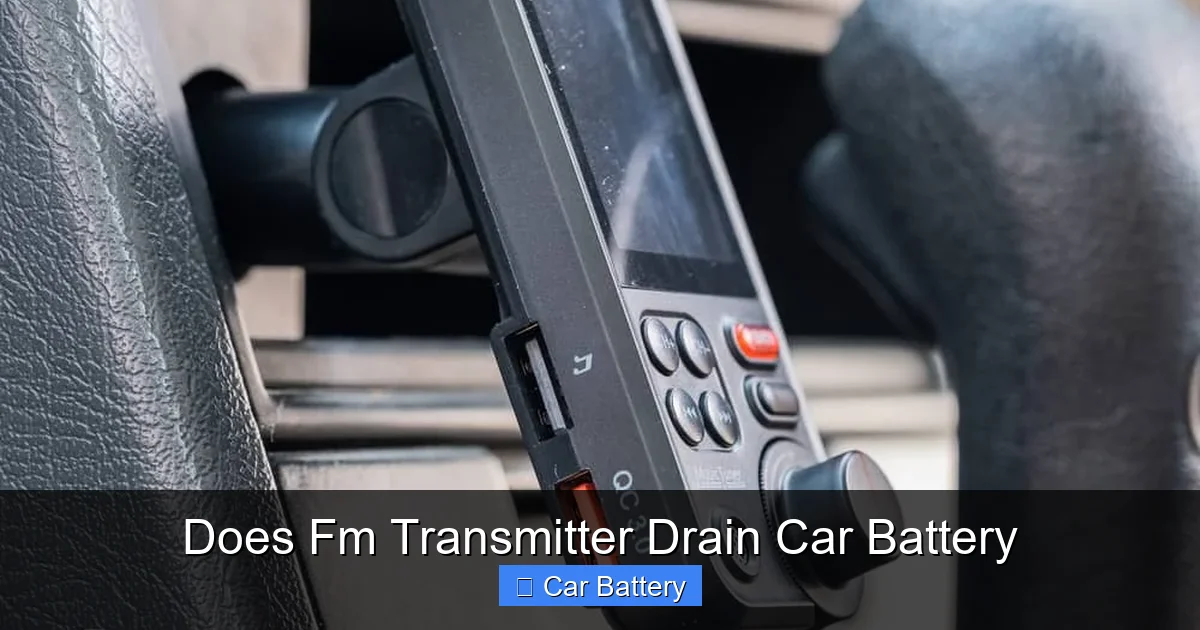
Not all FM transmitters are created equal, and several factors can influence how much power they draw and whether they pose a risk to your battery.
Visual guide about Does Fm Transmitter Drain Car Battery
Image source: drivingonroad.com
Transmitter Quality and Design
Higher-quality FM transmitters often include features like auto-shutoff or low-power standby modes. These help reduce power consumption when the device isn’t actively transmitting audio. For example, some models turn off automatically after 10 minutes of inactivity.
Cheaper transmitters, on the other hand, may lack these features. They might stay fully powered even when not in use, drawing more current over time. Always check product specifications and user reviews to ensure you’re buying a well-designed device.
Bluetooth vs. AUX Connection
FM transmitters that use Bluetooth to connect to your phone may consume slightly more power than those using a wired AUX connection. This is because Bluetooth requires constant wireless communication, which uses additional energy.
However, the difference is minimal—usually less than 0.5 watts. Unless you’re extremely concerned about power efficiency, this shouldn’t be a deciding factor. The convenience of wireless Bluetooth often outweighs the tiny increase in power draw.
Car Electrical System and Battery Health
Your car’s overall electrical health plays a big role in whether an FM transmitter can cause battery issues. A well-maintained vehicle with a new battery and a functioning alternator can easily handle small accessories without any problems.
But if your car has:
- A battery older than 4 years
- A history of starting issues
- Frequent short trips (which don’t allow the battery to fully recharge)
- Aftermarket electronics that draw power when off
…then even a small drain from an FM transmitter could become a concern.
Socket Type: Always-On vs. Ignition-Controlled
Some cars have cigarette lighter sockets that are only powered when the ignition is on. In these vehicles, the FM transmitter will automatically turn off when you turn off the engine—eliminating any risk of battery drain.
Other cars have sockets that remain powered even when the car is off. This is common in newer vehicles with advanced infotainment systems. If your socket stays live, you’ll need to manually unplug the transmitter or use a model with auto-shutoff to prevent drain.
You can test your socket by plugging in a phone charger and seeing if it charges when the engine is off. If it does, the socket is always-on.
How to Prevent FM Transmitter Battery Drain
The good news is that preventing battery drain from an FM transmitter is simple and doesn’t require any technical expertise. Here are practical tips to keep your battery healthy while still enjoying wireless audio.
Unplug When Not in Use
The easiest and most effective solution is to unplug the FM transmitter when you’re not using it. This completely eliminates any risk of drain. Make it a habit—just like turning off the lights when you leave a room.
If you’re worried about forgetting, consider storing the transmitter in your glove compartment or center console. That way, it’s out of sight and out of mind when you park.
Use a Transmitter with Auto-Shutoff
Invest in an FM transmitter that includes an auto-shutoff feature. These devices detect when no audio is being played and automatically power down after a set period—usually 5 to 15 minutes. This prevents unnecessary drain when the car is off.
Look for models with LED indicators that show when the device is active. This helps you confirm it’s turned off.
Install a Smart 12V Socket or Switch
For a more permanent solution, consider installing a smart 12V socket or a manual switch on your cigarette lighter port. These allow you to cut power to the socket with the flip of a switch or via a timer.
Some smart sockets even connect to your phone via Bluetooth and can be controlled remotely. You can turn them off from inside your house before heading out, ensuring nothing is draining your battery.
Use a Battery Maintainer or Trickle Charger
If you frequently park your car for long periods (like during vacations or winter storage), use a battery maintainer or trickle charger. These devices keep your battery at optimal charge without overcharging it.
They’re especially useful for older cars or vehicles with high parasitic drains. A maintainer ensures your battery stays healthy, even with small accessories like an FM transmitter plugged in.
Monitor Your Battery Health
Regularly check your battery’s condition. Most auto parts stores offer free battery testing. If your battery is more than 4 years old or shows signs of weakness (slow cranking, dim lights), consider replacing it.
A healthy battery is far less likely to be affected by small power draws. Think of it like a strong immune system—it can handle minor stresses without getting sick.
Alternatives to FM Transmitters
If you’re still concerned about battery drain—or if you’ve experienced interference with FM signals—consider these alternatives:
Bluetooth Car Kits
Many modern cars support Bluetooth audio streaming. If yours does, you can pair your phone directly to the stereo without any wires or transmitters. This uses your phone’s Bluetooth, not the car’s electrical system, so there’s no battery drain at all.
AUX Cable
A simple 3.5mm aux cable is the most reliable and power-free option. Just plug one end into your phone and the other into your car’s AUX input. No batteries, no transmitters, no drain.
Aftermarket Head Units
If your car lacks modern connectivity, consider upgrading to a new stereo with built-in Bluetooth, USB, or Apple CarPlay/Android Auto. While this requires an investment, it eliminates the need for external devices and improves audio quality.
Conclusion: Peace of Mind with Smart Habits
So, does an FM transmitter drain your car battery? The answer is nuanced. Under normal use—while driving—it poses no risk at all. The device draws minimal power, and your alternator easily compensates. However, if left plugged in for extended periods with the engine off, especially in older or weak batteries, it can contribute to a slow drain.
The key is awareness and good habits. Unplug the transmitter when you’re done using it, choose a model with auto-shutoff, and keep your battery in good condition. With these simple steps, you can enjoy wireless audio without worrying about a dead battery.
Remember, the FM transmitter is just one small piece of your car’s electrical puzzle. By understanding how it works and how it interacts with your vehicle, you can make informed decisions that keep both your music and your battery running smoothly.
Frequently Asked Questions
Can an FM transmitter drain my car battery overnight?
It’s unlikely but possible, especially if your battery is old or weak. Most transmitters draw very little power, but combined with other small drains, they could contribute to a dead battery over several days.
How much power does an FM transmitter use?
Most FM transmitters use between 0.5 and 2 watts of power, which is less than a typical phone charger. This is a very small load on your car’s electrical system.
Should I unplug my FM transmitter when not in use?
Yes, it’s a good habit. Unplugging it eliminates any risk of battery drain, especially if your car’s 12V socket stays powered when the engine is off.
Do all FM transmitters have auto-shutoff?
No, only higher-quality models include this feature. Check the product description before buying to see if it powers down automatically after inactivity.
Can cold weather make FM transmitter drain worse?
Yes. Cold temperatures reduce battery efficiency, making it easier for small drains—like an FM transmitter—to contribute to a dead battery, especially in older vehicles.
Is it safe to leave an FM transmitter plugged in all the time?
It’s generally safe if your battery is healthy and the transmitter has auto-shutoff. However, for peace of mind and battery longevity, it’s best to unplug it when the car is parked for long periods.