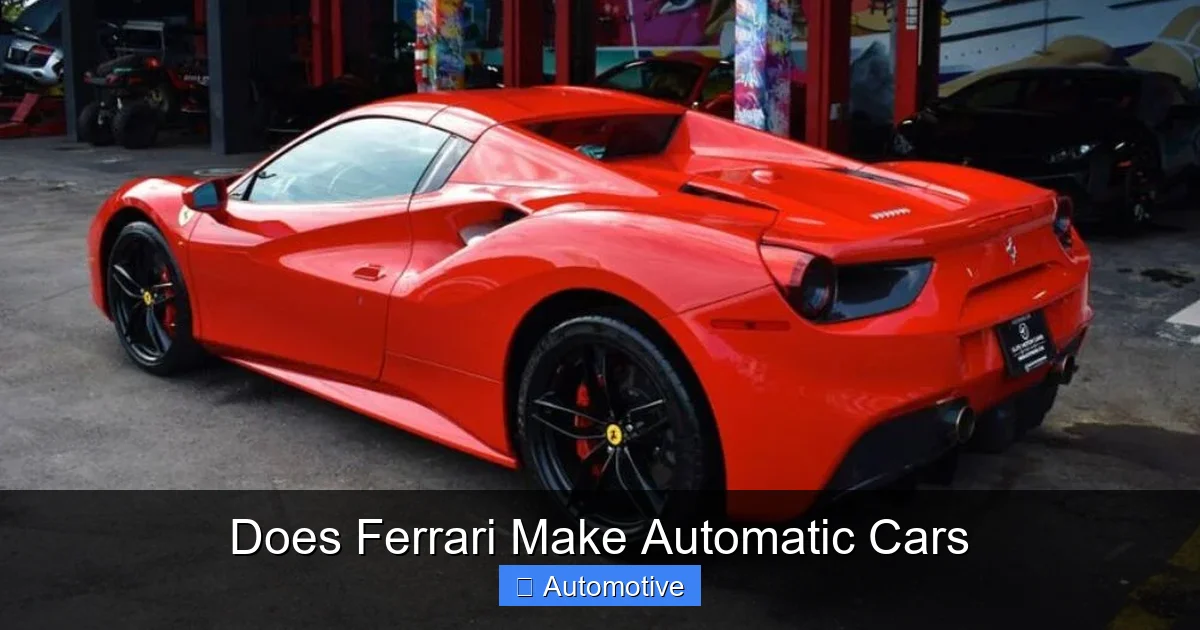
Does Ferrari Make Automatic Cars

Contents
- 1 Key Takeaways
- 2 📑 Table of Contents
- 3 Does Ferrari Make Automatic Cars? The Truth Behind the Gearbox Evolution
- 4 The End of the Manual Era: A Look Back at Ferrari’s Gearbox History
- 5 How Ferrari’s Automatic Transmissions Work: The Technology Behind the Thrill
- 6 Ferrari’s Current Lineup: Which Models Come with Automatic Transmissions?
- 7 Performance vs. Practicality: Why Ferrari Chose Automatic Transmissions
- 8 The Future of Ferrari Transmissions: What’s Next?
- 9 Conclusion: Ferrari’s Automatic Cars Are Here to Stay
- 10 Frequently Asked Questions

Car Ambient Light Kit
Reflective Safety Triangle

Car USB Charger

Bluetooth FM Transmitter
Ferrari does make automatic cars—in fact, nearly all of its current models feature advanced automatic transmissions. While the brand is rooted in manual driving heritage, modern Ferraris use sophisticated dual-clutch automatics that deliver lightning-fast shifts and thrilling performance.
Key Takeaways
- Ferrari offers automatic transmissions across its entire lineup: Every new Ferrari model today comes with an advanced automatic gearbox, primarily dual-clutch systems.
- No manual Ferraris in production since 2012: The last factory-equipped manual Ferrari was the 599 GTB Fiorano, marking the end of an era.
- Dual-clutch automatics dominate: Ferrari’s F1-style DCT (Dual Clutch Transmission) delivers ultra-fast gear changes, enhancing both performance and driver engagement.
- Automatic doesn’t mean less driver control: Many Ferraris include paddle shifters and multiple driving modes, allowing drivers to manually select gears when desired.
- Smooth city driving and track dominance: Modern Ferrari automatics excel in everyday comfort and high-speed precision, making them versatile supercars.
- Future-focused innovation: Ferrari continues to refine its automatic systems, integrating hybrid technology and AI-driven shift logic for optimal performance.
📑 Table of Contents
- Does Ferrari Make Automatic Cars? The Truth Behind the Gearbox Evolution
- The End of the Manual Era: A Look Back at Ferrari’s Gearbox History
- How Ferrari’s Automatic Transmissions Work: The Technology Behind the Thrill
- Ferrari’s Current Lineup: Which Models Come with Automatic Transmissions?
- Performance vs. Practicality: Why Ferrari Chose Automatic Transmissions
- The Future of Ferrari Transmissions: What’s Next?
- Conclusion: Ferrari’s Automatic Cars Are Here to Stay
Does Ferrari Make Automatic Cars? The Truth Behind the Gearbox Evolution
When you think of Ferrari, images of roaring V8s and V12s, sleek Italian design, and the prancing horse logo likely come to mind. But what about the gearbox? For decades, driving purists associated Ferrari with manual transmissions—the kind that required skill, timing, and a third pedal to master. Shifting gears by hand was part of the romance, the connection between man and machine. But times have changed. Today, if you walk into a Ferrari dealership, you won’t find a single new model with a traditional manual transmission. So, does Ferrari make automatic cars? The short answer is yes—and not just any automatics, but some of the most advanced, high-performance gearboxes in the automotive world.
Ferrari has fully embraced automatic transmissions, not as a compromise, but as a leap forward in performance and usability. While the brand’s heritage is deeply tied to manual driving, the shift to automatics reflects broader trends in the supercar industry: faster acceleration, improved fuel efficiency, and enhanced driver experience. Modern Ferrari automatics—especially the dual-clutch systems—are engineered to deliver split-second gear changes, seamless power delivery, and an emotional driving experience that rivals, and in some ways surpasses, the old manual setups. Whether you’re carving through mountain roads or cruising through city traffic, Ferrari’s automatic transmissions are designed to make every drive exhilarating.
The End of the Manual Era: A Look Back at Ferrari’s Gearbox History
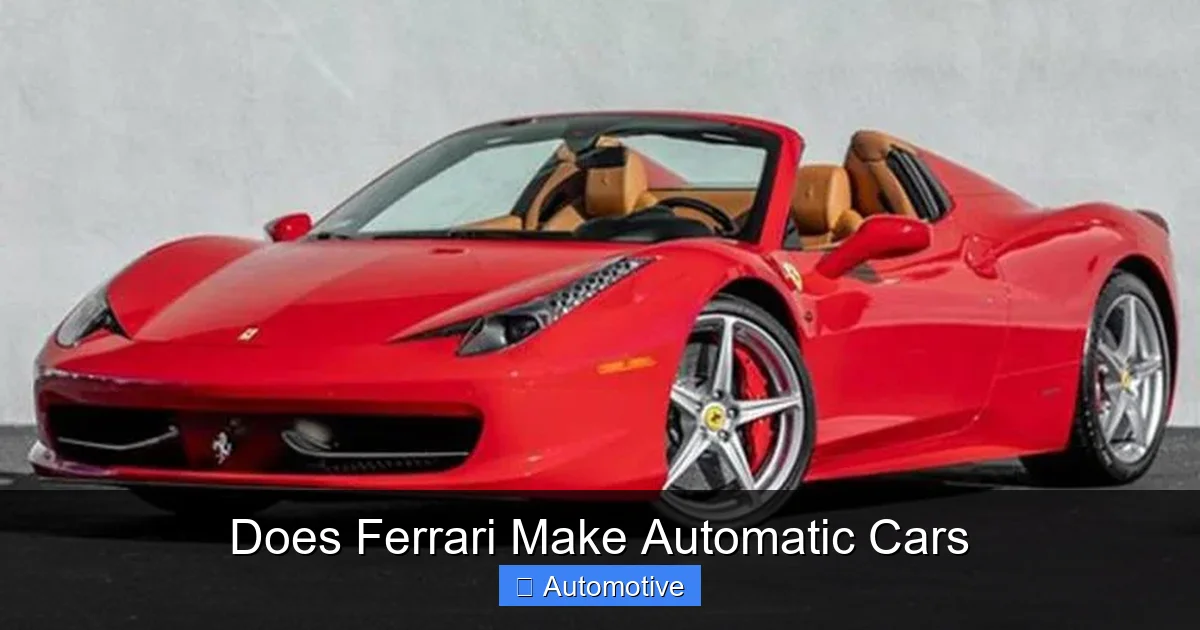
Visual guide about Does Ferrari Make Automatic Cars
Image source: experienceferrari.com
To understand why Ferrari now makes automatic cars, it helps to look at where the brand came from. For much of its history, Ferrari was synonymous with manual transmissions. From the iconic 250 GTO to the F40 and the Enzo, these legends were built for drivers who wanted full control over their machines. The manual gearbox wasn’t just a feature—it was a badge of honor. It required skill, precision, and a deep understanding of the car’s behavior. Shifting at the right RPM, heel-and-toe downshifting, and mastering clutch modulation were all part of the Ferrari experience.
However, as automotive technology advanced, so did the demands on performance. By the early 2000s, automakers began experimenting with automated manual transmissions (AMTs) and dual-clutch systems that could shift faster than any human. Ferrari was at the forefront of this revolution. In 2009, the California introduced the brand’s first dual-clutch automatic transmission, the F1 DCT. This wasn’t your grandmother’s automatic—it was a race-bred system capable of shifting gears in under 100 milliseconds. The California could go from 0 to 60 mph in just over 4 seconds, a feat made possible in part by the lightning-fast gearbox.
The final nail in the coffin for manual Ferraris came in 2012, when the 599 GTB Fiorano was discontinued. It was the last Ferrari to offer a factory-installed manual transmission. Since then, every new Ferrari—whether it’s the F8 Tributo, the SF90 Stradale, or the Roma—has come equipped with an automatic transmission. This shift wasn’t about abandoning tradition; it was about embracing innovation. Ferrari recognized that modern drivers wanted both performance and convenience, and the automatic transmission delivered on both fronts.
How Ferrari’s Automatic Transmissions Work: The Technology Behind the Thrill
Visual guide about Does Ferrari Make Automatic Cars
Image source: apexautogarage.com
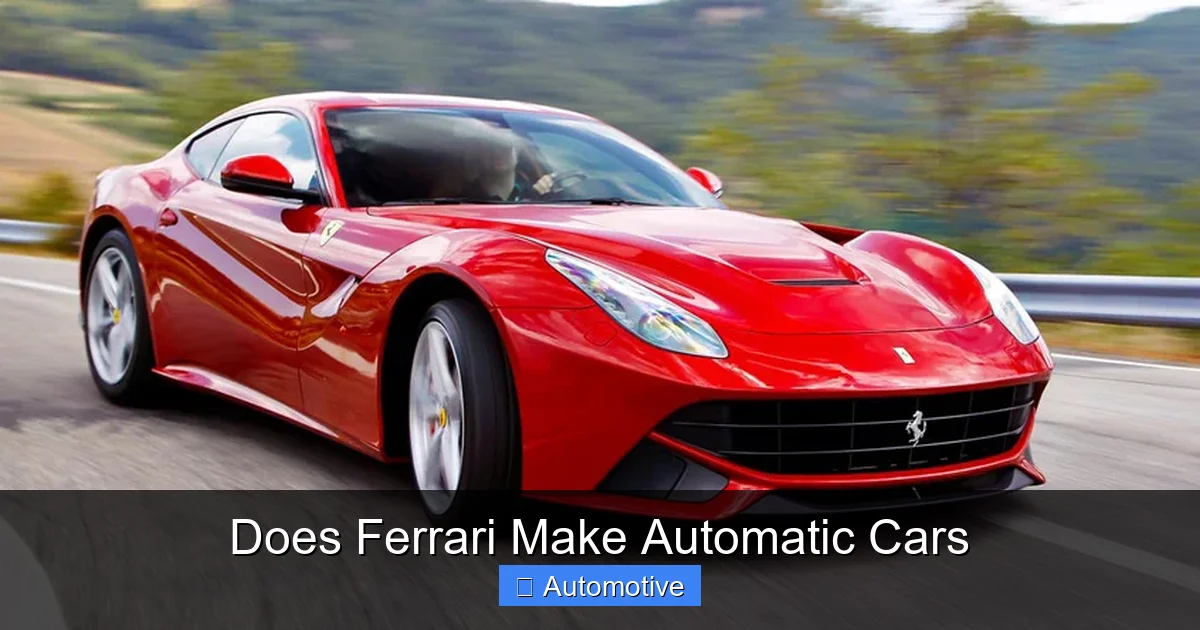
So, what makes Ferrari’s automatic transmissions so special? Unlike traditional torque-converter automatics found in many luxury sedans, Ferrari uses dual-clutch transmissions (DCTs), also known as F1-style gearboxes. These systems are derived from racing technology and are designed for maximum speed and efficiency.
Dual-Clutch Transmission Explained
A dual-clutch transmission uses two separate clutches—one for odd-numbered gears (1st, 3rd, 5th) and one for even-numbered gears (2nd, 4th, 6th). While one clutch is engaged, the other pre-selects the next gear. When it’s time to shift, the system simply disengages one clutch and engages the other—almost instantaneously. This eliminates the power interruption seen in traditional automatics and allows for smoother, faster acceleration.
Ferrari’s DCT systems are electronically controlled and can adapt to driving conditions in real time. For example, in Sport mode, the transmission holds gears longer for maximum performance. In Comfort mode, it shifts earlier to improve fuel economy and reduce engine noise. The system also includes launch control, which optimizes acceleration from a standstill by managing engine RPM and clutch engagement.
Paddle Shifters and Manual Mode
Even though Ferrari’s cars are automatic, they still offer a manual-like experience. Most models come with steering-wheel-mounted paddle shifters, allowing drivers to manually select gears without using a clutch pedal. This gives enthusiasts the thrill of shifting while retaining the convenience of an automatic. The paddles are made of lightweight materials like carbon fiber or aluminum and provide tactile feedback with every shift.
In manual mode, the transmission won’t automatically upshift at redline or downshift when decelerating—putting full control in the driver’s hands. However, the system includes safeguards to prevent engine damage, such as automatic upshifts if the driver forgets to shift at high RPMs.
Integration with Driving Modes
Ferrari’s automatic transmissions are deeply integrated with the car’s driving dynamics. Each model offers multiple driving modes—such as Wet, Comfort, Sport, and Race—that adjust not only the suspension and throttle response but also the transmission behavior. In Race mode, for instance, the DCT becomes more aggressive, holding gears longer and shifting at higher RPMs for maximum performance. This level of customization ensures that the car feels responsive and engaging, no matter the driving conditions.
Ferrari’s Current Lineup: Which Models Come with Automatic Transmissions?
Visual guide about Does Ferrari Make Automatic Cars
Image source: car-images.bauersecure.com
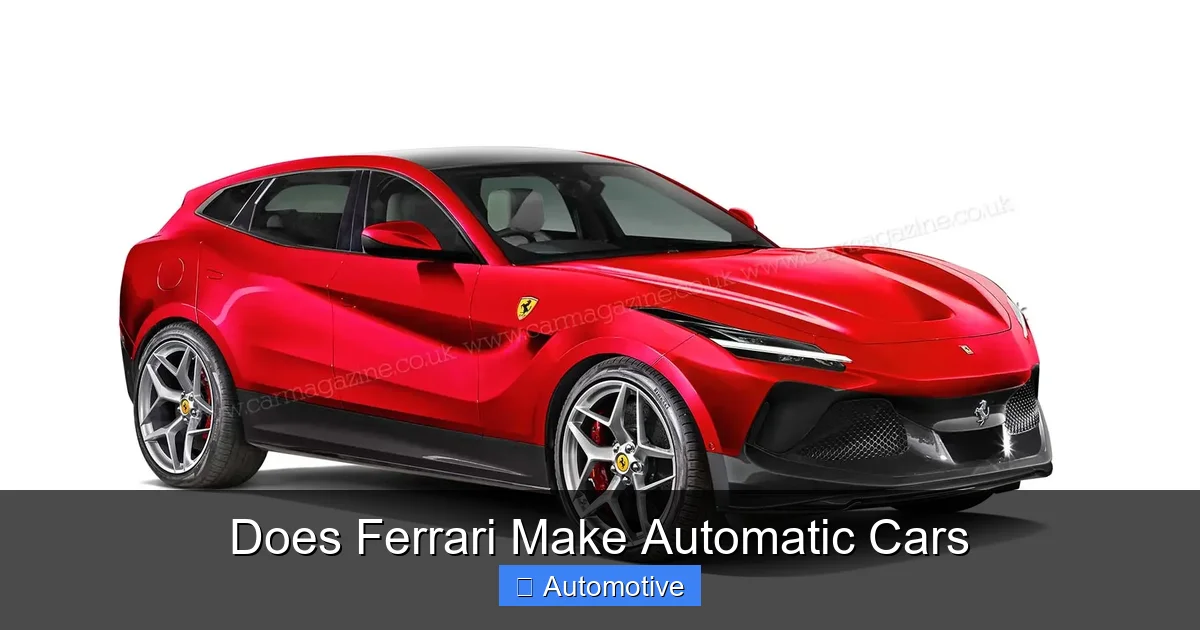
As of 2024, every Ferrari model in production features an automatic transmission. Here’s a breakdown of the current lineup and their gearbox technology:
Ferrari Roma and Roma Spider
The Roma is Ferrari’s entry-level grand tourer, designed for elegance and everyday usability. It’s powered by a 3.9-liter twin-turbo V8 and comes with an 8-speed dual-clutch automatic transmission. The gearbox delivers smooth shifts in city driving and razor-sharp responses on the highway. The Roma Spider, the convertible version, shares the same transmission and offers a thrilling open-top experience.
Ferrari F8 Tributo and F8 Spider
The F8 Tributo is a mid-engine supercar that honors Ferrari’s legacy of high-performance V8s. It features a 710-horsepower 3.9-liter twin-turbo V8 paired with a 7-speed dual-clutch automatic. The transmission is tuned for track performance, with rapid shifts and launch control capabilities. The F8 Spider offers the same powertrain in a convertible format.
Ferrari SF90 Stradale and SF90 Spider
The SF90 Stradale is Ferrari’s first series-production plug-in hybrid supercar. It combines a 4.0-liter twin-turbo V8 with three electric motors for a total output of 986 horsepower. The car uses an 8-speed dual-clutch automatic transmission that’s specially designed to handle the hybrid powertrain. The gearbox can operate in electric-only mode for silent city driving or deliver full hybrid power for blistering acceleration.
Ferrari 296 GTB and 296 GTS
The 296 GTB is Ferrari’s newest V6 hybrid supercar, featuring a 2.9-liter twin-turbo V6 and an electric motor for a combined 818 horsepower. It uses an 8-speed dual-clutch automatic that’s lightweight and efficient. The 296 GTS is the spider version, offering the same performance with a retractable hardtop.
Ferrari Purosangue
The Purosangue is Ferrari’s first four-door, four-seater SUV. Despite its size, it’s built for performance, with a 6.5-liter V12 engine and an 8-speed dual-clutch automatic transmission. The gearbox ensures smooth power delivery and quick shifts, making the Purosangue both practical and thrilling to drive.
Performance vs. Practicality: Why Ferrari Chose Automatic Transmissions
At first glance, the shift to automatic transmissions might seem like a betrayal of Ferrari’s racing roots. But the decision was driven by real-world performance gains and evolving customer expectations.
Faster Acceleration and Better Lap Times
One of the biggest advantages of dual-clutch automatics is speed. Because shifts happen in milliseconds, there’s no power loss between gears. This results in faster 0-60 mph times and improved lap times on the track. For example, the Ferrari SF90 Stradale can accelerate from 0 to 60 mph in just 2.5 seconds—faster than many manual supercars from just a decade ago.
Improved Fuel Efficiency and Emissions
Modern automatic transmissions are more efficient than their manual counterparts. Ferrari’s DCT systems reduce friction and optimize gear selection, leading to better fuel economy and lower emissions. This is especially important as automakers face stricter environmental regulations.
Enhanced Driver Experience
Ferrari’s automatic transmissions aren’t just about performance—they’re about enjoyment. The systems are designed to be intuitive and responsive, whether you’re driving in traffic or on a racetrack. Features like launch control, adaptive shift logic, and paddle shifters make the car feel alive and connected to the driver.
Broader Market Appeal
By offering automatic transmissions, Ferrari has made its cars more accessible to a wider audience. Not everyone wants to deal with a clutch pedal, especially in stop-and-go traffic. The automatic gearbox allows more people to experience the thrill of driving a Ferrari without sacrificing performance.
The Future of Ferrari Transmissions: What’s Next?
As Ferrari continues to innovate, its automatic transmissions will only get more advanced. The brand is investing heavily in hybrid and electric technology, and future gearboxes will need to adapt to new powertrains.
Hybrid and Electric Integration
Ferrari’s hybrid models, like the SF90 and 296 GTB, already use automatic transmissions that work seamlessly with electric motors. In the future, we can expect even more integration, with gearboxes that optimize power delivery between combustion and electric systems.
AI and Predictive Shifting
Ferrari is exploring the use of artificial intelligence to improve shift logic. Future systems could learn a driver’s habits and anticipate gear changes based on road conditions, GPS data, and driving style. This would make the car even more responsive and personalized.
Lightweight and Compact Designs
As Ferrari pushes for greater efficiency, future transmissions will likely be lighter and more compact. This will improve weight distribution and handling, key factors in supercar performance.
Conclusion: Ferrari’s Automatic Cars Are Here to Stay
So, does Ferrari make automatic cars? Absolutely—and they’re better than ever. While the brand’s manual heritage will always be cherished, the shift to automatic transmissions represents a natural evolution in the pursuit of performance, efficiency, and driver enjoyment. Ferrari’s dual-clutch systems are among the most advanced in the world, delivering speed, precision, and emotion in every shift.
Whether you’re behind the wheel of a Roma, an F8 Tributo, or the groundbreaking SF90 Stradale, you’re experiencing the future of Ferrari engineering. These cars prove that automatic doesn’t mean automatic—it means automatic performance, automatic innovation, and automatic excitement. And for Ferrari, that’s a legacy worth driving into the future.
Frequently Asked Questions
Does Ferrari still make manual transmission cars?
No, Ferrari has not produced a new manual transmission car since 2012. The last model to offer a factory manual was the 599 GTB Fiorano. All current Ferrari models come with advanced automatic transmissions.
What type of automatic transmission does Ferrari use?
Ferrari uses dual-clutch transmissions (DCTs), also known as F1-style gearboxes. These systems shift gears in under 100 milliseconds and are derived from racing technology for maximum performance.
Can you manually shift gears in a Ferrari automatic?
Yes, most Ferrari models come with steering-wheel-mounted paddle shifters that allow drivers to manually select gears in manual mode, giving a more engaging driving experience.
Are Ferrari automatic cars good for daily driving?
Yes, Ferrari’s automatic transmissions are designed for both performance and comfort. With multiple driving modes and smooth shifts, models like the Roma and Purosangue are well-suited for everyday use.
Do Ferrari automatics have launch control?
Yes, most modern Ferrari models with automatic transmissions include launch control, which optimizes acceleration from a standstill by managing engine RPM and clutch engagement.
Will Ferrari ever bring back manual transmissions?
It’s highly unlikely. The shift to automatics was driven by performance, efficiency, and market demand. Ferrari has no plans to reintroduce manual transmissions in new models.