Does Cvs Sell Car Oil

Contents
- 1 Key Takeaways
- 2 📑 Table of Contents
- 3 Does CVS Sell Car Oil? A Complete Guide for Drivers
- 4 What Does CVS Typically Carry in the Automotive Section?
- 5 Where to Find Car Oil Near CVS (And Why It Matters)
- 6 How to Choose the Right Car Oil (Even If CVS Doesn’t Have It)
- 7 Tips for Buying and Storing Car Oil
- 8 When to Skip CVS and Go Straight to an Auto Specialist
- 9 Summary Table: Where to Buy Car Oil (And What to Expect)
- 10 Final Thoughts: Should You Rely on CVS for Car Oil?
- 11 Frequently Asked Questions

Engine Oil Additive

Octane Booster
Tire Shine Spray

Car Windshield Wiper Blades
CVS does not sell car oil—despite offering a wide range of automotive accessories like windshield wipers and air fresheners, motor oil is not available at their stores or online. For car oil, you’ll need to visit auto supply retailers such as AutoZone, O’Reilly, or Walmart, where a full selection of engine oils and fluids is stocked.
“`html
Key Takeaways
- CVS does not sell car oil in its standard retail locations.
- Check CVS online inventory for occasional specialty or seasonal automotive items.
- Visit auto supply stores like AutoZone or Advance Auto Parts for reliable oil options.
- Use CVS for convenience items like wiper fluid or air fresheners, not engine oil.
- Call ahead to confirm if a specific CVS location carries automotive products.
- Consider CVS prescription auto-refill for car-related medications, not maintenance supplies.
📑 Table of Contents
- Does CVS Sell Car Oil? A Complete Guide for Drivers
- What Does CVS Typically Carry in the Automotive Section?
- Where to Find Car Oil Near CVS (And Why It Matters)
- How to Choose the Right Car Oil (Even If CVS Doesn’t Have It)
- Tips for Buying and Storing Car Oil
- When to Skip CVS and Go Straight to an Auto Specialist
- Summary Table: Where to Buy Car Oil (And What to Expect)
- Final Thoughts: Should You Rely on CVS for Car Oil?
Does CVS Sell Car Oil? A Complete Guide for Drivers
Picture this: You’re driving home after a long day, and your dashboard lights up like a Christmas tree. The “Check Engine” light is on, and you’re pretty sure it’s because your car is running low on oil. You pull into the nearest convenience store, hoping to grab a quart or two to get you through the night—only to wonder, Does CVS sell car oil?
It’s a fair question. CVS is a household name, known for everything from prescription medications to snacks and toiletries. But when it comes to automotive supplies, most people think of auto parts stores like AutoZone, O’Reilly, or even Walmart. So, does CVS carry car oil? The short answer is: sometimes. But the full story is a bit more nuanced. In this guide, we’ll explore what CVS actually stocks, where you can find car oil nearby, and how to make the best decision when your engine needs a top-up. Whether you’re a daily commuter, a weekend road-tripper, or just someone who wants to be prepared, this post will help you navigate your options with confidence.
What Does CVS Typically Carry in the Automotive Section?
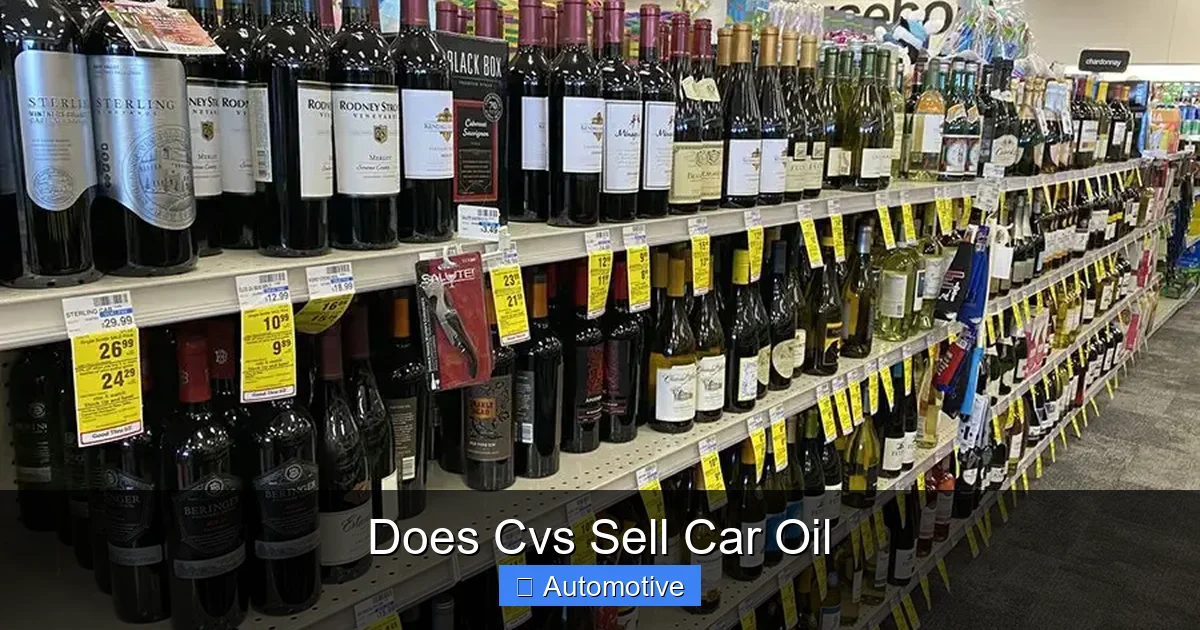
If you’ve ever wandered down the automotive aisle at CVS, you’ve probably noticed it’s not exactly a mechanic’s dreamland. Unlike dedicated auto parts retailers, CVS focuses on convenience and everyday essentials. That means their automotive section is usually compact and limited to the most common, high-demand items. Think windshield washer fluid, basic car air fresheners, jumper cables, and maybe a tire pressure gauge. But what about engine oil?
Visual guide about Does Cvs Sell Car Oil
Image source: sbxl.com
Limited Selection of Motor Oil
While some CVS locations do carry motor oil, it’s far from guaranteed. The availability varies widely by store, region, and even individual store manager decisions. In general, you’re more likely to find motor oil in larger CVS stores located in suburban or rural areas where customers might rely on one-stop shopping. Urban stores, especially in cities with strong public transit, may skip automotive products altogether.
When CVS does stock motor oil, it’s usually the most common types: 5W-30 and 10W-30 conventional oils from well-known brands like Mobil 1, Valvoline, or Castrol. These are the standard viscosities recommended for many passenger vehicles, especially in moderate climates. However, you’re unlikely to find synthetic blends, high-mileage oils, or specialty formulations unless you’re very lucky.
Why the Limited Inventory?
There are a few reasons CVS doesn’t go all-in on automotive supplies. First, shelf space is at a premium. CVS prioritizes health, beauty, and household items that drive consistent sales. Second, motor oil is bulky, heavy, and has a limited shelf life once opened. It’s not as profitable per square foot as, say, a pack of gum or a bottle of vitamins. Finally, CVS isn’t positioned as an automotive expert. Customers don’t go there for advice on oil change intervals or compatibility with turbocharged engines—they go for convenience.
So while CVS might have a few quarts of oil stashed behind the counter or in a small display near the registers, don’t count on it. If you’re in a pinch and need oil fast, it’s worth checking—but have a backup plan.
Where to Find Car Oil Near CVS (And Why It Matters)
Let’s say you’re standing in the CVS parking lot, engine light glowing, and the store doesn’t have oil. What now? The good news is that CVS is often located in shopping centers or near other retailers that do carry automotive supplies. Knowing where to go next can save you time, stress, and potentially expensive engine damage.

Visual guide about Does Cvs Sell Car Oil
Image source: shoppersreality.com
Auto Parts Stores: Your Best Bet
The most reliable place to buy car oil is an auto parts store. Chains like AutoZone, Advance Auto Parts, O’Reilly Auto Parts, and NAPA are designed specifically for this purpose. They carry a wide range of oil types, brands, and viscosities, and many offer free oil recycling and even free oil change tools (like funnels and gloves). Some even have in-store experts who can help you pick the right oil based on your vehicle’s make, model, and year.
For example, if you drive a 2018 Honda Civic with a 2.0L engine, an AutoZone employee can quickly look up that it takes 0W-20 synthetic oil. They’ll even check your owner’s manual if you’re unsure. That level of service and selection simply isn’t available at CVS.
Big-Box Retailers: A Solid Alternative
If there’s no auto parts store nearby, big-box retailers like Walmart, Target, and Costco are excellent alternatives. Walmart, in particular, has a surprisingly robust automotive section. You’ll find everything from conventional to full synthetic oils, oil filters, and even basic tools. Prices are often competitive, and many locations have extended hours—perfect for late-night emergencies.
Costco is another great option, especially if you’re a member. They typically carry high-quality synthetic oils at lower prices than retail. However, you’ll need to bring your own container or buy one, and they don’t offer installation services. Still, for stocking up or doing a DIY oil change at home, Costco is hard to beat.
Gas Stations and Convenience Stores: Proceed with Caution
Some gas stations, especially larger chains like Shell, BP, or 7-Eleven, do carry motor oil. But the selection is usually minimal—often just one or two types of conventional oil. Prices can be higher than at auto parts stores, and the staff may not be knowledgeable about which oil your car needs. That said, if you’re stranded and need a quart to get home, it’s better than nothing.
One tip: Always check the expiration date on the oil container. Motor oil doesn’t “expire” in the traditional sense, but it can degrade over time, especially if stored in hot or humid conditions. A gas station in a desert town might have oil that’s been sitting in the sun for months—less than ideal.
How to Choose the Right Car Oil (Even If CVS Doesn’t Have It)
Let’s say you’ve ruled out CVS and are now heading to AutoZone or Walmart. Great! But now you’re faced with another challenge: which oil do you actually need? With so many options—conventional, synthetic, high-mileage, 5W-30, 0W-20, and more—it’s easy to feel overwhelmed. Here’s how to make the right choice without pulling your hair out.

Visual guide about Does Cvs Sell Car Oil
Image source: playbite.com
Check Your Owner’s Manual
The single most important step is to consult your vehicle’s owner’s manual. This little booklet (or digital version, if you’ve lost the physical copy) contains the manufacturer’s recommended oil type, viscosity, and change interval. For example, a 2020 Toyota Camry might require 0W-20 full synthetic oil, while a 2010 Ford F-150 might use 5W-30 conventional.
If you don’t have the manual handy, don’t panic. Many manufacturers publish them online. A quick Google search for “2015 Honda Accord owner’s manual PDF” will usually do the trick. You can also check the oil cap under your hood—many vehicles have the recommended oil type printed right there.
Understand Oil Viscosity and Types
Oil viscosity refers to how thick or thin the oil is. The numbers like 5W-30 or 0W-20 are part of a grading system set by the Society of Automotive Engineers (SAE). The “W” stands for “winter,” and the first number indicates how well the oil flows in cold temperatures. The second number is the viscosity at operating temperature.
For example, 5W-30 oil flows easily in cold weather (good for winter starts) but maintains proper thickness when the engine is hot. If you live in a cold climate, a lower first number (like 0W) might be better. In hot climates, a higher second number (like 40) could be recommended.
As for oil types:
- Conventional oil: The standard choice for older or low-mileage vehicles. It’s affordable but breaks down faster.
- Synthetic oil: Engineered for better performance, longevity, and protection. Ideal for newer cars, turbocharged engines, or extreme temperatures.
- Synthetic blend: A mix of conventional and synthetic. Offers some benefits of synthetic at a lower price.
- High-mileage oil: Formulated for vehicles with over 75,000 miles. Contains additives to condition seals and reduce leaks.
Match the Oil to Your Driving Conditions
Your driving habits matter too. If you frequently tow heavy loads, drive in stop-and-go traffic, or live in an area with extreme temperatures, your engine may benefit from a higher-quality oil. Synthetic oils, for instance, handle heat and stress better than conventional oils.
Let’s say you drive a 2016 Subaru Outback with 90,000 miles and live in Minnesota. You probably want a high-mileage synthetic blend in 5W-30 to protect your engine in cold winters and reduce wear on older components. But if you drive a 2022 Tesla Model 3? Well, it doesn’t use engine oil at all—just pointing that out!
Tips for Buying and Storing Car Oil
Once you’ve found the right oil, there are a few practical tips to keep in mind to ensure you get the most out of your purchase—and avoid common mistakes.
Buy the Right Amount
Most cars take between 4 and 6 quarts of oil, but always check your manual. Buying too little means you’ll have to make another trip. Buying too much is a waste of money. If you’re doing a full oil change, consider buying an oil filter too—many auto parts stores offer discounts when you buy both.
Check the Bottle Before You Buy
Inspect the oil container for leaks, dents, or signs of tampering. Shake it gently—there shouldn’t be any unusual sounds or separation. Also, check the “API” and “ILSAC” certification seals on the label. These indicate the oil meets industry standards for performance and protection.
Store Oil Properly
If you buy extra oil for future use, store it in a cool, dry place away from direct sunlight. A garage shelf or closet works well. Avoid storing oil in your car trunk—temperature swings can degrade the oil over time. And never store oil in open containers; keep the cap tightly sealed to prevent contamination.
One pro tip: Label the container with the date you bought it. While oil doesn’t “expire” quickly, it’s best to use it within 2–3 years for optimal performance.
When to Skip CVS and Go Straight to an Auto Specialist
While CVS might occasionally have motor oil, there are times when it’s smarter—and safer—to skip the convenience store altogether and head straight to a professional.
If Your Car Is Leaking Oil
A low oil light could mean more than just a need for a top-up. If your car is leaking oil, adding more won’t fix the problem—and driving with a leak can cause serious engine damage. In this case, you need a mechanic, not a quart of oil from CVS.
If You’re Due for an Oil Change
Adding oil is a temporary fix. If your oil is dirty, sludgy, or overdue for a change, topping it off won’t restore engine protection. A full oil change with a new filter is the right move. Many auto parts stores offer free oil change services if you buy the oil and filter from them.
If You Drive a High-Performance or Luxury Vehicle
Cars like BMWs, Mercedes, or performance models often require specific synthetic oils or additives. CVS won’t carry these specialty products. Using the wrong oil can void your warranty or damage your engine. Stick to authorized dealers or trusted mechanics for these vehicles.
Summary Table: Where to Buy Car Oil (And What to Expect)
| Retailer | Oil Selection | Price Range | Expert Help | Best For |
|---|---|---|---|---|
| CVS | Limited (5W-30, 10W-30 conventional only) | $$ (Higher than average) | No | Emergency top-up only |
| AutoZone / O’Reilly | Wide (all types, brands, viscosities) | $–$$ | Yes (in-store experts) | Full oil changes, advice |
| Walmart | Good (conventional to synthetic) | $ | Limited | Everyday shopping, budget buys |
| Costco | High-quality synthetic | $ | No | Bulk buying, members |
| Gas Stations | Minimal (1–2 types) | $$$ | No | Last-resort emergency |
Final Thoughts: Should You Rely on CVS for Car Oil?
So, does CVS sell car oil? The answer is: maybe. But relying on CVS for your automotive needs is like using a Band-Aid for a broken arm—it might help in a pinch, but it’s not the right long-term solution. While CVS offers convenience and accessibility, its limited selection, higher prices, and lack of expertise make it a poor choice for anything beyond a temporary top-up.
For most drivers, the best approach is to plan ahead. Keep a quart of the right oil in your garage or trunk (especially if you drive an older car or live in a remote area). When it’s time for an oil change, head to an auto parts store or schedule a service with a trusted mechanic. Your engine will thank you—and you’ll save money and stress in the long run.
Remember, your car is more than just a mode of transportation. It’s a complex machine that needs the right care to run smoothly. Whether you’re adding oil, changing a filter, or just checking the levels, taking the time to do it right makes all the difference. So next time you’re near a CVS and see that oil light flicker on, don’t panic. Just keep driving—toward the store that actually has what you need.
“`
Frequently Asked Questions
Does CVS sell car oil?
Yes, CVS does sell car oil, including conventional and synthetic motor oils from popular brands. You can find a selection of motor oils in the automotive section of most CVS stores or online at CVS.com.
What types of car oil does CVS carry?
CVS offers a variety of car oil options, such as 5W-30, 10W-30, and full synthetic oils, suitable for different vehicle needs. These are typically available in common sizes like 5-quart bottles for easy at-home oil changes.
Can I buy car oil online from CVS?
Yes, you can purchase car oil online through the CVS website and have it shipped to your home or picked up in-store. This makes it convenient to shop for automotive supplies alongside your everyday essentials.
Is the car oil sold at CVS good quality?
The car oil sold at CVS includes trusted brands like Mobil, Castrol, and Valvoline, ensuring reliable performance and engine protection. These products meet industry standards for viscosity and engine compatibility.
How much does car oil cost at CVS?
Prices for car oil at CVS vary depending on the brand and type, typically ranging from $20 to $40 for a 5-quart bottle. Look for promotions or ExtraCare rewards to save on your purchase.
Does CVS offer oil filters and other car maintenance items?
Yes, in addition to car oil, CVS often carries oil filters, windshield wiper fluid, and basic car care products. While selection may be limited compared to auto parts stores, it’s convenient for quick top-offs or emergency needs.