Does Car Insurance Cover Tires

Contents
- 1 Key Takeaways
- 2 📑 Table of Contents
- 3 Understanding Car Insurance Coverage Types
- 4 When Does Car Insurance Cover Tire Damage?
- 5 What Car Insurance Does NOT Cover
- 6 Road Hazard Warranties: A Better Option for Tire Protection?
- 7 Tips for Filing a Tire Damage Claim
- 8 How to Prevent Tire Damage
- 9 Conclusion
- 10 Frequently Asked Questions



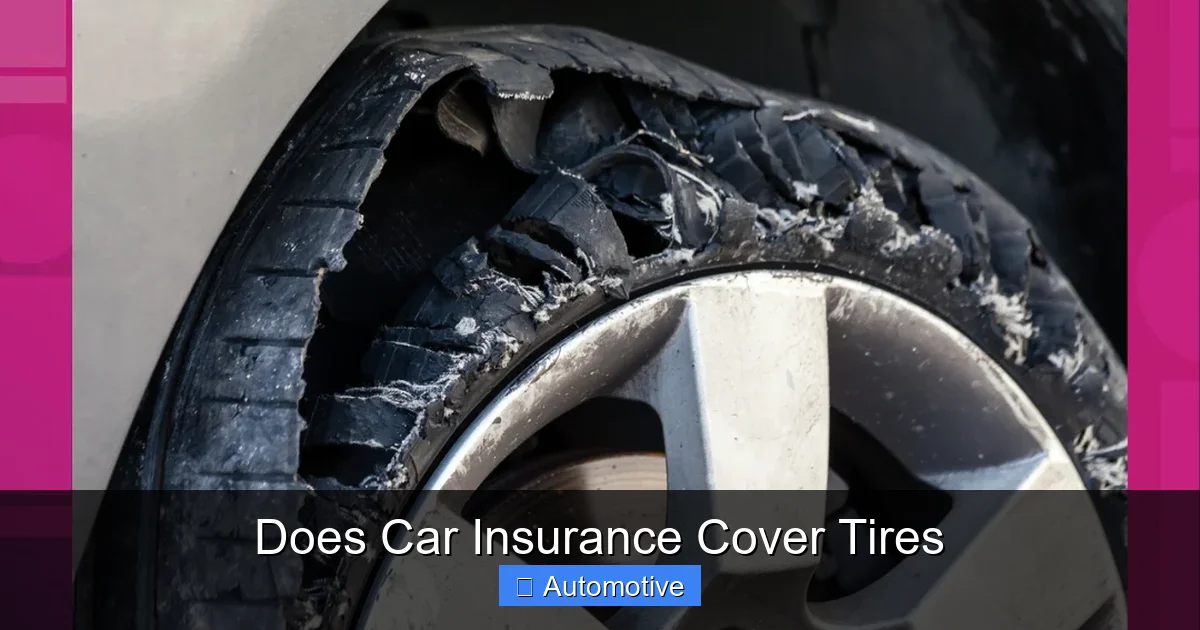
Car insurance may cover tire damage, but only under specific conditions. Comprehensive and collision coverage can help if tires are damaged in an accident, vandalism, or weather events—but normal wear and tear isn’t covered. Understanding your policy details is key to avoiding surprise out-of-pocket costs.
If you’ve ever blown a tire on a pothole-riddled road or come back to find your car’s tires slashed overnight, you’ve probably asked yourself: “Does car insurance cover tires?” It’s a smart question—and one that many drivers don’t think about until it’s too late. Tires are expensive, with a single high-performance tire costing anywhere from $100 to over $500. When something goes wrong, you want to know whether your insurance policy has your back.
The short answer? It depends. Car insurance doesn’t automatically cover every flat or blowout. Whether your policy helps pay for tire damage hinges on the type of coverage you have, how the damage occurred, and the specifics of your insurer’s terms. In most cases, standard liability-only policies—those that meet minimum state requirements—won’t cover your tires at all. But if you’ve added comprehensive or collision coverage, there’s a good chance you’re protected in certain scenarios.
Understanding the nuances can save you hundreds of dollars and a lot of frustration. This guide breaks down exactly when car insurance covers tires, what types of damage qualify, and how to maximize your protection. Whether you’re dealing with a sudden blowout, vandalism, or just curious about your policy, read on to get the full picture.
Key Takeaways
- Comprehensive coverage may cover tire damage from non-collision events: This includes vandalism, falling objects, fire, or animal strikes—common causes of tire damage beyond regular use.
- Collision coverage can apply if tires are damaged in an accident: If you hit a pothole, curb, or another vehicle and your tires are harmed, collision coverage might pay for repairs or replacements.
- Normal wear and tear is never covered: Insurance companies don’t pay for bald tires, dry rot, or gradual deterioration due to age or mileage.
- Liability and basic policies exclude tire coverage: Minimum required insurance only covers damage you cause to others—not your own vehicle or its parts.
- Road hazard warranties are a better option for frequent tire issues: These add-ons, often sold by tire retailers, specifically protect against punctures, blowouts, and pothole damage.
- Documenting damage improves claim success: Photos, police reports (if applicable), and repair estimates help prove that damage wasn’t due to neglect or wear.
- Check your deductible before filing a claim: If the cost to replace one or two tires is close to or less than your deductible, it may not be worth filing.
📑 Table of Contents
Understanding Car Insurance Coverage Types
Before diving into whether your tires are covered, it’s essential to understand the different types of car insurance coverage available. Most drivers are familiar with liability insurance—it’s required in nearly every state and covers damage or injuries you cause to others. But liability doesn’t protect your own vehicle. That’s where other coverage types come in.
The three main types that could potentially cover tire damage are liability, collision, and comprehensive. Let’s look at each one.
Liability Coverage: What It Does (and Doesn’t) Cover
Liability insurance is the foundation of most auto policies. It includes two parts: bodily injury liability (covers medical bills if you injure someone) and property damage liability (covers repairs to another person’s car or property). While it’s crucial for legal and financial protection, it does not cover damage to your own vehicle—including your tires.
For example, if you rear-end another car and your front tires are damaged in the process, your liability policy will pay for the other driver’s car repairs, but not yours. You’d need additional coverage to get your tires fixed. This is why liability-only policies are generally not sufficient if you want protection for your own car’s components.
Collision Coverage: Protection When You Hit Something
Collision coverage steps in when your vehicle collides with another car, object, or even the ground (like in a rollover). This includes accidents where you hit a pothole, curb, guardrail, or another vehicle. If your tires are damaged as a direct result of such an impact, collision coverage may pay for repairs or replacements—minus your deductible.
Let’s say you swerve to avoid a deer and your front right tire hits a concrete barrier, causing a sidewall bulge. If you have collision coverage, you can file a claim. The insurer will assess the damage and, if approved, cover the cost of a new tire (or tires, if multiple are affected), up to your policy limits.
Keep in mind that collision coverage typically applies per incident. So if you damage one tire in an accident, you’ll likely need to pay your deductible for that claim. If your deductible is $500 and a new tire costs $200, it probably doesn’t make financial sense to file. But if multiple tires are damaged or you’ve also damaged your suspension, the claim could be worthwhile.
Comprehensive Coverage: Protection Beyond Collisions
Comprehensive coverage is where many drivers find relief for unexpected tire damage. This type of insurance covers non-collision events such as theft, vandalism, fire, falling objects, weather-related damage (like hail or flooding), and animal strikes.
For instance, if a tree branch falls on your parked car and damages two tires, comprehensive coverage should pay for the replacements. Similarly, if someone slashes your tires as an act of vandalism, your policy may cover the cost—again, minus your deductible.
One common misconception is that comprehensive coverage includes “road hazards” like nails or potholes. While it can cover damage from falling debris (like a piece of metal falling from a truck), it usually doesn’t cover everyday road hazards unless they’re part of a larger covered event. That’s where road hazard warranties come into play—more on that later.
When Does Car Insurance Cover Tire Damage?
Visual guide about Does Car Insurance Cover Tires
Image source: moneymink.com
Now that you understand the coverage types, let’s get into the specifics: when exactly will your car insurance pay for tire damage? The answer depends on the cause of the damage and the type of coverage you have.
Accidents and Collisions
If your tires are damaged during a collision—whether it’s a fender bender, hitting a pothole, or skidding off the road—collision coverage is your best bet. Insurers typically consider tire damage in these cases as part of the overall vehicle damage.
For example, imagine you’re driving on a poorly maintained road and hit a deep pothole. Your front left tire blows out, and the rim is bent. You also notice alignment issues. In this case, you can file a collision claim. The insurer will likely cover the cost of a new tire, wheel alignment, and possibly suspension repairs—depending on the extent of the damage.
However, insurers may deny claims if they determine the damage was due to negligence, such as driving too fast over known road hazards. Always drive cautiously, especially in areas with poor road conditions, to avoid disputes.
Vandalism and Theft
Comprehensive coverage shines when it comes to vandalism. If you return to your car and find all four tires slashed, comprehensive insurance should cover the replacements. Similarly, if your tires are stolen (yes, it happens!), your policy may reimburse you for their value.
To strengthen your claim, document the scene immediately. Take photos of the damaged tires, note the time and location, and file a police report if necessary. Most insurers require a report for theft or vandalism claims. Without it, they may deny coverage.
Keep in mind that comprehensive coverage usually has a deductible, so if the cost of new tires is less than your deductible, you’ll pay out of pocket. For example, if your deductible is $500 and replacing four tires costs $600, you’d only receive $100 from the insurer. In such cases, it might be better to pay yourself unless other damage (like broken windows) is also covered.
Weather and Natural Events
Severe weather can wreak havoc on your vehicle, including your tires. Hailstorms, floods, and falling trees can all cause tire damage. If a hailstorm dents your wheels or causes sidewall damage, comprehensive coverage should apply.
Flooding is another common issue. If your car is submerged and the tires are damaged due to water exposure or debris, comprehensive may cover the cost. However, insurers may argue that driving through flooded roads constitutes negligence. To avoid this, never drive through standing water—especially if you can’t see the road beneath.
Animal Strikes
While less common, animal strikes can damage tires—especially if you hit a large animal like a deer. If the impact causes a tire to blow out or the sidewall to rupture, comprehensive coverage typically applies.
For example, if you swerve to avoid a deer and your tire hits a rock, causing a blowout, you can file a claim under comprehensive. The insurer will assess whether the damage was directly caused by the animal-related incident.
What Car Insurance Does NOT Cover
Visual guide about Does Car Insurance Cover Tires
Image source: lemonade.com
Just as important as knowing what’s covered is understanding what isn’t. Car insurance has clear exclusions, and tires are no exception.
Normal Wear and Tear
This is the biggest reason tire claims get denied. Insurance is designed to cover sudden, unexpected events—not gradual deterioration. Bald tires, dry rot, cracks from aging, or loss of tread due to high mileage are all considered normal wear and tear.
For instance, if your tires are over five years old and develop sidewall cracks, your insurer won’t pay for replacements. They’ll argue that proper maintenance and timely replacement are your responsibility. Most tire manufacturers recommend replacing tires every six to ten years, regardless of tread depth.
To avoid this, inspect your tires regularly. Look for signs of aging, uneven wear, or low tread depth. Use the penny test: insert a penny into the tread with Lincoln’s head upside down. If you can see the top of his head, it’s time for new tires.
Punctures and Road Hazards
A nail in the tire? A screw in the tread? Unfortunately, most standard policies don’t cover punctures from everyday road hazards. This includes nails, screws, glass, or sharp debris on the road.
While comprehensive coverage might apply if the puncture is part of a larger event (like debris falling from a truck), isolated punctures are typically excluded. That’s why many drivers opt for road hazard warranties when purchasing new tires.
Manufacturing Defects
If your tire fails due to a defect—like a blowout caused by a faulty sidewall—your insurance likely won’t cover it. Instead, you should file a claim with the tire manufacturer under their warranty. Most reputable brands offer limited warranties that cover defects for a certain period or mileage.
For example, if a Michelin tire blows out within the first 20,000 miles due to a manufacturing flaw, Michelin may replace it for free. But if the blowout happens after 50,000 miles due to wear, you’re on your own.
Negligence and Lack of Maintenance
Insurers can deny claims if they determine the damage resulted from poor maintenance. Driving on underinflated tires, ignoring alignment issues, or failing to rotate tires regularly can all be seen as negligence.
For example, if your tires wear unevenly because you never rotated them, and one blows out, the insurer may refuse coverage. They’ll argue that proper maintenance could have prevented the issue.
Road Hazard Warranties: A Better Option for Tire Protection?

Visual guide about Does Car Insurance Cover Tires
Image source: autoquotetracker.com
Given the limitations of standard car insurance, many drivers turn to road hazard warranties for tire protection. These are add-on plans sold by tire retailers that specifically cover damage from road hazards like potholes, nails, and debris.
How Road Hazard Warranties Work
When you buy new tires, the retailer may offer a road hazard warranty for an additional fee—typically $10 to $25 per tire. This warranty covers repairs or replacements if your tire is damaged by a road hazard during the coverage period, which can range from one to five years or a set mileage limit (e.g., 20,000 miles).
For example, if you hit a pothole and your tire develops a bulge, the warranty may cover a full replacement—no deductible required. Some plans even include free flat repairs and roadside assistance.
Pros and Cons of Road Hazard Warranties
The biggest advantage is peace of mind. You know that if something happens to your tires on the road, you’re covered—without relying on your auto insurance. It’s especially useful for drivers in areas with poor road conditions or those who frequently drive long distances.
However, warranties aren’t free. Over time, the cost can add up. And if you’re a careful driver who avoids hazards, you may never use the coverage. Also, some warranties have exclusions—like damage from racing, off-road use, or improper inflation.
Before buying, read the fine print. Check the coverage limits, exclusions, and claim process. Some retailers require you to return to their location for repairs, which may not be convenient.
Comparing Insurance vs. Warranty
| Feature | Car Insurance | Road Hazard Warranty |
|——–|—————|————————|
| Covers wear and tear | ❌ No | ❌ No |
| Covers punctures | ❌ Rarely | ✅ Yes |
| Covers pothole damage | ✅ (Collision) | ✅ Yes |
| Deductible | Yes | Usually none |
| Cost | Part of premium | $10–$25 per tire |
| Claim process | Can be slow | Often faster |
In most cases, a road hazard warranty is a better fit for tire-specific protection. But if you have comprehensive and collision coverage, you may already be covered for major incidents.
Tips for Filing a Tire Damage Claim
If you believe your tire damage is covered, follow these steps to improve your chances of a successful claim.
Document the Damage Immediately
Take clear photos of the damaged tire(s), the surrounding area, and any contributing factors (like a pothole or debris). Include close-ups of the damage and wider shots showing the context.
If the damage occurred in an accident, get a police report. For vandalism or theft, file a report with local law enforcement. Insurers often require these documents to process claims.
Contact Your Insurance Company Promptly
Don’t wait to file a claim. Most insurers require you to report damage within a certain timeframe—usually 24 to 72 hours. Delaying could result in a denial.
When you call, provide all relevant details: when and where the damage occurred, how it happened, and what parts were affected. Be honest and accurate.
Get a Repair Estimate
Visit a trusted mechanic or tire shop to get a written estimate for repairs or replacements. This helps the insurer assess the claim and ensures you’re not overcharged.
If the estimate is close to or less than your deductible, consider paying out of pocket. Filing a claim for a small amount could increase your premiums.
Know Your Policy Limits
Check your policy to see the coverage limits for collision and comprehensive. Most policies cover up to the actual cash value of the vehicle, but tire coverage may be limited.
Also, confirm whether your policy covers OEM (original equipment manufacturer) tires or aftermarket ones. Some insurers only pay for comparable replacements.
How to Prevent Tire Damage
While insurance and warranties offer protection, prevention is always the best strategy. Here are practical tips to keep your tires in good condition.
Maintain Proper Tire Pressure
Underinflated or overinflated tires wear unevenly and are more prone to blowouts. Check your tire pressure monthly using a reliable gauge. Refer to the sticker inside your driver’s door for the recommended PSI.
Rotate Your Tires Regularly
Tire rotation ensures even wear. Most manufacturers recommend rotating tires every 5,000 to 7,500 miles. Front and rear tires wear differently, so swapping them extends their life.
Inspect Tires Monthly
Look for signs of damage: bulges, cracks, punctures, or uneven tread wear. Use the penny test to check tread depth. If you notice anything unusual, have it checked by a professional.
Avoid Road Hazards When Possible
Stay alert for potholes, debris, and construction zones. If you can’t avoid a hazard, slow down to reduce impact. Driving too fast over obstacles increases the risk of tire damage.
Replace Tires When Needed
Don’t wait until a tire fails. Replace tires when tread is low, they’re over six years old, or you notice signs of aging. Investing in quality tires and replacing them on time saves money in the long run.
Conclusion
So, does car insurance cover tires? The answer is: sometimes. Comprehensive and collision coverage can help if your tires are damaged in an accident, vandalism, weather event, or animal strike. But normal wear and tear, punctures, and manufacturing defects are typically excluded.
For the best protection, consider adding road hazard warranties when buying new tires. They’re affordable, easy to use, and specifically designed for tire-related issues. And remember: maintaining your tires properly is the most effective way to avoid damage in the first place.
By understanding your policy, knowing what’s covered, and taking preventive steps, you can keep your tires—and your wallet—in good shape. Don’t wait for a blowout to find out what your insurance covers. Review your policy today and make sure you’re protected.
Frequently Asked Questions
Does liability insurance cover tire damage?
No, liability insurance only covers damage you cause to other people’s property or vehicles. It does not cover damage to your own car, including your tires.
Will my insurance cover a flat tire from a nail?
Generally, no. Most standard auto insurance policies do not cover punctures from everyday road hazards like nails or screws. A road hazard warranty is a better option for this type of damage.
Can I claim tire damage from a pothole?
Yes, if you have collision coverage. Hitting a pothole that damages your tires may be covered under collision insurance, minus your deductible. Document the damage and file a claim promptly.
Does comprehensive insurance cover slashed tires?
Yes, comprehensive coverage typically covers vandalism, including slashed tires. File a police report and contact your insurer to start the claim process.
Are old tires covered if they fail?
No, insurance does not cover tire failure due to age, dry rot, or normal wear and tear. These are considered maintenance issues, not sudden accidents.
Should I file a claim for one damaged tire?
It depends on your deductible. If the cost to replace the tire is less than your deductible, it’s usually not worth filing. Consider paying out of pocket to avoid premium increases.