Does Car Insurance Cover Mechanic Negligence

Contents
- 1 Key Takeaways
- 2 📑 Table of Contents
- 3 Does Car Insurance Cover Mechanic Negligence? A Clear Answer
- 4 What Is Mechanic Negligence?
- 5 How Standard Car Insurance Policies Work
- 6 When Might Your Insurance Actually Help?
- 7 What About the Mechanic’s Insurance?
- 8 Your Rights and Recourse Options
- 9 How to Protect Yourself Before a Repair
- 10 Real-Life Example: When Insurance Stepped In
- 11 When to Walk Away—and When to Fight
- 12 Conclusion: Know Your Coverage, Know Your Rights
- 13 Frequently Asked Questions

Octane Booster

Dash Cam

Anti Rust Spray

Car Battery Tester
Car insurance typically does not cover mechanic negligence directly, but certain policies—like comprehensive or collision—may help if damage results from a faulty repair. Understanding your coverage, documenting issues, and knowing when to file a claim or seek legal recourse can save you time and money.
Key Takeaways
- Standard car insurance does not cover mechanic negligence: Your policy is designed for accidents, theft, and natural disasters—not poor workmanship.
- Comprehensive or collision coverage may apply in rare cases: If a botched repair leads to further damage (e.g., a leaking seal causes engine failure), your insurer might cover the resulting loss.
- Mechanics carry their own liability insurance: Reputable shops have garage liability policies that protect you if their error causes damage or injury.
- Document everything after a bad repair: Photos, invoices, communication records, and expert assessments strengthen your case.
- You can file a complaint or sue for damages: State consumer protection agencies and small claims court are options if the shop refuses to make things right.
- Prevention is key: Choose certified mechanics, read reviews, and get written estimates before any major work.
- Gap in coverage? Consider an extended warranty or service contract: These may offer protection beyond what standard insurance provides.
📑 Table of Contents
- Does Car Insurance Cover Mechanic Negligence? A Clear Answer
- What Is Mechanic Negligence?
- How Standard Car Insurance Policies Work
- When Might Your Insurance Actually Help?
- What About the Mechanic’s Insurance?
- Your Rights and Recourse Options
- How to Protect Yourself Before a Repair
- Real-Life Example: When Insurance Stepped In
- When to Walk Away—and When to Fight
- Conclusion: Know Your Coverage, Know Your Rights
Does Car Insurance Cover Mechanic Negligence? A Clear Answer
You drop your car off at the shop for a routine oil change, only to return and find a strange noise under the hood—or worse, your engine won’t start at all. The mechanic insists nothing went wrong on their end, but you suspect negligence. Now you’re stuck with repair bills and mounting frustration. The big question: Will your car insurance cover this?
The short answer? Not usually. Car insurance is built to protect you from unexpected events like collisions, theft, vandalism, or weather damage—not from mistakes made by repair professionals. But that doesn’t mean you’re completely out of luck. In certain situations, your policy might kick in, especially if the mechanic’s error leads to additional, covered damage. Understanding the nuances can mean the difference between paying out of pocket and getting the help you deserve.
This guide will walk you through what car insurance does—and doesn’t—cover when it comes to mechanic negligence. We’ll explore real-life examples, explain how different types of coverage work, and give you actionable steps to protect yourself before, during, and after a repair job goes wrong.
What Is Mechanic Negligence?

Visual guide about Does Car Insurance Cover Mechanic Negligence
Image source: netoinsurance.com
Before diving into insurance, it’s important to define what we mean by “mechanic negligence.” In legal terms, negligence occurs when a professional fails to meet the standard of care expected in their field—resulting in harm or damage. For mechanics, this could mean installing the wrong part, over-tightening bolts, failing to replace a critical component, or even leaving tools inside the engine.
For example, imagine a mechanic removes your alternator for replacement but forgets to reconnect the wiring harness. You drive away, and within miles, your battery dies because the alternator isn’t charging it. That’s negligence—not an accident, not wear and tear, but a direct result of improper service.
Other common forms of mechanic negligence include:
– Using incorrect fluids (e.g., putting diesel oil in a gasoline engine)
– Failing to torque lug nuts properly, leading to a wheel coming loose
– Improperly installing brake pads, causing reduced stopping power
– Skipping safety checks during routine maintenance
These aren’t just inconveniences—they can create serious safety hazards and lead to costly secondary damage. And while your car insurance won’t pay for the original repair mistake, it might cover the consequences if those consequences fall under your policy’s terms.
How Standard Car Insurance Policies Work

Visual guide about Does Car Insurance Cover Mechanic Negligence
Image source: goodcover.ghost.io
To understand whether your insurance covers mechanic negligence, you first need to know what your policy includes. Most drivers carry three main types of coverage: liability, collision, and comprehensive. Let’s break them down.
Liability Coverage
This is the bare minimum required by law in most states. It covers damage you cause to other people’s property or injuries you inflict in an accident. It does not cover your own vehicle—or any damage caused by a mechanic. So if a faulty repair leads to a crash that damages someone else’s car, your liability insurance would cover their losses, but not your repairs.
Collision Coverage
Collision pays for damage to your car after an accident with another vehicle or object—like hitting a pole or sliding into a guardrail. Importantly, it only applies to accidents, not mechanical failures or poor repairs. If a mechanic installs a defective brake line and you crash because the brakes fail, collision coverage likely won’t apply unless the crash itself is deemed the primary cause.
Comprehensive Coverage
This covers non-collision events like theft, fire, hail, or animal strikes. Some policies also include “mechanical breakdown” as an optional add-on, but standard comprehensive plans do not cover repairs gone wrong. However—and this is crucial—if a mechanic’s error leads to a covered event (like water damage from a poorly sealed sunroof), comprehensive might step in.
For instance, suppose a mechanic replaces your windshield but doesn’t seal it correctly. Rainwater leaks in, shorts out your electrical system, and ruins your infotainment unit. While the initial mistake wasn’t covered, the resulting water damage might be—if your comprehensive policy includes “water damage” as a covered peril.
When Might Your Insurance Actually Help?
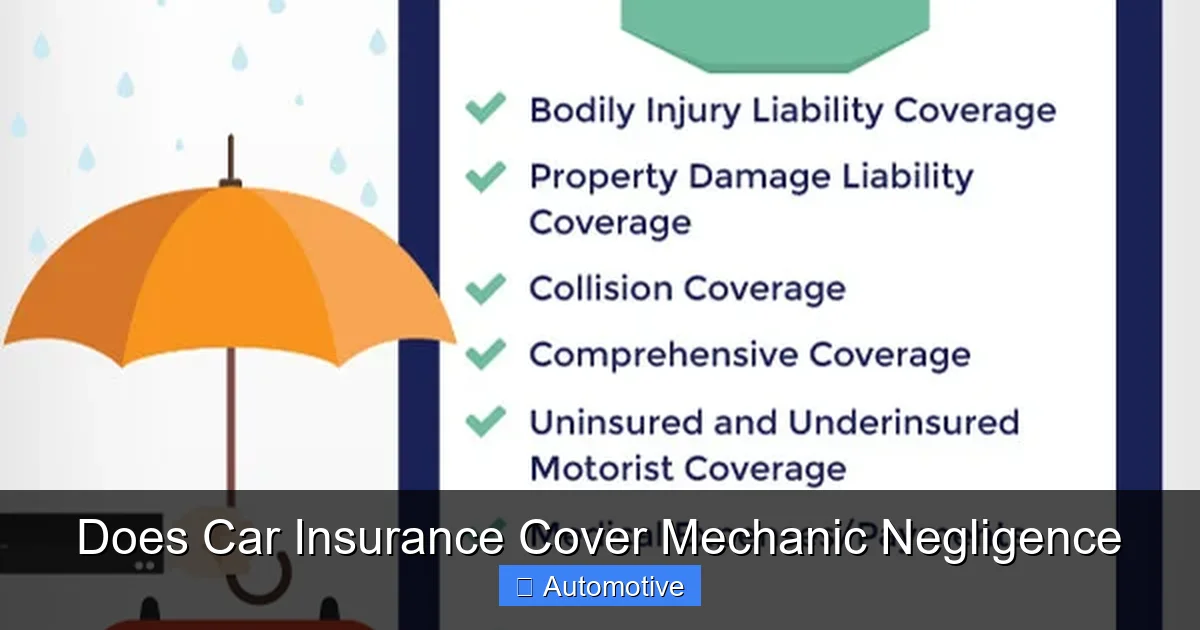
Visual guide about Does Car Insurance Cover Mechanic Negligence
Image source: assets-global.website-files.com
So far, it sounds like insurance is a dead end—but there are exceptions. Here’s when your policy might offer a lifeline after mechanic negligence.
Secondary Damage from a Covered Event
As mentioned, if a mechanic’s mistake triggers a chain reaction that results in a covered loss, your insurer may pay. Think of it like this: the mechanic caused the problem, but the insurance covers the symptom.
Example: A technician installs a new radiator but fails to properly bleed the cooling system. Air pockets form, causing your engine to overheat. The overheating warps the cylinder head—a costly repair. While the original installation error isn’t covered, the engine damage might be if your policy includes mechanical breakdown protection or if the overheating led to a fire (covered under comprehensive).
Optional Mechanical Breakdown Coverage
Some insurers offer add-ons specifically for mechanical failures. These are rare and often sold as standalone products or through dealerships. If you have this coverage, it may reimburse you for repairs due to faulty work—even if the mechanic was at fault. Always check your policy wording carefully.
Rental Reimbursement and Towing
Even if your main repair isn’t covered, some policies include rental car reimbursement or roadside assistance. If a mechanic’s error leaves your car undrivable, you might get a loaner car or a tow to another shop—reducing your out-of-pocket costs while you sort things out.
What About the Mechanic’s Insurance?
If your car insurance won’t cover the damage, the next place to look is the mechanic’s own insurance. Reputable repair shops carry garage liability insurance (also called garage keepers’ legal liability), which protects customers when their employees cause damage during service.
This type of policy is designed exactly for situations like:
– Scratches or dents during repairs
– Theft of your vehicle while in their possession
– Damage caused by improper installation or handling
To file a claim, you’ll typically need to:
1. Notify the shop immediately
2. Provide evidence (photos, receipts, witness statements)
3. Allow them to inspect the vehicle
4. Work with their insurer to assess damages
Most shops will cooperate to avoid bad reviews or legal trouble. But if they deny responsibility, you may need to escalate.
Your Rights and Recourse Options
When insurance doesn’t help—and the mechanic won’t budge—you still have options. Knowing your rights empowers you to take action.
File a Complaint with State Agencies
Every state has a consumer protection office or Department of Motor Vehicles (DMV) division that handles auto repair disputes. In California, for example, the Bureau of Automotive Repair (BAR) investigates complaints and can order shops to refund or redo work. Submitting a formal complaint is free and often prompts the shop to respond.
Small Claims Court
If the damages are under your state’s small claims limit (usually $5,000–$10,000), you can sue the mechanic without a lawyer. You’ll need to prove:
– The mechanic had a duty to perform quality work
– They breached that duty (negligence)
– The breach directly caused your damages
– You suffered measurable financial loss
Gather all documentation: invoices, photos, expert opinions, and any communication with the shop. Many cases settle before trial once the shop realizes you’re serious.
Contact Your Credit Card Company
If you paid for the repair with a credit card, you may be able to dispute the charge under “services not rendered as described.” This won’t cover additional damages, but it can get your original payment refunded while you pursue other remedies.
How to Protect Yourself Before a Repair
The best defense against mechanic negligence is prevention. A few smart habits can save you thousands—and a lot of stress.
Choose Certified and Reviewed Shops
Look for ASE-certified technicians and shops accredited by organizations like the National Institute for Automotive Service Excellence or the Better Business Bureau. Read recent online reviews, especially those mentioning specific repairs similar to yours.
Get a Written Estimate
Always ask for a detailed, itemized estimate before any work begins. It should include parts, labor, taxes, and potential additional charges. Sign it, and keep a copy. This creates a paper trail if things go wrong.
Ask Questions
Don’t be afraid to ask why a part needs replacing or how long a procedure should take. A good mechanic will explain clearly. Vague answers or pressure to approve unnecessary work are red flags.
Take Photos Before and After
Snap pictures of your car’s condition, mileage, and any existing issues before dropping it off. After pickup, inspect everything thoroughly—and take more photos if something looks off.
Keep All Records
Store receipts, work orders, warranties, and communication (texts, emails) in a dedicated folder—digital or physical. These become critical evidence if a dispute arises.
Real-Life Example: When Insurance Stepped In
Let’s look at a real-world scenario to tie it all together.
Maria took her SUV to a local shop for brake service. The mechanic replaced the pads but didn’t properly lubricate the caliper slide pins. A week later, the brakes started dragging, overheating the rotors and warping them. Maria returned to the shop, but they refused to cover the $600 repair, claiming “normal wear.”
Frustrated, Maria called her insurer. Her comprehensive policy didn’t cover mechanical failure, but she did have optional mechanical breakdown coverage. After submitting photos, the repair invoice, and a statement from a second mechanic confirming improper service, her claim was approved. She got reimbursed for the rotor replacement—and used the payout to switch to a more reputable shop.
This case highlights two key points:
1. Optional coverage can make a huge difference.
2. Getting a second opinion from another mechanic strengthens your position.
When to Walk Away—and When to Fight
Not every repair issue is worth a legal battle. If it’s a minor scratch or a $50 overcharge, sometimes it’s better to cut your losses and find a new shop. But if safety is compromised—or the cost is significant—don’t stay silent.
Ask yourself:
– Could this have caused an accident?
– Did the shop lie or refuse to acknowledge the problem?
– Are other customers reporting similar issues?
If you answer “yes” to any of these, it’s time to act. Document, complain, and if needed, escalate. Your safety—and wallet—are worth it.
Conclusion: Know Your Coverage, Know Your Rights
So, does car insurance cover mechanic negligence? Generally, no—but that doesn’t mean you’re helpless. Standard policies aren’t designed for repair errors, but optional coverages, the mechanic’s own insurance, and legal avenues can provide relief. The key is understanding your options and acting quickly.
Start by reviewing your policy. Do you have mechanical breakdown coverage? What does your comprehensive plan include? Then, choose repair shops wisely, document everything, and don’t hesitate to speak up when something feels wrong. A little knowledge goes a long way in protecting yourself from costly mistakes—and ensuring your car stays safe on the road.
Frequently Asked Questions
Will my car insurance pay if a mechanic ruins my engine?
Not typically. Standard policies don’t cover mechanical failures due to poor repairs. However, if you have optional mechanical breakdown coverage or the damage leads to a covered event (like a fire), your insurer might help.
Can I sue a mechanic for negligence?
Yes, if their mistake caused measurable damage. You’ll need evidence like invoices, photos, and expert opinions. Many cases are resolved in small claims court without a lawyer.
What if the mechanic says it’s “normal wear and tear”?
Ask for a detailed explanation in writing. If you disagree, get a second opinion from another certified mechanic. Their assessment can counter the shop’s claim.
Does liability insurance cover damage from a bad repair?
No. Liability only covers damage you cause to others. It won’t help if a mechanic’s error damages your own vehicle.
How do I find out if a shop has insurance?
Ask directly. Reputable shops will provide proof of garage liability insurance upon request. You can also check with your state’s licensing board.
Should I always get a second opinion after a repair?
It’s wise for major repairs or if something feels off. A quick inspection by another mechanic can catch issues early and provide documentation if you need to dispute a claim later.