Does Car Insurance Cover Lost Keys?

Contents
- 1 Key Takeaways
- 2 📑 Table of Contents
- 3 What Types of Car Insurance Might Cover Lost Keys?
- 4 Comprehensive Coverage: Your Best Bet for Key Protection
- 5 Optional Add-Ons and Key Replacement Riders
- 6 How Much Does It Cost to Replace Car Keys?
- 7 Real-Life Examples: When Insurance Did (and Didn’t) Cover Lost Keys
- 8 Tips to Prevent Losing Your Car Keys
- 9 What to Do If You Lose Your Car Keys
- 10 Conclusion
- 11 Frequently Asked Questions

Tool Roll Bag

Anti-Slip Dashboard Mat

Car Ambient Light Kit

Car Battery Tester
Most standard car insurance policies do not cover lost keys, but some comprehensive plans or add-on services may help. Understanding your coverage options can save you hundreds in replacement fees.
Losing your car keys is one of those frustrating, everyday mishaps that can throw your entire day off track. One minute you’re grabbing your coffee and heading out the door—the next, you’re frantically patting down pockets, checking under couch cushions, and wondering if you left them at the grocery store. And when you finally accept that they’re truly gone? Panic sets in. Not just because you can’t drive your car, but because modern car keys aren’t just simple metal cutouts anymore. Today’s keys often come with high-tech fobs, transponder chips, remote starters, and even smartphone integration—all of which come with a hefty price tag to replace.
So, the big question on most people’s minds is: Does car insurance cover lost keys? The short answer? It depends. While it’s not a standard inclusion in most basic auto insurance policies, there are scenarios—and specific types of coverage—where you might be protected. Understanding the nuances can mean the difference between paying out of pocket for a $400 key fob or having your insurer foot the bill. In this guide, we’ll walk you through everything you need to know about whether your car insurance covers lost keys, what your options are if it doesn’t, and how to avoid this headache altogether.
Whether you’ve already misplaced your keys or you’re just being proactive, this article will help you navigate the often-confusing world of auto insurance and key replacement. We’ll break down policy types, real-world examples, costs, and practical tips so you can make informed decisions and stay protected—no matter where life (or your keys) takes you.
Key Takeaways
- Understanding Does Car Insurance Cover Lost Keys?: Provides essential knowledge
📑 Table of Contents
- What Types of Car Insurance Might Cover Lost Keys?
- Comprehensive Coverage: Your Best Bet for Key Protection
- Optional Add-Ons and Key Replacement Riders
- How Much Does It Cost to Replace Car Keys?
- Real-Life Examples: When Insurance Did (and Didn’t) Cover Lost Keys
- Tips to Prevent Losing Your Car Keys
- What to Do If You Lose Your Car Keys
- Conclusion
What Types of Car Insurance Might Cover Lost Keys?
When it comes to car insurance, not all policies are created equal. Most drivers are familiar with liability coverage (which pays for damage you cause to others) and collision coverage (which covers damage to your own car in an accident). But what about something as seemingly minor—yet potentially expensive—as losing your keys? The truth is, standard liability and collision policies generally don’t include coverage for lost or stolen keys. However, there’s one type of coverage that might: comprehensive insurance.
Comprehensive coverage is designed to protect your vehicle from non-collision-related incidents, such as theft, vandalism, fire, hail, or falling objects. Because it’s broader in scope, some comprehensive policies extend protection to personal items inside the car—including keys—especially if they were stolen along with the vehicle or damaged in a covered event. For example, if your car is broken into and your keys are stolen from the glove compartment, your comprehensive policy might reimburse you for the cost of replacing them.
But here’s the catch: coverage for lost keys (as opposed to stolen) is less common. Insurance companies often distinguish between “lost” and “stolen” because theft implies a criminal act, which falls under the umbrella of comprehensive protection. If you simply misplaced your keys at the park or left them on a restaurant table, insurers may consider that negligence rather than a covered peril. That said, some insurers offer more generous interpretations, particularly if you have additional endorsements or riders on your policy.
Another factor is whether your keys are considered part of the vehicle or personal property. Modern car keys—especially smart keys and fobs—are often classified as “accessories” or “electronic equipment” tied directly to the car’s security system. In these cases, some comprehensive policies may treat key replacement similarly to repairing a damaged alarm system or replacing a broken window. Always check your policy’s definitions section to see how “accessories” or “attached equipment” are defined.
It’s also worth noting that coverage limits apply. Even if your policy does cover key replacement, there’s usually a cap—say, $200 or $500—and you’ll likely need to pay a deductible. So if your new key fob costs $450 and your deductible is $250, you’d only receive $200 from the insurer. Still, that’s better than paying the full amount out of pocket.
Comprehensive Coverage: Your Best Bet for Key Protection
Visual guide about Does Car Insurance Cover Lost Keys?
Image source: image4.slideserve.com
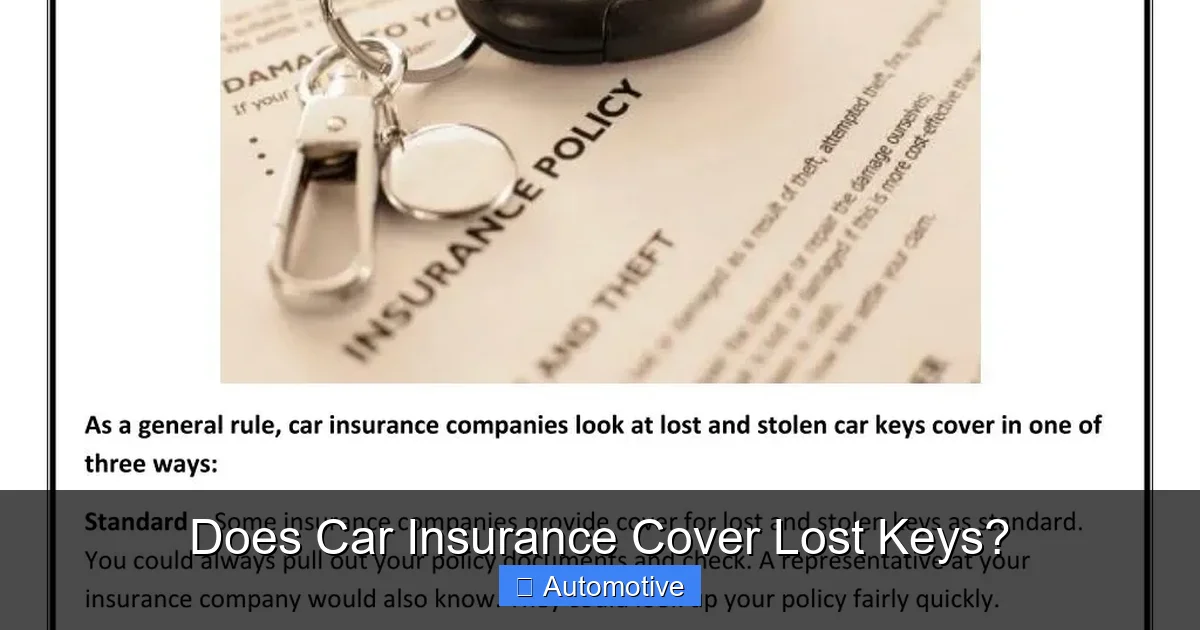
If you’re hoping your car insurance will help cover the cost of lost keys, comprehensive coverage is your most likely avenue. As mentioned, this optional coverage protects your vehicle from a wide range of non-accident-related risks, and in some cases, it extends to items directly related to the car’s operation—like keys.
But how do you know if your comprehensive policy includes key replacement? Start by reviewing your declarations page, which outlines your coverage limits, deductibles, and included perils. Look for language about “personal effects,” “accessories,” or “electronic equipment.” Some policies explicitly list key fobs or transponder keys as covered items, while others are more vague.
For example, State Farm’s comprehensive coverage includes “personal property” stolen from your vehicle, which could include keys if they were taken during a break-in. Similarly, Geico’s policy mentions coverage for “factory-installed equipment,” which may encompass modern key systems. However, neither company guarantees coverage for keys that are simply misplaced.
To increase your chances of reimbursement, document everything. If your keys were stolen, file a police report immediately—this creates an official record that supports your claim. Take photos of the scene, note the time and location, and keep receipts for any temporary transportation costs (like a rental car) while you’re without keys. Even if your keys are just lost, having a record of your efforts to find them (e.g., calling places you visited) can help demonstrate good faith.
Another smart move is to call your insurance agent directly. Policies vary widely between insurers and even between individual plans, so speaking with a representative can clarify what’s covered. Ask specific questions like: “Does my comprehensive policy cover replacement of a lost key fob?” or “Is there a limit on key replacement claims?” Don’t rely solely on online summaries—get it in writing if possible.
Keep in mind that even with comprehensive coverage, insurers may require proof that the keys were essential to operating the vehicle. For older cars with traditional metal keys, this might be harder to prove, whereas smart keys with immobilizer systems are clearly integral to the car’s function. In short, the more technologically advanced your key, the stronger your case for coverage.
Optional Add-Ons and Key Replacement Riders
Visual guide about Does Car Insurance Cover Lost Keys?
Image source: plymouthrock.com
If your standard policy doesn’t cover lost keys—or if you want extra peace of mind—many insurers offer optional add-ons specifically designed for key protection. These are often called “key replacement riders,” “personal property endorsements,” or “accessory coverage,” and they can be added to your existing policy for a modest annual fee (typically $10–$30).
These riders typically cover the cost of replacing lost, stolen, or damaged keys, including programming fees for transponder chips or smart fobs. Some even extend coverage to house keys or office keys if they’re attached to the same keychain. For example, Allstate offers a “Key Replace” endorsement that covers up to $500 in key replacement costs per incident, with no deductible. Progressive has a similar option called “Key Replacement Coverage,” which pays for locksmith services and new keys.
One major advantage of these add-ons is that they often cover both lost and stolen keys, removing the ambiguity that comes with standard comprehensive claims. They also usually have higher limits than what you’d get under personal property coverage, making them ideal for owners of newer vehicles with expensive key systems.
When considering an add-on, weigh the cost against the potential expense of replacing your keys. If you drive a Toyota Corolla from 2010, your key might only cost $50 to replace—so paying $20 a year for coverage may not be worth it. But if you own a 2023 BMW with a digital key and proximity entry, replacement could run $600 or more. In that case, the add-on is a no-brainer.
Another benefit? Many key replacement riders include 24/7 assistance. If you lose your keys at 2 a.m. in a parking lot, you can call a toll-free number and get connected to a locksmith or dealership that can help on the spot. This service alone can save you hours of stress and potentially hundreds in emergency fees.
Before adding a rider, compare options across insurers. Some companies bundle key coverage with other perks like roadside assistance or rental car reimbursement. Others offer discounts if you bundle auto and home insurance. Shopping around ensures you get the best value for your needs.
How Much Does It Cost to Replace Car Keys?
Visual guide about Does Car Insurance Cover Lost Keys?
Image source: rateforce.com
Understanding the potential cost of replacing your car keys is crucial—not just for budgeting, but for deciding whether insurance coverage is worth it. The price varies dramatically based on your vehicle’s make, model, year, and the type of key you have.
Let’s start with the basics. A traditional metal key for an older car (think 1990s Honda Civic) might cost as little as $10–$20 to duplicate at a hardware store or locksmith. No electronics, no chips—just a simple cut. But once you move into the 2000s and beyond, things get more complicated.
Most cars manufactured after 2000 use transponder keys—physical keys embedded with a small electronic chip that communicates with the car’s immobilizer system. Without the correct chip, the engine won’t start, even if the key fits the ignition. Replacing a transponder key typically costs $100–$250, including programming. You’ll usually need to go to a dealership or a certified locksmith, as the programming requires specialized equipment.
Now, enter the era of smart keys and key fobs. These wireless devices allow you to unlock and start your car with the push of a button—or even just by being near the vehicle. They often include features like remote start, panic alarms, and trunk release. Replacing a smart key fob can cost anywhere from $200 to $500 or more, depending on the brand. Luxury vehicles like Mercedes-Benz, BMW, or Tesla can easily hit the $600–$800 range.
For example, replacing a 2022 Honda Accord key fob might cost around $300 at a dealership, while a 2023 Lexus RX fob could run $550. And that’s before labor or programming fees. Some dealerships charge an additional $100–$200 for programming, especially if you don’t have a working spare key.
There’s also the cost of downtime. If you lose your only key, you may need to tow your car to a dealership or hire a mobile locksmith. Rental car fees can add another $30–$50 per day. Multiply that by a few days, and the total expense climbs quickly.
Then there’s the hidden cost: stress. Being unable to access your car disrupts your routine, affects work, and can lead to missed appointments. While insurance won’t reimburse you for emotional distress, it can at least ease the financial burden.
Real-Life Examples: When Insurance Did (and Didn’t) Cover Lost Keys
To bring this topic to life, let’s look at a few real-world scenarios where drivers tried to use their car insurance to cover lost keys—and what happened.
Example 1: The Stolen Key Fob
Sarah, a 34-year-old teacher from Denver, parked her 2020 Subaru Outback in a mall parking lot. When she returned, her purse—and her key fob—were gone. She filed a police report and contacted her insurer, which had comprehensive coverage. Because the keys were stolen during a break-in, her claim was approved. She received $320 to cover the cost of a new fob and programming at the dealership. Her deductible was $250, so she paid $250 out of pocket—but saved $70.
Example 2: The Misplaced Keys
Mike, a college student, left his car keys on a bench at the park. He searched for hours but couldn’t find them. His 2018 Ford Focus had a transponder key, and replacement would cost $180. He called his insurer, which offered only liability and collision coverage. They denied his claim, stating that lost keys aren’t covered under standard policies. Mike ended up paying the full amount himself.
Example 3: The Add-On That Paid Off
Lisa added a key replacement rider to her Progressive policy for $15 a year. Two years later, she accidentally dropped her key fob in a lake while fishing. She filed a claim, provided photos of the incident, and received $400 to replace her 2021 Hyundai Tucson fob. “It was the best $15 I ever spent,” she said.
Example 4: The Denied Claim Due to Late Reporting
James lost his keys during a weekend trip but didn’t report the loss to his insurer until five days later. His policy required notification within 48 hours for theft-related claims. Even though his keys were likely stolen, the delay led to a denial. He paid $375 out of pocket.
These examples show how outcomes depend on policy type, circumstances, and timing. They also highlight the importance of reading the fine print and acting quickly.
Tips to Prevent Losing Your Car Keys
While insurance can help after the fact, prevention is always the best strategy. Here are practical tips to reduce the risk of losing your keys:
- Use a key finder: Devices like Tile or Apple AirTag attach to your keychain and connect to your smartphone. If you misplace your keys, you can ring them or see their last known location on a map.
- Designate a key spot: Keep a bowl, hook, or tray by your front door where you always place your keys when you come home. Consistency reduces the chance of forgetting.
- Make a spare key: Keep a spare with a trusted neighbor, family member, or in a secure lockbox. Avoid hiding it under a doormat or flowerpot—thieves know those spots.
- Use a lanyard or wrist strap: Especially useful when shopping or traveling, a lanyard keeps your keys attached to your wrist or bag.
- Take a photo of your key: Some locksmiths can duplicate keys from clear photos, which can speed up replacement if you lose your original.
- Consider a keyless entry system: If your car supports it, use a smartphone app or digital key to unlock and start your vehicle—no physical key needed.
What to Do If You Lose Your Car Keys
If the worst happens and you lose your keys, act quickly:
- Retrace your steps: Think about where you last had them. Check bags, coat pockets, and recent locations.
- Call places you visited: Restaurants, stores, and public transit services often have lost-and-found departments.
- Contact your insurer: Even if you’re not sure you’re covered, it’s worth asking. Have your policy number ready.
- Call a locksmith or dealership: Get quotes before proceeding. Some insurers only reimburse approved vendors.
- File a police report if stolen: This strengthens your insurance claim and may be required for reimbursement.
- Consider a rental car: If you’re stranded, your policy may cover rental expenses under certain conditions.
Conclusion
So, does car insurance cover lost keys? The answer isn’t a simple yes or no—it depends on your policy, how the keys were lost, and whether you’ve added specific protections. While standard coverage rarely includes key replacement, comprehensive insurance and optional riders can offer valuable support, especially for modern vehicles with expensive key systems.
The key takeaway? Don’t assume you’re covered. Review your policy, consider adding a key replacement rider if you drive a newer car, and take preventive steps to avoid losing your keys in the first place. A little preparation today can save you significant time, money, and stress tomorrow.
Remember, insurance is about peace of mind. Knowing what’s covered—and what’s not—helps you drive with confidence, no matter what life throws your way.
Frequently Asked Questions
Does liability insurance cover lost car keys?
No, liability insurance only covers damage you cause to other people’s property or injuries in an accident. It does not cover personal items like car keys.
Will my insurance cover a broken key fob?
It depends. If the damage occurred during a covered event (like vandalism or theft), comprehensive coverage may help. Accidental damage usually isn’t covered unless you have a specific add-on.
Can I claim lost keys on my homeowner’s or renter’s insurance?
Possibly. Some home or renters policies cover personal property lost anywhere, including car keys. Check your policy’s “off-premises” coverage limits.
How long do I have to report lost keys to my insurer?
Most insurers require prompt reporting—often within 48 to 72 hours, especially if theft is involved. Delays can result in claim denials.
Do all comprehensive policies cover key replacement?
No. Coverage varies by insurer and policy. Always review your declarations page or ask your agent for confirmation.
Is it worth adding key replacement coverage?
If you drive a newer or luxury vehicle with expensive key systems, yes. For older cars with simple keys, it may not be cost-effective.