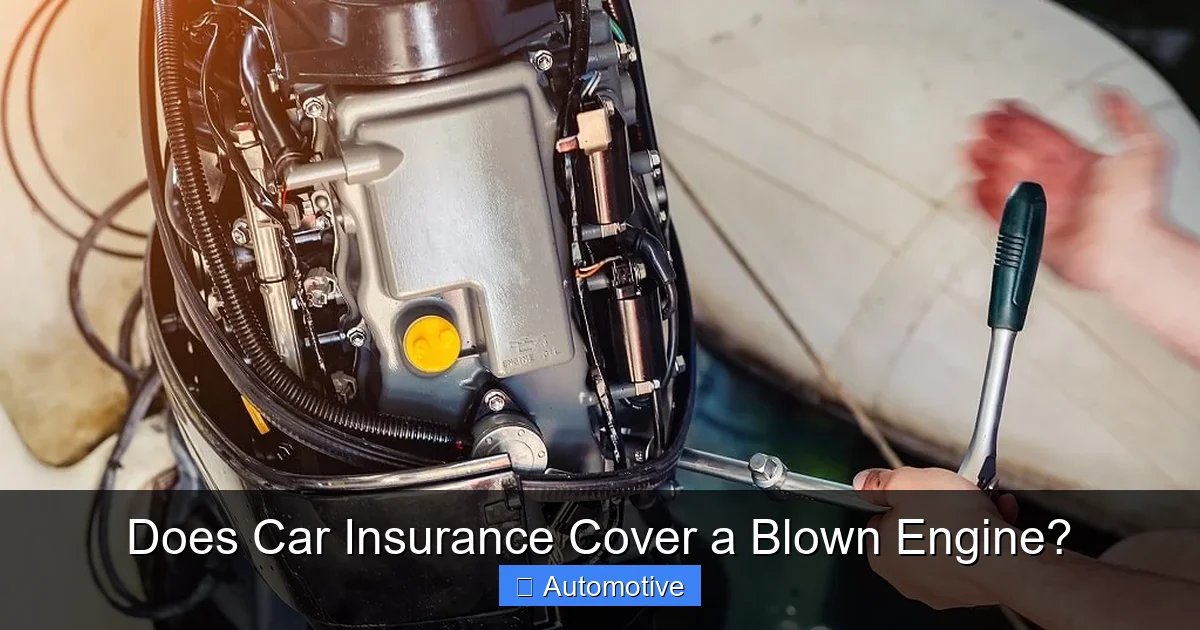
Does Car Insurance Cover a Blown Engine?

Contents
- 1 Key Takeaways
- 2 📑 Table of Contents
- 3 Does Car Insurance Cover a Blown Engine?
- 4 What Is a Blown Engine?
- 5 How Standard Car Insurance Works
- 6 When Might Insurance Cover a Blown Engine?
- 7 What Doesn’t Get Covered (And Why)
- 8 Optional Coverage That Can Help
- 9 Tips to Prevent a Blown Engine
- 10 What to Do If Your Engine Blows
- 11 Conclusion
- 12 Frequently Asked Questions

Car LED Headlight Bulb

Portable Work Light

Car Seat Cover (Universal Fit)

Anti-Slip Dashboard Mat
Most standard car insurance policies do not cover a blown engine unless it results from a covered incident like an accident or flooding. Mechanical breakdowns due to wear and tear, poor maintenance, or manufacturing defects are typically excluded. However, optional coverage like mechanical breakdown insurance (MBI) or an extended warranty may help.
[FEATURED_IMAGE_PLACEOLDER]
Key Takeaways
- Standard auto insurance usually excludes blown engines: Liability, collision, and comprehensive coverage don’t pay for mechanical failures caused by normal use or lack of maintenance.
- Comprehensive coverage may apply in rare cases: If the engine fails due to a covered event like flooding, fire, or falling objects, your policy might help cover repairs.
- Mechanical breakdown insurance (MBI) can help: This add-on coverage, offered by some insurers, pays for repairs to major components like the engine and transmission.
- Extended warranties offer another layer of protection: Purchased separately, these plans often cover engine repairs beyond the manufacturer’s warranty period.
- Regular maintenance is your best defense: Keeping up with oil changes, coolant checks, and tune-ups can prevent many engine failures.
- Document everything if you file a claim: Photos, repair estimates, and maintenance records strengthen your case if you believe the damage should be covered.
- Know your policy details: Always review your insurance contract to understand what’s included and excluded before an issue arises.
📑 Table of Contents
Does Car Insurance Cover a Blown Engine?
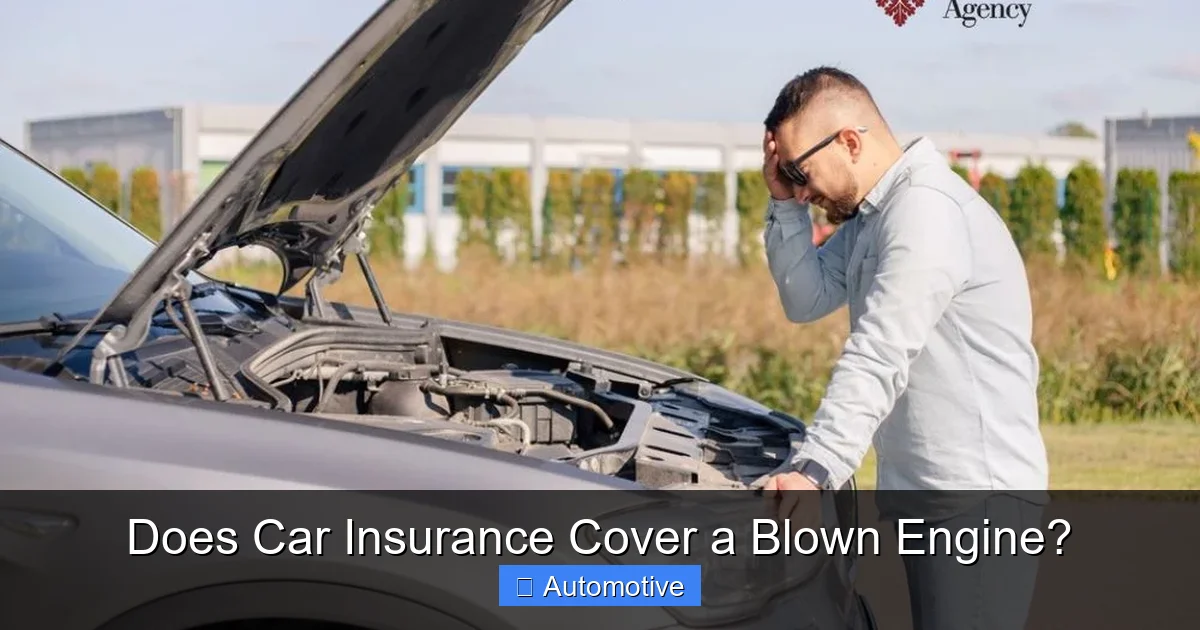
So, your car won’t start. You turn the key, hear a loud clunk, and then… nothing. Or worse—you’re driving down the highway when suddenly there’s a loud knocking noise, smoke under the hood, and your engine shuts off. You pull over, pop the hood, and realize: you’ve got a blown engine.
It’s a nightmare scenario for any driver. Not only is it stressful, but it’s also expensive—engine replacements can cost anywhere from $3,000 to $10,000 or more, depending on your vehicle. Naturally, your first thought might be: “Will my car insurance cover this?”
The short answer? It depends—but mostly, no. Most standard car insurance policies do not cover a blown engine unless it was caused by a specific, covered event. Understanding why requires a closer look at what your policy actually includes—and what it leaves out.
In this guide, we’ll break down exactly when (and when not) your car insurance might help with a blown engine. We’ll explore the types of coverage available, common exclusions, and smart ways to protect yourself from costly mechanical failures. Whether you’re driving a brand-new sedan or a trusty 10-year-old SUV, knowing your options can save you thousands.
What Is a Blown Engine?
Visual guide about Does Car Insurance Cover a Blown Engine?
Image source: policybachat.com
Before we dive into insurance, let’s clarify what we mean by a “blown engine.” This term is often used loosely to describe any serious engine failure, but it usually refers to catastrophic internal damage—like a cracked block, seized pistons, or thrown rods—that renders the engine unusable.
Common Causes of Engine Failure
Engine failures can happen for many reasons, but they generally fall into three categories:
- Lack of maintenance: Skipping oil changes, ignoring low coolant levels, or failing to replace worn belts and hoses can lead to overheating and internal damage.
- Manufacturing defects: Sometimes, engines have design flaws or faulty parts that fail prematurely—even in well-maintained vehicles.
- External events: Accidents, flooding, or debris hitting the engine can cause sudden, severe damage.
For example, imagine you forget to check your oil for months. Over time, sludge builds up, lubrication fails, and metal parts grind against each other. Eventually, a piston seizes, and the engine locks up. That’s a classic case of a blown engine due to neglect.
On the other hand, if your car is caught in a flash flood and water floods the engine bay, hydrolocking the cylinders, that’s an external event—and potentially a different story when it comes to insurance.
Signs Your Engine Might Be Failing
Catching problems early can prevent a full-blown engine failure. Watch for these warning signs:
- Knocking or ticking noises from the engine
- Excessive smoke from the exhaust (blue or white)
- Loss of power or poor acceleration
- Overheating (temperature gauge in the red)
- Oil leaks or low oil pressure
- Check engine light staying on
If you notice any of these, get your car inspected immediately. A $100 diagnostic could save you a $5,000 repair.
How Standard Car Insurance Works
Visual guide about Does Car Insurance Cover a Blown Engine?
Image source: cdn.stratospherewebsites.com
To understand whether your insurance covers a blown engine, you need to know what your policy includes. Most auto insurance policies consist of several types of coverage, each with a specific purpose.
Liability Coverage
This is the most basic and legally required coverage in most states. It pays for damage or injuries you cause to others in an accident. It does not cover your own vehicle or mechanical issues. So, if your engine blows up while you’re driving and you crash into another car, liability will cover their damages—but not your engine repair.
Collision Coverage
Collision pays for damage to your car if you hit another vehicle or object—like a tree, guardrail, or pothole. For example, if you swerve to avoid a deer and your car slams into a concrete barrier, damaging the engine, collision coverage may help.
But here’s the catch: collision only applies if the engine damage is a direct result of the impact. If your engine fails because of internal wear and you happen to be in a minor fender bender at the same time, the insurer will likely deny the claim, arguing the engine failure wasn’t caused by the collision.
Comprehensive Coverage
This is where things get interesting. Comprehensive coverage protects your vehicle from non-collision events like theft, vandalism, fire, falling objects, and—critically—flooding.
So, if a severe storm causes flooding that submerges your car and ruins the engine, comprehensive coverage may pay for repairs or even a total loss. Similarly, if a tree branch falls on your hood and damages the engine, that could be covered.
But again, comprehensive does not cover mechanical breakdowns due to age, wear, or poor maintenance. If your engine fails because it’s 15 years old and hasn’t been serviced in years, your insurer will say it’s a mechanical issue—not a covered peril.
Uninsured/Underinsured Motorist Coverage
This protects you if you’re hit by a driver with no insurance or insufficient coverage. It doesn’t apply to engine failures unless another driver’s negligence directly caused the damage—like if they rear-end you and their car’s bumper smashes into your engine block.
When Might Insurance Cover a Blown Engine?

Visual guide about Does Car Insurance Cover a Blown Engine?
Image source: insurancepanda.com
Now for the million-dollar question: Are there any situations where car insurance will actually pay for a blown engine?
The answer is: rarely—but it’s not impossible. Here are the most common scenarios where coverage might apply.
Flood Damage
If your car is caught in a flood and water enters the engine, causing hydrolock (where water compresses in the cylinders and bends connecting rods), comprehensive coverage may step in.
For example, during Hurricane Harvey in 2017, thousands of cars were submerged. Owners with comprehensive coverage were able to file claims and receive payouts for totaled vehicles—even if the engine was ruined by water.
But beware: if you drive into floodwater knowing it’s dangerous, some insurers may deny the claim, calling it “intentional negligence.” Always avoid driving through standing water, especially if it’s deeper than your door sill.
Fire or Explosion
If a fire starts in your engine bay—due to an electrical short, fuel leak, or accident—and damages the engine, comprehensive coverage should cover the loss.
Say a rodent chews through a wiring harness, causing a short circuit that ignites a fire. If the fire spreads and destroys the engine, your insurer will likely pay, as fire is a named peril in most comprehensive policies.
Falling Objects
Imagine parking under a construction site, and a chunk of concrete falls from a crane, smashing through your hood and damaging the engine. That’s a covered event under comprehensive.
Similarly, if a hailstorm dents your hood so severely that it crushes the engine components beneath, you may have a valid claim.
Accidents That Damage the Engine
If you’re in a collision and the impact directly damages the engine—like a front-end crash that bends the engine block or ruptures the oil pan—collision coverage should apply.
For instance, if you hit a deep pothole at high speed and the engine mounts break, causing the engine to shift and crack the block, that could be covered.
But again, the key is causation. The insurer will investigate whether the engine damage was a direct result of the accident—or if it was already failing due to mechanical issues.
Manufacturer Recalls or Lemon Laws
While not technically “insurance,” if your engine fails due to a known defect and the manufacturer issues a recall, you may be entitled to a free repair or replacement.
Some states also have “lemon laws” that require manufacturers to buy back or replace vehicles with recurring, unfixable problems—including chronic engine issues.
In these cases, your insurer isn’t paying, but you’re still protected. Always check if your vehicle is under recall by visiting the NHTSA website or contacting your dealer.
What Doesn’t Get Covered (And Why)
Now let’s talk about the situations where your insurance will almost certainly say “no.”
Normal Wear and Tear
This is the number one reason claims for blown engines are denied. Insurance is designed to cover sudden, unexpected events—not the gradual deterioration of parts over time.
If your engine fails because it’s 12 years old, has 180,000 miles, and you haven’t changed the oil in two years, your insurer will classify it as “mechanical breakdown due to wear and tear.” That’s not covered under standard policies.
Think of it like health insurance: it covers accidents and illnesses, but not the natural aging of your body. Similarly, car insurance covers accidents and disasters—not the natural aging of your engine.
Poor Maintenance
Neglecting routine maintenance is a fast track to claim denial. If you skip oil changes, ignore warning lights, or use the wrong type of coolant, and your engine overheats and seizes, the insurer will point to your lack of care.
For example, if your oil light has been on for weeks and you keep driving, and then the engine locks up, the insurer will say the damage was preventable—and therefore not covered.
Manufacturing Defects (Without Recall)
If your engine fails due to a design flaw—but the manufacturer hasn’t issued a recall—your insurance won’t pay. This is because the defect isn’t a sudden, external event; it’s an inherent flaw.
Some drivers try to argue that a defect is like a “hidden peril,” but insurers typically classify it as a mechanical issue, not a covered loss.
Modifications or Aftermarket Parts
If you’ve modified your engine—say, installed a turbocharger or performance chip—and it fails, your insurer may deny the claim, especially if the modification contributed to the failure.
Even if the failure seems unrelated, insurers often scrutinize modified vehicles more closely and may argue that the changes increased the risk.
Optional Coverage That Can Help
So, if standard insurance usually doesn’t cover a blown engine, what can you do to protect yourself?
The good news is there are add-on options that specifically cover mechanical failures.
Mechanical Breakdown Insurance (MBI)
Also known as “repair protection” or “component coverage,” MBI is an optional add-on offered by some insurers (like GEICO, Progressive, and USAA) that covers repairs to major systems—including the engine, transmission, and electrical components.
Unlike extended warranties, MBI is sold by insurance companies and often has lower deductibles and broader coverage.
For example, GEICO’s MBI covers up to $7,500 in repairs per year, with a $100 deductible, and includes rental car reimbursement. It’s available for vehicles up to 15 years old with fewer than 150,000 miles.
But it’s not cheap. Premiums can range from $15 to $30 per month, and coverage varies by provider. Still, for high-mileage or older vehicles, it can be a smart investment.
Extended Warranties
These are service contracts sold by dealerships or third-party providers that cover repairs after the manufacturer’s warranty expires.
Extended warranties often include engine and transmission coverage, but they come with limitations: mileage caps, exclusion of wear items, and strict maintenance requirements.
For instance, a typical extended warranty might cover engine repairs for up to 100,000 miles, but only if you can prove you changed the oil every 5,000 miles.
They can be worth it if you plan to keep your car long-term, but shop around—prices and terms vary widely.
Manufacturer Extended Warranties
Some automakers offer their own extended service plans, which are often more reliable than third-party options. For example, Toyota’s Platinum Coverage or Honda’s Care plan can cover engine repairs for up to 8 years or 125,000 miles.
These plans are usually more expensive upfront but offer peace of mind and better customer service.
Tips to Prevent a Blown Engine
The best way to avoid a blown engine—and the insurance headache that comes with it—is prevention. Here’s how to keep your engine running smoothly.
Follow the Maintenance Schedule
Your owner’s manual has a maintenance timeline for a reason. Stick to it. That means:
- Oil changes every 5,000 to 7,500 miles (or as recommended)
- Coolant flushes every 30,000 to 60,000 miles
- Timing belt replacement (if applicable) around 60,000–100,000 miles
- Regular inspections of belts, hoses, and filters
Monitor Fluids and Gauges
Check your oil level monthly. Look for leaks under the car. Keep an eye on the temperature gauge—if it starts creeping into the red, pull over immediately.
Low oil or overheating are the two biggest killers of engines. Don’t ignore them.
Use Quality Parts and Fluids
Cheap oil or the wrong coolant can cause long-term damage. Use the manufacturer-recommended oil viscosity and type. Don’t mix different coolants.
Drive Responsibly
Avoid “redlining” the engine, especially when it’s cold. Don’t tow beyond your vehicle’s capacity. These habits reduce stress on the engine and extend its life.
Address Warning Signs Immediately
If the check engine light comes on, get it scanned. If you hear a new noise, have it checked. Small issues can turn into big problems fast.
What to Do If Your Engine Blows
So, the worst has happened. Your engine is gone. Here’s what to do next.
1. Don’t Try to Start the Car
If the engine is seized, attempting to start it can cause further damage. Have it towed to a trusted mechanic.
2. Document Everything
Take photos of the engine, the damage, and the vehicle’s condition. Keep all repair estimates and invoices.
3. Review Your Insurance Policy
Check your declarations page to see what coverage you have. Look for comprehensive, collision, and any add-ons like MBI.
4. File a Claim (If Applicable)
If you believe the damage was caused by a covered event—like flooding or an accident—file a claim with your insurer. Provide all documentation, including maintenance records.
5. Get a Second Opinion
If your claim is denied, ask for a detailed explanation. You can appeal or seek a second opinion from an independent mechanic.
6. Consider Your Options
If the engine is beyond repair, you may need to replace it or sell the car for parts. A used engine can cost $2,000–$4,000, while a rebuilt one might run $3,000–$6,000. A new engine can exceed $10,000.
Conclusion
So, does car insurance cover a blown engine? In most cases, no—unless the failure was caused by a covered event like flooding, fire, or an accident. Standard policies are not designed to pay for mechanical breakdowns due to wear, neglect, or manufacturing defects.
But that doesn’t mean you’re out of options. Optional coverage like mechanical breakdown insurance or an extended warranty can provide valuable protection, especially for older or high-mileage vehicles.
The best defense, however, is prevention. Regular maintenance, attentive driving, and prompt repairs can keep your engine running strong for years. And if the worst happens, knowing your policy details and acting quickly can make all the difference.
Don’t wait until your engine fails to think about coverage. Review your insurance today, consider your options, and drive with confidence.
Frequently Asked Questions
Will my car insurance cover a blown engine if it wasn’t my fault?
Only if the engine failure was caused by a covered event, such as flooding, fire, or an accident. If the failure was due to wear and tear or poor maintenance, even if it wasn’t your fault, standard insurance won’t pay.
Can I add mechanical breakdown insurance after my engine fails?
No. MBI must be purchased before any mechanical issues occur. Insurers won’t sell coverage for a problem that already exists.
Does comprehensive coverage cover engine failure from overheating?
Generally, no. Overheating due to low coolant or a broken thermostat is considered a mechanical issue, not a covered peril like fire or flood.
Will my warranty cover a blown engine?
It depends. If your vehicle is still under the manufacturer’s warranty or an extended warranty that includes engine coverage, and the failure isn’t due to neglect, it may be covered.
Can I sue the manufacturer if my engine blows due to a defect?
Possibly. If you can prove the engine failed due to a design or manufacturing defect, you may have a case under lemon laws or product liability. Consult a lawyer for advice.
Is it worth buying mechanical breakdown insurance?
It depends on your vehicle’s age, mileage, and reliability. For newer or high-value cars, it can be a smart investment. For older cars with known issues, it may not be cost-effective.