Do You Need a Notary to Sell a Car in Pa
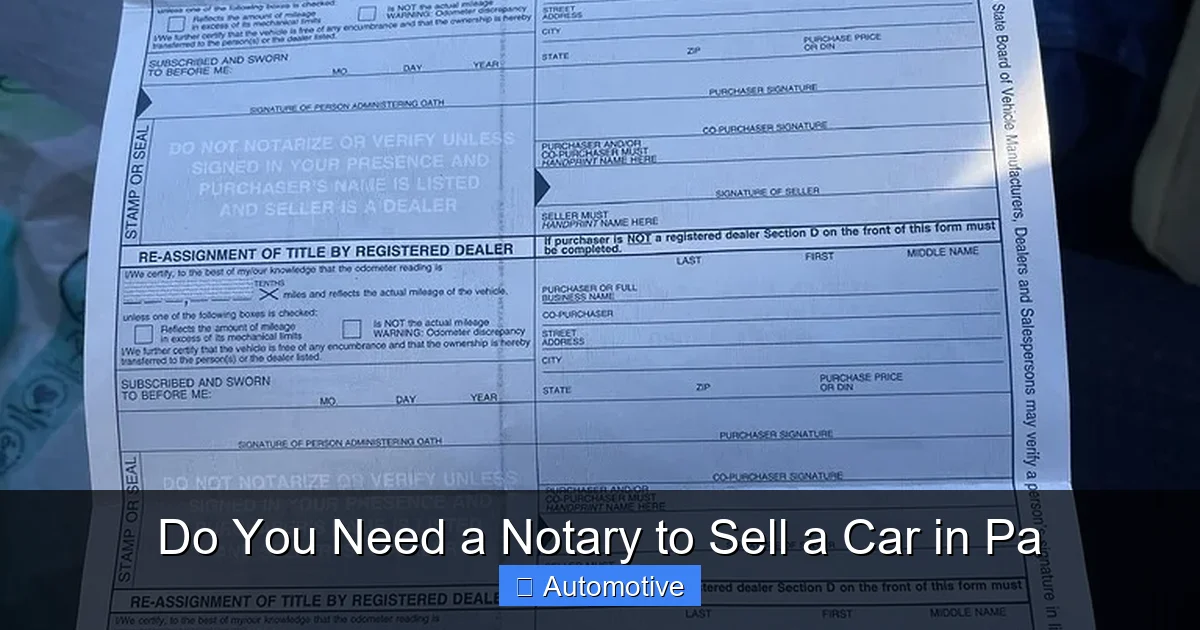
You don’t always need a notary to sell a car in Pennsylvania, but it’s often required for the vehicle title transfer—especially if the seller’s signature needs verification. Understanding when notarization is mandatory and how to complete the process correctly can save you time, money, and legal headaches.
So, you’ve decided to sell your car in Pennsylvania—congratulations! Whether you’re upgrading to a newer model, downsizing, or just ready to part ways with your trusty old ride, selling a vehicle can be both exciting and a little overwhelming. One of the first questions that pops up is: “Do I need a notary to sell a car in PA?” It’s a smart question, and the answer isn’t always straightforward. While not every car sale requires a notary, most private sales in Pennsylvania do—especially when it comes to transferring the vehicle title.
Understanding Pennsylvania’s notarization rules is crucial to completing your sale legally and smoothly. The good news? Once you know the steps, the process is pretty simple. In this guide, we’ll walk you through everything you need to know about notarization, title transfers, and the paperwork involved in selling a car in the Keystone State. Whether you’re a first-time seller or you’ve done this before, this article will help you avoid common pitfalls and ensure your sale goes off without a hitch.
Let’s start with the basics: What exactly is a notary, and why does Pennsylvania care so much about them? A notary public is a state-appointed official whose job is to witness signatures on important documents and verify the identity of the people signing them. Their seal and signature act as a layer of protection against fraud. In the context of car sales, notarization helps ensure that the person signing over the title is who they say they are—and that they’re doing so willingly.
Now, you might be thinking, “But I’m just selling my car to my cousin. Do I really need a notary?” Or maybe, “What if I’m selling online to someone in another state?” These are great questions, and the answers depend on several factors—including who’s buying, how the title is structured, and whether the sale is private or through a dealer. Let’s dive deeper into when notarization is required, how to get it done, and what happens if you skip this step.
In This Article
- 1 Key Takeaways
- 2 📑 Table of Contents
- 3 When Is a Notary Required to Sell a Car in Pennsylvania?
- 4 How to Notarize a Car Title in Pennsylvania
- 5 Completing the Title Transfer in Pennsylvania
- 6 Common Mistakes to Avoid When Selling a Car in PA
- 7 Where to Get Help and Resources
- 8 Final Thoughts: Selling Your Car in Pennsylvania
- 9 Frequently Asked Questions
Key Takeaways
- Notarization is required in most private car sales in PA: The Pennsylvania Department of Transportation (PennDOT) typically requires the seller’s signature on the vehicle title to be notarized to prevent fraud and ensure authenticity.
- Exceptions exist for certain transactions: If the vehicle is being sold to an immediate family member or through a dealership, notarization may not be required.
- Both buyer and seller must complete the title correctly: The buyer must sign the title and provide proof of insurance, while the seller must sign in the presence of a notary if required.
- Use Form MV-4ST for private sales: This is the official “Vehicle Sales and Use Tax Return” form used in Pennsylvania for private vehicle transactions.
- Notaries are widely available: You can find notary services at banks, UPS stores, law offices, and some public libraries—often for a small fee or even free.
- Failure to notarize when required can delay registration: PennDOT may reject your title transfer if the notarization is missing or incorrect.
- Keep copies of all documents: Both buyer and seller should retain copies of the signed title, bill of sale, and notarization record for their records.
📑 Table of Contents
When Is a Notary Required to Sell a Car in Pennsylvania?
In Pennsylvania, notarization is generally required when you’re selling a vehicle privately—meaning you’re not going through a licensed dealership. The main reason? The vehicle title must be signed by the seller, and PennDOT wants to make sure that signature is legitimate. That’s where the notary comes in.
According to PennDOT regulations, the seller’s signature on the vehicle title must be notarized unless an exception applies. This rule applies whether you’re selling a car, truck, motorcycle, or even a trailer. The notary’s job is to confirm your identity, witness your signature, and stamp the document with their official seal. This helps prevent title fraud, which has become increasingly common in recent years.
But not every sale needs a notary. There are a few key exceptions:
Sales to Immediate Family Members
If you’re selling your car to a spouse, parent, child, or sibling, notarization may not be required. However, you’ll still need to complete the title transfer correctly and provide proof of the familial relationship (like a birth certificate or marriage license). It’s always a good idea to check with your local PennDOT office or consult the MV-4ST form instructions to confirm.
Sales Through a Licensed Dealer
When you sell your car to a dealership—whether you’re trading it in or selling it outright—the dealer typically handles the title transfer and registration. In these cases, notarization is usually not required because the dealer acts as an intermediary and assumes responsibility for the paperwork.
Vehicles with Multiple Owners
If the vehicle has co-owners (for example, “John Smith and Jane Doe”), both owners must sign the title. If both are present and signing together, only one notarization is needed—but both signatures must be witnessed. If only one owner is present, the absent owner must sign and notarize their signature separately, often using a “Power of Attorney” form.
Out-of-State Buyers
If you’re selling your car to someone in another state, the notarization rules still apply in Pennsylvania. The seller (you) must sign the title in the presence of a Pennsylvania notary. The buyer will then handle registration in their home state, which may have its own requirements.
It’s important to note that even if notarization isn’t strictly required, many buyers and sellers choose to use a notary anyway for added peace of mind. It’s a small step that can prevent disputes down the road.
How to Notarize a Car Title in Pennsylvania
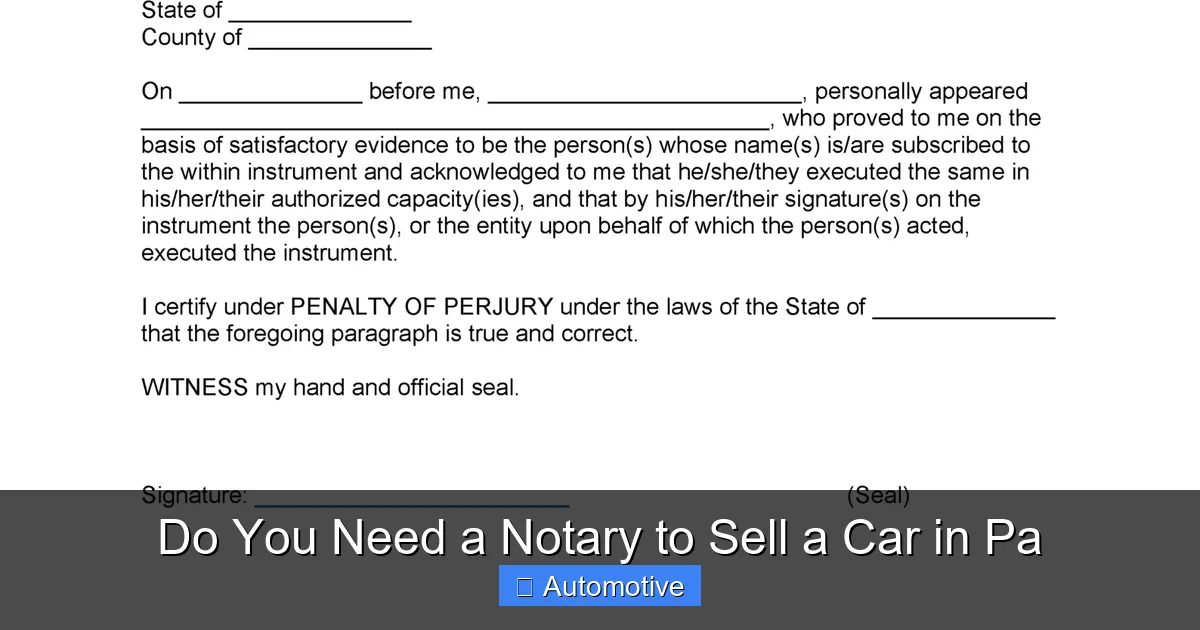
Visual guide about Do You Need a Notary to Sell a Car in Pa
Image source: esign.com
Now that you know when notarization is needed, let’s talk about how to actually get it done. The process is straightforward, but there are a few key steps to follow to make sure everything is done correctly.
Step 1: Locate a Notary Public
Notaries are easy to find in Pennsylvania. You can usually find one at:
– Your local bank or credit union (many offer free notary services to customers)
– UPS Stores or FedEx Office locations (typically charge $5–$15)
– Law offices or title companies
– Some public libraries or municipal buildings
Always call ahead to confirm availability and fees. Some notaries may require an appointment.
Step 2: Bring the Right Documents
When you go to the notary, you’ll need:
– The vehicle title (signed by the seller)
– A valid government-issued photo ID (like a driver’s license or passport)
– The notary may also ask for proof of ownership or additional identification
Make sure the title is filled out completely and correctly before you arrive. Any errors could delay the process.
Step 3: Sign in the Notary’s Presence
The notary will ask you to sign the title in front of them. They’ll verify your identity, confirm you understand what you’re signing, and then apply their official seal and signature. This completes the notarization.
Step 4: Keep a Copy
After notarization, make a copy of the signed and notarized title for your records. This can be helpful if there are any issues during the registration process.
Pro Tip: Use a Bill of Sale
While not always required, it’s a smart idea to create a bill of sale in addition to the title. This document outlines the sale price, vehicle details, and terms of the transaction. It can protect both buyer and seller in case of disputes. Pennsylvania doesn’t have a standard bill of sale form, but you can find free templates online or use PennDOT’s MV-4ST form, which includes a sales section.
Completing the Title Transfer in Pennsylvania
Visual guide about Do You Need a Notary to Sell a Car in Pa
Image source: i.pinimg.com
Notarization is just one part of the car-selling process. Once the title is signed and notarized, the buyer must complete the transfer with PennDOT. Here’s what that involves.
What the Buyer Needs to Do
The buyer is responsible for registering the vehicle in their name and paying any applicable taxes and fees. To do this, they’ll need:
– The signed and notarized title
– A completed MV-4ST form (Vehicle Sales and Use Tax Return)
– Proof of insurance (a Pennsylvania insurance card)
– A valid driver’s license
– Payment for registration, title, and sales tax (if applicable)
The buyer must submit these documents to their local PennDOT office or mail them in. Processing times vary, but most people receive their new title and registration within a few weeks.
Sales Tax in Pennsylvania
Pennsylvania charges a 6% sales tax on most vehicle purchases. However, if the buyer is registering the vehicle in a county with a local tax (like Philadelphia or Allegheny County), the total tax rate may be higher. The tax is based on the sale price or the vehicle’s fair market value, whichever is higher.
There are some exemptions. For example, if the vehicle is gifted or inherited, no sales tax is due. Similarly, if the buyer is a member of the military stationed in Pennsylvania, they may be exempt from sales tax.
Odometer Disclosure
For vehicles less than 10 years old, the seller must complete the odometer disclosure section on the title. This confirms the mileage at the time of sale. Both buyer and seller should verify this information to avoid future issues.
Release of Liability
After the sale, the seller should notify PennDOT that they’re no longer responsible for the vehicle. This is done by completing the “Notice of Vehicle Sale” section on the back of the title or by submitting Form MV-42. This protects the seller if the buyer gets a ticket or is involved in an accident before registering the vehicle.
Common Mistakes to Avoid When Selling a Car in PA
Visual guide about Do You Need a Notary to Sell a Car in Pa
Image source: bluenotary.us
Even with the best intentions, mistakes can happen. Here are some common pitfalls to watch out for:
Forgetting to Notarize the Title
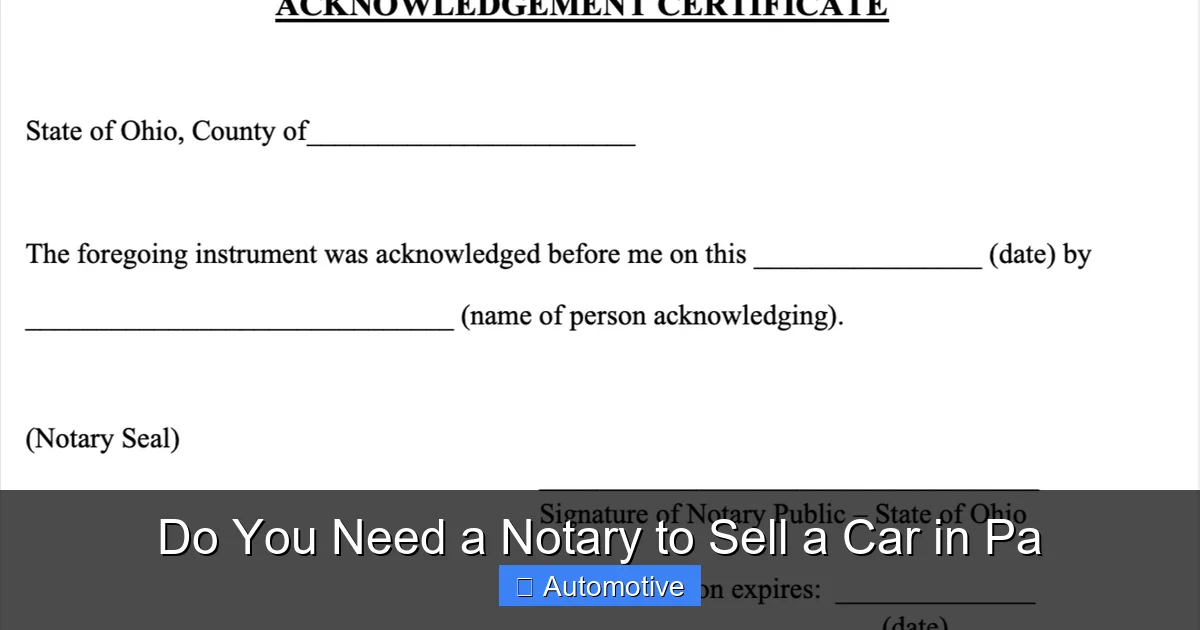
This is the biggest mistake sellers make. If the title isn’t notarized when required, PennDOT will reject the transfer. The buyer will have to return the title, get it notarized, and resubmit—costing time and potentially delaying registration.
Incomplete or Incorrect Title Information
Double-check the vehicle identification number (VIN), odometer reading, and sale price. Even a small typo can cause problems. If you make a mistake, don’t use correction fluid. Instead, void the title and start over.
Not Providing a Bill of Sale
While not legally required in all cases, a bill of sale creates a paper trail. It can help resolve disputes over price, condition, or delivery date.
Selling Without Clear Title
You can’t sell a car if there’s a lien on it (like an unpaid loan). The lien must be released before the sale. If you’re still making payments, contact your lender to arrange a payoff and title release.
Ignoring the Release of Liability
Failing to notify PennDOT that you’ve sold the vehicle can leave you liable for tickets, tolls, or accidents. Always complete the release of liability form.
Where to Get Help and Resources
If you’re feeling overwhelmed, don’t worry—help is available. Here are some resources to guide you:
PennDOT Website
The official PennDOT website (www.dmv.pa.gov) has detailed guides, forms, and FAQs about vehicle sales and title transfers. You can download the MV-4ST form, check tax rates, and find your local office.
Local PennDOT Offices
Visit or call your nearest PennDOT location for in-person assistance. Staff can answer questions and review your documents before submission.
Notary Services
As mentioned earlier, banks, UPS Stores, and law offices offer notary services. Some may even come to your home for a small fee.
Online Forums and Communities
Websites like Reddit (r/Pennsylvania or r/cars) and local Facebook groups can be great places to ask questions and get advice from other sellers.
Final Thoughts: Selling Your Car in Pennsylvania
Selling a car in Pennsylvania doesn’t have to be complicated—but it does require attention to detail. While notarization isn’t always mandatory, it’s required in most private sales to protect both buyer and seller. Taking the time to notarize the title, complete the paperwork correctly, and notify PennDOT of the sale can save you from headaches down the road.
Remember, the goal is a smooth, legal transfer that leaves both parties satisfied. Whether you’re selling to a neighbor, a family member, or someone across the country, following Pennsylvania’s rules ensures everything is above board. And if you’re ever unsure, don’t hesitate to ask for help. A quick call to PennDOT or a visit to a notary can make all the difference.
So go ahead—list that car, meet your buyer, and get that title notarized. With the right preparation, selling your car in PA can be a breeze.
Frequently Asked Questions
Do I need a notary to sell a car in PA?
Yes, in most private car sales in Pennsylvania, the seller’s signature on the vehicle title must be notarized. This helps prevent fraud and ensures the signature is authentic. Exceptions include sales to immediate family members or through a dealership.
Can I sell my car without notarizing the title?
Only in specific cases, such as selling to a spouse, parent, child, or sibling, or when selling through a licensed dealer. Otherwise, notarization is required by PennDOT for private sales.
Where can I find a notary in Pennsylvania?
You can find notaries at banks, UPS Stores, law offices, and some public libraries. Many banks offer free notary services to customers, while others charge a small fee.
What happens if I don’t notarize the title?
PennDOT may reject the title transfer, delaying the buyer’s registration. The buyer would need to return the title, get it notarized, and resubmit it, which can be time-consuming and frustrating.
Do I need a bill of sale when selling a car in PA?
While not always required, a bill of sale is highly recommended. It documents the sale price, vehicle details, and terms, providing protection for both buyer and seller.
How do I notify PennDOT that I’ve sold my car?
Complete the “Notice of Vehicle Sale” section on the back of the title or submit Form MV-42 to PennDOT. This releases you from liability for the vehicle after the sale.