
Do You Have to Have Car Insurance in Florida?

In Florida, you must have car insurance to legally drive—specifically Personal Injury Protection (PIP) and Property Damage Liability (PDL). While bodily injury liability isn’t required, having it is strongly recommended for full protection. Driving without coverage can lead to fines, license suspension, and financial risk.
This is a comprehensive guide about Do You Have to Have Car Insurance in Florida?.
Key Takeaways
- Florida requires car insurance: All drivers must carry at least $10,000 in Personal Injury Protection (PIP) and $10,000 in Property Damage Liability (PDL).
- No-fault state rules apply: Your own insurance covers your medical expenses after an accident, regardless of who caused it.
- Bodily injury liability is optional but wise: Florida doesn’t require it, but it protects you if you injure someone else in a crash.
- Driving uninsured has serious consequences: Penalties include fines up to $500, license suspension, and vehicle impoundment.
- Proof of insurance must be carried: You must show valid insurance documentation when requested by law enforcement or during traffic stops.
- Shop around for the best rates: Comparing quotes from multiple insurers can save you hundreds per year while ensuring adequate coverage.
- Consider additional coverage: Collision, comprehensive, and uninsured motorist protection offer extra peace of mind beyond state minimums.
[FEATURED_IMAGE_PLACEHOLDER]
Do You Have to Have Car Insurance in Florida?
If you’re behind the wheel in Florida, one question looms large: Do you really need car insurance? The short answer is yes—Florida law mandates that all registered vehicles carry a minimum level of auto insurance. But the full picture is a bit more nuanced than just checking a box. Understanding what’s required, why it matters, and how to stay compliant can save you from hefty fines, legal trouble, and financial disaster.
Florida operates under a “no-fault” insurance system, which means your own insurance company pays for your medical bills and lost wages after an accident—regardless of who was at fault. This unique approach shapes the type of coverage drivers must carry. While some states require bodily injury liability, Florida takes a different route, focusing instead on Personal Injury Protection (PIP) and Property Damage Liability (PDL). That said, just meeting the bare minimum might leave you exposed in serious accidents. So while the law sets the floor, smart drivers build a stronger safety net.
Whether you’re a new resident, a longtime Floridian, or just visiting, knowing your obligations under Florida’s auto insurance laws is essential. In this guide, we’ll walk you through everything you need to know—from legal requirements and penalties for noncompliance to practical tips for choosing the right policy. Let’s dive in.
Florida’s Legal Requirements for Car Insurance
Florida Statute 324.021 clearly states that every driver must maintain continuous automobile insurance coverage. Specifically, the law mandates two types of coverage: Personal Injury Protection (PIP) and Property Damage Liability (PDL). Both are non-negotiable if you want to legally operate a vehicle in the Sunshine State.
Minimum Coverage Limits
The state sets strict minimums for these coverages:
– Personal Injury Protection (PIP): $10,000
This covers medical expenses, lost wages, and essential services for you and your passengers—up to 80% of medical costs and 60% of lost income. Importantly, PIP applies regardless of fault.
– Property Damage Liability (PDL): $10,000
This covers damage you cause to another person’s property—like their car, fence, or mailbox—in an at-fault accident.
These amounts may seem low, especially compared to other states, but they reflect Florida’s no-fault philosophy. The idea is to ensure quick payment for basic injuries without waiting for fault determinations. However, as we’ll explore later, these minimums often fall short in serious crashes.
Why These Requirements Exist
Florida’s no-fault system was designed to reduce lawsuits and speed up claims processing. By requiring PIP, the state ensures that injured parties receive prompt medical care without getting tangled in lengthy court battles over who caused the accident. PDL, meanwhile, protects others from bearing the cost of property damage you cause.
It’s also worth noting that these requirements apply to all registered vehicles—including cars, trucks, motorcycles, and even certain golf carts used on public roads. If you let your insurance lapse, even for a day, you’re technically violating the law.
Exceptions and Special Cases
There are very few exceptions to Florida’s insurance mandate. One rare scenario involves out-of-state residents who maintain valid insurance in their home state and only drive occasionally in Florida. However, if you become a Florida resident—typically defined as staying more than 90 days or obtaining a Florida driver’s license—you must switch to a Florida policy within 30 days.
Additionally, leased or financed vehicles often require higher coverage levels than the state minimum. Lenders typically insist on collision and comprehensive coverage to protect their financial interest in the vehicle.
What Happens If You Drive Without Insurance in Florida?
Driving without valid car insurance in Florida isn’t just risky—it’s illegal. And the consequences can be severe, affecting your wallet, driving privileges, and even your ability to register a vehicle in the future.
First Offense Penalties
If you’re caught driving uninsured for the first time, expect:
– A fine between $150 and $500
– Suspension of your driver’s license for up to three years
– Suspension of your vehicle registration
– Possible impoundment of your vehicle
To reinstate your license and registration, you’ll need to provide proof of insurance and pay reinstatement fees—which can add another $150 or more.
Repeat Offenses Are Worse
Second and subsequent violations come with harsher penalties:
– Fines up to $1,000
– Mandatory license suspension for one year
– Requirement to file an SR-22 (proof of financial responsibility) for three years
– Possible jail time in extreme cases
An SR-22 isn’t a type of insurance—it’s a form your insurer files with the state to confirm you’re maintaining coverage. It’s often required after serious violations and can significantly increase your premiums.
Real-Life Example
Imagine you’re involved in a minor fender bender while uninsured. Even if the other driver is clearly at fault, you could still face penalties because Florida law holds all drivers accountable for carrying coverage. Worse, if you’re found at fault and don’t have PDL, you could be personally sued for thousands in property damage—and without insurance, those costs come straight out of your pocket.
Financial Risk Beyond Fines
Beyond legal penalties, driving uninsured exposes you to massive financial risk. Medical bills after a serious accident can easily exceed $10,000—the maximum your PIP would cover. Without bodily injury liability or collision coverage, you’re on the hook for everything else. One bad decision could lead to bankruptcy.
Understanding Florida’s No-Fault Insurance System
Florida’s no-fault system is one of the most misunderstood aspects of its auto insurance laws. Unlike traditional “at-fault” states where the responsible party’s insurance pays for damages, Florida shifts the burden to each driver’s own insurer—at least for medical expenses.
How No-Fault Works in Practice
After an accident, your PIP coverage kicks in immediately to pay for:
– Medical treatment (up to 80% of reasonable costs)
– Lost wages (up to 60% of your income)
– Replacement services (like childcare or housekeeping if you’re injured)
– Funeral expenses (up to $5,000)
This happens regardless of who caused the crash. The goal is to get people treated quickly and avoid clogging the courts with small claims.
Limits of No-Fault Protection
While no-fault sounds great in theory, it has significant limitations:
– PIP only covers up to $10,000—far less than many hospital bills.
– You can only sue the other driver if your injuries meet a certain “serious injury” threshold (e.g., permanent disability, significant disfigurement, or death).
– Property damage is not covered under no-fault—that’s where PDL comes in.
This means that even with PIP, you could face out-of-pocket costs if your injuries are severe. That’s why many Floridians choose to add bodily injury liability and uninsured motorist coverage.
Why Bodily Injury Liability Is Optional (But Smart)
Unlike most states, Florida does not require bodily injury liability (BIL) coverage. This protects you if you injure someone else in an at-fault accident. While it’s not mandatory, skipping it is a gamble. Consider this: a single emergency room visit can cost $15,000 or more. Without BIL, you’d be personally responsible for those bills—and the injured party could sue you.
Many insurers offer affordable BIL packages. For example, a 100/300/100 policy ($100,000 per person, $300,000 per accident, $100,000 property damage) might cost only $50–$100 more per month than the state minimum—but provide far greater protection.
Types of Coverage Beyond the Minimum
Meeting Florida’s minimum requirements keeps you legal, but it rarely keeps you fully protected. Smart drivers invest in additional coverage to guard against the unexpected.
Collision Coverage
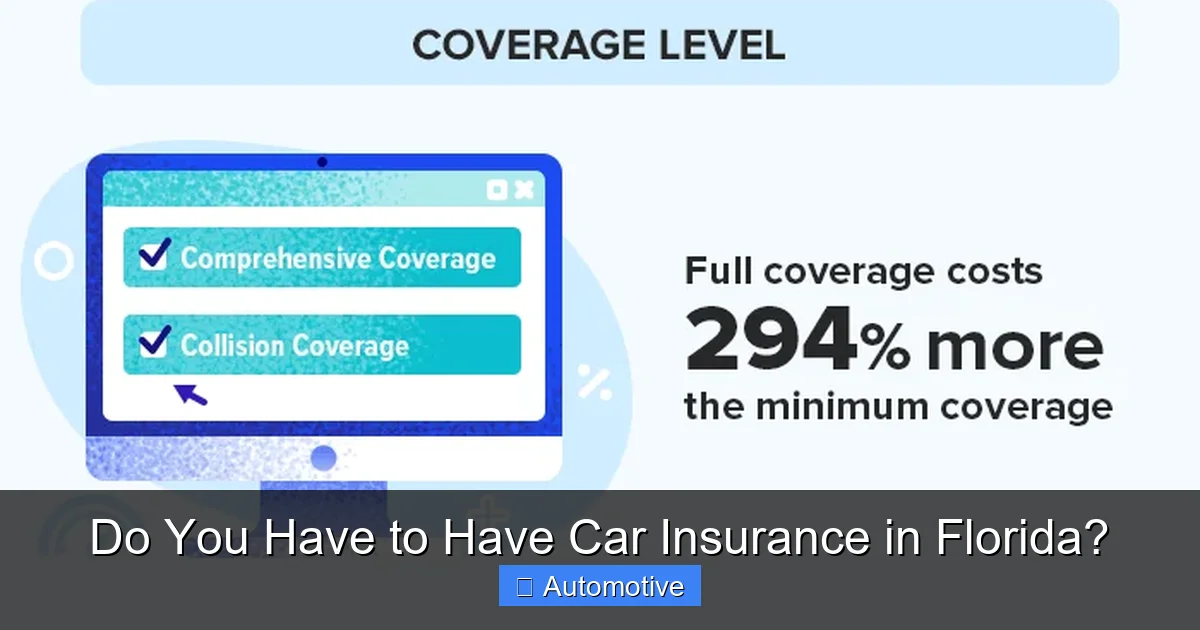
This pays to repair or replace your vehicle if it’s damaged in a collision—regardless of fault. It’s especially valuable if you drive a newer or financed car. Without it, you’d pay out of pocket for repairs after even a minor accident.
Comprehensive Coverage
Comprehensive covers non-collision incidents like theft, vandalism, fire, hail, or hitting an animal. In Florida, where hurricanes and flooding are common, this coverage can be a lifesaver.
Uninsured/Underinsured Motorist Coverage (UM/UIM)
Nearly 20% of Florida drivers are uninsured—one of the highest rates in the nation. UM/UIM protects you if you’re hit by someone without insurance or with insufficient coverage. It can pay for medical bills, lost wages, and pain and suffering—something PIP doesn’t cover.
Medical Payments (MedPay)
While PIP covers medical costs, MedPay offers additional reimbursement for you and your passengers—often with no deductible. It’s a small add-on that can fill gaps left by PIP.
Rental Reimbursement and Roadside Assistance
These optional add-ons provide convenience and peace of mind. Rental reimbursement covers a rental car while yours is being repaired, while roadside assistance helps with towing, flat tires, or lockouts.
Practical Tip: Bundle for Savings
Many insurers offer discounts when you bundle auto insurance with home, renters, or umbrella policies. You could save 10–25% just by consolidating your coverage.
How to Get and Maintain Valid Car Insurance in Florida
Getting insured in Florida is straightforward—but staying compliant requires ongoing attention.
Steps to Purchase a Policy
1. Gather required info: Driver’s license, vehicle registration, VIN, and driving history.
2. Compare quotes: Use online tools or work with an independent agent to compare rates from multiple insurers.
3. Choose coverage: Start with state minimums, then add extras based on your needs and budget.
4. Complete application: Provide accurate details to avoid claim denials later.
5. Receive proof of insurance: Most insurers email a digital ID card instantly.
Keeping Your Policy Active
– Pay premiums on time—lapses can trigger penalties.
– Update your insurer if you move, change vehicles, or add drivers.
– Renew annually or opt for automatic payments to avoid gaps.
What to Do During a Traffic Stop
Always carry proof of insurance—either a physical card or digital copy on your phone. Officers can verify coverage electronically, but having documentation ready speeds up the process and shows you’re responsible.
Tips for Saving Money on Florida Car Insurance
Car insurance doesn’t have to break the bank. With smart strategies, you can stay compliant and protected without overspending.
Maintain a Clean Driving Record
Accidents and tickets increase premiums. Safe driving not only keeps you safe—it keeps your rates low.
Take Advantage of Discounts
Common discounts include:
– Good student (for young drivers with B averages)
– Defensive driving course completion
– Low mileage
– Anti-theft devices
– Multi-car or multi-policy bundles
Raise Your Deductible
Choosing a higher deductible (e.g., $1,000 instead of $500) can lower your premium—but only if you can afford to pay it out of pocket if needed.
Shop Around Every Year
Insurance rates change frequently. Comparing quotes annually ensures you’re not overpaying. Use free comparison sites or consult an independent agent.
Consider Usage-Based Insurance
Some insurers offer programs that track your driving habits via a mobile app or device. Safe drivers can earn significant discounts.
Conclusion
So, do you have to have car insurance in Florida? Absolutely. The state mandates PIP and PDL coverage for all drivers, and failing to comply comes with serious consequences—from fines and license suspension to financial ruin after an accident. While Florida’s no-fault system simplifies some aspects of claims, it also leaves gaps that smart drivers fill with additional coverage like bodily injury liability, collision, and uninsured motorist protection.
The good news? Staying insured doesn’t have to be expensive or complicated. By understanding your requirements, comparing quotes, and taking advantage of discounts, you can find affordable coverage that keeps you legal—and protected—on Florida’s busy roads. Don’t wait until it’s too late. Review your policy today, ensure it meets your needs, and drive with confidence knowing you’re prepared for whatever comes your way.
Frequently Asked Questions
Is car insurance required in Florida?
Yes, Florida law requires all drivers to carry at least $10,000 in Personal Injury Protection (PIP) and $10,000 in Property Damage Liability (PDL). Driving without this coverage is illegal and can result in fines, license suspension, and vehicle impoundment.
Can I drive in Florida with out-of-state insurance?
If you’re a visitor, yes—but only temporarily. Once you become a Florida resident (usually after 90 days or obtaining a Florida license), you must switch to a Florida-based policy within 30 days to comply with state law.
What happens if I let my insurance lapse in Florida?
Letting your policy lapse—even briefly—can lead to license and registration suspension, fines, and reinstatement fees. You may also be required to file an SR-22 form, which can increase future premiums.
Do I need bodily injury liability insurance in Florida?
No, it’s not required by law. However, it’s highly recommended because it protects you if you cause injuries to others in an at-fault accident. Without it, you could face lawsuits and personal financial liability.
How much does car insurance cost in Florida?
Florida has some of the highest average insurance rates in the U.S., often exceeding $2,000 per year for minimum coverage. Costs vary based on age, driving history, location, vehicle type, and coverage level—but shopping around can help you find better deals.
Can I be sued after an accident in Florida even with PIP?
Yes, but only if your injuries meet the state’s “serious injury” threshold—such as permanent disability, significant disfigurement, or death. Otherwise, Florida’s no-fault laws limit your ability to sue for pain and suffering.
