Do All Household Members Need to Be on Car Insurance

Contents
- 1 Key Takeaways
- 2 📑 Table of Contents
- 3 Do All Household Members Need to Be on Car Insurance?
- 4 Why Insurance Companies Care About Household Members
- 5 When Household Members Must Be Added to Your Policy
- 6 Can You Exclude a Household Member from Your Policy?
- 7 State Laws and Insurance Requirements
- 8 How Adding Household Members Affects Your Premium
- 9 What Happens If You Don’t Disclose a Household Member?
- 10 Best Practices for Managing Household Drivers
- 11 Conclusion
- 12 Frequently Asked Questions

Bluetooth FM Transmitter

Rear View Camera

Octane Booster

Car Cup Holder Expander
Not all household members are required to be listed on your car insurance policy, but failing to disclose regular drivers can lead to claim denials or policy cancellation. Understanding your insurer’s rules and state laws is key to staying protected and avoiding costly surprises.
Key Takeaways
- Household members who regularly drive your car should be listed on your policy to ensure coverage and avoid claim denials.
- Excluding a driver is possible but risky—if an excluded driver causes an accident, you may still face liability and legal issues.
- State laws vary, so check your local regulations regarding who must be insured in your household.
- Insurance companies define “household member” broadly, often including anyone living with you for 30+ days, even if they don’t own the car.
- Adding a young or inexperienced driver increases premiums, but it’s safer than leaving them uninsured or underinsured.
- Failure to disclose a regular driver can result in policy cancellation or non-renewal, making future coverage harder to obtain.
- Consider usage-based insurance or permissive use policies if a household member only drives occasionally.
📑 Table of Contents
- Do All Household Members Need to Be on Car Insurance?
- Why Insurance Companies Care About Household Members
- When Household Members Must Be Added to Your Policy
- Can You Exclude a Household Member from Your Policy?
- State Laws and Insurance Requirements
- How Adding Household Members Affects Your Premium
- What Happens If You Don’t Disclose a Household Member?
- Best Practices for Managing Household Drivers
- Conclusion
Do All Household Members Need to Be on Car Insurance?
When it comes to car insurance, one of the most common questions families ask is: “Do all household members need to be on the policy?” The short answer is no—not everyone living in your home is legally required to be listed on your car insurance. But the longer, more important answer is that failing to include regular drivers can lead to serious financial and legal consequences.
Car insurance isn’t just about protecting the car—it’s about protecting people, property, and your financial future. Most policies are designed to cover drivers who live in the same household because they’re more likely to use the vehicle regularly. Insurance companies assume that if someone lives with you, they might drive your car, even if they don’t own it. That’s why transparency with your insurer is crucial.
In this guide, we’ll walk you through everything you need to know about insuring household members, from legal requirements to smart strategies for managing premiums. Whether you’re a parent adding a teen driver, sharing a home with a roommate, or just trying to understand your policy, this article will help you make informed decisions.
Why Insurance Companies Care About Household Members
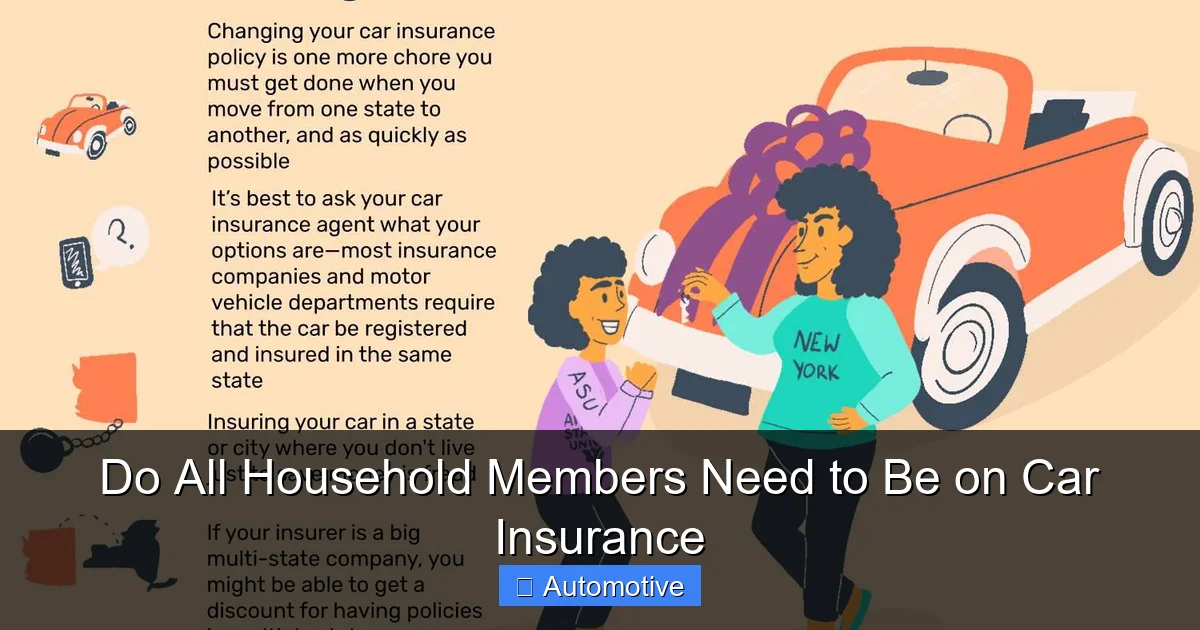
Visual guide about Do All Household Members Need to Be on Car Insurance
Image source: insuremycars.ie
Insurance companies aren’t just being nosy when they ask about everyone living in your home. They care because risk assessment is the foundation of how they set premiums and determine coverage. If someone in your household regularly drives your car, they’re part of your risk profile—whether you like it or not.
How Insurers Define “Household Member”
Most insurance companies define a “household member” as anyone who lives with you for 30 days or more, regardless of whether they’re related to you. This includes spouses, children, roommates, domestic partners, and even long-term guests. The key factor is residency, not ownership.
For example, if your 22-year-old cousin moves in with you for the summer to save money before starting a new job, and they occasionally borrow your car to run errands, they may be considered a household member by your insurer. Even if they have their own car and insurance, their presence in your home could affect your policy.
The Risk of Undisclosed Drivers
Let’s say your teenage son gets his license and starts driving your car a few times a week. You don’t add him to your policy because you’re worried about the cost. One day, he gets into an accident. When the insurance company investigates, they discover he’s been driving regularly but isn’t listed on the policy.
In many cases, the insurer may deny the claim, arguing that you misrepresented the risk by not disclosing a regular driver. This could leave you personally responsible for thousands of dollars in damages, medical bills, and legal fees. Worse, your policy could be canceled, and you might be flagged as a high-risk customer, making future insurance much more expensive.
Permissive Use vs. Regular Use
Insurance policies typically cover “permissive use,” meaning someone can drive your car occasionally with your permission and still be covered. For example, if a friend borrows your car to pick up groceries, they’re usually covered under your policy.
But when someone drives your car regularly—say, several times a week—they cross the line from permissive use to regular use. At that point, insurers expect them to be listed on the policy. The distinction isn’t always black and white, but frequency and intent matter. If the person is using your car as their primary vehicle, even without owning it, they should be insured.
When Household Members Must Be Added to Your Policy

Visual guide about Do All Household Members Need to Be on Car Insurance
Image source: thepinnaclelist.com
While not every household member needs to be on your policy, there are clear situations where adding them is not just recommended—it’s essential.
Teen and Young Adult Drivers
If you have a child under 18 who lives at home and drives, they must be added to your policy once they get their license. Most states require all licensed drivers in a household to be insured, and insurers expect this information upfront.
Even if your teen only drives occasionally, their inexperience increases the risk of accidents. Adding them to your policy ensures they’re covered and helps build their driving record. Some insurers offer discounts for good grades or completion of driver’s education courses, which can help offset the cost.
Spouses and Domestic Partners
Married couples or domestic partners who live together are almost always expected to be on the same policy. In fact, many insurers require both spouses to be listed, even if only one owns the car. This is because both individuals likely have access to the vehicle and may drive it regularly.
If you’re separated but still living under the same roof, the rules can get tricky. Some insurers may still consider you a household member, so it’s best to disclose the situation and ask how it affects your policy.
Roommates and Non-Related Residents
This is where things get complicated. If you live with a roommate who doesn’t own a car but occasionally drives yours, do they need to be on your policy?
Technically, no—if they only drive your car once in a while and have their own insurance (perhaps through a non-owner policy), they may be covered under permissive use. But if they start using your car regularly—say, to commute to work or run daily errands—you should add them to your policy or exclude them formally.
Failing to do so could lead to claim denial if they’re involved in an accident. And if they don’t have their own insurance, you could be on the hook for damages.
Drivers with Suspended or Restricted Licenses
If a household member has a suspended license or is under driving restrictions, you should never allow them to drive your car—and definitely don’t add them to your policy. Doing so could void your coverage and lead to serious legal trouble.
Insurance companies may ask about license status during policy renewal or claims. Lying about a suspended license is considered fraud and can result in policy cancellation, fines, or even criminal charges.
Can You Exclude a Household Member from Your Policy?
Visual guide about Do All Household Members Need to Be on Car Insurance
Image source: edge.sitecorecloud.io
Yes, in some cases, you can exclude a household member from your car insurance policy. This means they won’t be covered if they drive your car, even with your permission. But exclusion comes with risks and limitations.
How Driver Exclusion Works
When you exclude a driver, you’re telling the insurer: “This person lives with me but will never drive my car.” The exclusion is added to your policy, and the insurer won’t cover any claims involving that person driving your vehicle.
For example, if your adult child moves back home but has their own car and insurance, you might choose to exclude them from your policy to avoid a premium increase. As long as they never drive your car, this can be a smart move.
Risks of Excluding a Driver
The biggest risk is that the excluded person might still drive your car—intentionally or accidentally. Maybe they borrow it to pick up a friend, or they take it without asking. If they get into an accident, your insurer won’t pay, and you could be sued for damages.
Even if you have a strict “no driving” rule, accidents happen. And if the excluded driver is found at fault, you could face lawsuits, medical bills, and repair costs out of pocket. In some states, you may still be held liable as the vehicle owner, even if the driver was excluded.
When Exclusion Makes Sense
Excluding a driver can be a good strategy in specific situations:
– The person has their own car and full coverage.
– They rarely, if ever, drive your vehicle.
– They have a poor driving record or high-risk status (e.g., DUIs, multiple accidents).
– Adding them would significantly increase your premium.
But remember: exclusion doesn’t eliminate liability. If the excluded driver causes an accident, you could still be named in a lawsuit. It’s a calculated risk, not a foolproof solution.
State Laws and Insurance Requirements
Car insurance laws vary by state, and understanding your local regulations is essential. While most states follow similar principles, there are key differences in how they handle household members and driver disclosure.
No-Fault vs. At-Fault States
In no-fault states (like Florida, Michigan, and New York), your own insurance covers your medical expenses after an accident, regardless of who was at fault. These states often have stricter rules about who must be insured, including household members.
In at-fault states (like California, Texas, and Illinois), the driver responsible for the accident pays for damages. While the rules may be slightly more flexible, insurers still expect full disclosure of regular drivers.
Minimum Coverage Requirements
Every state requires minimum liability coverage, but some also mandate uninsured/underinsured motorist protection, personal injury protection (PIP), or medical payments coverage. If a household member causes an accident, your policy must meet these minimums—or you could face fines, license suspension, or lawsuits.
Reporting Requirements
Some states require you to report all licensed drivers in your household to the DMV or your insurer. Failure to do so can result in penalties. For example, in New York, you must list all household members on your policy or formally exclude them.
Always check your state’s Department of Motor Vehicles (DMV) website or consult with your insurance agent to understand local rules.
How Adding Household Members Affects Your Premium
One of the biggest concerns about adding household members is the cost. Insurance premiums are based on risk, and more drivers—especially young or inexperienced ones—mean higher risk.
Factors That Influence Premium Increases
– **Age and driving experience:** Teen drivers typically cause the biggest spike in premiums. A 16-year-old can increase your rate by 50% or more.
– **Driving record:** Accidents, tickets, and DUIs will raise your rates significantly.
– **Credit score:** In most states, insurers use credit-based insurance scores to assess risk.
– **Mileage and usage:** If the household member drives frequently or long distances, your premium may go up.
– **Type of vehicle:** High-performance or luxury cars cost more to insure, especially with multiple drivers.
Ways to Reduce the Cost
While adding a driver will likely increase your premium, there are ways to manage the cost:
– **Shop around:** Get quotes from multiple insurers. Some companies offer better rates for young drivers.
– **Bundle policies:** Combine auto, home, or renters insurance for a multi-policy discount.
– **Increase deductibles:** A higher deductible lowers your premium, but make sure you can afford it if you need to file a claim.
– **Take advantage of discounts:** Look for good student discounts, safe driver programs, low-mileage discounts, or telematics programs (like usage-based insurance).
– **Encourage safe driving:** Some insurers offer discounts for completing defensive driving courses or maintaining a clean record.
Usage-Based Insurance Options
If a household member only drives occasionally, consider usage-based insurance (UBI). These programs use a mobile app or device to track driving behavior—like speed, braking, and mileage—and adjust your premium accordingly.
For example, if your college student only drives home on weekends, UBI could save you money by reflecting their limited usage. It’s a great way to keep costs down while still maintaining coverage.
What Happens If You Don’t Disclose a Household Member?
Failing to disclose a regular driver isn’t just a minor oversight—it can have serious consequences.
Claim Denial
If an undisclosed household member causes an accident, the insurer may deny the claim. They’ll argue that you misrepresented the risk by not listing a regular driver. This leaves you responsible for all damages, which could total tens of thousands of dollars.
Policy Cancellation or Non-Renewal
Insurers can cancel your policy or refuse to renew it if they discover undisclosed drivers. This can make it difficult to find coverage in the future, as you’ll be labeled a high-risk customer.
Legal and Financial Liability
Even if your insurer denies the claim, you could still be sued for damages. As the vehicle owner, you may be held liable for injuries or property damage caused by someone driving your car—especially if you allowed them to drive regularly.
Insurance Fraud Concerns
Intentionally hiding a driver to get lower rates can be considered insurance fraud. While most people don’t do this on purpose, the consequences can include fines, policy cancellation, and even criminal charges in extreme cases.
The best approach? Be honest with your insurer. It’s better to pay a higher premium than face a denied claim or legal trouble.
Best Practices for Managing Household Drivers
To stay protected and avoid surprises, follow these best practices:
– **Review your policy regularly:** Update your insurer when someone moves in or out, gets a license, or starts driving your car.
– **Communicate with household members:** Set clear rules about who can drive your car and when.
– **Consider non-owner insurance:** If a household member doesn’t own a car but drives occasionally, a non-owner policy can provide liability coverage.
– **Document exclusions:** If you exclude a driver, get it in writing and remind them they’re not allowed to drive your car.
– **Keep records:** Save copies of your policy, exclusion forms, and any communications with your insurer.
Conclusion
So, do all household members need to be on car insurance? The answer is no—but if they regularly drive your car, they should be. Insurance companies expect transparency, and failing to disclose regular drivers can lead to claim denials, policy cancellation, and financial liability.
The key is understanding your insurer’s rules, your state’s laws, and the difference between occasional and regular use. Whether you’re adding a teen driver, managing roommates, or excluding a high-risk household member, make informed decisions that protect your family and your finances.
When in doubt, talk to your insurance agent. They can help you navigate the complexities and find the right coverage for your situation. Remember: it’s not just about following the rules—it’s about peace of mind.
Frequently Asked Questions
Do I have to add my spouse to my car insurance policy?
Yes, in most cases. If you’re married and live together, insurers typically require both spouses to be listed on the policy, even if only one owns the car. This is because both individuals likely have access to the vehicle.
Can I insure my car without adding my teenage driver?
No, if your teen lives at home and drives regularly, they must be added to your policy. Failing to do so can result in claim denial or policy cancellation if they’re involved in an accident.
What if my roommate only drives my car once in a while?
If your roommate only drives occasionally and has their own insurance, they may be covered under permissive use. But if they drive regularly, you should add them to your policy or formally exclude them.
Will excluding a driver lower my premium?
Possibly, but only if the excluded driver would have significantly increased your rate (e.g., a young or high-risk driver). However, exclusion doesn’t eliminate liability if they drive your car and cause an accident.
Can I get in trouble for not listing a household member on my policy?
Yes. If an undisclosed household member causes an accident, your claim may be denied, your policy could be canceled, and you could face legal or financial consequences—especially if the insurer believes you misrepresented the risk.
What is a non-owner car insurance policy?
A non-owner policy provides liability coverage for someone who doesn’t own a car but drives occasionally. It’s a good option for household members who don’t own a vehicle but may borrow yours from time to time.