Difference Between Toyota Highlander Xle and Xse

Contents

Car LED Headlight Bulb

Waterless Car Wash Spray

Car Windshield Wiper Blades
Car Emergency Roadside Kit
The Toyota Highlander XLE and XSE offer distinct driving experiences: the XLE emphasizes comfort and practicality, while the XSE delivers sportier performance and bold styling. Choosing between them depends on your priorities—luxury refinement or dynamic flair.
[FEATURED_IMAGE_PLACEHolder]
If you’re in the market for a reliable, family-friendly three-row SUV, the Toyota Highlander is likely on your shortlist. Known for its dependability, spacious interior, and strong resale value, the Highlander has been a top pick among midsize SUVs for years. But once you dive into the trim levels, things can get a bit confusing—especially when comparing the Toyota Highlander XLE and XSE. At first glance, they look similar, but under the surface, they cater to very different driving preferences and lifestyles.
So, what’s the real difference between the Toyota Highlander XLE and XSE? Are they just cosmetic variations, or do they offer distinct experiences behind the wheel? The answer lies in a blend of design philosophy, performance tuning, and interior ambiance. While both trims share the same platform, engine, and core features, Toyota has carefully tailored each to appeal to different buyer personalities. The XLE leans into comfort, elegance, and practicality—ideal for daily commutes, school runs, and long road trips. The XSE, on the other hand, injects a dose of sportiness with aggressive styling, a firmer suspension, and a more driver-centric feel.
Whether you’re a family hauler who values smoothness and quiet cabins or an enthusiast who wants a little more excitement from your SUV, understanding these differences is key. In this guide, we’ll break down every aspect—from exterior design and performance to interior comfort and technology—so you can make an informed decision. By the end, you’ll know exactly which Highlander trim aligns with your needs, whether it’s the refined XLE or the spirited XSE.
Key Takeaways
- Exterior Design: The XSE features aggressive styling with a sport-tuned grille, blacked-out accents, and unique wheels, while the XLE offers a more refined, traditional SUV look.
- Performance & Suspension: The XSE includes a sport-tuned suspension and paddle shifters for a more engaging drive, whereas the XLE focuses on smooth, comfortable cruising.
- Interior Materials & Layout: Both trims offer premium interiors, but the XSE includes sport seats with contrast stitching and a driver-focused cockpit design.
- Technology & Infotainment: Both come with Toyota’s latest tech suite, but the XSE often includes additional driver-assist features and a more dynamic instrument cluster.
- Seating & Cargo Space: Identical in seating capacity and cargo volume—both offer three rows and up to 84.3 cubic feet of storage.
- Fuel Efficiency: Nearly identical fuel economy, with minor differences due to tire size and aerodynamics—XLE may edge out slightly in highway MPG.
- Pricing & Value: The XSE is typically $2,000–$3,000 more than the XLE, justified by sportier features and enhanced aesthetics.
📑 Table of Contents
Exterior Design and Styling Differences
One of the most noticeable differences between the Toyota Highlander XLE and XSE is their exterior styling. While both share the same overall silhouette and dimensions, Toyota has given each trim a distinct visual identity that reflects its intended character.
XLE: Elegant and Timeless
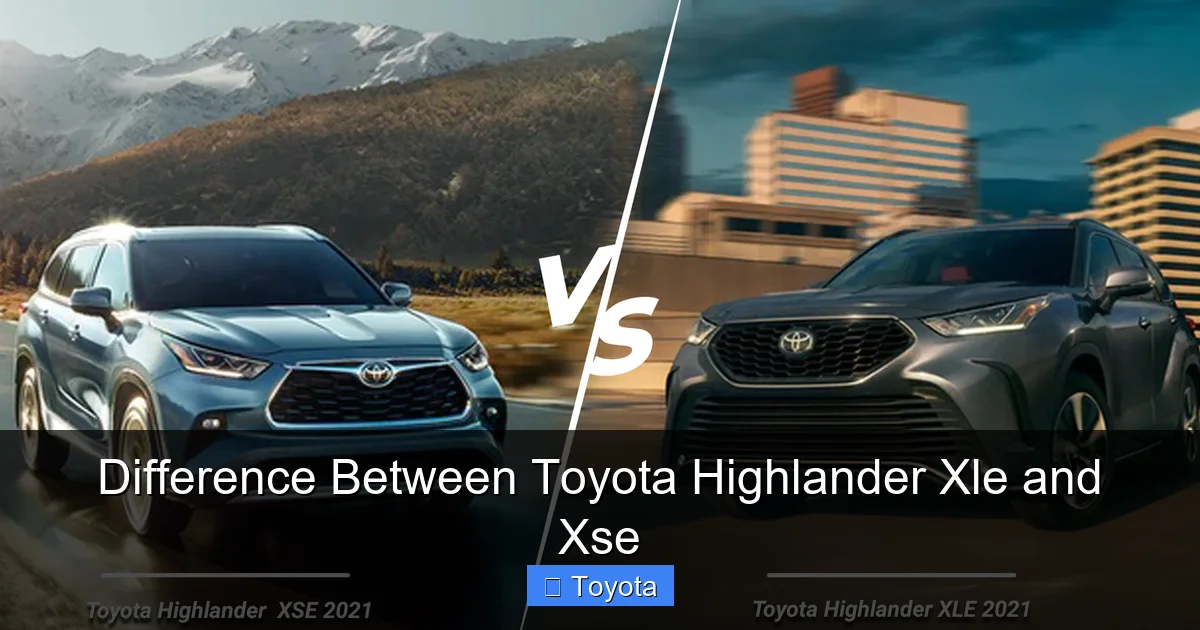
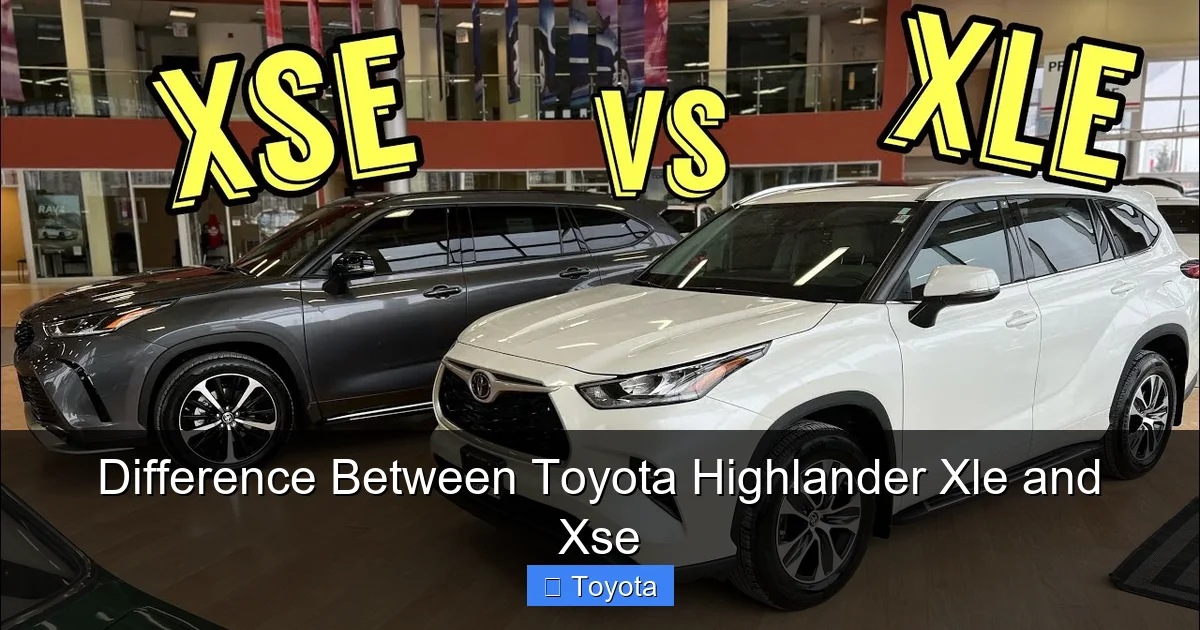
The Highlander XLE embraces a more traditional, upscale SUV aesthetic. It features a chrome-accented grille with horizontal slats, giving it a polished and sophisticated look. The front fascia is clean and understated, with integrated LED headlights and fog lights that blend seamlessly into the bodywork. The side profile includes body-colored door handles, roof rails, and 18-inch alloy wheels with a machined finish. Overall, the XLE looks like a premium family hauler—refined, approachable, and perfect for suburban driveways or business meetings.
XSE: Bold and Sporty
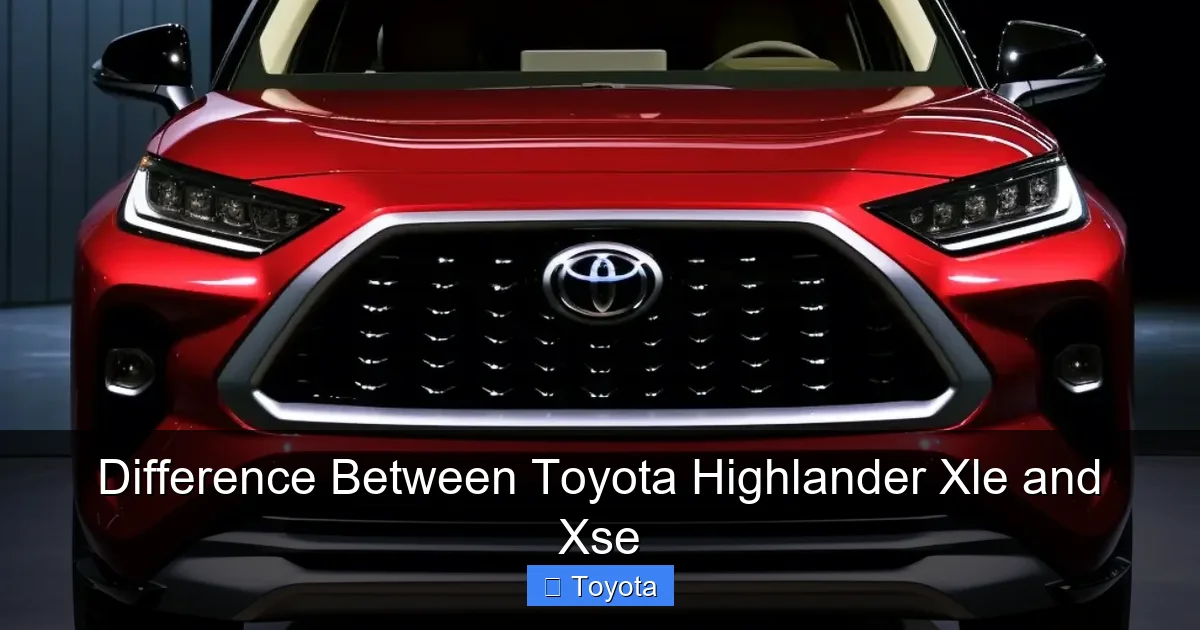
In contrast, the XSE turns up the intensity with a sport-inspired design language. It sports a black mesh grille with a honeycomb pattern, flanked by aggressive LED headlights and darkened fog light surrounds. The front bumper is more angular, with larger air intakes that hint at performance. Along the sides, you’ll find 20-inch black alloy wheels, black window trim, and unique XSE badging. The rear also gets a sportier treatment, with a rear spoiler, dual exhaust tips, and a more sculpted bumper. The XSE doesn’t just look fast—it looks like it means business.
Color Options and Finishes
Both trims offer a range of exterior colors, but the XSE often comes with exclusive finishes like Midnight Black Metallic or Ruby Flare Pearl, which enhance its bold stance. The XLE, meanwhile, favors classic tones such as Blizzard Pearl, Celestial Silver Metallic, and Predawn Gray Mica. These subtle differences in color availability further emphasize the personality of each trim—sophisticated vs. sporty.
Practical Implications
While styling is largely subjective, the XSE’s larger 20-inch wheels can impact ride comfort on rough roads due to lower-profile tires. The XLE’s 18-inch wheels, with taller sidewalls, absorb bumps more effectively, making it a better choice for long-distance comfort. Additionally, the XSE’s black accents may require more frequent cleaning to maintain their sharp appearance, especially in dusty or snowy climates.
Performance and Driving Dynamics
Under the hood, both the Toyota Highlander XLE and XSE are powered by the same 3.5-liter V6 engine, producing 295 horsepower and 263 lb-ft of torque. They also share an 8-speed automatic transmission and offer front-wheel drive (FWD) or all-wheel drive (AWD) configurations. So, on paper, performance is identical—but in practice, the driving experience differs significantly due to tuning and suspension setup.
Engine and Transmission
The 3.5L V6 is a proven workhorse, delivering smooth acceleration and plenty of power for highway merging and uphill climbs. Whether you choose the XLE or XSE, you’ll get the same responsive throttle and confident passing ability. The 8-speed automatic shifts seamlessly in most conditions, though it can feel slightly hesitant during aggressive downshifts—something more noticeable in the XSE due to its sport-oriented tuning.
Visual guide about Difference Between Toyota Highlander Xle and Xse
Image source: storage.googleapis.com
Suspension and Handling
This is where the real divergence begins. The XSE comes equipped with a sport-tuned suspension, which includes stiffer springs, revised dampers, and a rear stabilizer bar. The result is sharper turn-in, reduced body roll, and a more connected feel to the road. It’s not a sports car, but the XSE feels more agile and responsive, especially on winding roads or during quick lane changes.
The XLE, by contrast, uses a comfort-oriented suspension setup. It prioritizes ride smoothness over cornering precision, making it ideal for long drives or rough pavement. Passengers will notice less jostling over potholes and railroad tracks, and the steering feels lighter and more relaxed. For families with young children or elderly passengers, the XLE’s softer ride can be a major advantage.
Steering and Braking
The XSE also features a sport-tuned steering system with increased feedback and weight, giving drivers a better sense of road conditions. Paddle shifters mounted behind the steering wheel allow for manual gear selection, adding a layer of engagement—especially fun on mountain roads or during spirited driving. The XLE lacks paddle shifters, relying solely on the automatic transmission’s programming.
Braking performance is similar across both trims, with 4-wheel disc brakes and standard ABS. However, the XSE’s sport suspension helps keep the nose from diving under hard braking, improving stability and control.
Real-World Driving Experience
Imagine driving on a scenic mountain road. In the XSE, you’ll feel more connected to the curves, with quicker responses and a firmer chassis. In the XLE, the ride will be smoother, but you might notice more body lean in tight turns. For daily city driving, both are excellent—but the XLE’s softer setup makes stop-and-go traffic less fatiguing.
Fuel Economy Comparison
Despite the performance differences, fuel economy is nearly identical. The XLE FWD achieves an EPA-estimated 21 mpg city / 29 mpg highway, while the XSE FWD comes in at 20 mpg city / 28 mpg highway. The slight drop in the XSE is due to larger wheels and lower-profile tires, which increase rolling resistance. AWD models see a small reduction across the board, but the gap between trims remains minimal.
Interior Comfort and Materials
Step inside the Toyota Highlander XLE and XSE, and you’ll immediately notice differences in ambiance, materials, and layout. Both trims offer a premium feel, but the XSE leans into a sportier, driver-focused environment, while the XLE emphasizes comfort and elegance.
Seating and Upholstery
The XLE features SofTex-trimmed seats with a soft, leather-like feel. The front seats are power-adjustable (8-way for the driver, 6-way for the passenger) and include heating and ventilation options. The second-row captain’s chairs are spacious and comfortable, with ample legroom and recline functionality. The third row is best suited for children or short trips, but it’s still more usable than many competitors.
Visual guide about Difference Between Toyota Highlander Xle and Xse
Image source: i.ytimg.com
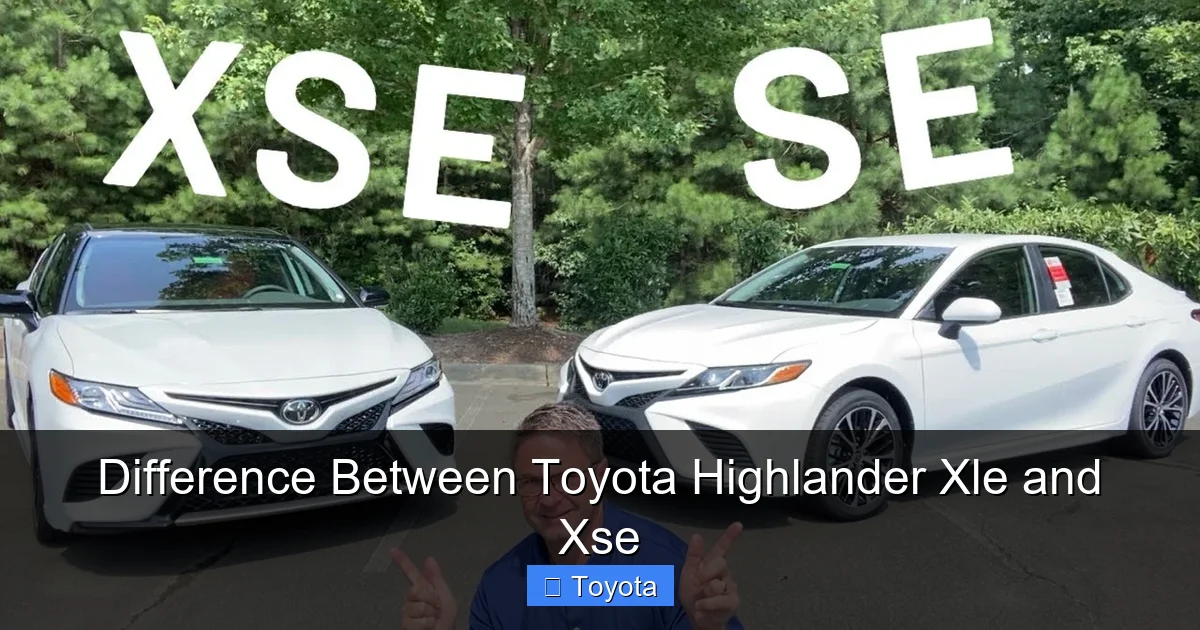
The XSE takes seating up a notch with sport front seats that feature deeper bolsters and contrast stitching—often in red or gray. These seats provide better lateral support during cornering and feel more performance-oriented. Like the XLE, they’re available with heating and ventilation, but the sport design gives the cabin a more dynamic vibe. The second and third rows are identical in layout and comfort.
Dashboard and Controls
The XLE’s dashboard is clean and functional, with a horizontal design that emphasizes width and openness. Soft-touch materials are used on the upper dashboard and door panels, and the center stack includes a user-friendly 8-inch touchscreen. Physical buttons for climate and audio controls are well-placed and easy to use, even while driving.
The XSE’s interior takes a more driver-centric approach. The instrument cluster features a sport-themed design with a larger tachometer and red accent lighting. The steering wheel is wrapped in leather with contrast stitching and includes paddle shifters. The overall layout feels more performance-oriented, with a focus on keeping the driver engaged.
Noise, Vibration, and Harshness (NVH)
Both trims are well-insulated against road and wind noise, but the XLE has a slight edge in cabin quietness. The XSE’s sport suspension and larger wheels transmit more road feedback, which can be noticeable on rough surfaces. For buyers who prioritize a serene driving environment—especially on long trips—the XLE is the better choice.
Storage and Practicality
Despite the differences in style, both trims offer identical storage solutions. You’ll find cupholders, door pockets, a center console bin, and under-seat storage in the second row. The cargo area is equally spacious, with 16 cubic feet behind the third row, 48.4 cubic feet with the third row folded, and up to 84.3 cubic feet with both rear rows down. The XSE’s sport seats don’t compromise passenger or cargo space, making it just as practical as the XLE.
Technology and Infotainment Features
Toyota has loaded both the Highlander XLE and XSE with modern technology, but there are subtle differences in how features are presented and prioritized.
Infotainment System
Both trims come standard with an 8-inch touchscreen infotainment system that includes Apple CarPlay, Android Auto, Amazon Alexa compatibility, and a 6-speaker audio system. The interface is intuitive, with large icons and responsive touch controls. Navigation is available as an option on both, though it’s more commonly equipped on higher trims.
Visual guide about Difference Between Toyota Highlander Xle and Xse
Image source: i.ytimg.com
The XSE often includes a premium JBL audio system as part of its sport package, delivering richer sound with 11 speakers and a subwoofer. The XLE can also be upgraded to JBL, but it’s not standard. For audiophiles or families who enjoy road trip playlists, this can be a deciding factor.
Driver Assistance and Safety
Both trims come with Toyota Safety Sense 2.5+, which includes features like adaptive cruise control, lane departure warning, automatic emergency braking, and road sign assist. However, the XSE may include additional driver aids like a 360-degree camera system or parking sensors as part of its sport package, depending on the model year and options.
The XLE focuses on safety through comfort and visibility, with standard blind-spot monitoring and rear cross-traffic alert. The XSE, with its sportier handling, benefits from these features even more, especially during quick maneuvers.
Instrument Cluster and Displays
The XLE uses a traditional analog instrument cluster with a 4.2-inch color display. The XSE upgrades to a 7-inch multi-information display with customizable layouts, including performance metrics like G-force and torque distribution (in AWD models). This adds a layer of engagement for drivers who enjoy monitoring vehicle dynamics.
Connectivity and Charging
Both trims offer multiple USB ports, a 12-volt power outlet, and available wireless charging. The XSE often includes additional USB-C ports and faster charging capabilities, catering to tech-savvy users. Wi-Fi hotspot capability is available on both, making long trips more entertaining for passengers.
Pricing, Trim Levels, and Value
When it comes to cost, the Toyota Highlander XLE and XSE are closely positioned, but the XSE commands a premium for its sporty enhancements.
Starting Prices
As of the latest model year, the XLE starts around $43,000 (FWD), while the XSE begins at approximately $45,500 (FWD). The difference grows with AWD and optional packages. The XSE’s higher price reflects its unique styling, sport suspension, and additional features like paddle shifters and sport seats.
Optional Packages
The XLE offers packages like the Premium Package, which adds features such as a panoramic sunroof, upgraded audio, and ventilated seats. The XSE, meanwhile, often bundles these features into its base configuration or offers a Sport Package that enhances performance and aesthetics.
Resale Value and Depreciation
Both trims hold their value well, thanks to Toyota’s reputation for reliability. However, the XLE may have a slight edge in resale value due to its broader appeal and lower initial cost. The XSE’s niche sporty styling could limit its market to enthusiasts, potentially affecting long-term depreciation.
Which Offers Better Value?
If you prioritize comfort, quiet, and traditional SUV elegance, the XLE delivers excellent value. If you want a more engaging drive and don’t mind paying extra for sporty flair, the XSE is worth the upgrade. For most families, the XLE strikes the best balance. For driving enthusiasts, the XSE adds a welcome dose of excitement.
Who Should Choose Which Trim?
Choosing between the Toyota Highlander XLE and XSE ultimately comes down to lifestyle and priorities.
Choose the XLE If:
- You value a smooth, quiet ride for long commutes or road trips.
- You prefer a refined, upscale interior with classic styling.
- You want maximum comfort for passengers, including children and seniors.
- You prioritize fuel efficiency and lower maintenance costs.
- You don’t need sporty handling or aggressive aesthetics.
Choose the XSE If:
- You enjoy a more engaging, responsive driving experience.
- You appreciate bold design and sporty details.
- You frequently drive on winding roads or want a more dynamic feel.
- You don’t mind a slightly firmer ride for better handling.
- You’re willing to pay a premium for enhanced style and performance cues.
Final Recommendation
For most buyers, the Highlander XLE is the smarter, more practical choice. It offers nearly all the features of the XSE with a focus on comfort and everyday usability. But if you’re someone who loves driving and wants your SUV to reflect a bit of personality, the XSE is a compelling upgrade. Test drive both if possible—because the difference between the Toyota Highlander XLE and XSE isn’t just on paper. It’s in the way they make you feel behind the wheel.
Frequently Asked Questions
What is the main difference between the Toyota Highlander XLE and XSE?
The main difference lies in design and driving dynamics. The XLE focuses on comfort and refinement, while the XSE offers sportier styling, a firmer suspension, and a more engaging driving experience.
Do the XLE and XSE have the same engine?
Yes, both trims are powered by the same 3.5-liter V6 engine producing 295 horsepower. Performance is similar, but the XSE’s sport-tuned suspension changes how the power feels on the road.
Is the XSE less comfortable than the XLE?
The XSE has a firmer ride due to its sport suspension, which can feel less comfortable on rough roads. The XLE offers a smoother, more cushioned ride, making it better for long trips or passengers sensitive to bumps.
Can you get AWD on both the XLE and XSE?
Yes, both trims are available with front-wheel drive or all-wheel drive. AWD adds about $1,500–$2,000 to the price and slightly reduces fuel economy.
Does the XSE have more technology than the XLE?
Both trims come with similar tech, but the XSE often includes a premium JBL audio system and a larger instrument display as standard or part of a package. The XLE may require upgrades for these features.
Which trim holds its value better?
The XLE typically has a slight edge in resale value due to its broader appeal and lower initial cost. The XSE’s sporty styling may attract a narrower buyer pool over time.