Charge Car Battery with Solar Panel
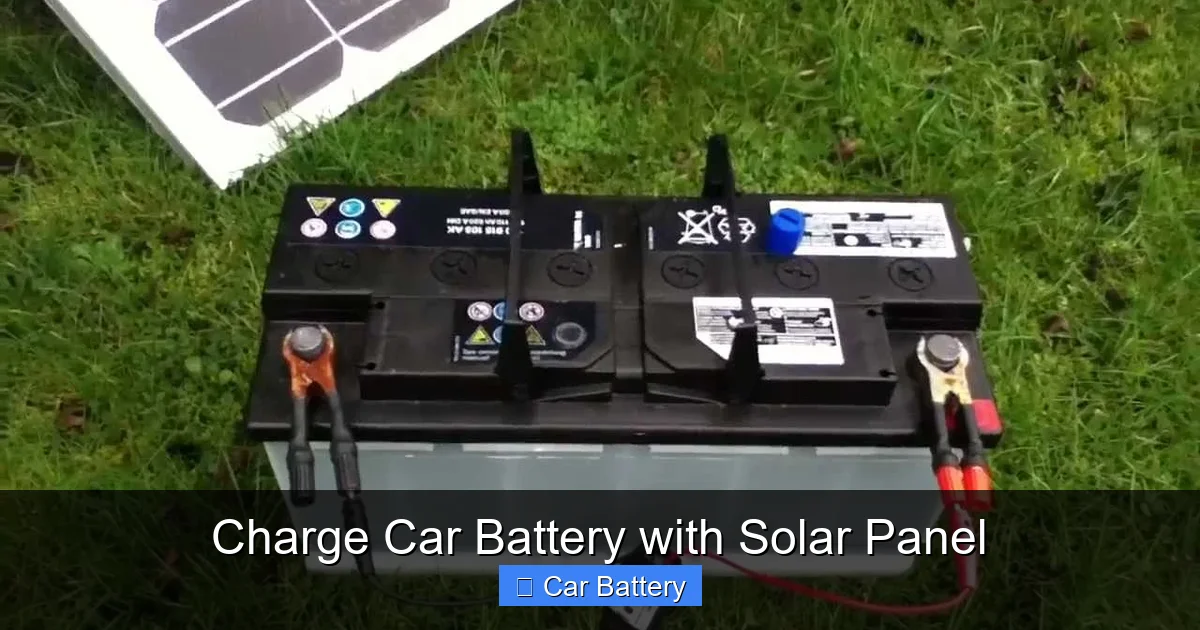
Charging a car battery with a solar panel is a smart, eco-friendly way to maintain battery health and avoid unexpected dead batteries. With the right setup, even a small solar panel can keep your vehicle’s battery topped up, especially during long periods of inactivity.
In This Article
- 1 Key Takeaways
- 2 📑 Table of Contents
- 3 Why Charge a Car Battery with a Solar Panel?
- 4 How Solar Panels Charge Car Batteries
- 5 Choosing the Right Solar Panel for Your Car Battery
- 6 Step-by-Step Guide to Charging Your Car Battery with Solar
- 7 Benefits of Solar Battery Charging
- 8 Common Mistakes to Avoid
- 9 Real-World Examples and Tips
- 10 Conclusion
- 11 Frequently Asked Questions
- 11.1 Can a solar panel fully charge a dead car battery?
- 11.2 Do I need a charge controller for a small solar panel?
- 11.3 Can I leave a solar charger connected all the time?
- 11.4 Will a solar panel work on a cloudy day?
- 11.5 Can I charge a car battery through the cigarette lighter?
- 11.6 What’s the best solar panel size for a car battery?
Key Takeaways
- Solar panels can effectively maintain car battery charge: Even low-wattage panels prevent battery drain when your car sits unused.
- Portable solar chargers are ideal for occasional use: Easy to set up and store, they’re perfect for weekend drivers or seasonal vehicles.
- Proper voltage regulation is essential: Always use a charge controller to avoid overcharging and protect battery life.
- Sunlight exposure matters: Position panels in direct sunlight for maximum efficiency—shade drastically reduces output.
- Maintenance charging extends battery lifespan: Regular solar top-ups reduce sulfation and improve overall battery performance.
- Not all solar panels are created equal: Choose panels rated for 12V systems and compatible with your battery type (lead-acid, AGM, lithium).
- Solar charging works best as a supplement: It’s not a replacement for driving or using a traditional charger in extreme conditions.
📑 Table of Contents
Why Charge a Car Battery with a Solar Panel?
Imagine this: You haven’t driven your car in weeks. Maybe it’s a classic car stored in the garage, a weekend SUV, or a work truck parked at a remote site. When you finally go to start it, the engine won’t turn over—your battery is dead. It’s frustrating, costly, and totally avoidable. That’s where charging a car battery with a solar panel comes in.
Solar-powered battery maintenance is gaining popularity among car owners who want a green, low-effort solution to keep their batteries healthy. Unlike traditional battery chargers that plug into the wall, solar panels harness free energy from the sun. They’re quiet, require no electricity bills, and can run indefinitely with proper sunlight. Whether you’re an eco-conscious driver, a camper, or someone with a vehicle that sits idle for long stretches, solar charging offers a practical and sustainable alternative.
But it’s not just about convenience. Modern car batteries—especially lead-acid and AGM types—suffer from a process called sulfation when they sit discharged. This buildup of lead sulfate crystals reduces capacity and shortens lifespan. Regular charging, even at low levels, prevents this damage. A solar panel acts like a gentle, continuous trickle charger, keeping the battery at an optimal state of charge without overloading it.
How Solar Panels Charge Car Batteries
At its core, charging a car battery with a solar panel is simple: sunlight hits the panel, generates electricity, and that power flows into the battery. But the real magic happens in the details. Understanding how this process works helps you choose the right equipment and avoid common pitfalls.
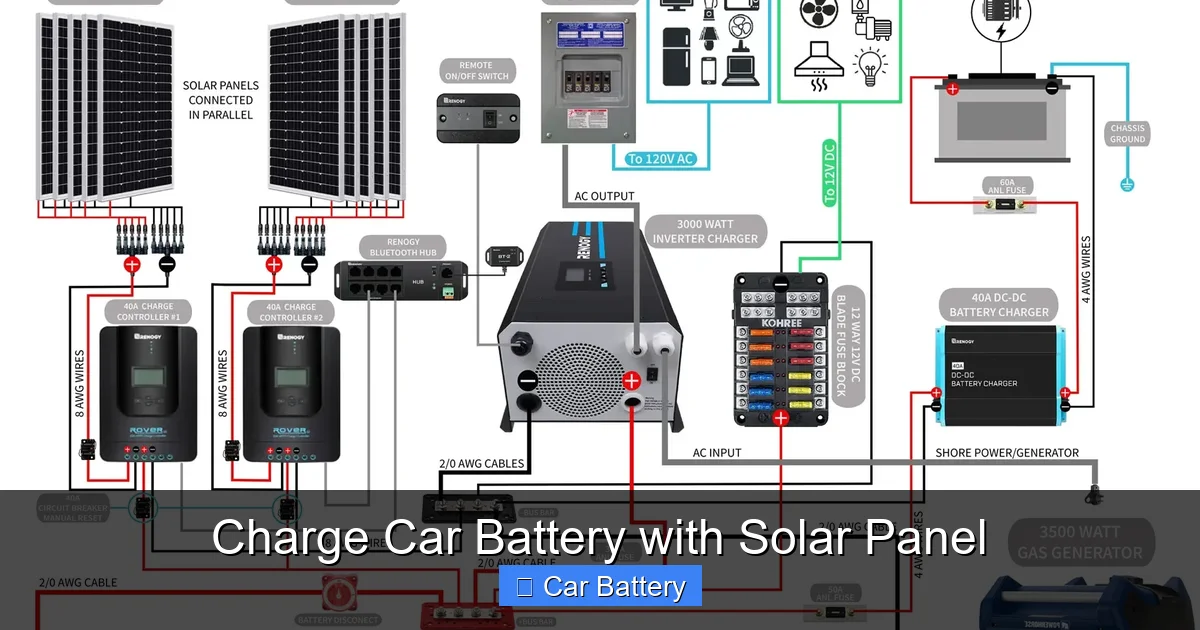
Visual guide about Charge Car Battery with Solar Panel
Image source: solarplacas.es
The Science Behind Solar Charging
Solar panels are made of photovoltaic (PV) cells that convert sunlight into direct current (DC) electricity. A typical car battery operates at 12 volts, so you’ll need a solar panel that outputs around 12–18 volts to charge it effectively. Most small solar chargers are designed specifically for 12V batteries, making them compatible with cars, motorcycles, RVs, and boats.
When sunlight hits the panel, electrons in the PV cells get excited and create a flow of electricity. This current travels through wires to the battery, replenishing its charge. The amount of power generated depends on the panel’s wattage, sunlight intensity, and exposure time. For example, a 20-watt panel in full sun might produce about 1–1.5 amps per hour—enough to maintain a battery but not enough to fully recharge a deeply discharged one quickly.
The Role of a Charge Controller
One critical component often overlooked is the charge controller. Without it, you risk overcharging your battery, which can cause overheating, gas buildup, and permanent damage. A charge controller regulates the voltage and current from the solar panel to the battery, ensuring a safe and steady charge.
There are two main types: PWM (Pulse Width Modulation) and MPPT (Maximum Power Point Tracking). PWM controllers are affordable and work well for small setups, while MPPT controllers are more efficient, especially in low-light conditions or with higher-wattage panels. For most car battery applications, a basic PWM controller is sufficient.
Direct vs. Indirect Charging
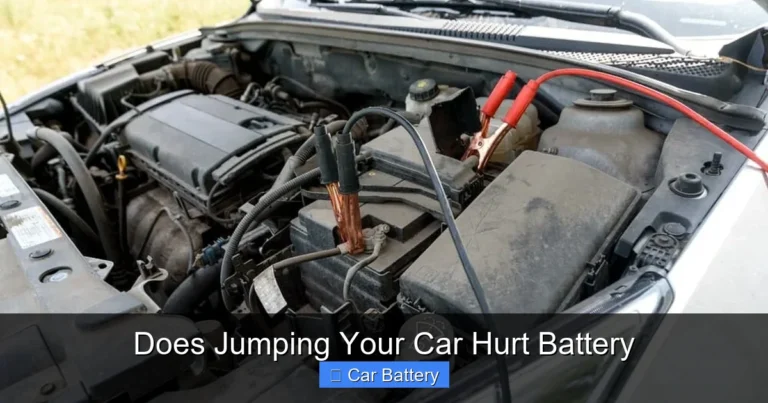
You can charge your car battery in two ways: directly or indirectly. Direct charging connects the solar panel straight to the battery terminals via alligator clips or ring terminals. This method is simple but requires you to open the hood and access the battery—something not always convenient.
Indirect charging uses a solar battery maintainer that plugs into your car’s 12V cigarette lighter or OBD-II port. These devices are easier to use and don’t require opening the hood, but they only work if the lighter socket remains powered when the car is off. Many modern cars cut power to these ports when the ignition is off, so check your vehicle’s manual first.
Choosing the Right Solar Panel for Your Car Battery
Not every solar panel can charge a car battery effectively. The key is matching the panel’s output to your battery’s needs. Here’s what to look for when selecting a solar charger.
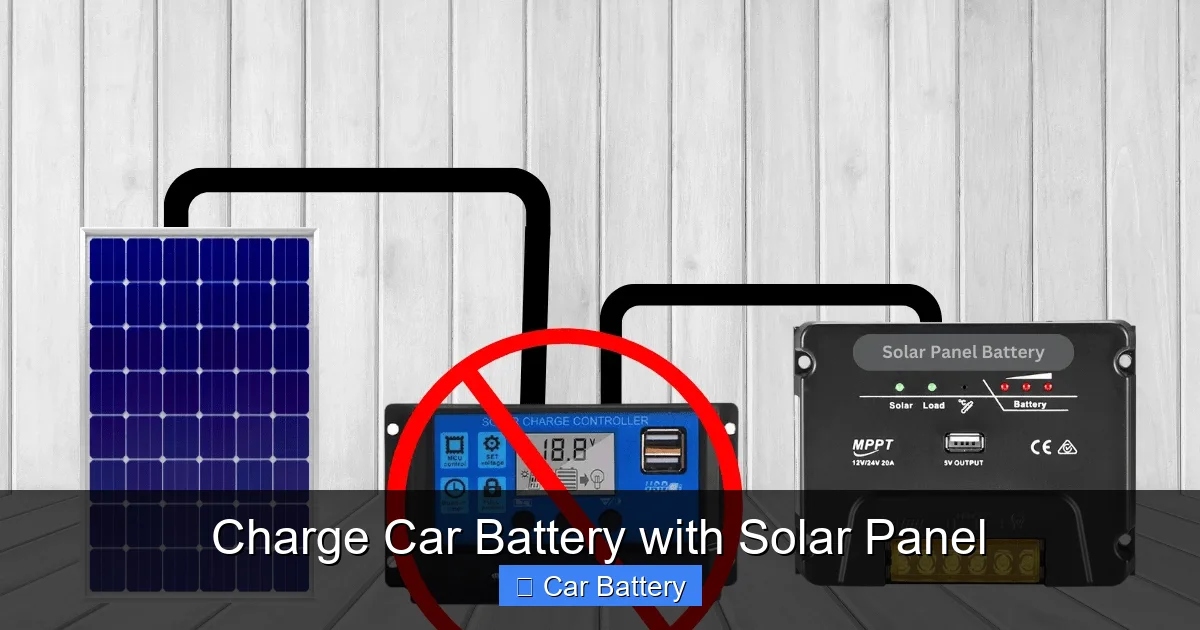
Visual guide about Charge Car Battery with Solar Panel
Image source: energytheory.com
Panel Wattage and Output
For maintaining a car battery, a 10W to 50W solar panel is usually sufficient. A 10W panel can produce about 0.5–0.7 amps in ideal conditions—enough to offset natural battery drain from alarms, clocks, and other electronics. If your car sits for months or you live in a cloudy area, consider a 20W or 30W panel for better performance.
Higher wattage panels (50W and above) are better for faster charging or larger batteries, like those in RVs or trucks. But remember: more power isn’t always better. Overkill can lead to unnecessary cost and complexity if you only need maintenance charging.
Portability and Durability
If you plan to move the panel around—say, from your garage to your driveway—choose a foldable or portable solar charger. These are lightweight, often come with carrying cases, and can be propped up on a windshield or dashboard. Look for models with weather-resistant coatings and sturdy frames.
For permanent installations, like on an RV or boat, rigid panels mounted on a roof are more durable and efficient. They’re less likely to shift or get damaged but require more setup.
Battery Compatibility
Different battery types have different charging requirements. Lead-acid batteries (common in most cars) can handle a steady trickle charge. AGM (Absorbent Glass Mat) batteries are more sensitive and benefit from regulated charging. Lithium-ion batteries, while rare in standard cars, require specific charge profiles and should only be charged with compatible controllers.
Always check the manufacturer’s recommendations. Most solar battery maintainers are designed for 12V lead-acid and AGM batteries, so they’re safe for the majority of vehicles. Avoid using solar chargers not rated for automotive use—they may not provide the right voltage or protection.
Step-by-Step Guide to Charging Your Car Battery with Solar
Ready to get started? Charging your car battery with a solar panel is easier than you think. Follow these steps for a safe and effective setup.
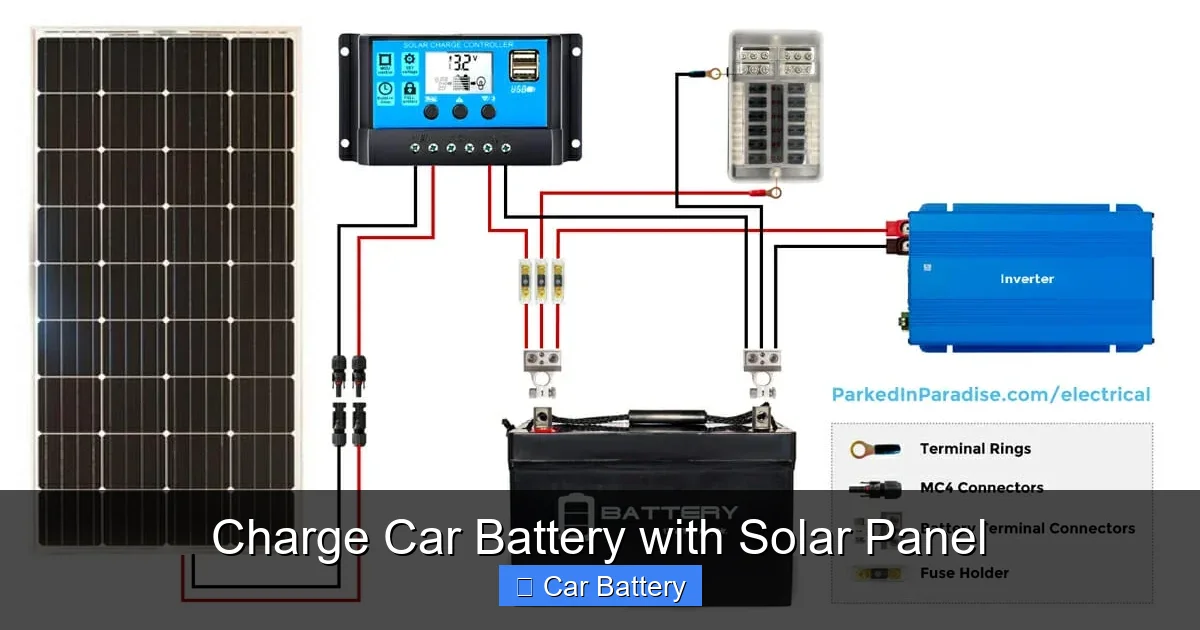
Visual guide about Charge Car Battery with Solar Panel
Image source: parkedinparadise.com
Step 1: Gather Your Equipment
You’ll need:
- A solar panel (10W–50W recommended)
- A charge controller (built-in or separate)
- Alligator clips or ring terminals
- Optional: cigarette lighter adapter or OBD-II plug
- Safety gloves and glasses
Step 2: Choose a Sunny Location
Place the solar panel where it will get maximum sunlight—ideally on a south-facing surface (in the Northern Hemisphere) with no shade. Avoid parking under trees or near buildings that cast shadows. Even partial shading can reduce output by 50% or more.
Step 3: Connect the Charge Controller
If your solar panel doesn’t have a built-in controller, connect one between the panel and the battery. Wire the panel’s positive and negative leads to the controller’s input, then connect the controller’s output to the battery terminals. Always connect positive to positive and negative to negative.
Step 4: Attach to the Battery
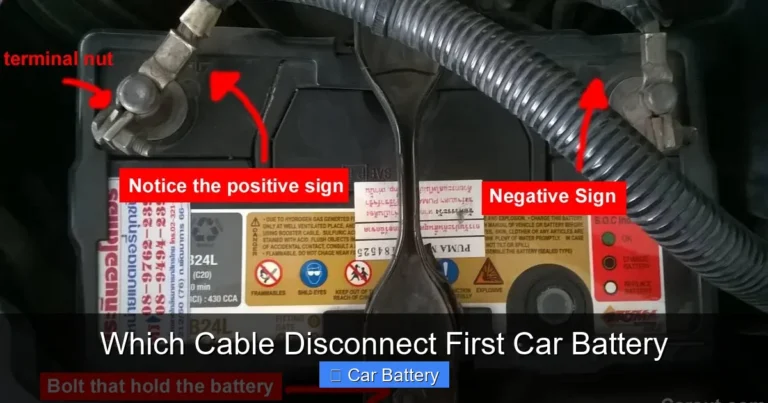
For direct charging, clamp the alligator clips to the battery terminals—red to positive (+), black to negative (−). Make sure the connections are secure and won’t slip off. If using a cigarette lighter adapter, plug it in and ensure the socket is live when the car is off.
Step 5: Monitor and Maintain
Check the charge controller’s indicator lights or display. Most will show when the battery is charging, fully charged, or if there’s an error. Leave the panel connected as long as needed—solar chargers are designed for continuous use.
Periodically inspect the connections for corrosion or looseness. Clean the solar panel surface with a soft cloth to remove dust or debris that blocks sunlight.
Benefits of Solar Battery Charging
Charging a car battery with a solar panel isn’t just a neat trick—it offers real advantages over traditional methods.
Eco-Friendly and Cost-Effective
Solar energy is clean and renewable. By using the sun’s power, you reduce reliance on grid electricity and lower your carbon footprint. Over time, the savings on electricity bills and battery replacements add up. A quality solar maintainer pays for itself in just a few years.
Convenience for Infrequent Drivers
If you only drive your car on weekends or store it seasonally, a solar charger keeps the battery ready to go. No more jump-starts or emergency calls. It’s peace of mind in a compact package.
Extended Battery Life
Regular maintenance charging prevents sulfation and keeps the battery in peak condition. Studies show that properly maintained batteries last 30–50% longer than neglected ones. That means fewer replacements and lower long-term costs.
Great for Remote Locations
For campers, off-grid homeowners, or workers in remote areas, solar charging provides reliable power without access to outlets. It’s perfect for keeping a work truck or generator battery topped up at a job site.
Common Mistakes to Avoid
Even simple systems can go wrong if you’re not careful. Here are common pitfalls and how to avoid them.
Using the Wrong Panel
A solar panel rated for 24V won’t work with a 12V car battery—it could damage the battery or fail to charge it. Always match the panel voltage to your system.
Skipping the Charge Controller
Some cheap solar chargers claim to be “battery-safe” without a controller. Don’t trust them. Without regulation, voltage spikes can destroy your battery. Always use a controller, even with small panels.
Ignoring Weather and Seasonal Changes
Solar output drops in winter due to shorter days and lower sun angles. If you live in a northern climate, consider a larger panel or supplement with occasional wall charging. Snow and ice on the panel also block sunlight—keep it clear.
Leaving Connections Unsecured
Loose clips can spark, overheat, or disconnect, stopping the charge. Double-check all connections and use zip ties or clamps to secure wires.
Real-World Examples and Tips
Let’s look at how real people use solar to charge car batteries.
Classic Car Owner
Sarah owns a 1967 Mustang that she drives only in summer. She parks it in a garage from October to May. To prevent battery death, she uses a 20W foldable solar panel with a built-in charge controller. She props it on the windshield and connects it via alligator clips. Every spring, her battery starts right up—no jump-starts needed.
RV Enthusiast
Mike travels full-time in his RV. He mounted a 100W rigid solar panel on the roof and connected it to his house battery bank. He uses an MPPT controller for maximum efficiency. Even on cloudy days, the system keeps his batteries charged, powering lights, fridge, and his car’s auxiliary battery.
Weekend Camper
Jen takes her SUV camping once a month. She keeps a 15W portable solar charger in the trunk. When she arrives at the campsite, she plugs it into the cigarette lighter and leaves it on the dashboard. By morning, the battery is topped up and ready for the drive home.
Pro Tip: Use a battery monitor to track voltage and state of charge. Many solar chargers include basic displays, but a dedicated voltmeter gives more precise readings.
Conclusion
Charging a car battery with a solar panel is a smart, sustainable solution for maintaining battery health and avoiding the frustration of a dead battery. With the right equipment—like a compatible solar panel, charge controller, and secure connections—you can keep your vehicle ready to go, even after long periods of inactivity.
It’s not just about convenience. Solar charging reduces waste, saves money, and supports a greener lifestyle. Whether you’re preserving a classic car, powering an RV, or just want peace of mind, solar energy offers a reliable and eco-friendly way to keep your battery charged. Start small, learn as you go, and enjoy the freedom of harnessing the sun’s power for your car.
Frequently Asked Questions
Can a solar panel fully charge a dead car battery?
A small solar panel (under 50W) is best for maintenance charging, not deep recharging. It may take days or weeks to fully restore a dead battery, depending on size and sunlight. For quick recovery, use a traditional charger first, then switch to solar for maintenance.
Do I need a charge controller for a small solar panel?
Yes. Even small panels can produce excess voltage that damages batteries. A charge controller ensures safe, regulated charging and extends battery life.
Can I leave a solar charger connected all the time?
Absolutely. Solar battery maintainers are designed for continuous use. They automatically stop charging when the battery is full, preventing overcharging.
Will a solar panel work on a cloudy day?
Yes, but at reduced efficiency. A panel may produce 10–25% of its rated output on overcast days. For best results, use a larger panel or supplement with occasional wall charging.
Can I charge a car battery through the cigarette lighter?
Only if the lighter socket remains powered when the car is off. Many modern cars disable these ports to save power. Check your owner’s manual or test with a voltmeter.
What’s the best solar panel size for a car battery?
A 10W to 30W panel is ideal for most cars. It provides enough power to maintain the battery without overcomplicating the setup. Larger panels are better for RVs or frequent use.