Car Battery Terminals on Wrong Side
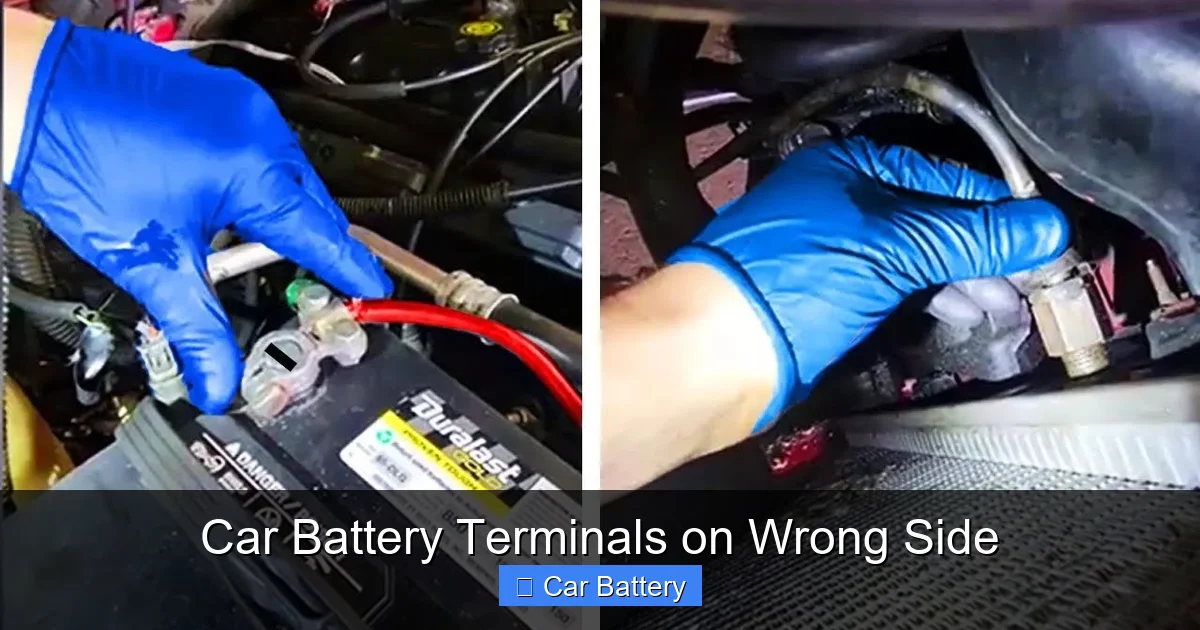
Having car battery terminals on wrong side can lead to serious electrical problems, safety hazards, and damage to your vehicle’s systems. This guide explains why terminal placement matters, how to identify and fix incorrect installations, and how to prevent costly mistakes during battery replacement.
In This Article
- 1 Key Takeaways
- 2 📑 Table of Contents
- 3 Why Car Battery Terminal Placement Matters
- 4 How to Identify Correct Terminal Position
- 5 What to Do If Your New Battery Has Wrong Terminal Placement
- 6 Risks of Installing a Battery with Wrong Terminal Placement
- 6.1 Electrical System Damage
- 6.2 Blown Fuses and Short Circuits
- 6.3 Failed Starts and Stalling
- 6.4 Corrosion and Connection Issues Forcing cables to reach misaligned terminals can loosen connections over time. Loose terminals cause arcing, which generates heat and accelerates corrosion. Corroded terminals reduce conductivity, leading to hard starts and reduced battery life. How to Prevent Terminal Placement Mistakes The best way to deal with car battery terminals on wrong side is to avoid the problem altogether. Follow these preventive tips during your next battery replacement. Plan Ahead
- 6.5 Buy from Reputable Sources
- 6.6 Use a Battery Finder Tool
- 6.7 Label Your Cables
- 6.8 Take Your Time
- 7 Real-World Example: A Costly Mistake
- 8 Conclusion
- 9 Frequently Asked Questions
- 9.1 Can I install a battery with terminals on the wrong side?
- 9.2 What happens if I reverse battery terminals?
- 9.3 How do I know which side the positive terminal should be on?
- 9.4 Can I use adapters to fix wrong terminal placement?
- 9.5 Is it safe to rotate a battery to flip the terminals?
- 9.6 Should I call a mechanic if I’m unsure about terminal placement?
Key Takeaways
- Terminal orientation is critical: Installing a battery with terminals on the wrong side can reverse polarity, damaging electronics and starting systems.
- Check your owner’s manual: Always verify the correct terminal layout before purchasing or installing a new battery.
- Use battery terminal adapters: If the new battery has reversed terminals, adapters can help reconfigure connections safely.
- Avoid forcing connections: Never bend or stretch cables to fit—this can cause short circuits or fire risks.
- Look for labeled terminals: Most batteries clearly mark positive (+) and negative (−) posts to prevent confusion.
- Professional help is wise: If unsure, consult a mechanic to ensure correct and safe installation.
- Prevention saves money: Taking time to match terminal positions avoids expensive repairs from electrical damage.
📑 Table of Contents
Why Car Battery Terminal Placement Matters
You might think all car batteries are the same—just pop in a new one when the old one dies, right? Not so fast. One of the most overlooked yet critical aspects of battery replacement is the position of the terminals. Getting car battery terminals on wrong side can lead to a cascade of problems, from failed starts to fried electronics. It’s not just about convenience; it’s about safety and functionality.
Every vehicle is designed with a specific battery layout in mind. The cables that connect to the battery are routed and sized based on where the positive and negative terminals should be. If you install a battery with terminals on the opposite side, you’re essentially forcing a square peg into a round hole. This mismatch can cause cables to stretch, bend, or even short against metal parts of the engine bay. In worst-case scenarios, reversing the terminal connections can send power flowing backward through your car’s electrical system, damaging sensitive components like the alternator, ECU, or fuse box.
How Terminal Orientation Affects Your Vehicle
Modern cars rely heavily on electronic control units (ECUs), sensors, and computer-managed systems. These components are designed to receive power in a specific direction—positive to negative. When car battery terminals are on the wrong side, and you accidentally reverse the connections, you create what’s known as reverse polarity. This can instantly blow fuses, corrupt software, or destroy expensive modules.
For example, imagine you’re replacing the battery in a 2018 Honda Civic. The original battery has the positive terminal on the right and negative on the left. You buy a replacement that looks identical but has the terminals swapped. If you connect the cables without noticing, the red (positive) cable goes to the left post and black (negative) to the right. The moment you turn the key, current flows backward. Within seconds, your dashboard lights may flicker, the radio could die, or worse—the engine control module might short out.
Common Signs of Wrong Terminal Placement
How can you tell if your battery was installed with terminals on the wrong side? Look for these red flags:
- Cables are stretched taut or bent at sharp angles.
- Terminals are connected, but the battery case doesn’t sit flush in the tray.
- You had to force or modify the cables to reach the posts.
- The battery label or terminal markings don’t align with the cable colors (red to positive, black to negative).
- After installation, the car won’t start, or electronics behave erratically.
If you notice any of these, stop and double-check the terminal orientation before turning the ignition.
How to Identify Correct Terminal Position
Before you even think about swapping batteries, take a moment to inspect the existing setup. The correct terminal position is usually determined by the vehicle manufacturer and should match the original battery’s layout. Here’s how to identify it properly.
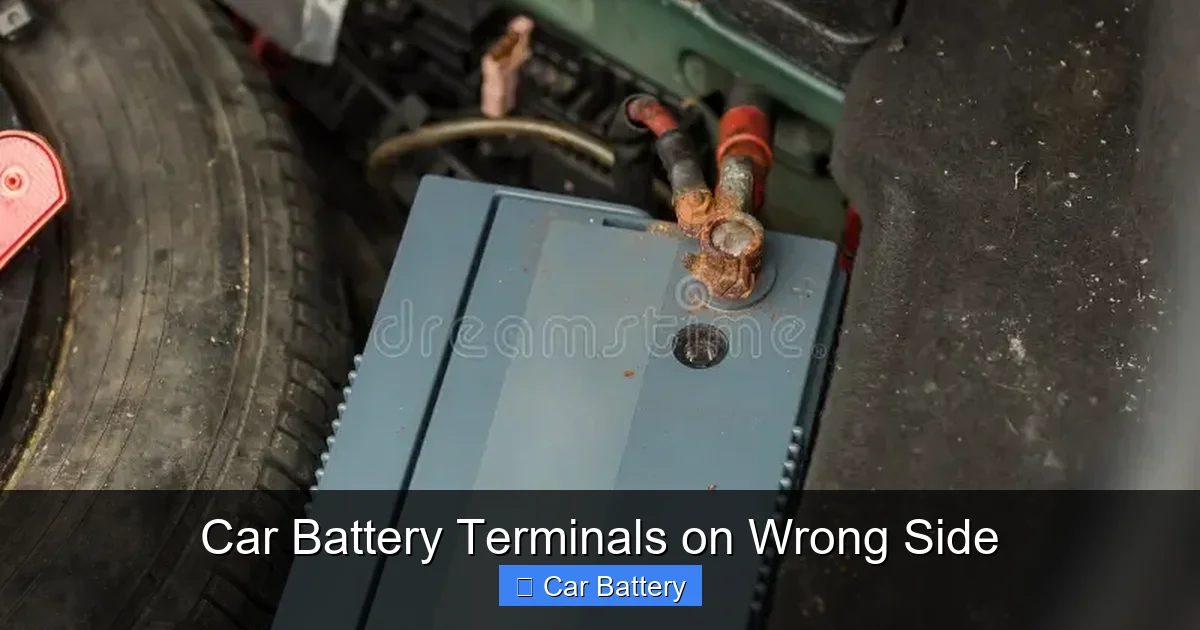
Visual guide about Car Battery Terminals on Wrong Side
Image source: thumbs.dreamstime.com
Check the Owner’s Manual
The first and most reliable source of information is your car’s owner’s manual. It will specify the correct battery group size, terminal type, and orientation. For instance, a Ford F-150 might require a Group 65 battery with top posts and positive on the right, while a Toyota Camry uses a Group 35 with positive on the left. These details are crucial and often overlooked by DIYers.
Examine the Old Battery
If the old battery is still in place, note the position of the terminals. Take a photo or sketch a quick diagram. Look for markings like “+” and “−” near the posts. Some batteries also have arrows or labels indicating “POS” and “NEG.” This visual reference will help you choose the right replacement.
Compare Battery Group Sizes
Batteries are categorized by group size (e.g., Group 24, Group 34, Group 48), which defines their physical dimensions and terminal placement. Using a battery with the wrong group size is a common cause of terminal misalignment. For example, a Group 24F battery has terminals on the front, while a Group 24 has them on the top. Mixing these up leads to car battery terminals on wrong side issues.
Use Online Resources
If you’ve lost the manual or the old battery is gone, use online tools. Websites like AutoZone, Advance Auto Parts, or the manufacturer’s site allow you to look up the correct battery by year, make, and model. These tools often include images showing terminal placement, so you can match it visually.
What to Do If Your New Battery Has Wrong Terminal Placement
So you’ve bought a new battery, brought it home, and now realize the terminals are on the wrong side. Don’t panic—there are solutions. But remember: never force the cables or ignore the problem. Here’s how to handle it safely.
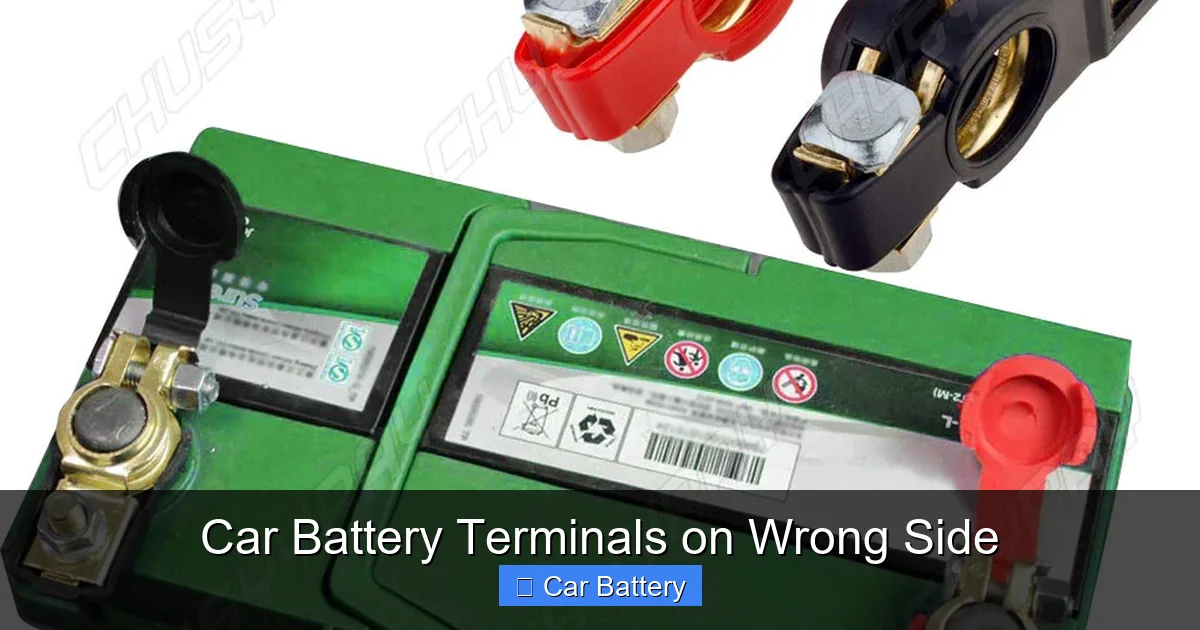
Visual guide about Car Battery Terminals on Wrong Side
Image source: i.ebayimg.com
Option 1: Return and Exchange the Battery
The simplest fix is to return the incorrect battery and get the right one. Most auto parts stores accept returns within a few days, especially if the battery is unopened. Bring your old battery or a photo of the terminal layout to ensure you get the correct match. This is the safest and most reliable option.
Option 2: Use Battery Terminal Adapters
If returning isn’t possible, consider using battery terminal adapters. These are short extension cables or repositioning kits that allow you to reroute the connections without modifying the original cables. For example, a right-angle terminal adapter can shift the positive post from the left to the right side, matching your vehicle’s layout.
Adapters are widely available online or at auto shops. Look for ones made of heavy-duty copper with corrosion-resistant coatings. Make sure they’re rated for your battery’s amperage—typically 400–800 CCA (cold cranking amps). Install them securely and double-check all connections before starting the car.
Option 3: Reorient the Battery (If Possible)
In some cases, you can rotate the battery 180 degrees to flip the terminal positions. However, this only works if the battery tray and hold-down mechanism allow it. Never force the battery into place—if it doesn’t fit naturally, don’t do it. Also, be cautious with batteries that have built-in vents or caps; rotating them might cause acid leaks.
Option 4: Consult a Professional
If you’re unsure or uncomfortable making changes, take the battery and your car to a trusted mechanic or dealership. They can verify the correct terminal orientation and install the battery safely. While this may cost $20–$50, it’s a small price to pay compared to repairing electrical damage from reverse polarity.
Risks of Installing a Battery with Wrong Terminal Placement
Ignoring terminal orientation isn’t just inconvenient—it’s dangerous. Here’s what can go wrong when car battery terminals are on the wrong side.
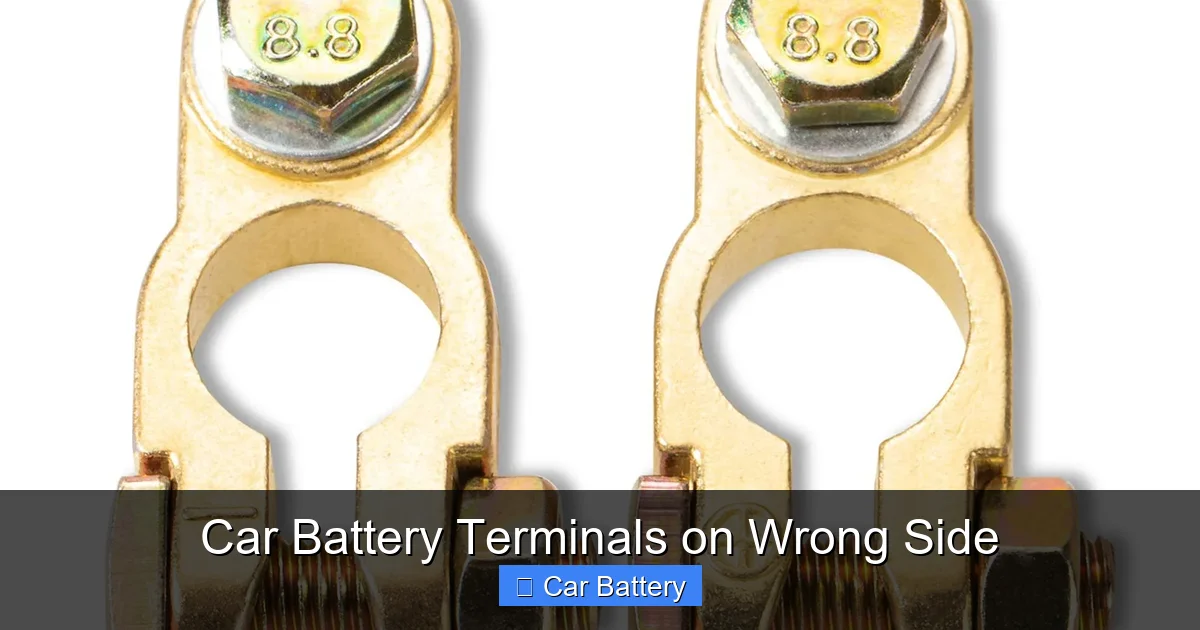
Visual guide about Car Battery Terminals on Wrong Side
Image source: m.media-amazon.com
Electrical System Damage
Reversing the battery connections sends power in the wrong direction. This can fry the alternator, which isn’t designed to handle reverse current. It can also damage the engine control unit (ECU), which manages fuel injection, ignition timing, and emissions. Replacing an ECU can cost $500–$2,000, far more than a new battery.
Blown Fuses and Short Circuits
Modern cars have dozens of fuses protecting various circuits. Reverse polarity can blow multiple fuses at once, disabling lights, wipers, power windows, and more. In extreme cases, a short circuit can cause sparks, overheating, or even fire—especially if cables rub against sharp metal edges.
Failed Starts and Stalling
Even if the car starts, incorrect terminal placement can cause intermittent electrical issues. You might experience random stalling, flickering dashboard lights, or a dead battery after short trips. These symptoms are often misdiagnosed as alternator or wiring problems, leading to unnecessary repairs.
Corrosion and Connection Issues
Forcing cables to reach misaligned terminals can loosen connections over time. Loose terminals cause arcing, which generates heat and accelerates corrosion. Corroded terminals reduce conductivity, leading to hard starts and reduced battery life.
How to Prevent Terminal Placement Mistakes
The best way to deal with car battery terminals on wrong side is to avoid the problem altogether. Follow these preventive tips during your next battery replacement.
Plan Ahead
Before your current battery dies, research the correct replacement. Note the group size, terminal type (top post, side post, L-terminal), and orientation. Keep this info in your glove box or phone for quick reference.
Buy from Reputable Sources
Stick to well-known brands and retailers that provide detailed product descriptions and images. Avoid cheap, no-name batteries that may not match OEM specifications.
Use a Battery Finder Tool
Most auto parts stores have online battery finders. Enter your vehicle details, and the tool will recommend the correct battery with terminal placement info. Some even offer side-by-side comparisons.
Label Your Cables
Before disconnecting the old battery, label the positive and negative cables with tape or zip ties. This ensures you reconnect them correctly, even if the new battery looks different.
Take Your Time
Rushing leads to mistakes. Set aside 30–60 minutes for the job. Work in a well-lit area, wear safety glasses, and disconnect the negative cable first (and reconnect it last) to reduce shock risk.
Real-World Example: A Costly Mistake
Let’s look at a real scenario. John, a DIY enthusiast, replaced the battery in his 2015 Subaru Outback. He bought a compatible Group 35 battery but didn’t notice the terminals were reversed. He forced the cables to reach, bending them sharply. The car started, but the next day, the check engine light came on. At the shop, a diagnostic revealed a blown main fuse and a damaged alternator. The repair bill: $650.
John’s mistake? He assumed all Group 35 batteries were identical. But terminal orientation varies by brand and model. A quick check of the old battery or the owner’s manual would have saved him time, money, and frustration.
Conclusion
Car battery terminals on wrong side might seem like a minor detail, but it’s a critical factor in safe and reliable battery installation. Getting the terminal orientation right protects your vehicle’s electrical system, prevents costly damage, and ensures your car starts when you need it. Always verify the correct layout before buying or installing a new battery. Use adapters if necessary, but never force connections or ignore mismatches. When in doubt, seek professional help. A few extra minutes of preparation can save you hundreds in repairs and keep you safely on the road.
Frequently Asked Questions
Can I install a battery with terminals on the wrong side?
It’s not recommended. Installing a battery with terminals on the wrong side can cause reverse polarity, damaging electronics and starting systems. Always match the terminal orientation to your vehicle’s original setup.
What happens if I reverse battery terminals?
Reversing terminals sends power backward through the electrical system, which can blow fuses, damage the alternator, or destroy the engine control unit. This can lead to expensive repairs and safety risks.
How do I know which side the positive terminal should be on?
Check your owner’s manual or examine the old battery. Most vehicles have the positive terminal on the right, but this varies by make and model. Look for “+” markings and cable routing clues.
Can I use adapters to fix wrong terminal placement?
Yes, battery terminal adapters can reposition connections safely. Choose heavy-duty, corrosion-resistant adapters rated for your battery’s power output, and ensure all connections are tight and secure.
Is it safe to rotate a battery to flip the terminals?
Only if the battery tray and hold-down allow it. Never force the battery, and avoid rotating batteries with vent caps or sealed designs, as this can cause leaks or damage.
Should I call a mechanic if I’m unsure about terminal placement?
Yes, if you’re uncertain, consult a professional. A mechanic can verify the correct battery and install it safely, preventing costly mistakes and ensuring your vehicle’s electrical system remains intact.