Why Your Car Battery Dies in Cold Weather
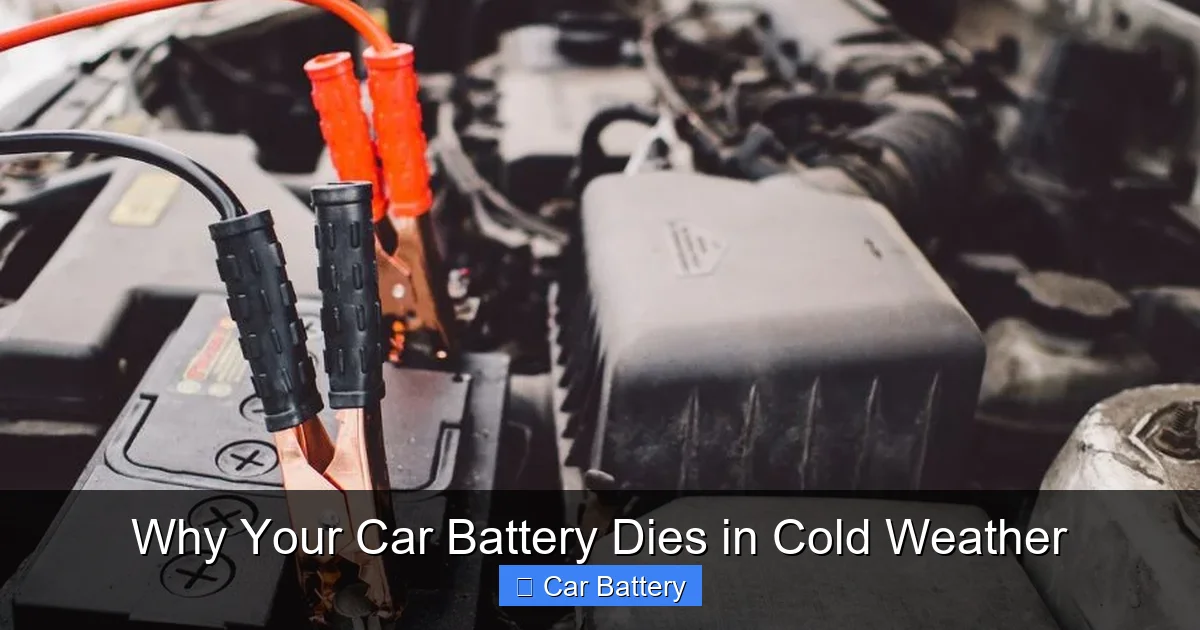
Cold weather is a car battery’s worst enemy. It dramatically slows the chemical reactions inside the battery, reducing its power output just when your engine needs more energy to start. Combined with increased electrical loads from heaters and lights, this often leads to the dreaded “click” of a dead battery on a frosty morning.
In This Article
- 1 Key Takeaways
- 2 📑 Table of Contents
- 3 Why Your Car Battery Dies in Cold Weather
- 4 The Cold, Hard Science: What Happens Inside Your Battery
- 5 The Engine’s Role: A Double Whammy
- 6 The Electrical Load: Piling On the Pressure
- 7 Parasitic Drain: The Silent Killer
- 8 How to Prevent a Dead Battery in Winter
- 9 What to Do When Your Battery Dies in the Cold
- 10 Conclusion: Don’t Get Left Out in the Cold
- 11 Frequently Asked Questions
- 11.1 Can a completely dead battery be revived in cold weather?
- 11.2 How long should I drive my car to recharge a dead battery?
- 11.3 Does revving the engine charge the battery faster?
- 11.4 At what temperature do car batteries start to fail?
- 11.5 Should I bring my car battery inside when it’s very cold?
- 11.6 Are some batteries better for cold weather than others?
Key Takeaways
- Chemistry Slows Down: Cold temperatures thicken the battery’s electrolyte, slowing the chemical reaction that produces electricity by up to 50%.
- Engine Oil Thickens: Your engine needs more power to turn over because the oil inside it becomes like molasses in the cold.
- Power Demand Skyrockets: It can take over twice as much power to start a cold engine compared to a warm one, pushing an already weakened battery to its limit.
- Parasitic Drain Matters More: Small, constant drains from your car’s electronics can kill a marginal battery in just a few cold days.
- Prevention is Key: Regular testing, keeping terminals clean, and using a battery maintainer can prevent most winter failures.
- Know the Signs: Slow cranking, dim lights, and needing multiple attempts to start are clear warnings your battery is struggling.
- Jump-Starting is a Temporary Fix: A successful jump-start gets you going, but the underlying weak battery will likely fail again without being tested or replaced.
📑 Table of Contents
- Why Your Car Battery Dies in Cold Weather
- The Cold, Hard Science: What Happens Inside Your Battery
- The Engine’s Role: A Double Whammy
- The Electrical Load: Piling On the Pressure
- Parasitic Drain: The Silent Killer
- How to Prevent a Dead Battery in Winter
- What to Do When Your Battery Dies in the Cold
- Conclusion: Don’t Get Left Out in the Cold
Why Your Car Battery Dies in Cold Weather
You know the feeling. It’s a frigid morning. You scrape the ice off your windshield, bundle into the driver’s seat, turn the key, and… click. Nothing. Or worse, a slow, labored groan from the engine that slowly fades into silence. Your car battery is dead.
This isn’t just bad luck. It’s cold, hard science. Winter is the peak season for battery failure. Understanding why this happens is the first step to preventing it. Let’s pop the hood and look at the perfect storm of factors that conspire to kill your battery when the temperature drops.
The Cold, Hard Science: What Happens Inside Your Battery
Your car battery is a chemical power plant. It stores energy chemically and releases it as electrical energy. This process relies on a fluid inside called electrolyte—a mix of sulfuric acid and water.
Visual guide about Why Your Car Battery Dies in Cold Weather
Image source: thepowerall.com
The Electrolyte Effect
When temperatures plummet, this electrolyte fluid gets thicker. Think of maple syrup straight from the fridge versus on a warm pancake. A thicker electrolyte slows down the movement of ions between the battery’s lead plates. This chemical reaction is what creates electricity. The colder it gets, the slower this reaction becomes. At 32°F (0°C), a battery can lose up to 35% of its strength. At 0°F (-18°C), it can lose a staggering 50-60% of its cranking power.
Reduced Cranking Amps (CCA)
This is the most important number on your battery for winter. Cranking Amps (CA) and Cold Cranking Amps (CCA) measure the battery’s ability to start an engine in the cold. CCA is the number of amps a battery can deliver at 0°F for 30 seconds while maintaining a usable voltage. A battery rated for 700 CCA might only perform like a 350 CCA battery on a bitter morning. If your engine needs 500 amps to turn over, you’re now out of luck.
The Engine’s Role: A Double Whammy
It’s not just the battery that suffers in the cold. Your engine becomes much harder to start, demanding more from a battery that’s already weak.
Visual guide about Why Your Car Battery Dies in Cold Weather
Image source: assets2.cbsnewsstatic.com
Thickened Engine Oil
Engine oil is designed to flow smoothly to lubricate parts. In the cold, it thickens significantly. This means your starter motor has to work much harder to spin the engine against the resistance of this syrupy oil. It’s like trying to pedal a bicycle through deep mud versus on a smooth road.
Increased Friction
All the metal components inside your engine contract slightly in the cold. This can increase internal friction, adding another layer of difficulty for the starter. The result? A cold engine might need over twice the electrical power to start compared to when it’s warm.
The Electrical Load: Piling On the Pressure
Modern cars are packed with electronics. In winter, we use almost all of them at once, placing a huge drain on the battery.
Visual guide about Why Your Car Battery Dies in Cold Weather
Image source: admin.goweatherforecast.com
- Heater Blower: Running on high to defrost windows and warm the cabin.
- Heated Seats, Steering Wheel, and Mirrors: These are massive power draws.
- Headlights, Fog Lights, and Interior Lights: Used more due to shorter, darker days.
- Rear Window Defroster: This thin grid on your back window can draw 20-30 amps by itself.
When you first start the car, all these systems are often switched on. This parasitic load competes with the starter motor for the battery’s dwindling power, often tipping it over the edge into failure.
Parasitic Drain: The Silent Killer
Even when your car is off, it’s never truly “off.” Computers, clocks, alarm systems, and keyless entry receivers are always sipping a small amount of power. This is called parasitic drain.
A healthy battery can handle this for weeks. A weak or old battery, combined with cold-induced capacity loss, can be drained to the point of no-start in just a few days of sitting. If you only take short trips, the alternator doesn’t have enough time to fully recharge the battery, leaving it in a perpetually low state—a recipe for a cold-weather failure.
How to Prevent a Dead Battery in Winter
Don’t wait for the click. Be proactive with these simple steps.
1. Test Your Battery Before Winter Hits
Most auto parts stores offer free battery testing. They can measure its voltage and, more importantly, its ability to hold a charge under load (a load test). This is the best way to know if your battery is on its last legs. If it’s more than 3-4 years old, get it tested in the fall.
2. Keep It Clean and Tight
Corrosion on the battery terminals (those white, blue, or green crusty deposits) creates resistance. Resistance makes it harder for the battery’s full power to reach the starter. Clean terminals with a wire brush and a baking soda/water solution. Ensure the cable connections are tight.
3. Invest in a Battery Maintainer (Trickle Charger)
If you park in a garage with an outlet, a battery maintainer is your best friend. It plugs into the wall and your battery, providing a tiny, smart charge to keep it at 100% without overcharging. This is ideal for vehicles driven infrequently or only for short trips.
4. Give Your Battery a Break
Before cranking the engine on a cold morning, turn off every non-essential electrical load. Turn off the heater fan, defroster, radio, and lights. This gives all the battery’s available power to the starter. Once the engine is running, you can turn things back on.
5. Take Longer Drives
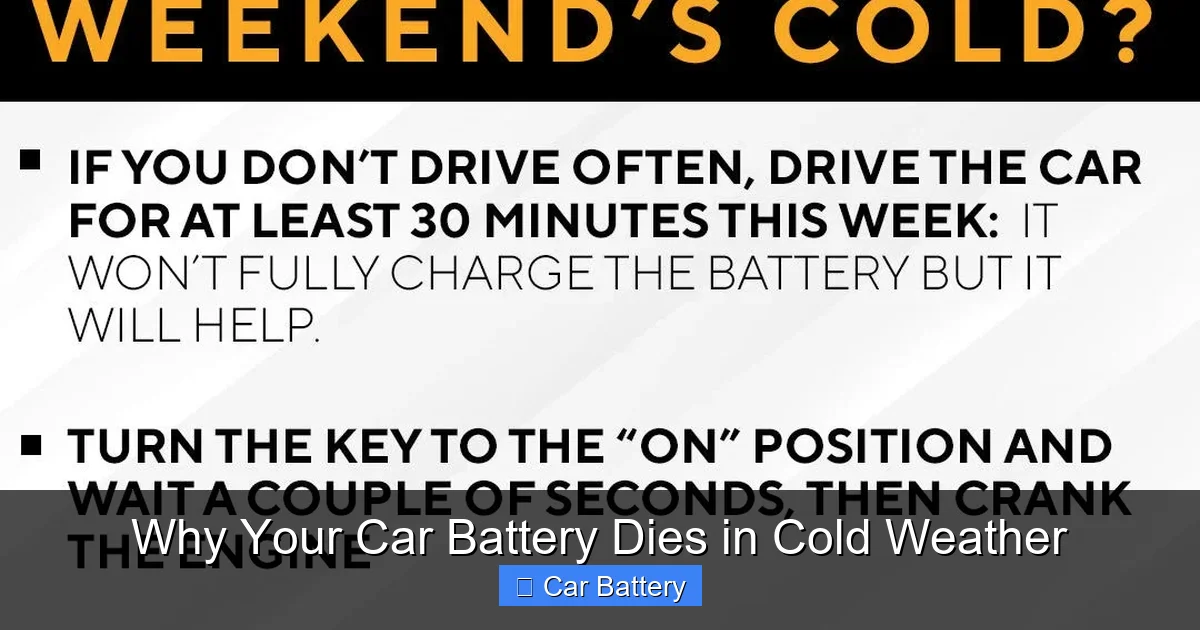
Short trips (under 15 minutes) don’t allow the alternator enough time to replenish the charge used to start the car. Once a week, try to take a drive of at least 30 minutes on the highway to give the battery a full, proper charge.
What to Do When Your Battery Dies in the Cold
If prevention fails, here’s your action plan.
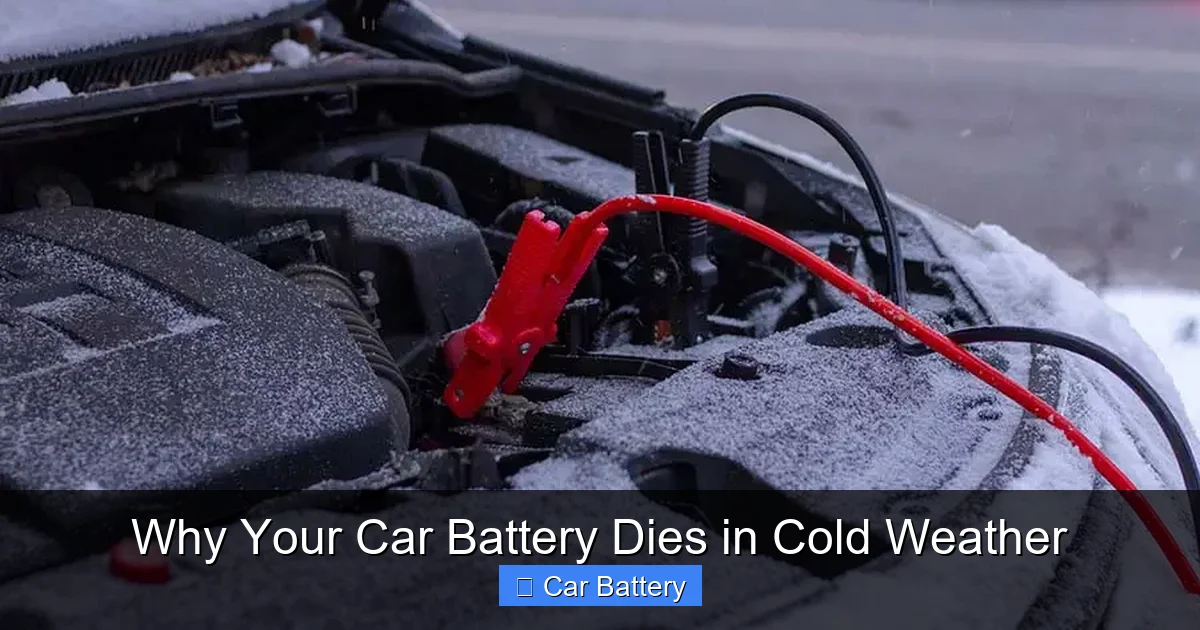
Safe Jump-Starting Procedure
Always have a set of quality jumper cables in your trunk.
- Park the donor car close, but not touching. Turn both cars off.
- Connect RED clamp to the DEAD battery’s positive (+) terminal.
- Connect the other RED clamp to the GOOD battery’s positive (+) terminal.
- Connect BLACK clamp to the GOOD battery’s negative (-) terminal.
- Connect the final BLACK clamp to an UNPAINTED METAL BOLT or bracket on the dead car’s engine block. Do not connect to the dead battery’s negative terminal.
- Start the donor car, let it run for a few minutes.
- Try to start the dead car. If it starts, let both cars run connected for a few more minutes.
- Disconnect in REVERSE order: Black from ground on dead car, black from good battery, red from good battery, red from dead battery.
Call for Professional Help
Roadside assistance is a great option. They can provide a jump-start or, if needed, install a new battery on the spot. Portable jump-starter packs are also fantastic modern tools—a compact, battery-powered unit that can jump your car without another vehicle.
After a Jump-Start
A jump-start is a temporary fix. Drive for at least 30-45 minutes to recharge the battery. Then, get your battery and charging system tested immediately. The cold likely exposed an underlying weakness. It will almost certainly fail again, possibly at a worse time.
Conclusion: Don’t Get Left Out in the Cold
A dead car battery in winter is more than an inconvenience; it’s a safety issue. But it’s also largely predictable and preventable. By understanding the chemistry and physics at play—the sluggish battery, the stiff engine, and the high electrical demands—you can take control.
Make battery maintenance part of your fall routine. Test it, clean it, and consider a maintainer. Listen to the warning signs like slow cranking. A little preparation ensures that when you turn the key on the coldest morning, you’re met with the confident roar of an engine, not the disappointing silence of a dead battery. Stay charged and stay safe out there.
Frequently Asked Questions
Can a completely dead battery be revived in cold weather?
Sometimes, but don’t count on it. A very cold battery’s chemical reaction is simply slowed. Jump-starting and driving may revive it. However, if the battery was already weak and the cold caused it to fully discharge and freeze, the internal damage is often permanent, requiring replacement.
How long should I drive my car to recharge a dead battery?
After a successful jump-start, you should drive for at least 30-45 minutes of continuous driving, preferably on a highway. This gives the alternator enough time to put a meaningful charge back into the battery. Short trips will leave it undercharged.
Does revving the engine charge the battery faster?
Yes, but only slightly and with caution. The alternator charges faster at higher RPMs. After a jump-start, idling at 1,200-1,500 RPM for a few minutes can help, but driving is more effective and safer. Never excessively rev a cold engine.
At what temperature do car batteries start to fail?
Problems can begin as soon as it gets below 32°F (0°C). The effects become severe below 20°F (-7°C) and critical below 0°F (-18°C). A battery that starts fine at 40°F may struggle at 20°F and fail completely at 0°F.
Should I bring my car battery inside when it’s very cold?
It’s not practical for daily use, but it can help for seasonal storage. For a car sitting all winter in a cold garage, removing the battery, storing it indoors on a wooden surface, and keeping it on a maintainer is the best way to preserve its life.
Are some batteries better for cold weather than others?
Absolutely. Look for a battery with a high Cold Cranking Amp (CCA) rating that meets or exceeds your vehicle’s specifications. AGM (Absorbent Glass Mat) batteries generally perform better in cold weather and handle deep discharges better than traditional flooded batteries.