
Car Battery Booster

A car battery booster is a portable device that jump-starts your vehicle without another car. It’s compact, safe, and essential for emergencies, especially in cold weather or remote areas. Modern boosters also charge phones, power tools, and more—making them a must-have in every car.
Key Takeaways
- Car battery boosters are self-contained jump starters: Unlike traditional jumper cables, they don’t require a second vehicle—just plug in and go.
- They work with most 12V vehicles: Cars, trucks, motorcycles, boats, and even some RVs can be jump-started using a quality booster pack.
- Safety features are critical: Look for reverse polarity protection, spark-proof clamps, and overload safeguards to prevent damage or injury.
- Modern boosters double as power banks: Many include USB ports, LED flashlights, and even air compressors for added convenience on the road.
- Battery capacity matters: Choose a booster with at least 10,000mAh for small cars; larger engines may need 20,000mAh or more.
- Regular maintenance extends booster life: Recharge your booster every 3–6 months, even if unused, to keep it ready when needed.
- They’re cost-effective insurance: A $100 booster can save you hundreds in tow truck fees and roadside assistance calls.
📑 Table of Contents
- What Is a Car Battery Booster?
- How Does a Car Battery Booster Work?
- Why Every Driver Needs a Car Battery Booster
- Choosing the Right Car Battery Booster
- How to Use a Car Battery Booster Safely
- Maintaining Your Car Battery Booster
- Car Battery Booster vs. Traditional Jumper Cables
- Real-Life Scenarios Where a Booster Saves the Day
- Conclusion
What Is a Car Battery Booster?
A car battery booster—also known as a jump starter, jump box, or portable car starter—is a compact, battery-powered device designed to restart a vehicle with a dead or weak battery. Unlike traditional jump-starting methods that rely on connecting your car to another vehicle via jumper cables, a booster pack contains its own internal lithium-ion or lead-acid battery. This means you can revive your engine anywhere—whether you’re stranded in a parking lot, on a remote highway, or in your own driveway—without needing help from another driver.
These devices have evolved significantly over the past decade. Early models were bulky, heavy, and often unreliable. Today’s boosters are lightweight, pocket-sized, and packed with smart technology. Many feature built-in safety mechanisms, digital displays, and multi-functional capabilities like USB charging ports, LED work lights, and even tire inflators. Think of it as a Swiss Army knife for your car’s electrical system: versatile, dependable, and always ready when you need it most.
The core purpose remains simple: deliver a high-current burst to your car’s starter motor when the main battery can’t. But modern boosters do so much more than just jump-start engines. They’re essentially portable power stations that keep you connected and safe during unexpected breakdowns. Whether you’re commuting daily or taking a cross-country road trip, having a car battery booster in your glove compartment is like carrying peace of mind in a small case.
How Does a Car Battery Booster Work?
Visual guide about Car Battery Booster
Image source: m.media-amazon.com
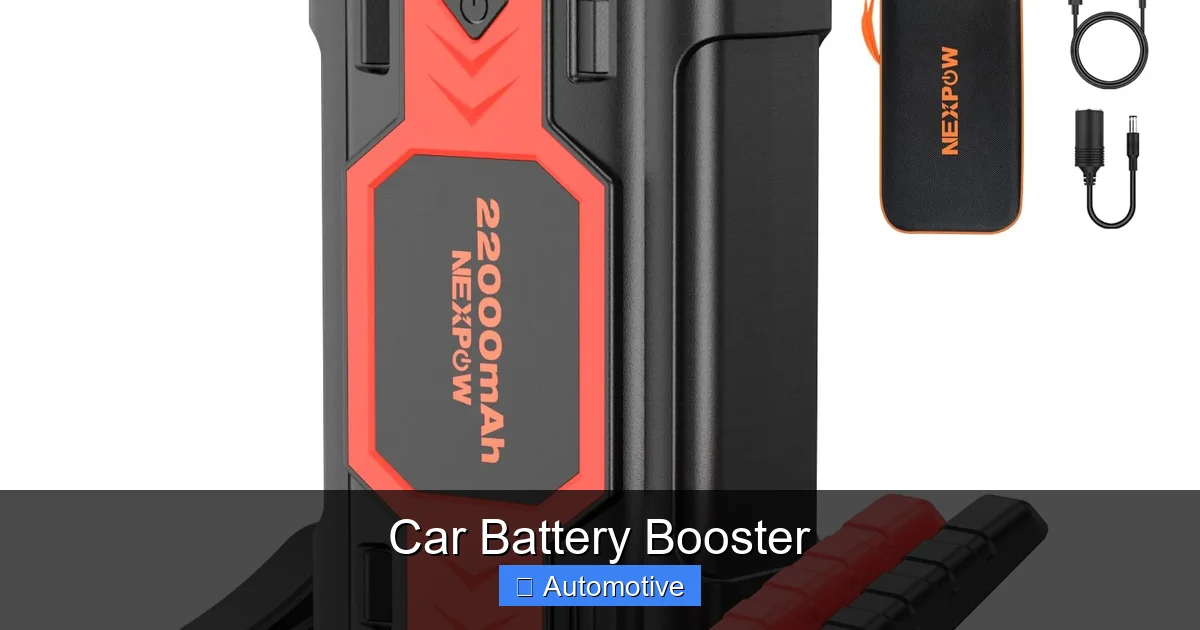
At its heart, a car battery booster works by storing electrical energy in its internal battery and releasing it quickly when needed. When your vehicle’s battery is too weak to crank the engine, the booster steps in as a temporary power source. Here’s a step-by-step breakdown of how it functions:
First, you connect the booster’s heavy-duty clamps to your car battery’s terminals—red to positive (+), black to negative (–). Most modern boosters include clear labels and color-coded cables to prevent mistakes. Once connected, the booster detects the voltage and prepares to deliver a surge of current. Unlike old-school lead-acid jump starters, today’s lithium-ion models can hold a charge for months and deliver consistent power even in cold temperatures.
When you turn the key (or press the start button), the booster sends a high-amperage pulse directly to your car’s starter motor. This gives the engine the kick it needs to fire up. Within seconds—often less than 30—you’ll hear the familiar roar of a running engine. Once the car is running, you simply disconnect the clamps and stow the booster away.
But what makes modern boosters truly impressive is their intelligence. Many units come with microprocessors that monitor voltage, temperature, and connection status. If you accidentally hook up the clamps backward (reverse polarity), the booster won’t activate—and may even flash a warning light or sound an alarm. Some models also feature “smart clamps” that communicate with the device to ensure safe operation. This level of protection wasn’t possible just a few years ago and has made jump-starting safer than ever.
Types of Car Battery Boosters
Not all boosters are created equal. Understanding the different types helps you choose the right one for your needs:
**Lithium-ion Boosters**: These are the most popular today due to their lightweight design, high energy density, and long shelf life. They can be recharged via USB-C or wall outlets and often include advanced safety features. Ideal for everyday drivers and frequent travelers.
**Lead-Acid Boosters**: Older technology, but still used in heavy-duty applications. They’re bulkier and heavier but can deliver very high cranking amps—making them suitable for large trucks or diesel engines. However, they require more maintenance and don’t hold a charge as well over time.
**Ultra-Capacitor Boosters**: A newer innovation that uses capacitors instead of batteries. They charge instantly from your car’s weak battery and deliver an enormous burst of power in seconds. Great for extreme cold where traditional batteries fail, but currently more expensive and less common.
For most drivers, a mid-range lithium-ion booster with 10,000–20,000mAh capacity offers the best balance of power, portability, and price.
Why Every Driver Needs a Car Battery Booster
Visual guide about Car Battery Booster
Image source: m.media-amazon.com
Imagine this: It’s 7 a.m., you’re running late for work, and your car won’t start. The battery light is on, and you’re alone in a dimly lit parking garage. Without a booster, your only options are calling a tow truck (costly and time-consuming) or hoping a Good Samaritan stops by with jumper cables (unreliable). But with a car battery booster, you’re back on the road in under five minutes—no waiting, no stress.
Dead batteries are one of the most common reasons for roadside breakdowns. Cold weather, leaving lights on, aging batteries, or parasitic drains can all leave you stranded. According to AAA, battery-related issues account for nearly 20 million service calls annually in the U.S. alone. A booster isn’t just convenient—it’s practical insurance against these everyday frustrations.
Beyond emergencies, boosters offer everyday utility. Many include USB-A and USB-C ports so you can charge your phone, tablet, or GPS while driving. Some even have built-in LED flashlights with SOS modes, perfect for nighttime repairs or signaling for help. High-end models might feature 12V outlets to power coolers, air compressors, or camping gear. In short, a booster transforms your car into a mobile power hub.
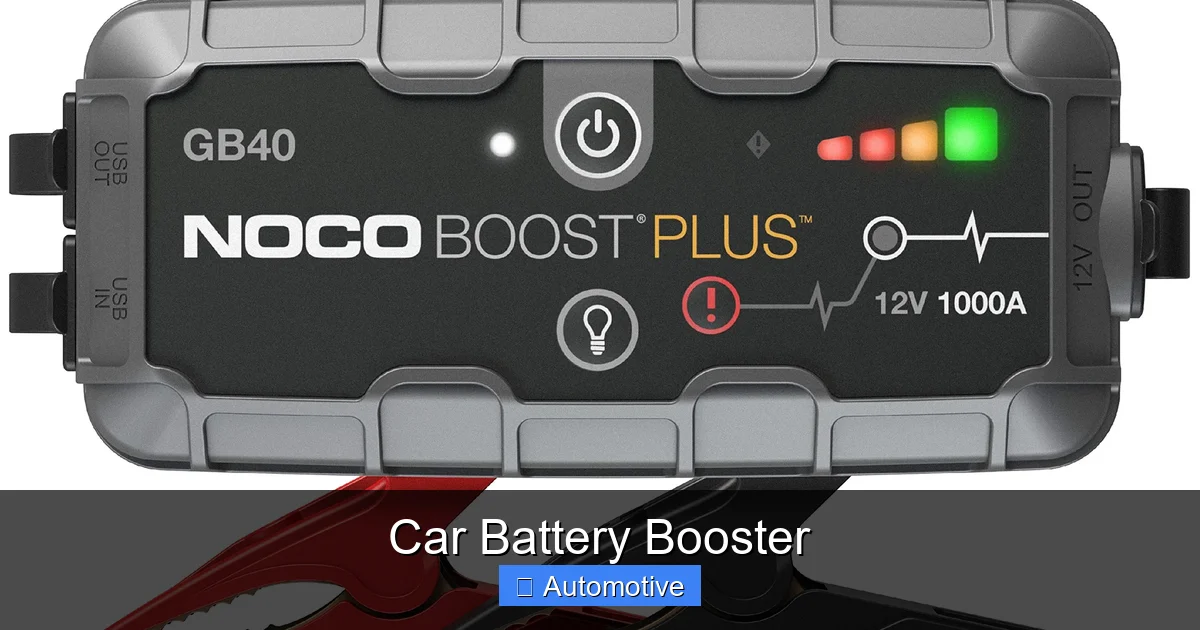
Consider this real-world example: Sarah, a nurse working night shifts, often parks in a poorly lit hospital lot. One winter morning, her 2018 Honda Civic wouldn’t start. Instead of waiting 45 minutes for roadside assistance, she pulled out her NOCO Boost Plus GB40, connected it in under a minute, and was on her way. “It paid for itself that one time,” she said. “Now I keep it in my center console—just in case.”
Peace of Mind for Families and Seniors
For families with young children or elderly drivers, a booster adds an extra layer of safety. Kids might accidentally leave interior lights on; seniors may forget to turn off headlights. A booster ensures help is always within reach—no phone signal or nearby traffic required. It’s especially valuable in rural areas where cell service is spotty and tow trucks take hours to arrive.
Choosing the Right Car Battery Booster
Visual guide about Car Battery Booster
Image source: i5.walmartimages.com
With dozens of models on the market, picking the right booster can feel overwhelming. But focus on a few key factors, and you’ll find the perfect match for your vehicle and lifestyle.
**1. Engine Size and Cranking Power**
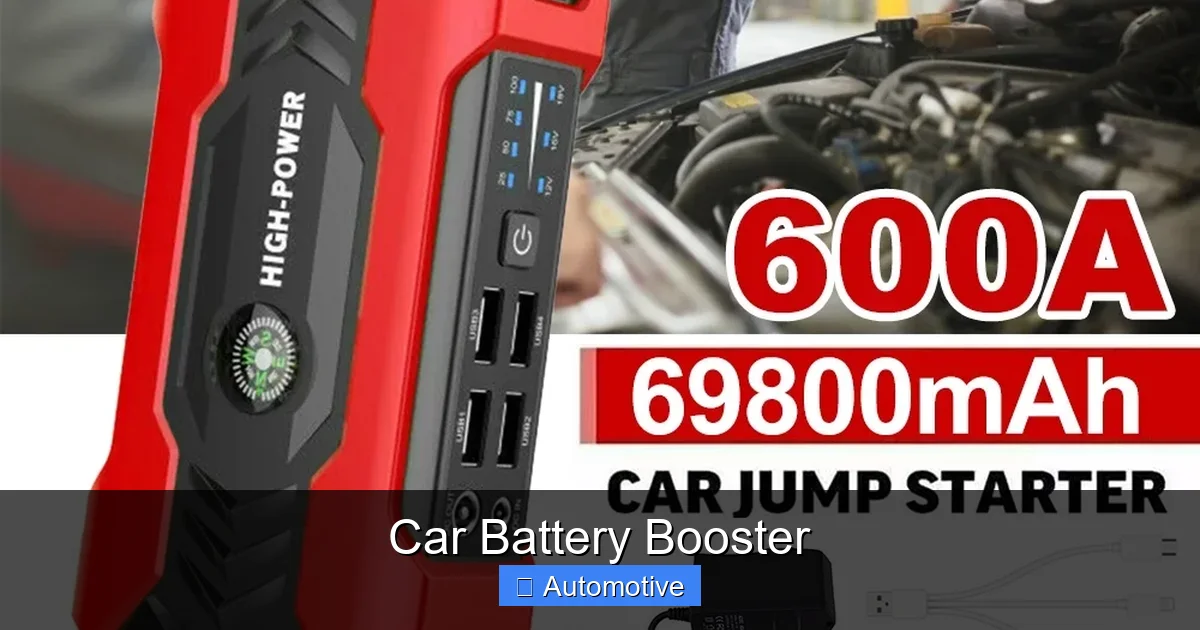
Match the booster’s peak amps to your engine. Small cars (4-cylinder) typically need 400–600 peak amps. SUVs and trucks (V6/V8) may require 1000+ amps. Check your owner’s manual or look up your vehicle’s cranking requirements online. Most reputable brands provide compatibility charts.
**2. Battery Capacity (mAh)**
Measured in milliamp-hours, this indicates how much charge the booster holds. A 10,000mAh unit can jump-start a compact car 3–5 times on a full charge. For larger vehicles or frequent use, consider 15,000–25,000mAh models. Remember: higher capacity usually means slightly larger size and weight.
**3. Safety Features**
Never compromise on safety. Look for:
– Reverse polarity protection
– Spark-proof technology
– Overcurrent and short-circuit protection
– Thermal overload shutdown
These features prevent damage to your car’s electronics and reduce fire or shock risks.
**4. Additional Functions**
Do you need a flashlight? USB charging? An air compressor? Some boosters, like the DEWALT DXAEJ14, include a 12V/10A outlet and tire inflator—ideal for road trips. Others, like the Anker Roav Jump Starter, double as a power bank with fast-charging USB-C.
**5. Portability and Build Quality**
If you drive a small car or travel often, opt for a compact, lightweight model (under 2 lbs). Rugged, water-resistant casings (IP65 rating or higher) ensure durability in rain or snow.
**6. Brand Reputation and Warranty**
Stick with trusted names like NOCO, Jump-N-Carry, Clore Automotive, or Anker. They offer reliable customer support and warranties (typically 1–3 years). Avoid cheap, no-name brands—they often lack safety certifications and fail when you need them most.
Top Picks by Category
– **Best Overall**: NOCO Boost Plus GB40 – Compact, 1000A peak, works down to -20°F
– **Best for Trucks**: Clore Automotive JNC660 – 1700 peak amps, heavy-duty build
– **Best Budget**: Tacklife T8 – Under $80, 800A, includes flashlight and USB ports
– **Best Multi-Tool**: DEWALT DXAEJ14 – Jump starter + air compressor + power outlet
How to Use a Car Battery Booster Safely
Using a booster is simple, but safety should always come first. Follow these steps to avoid accidents and ensure a successful jump-start:
**Step 1: Park Safely**
Turn off the engine, engage the parking brake, and place the car in “Park” (or first gear for manuals). Make sure both vehicles (if using another car) are off and not touching.
**Step 2: Locate the Battery**
Open the hood and find the battery. In some cars (especially European models), the battery may be in the trunk or under a seat. Consult your manual if unsure.
**Step 3: Connect the Clamps**
Attach the red clamp to the positive (+) terminal and the black clamp to the negative (–) terminal. If your booster has a “ground” option (some recommend connecting black to an unpainted metal surface instead of the negative terminal), follow the manufacturer’s instructions—this reduces sparking near the battery.
**Step 4: Power On the Booster**
Turn on the booster (most have a button or switch). Wait for the indicator light to show it’s ready—usually green or solid.
**Step 5: Start the Engine**
Turn the key or press the start button. If the engine doesn’t start within 3–5 seconds, wait 30 seconds before trying again. Most boosters allow 3–5 attempts per charge.
**Step 6: Disconnect and Recharge**
Once the engine runs, disconnect the clamps in reverse order (black first, then red). Turn off the booster and recharge it as soon as possible—even if it shows remaining charge.
Common Mistakes to Avoid
– **Connecting clamps backward**: Always double-check polarity. Modern boosters protect against this, but it’s still risky.
– **Using a depleted booster**: If the booster’s battery is low, it won’t deliver enough power. Recharge regularly.
– **Jumping in extreme heat or cold**: While many boosters work in sub-zero temps, avoid using them in direct sunlight above 120°F.
– **Leaving clamps connected**: Never leave the booster attached while driving—it can overheat or drain your car’s battery.
Maintaining Your Car Battery Booster
A booster is only useful if it’s charged and ready. Treat it like any other essential tool—maintain it regularly.
**Recharge Every 3–6 Months**
Even if unused, lithium-ion batteries slowly lose charge. Set a calendar reminder to top it off. Most boosters take 2–4 hours to fully recharge via wall outlet or USB.
**Store in a Cool, Dry Place**
Avoid leaving your booster in the car during summer—temperatures inside can exceed 140°F, damaging the battery. A garage or climate-controlled space is ideal.
**Clean the Clamps and Ports**
Dust and corrosion can interfere with connections. Wipe clamps with a dry cloth and use compressed air to clear USB ports.
**Check for Firmware Updates**
Some smart boosters (like NOCO’s Boost HD) support firmware updates via app. These can improve performance and add new safety features.
**Test It Annually**
Once a year, simulate a jump-start on a healthy battery (with caution) to ensure everything works. This builds confidence and catches issues early.
Car Battery Booster vs. Traditional Jumper Cables
It’s a common debate: booster pack or jumper cables? Both have pros and cons, but boosters offer clear advantages in most situations.
**Jumper Cables Require Another Vehicle**
You’re dependent on finding a Good Samaritan with a working car. In remote areas or late at night, this isn’t always possible. Plus, not everyone knows how to use cables safely.
**Boosters Are Independent**
No second car needed. Just you, your booster, and your dead battery. Perfect for solo drivers, rural residents, or those with older vehicles that frequently have battery issues.
**Speed and Convenience**
With cables, you must position two cars close enough to connect—often awkward in tight spaces. Boosters eliminate this hassle. Connect, start, done.
**Safety**
Modern boosters have multiple safeguards. Traditional cables offer no protection against reverse polarity or voltage spikes, which can fry your car’s ECU.
That said, jumper cables are cheaper (as low as $15) and don’t need recharging. They’re a good backup, but a booster is the smarter primary solution.
Real-Life Scenarios Where a Booster Saves the Day
Let’s look at a few everyday situations where a car battery booster proves invaluable:
**Scenario 1: Winter Morning in Minnesota**
Tom wakes up to -10°F weather. His 2015 Ford F-150 won’t start—the battery is too weak to crank in the cold. He grabs his Clore JNC660 booster, connects it in his driveway, and the truck fires up in 15 seconds. Without it, he’d be waiting hours for a tow in freezing temps.
**Scenario 2: Road Trip Breakdown in Nevada**
Lisa and her kids are driving through the desert when their minivan dies at a rest stop. No other cars in sight. She uses her Anker Roav booster to restart the engine and drives 20 miles to the nearest town. “It was a lifesaver,” she says. “We didn’t miss our hotel reservation.”
**Scenario 3: Teen Driver’s First Mistake**
High school senior Jake leaves his headlights on overnight. His mom keeps a Tacklife T8 in her SUV. She jumps his car in the school parking lot before class starts. “Now he knows to check the lights—and I’m not late for work,” she laughs.
These stories aren’t rare—they’re everyday realities for drivers who prepare ahead of time.
Conclusion
A car battery booster is more than a gadget—it’s a reliable companion for any driver. It eliminates the stress of dead batteries, reduces reliance on strangers, and provides backup power for your devices. Whether you’re commuting, traveling, or just want peace of mind, investing in a quality booster is one of the smartest automotive decisions you can make.
Modern boosters are safer, smarter, and more versatile than ever. With features like USB charging, LED lights, and air compressors, they’re not just for emergencies—they’re everyday tools. And at prices starting under $80, they’re far cheaper than a single tow truck call.
Don’t wait until you’re stranded. Buy a booster today, keep it charged, and store it where you can reach it quickly. Your future self—especially on a cold, dark morning—will thank you.
Frequently Asked Questions
Can a car battery booster damage my vehicle?
No, if used correctly. Modern boosters include safety features like reverse polarity protection and voltage regulation that prevent damage to your car’s electronics. Always follow the manufacturer’s instructions.
How long does a booster take to recharge?
Most lithium-ion boosters recharge in 2–4 hours via a wall outlet or USB-C. Some fast-charging models can reach 80% in under an hour.
Will a booster work in freezing temperatures?
Yes, many boosters (like the NOCO GB40) operate down to -20°F. Lithium-ion batteries perform better in cold weather than traditional lead-acid ones.
Can I use a booster on a diesel engine?
Yes, but choose a high-amp model (1500+ peak amps). Diesel engines require more cranking power than gasoline engines.
How many times can a booster jump-start a car?
A 10,000mAh booster can typically jump a compact car 3–5 times on a full charge. Larger vehicles may only get 1–2 jumps per charge.
Do I still need jumper cables if I have a booster?
It’s wise to keep cables as a backup, especially on long trips. But for most daily drivers, a booster is sufficient and more convenient.