Can You Sell a Car Without a Catalytic Converter
Yes, you can technically sell a car without a catalytic converter, but it’s not that simple. The sale may be legal in some states, but it can lead to serious legal trouble, reduced buyer interest, and ethical concerns. Understanding your local laws and the risks involved is crucial before listing a vehicle missing this key emissions device.
In This Article
- 1 Key Takeaways
- 2 📑 Table of Contents
- 3 Can You Sell a Car Without a Catalytic Converter?
- 4 Why the Catalytic Converter Matters
- 5 Legal Landscape: What the Law Says
- 6 Challenges for Buyers (and Why It Affects Your Sale)
- 7 How to Sell a Car Without a Catalytic Converter
- 8 Ethical and Practical Considerations
- 9 Conclusion
- 10 Frequently Asked Questions
- 10.1 Is it illegal to sell a car without a catalytic converter?
- 10.2 Can I sell my car for parts if it’s missing a catalytic converter?
- 10.3 Will a missing catalytic converter affect my car’s value?
- 10.4 Do I need to tell the buyer the catalytic converter is missing?
- 10.5 Can the buyer register the car without a catalytic converter?
- 10.6 How much does it cost to replace a catalytic converter?
Key Takeaways
- Legality varies by state: Selling a car without a catalytic converter is illegal in states like California, New York, and Colorado due to strict emissions laws, but may be allowed in others with proper disclosure.
- Federal law prohibits tampering: Under the Clean Air Act, removing or disabling a catalytic converter is illegal, even if the vehicle is sold “as-is.”
- Buyers face registration hurdles: Most states won’t allow registration or emissions testing for vehicles missing a catalytic converter, making them nearly impossible to legally drive.
- Resale value drops significantly: Cars without catalytic converters are seen as high-risk and often sell for 20–40% less than comparable models with intact emissions systems.
- Ethical concerns matter: Selling a car without disclosing the missing converter can damage your reputation and lead to disputes or legal action from buyers.
- Installation costs add up: Buyers will need to spend $1,000–$3,000 to legally reinstall a catalytic converter, which affects your car’s marketability.
- Document everything: If you sell a car without a catalytic converter, provide full written disclosure and keep records to protect yourself from future liability.
📑 Table of Contents
Can You Sell a Car Without a Catalytic Converter?
So, you’ve got a car that’s missing its catalytic converter—maybe it was stolen, damaged, or removed for repairs that never happened. Now you’re thinking about selling it. But can you actually sell a car without a catalytic converter? The short answer is yes, but it’s not as straightforward as slapping a “For Sale” sign on the windshield and waiting for offers.
The catalytic converter is more than just a metal box under your car—it’s a critical part of the emissions system that reduces harmful pollutants like carbon monoxide, nitrogen oxides, and hydrocarbons. Because of its environmental importance, laws around its removal and sale are strict and vary widely depending on where you live. In some states, selling a car without one could land you in legal hot water. In others, it might be allowed—but only if you’re completely transparent with buyers.
This guide will walk you through everything you need to know about selling a car missing a catalytic converter, from legal requirements and buyer challenges to pricing strategies and ethical considerations. Whether you’re dealing with a salvage title, a project car, or a daily driver that’s seen better days, understanding the full picture will help you make a smart, informed decision.
Why the Catalytic Converter Matters
Before diving into the sale process, it’s important to understand why the catalytic converter is such a big deal. This small but powerful component sits between the engine and the muffler in your exhaust system. Its job is to convert toxic gases produced during combustion into less harmful substances before they exit the tailpipe.
Environmental Impact
Catalytic converters were introduced in the 1970s as part of a nationwide effort to reduce air pollution. Today, they’re responsible for cutting vehicle emissions by up to 90%. Without one, your car releases significantly more pollutants into the atmosphere, contributing to smog, respiratory issues, and climate change. That’s why governments at both the federal and state levels regulate their use so strictly.
Legal Requirements
Under the U.S. Clean Air Act, it’s illegal to remove or disable a catalytic converter on any vehicle manufactured after 1975. This law applies even if the car is no longer in regular use or is being sold “as-is.” The Environmental Protection Agency (EPA) enforces these rules, and violations can result in fines up to $4,819 per vehicle as of 2024.
But here’s the catch: while federal law prohibits tampering, it doesn’t outright ban the sale of a car without a catalytic converter. Instead, it’s up to individual states to decide how—or if—such vehicles can be sold. This creates a patchwork of regulations that can confuse sellers and buyers alike.
Common Reasons for Removal
Catalytic converters are often removed for a few reasons:
- Theft: Thieves target catalytic converters because they contain precious metals like platinum, palladium, and rhodium. A single converter can fetch $50–$300 on the black market.
- Performance modifications: Some car enthusiasts remove converters to boost horsepower or improve exhaust sound, though this is illegal for street-driven vehicles.
- Damage or failure: Over time, converters can clog or break down, leading owners to remove them instead of replacing them.
Regardless of the reason, selling a car without a catalytic converter comes with real consequences—both legal and practical.
Legal Landscape: What the Law Says
The legality of selling a car without a catalytic converter depends heavily on where you live. Some states have zero-tolerance policies, while others are more lenient—especially for older vehicles or those being sold for parts.
Federal Law Overview
As mentioned earlier, the Clean Air Act makes it illegal to remove or alter a catalytic converter on any vehicle designed to operate on public roads. This includes selling a vehicle that has been tampered with in this way. The law applies to all 50 states, but enforcement is often left to state and local authorities.
The EPA can issue fines to manufacturers, dealers, and even private sellers who knowingly sell non-compliant vehicles. While individual sellers are rarely targeted, the risk increases if you’re selling multiple vehicles or advertising the car as “emissions-ready” when it’s not.
State-by-State Regulations
Here’s a breakdown of how different states handle the sale of vehicles without catalytic converters:
- California: One of the strictest states. All vehicles must pass smog checks, which include verifying the presence and functionality of the catalytic converter. Selling a car without one is illegal and can result in fines or registration denial.
- New York, Colorado, Massachusetts, and Washington: These states follow California’s emissions standards (CARB-compliant). Selling a car without a catalytic converter is prohibited unless it’s a pre-1975 vehicle or being sold for parts only.
- Texas, Florida, and Arizona: These states have more relaxed rules. While tampering is still illegal, private sellers may be able to sell a car without a converter if they disclose the issue and the buyer understands the risks.
- Rural or agricultural exemptions: Some states allow exemptions for farm vehicles, off-road vehicles, or vehicles over 25 years old. Check your local DMV for details.
Always consult your state’s Department of Motor Vehicles (DMV) or environmental agency before listing a vehicle for sale.
“As-Is” Sales and Disclosure Requirements
Many sellers assume that selling a car “as-is” protects them from liability. While “as-is” sales limit your responsibility for mechanical issues, they don’t shield you from legal violations—especially when it comes to emissions equipment.
In most states, you’re required to disclose any known defects or missing components, including a catalytic converter. Failing to do so can be considered fraud, especially if the buyer later discovers the issue and can’t register the vehicle.
A simple way to protect yourself is to include a written statement like:
“This vehicle is being sold without a catalytic converter. It may not pass emissions testing and cannot be legally registered in certain states. Buyer assumes all responsibility for compliance with local laws.”
Keep a copy of this disclosure and any communication with the buyer.
Challenges for Buyers (and Why It Affects Your Sale)
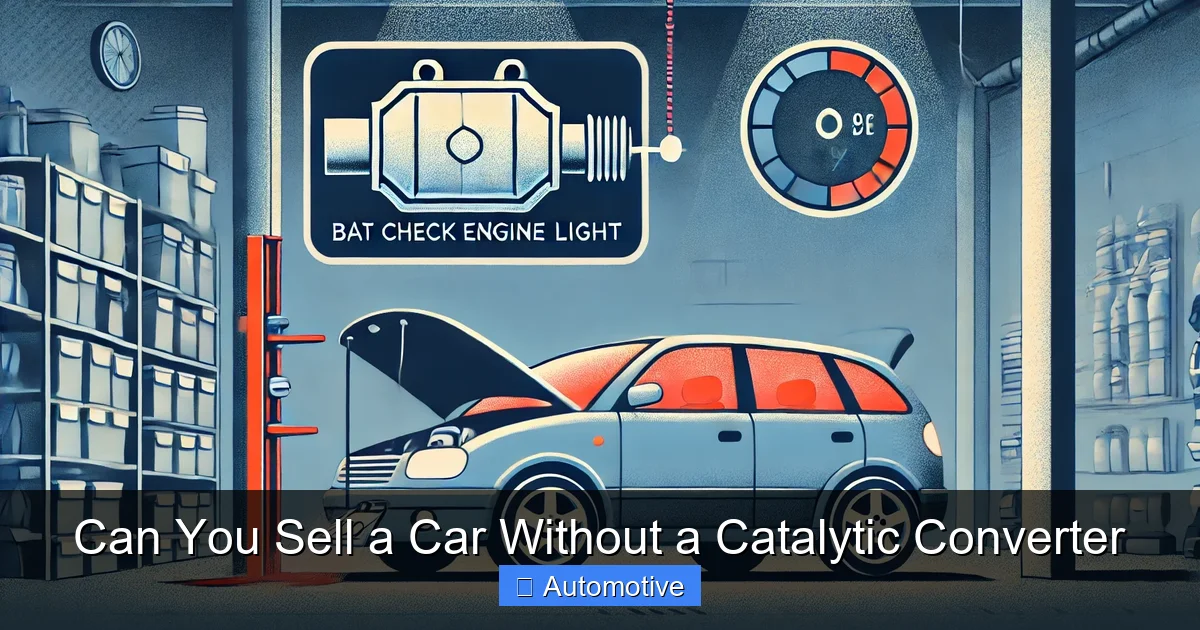
Visual guide about Can You Sell a Car Without a Catalytic Converter
Image source: badcatalytic.com
Even if you’re legally allowed to sell a car without a catalytic converter, you’ll face major hurdles when it comes to finding a buyer. Most people don’t want the headache—or the expense—of dealing with a missing emissions component.
Registration and Emissions Testing
In states with emissions testing, a missing catalytic converter is an automatic fail. Without passing inspection, the buyer can’t register the car or get license plates. This makes the vehicle essentially undrivable on public roads.
Even in states without formal emissions programs, many DMVs still require proof that the vehicle meets federal emissions standards—especially if it was originally equipped with a converter.
Insurance and Financing Issues
Insurance companies may be hesitant to cover a vehicle that can’t be legally registered. Similarly, banks and credit unions often won’t finance cars that don’t meet basic safety and emissions standards.
This limits your pool of potential buyers to cash-only transactions, typically from private individuals or mechanics who plan to fix and resell the car.
Resale Value and Market Demand
Cars without catalytic converters are seen as high-risk and low-value. Buyers know they’ll have to spend $1,000 to $3,000 (or more) to install a new converter—and that’s if they can find one that fits and meets legal requirements.
As a result, you can expect offers to be significantly lower than market value. For example, a 2015 Honda Civic that normally sells for $12,000 might only fetch $7,000–$8,000 without a converter.
Additionally, online marketplaces like Craigslist, Facebook Marketplace, and eBay Motors may flag or remove listings for vehicles with missing emissions equipment, especially if you don’t disclose the issue upfront.
Who Might Buy a Car Without a Catalytic Converter?
Despite the challenges, there are still buyers out there. These include:
- Mechanics and repair shops: They may buy the car to use as a parts donor or to fix and resell.
- DIY enthusiasts: Some hobbyists are willing to take on the project if the price is right.
- Scrap yards and recyclers: If the car is otherwise damaged, they may buy it for metal value.
- Out-of-state buyers: Someone in a state with looser emissions laws might be interested, though they’ll still face registration challenges.
Be upfront about the condition of the vehicle and set realistic expectations.
How to Sell a Car Without a Catalytic Converter
If you’ve decided to move forward with the sale, here’s how to do it responsibly and effectively.
Step 1: Know Your Local Laws
Before listing the car, research your state’s regulations. Contact your DMV or environmental agency to confirm whether you can legally sell the vehicle without a converter. If it’s prohibited, your only options may be to install a new converter or sell the car for parts only.
Step 2: Be Transparent in Your Listing
Honesty is the best policy. Clearly state in your ad that the catalytic converter is missing. Use phrases like:
- “Catalytic converter removed – sold as-is”
- “Missing emissions equipment – not street legal in most states”
- “Buyer responsible for compliance with local laws”
Include photos of the exhaust system to show the missing component. This builds trust and filters out buyers who aren’t prepared for the challenge.
Step 3: Price It Right
Adjust your asking price to reflect the missing converter. A good rule of thumb is to subtract the estimated cost of a new converter ($1,500–$2,500) plus a buffer for the inconvenience. For example:
- Market value: $10,000
- Estimated converter cost: $2,000
- Adjusted price: $7,500–$8,000
Be prepared to negotiate. Buyers will likely lowball you, so set your price slightly higher than your minimum acceptable offer.
Step 4: Choose the Right Platform
Some online platforms are more tolerant of “as-is” sales than others. Consider:
- Facebook Marketplace: Allows detailed descriptions and local meetups.
- Craigslist: Popular for private sales, but be cautious of scams.
- Local car enthusiast groups: Mechanics and DIYers often browse these forums.
- Scrap yards or junk car buyers: If the car is beyond repair, they may offer a quick cash deal.
Avoid listing on sites that prohibit non-compliant vehicles, such as some national classifieds or dealer-only platforms.
Step 5: Complete the Sale Legally
When you find a buyer:
- Sign over the title correctly, noting any liens or issues.
- Provide a bill of sale that includes the VIN, sale price, and date.
- Include your written disclosure about the missing catalytic converter.
- Keep copies of all documents for your records.
In some states, you may also need to provide a smog check exemption form or a statement of facts (e.g., “Vehicle not equipped with required emissions equipment”).
Step 6: Consider Alternatives
If selling proves too difficult, consider these options:
- Install a new catalytic converter: This can cost $1,000–$3,000 but may increase your resale value and make the car legal to drive.
- Sell for parts: Advertise the car as a parts vehicle. This avoids emissions compliance issues and may attract mechanics or recyclers.
- Donate the car: Some charities accept vehicles in any condition and provide a tax deduction.
- Scrap it: If the car is beyond repair, scrap yards will pay for the metal, even without a converter.
Each option has pros and cons, so weigh them based on your timeline, budget, and goals.
Ethical and Practical Considerations
Beyond the legal and financial aspects, selling a car without a catalytic converter raises ethical questions. You’re passing on a problem to someone else—and potentially contributing to environmental harm.
Environmental Responsibility
Every missing catalytic converter means more pollution. By selling a car without one, you’re indirectly enabling higher emissions, especially if the buyer doesn’t replace it. While you may not be directly responsible, it’s worth considering the broader impact.
Buyer Beware—But Seller Be Fair
It’s one thing to sell a car “as-is” with full disclosure. It’s another to hide the issue or mislead the buyer. Ethical selling means being upfront, even if it means fewer offers or a lower price.
A good test: Would you buy this car from yourself? If the answer is no, it might be time to rethink your approach.
Long-Term Reputation
If you’re a repeat seller—whether privately or as a small dealer—your reputation matters. Word spreads quickly online. A single bad review or dispute over a missing catalytic converter can hurt future sales.
Conclusion
So, can you sell a car without a catalytic converter? Technically, yes—but it’s complicated. The process is fraught with legal, financial, and ethical challenges that can turn a simple sale into a major headache.
Your ability to sell depends on your location, the vehicle’s age and condition, and how transparent you are with buyers. In strict emissions states like California, the sale is likely illegal. In others, it may be allowed—but only with full disclosure and a significant price reduction.
Before listing your car, do your homework. Check local laws, adjust your price, and be honest about the missing component. Consider alternatives like installing a new converter or selling for parts. And always document everything to protect yourself from future liability.
At the end of the day, selling a car without a catalytic converter isn’t impossible—but it’s rarely easy. With the right approach, you can find a buyer and complete the sale responsibly. Just remember: the cheapest and fastest option isn’t always the best for you, the buyer, or the environment.
Frequently Asked Questions
Is it illegal to sell a car without a catalytic converter?
It depends on your state. In states like California, New York, and Colorado, it’s illegal due to strict emissions laws. In other states, it may be allowed if you fully disclose the missing component and sell the car “as-is.”
Can I sell my car for parts if it’s missing a catalytic converter?
Yes, selling a car for parts is often a legal and practical option. Many buyers, including mechanics and recyclers, are interested in vehicles for parts, even without emissions equipment.
Will a missing catalytic converter affect my car’s value?
Absolutely. Most buyers will expect a significant discount—typically 20–40% off market value—due to the cost and hassle of replacing the converter and potential registration issues.
Do I need to tell the buyer the catalytic converter is missing?
Yes. Failing to disclose a missing catalytic converter can be considered fraud in many states. Always provide written disclosure to protect yourself legally.
Can the buyer register the car without a catalytic converter?
In most states, no. Without a catalytic converter, the vehicle will fail emissions testing and cannot be legally registered or driven on public roads.
How much does it cost to replace a catalytic converter?
Replacement costs vary by vehicle, but typically range from $1,000 to $3,000, including parts and labor. OEM converters are more expensive than aftermarket options.