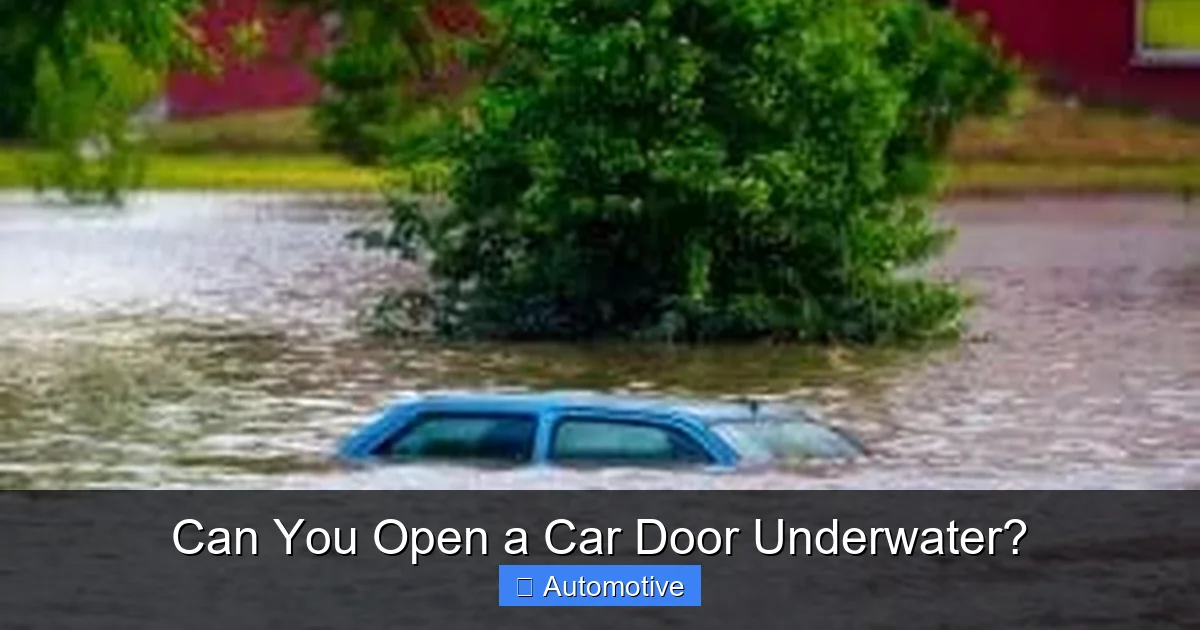
Can You Open a Car Door Underwater?

Contents
- 1 Key Takeaways
- 2 📑 Table of Contents
- 3 Can You Open a Car Door Underwater?
- 4 The Science Behind Submerged Car Doors
- 5 Why Opening the Door Immediately Is a Bad Idea
- 6 When Can You Open a Car Door Underwater?
- 7 Better Escape Options Than Opening the Door
- 8 Special Considerations for Different Vehicles
- 9 Preparing for the Worst: Prevention and Preparedness
- 10 What to Do After Escaping
- 11 Conclusion
- 12 Frequently Asked Questions
Wiper Blade Refills

Car Floor Mats (Universal)

Chain Lubricant Spray

Emergency First Aid Kit
Opening a car door underwater is extremely difficult due to water pressure, but not impossible—timing and technique are critical. Most experts agree that rolling down windows or using emergency tools is far safer and faster than trying to force a door open once the car is submerged.
Key Takeaways
- Water pressure makes doors nearly impossible to open until the cabin fills. The external water pressure against the door increases rapidly as the car sinks, making it extremely hard to push open until the interior and exterior water levels equalize.
- Electric windows may work briefly after submersion. If the car’s electrical system is still functional, you may have a short window (30–60 seconds) to roll down windows before power fails—this is your best escape route.
- Manual window cranks are more reliable underwater. Older vehicles with manual windows don’t rely on electricity, so they can be operated even when the car is submerged, offering a safer escape option.
- Breaking a window is often faster than opening a door. Using a spring-loaded window punch or heavy object to shatter a side window is usually quicker and more effective than waiting for pressure equalization.
- Children and elderly passengers face higher risks. Panic, physical strength limitations, and confusion underwater make it harder for vulnerable passengers to escape without assistance.
- Preparation and awareness save lives. Keeping an emergency escape tool in the car, knowing how to use it, and practicing mental escape plans can dramatically improve survival chances.
- Most drownings occur before the car fully submerges. Victims often panic and fail to act quickly in the first few seconds after water enters the vehicle—acting fast is crucial.
📑 Table of Contents
- Can You Open a Car Door Underwater?
- The Science Behind Submerged Car Doors
- Why Opening the Door Immediately Is a Bad Idea
- When Can You Open a Car Door Underwater?
- Better Escape Options Than Opening the Door
- Special Considerations for Different Vehicles
- Preparing for the Worst: Prevention and Preparedness
- What to Do After Escaping
- Conclusion
Can You Open a Car Door Underwater?
Imagine this: You’re driving near a lake or river, and suddenly your car skids off the road and plunges into the water. The engine cuts out. Water begins to rush in. Your first instinct might be to open the door and swim to safety. But can you actually open a car door underwater?
The short answer is: It’s very difficult—but not impossible. However, trying to open the door immediately after submersion is one of the most dangerous mistakes you can make. Understanding the physics, timing, and best escape strategies can mean the difference between life and death.
This article dives deep into the science behind car submersion, the mechanics of opening doors underwater, and the most effective ways to escape a sinking vehicle. Whether you’re a daily commuter, a parent, or someone who lives near water, knowing what to do in this rare but deadly scenario could save your life.
The Science Behind Submerged Car Doors
Visual guide about Can You Open a Car Door Underwater?
Image source: image.shutterstock.com
When a car enters water, several forces come into play that affect your ability to open the doors. The most important factor is water pressure.
How Water Pressure Affects Door Operation
Water is incredibly dense—about 800 times denser than air. As your car sinks, the water outside pushes against the doors with increasing force. This external pressure makes it nearly impossible to open the door from the inside until the cabin fills with water and the pressure equalizes.
Think of it like trying to open a door in a flooded basement. The water outside is pushing the door shut. The same principle applies underwater. The deeper the car goes, the greater the pressure difference between the inside and outside of the vehicle.
For example, at just 3 feet (about 1 meter) below the surface, the water pressure is already significant enough to make pushing a door open extremely difficult. At 6 feet, it becomes nearly impossible without superhuman strength. This is why most people cannot open car doors underwater during the initial sinking phase.
The Role of Air Pockets and Buoyancy
As water enters the car, air gets trapped in the upper portions of the cabin. This creates a small air pocket that can keep the car afloat for a short time—usually 30 seconds to 2 minutes, depending on the vehicle and how quickly water enters.
During this time, the car may tilt or float slightly, but the doors remain sealed by water pressure. The trapped air also means the interior hasn’t fully flooded, so the pressure difference is still too great to open the doors.
This buoyancy window is critical. It gives you a brief opportunity to act—before the electrical systems fail and before the car sinks completely.
Why Opening the Door Immediately Is a Bad Idea

Visual guide about Can You Open a Car Door Underwater?
Image source: thumbs.dreamstime.com
Many people assume that the moment their car hits water, they should immediately try to open the door and swim out. But this instinct can be deadly.
Panic and Poor Decision-Making
In high-stress situations, the human brain often defaults to fight-or-flight mode. Panic sets in quickly, and rational thinking goes out the window. People may try to open the door right away, only to find it won’t budge. This wastes precious time and energy.
Additionally, struggling against a door that won’t open can cause you to inhale water accidentally, especially if the car is already filling. This increases the risk of drowning before you even attempt to escape.
Electrical Failure and Window Operation
Modern cars rely heavily on electronic systems. When water enters the cabin, it can short-circuit the electrical system within seconds. This means power windows, locks, and lights may stop working almost immediately.
If you wait too long to act, you might lose the ability to roll down windows—your best escape route. That’s why experts recommend acting within the first 30 to 60 seconds after submersion.
Water Inrush Can Trap You
If you do manage to open a door slightly, water will rush in rapidly. This sudden influx can destabilize the car, cause it to sink faster, and even trap passengers under seats or dashboards due to the force of the water.
In some cases, opening a door too early can create a suction effect, pulling you back into the car as water floods in. This makes escape even more dangerous.
When Can You Open a Car Door Underwater?

Visual guide about Can You Open a Car Door Underwater?
Image source: garagesee.com
So, if opening the door right away is dangerous, when—if ever—can you do it?
After Pressure Equalization
The only time it becomes physically possible to open a car door underwater is after the cabin has filled with water and the internal and external pressures have equalized. This usually happens when the car is nearly or fully submerged.
At this point, the water inside the car balances the pressure outside, so the door can be opened with normal force. However, this process can take several minutes—time that most people don’t have.
By the time the car is fully flooded, oxygen levels inside the cabin may be dangerously low. Passengers may be disoriented, panicked, or unconscious. Even if you can open the door, swimming to the surface in the dark, possibly upside down, is extremely challenging.
Real-World Examples and Survivor Stories
There are documented cases of people escaping submerged cars by opening doors after the cabin filled. For example, in 2018, a driver in Florida survived after his SUV plunged into a canal. He waited until the car was nearly full of water, then opened the door and swam to safety.
However, these cases are rare and often involve individuals who remained calm, knew what to do, and had strong swimming skills. Most people don’t have that level of composure under extreme stress.
In contrast, many drowning victims are found with their seatbelts still on and doors closed—indicating they never attempted to escape or failed to act in time.
Better Escape Options Than Opening the Door
Given the risks and difficulties of opening a car door underwater, experts agree that other escape methods are far more effective.
Roll Down the Windows Immediately
The best and fastest way to escape a sinking car is to roll down the windows as soon as the vehicle hits the water—before the electrical system fails.
Most cars will retain power for 30 to 60 seconds after submersion. Use this time to lower all windows, especially the driver’s side. This creates an immediate escape route.
If you have children in the car, help them roll down their windows or open their doors from your side. Once the windows are down, everyone can swim out quickly.
Use an Emergency Window Breaker
If the windows won’t roll down—due to power loss or mechanical failure—you’ll need to break a window.
Side windows are made of tempered glass, which shatters into small, dull pieces when struck correctly. The best tool for this is a spring-loaded window punch, often called a “car escape tool” or “life hammer.”
These tools have a sharp point that concentrates force on a small area of the glass, causing it to break instantly. They’re affordable (usually under $20) and can be stored in the glove compartment or mounted near the driver’s seat.
If you don’t have a tool, you can use a heavy object like a shoe heel, flashlight, or even a car key—but these are far less effective and may take multiple attempts.
Tip: Aim for the corners of the window, not the center. The edges are weaker and more likely to break under pressure.
Unlock the Doors and Release Seatbelts
Even if you can’t open the door, make sure it’s unlocked. This reduces resistance and makes it easier to push open once pressure equalizes.
Also, release your seatbelt immediately. Many people forget to unbuckle in panic, which can trap them inside the car. Practice unbuckling with your eyes closed so you can do it in the dark.
Help Passengers Escape
If you’re driving, you’re responsible for helping others escape—especially children, elderly passengers, or those with disabilities.
Open windows or break glass for rear passengers if needed. Guide them out and ensure they swim toward the surface. Remember, people may panic and swim downward, so stay calm and direct them upward.
Special Considerations for Different Vehicles
Not all cars behave the same way when submerged. Vehicle type, age, and design can affect your escape options.
Older Cars with Manual Windows
Vehicles manufactured before the 1990s often have manual window cranks. These don’t rely on electricity, so they can be operated even when the car is fully submerged.
If you drive an older car or a classic vehicle, this is a major advantage. You can roll down windows at any time, even after the car sinks.
SUVs and Trucks
Larger vehicles like SUVs and trucks may float longer due to their size and air volume. This gives you more time to act—but also increases the risk of rolling over in the water.
Additionally, their higher ground clearance means they may sink more slowly, but the doors are often heavier and harder to open even after pressure equalization.
Electric and Hybrid Vehicles
Electric cars (like Teslas) and hybrids have high-voltage batteries that can pose additional risks when submerged. While the doors and windows operate the same way, there’s a small risk of electrical shock if water contacts live components.
However, modern EVs are designed with safety cutoffs that disable the high-voltage system in a crash or submersion. Still, it’s best to exit quickly and avoid touching metal parts if you suspect a leak.
Preparing for the Worst: Prevention and Preparedness
While car submersion is rare, it’s not unheard of—especially in areas with rivers, canals, or flood-prone roads. Being prepared can dramatically increase your chances of survival.
Keep an Escape Tool in Your Car
Store a window-breaking tool and seatbelt cutter in an easily accessible location—like the glove box, center console, or attached to the sun visor. Make sure all passengers know where it is.
Some tools combine a window punch and seatbelt cutter in one device. These are lightweight, inexpensive, and could save your life.
Practice Mental Escape Plans
Mental rehearsal is a powerful tool. Spend a few minutes imagining what you’d do if your car went into water. Visualize rolling down windows, helping passengers, and swimming to the surface.
This mental practice can reduce panic and improve reaction time in a real emergency.
Educate Your Family
Teach your children how to unbuckle seatbelts, open doors, and swim to safety. Practice escape drills at home or in a pool (safely, with supervision).
Make sure everyone in the car knows the plan: “Windows first, then doors.”
Know Your Route
If you frequently drive near water, pay attention to road conditions, guardrails, and drainage areas. Avoid driving through flooded roads—even shallow water can sweep a car away.
Check weather reports and avoid driving during heavy rain or flash flood warnings.
What to Do After Escaping
Once you’re out of the car, your next priority is getting to safety.
Swim to the Surface
Look for light or bubbles to find the surface. If you’re disoriented, remember that air rises—so swim upward.
Avoid inhaling water. If you’re underwater, exhale slowly through your nose to prevent panic.
Get to Land or a Safe Platform
Once you reach the surface, swim to the nearest shore, boat, or floating object. Call for help or use your phone if it’s still functional.
Seek Medical Attention
Even if you feel fine, see a doctor. Inhaling water—even a small amount—can cause “secondary drowning” hours later. Symptoms include coughing, chest pain, or difficulty breathing.
Conclusion
So, can you open a car door underwater? Technically, yes—but only after the cabin fills with water and pressure equalizes, which may take too long to be practical.
The real answer is that opening the door is rarely the best or fastest escape method. Rolling down windows immediately, using an emergency tool to break glass, and staying calm are far more effective strategies.
Car submersion is a terrifying scenario, but with the right knowledge and preparation, you can dramatically improve your chances of survival. Keep an escape tool in your car, practice your plan, and remember: act fast, stay calm, and get out before it’s too late.
Your life—and the lives of your passengers—may depend on those first 60 seconds.
Frequently Asked Questions
Can you open a car door underwater immediately after submersion?
No, it’s nearly impossible due to water pressure pushing against the door. The external pressure increases rapidly as the car sinks, making it extremely difficult to push the door open until the cabin fills with water.
How long do you have to escape a sinking car?
Most cars float for 30 seconds to 2 minutes after hitting the water. This gives you a short window to roll down windows or break glass before the electrical system fails and the car sinks.
Do power windows work underwater?
Power windows may work for 30 to 60 seconds after submersion, depending on when the electrical system shorts out. Use this time to lower the windows immediately.
What’s the best tool to break a car window underwater?
A spring-loaded window punch (car escape tool) is the most effective. It concentrates force on a small area of the glass, shattering it instantly. Store one in your glove box or console.
Can children escape a sinking car on their own?
Young children may struggle due to panic, lack of strength, or confusion. Adults should help them unbuckle, open windows, and guide them out. Practice escape drills at home.
Should you wait for the car to fill with water before opening the door?
Waiting increases the risk of drowning due to low oxygen and disorientation. It’s better to escape through windows or broken glass before the car fully submerges.